← All books
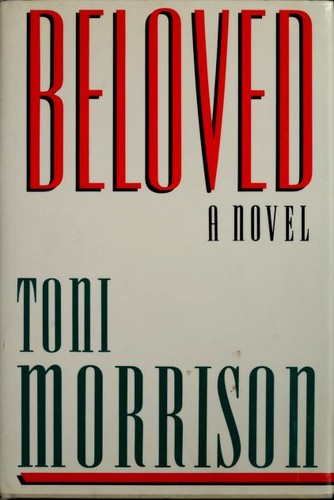
Beloved
by Toni Morrison · 1987
Buy on Amazon
Toni Morrison--author of Song of Solomon and Tar Baby--is a writer of remarkable powers: her novels, brilliantly acclaimed for their passion, their dazzling language and their lyric and emotional force, combine the unassailable truths of experience and emotion with the vision of legend and imagination. It is the story--set in post-Civil War Ohio--of Sethe, an escaped slave who has risked death in order to wrench herself from a living death; who has lost a husband and buried a child; who has borne the unthinkable and not gone mad: a woman of "iron eyes and backbone to match." Sethe lives in a small house on the edge of town with her daughter, Denver, her mother-in-law, Baby Suggs, and a disturbing, mesmerizing intruder who calls herself Beloved.…
Recommended by
"I think this is why the work of Toni Morrison's Beloved was so important to me because I saw in Beloved a first generation testimony... felt so powerful to me and I learned so much from that book."
Books from On Being: Ocean Vuong — A Life Worthy of Our Breath ·
youtube.com
"Beloved was Morrison’s fifth novel. It’s a gripping story, inspired by a famous abolitionist case, the true story of a woman who runs away from slavery with her children, but when the slave catchers catch up with her, she kills one of her own and tries to kill the others, rather than returning them to slavery. We enter the story after the murder, after the trial. “The specter of slavery is unrecognized and unnamed; it is embodied in a ghost-like, other-worldly figure” What is of concern to Morrison is the way slavery haunts the formally enslaved, their progeny, and the nation. The specter of slavery is unrecognized and unnamed; it is embodied in a ghost-like, other-worldly figure. It’s a novel about trauma and psychic scarring, but it’s a novel that points toward a necessary reckoning with what she calls the black and lonely dead, those lost from the Middle Passage, through abolition to the racial violence of the twentieth century. They understand the African and United States racial landscapes. They write about the diaspora in ways that are very forthright, rather than romanticized. They’ve read deeply in African literature and African American literature. We’ve had these two formations: African literature and African American literature. Writers like Chimamanda and Teju, and especially Yaa Gyasi, are bridging these traditions."
"It’s funny, because I thought for a minute about not having Beloved here, simply because so much has been said and written about it that it almost feels redundant to do so, but ultimately it was impossible for me to leave it out. For me, Beloved is like an object that light bends around – I can’t think about American literature without it. I think, like with Blood Meridian , that Beloved is at least partly about looking that fallacious dream of American unity directly in the face and excavating the utter horror on which it’s built. And whether you do that as McCarthy does, through this sort of pageantry of the grotesque, or as Morrison does, in a very tight portrait of a small number of extremely brutalized and traumatized individuals, you’re still chipping away at that central lie of the building blocks of American unity. Morrison’s novel, to me, is ultimately a voice novel — you feel the voices so viscerally. Where McCarthy’s novel ends with a devil’s dance, Morrison’s ends with a song of worship, specifically with an act of collective harmonizing, which operates, basically, as a kind of exorcism. I have spent a lot of time thinking about the final pages of Beloved , because in that epilogue Morrison acknowledges the paradox of what it means to remember something that unspeakable, something that has ruined your body and your mind and the bodies and minds of millions of others. Because how can you go on carrying that? And what Morrison suggests is that you can’t, so you have to give it away. But how to give it away, when giving it away gives the memory, and the story, a power that maybe it shouldn’t have? And so you have that repeated final line, that it is not “a story to pass on,” which of course holds within it the duality of not avoiding but also not retelling. It’s such an extraordinary ending. This is an interesting question, because my initial response would be ‘Not a great deal.’ I have always felt that in my fiction I’m influenced more by European or Latin American writers – Kafka , Ginzburg , Jaeggy , and Borges – particularly in terms of locating narratives in a rather abstract setting, or in a real-seeming place that contains some small element of abstraction. But on reflection, I do think there’s something of the systematic nature of American literature, a description of the workings of a particular world, that probably does find its way into my writing. It’s funny, because I’ve recently completed a new novel which is set in England and Scotland over the last 25 years and is very particularly about those places, and which is much more realistic than anything else I’ve written, but it’s still about people in thrall to systems that help them to live — whether its art or religion or mysticism. There’s still some abstraction in there – I can’t help that, it seems."
"“I watched the old grey-haired slave turn, and meeting her powerful golden eyes I was suddenly flooded with pain, horrified and confused.” I was introduced to this book by an English professor in my first year of university and was shocked by the blunt force of its subject matter and its exquisitely torqued prose. It remains one of my most adored novels."
"I should state up front that few scholars would identify Beloved as a Civil War novel, and I didn’t view it as one for many years. After all, the novel is set about a decade after the war with occasional flashbacks to events happening before the conflict. The war itself, happening between, receives no sustained attention in the novel’s pages. Why, then, include it among my choices? Today the vast majority of scholars agree that slavery was the single most important factor leading to the Civil War, touching virtually every other major political and cultural issue of the day – from economics to state autonomy to national expansion. As a professor of American literature, I know of no novel that better illustrates the dehumanizing nature of slavery and the personal traumas it produced than Beloved . Part ghost story, part historical novel, the plot follows the protagonist, a Black woman named Sethe who escaped slavery with her four children. When slave-catchers track her down to Ohio with plans to return the family to slavery, Sethe chooses to kill her children rather than see them live a life of bondage. She manages to kill her oldest daughter, Beloved, and wounds her two sons. This act of violence at once horrifies all who witness it, black and white, and yet it stands as a powerful repudiation of the institution of slavery and the evils it promotes. I teach the novel alongside more traditional works of Civil War literature precisely because those set during the war are usually so concerned with the traumas of battle and the home front that they often neglect the reasons behind the fighting. Even when war novels do confront slavery, they often deal with the institution in abstract terms. Morrison’s Beloved provides a devastating counterweight, with Sethe’s actions offering an unforgettable critique of slavery and of those who would promote and protect its future."
"Beloved is hard to categorize. I read this when I was at university many years ago, for my undergraduate degree. I remember feeling that I had never read anything like this in my life; the way it’s written is so unique. It’s very much a gothic fantasy, but it’s using the Gothic to look at slavery, and that horrific past that affected so many people. The protagonist, Sethe, was born a slave and is haunted by her ghost baby. The intrigue for me was that she had killed this child, and yet it was very clear that she loved this child. Why would you do such a thing? – and that really takes you into the horrors of slavery, and the kind of life that she did not want for her child. The voice of the ghost baby is so strong. We don’t just focus on the protagonist and her horror, as you might in another kind of novel; Morrison presents the ghost baby as so real, and actually very dominating and obstructive in the main character’s life. It’s a profound novel. It rewrites the genre in some ways, and it explores the power and distortions of trauma, and the lengths to which a mother would go to prevent a child from a kind of suffering that’s worse than death."
"It’s a book about the divide between the land of slavery and the land of freedom, which winds up insisting that there’s not much of a divide after all. The long arm of slavery asserts itself from Kentucky into Cincinnati, where the main character has escaped, and where slave catchers find her. Instead of going peaceably back to the plantation where she was enslaved, she kills her child and freaks out, causing the slave catchers to shrink back. The legacy of all that she fled comes back, as the slain child comes back, in a ghostly form, to haunt her life. “This is not a story to pass on,” the book says towards the end, and yet it does. Beloved redefines the central happenings in Stowe’s Uncle Tom’s Cabin . In Stowe’s story, the heroic slave mother escapes to the North, carrying her small child successfully, but in Beloved , there’s no escape from danger and memory. The brutal facts of enslavement must be suppressed daily and must be remembered. Beloved is linked to its predecessors. Morrison wrote a preface to an edition of Huck Finn . Beloved, Huck Finn, and Uncle Tom’s Cabin all absorb in themselves the most popular and impactful type of narrative writing from the period right before the GAN began to be bandied about—the slave narrative. The slave narrative was important in a formative era for American literature. There were hundreds, if not thousands, of slave narratives, some extremely popular; Stowe drew from them. Huck Finn’s story is a reverse slave narrative. Beloved is one of dozens of African American fictions that have been called neo-slave narratives. Overstory by Richard Powers, a work of genius which won the Pulitzer Prize, is one of the most ambitious and successful pieces of fiction that I’ve read. It’s focused on the unlikely convergence of figures from disparate backgrounds around incidents of eco-terrorism in America’s West. The plot picks up on the derangements of the Anthropocene age , as we are coming to realize that humankind’s footprint is impacting Earth’s system in unprecedented ways. Overstory fits the template of collective fiction, like Moby-Dick , Thomas Pynchon’s Gravity’s Rainbow , and the U.S.A. trilogy by John Dos Passos . They are all about the democratic collective under duress."
"Morrison is always interested in history. She was the Random House editor, along with Middleton Harris, of The Black Book when it was published in 1974. It was during the early 1970s, while collecting the contents of the book, that she first found the newspaper clipping from a Baptist newspaper about Margaret Garner, the enslaved woman who escaped from a Kentucky plantation and made it to Ohio—only to have the slavecatchers come to attempt to return her to the plantation as required by the Fugitive Slave law. According to the news story, when Margaret saw the slavecatchers coming for her and her children, she attempted to kill them all, but only succeeded in killing one. Morrison had always thought the story of enslavement was too large to take on, but the story of Margaret Garner engaged her imagination and inspired the novel. She was intrigued with the thought of infanticide as an example of excessive maternal love under the duress of the terror of enslavement . In a sense, she wanted to interrogate what kind of love would drive a mother to engage in such an act, and what the consequences for her emotional life might be. The novel looks at enslavement primarily from a woman’s perspective, in contradistinction to the perspective in familiar slave narratives, written primarily by men, like Frederick Douglass . Some readers know the slave narratives of Linda Brent or Harriet Jacobs, but Morrison wanted to offer a totally different perspective on enslavement and the struggle for freedom. Her goal was to tell the story of slavery, from the perspective of a woman, to capture the epic nature of her love and to historicize the horrific nature of slavery. Morrison attempted to historicize, narrate, and imagine it from the perspective of the interior life that was missing in historical slave narratives. The novel looks at both the reality of what happened to Black bodies and what happened specifically to the Black female body. In a sense, you’re getting the interior life of a grieving mother, along with the interior life of a woman who has been traumatized by slavery. One of the ways she chose to represent the depth of the love and the complexity of the circumstances was to have the child that was killed possibly come back in the form of a ghost. She realized some readers might have difficulty in accepting the notion of a ghost, but she also knew some communities were not at all uncomfortable with having ghosts in their midst. In one sense, the novel asserts the presence of the dead and the reality of how history is always with us. Morrison interrogates the complexities of absence and presence in the novel to illuminate how they are interconnected. Moreover, she is intrigued with how Black women loved under circumstances where their bodies were the site of reproduction and production at the same time."
"The most amazing iteration of these difficulties and mysteries is in Beloved, by Toni Morrison."
"I love books that leave me weeping inside. 'A Little Life,' by Hanya Yanagihara, 'Room,' by Emma Donoghue, 'Never Let Me Go,' by Kazuo Ishiguro, 'Beloved,' by Toni Morrison, and 'Sophie's Choice,' by William Styron, destroyed me in all the best ways."
"Toni Morrison's 'Beloved' and Zadie Smith's 'White Teeth' are two examples of books that made me feel I was for somewhere else, and for something else."
"We need to read it again and again until we never forget the ghosts of slavery. Also, I return to it every now and then for the literature: One sentence from Toni Morrison can inspire a lifetime of writing."
"My favorite book to assign, besides "The Fire Next Time," is Toni Morrison's novel "Beloved." I have been teaching both books for over 20 years."
"Some of the books, plays, essays and poetry that have cracked me open include "Beloved" and "Song of Solomon," by Toni Morrison."
""Beloved," Toni Morrison"
"Beloved by Toni Morrison. But that should just be the first time, not the last."
"I reread it last summer after Morrison died to see if it was as great as I recalled, and it was greater."
"A book that gives the English language back to itself and your conscience back to itself."
"Toni Morrison's "Beloved""
"It took me at least two attempts to finish Toni Morrison's "Beloved" … which are now among the books that have had the greatest influence on my thinking."