Lawrence Buell's Reading List
Lawrence Buell, Emeritus Professor at Harvard University, winner of the Modern Language Association’s Hubbell Medal for Lifetime Achievement, is the author of Writing for an Endangered World and The Dream of The Great American Novel.
Open in WellRead Daily app →The Great American Novel (2022)
Scraped from fivebooks.com (2022-11-13).
Source: fivebooks.com
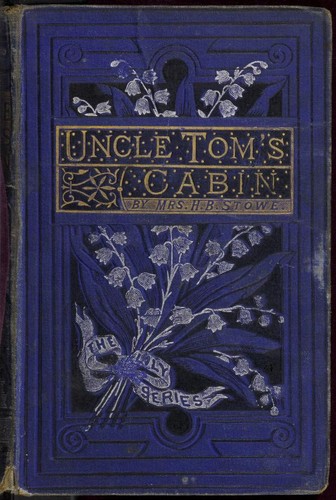
Harriet Beecher Stowe · Buy on Amazon
"Uncle Tom’s Cabin is an anti-slavery activist novel, written in the run-up to the Civil War . Stowe tried to mediate the widening schism between North and South, but the book had the opposite effect – prodding North and South to greater extremes of rage. With some justice, Uncle Tom’s Cabin has been called a cause of the Civil War. When President Abraham Lincoln met the author at the White House, he greeted her as “the little lady that started the big war.” Uncle Tom’s Cabin was the prime candidate bandied around at the time that the concept of the Great American Novel was first in wide circulation. So, there’s a historical reason to include it as a GAN. But there are intrinsic reasons as well. The novel has two plot strands that cut in opposite directions. The main plot involves the selling of the nominal hero, Uncle Tom, from a plantation in the upper south into harsher forms of slavery. The other sub-plot involves the opposite movement of a Frederick Douglass -like slave who escapes North with his wife, who is from the same plantation as Uncle Tom. Stowe presses harder and wider on the anti-slavery theme than just to say that it’s bad to subject Blacks to chattel status. To hit the middle-class reader square in the gut, she shows how slavery destroys families. It was wildly successful. It always has been a marketing ploy, used to telegraph a big achievement. In this case, the advertisement avoids branding it as fiction because when Uncle Tom’s Cabin first appeared novels, as a genre, still lay under a cloud of suspicion. But you can find slogans like ‘one of the greatest American novels of our time’ from the late nineteenth century forward."

Herman Melville · 1851 · Buy on Amazon
"It showcases the susceptibility of this republic and others, to being overcome by populist demagogues—the danger of democracy being usurped by tyranny. In Moby-Dick , the crew are proxies for a cross-section of society. They enter an almost parody version of ‘the social contract’ to ship out with the Pequod. They find themselves at the mercy of Captain Ahab’s regime. During Melville’s day, the plot provided a way of reflecting on slavery; it continues to call attention to the danger of authoritarianism. My book ended before 2016; since then, there were umpteen new readings of Moby-Dick in light of Donald Trump’s election. That’s part of the afterlife of Moby-Dick . It has been seized upon in popular culture and by the media as a reference point for misadventures that overtake the United States. Any interpretative frame can become constrictive. It can keep a reader away from the direct encounter with the text that should be the heart of the reading experience. It can impose a screen. More positively, the halo around a text that you hear is a Great American Novel can create excitement."

Mark Twain · 1884 · Buy on Amazon
"Like Uncle Tom’s Cabin and unlike Moby-Dick , this is a book that had quick popular success; indeed, it was so popular that for quite a while it wasn’t esteemed to be serious fiction . As a sequel to Tom Sawyer , it tended to get put in the young adult box. And it tended to be trivialized because of its comedic side. It is the least ‘serious’ of just about all the Great American Novel contenders. But over time, its more complicated resonances were perceived, and it garnered serious admirers. It also gathered criticism in the post-Civil Rights Era for the incessant repetition of the N-word. There have been battles about delisting it in school districts for decades. Huckleberry Finn is another romance of the divide. The trip down the Mississippi , from the Upper South border regions to the Deep South, and back again, is the movement of the plot. It’s also a romance across the color line, between Huck and his companion, Jim, who escaped slavery. Romance doesn’t necessarily mean a sexual relationship (although it has been argued that there’s a homoerotic bond between Huck and Jim, I think that is overheated). The friendship and understanding between Jim and Huck is the moral center of gravity for the book. Huck’s been a figure that some readers identified with over the years as either the perennial youth resisting acculturation or the personification of wanderlust. He’s a slacker, the exact opposite of the American pioneer driven by work ethic. That is part of the novel’s broad appeal and one of the reasons it’s a candidate for Great American Novel. As far as the intractable whiteness, that chiefly goes to show that the GAN mirrors the scene of cultural production. The dominant literary culture, until recently, has been white. And the paying readership dominantly has been white. So, you get a somewhat skew-y version of the national tapestry if you look at the nominees for the title of GAN. But that doesn’t prevent novelists of color from seizing the legacy and reconceiving the stakes of the Great American Novel and reweaving the ingredients of the GAN into monumental efforts of their own. Tony Morrison does that in Beloved . Ellison drew from Uncle Tom’s Cabin and Huck Finn . Generativity is a characteristic of this GAN game. Candidates are not only good reads, they tend to lend themselves to metamorphosis. The game doesn’t remain stable. Morrison and Ellison reinvigorated the Great American Novel tradition by morphing it."

F. Scott Fitzgerald · 1925 · Buy on Amazon
"It’s the shortest book that has been a perennial nominee. The central figure, Jay Gatsby, migrates from the Midwest to the East, trying to break into the upper crust. But Gatsby’s means of getting the wealth that he wields is bootlegging. He’s viewed through the lens of a prim and proper but sympathetic first-person narrator who is his neighbor on Long Island in the Roaring Twenties. There’s a mixture of moral disapproval and admiration for Gatsby’s charm, chutzpah, and idealism in grasping for the stars, the golden girl of his imagination. The book showcases both the allure and the ricketiness of the American dream. The story shows the American dream is fragile despite its potency and persistence. It shows its perpetual obsolescence. We often hear that it’s harder to rise from the bottom to the top in the US than it is in many other countries. Even in Fitzgerald’s day, the fluidity of society was fading . Perhaps The Great Gatsby still seems germane because of the way it showed the mismatch between American actualities and American ideals, the two-faced character of the American dream, its materialism and idealism."
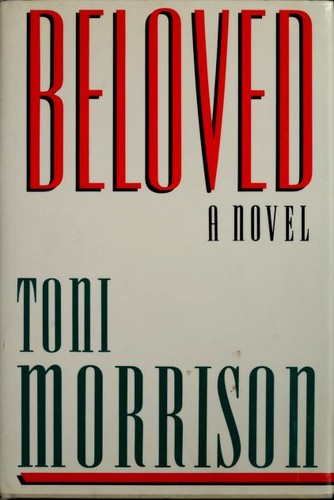
Toni Morrison · 1987 · Buy on Amazon
"It’s a book about the divide between the land of slavery and the land of freedom, which winds up insisting that there’s not much of a divide after all. The long arm of slavery asserts itself from Kentucky into Cincinnati, where the main character has escaped, and where slave catchers find her. Instead of going peaceably back to the plantation where she was enslaved, she kills her child and freaks out, causing the slave catchers to shrink back. The legacy of all that she fled comes back, as the slain child comes back, in a ghostly form, to haunt her life. “This is not a story to pass on,” the book says towards the end, and yet it does. Beloved redefines the central happenings in Stowe’s Uncle Tom’s Cabin . In Stowe’s story, the heroic slave mother escapes to the North, carrying her small child successfully, but in Beloved , there’s no escape from danger and memory. The brutal facts of enslavement must be suppressed daily and must be remembered. Beloved is linked to its predecessors. Morrison wrote a preface to an edition of Huck Finn . Beloved, Huck Finn, and Uncle Tom’s Cabin all absorb in themselves the most popular and impactful type of narrative writing from the period right before the GAN began to be bandied about—the slave narrative. The slave narrative was important in a formative era for American literature. There were hundreds, if not thousands, of slave narratives, some extremely popular; Stowe drew from them. Huck Finn’s story is a reverse slave narrative. Beloved is one of dozens of African American fictions that have been called neo-slave narratives. Overstory by Richard Powers, a work of genius which won the Pulitzer Prize, is one of the most ambitious and successful pieces of fiction that I’ve read. It’s focused on the unlikely convergence of figures from disparate backgrounds around incidents of eco-terrorism in America’s West. The plot picks up on the derangements of the Anthropocene age , as we are coming to realize that humankind’s footprint is impacting Earth’s system in unprecedented ways. Overstory fits the template of collective fiction, like Moby-Dick , Thomas Pynchon’s Gravity’s Rainbow , and the U.S.A. trilogy by John Dos Passos . They are all about the democratic collective under duress."