Craig A. Warren's Reading List
Craig A. Warren is a professor of English at Penn State Behrend in Erie, Pennsylvania. He is the author of the books Scars to Prove It: The Civil War Soldier and American Fiction and The Rebel Yell: A Cultural History . Warren is also the founder and editor of The Ambrose Bierce Project , a digital humanities project and online journal.
Open in WellRead Daily app →Classic Novels of the American Civil War (2024)
Scraped from fivebooks.com (2024-09-19).
Source: fivebooks.com

Stephen Crane · 1895 · Buy on Amazon
"The Red Badge of Courage marked a crucial moment in the history of Civil War literature. Prior to its publication in 1895, writing about the war was dominated by veterans North and South. Former soldiers were numerous and widely respected, and they came to flood the literary marketplace with memoirs and regimental histories at the turn of the century. The public proved to have an enormous appetite for these accounts of camp and battle. While this meant that millions of Americans were reading and thinking about the recent war, veterans’ stranglehold on the subject ensured that memoirs of women, former slaves, and civilians of every kind were overshadowed or ignored. Indeed, Civil War veterans came to actively police the literary market, intimidating any nonveteran who would presume to write about the conflict. No wonder that when Crane’s Red Badge of Courage first saw publication, many readers assumed he must be a veteran. Not only did the novel take the Civil War battlefield as its subject, but it offered readers an account of battle as seen through the eyes of a Union private during his first experiences in combat. When the surprising truth became known, that author Stephen Crane was both a nonveteran and a young man born after the war, many veterans objected. At least one prominent veteran dismissed Crane’s novel as the work of a “diseased imagination,” and not just because of the author’s civilian status. With rare exception, veterans had avoided graphic details in their memoirs, preferring to share highly romanticized and sanitized accounts in keeping with Victorian sensibilities. By contrast, Crane drew on his considerable talent as a writer, and on his physical and emotional experiences on the football field, to breathe life into the dry accounts so often published by veterans. The Red Badge of Courage teems with the speed, dirt, blood, fear, adrenaline, and chaos of the battlefield – precisely those details that are missing from most nineteenth-century accounts of the war. “The Civil War stands as the central moment in all American history” Ultimately the public found Crane’s novel entrancing because it brought the war to life in a way readers had not before experienced. Dropped breathlessly into the Civil War battlefield they had long read about and even revered from afar, Crane’s readers found themselves asking new questions about the motivation and ideology of the war’s participants. In short, the novel helped readers in 1895 move from asking, ‘What was the war like?’ to ‘Why did its participants take part? Why endure these harrowing and often brutal experiences?’ In that sense, then, the bestseller led readers to think of the war in terms of lived experience, body and mind, and reframed the conflict in terms of personal participation. We see that emphasis on participation still today, not just in Civil War literature but in everything from Civil War reenacting groups to museum exhibits that employ sounds and even smells to stimulate the senses of visitors. The Red Badge of Courage has experienced a surge in readers every time the U.S. has entered an armed conflict during the twentieth and twenty-first centuries. Readers seem to turn to the book for answers. What is the nature of warfare, and what role can an individual play within its sweep? Crane’s narrative shows warfare to be an all-encompassing force over which the individual has little or no control. At best, survivors can try to interpret their traumatic experiences and assign meaning and order to the chaos. That is what we see Crane’s everyman protagonist struggling to do throughout the novel, and we sympathize with the youth, even if his interpretations are too narrow and self-interested to satisfy us. For instance, the young soldier concludes that combat has made him ‘a man.’ He cannot break free of his personal anxieties and psychological needs to consider war’s meanings beyond himself. I would argue that its honesty – more than any sense of war-weariness – explains readers’ enduring interest in The Red Badge of Courage . Its portrait of warfare as harsh, amoral, and untamable explodes romantic notions and insists that we explore our reasons for participating in such a traumatic undertaking."
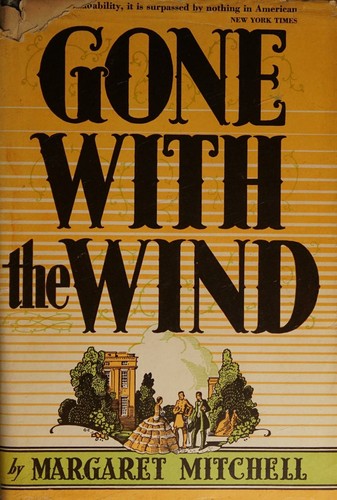
Margaret Mitchell · Buy on Amazon
"Today, far more people have watched the blockbuster 1939 film adaptation of Gone with the Wind than have read the 1,037 pages of the Pulitzer-Prize winning novel. That’s unfortunate, given that the book offers a more nuanced and sophisticated view of the Civil War and Reconstruction, particularly of women in the American South. The novel charts the evolution of Scarlett O’Hara from a spoiled, sheltered, and superficial pre-war belle to a shrewd postwar plantation and business owner operating in and around Atlanta, Georgia. Scarlett’s family and their plantation home of Tara face endless challenges brought on by the war and its aftermath – including poverty, disease, runaway slaves, labor shortages, marauding Yankee soldiers, the burning of Atlanta, postwar carpetbaggers, crime, inflation, and the death of family and loved ones. Yet Scarlett’s relentless drive to protect her home leads her to overcome each obstacle in turn, including a love triangle that threatens to tear her family apart. For many readers the novel tells the story of the South’s surviving the Civil War, with the new South emerging to replace and succeed the storied South of old. Yes, readers have interpreted Scarlett’s character in a wide number of ways. Some have lauded Scarlett for embodying the tough, shrewd resourcefulness that enabled Southern women to hold together their society both during and after the Civil War. With men away at war, or killed, or maimed and in need of care, Scarlett’s real-life equivalents played a central role in their societies. Other readers have condemned Scarlett for putting her household ahead of her community except when it suits her to do otherwise. There are plenty of other perspectives on Scarlett that fall between these two extremes, many of which take up the matter of gender. For instance, some have argued that Scarlett’s self-interest is scandalous only because it deviates from traditional expectations for a woman. My own view is that we should consider the Southern society in which Gone with the Wind was written and published. Throughout the late nineteenth and early twentieth centuries, the figure of the Civil War veteran had become an American icon. This was the case in the North as well, but perhaps especially so in the South where veterans organizations and women’s societies were devoted to honoring the South’s surviving soldiers, caring for those in need, and decorating the graves of the fallen. The figure of the veteran had achieved such lofty heights that Margaret Mitchell set out to win recognition for the wartime sacrifices and achievements of southern women. In fact, her novel devotes serious attention to the Reconstruction era – when soldiers had returned home – in order to portray southern men and women working together to repair their war-torn communities. After well over 1,000 pages of a novel describing Scarlett and other southern women in her community toiling and sacrificing, the privileged word ‘veteran’ is at last applied to Scarlett. The narrative states, “They were veterans. She was a veteran too.” Given that the term ‘veteran’ was almost exclusively coded as male, including during the 1930s when Mitchell wrote Gone with the Wind , this late moment in the novel is a striking one. Gone with the Wind is not a fully feminist work, but it was surely progressive in demanding that Southern women be recognized for the part they played in Civil War and American history."

Michael Shaara · Buy on Amazon
"The Killer Angels has had a tremendous influence over Civil War literature and cinema of the last several decades. Not only has this novel about the Battle of Gettysburg inspired feature films backed by studio money and starring Hollywood actors, but the book also won the adoration of acclaimed documentary filmmaker Ken Burns. Burns cited his experience reading the novel in 1984 as the episode that made him resolve to make his landmark 1990 PBS series The Civil War . Not surprisingly, many fictions published in the years after The Killer Angels employ its multi-narrator approach, with chapters swinging back and forth between personalities North and South. Scholarship has also been shaped by the novel, as Shaara’s focus on certain historical figures led to a renewal of scholarly interest in those persons – most importantly, Union officer Joshua Lawrence Chamberlain. But even had the novel not had such an influence over other writers, filmmakers, and scholars, it would still be worth reading today. Shaara’s genius was to realize that many modern-day Americans struggle to feel a personal connection to a Civil War that they have been taught was fought to end slavery. These readers, particularly white readers, wonder whether the story of the war has any meaning for them, personally. Shaara’s solution was to collapse the story of Emancipation into the larger story of Americans fighting to rid their nation of an Old World aristocracy in which one group of people is superior to another. By portraying the Battle of Gettysburg as the end of class-based inequality in America, Shaara’s book gives all Americans reason to appreciate the outcome of the conflict."
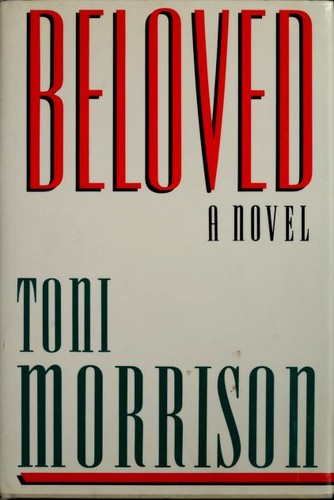
Toni Morrison · 1987 · Buy on Amazon
"I should state up front that few scholars would identify Beloved as a Civil War novel, and I didn’t view it as one for many years. After all, the novel is set about a decade after the war with occasional flashbacks to events happening before the conflict. The war itself, happening between, receives no sustained attention in the novel’s pages. Why, then, include it among my choices? Today the vast majority of scholars agree that slavery was the single most important factor leading to the Civil War, touching virtually every other major political and cultural issue of the day – from economics to state autonomy to national expansion. As a professor of American literature, I know of no novel that better illustrates the dehumanizing nature of slavery and the personal traumas it produced than Beloved . Part ghost story, part historical novel, the plot follows the protagonist, a Black woman named Sethe who escaped slavery with her four children. When slave-catchers track her down to Ohio with plans to return the family to slavery, Sethe chooses to kill her children rather than see them live a life of bondage. She manages to kill her oldest daughter, Beloved, and wounds her two sons. This act of violence at once horrifies all who witness it, black and white, and yet it stands as a powerful repudiation of the institution of slavery and the evils it promotes. I teach the novel alongside more traditional works of Civil War literature precisely because those set during the war are usually so concerned with the traumas of battle and the home front that they often neglect the reasons behind the fighting. Even when war novels do confront slavery, they often deal with the institution in abstract terms. Morrison’s Beloved provides a devastating counterweight, with Sethe’s actions offering an unforgettable critique of slavery and of those who would promote and protect its future."

Howard Bahr · Buy on Amazon
"Howard Bahr is an excellent writer, but his fiction isn’t as well known as that of other writers on my list. That’s a shame, as The Judas Field is one of the best Civil War novels published during the twenty-first century. In particular, it does a fine job of responding to the human legacy of America’s military conflicts. Set in the mid-1880s, the frame narrative portrays the return of three Confederate veterans to the battlefield at Franklin, Tennessee. Tasked by a friend with recovering the bodies of her long-buried father and brother, soldiers killed in the 1864 battle, the men are overwhelmed with flashbacks of the horrific fighting years earlier. The narrative sways back and forth between the present day and the war twenty years earlier, and in doing so documents the psychic damage left in the wake of an awful trauma. Bahr’s veterans live with survivor’s guilt each day, haunted by bad memories and suffering from alcoholism and drug addiction. Some live on the brink of a physical and mental collapse. Himself a veteran of the Vietnam War , Bahr’s portrait of Civil War veterans lines up with what we know of veterans of America’s later wars – men and women haunted by post-traumatic stress disorder and often nursing old wounds. By reimaging what it meant to be a Civil War veteran, Bahr complicates the prevailing picture of those men as nostalgic old-timers more than happy to walk their old battlefields and refight their old battles. The result, especially for scholars who study veterans’ lives and memoirs, is instructive. The Judas Field helps us better understand what it meant to wear the label of ‘veteran’ in the decades after 1865, and to better appreciate the long-term sacrifices made by those persons who returned from the Civil War. We might say that this and similar works of fiction lend insight into ‘The Long War,’ a term some scholars use for the war’s legacy well beyond its official ending in 1865. Fictional responses to the American Civil War are so numerous and diverse that it can be risky to generalize. But I would say that the primary interest of fiction writers – whether in 1895 or 2024 – has been to grant the reader some measure of personal access to the conflict. Earlier fiction, such as that by Crane, sought to put the reader in the shoes of a soldier amidst the crash of battle. In doing so, those texts reflected the prevailing thinking that only men in uniform had truly experienced the war. Later fictions expanded outward from there, granting readers access to the lives of women and other civilians on the home front – persons who participated in the conflict in different yet still tremendously important ways. Still later works have wanted readers to experience something of what it meant to be slave, or an abolitionist, or a psychologically damaged veteran. These works have come to value the historical contributions of a wide range of Americans, reflecting our nation’s increasingly democratic approach to its past and, ideally, to its future."