David Hering's Reading List
David Hering is Senior Lecturer in English Literature and co-director of the Centre for New and International Writing at the University of Liverpool. His fiction, essays and criticism have appeared in publications including The New York Review of Books , Guernica , The Los Angeles Review of Books , The Point, 3:AM , The London Magazine , The Oxonian Review and The Quietus.
Open in WellRead Daily app →The Best 20th-Century American Novels (2023)
Scraped from fivebooks.com (2023-07-10).
Source: fivebooks.com

Edith Wharton · Buy on Amazon
"So this is Wharton’s second novel, and was extremely – really remarkably – successful on publication. It’s a novel about the culture of the Gilded Age and, as far as I’m aware, one of the first major novels about New York society at that time. It traces the extraordinary descent – literally and figuratively – of a woman, Lily Bart, in the social scene. One of the things I love about The House of Mirth is the way the entire novel is encoded in the form of the opening scene, in which Lily ascends and descends a flight of stairs, and in doing so accidentally sets in motion the accumulation of rumor and misfortune that will eventually destroy her. The novel is constantly moving through these accretive images of exquisite beauty and wealth, which themselves then also complicate or degrade Lily’s social standing in the moment of their perception. So, to give you an example, at the heart of the novel is a party where Lily appears in a tableaux vivant ; she’s posed as a Joshua Reynolds painting. And this appearance, which is apparently so amazing that it elicits a gasp from the audience, is the moment at which Lily’s beauty is publicly crystallized, but the fixing of that beauty in a shape – an “outline” as one character calls it – also has the effect of rendering her body completely present, and thus also less reputable. This is the novel in miniature – everyone worships an abstract idea of beauty, one that is secured by wealth, but when the materialities of body and money are put on public display, everyone turns away, because their complicity is suddenly visible to them. In many ways, this story is played out again and again in the 20th-century American novel – no one wants to see the gears grinding underneath, to see what goes into constructing the tableaux . They’re prepared to let people die to maintain it."

Willa Cather · Buy on Amazon
"I first read My Ántonia in college, and this was a time when I was very into the more avant-garde, formal end of modernism , so I looked at it and just assumed, fairly dismissively, that it was going to be this sort of bucolic country romance. And I read it and was totally captured by it, in a way, I think, that I didn’t have the vocabulary for at that age. I suppose you’d say now that I liked the vibe of it, without fully understanding where the vibe came from. But over the years I’ve re-read it a number of times and I’ve come to recognize it as a radical book, quietly so. It occupies a weird zone, in that it initially seems to behave like a 19th-century romance despite being published in 1918, but the novel itself is as ‘modern’ as anything by Faulkner. If you synopsize it, a man remembers his youth in the Midwest and his ongoing friendship with a Bohemian immigrant farm girl. It sounds quite realist, but Cather isn’t interested in following the traditional route of an agrarian romance at all. They don’t eventually get together, for one – 99% of books like this would end with them realizing their feelings for each other – and the novel’s approach to family, which is often the point towards which bildungsroman narratives converge, is profoundly ambivalent. Family units are dysfunctional or cobbled together, and characters find other ways of living together. It was only on subsequent readings I realized just how much My Ántonia was a queer novel, how much the essentialist approach to gender and sexuality is picked apart or described in terms of a social convenience. Then, when you discover that Cather would also present as male and go by ‘William,’ this reading of the novel really opens up. Cather is also able to conjure these images that are extremely evocative, that lead from color or sound rather than character or plot, and these images – there’s a long description of a plough backlit by the setting sun – are also dramatizations of transitions between moments of understanding, so you have an epiphany communicated without the character necessarily knowing it at the time. It feels radical to me."

Ralph Ellison · 1952 · Buy on Amazon
"A round-about way of answering this: I sometimes talk to the students I teach about the fallacy of the term ‘Great American Novel’ because it presumes a quality that is arguably at odds with the actual nation itself. A Great American Novel presupposes the experiences of a manageably unified nation, which is, of course, not the story of America. It’s maybe the dream of America, though, which is why some of my favorite American novels, like Invisible Man , have a distinctly dreamlike quality. I do think that you could perhaps call Invisible Man the most characteristic American novel, in that it so thoroughly acknowledges this struggle and embraces it in its form. I also don’t think of Invisible Man as existing purely in a textual sphere. I’ve always felt that it lies at the intersection of a number of different arts – painting, music, sculpture – and that it alternately mimics or incorporates their forms as it goes; I would use the word ‘artwork’ rather than novel. At the centre of the novel is this image of the narrator’s racial visibility that deliberately doesn’t cohere into a systematic idea: when he’s invisible he’s visible, and when he’s visible he’s invisible. For the entire novel, he’s in this spectral state, flickering between these different modes of being, always at the whim of other people. The only solution is either to turn the lights out, or to turn all the lights permanently on. It’s an extraordinarily powerful metaphor, and it never gets overworked because Ellison heightens everything almost to the level of myth, so all moments in the narrator’s journey become these tableaux or overdetermined objects of injustice. It’s an incredible novel."

Cormac McCarthy · 1985 · Buy on Amazon
"Yes, it’s somewhat loosely based on the history of the Glanton Gang, who were a bunch of murderous outlaws in the southern US in the 19th century. McCarthy is using them as the occasion to think about how one chronicles an unspeakable history, or how one can reckon with a nation that comes from chaos, and what that means for the nation itself. With Beloved , which I’ll come to shortly, Toni Morrison is thinking about systematized brutality and its repercussions; in Blood Meridian , there really is no system at all. If there is one, it’s a kind of debased violent impulse, which is why the novel is both perpetually on the verge of an explosion of violence, and also often, frankly, quite monotonous. Because how else can you depict unsystematized chaos in the long form? Blood Meridian has these 18th-century-style subtitles for its chapters which summarize what is about to happen, and to me these summaries indicate the utter inevitability of the world that McCarthy is describing. By the time you read the chapter itself, it’s effectively already happened, it’s predestined. And the novel ultimately moves towards this kind of dance of the devils. It ends in total bacchanal, with Satan at its centre. It gravitates to what it has always desired, which is true chaos. Support Five Books Five Books interviews are expensive to produce. If you're enjoying this interview, please support us by donating a small amount . I can’t mention this novel without mentioning Judge Holden, who is one of the most monumental antagonists in all American literature — a giant, hairless demon in human form, who is present at all sites of human violence. You can tell that McCarthy, like Melville with the white whale, was aiming for something truly elemental here, and I believe he pulls it off. If ever I think about the last scene of this novel – and I spend quite a lot of time trying not to think about it – I remember the sheer pitch of horror in that final unseen act the Judge commits, which is the only act of violence that McCarthy keeps off the page, as if even in this world it’s too much to bear."
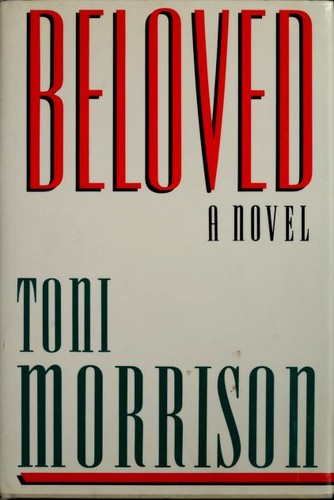
Toni Morrison · 1987 · Buy on Amazon
"It’s funny, because I thought for a minute about not having Beloved here, simply because so much has been said and written about it that it almost feels redundant to do so, but ultimately it was impossible for me to leave it out. For me, Beloved is like an object that light bends around – I can’t think about American literature without it. I think, like with Blood Meridian , that Beloved is at least partly about looking that fallacious dream of American unity directly in the face and excavating the utter horror on which it’s built. And whether you do that as McCarthy does, through this sort of pageantry of the grotesque, or as Morrison does, in a very tight portrait of a small number of extremely brutalized and traumatized individuals, you’re still chipping away at that central lie of the building blocks of American unity. Morrison’s novel, to me, is ultimately a voice novel — you feel the voices so viscerally. Where McCarthy’s novel ends with a devil’s dance, Morrison’s ends with a song of worship, specifically with an act of collective harmonizing, which operates, basically, as a kind of exorcism. I have spent a lot of time thinking about the final pages of Beloved , because in that epilogue Morrison acknowledges the paradox of what it means to remember something that unspeakable, something that has ruined your body and your mind and the bodies and minds of millions of others. Because how can you go on carrying that? And what Morrison suggests is that you can’t, so you have to give it away. But how to give it away, when giving it away gives the memory, and the story, a power that maybe it shouldn’t have? And so you have that repeated final line, that it is not “a story to pass on,” which of course holds within it the duality of not avoiding but also not retelling. It’s such an extraordinary ending. This is an interesting question, because my initial response would be ‘Not a great deal.’ I have always felt that in my fiction I’m influenced more by European or Latin American writers – Kafka , Ginzburg , Jaeggy , and Borges – particularly in terms of locating narratives in a rather abstract setting, or in a real-seeming place that contains some small element of abstraction. But on reflection, I do think there’s something of the systematic nature of American literature, a description of the workings of a particular world, that probably does find its way into my writing. It’s funny, because I’ve recently completed a new novel which is set in England and Scotland over the last 25 years and is very particularly about those places, and which is much more realistic than anything else I’ve written, but it’s still about people in thrall to systems that help them to live — whether its art or religion or mysticism. There’s still some abstraction in there – I can’t help that, it seems."