Farah Jasmine Griffin's Reading List
Farah Jasmine Griffin is an American academic and professor specializing in African-American literature. She is William B. Ransford Professor of English and Comparative Literature and African-American Studies and Director Elect of the Institute for Research in African American Studies (IRAAS) at Columbia University. She is the author of " Who Set You Flowin’?": The African American Migration Narrative (1995), If You Can’t Be Free, Be a Mystery: In Search of Billie Holiday (2001), Clawing At the Limits of Cool: Miles Davis, John Coltrane, and the Greatest Jazz Collaboration Ever (2008), and mos
Open in WellRead Daily app →The Best African American Literature (2019)
Scraped from fivebooks.com (2019-02-25).
Source: fivebooks.com

Jean Toomer · Buy on Amazon
"Cane is one of the most beautiful novels in all of American literature . It’s a hybrid text divided into three parts. The first part is a set of impressionistic sketches of a southern African American folk culture that is fading away. The next section of short stories and poems concern a character who migrates from the South to an urban setting. This section is attentive to the black bourgeois being formed in Washington DC. The final story, written like a drama, is set in Chicago but returns to the South. This section concerns a black artist from an elite background who takes as his subject black folk cultures. Cane does all of that work in a very short span of pages. It is a slim volume, but very dense. Before Cane , black life was written about in a linear way. Cane eschews straightforward storytelling; it’s a very experimental book in both form and content. It identifies the American South—because of and despite its horrors—as a place that black artists almost own by birthright. The women who animated Toomer’s Cane were very compelling, but later black writers used Toomer’s archetypes as starting points for more fully-realized characters. We can see that as early as Zora Neale Hurston and as late as Alice Walker or Toni Morrison, as well."

Zora Neale Hurston · 1937 · Buy on Amazon
"Hurston was an anthropologist and an ethnographer who did lots of field work, but here she turns to the novel as a form to explore black indigenous culture. Black English is often disparaged as the vernacular of the uneducated; Hurston elevates black language to a level of poetry. She shows the worldview that one gets from language, which is a very spiritual one. “Hurston gives us one of the first true love stories in African American writing” Hurston gives us one of the first true love stories in African American writing. It’s a beautifully lyrical novel about a woman who married several times before falling in love with the person who helps her come into her own. Toni Morrison said, “Black literature is taught as sociology, as tolerance, not as a serious, rigorous art form.” There is a burden of being politically representational. Many African American writers write whatever they want, but audiences tend to want and expect a certain kind of realism and a certain kind of political stance on the part of the black writer. The work that get the most attention, that gets most widely-read, has tended to be work that can be read as a statement on blackness in America."

Ann Petry · Buy on Amazon
"Petry is probably the least known of the writers on this list. I hope that will change. When people do read her, they tend to read The Street , her bestselling novel of 1946 about Lutie Johnson, a hard-working, working-class, single mother in Harlem. Petry writes in a social realist mode and addresses the social impediments to the progress of an African American woman who does everything right to escape a tragic fate. The story resonated in 1946 and continues to resonate today. Support Five Books Five Books interviews are expensive to produce. If you're enjoying this interview, please support us by donating a small amount . The Narrows is the novel that I think is her master work. It is set in a small New England city. Its protagonist is a young black man, a scholar-athlete who is born in that town and who falls in love with the town’s wealthy white heiress. I think it is Petry’s most accomplished novel, but it did not garner the attention it might have, perhaps because it came out around the same time as Invisible Man and Invisible Man was such a tour de force that it overshadowed The Narrows There might be an appearance of gender parity now, but throughout most of the tradition there had not been. Frederick Douglas s was much better known in the nineteenth century than Linda Brent. Literary critics and historians drew attention to writers like Brent, and brought them back into publication. Until the renaissance of writing by black women in the 1970s, with authors like Alice Walker, and in the 1980s with Toni Morrison , there was no parity. After they emerged at the forefront of African American literary production, garnering the greatest number of readers and the most critical acclaim, academics began recovering the work of writers like Petry and Hurston. Hurston’s work, which is now so well-known, had been out-of-print for decades. A generation of black feminists brought these writers back to the forefront."

Ralph Ellison · 1952 · Buy on Amazon
"Until his posthumously published novels, Invisible Man was Ellison’s only novel in print. But if one could only publish one book, Invisible Man would be the one. It engages a number of literary traditions—the high modernism of Joyce , Eliot and Pound, but also Dostoevsky and Marx . It’s filled with allusions to African American folklore, folk culture and history. It’s just a rich and dynamic novel. Get the weekly Five Books newsletter Invisible Man is epic in scope; appropriately, there are also allusions to Homer. It’s a great quest narrative. A young black, middle-class, intellectual protagonist navigates his way from a Tuskegee-like institution in the South through Harlem, confronting Garveyism and the Communist Party. It’s an incredibly ambitious novel, which was recognized as a tour de force from the instant of its publication, Ellison wrote himself into canon. He was very hard to ignore, but for a while, he was treated as the only one. He probably did open a door by showing that one did not only have to write in social realism, one did not only have to write what is known as protest fiction. He showed that there was room for high modernist experimentation in African American literature. We wouldn’t have had a literary establishment ready for Morrison without Ellison."
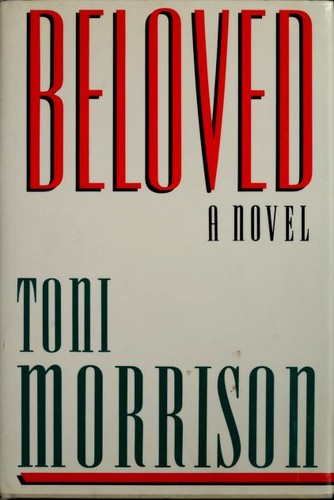
Toni Morrison · 1987 · Buy on Amazon
"Beloved was Morrison’s fifth novel. It’s a gripping story, inspired by a famous abolitionist case, the true story of a woman who runs away from slavery with her children, but when the slave catchers catch up with her, she kills one of her own and tries to kill the others, rather than returning them to slavery. We enter the story after the murder, after the trial. “The specter of slavery is unrecognized and unnamed; it is embodied in a ghost-like, other-worldly figure” What is of concern to Morrison is the way slavery haunts the formally enslaved, their progeny, and the nation. The specter of slavery is unrecognized and unnamed; it is embodied in a ghost-like, other-worldly figure. It’s a novel about trauma and psychic scarring, but it’s a novel that points toward a necessary reckoning with what she calls the black and lonely dead, those lost from the Middle Passage, through abolition to the racial violence of the twentieth century. They understand the African and United States racial landscapes. They write about the diaspora in ways that are very forthright, rather than romanticized. They’ve read deeply in African literature and African American literature. We’ve had these two formations: African literature and African American literature. Writers like Chimamanda and Teju, and especially Yaa Gyasi, are bridging these traditions."