Marilyn Mobley's Reading List
Marilyn S. Mobley is an Emerita Professor of English and African American Studies at Case Western Reserve University (CWRU). She formerly served as the inaugural Vice President for Diversity, Inclusion and Equal Opportunity (2009-2019) and was one of the founding members of African and African American Studies at CWRU. She earned her BA from Barnard College of Columbia University, her MA from NYU, and her PhD from Case Western Reserve University. She was the founding director of African American Studies and Associate Provost at George Mason University, where she was a faculty member in English
Open in WellRead Daily app →The Best Toni Morrison Books (2022)
Scraped from fivebooks.com (2022-02-27).
Source: fivebooks.com

Toni Morrison · 1970 · Buy on Amazon
"The best way to get introduced to Toni Morrison as a novelist is to discover the themes, narrative styles, and ideas that were top of her mind at the beginning of her career as an author. She began The Bluest Eye as an undergraduate student but did not complete it until she returned to her writing after her divorce. The Bluest Eye captures some of her early concerns about the intersection of race, class, and gender. Part of the attraction of the novel is that it resonates with the concerns of Black women and girls, how we navigate our lives with an acute awareness of the disregard and disrespect directed toward Black individuals, families and communities. The novel begins with an excerpt from a Dick and Jane primer, which is more significant than many critics have acknowledged. Those primers were also available at the library and in people’s homes, and the novel illustrates the image they engendered in the consciousness of a young Black girl. Against the backdrop of those primers and the ways in which they contributed to the racial imaginary is Pecola Breedlove, the novel’s young female protagonist, who lives in abject poverty. The first words of that primer connect Toni Morrison’s thinking about race as a construct replete with contradictions between idealized representations of the white world as perfect and the reality of the lived world that Black people inhabit under the influence of racial oppression. Readers can see, as early as that first novel, the kind of cultural work the narrative is doing. Part of such work in The Bluest Eye is foregrounding the intersection of race and gender, along with how that intersection mitigates a sense of belonging for a community’s most vulnerable population: Black girls. Pecola was based on an actual girl Morrison remembered from her own childhood, who thought if she had blue eyes, she would be attractive. Morrison said she grew up in the kind of home where she would never have thought such a thing, but she wanted to explore the devastating psychological implications of a young Black girl’s internalization of racial oppression and how that internalization affected her consciousness and sense of belonging. Although Claudia MacTeer, the narrator of the story, brings a more positive perspective toward her own racial identity—as a spectator to the devastating effects of racism, sexual violence, and poverty on Pecola Breedlove—she begins the narrative with the words “Quiet as it’s kept,” and reveals the ways in which the narrative is replete with taboo subjects people would rather avoid. Claudia’s family not only takes in Pecola and her mother after they are evicted from their home and put “outdoors,” but she provides a form of running commentary on the tragedy of the racism, sexual violence, and oppression that result in Pecola’s demise. Because the novel includes incest, rape, and impregnation by her father, Pecola’s demise is that much more tragic and difficult for many readers. In fact, some school districts have attempted to ban the book because of these topics, but Morrison was unafraid of such criticism, convinced as she was that there are forms of cultural work and truth-telling that artists alone must do—regardless of how some readers may respond. That’s a wonderful question. Morrison didn’t put white people at the center of her novels, but that doesn’t mean they are absent or unwelcome. Instead, she writes to welcome all readers into her novels on their own terms and invites them to rethink and reimagine their preconceived notions about themselves and the other and to engage with ways of knowing she knew had been “discredited.” She once discussed that her goal as a writer was to leave spaces for the reader to come into the text. She saw herself creating an open door to a text that would welcome readers in, regardless of their background. She knew that you don’t have to have had an experience to appreciate a book. I’ve always been intrigued by how racial dynamics in this country affect the concept of reading. In school, Black students have not had the luxury of feeling exempt from reading books by and about white people. Morrison always challenged such thinking as a consequence of white supremacist thinking and the racial hierarchies of value and access established to determine what literature deserves to be read, taught, and studied. She was always eager to see where the spaces for the reader are and where the reader would enter the text at spaces she could not anticipate. More importantly, however, she was attempting to create spaces for readers who had not seen their humanity or vernacular ways of using language acknowledged or represented in ways that did justice to who they were. Seeking to disrupt the normalization of whiteness as central, she created spaces for Black readers to see themselves at the center of their own narratives, and she invited all other readers to come in as well. For Morrison, the work of reading requires this willingness to consider the text in terms of its nuanced, cultural specificity and its diverse, complex humanity."

Toni Morrison · 1977 · Buy on Amazon
"The title of Song of Solomon comes from the Bible, a sacred text that suggests it is a story that appears larger than life. Like the myth and folklore that inform it about enslaved Africans who could fly, the narrative continuously takes twists and turns that challenge the reader’s expectations. The novel begins with her practice of starting in media res , which she does on purpose to unsettle the reader. She doesn’t want her reader to begin with so much comfort that she can’t teach them anything, so she begins with a scene of people looking up in the sky. Then, she weaves the town history and how people are related to that history into the narrative. The novel also gives the history of the community and its own way of reading the racist history it has both tolerated and coped with for years. Before the reader gets to the details of who Solomon or Milkman (the protagonist) is, Morrison begins by introducing a collective sensibility that will be in contradistinction to the individualistic perspective that Milkman brings to his life. Like the Greek and Roman myths, the structure is that of a bildungsroman , which is a narrative about a hero who goes on a major life journey to discover who he is. Morrison deals with myth and folklore throughout the book, along with how folklore and the Black oral tradition are often embedded within one’s identity, naming rituals, and the cultural ways of coming to a sense of self. “At every turn, she countered alienation with the value of belonging and community” More specifically, at the center of the novel is a Black version of the Odysseus story featuring Milkman Dead, a character who has grown up as part of the privileged Black middle class and undertakes a journey to the South—away from the comfort of his self-satisfied self-absorption, to an understanding of his ancestors, his family history, and the larger Black community of which he is a part. Milkman gradually disavows his privileged status as the son of the community’s wealthy Black landlord. Morrison weaves in one narrative after another to reveal who the Dead family is and how they came to be. For example, the name Dead emerged out of the history of enslavement and how the humanity of Black people was mistreated and disregarded. The name originated from an encounter between Milkman’s grandfather and a drunken Union soldier who wrote his place of birth where his first name should have been, and the status of his father—that is, dead—where his last name should have been."
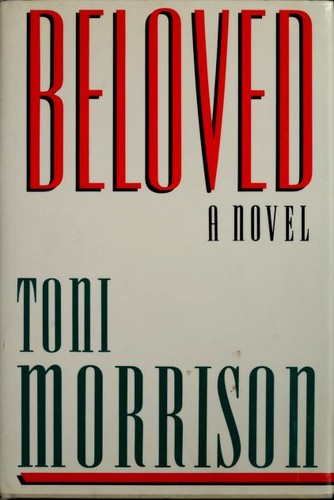
Toni Morrison · 1987 · Buy on Amazon
"Morrison is always interested in history. She was the Random House editor, along with Middleton Harris, of The Black Book when it was published in 1974. It was during the early 1970s, while collecting the contents of the book, that she first found the newspaper clipping from a Baptist newspaper about Margaret Garner, the enslaved woman who escaped from a Kentucky plantation and made it to Ohio—only to have the slavecatchers come to attempt to return her to the plantation as required by the Fugitive Slave law. According to the news story, when Margaret saw the slavecatchers coming for her and her children, she attempted to kill them all, but only succeeded in killing one. Morrison had always thought the story of enslavement was too large to take on, but the story of Margaret Garner engaged her imagination and inspired the novel. She was intrigued with the thought of infanticide as an example of excessive maternal love under the duress of the terror of enslavement . In a sense, she wanted to interrogate what kind of love would drive a mother to engage in such an act, and what the consequences for her emotional life might be. The novel looks at enslavement primarily from a woman’s perspective, in contradistinction to the perspective in familiar slave narratives, written primarily by men, like Frederick Douglass . Some readers know the slave narratives of Linda Brent or Harriet Jacobs, but Morrison wanted to offer a totally different perspective on enslavement and the struggle for freedom. Her goal was to tell the story of slavery, from the perspective of a woman, to capture the epic nature of her love and to historicize the horrific nature of slavery. Morrison attempted to historicize, narrate, and imagine it from the perspective of the interior life that was missing in historical slave narratives. The novel looks at both the reality of what happened to Black bodies and what happened specifically to the Black female body. In a sense, you’re getting the interior life of a grieving mother, along with the interior life of a woman who has been traumatized by slavery. One of the ways she chose to represent the depth of the love and the complexity of the circumstances was to have the child that was killed possibly come back in the form of a ghost. She realized some readers might have difficulty in accepting the notion of a ghost, but she also knew some communities were not at all uncomfortable with having ghosts in their midst. In one sense, the novel asserts the presence of the dead and the reality of how history is always with us. Morrison interrogates the complexities of absence and presence in the novel to illuminate how they are interconnected. Moreover, she is intrigued with how Black women loved under circumstances where their bodies were the site of reproduction and production at the same time."

Toni Morrison · Buy on Amazon
"Morrison is very good at taking a period we think we know—the 50s and the Korean War , for example—and creating an opportunity for us to imagine it differently to reveal truths we had missed altogether. She was aware that the 50s had been romanticized, so she was eager to illustrate how what may have been “happy days” for some people were not happy days for others. In Home , she centers the story around a Korean vet, Frank Money, who returns home and must simultaneously face the haunting atrocities of war and discover that the horrors of racism in America remain as they were before he left. Indeed, one of the people he meets says, “‘don’t let that uniform and all that fool you, you know you’re still here in the South.” When he first returns to America, he gets in trouble and ends up in a psych ward, the site where he is at the beginning of the novel. He then escapes the psych ward, and begins his own Odysseus-like journey from the North back to the South—the place he said he’d never planned to go—only because of a note he receives from a woman who works for the doctor where his sister was employed. Home starts in media res , like Song of Solomon , because Morrison wants the reader to feel disoriented, just as Black people were disoriented when snatched from their homeland and put on slave ships as cargo. For Morrison, the space and time may differ, but the realities of racial oppression and the cultural strategies Black people used to survive, thrive, and flourish despite those realities were the substance of her imagination. Support Five Books Five Books interviews are expensive to produce. If you're enjoying this interview, please support us by donating a small amount . The chapters in Home alternate between first-person italicized chapters where Frank Money describes his own understanding of his narrative and third-person (allegedly) objective renderings of his narrative. By jostling between the narrative and Money’s challenges to the narrative, Morrison challenges the reader to question the nature of their own presuppositions about the racial history of the South. She also challenges the different meanings of “home,” especially when the country Frank considers home is not where he experiences a sense of home. Moreover, at the crux of his return is discovering that his sister has fallen prey to the nefarious practices of a doctor engaged in medical experimentation on Black women’s reproductive organs. Home illustrates how the health sciences have a history of abuses against Black bodies in the name of health and eugenics . America did not have a history of being a space that was “snug and wide open”—to use Morrison’s description of home from her essay by the same title—but the novel illustrates the ways in which Black people made it home despite the forces that mitigated against them. Race operates as a social construct and as a system of oppression that deny one’s humanity in almost every arena of life. In each of her books, Morrison was concerned with how racism shows up to devalue and discredit ways of knowing, ways of being, and ways of understanding oneself and one’s community. In one novel after another, she presents and represents nuanced examples of the cost of racism to this nation. Yet, she was equally adept at showing the ways in which Black people subverted the forms and effects of racism and how they affirmed their humanity despite the pernicious systems of racism that attempted to minimize and marginalize them. Her work contains powerful examples of how language, narrative and culture sustained her characters and gave them a way to affirm their dignity, even when they were flawed. She was equally interested in how racism deprived white people of their humanity as well. Morrison is really interested in how racialized thinking has operated and how it has affected all of us—sometimes in ways we’re not aware—and I think her writing is designed to create spaces where we get to see how these things happen. In her nonfiction, she puts her prose to work in another, even more incisive way than she does in her art."

Toni Morrison · Buy on Amazon
"In The Source of Self-Regard, Morrison returns to ideas she introduced in her Nobel lecture about how language operates and how some of the ways we treat each other in the space we call “home” get replicated in one place after another. The book is a volume of essays, meditations, speeches, college lectures, and even tributes to people like her dear friend, James Baldwin , and others where she takes on huge issues like censorship, immigration, sexism, violence, and the role of memory in historicizing the past. Her essay on the value of the arts, even in the face of great opposition, emerges as her form of protest against those who would attempt to limit what an author can or cannot write and say. And, always, she is engaged in sharing difficult truths about the past and the present that mitigate our ability to move forward as global citizens. It is an eclectic but very weighty compilation that illuminates the breadth of her intellect and the expanse of her creativity as an artist. These writings show the ideas she has repeatedly grappled with, like how we treat the other and the forces that mitigate our ability to see our intersectional interconnectedness. She was always looking at how we read the other and what decisions we make about the other, based on that reading. Yes, I believe Morrison remained interested in the ways our very existence is connected to the modern propensity toward alienation and isolation. Though she was wary of the anxiety of influence and resisted perspectives on her work that only validated her writing against white norms, she was nevertheless very interested in existential forms of isolation and alienation that human choices and consequences created. Like Woolf, Faulkner, and even Baldwin, she was interested in the effects of society on the interior life and consciousness of her characters. Thus, she was interested in both external and internal sources of alienation that affected self-regard. As an artist, teacher, and critic, she was keenly aware that the oppression of the other inevitably resulted in self-degradation as well. Morrison understood better than most that you cannot continually mistreat the other and not diminish your own humanity. At every turn, she countered alienation with the value of belonging and community."