Bunkobons

← All curators

Nigel Warburton's Reading List

Nigel Warburton is a freelance philosopher, writer and host of the podcast Philosophy Bites . Featuring short interviews with the world's best philosophers on bite-size topics, the podcast has been downloaded more than 40 million times. He is also our philosophy editor here at Five Books , where he has been interviewing other philosophers about the best books on a range of philosophy topics since 2013 (you can read all the interviews he's done here: not all are about philosophy). In addition, he's recommended books for us on the best introductions to philosophy , the best critical thinking boo

Open in WellRead Daily app →

Key Philosophical Texts in the Western Canon (2021)

Scraped from fivebooks.com (2021-07-02).

Source: fivebooks.com

Cover of Republic
Plato · -380 · Buy on Amazon
"It’s obviously a foundational book in the history of Western philosophy and of political thinking as well. It’s written as a dialogue, but it doesn’t feel much like a dialogue, at times. In the book Plato , the author, includes Socrates as a character, and we assume—because Socrates was Plato’s teacher—that it gives a reasonably accurate picture of the kind of thing that Socrates said. But, at a certain point, the views are very much Platonic, rather than Socratic. It begins with a discussion about a fundamental question about ethics, basically why anybody should behave well. Anyone who had a magical ring which he or she could put on that made them invisible, surely they would just take advantage of other people? It’s only because of the risk of punishment or because powerful people stop us doing things that we don’t behave immorally most of the time, one of the characters suggests. The overall arch of the book is to suggest No, that there is a reward of acting well, there’s a psychological health which is achieved when the three parts of the soul, or as we would say mind, are in good balance. Now, that doesn’t give you any idea of why it’s called Republic. But, actually, the way that Plato develops the argument is by likening the well-balanced mind to a well-balanced city-state, in which you have philosopher kings or queens at the top, trained in a particular way so as to be unbiased. This is the rational part of the soul. You have workers at the bottom, doing the dirty work, and a kind of drone/ guardian/soldier class in the middle. This is supposed to reflect the well-balanced mind, but actually is a model of the state. And, so, Plato presents in this book a theory about an ideal state, an ideal way of organizing society, where because power corrupts, you have a special kind of incorruptible class at the top, a class of people who can see more deeply into the nature of things and aren’t sidetracked by mere appearances. “I’ve chosen books that I think are incredibly important and not too threatening to read if you haven’t studied philosophy formally” It’s at this point that Plato presents one of the most famous thought experiments in the history of philosophy, the analogy of the cave. The cave is where people are chained facing a wall and they see flickering shadows on the wall. But they don’t realize these are shadows, they take the shadows for reality. In fact, they’re shadows cast by objects being held in front of a fire behind them. And then one of these chained people escapes and goes outside and sees the real world outside and the sun and realizes that everything else is a mere representation at several removes from reality because it’s a shadow of a silhouette—and tells people about the reality that’s out there. This image is supposed to show us how philosophers, by the power of thought, reason about the abstract ‘Forms’ and not just the appearances of things. Most of us are like the people chained facing the wall, taking appearances for reality. But philosophers reason about the perfect versions of things. So, if you think of a circle, any circle that you look at is an imperfect circle. But we have this idea in our minds of a perfect circle, where every bit of the perimeter is precisely equidistant from the center. That ideal doesn’t just exist for circles but for things like tables: there is, for Plato, an ideal table, or an ideal person. Everything has an ideal Form. And, according to Plato—in this metaphysics that he presents—the role of the philosopher is to think about those abstract ideas. The Republic is a mixture of metaphysics, political philosophy, and a kind of psychology about the balance of the different parts of the soul. Many of its ideas have subsequently resonated throughout the history of philosophy. Certainly that’s true of the opening of the book. There are some very challenging ideas in there. Karl Popper famously described Plato as a totalitarian thinker, because his ideal society is heavily censored, for instance. Plato says you shouldn’t have the arts because the arts deal in fictions which are prone to make us have the wrong kinds of emotions and give us a false picture of reality. So turn away the artists at the borders of your state, because they’re going to corrupt society. You also have this fundamental lie at the heart of society where you tell people that the reason they occupy a particular stratum in society is because they have a certain kind of metal in their soul. If you have the right metal, you get to be higher ranking, if you have the wrong metal, you’re lower. These are kind of lies which keep society in place. It’s awful. There’s a famous critique of democracy there as well, where Plato famously likens democracy to a ship being steered by all the passengers, rather than having a skilled pilot at the helm, which is what you need in a storm. There are, then, lots of things about the content of the Republic which are controversial or wrong—including the idea at its heart, the metaphysical approach which suggests that there are these discoverable forms for everything, and that appearances are fundamentally deceptive about the things that matter. Nevertheless, the book is really stimulating for all kinds of reasons, not least because of something I strongly believe – that the best philosophy books are the ones with which you can disagree, and which it is easy to disagree with. They stimulate you to thought. Also, there’s the importance in the history of ideas of these idealized versions. If you think of painting, in the Renaissance there’s a kind of Neoplatonic view about beauty where some artists are trying to represent the Form of beauty, not a particular beautiful person. That’s got a fairly direct link back to Plato’s ideas about the Forms, that we can abstract from some particular beautiful person and get to this perfect circle version of them, as it were."
René Descartes · Buy on Amazon
"We’re jumping from the fifth century BC right forward to the first half of the 17th century. René Descartes is a superb writer who, in his first Meditation (which is the one I’m recommending) takes skepticism—which is an unwillingness to assume anything, a philosophical stance where you question everything—about as far as it can go. Meditations is written as if he is going through a process in real time, he’s imagining himself sitting by a fire taking all the thoughts that he’s had in his past, the different ways of acquiring information, cross-questioning himself about whether he could have been deceived about any of those, and employing what’s come to be known as ‘Cartesian doubt’. It’s not taking as true anything about which there is the slightest possible doubt. In ordinary life, that’s not a way to behave. If I take a step, the floor could always give way beneath me, I can’t guarantee that it won’t. But on Descartes’s view, if there’s the slightest possibility that it might give way, then I shouldn’t take that step—or at least shouldn’t treat my belief that the floor is firm as an example of a foundational belief. That’s a strategy for once in a lifetime, of reflecting on the foundations of knowledge for him. He does this beginning with the sensory inputs that he has. Should he trust his eyesight? Well, coloured things look a different colour under different lights. You make mistakes when you see things in the distance, too. Nearby a straight stick looks bent when half in water. Should he trust his hearing? That can be wrong too. Should you trust any of your senses? Maybe you should trust the sense of touch. But there are illusions with this sense too. But what about the fact that you could be deceived about just about anything in a dream? You could be dreaming. That’s an outside possibility most of the time, but still a possibility. He’s had these false awakenings in real life, he’s imagined he’s woken up when he hasn’t. And he thinks, Well, I can’t be sure I’m not dreaming now. How do I know I’m not dreaming now? Probably, I’m not dreaming now. But I could be dreaming. And he pushes and pushes with this and thinks—he’s a mathematician—‘even in dreams, two plus two equals four’. But what if there’s an evil demon that exists—it probably doesn’t—but what if there were and he is almost as powerful as God, and creates the illusion that two plus two equals four, when it actually equals five? And because it’s so powerful, how do I know that’s not going on now? “For me, when I read it as an 18-year-old, I was stunned” So he’s got this kind of progressive doubt that is actually pre-emptive. He’s not saying that you should doubt all these things. He’s pushing doubt as far as he can, then to perform a U-turn, to get beyond skepticism. He’s descended to the nadir of doubt, as it were, the lowest point he can possibly go and feels that he’s in a whirlpool of doubt. And then he finds this one thing which he thinks is impossible to doubt, which is his own existence. Because even if he doubts that, it proves that there’s a doubter. And you get this famous, “I think, therefore I am”. It’s questionable whether it’s a logical ‘therefore’. But there’s a sense that it’s impossible to doubt your own existence without certifying your own existence by the fact that you’re having a thought. And this leads him to think that he can be more certain of his own existence than he can be even of his own body, because his knowledge of the body comes from sensory information. And that’s always unreliable. But his knowledge of his own existence as a thinking thing is, he feels, the kind of groundwork or base from which he can rebuild the whole edifice of knowledge. That’s basically the first Meditation . Then, in the subsequent fives Meditations (there are six in all), by a few devious moves, he gets back to normality. These devious moves involve proving the existence of God and then a benevolent God who wouldn’t deceive him. So he ends up thinking that whatever he perceives clearly and distinctly is true, and from that point gradually rebuilds more or less everything he had believed before. Historically, the important thing is that pushing of skepticism as far as it can go. He gives us the ‘cogito’ argument and then puts forward a dualism between mind and body, because he’s certain of his own existence, whereas he can still doubt his own body. That’s one stage away from his own final position, which is that the soul is separable from the body, which was an orthodox Catholic belief. That’s an offshoot of his theory. Descartes is famous for this dualism, where he believed that the mind and body interact. They’re not the same thing. And so you have this Cartesian dualism of mind and body interacting, the mind stuff and the body stuff, the soul as it were, and the physical material body, which, in many people’s view, set philosophy off on a wrong path for hundreds of years. It’s what the Oxford philosopher Gilbert Ryle described as the myth of the ‘ghost in the machine’. But it’s an incredibly important book, not just historically, but also because it was very accessibly written and gives you the excitement of thinking things through, and makes a good starting place for studying philosophy. It’s argued, it’s not just asserted, and some of the sceptical arguments are very plausible. And if you have not come across it before, it can pull the rug from underneath your assumptions one by one. For me, when I read it as an 18-year-old, I was stunned, because I thought, ‘Could I be dreaming?’ Most of us haven’t progressively moved through those stages of doubt in that way. He gives a better description of the Cartesian method of doubt in a different work, where he talks about a barrel of apples. If you want a good barrel with no rotten apples, you have to take them out one by one, and examine them and not put any back in again until you’re absolutely sure it’s not rotten. You don’t want to take the risk of putting a rotten one in. That’s what he thinks he’s doing. He doesn’t want to put any rotten belief back into the barrel. And he’ll probably sling some good ones out as a result. But he wants to be absolutely certain about some things, he doesn’t want to just take a chance. Life is lived for us as a matter of probabilities most of the time. We don’t worry about really long odds of things possibly being misleading. But, for Descartes, this was about trying to understand the absolute basis of our human knowledge and its limitations and whether nothing could be certain, whether even the idea that nothing is certain might be uncertain. That’s the extreme Pyrrhonian skepticism after Pyrrho, the Greek philosopher, and Descartes doesn’t end up there. But he starts off by using the same kinds of arguments. It seems to me that it’s a plausible exercise, you’re trying to understand how we acquire knowledge and beliefs, and how reliable those methods are. He pushes those things to the limit, you’re testing these things to destruction. These are thought experiments, he’s not prescribing this as a way of life. It’s a once in a lifetime device. He uses the ontological argument, which is basically the idea that, by definition, God must exist. It’s like the three angles of triangles having to add up to 180 degrees by definition. From the definition of God, it must follow that there is a God because God is that entity than which nothing greater can be conceived. And there must be such an entity. To many people, that seems like a sophistical argument and totally implausible. He also uses a version of the argument from design, which is usually known as the trademark argument: if you introspect, you’ll find you have an idea of God. Everybody’s got an idea of God. Well, it must have come from somewhere, God left that stamp in your mind to find there. Where did that idea of God come from? It’s this little hint from the maker. I’m not convinced, but some people are."
David Hume · Buy on Amazon
"David Hume was a really remarkable thinker and writer of the 18th century. He was an atheist, or at least a very skeptical agnostic in a religious age, which made it difficult for him to find a job as a philosopher. He was an independent writer for most of his life, and a very successful one. As a young man, in his early 20s, he published a brilliant book known as A Treatise of Human Nature , but it was quite densely written and he famously described it as falling “dead-born from the press”. It wasn’t taken up, it wasn’t discussed. He actually wrote a review of it himself, to summarize it, hoping that would help. So, amazingly—something that you wouldn’t catch many people doing today—he rewrote the book in a more popular way, expanding it in some ways, omitting other bits, because he felt that part of the problem was the style of his communication. He’s a brilliant writer, very witty, sometimes ironic, so he rewrote the Treatise as the Enquiry Concerning Human Understanding . This was picked up and became very popular as a book. He also wrote many essays specifically for a popular audience and also a long history of England that was also very popular. “Like John Locke, he thinks that the mind is a blank slate, filled by experience” In the Enquiry he puts forward his particular empirical account of the mind. There’s a whole section on morality and so on, but the key bit for me is where he’s talking about how, following on from John Locke and the tradition of seeing the mind as a blank slate, we get ideas from what he calls ‘sense impressions’. If you think of an impression as like a footprint left in the sand, the senses get impressed, somewhat passively, by information that comes in from outside. And the impression that’s left in the mind, when we think about it away from what we’re seeing, is called an idea. The whole opening part of the book is about where we get our ideas from, and is it possible to have an idea without a corresponding impression? Can you think about things that you’ve never actually experienced? And he suggests not. You can combine ideas, but everything that is within the mind has come from some prior impression. That’s extremely controversial, because people think of genetics, of patterns of thought that must be there in the mind. Kant reacted very strongly to this, he described Hume as ‘waking him from his dogmatic slumbers.’ And Kant’s Critique of Pure Reason is an attempt to show that certain sorts of patterns must be imposed on all our thought, in order for us to have any thought at all. But Hume’s empiricism is very interesting and very, very important. He’s called an empiricist because, like John Locke, he thinks that the mind is a blank slate, filled by experience. Empirical knowledge is a knowledge acquired through the senses as opposed to by some kind of a priori reasoning. I know that apples are red and crisp because I’ve seen red apples and bitten into some of them. These are empirical observations that I’ve made from which I generalize. Many people think that two plus two equals four is not an empirical observation, it’s not because I’ve added two apples and two oranges and got four fruit over and over again that this is true—it’s because of some kind of abstract relationship between symbols that I can recognize as holding. Hume would agree and see this as a relation between ideas. Somebody might say we need to get the empirical evidence for those symbols – John Stuart Mill, a later empiricist philosopher, bit the bullet and claimed that mathematics too was indeed based on empirical generalisations. Also within this book—which is three books joined together—there are some controversial and fascinating essays on religion, most notably one on what we call the ‘argument from design’. This is the argument that there is an analogy between natural objects, like the human eye, or the human heart, and designed objects, like the workings of a clock or a carriage or a building. If you look at the human eye, how could it not have been designed? Surely something incredibly powerful and benevolent must have created it? Hume takes that apart as an argument from analogy and looks at its weaknesses. He did this more thoroughly in a brilliant posthumous book Dialogues Concerning Natural Religion , but his main criticisms of the argument from design are all contained within a chapter of his Enquiry . He suggests that even if you acknowledge there is a strong analogy between natural objects and designed ones, it doesn’t follow that there is one personal God that designed them, or who carries on existing and interacting with the world. They could just as easily have been made by a bunch of lesser gods working as a team or a God that subsequently died. He toys with all kinds of ideas, not because he believes they’re true, necessarily, but because he says that from the evidence, they’re equally probable. He even entertains an idea that is quite close to evolution as a possibility. It’s a very clever unraveling of a certain style of argument by analogy. “He doesn’t get obsessed with his skepticism” There’s also a brilliant essay on miracles, and whether you ought to believe the testimony of somebody who claims to have witnessed one. It turns on the idea that a miracle is a transgression of a law of nature. You’ve got huge amounts of evidence that if somebody says that somebody rose from the dead and walked about that the witness was mistaken, that there’s been misreporting. He gives some psychological accounts of why that might be so. His line is, ‘always believe the lesser miracle’. It’s a lesser miracle that someone was confused or conned than that somebody did actually arise from the dead. His conclusion is you shouldn’t believe eyewitness testimony that a statue has wept blood, or whatever the miracle might be. This was very controversial in his time and has been much discussed ever since. Those are just examples of the sort of ideas he has. Hume has a wonderful personality that comes through his writing. It’s a playful personality. You have to work to get through some passages. The books is quite difficult in parts because of the 18th century prose, but it’s worth persevering with. It’s also very easy to find commentaries on Hume to help you through that, including an amazing website originally made by Jonathan Bennett called Early Modern Philosophy , which includes complete paraphrases of huge number of philosophical works in contemporary language, including Hume’s. It’s different for different people. What you can’t miss is just how intelligent he is and creative in the way he presents counterarguments and examples. He loves creating imaginary situations which allow you to understand what’s at stake and why a particular argument has gone too far in its conclusion. He’s got a very fertile mind. And he’s quite genial. There are jokes in it, which is quite unusual for philosophy. He’s somebody who’s very skeptical, but what’s attractive about him is he’s not saying, ‘you can’t really believe anything.’ Crudely, what he believes is that there’s a point where you can’t push reasoning any further and we fall back on our human nature. Rather than worry too much about it, he goes off for a walk or plays backgammon. He doesn’t get obsessed with his skepticism. He’s a mitigated skeptic, as he puts it, rather than someone who says, ‘I can’t be sure I can take a step forward because I might fall into the abyss.’ He pushes arguments as far as they’ll go, but when he can’t resolve something, he’s not tearing his hair out. In answer to your question, a very attractive person comes through. His contemporaries mostly liked him, except those who hated him for his anti-religion, as they saw it. People don’t read him because they believe empiricism is true because very few are going to be taken in by his system. They read him because he’s a fascinating, intelligent thinker, trying to get to grips with things and has some brilliant arguments within that, some of which do hold still, particularly in the area of religion. This is the famous argument about the problem of induction. How do we know the future will be like the past? Just because the sun has come up every morning so far doesn’t mean it’ll come up tomorrow. Arguing from patterns of past events aren’t like deduction: we can’t be sure those patterns will hold in the future. Arguments from induction involve accumulating a large number of cases in support of continuity. Deduction, on the other hand, is where you say something like, ‘All men are mortal, Socrates is a man. Therefore, Socrates is mortal.’ If the premises are true, the conclusion must be true. It’s 100% true if the premises are 100%, true. A deductive argument is a truth-preserving machine. Induction is more problematic. How can we rely on induction—as we do. This is what science relies on, this is what we do in our daily lives. We assume patterns of similarity carrying on in the way that we’ve discerned in the past? How can we rely on such an unreliable way of reasoning? Bertrand Russell’s example is about a turkey who wakes up every day until Christmas Eve, when it then gets its neck wrung. The turkey had this justified belief, using inductive arguments, that the future would be like the past, but it absolutely wasn’t. That fateful day it wasn’t fed by the farmer, instead it was taken out and killed. How do we know we’re not in that same position in relation to the sun rising and any number of inductive conclusions that we draw? I step out of my office, I expect to be in my garden, but how do I know I’m not going to be in London? Just because I haven’t been in the past it doesn’t follow that I won’t be in the future. Hume tries to look at that, he looks at questions about cause and effect as well, and dissects them. What is it for one thing to cause another? Is it some kind of mysterious power that’s transferred from one thing to another? Or is it just finding the two things together in a certain sort of pattern? He analyzes that very systematically too. These are very deep, philosophical questions that he brought into sharp focus in the Enquiry , but originally in the Treatise . As I said, in almost everything like this, where he gets to a paradoxical situation, he says we have to rely on our own human nature in the end, the patterns of understanding the world we’re born with. This is where he’s a skeptic, philosophically. You push the skeptical arguments as far as they’ll go, and you can’t guarantee that the sun will rise tomorrow by inductive reasoning. You cannot find a warrant of induction that will be entirely reliable. Many people have tried since. It’s disconcerting, but you fall back on human nature at a certain point: we just do stuff. That’s more or less what Hume says—that or go and play backgammon. Most of us take for granted that we can rely on induction. We take for granted we know what we’re talking about when we talk about causes of things. If a billiard ball hits another and the second one moves, we say the first one caused the second one to move. But what do we mean by that? Just that whenever the first one hits the second one, it will move? It’s kind of mysterious, what we mean by it. And Hume teases that apart and looks at it analytically. That is a fundamental question in science, identifying cause and effect and what we mean by causation. Hume is incredibly important at opening up significant questions and putting forward arguments and thought experiments to demonstrate what he meant that have been the hugely discussed since. Just as an aside, if anybody does catch the Hume bug, his life is absolutely fascinating. There’s a great biography of him written in the 1950s by Ernest Mossner , which I think is better than any subsequent biography of Hume, though others have come out since. He was a fascinating man, so I’d recommend that strongly. There’s also a fascination section in Michael Ignatieff ‘s book The Needs of Strangers where he describes James Boswell visiting Hume while he’s dying, and the conversations they had and the significance of Hume’s death as an atheist in a religious age. Boswell, as a Christian, doesn’t believe Hume is really going to his death without fearing it, but Hume seems quite happy with the sorts of arguments that Epicurus and Lucretius used about why you shouldn’t fear dying, even though they didn’t believe in any kind of afterlife, or any separable soul. Hume didn’t seem to either. It’s a lovely summary of a real deathbed scene with the characters of Boswell and Hume in stark contrast."
Cover of On Liberty
John Stuart Mill · Buy on Amazon
"On Liberty was published in 1859, the same year as the Origin of Species but wasn’t entirely eclipsed by it. It’s a slim book. There was actually a version of it published in Mill’s lifetime that could fit into a worker’s pocket. It’s a book written for a general audience, though today the language can seem convoluted because Mill wrote in very long sentences with quite complicated syntax at times. What this book does is hammer home one truth. Mill described it as a “philosophic textbook of a single truth”. According to him it was hugely influenced by his discussions with his wife, Harriet Taylor, though she didn’t physically write it, and it’s his name on the cover. As the title suggests, it’s focused on liberty, on freedom. It puts forward what’s come to be known as ‘the harm principle’ which is that the only justification for the state or other people interfering with the lives of adults is if they risk harming others with their actions. (Adults doesn’t include children or people who’ve got psychiatric problems, or peoples in their ‘nonage’, as he rather worryingly puts it in the book—that is a kind of imperialist denigration of some more ‘primitive’ people as opposed to the Western, ‘civilized’ human beings he’s writing for). Then the whole book is an of unfolding of that principle in different areas. “The people with whom you disagree do you a huge favor by making you clarify what you think” Put it another way, John Stuart Mill is very vigorously against paternalism (or maternalism), of acting as a parent would to a child, of protecting someone for their own sake—whether that’s by creating rules, or by what he called the ‘tyranny of the majority’, the great forces of social power that shape people’s lives through pressures to conform. He felt that individuals should be allowed to decide for themselves and make their own mistakes. You could argue with people, you could criticize them for what they’ve done, but you should never coerce people who are adults, because that invades their autonomy in significant ways, and will be bad for society in the long run. Mill was famous for his utilitarianism , the idea that you should aim to maximize happiness for the greatest number of people. His was a more sophisticated version of Jeremy Bentham’s utilitarianism. Bentham, one of his mentors, cashed out everything in terms of pain and pleasure. For John Stuart Mill, in contrast, there were higher and lower pleasures, and these were not commensurable, there’s no common currency in which you could measure them both. He thought of human beings as progressive in the sense that we could become more fulfilled in all kinds of ways. And he wanted a society which gave us space to grow and to do that. He felt—and this is part of his empiricism and he’s very much in the empiricist tradition—that we learn by our mistakes. You cannot know, in advance, how things are going to turn out, you need to experiment. And we are all what he called ‘experiments of living.’ Now, each of us probably knows better than other people what will make us happy. But even if we get it wrong, it’s better that we’re allowed to make our own mistakes, and experiment for ourselves, than have somebody else’s view of what we should be forced upon us. He was actually an MP for a while at Westminster, a member of the Liberal Party. Libertarian philosophy can find a lot in John Stuart Mill. It’s written very much from an individualistic point of view, with the claim that by allowing individuals to flourish, we will produce a better society. So, for instance, one of his arguments is that what makes societies progress, often—and this is controversial—is geniuses. We need geniuses to push the boundaries, to make us think differently, to invent new things, to find radical new ways of doing things. According to Mill, just about every genius is perceived as weird and an outsider figure because they don’t conform with the expectations of other people. The conditions which allow geniuses to flourish is to give them space to do what they want to do, by not making them conform with other people, or coercing them to be like other people. So that if you want to have geniuses, you need to give such people personal space to do stuff that other people might disapprove of. As long as they don’t harm other people in the process, they should be free to do that, even if it offends other people that they’re doing and thinking these things. So that’s one way in which society is improved according to Mill. The other general way is that he believes individuals relish making their own mistakes. Choosing for themselves is almost an existential position. He also defends extensive freedom of speech. Chapter two of On Liberty is the most important defence of a liberal position on freedom of expression, where he argues that people should be free to express themselves up to the point where they incite violence. That point shouldn’t be measured by the words that they utter, but by the context in which they utter them, and the likelihood of its giving rise to violence. So, for instance, he says it’s fine to write ‘corn dealers are starvers of the poor’ in a newspaper editorial, but if you put that on a plaque and wave it in front of an angry mob outside a corn dealer’s house, that constitutes incitement to violence. And that is the point at which you can curb an individual’s freedom of expression. Support Five Books Five Books interviews are expensive to produce. If you're enjoying this interview, please support us by donating a small amount . So he makes a distinction—still very important, I feel—between offending people, which he thinks is an almost inevitable consequence of saying things in public, and actually harming people. This has been controversial too, of course. He didn’t have a rich concept of psychological violence, what could be done to someone with words alone through a certain kind of hate speech. That’s something which you might want to modify. But, generally, the idea that society benefits from a free market of ideas is one which a lot of people still respect and believe. He puts it in terms of the value of conversation, of public discussion of key ideas. The people with whom you disagree do you a huge favor by making you clarify what you think and encourage you to hold your beliefs in a non-dogmatic way. He’s very much into the idea that until you’ve had your ideas tested by somebody who believes they’re false, you just hold them as a mere dogmatic belief, not a living belief that has survived criticism. In a sense, that chapter is a summary of what many of us think is central to philosophy in general, the idea that you test ideas to destruction, and one of the best ways of doing that is by having conversations with people with whom you disagree. So in fact, the single voice that stands in opposition to the mob, as it were, is the one that he values most highly, because it’s the one that makes people think. It’s easy to conform and even if the person is wrong, there might be a little bit of truth in what they say that wouldn’t otherwise come out, so you don’t want to silence them in advance and stop them saying things. He’s much closer, I would say, to the way free expression is treated in American law than in British law, because we do have restrictions on the things that people can say in the UK. There are good arguments for having laws against anti-racist, anti-homophobic and anti-transphobic speech, perhaps, but he was much more laissez-faire in this respect than many European countries’ laws are. I think it highly unlikely that he would approve of censorship of Holocaust denial, for instance, even though he’d think it would be outrageous that people are denying its existence. The point is that when people do that, it’s an opportunity to refute them, and to show point by point where historically they’ve gone wrong. They shouldn’t be silenced in advance. It didn’t come out of the blue. There are lots of precedents in Milton, for instance. Many of his arguments were prefigured in a little book that Milton wrote called Areopagitica , which was a tract in reaction to pre-censorship of books, banning books before they’re published, killing books, as Milton put it. Mill came out of quite an anti-religious group of free thinkers. If you look at them, many of the arguments about freedom of expression are reactions to certain sorts of censorship and arguments to conform that came from religious sources. He’s part of a group of intellectuals who felt that freedom was incredibly important and was essential to what a human being is. Within the utilitarian tradition, there was a strong thread of allowing people to flourish in whatever way they wanted to when they weren’t harming other people, because that would add to the general happiness in the world. Interestingly, for instance, I mentioned his mentor, that eccentric figure, Jeremy Bentham. Although it wasn’t published in his lifetime in the 18th century, Bentham wrote about the irrationality of prosecuting practising homosexuals, because that would likely diminished the amount of pleasure in the world, and they weren’t harming other people by their consensual actions. That was very radical when homosexuals were still being hanged. He certainly would have been prosecuted if he’d published it in his lifetime. So Mill didn’t come out of nowhere. No one comes out of nowhere."
Ludwig Wittgenstein · Buy on Amazon
"This book was published posthumously, from the notes that were left to Elizabeth Anscombe, his friend. He’d been putting this book together for ages and at his death it hadn’t quite come together. She eventually edited, published and translated it. He wrote it originally in German, though Wittgenstein did speak English. He was from Vienna, a great Austrian intellectual from a hugely wealthy industrial and highly musical family. It was an unusual family. His brother was a concert pianist who lost his arm in the First World War and carried on his career very successfully, commissioning concertos for one hand from Ravel and other people. His other three brothers committed suicide. Wittgenstein came to Cambridge just before the First World War after initially starting off as an aeronautical engineer studying in Manchester. He switched to philosophy and became interested in mathematics and the foundations of logic. He persuaded Bertrand Russell to take him on as a student and then, having had these very intense discussions with Russell and other Cambridge philosophers, he fought on the other side in the First World War, and wrote his first book, the Tractatus Logico-Philosophicus , while in a prisoner of war camp. He thought he’d solved all the problems in philosophy and then went off and worked as a gardener and subsequently as a schoolteacher for a while. Then, eventually, he realized that maybe he hadn’t solved all the problems in philosophy and came back and became a professor of philosophy in Cambridge. He was extremely eccentric and lived in a room with no books and just some deck chairs and an army bed. It was very plain, very bare. He didn’t give normal lectures; he would just wait for somebody to come up with a problem or an issue and then he would discuss it. Then, halfway through the discussion, he would tear his hair out and say, ‘No, no, I’m a fool. I’ve said that wrong’ and start off again in another direction. Gradually his ideas coalesced, and his students wrote them down in notebooks and these got circulated. He had very radical ideas about the nature of the mind and its relation to language and how we think and what philosophy is. These ideas then reach their most popular version in the Philosophical Investigations , this posthumously published book. It’s a series of fragments, really, a series of numbered propositions, not completely coherent, jumping from topic to topic, almost aphoristic some of them. Ideas that come out of it include an attack on what’s come to be known as the Cartesian picture of our relationship to reality, that we have an inner picture of what the world is like and that we describe it to ourselves in a private language. Wittgenstein was in a more behaviorist tradition in the philosophy of mind, arguing that language is a public medium, that we don’t have private meanings in our heads, that we learn things and communicate in certain sorts of ways that are shaped by our ‘forms of life’—the complex social webs in which we live. Our minds are much more legible than philosophers had previously thought. We have to recognize that we’re in a community of social beings communicating with each other and there aren’t these private meanings in our heads. Another idea that is very important in the Philosophical Investigations is the idea that philosophy arises, as he puts it, ‘when language goes on holiday’. That’s a typical Wittgensteinian phrase, and what he means by it is that most traditional philosophical problems arise because people are using words that have a perfectly reasonable use in one context but they’re using those words in another context, and then wondering why they get into paradoxes. And so, by analyzing language and how we use it, we might be able to dissolve a lot of philosophical problems. He thought that by his method of revealing to people where their confusions lay he would, as he put it, let the fly out of the fly bottle. A fly bottle is a device for trapping flies with a small neck. And these flies are buzzing around in there. And what the philosopher does, if he’s a good philosopher like Wittgenstein, is let the fly out, and then there’s no more buzzing. It’s a kind of philosophy as therapy. Once you’ve done it, you needn’t do it again. He spent some of his life telling people who were studying philosophy to go off and work in factories rather than have careers as philosophers because he thought a lot of philosophy was simply a waste of time. Once you’ve solved these problems, you can just get on with something else. He was a very charismatic figure. The thing about the Philosophical Investigations is that it’s very rich as a stimulus to other people’s thought, there are a huge number of interpretations of exactly what he meant.It’s not some kind of wild poetry as some people take it to be. There are patterns within what he’s saying. “He thought he’d solved all the problems in philosophy” Another important idea of his is about how we suddenly see things differently. He’s got the example of the duck-rabbit, the famous illusion, where you have this line drawing that you can see either as a duck or as a rabbit. But you can’t see both at once. And he talks about ‘the dawning of an aspect’, of aspect seeing. The retinal image doesn’t change when you see a duck and then you see a rabbit: it’s exactly the same pattern reflected within your eyes, but it’s a kind of gestalt shift where you suddenly see it as one or the other. This is how human beings engage with the world when we see things under descriptions. We can flip between different ways of seeing things without the things themselves changing. He then applies that in various ways. Another important thought of his is about how philosophers generalize. They’re looking for abstract generalizations about the world, they’re not just talking about one rock, they’re talking about matter; they’re not talking about one person’s thoughts, they’re talking about mind, or consciousness. Wittgenstein has an anti- essentialist thread running through the Philosophical Investigations . Take his example of a game. What is a game? Do all games have something in common? Don’t just assume they do, he says, look and see. Then he runs through all the different sorts of games—throwing a ball against the wall, playing cricket, athletics. All kinds of things are called games. We tend to assume as Socrates did (according to Plato), that if they’re all called ‘game’, there must be some essence of the thing that makes them games. Maybe they have a winner and loser. Well, what about solitaire? Maybe they’re all activities, but you can play chess in your head (that’s probably not a very good example for him, because he wouldn’t say ‘in your head’). But his thought is that there are these things which he calls ‘family resemblance’ terms. ‘Game’ is a family resemblance term. You can see the resemblance between people in a genetically related family, but they might not all share one common feature. They don’t all have the same-colored eyes, they don’t have same shape cheeks, but there is a pattern of overlapping similarities between them. Analogously, games don’t all share some key feature. He thought that we assume with language, when we use one word in different contexts, there is some essence that carries across all those different things. But he says there’s a cluster of different things there, patterns of overlapping resemblance. Using another metaphor, if you have a piece of rope, lots of fibers are overlapping, but there is probably no single strand that runs the whole length of the rope, there is no essence of the thing that makes it what it is. And, once we recognize that, a lot of problems in philosophy will dissolve. When you start looking for the one thing that all freedom has in common, or one thing that all consciousness has in common, that kind of essentialism, it can be a flawed assumption in your reasoning. Get the weekly Five Books newsletter There are many different aspects of Wittgenstein, a huge number of things that are brought up by this very original thinker. He’s somebody who deliberately tries to provoke you to thought, rather than doing the thinking for you. There are big gaps between what he says which you’re supposed to fill in by your own reasoning and either move along with him or disagree with him. It’s a really interesting, important book in the history of philosophy. It can be irritating too, because it’s far from obvious some of the time what he is getting at. And sometimes his style of writing can be a little too indirect. I think, though, that he would have been glad to know that people are still discussing it and arguing about what he meant nearly seventy years after it was published. He’s had a massive influence on 20th century philosophy, that’s why. I’m not entirely a fan of his. I certainly wouldn’t be a fan of his personality; he would be a horrible person to have to deal with, often a jerk—more worried about his own honesty to himself than hurting others around him. But he’s an incredibly important thinker because he’s introducing new ways of seeing the subject. Whether you agree with him or not, he’s had a huge influence. I don’t think anybody understands all of it, in the sense of being able to say definitively what he meant by everything in it. There are numerous commentaries, and their authors disagree with each other about key points. But I think people can get something out of a lot of it. I think the way to do it is to read bits of it, be confused by it. Take on what you can, and then possibly go to some commentaries—of which there are many—and read it again and think about it again and see whether it makes sense to you. The section on what a game is might be a good place to start. I don’t think the ideas are impossibly difficult to grasp. It’s a lot easier than the theory of relativity , the things he’s dealing with, though he does it in an indirect way, often, by getting you to think about scenarios rather than telling you straight out what he thinks and it is not always obvious whether he is endorsing a view or merely entertaining it in order to refute it. That’s the last line of his earlier book, the Tractatus . That was about the limits of what can meaningfully be said. He was kind of mystic in that book: religion, ethics, everything important about humanity, you might say, is beyond the pale and you can’t talk meaningfully about it. There’s an early and a late Wittgenstein. The Tractatus is the early, extremely difficult book, but with some lucid aphorisms within it. The Philosophical Investigations is more approachable, more psychological in places. It also has its difficulties, but you can get more out of dipping into it."

The Best Philosophy Books of 2016 (2016)

Scraped from fivebooks.com (2016-11-28).

Source: fivebooks.com

Sarah Bakewell · Buy on Amazon
"This is the best philosophy book that I’ve read this year. It is exceptional. Sarah Bakewell wrote a brilliant book about Montaigne , several years ago, which won a number of prizes. I think, in some ways, this book is even better. She explains the philosophy and situates it in the time, but she does this with a very light touch. What she’s managed to do is combine the story of predominantly French existentialism (focusing on Sartre and de Beauvoir as well as Merleau-Ponty) with digressions about Heidegger and others. She’s combined that with some autobiographical elements and a real passion for the subject. “Existentialism puts individual freedom and choice at the heart of what it is to be human.” She is a very skilful writer, and draws you in through anecdote and small glimpses of the lives of these philosophers, blending it all together in a way that makes it seem very easy. But I know, as a writer, just how difficult that is to pull off, and only a truly exceptional writer could combine that many biographies, that many different, sometimes quite complex, philosophical positions, and still tell a plausible and engaging story. She’s done that, which is quite remarkable. In doing this she is resurrecting Sartre and the existentialism of the 1940s, which, in some ways, is considered passé, particularly in France. The result is empowering for people to read. So I think this is a superb book. Everyone should read it. There’s a particular kind of novelistic touch that she has when she observes things. The start of the book is the famous story about Sartre being inspired by the idea that he could philosophise about an apricot cocktail. This was part of the phenomenological movement—as he understood it—coming from Husserl: the idea that part of what it is to do philosophy is to describe accurately your perceptions and experiences, and that will somehow reveal the essence of things. Accurate description is as at the heart of philosophy and you can set aside any question of what exists and big metaphysical questions like that. That idea also inspired some of Sartre’s most brilliant passages in his book, Being and Nothingness . Sarah Bakewell has picked that up quietly and is herself very adept at this sort of description. That was a really interesting interview to do. I hadn’t read the book at that point, because she was still writing it, and in a sense, that’s some of the working of the book revealed there. But the book is much more complex than that interview as it weaves together the various elements. “Accurate description is as at the heart of philosophy and you can set aside any question of what exists and big metaphysical questions like that. ” In the book, she deals seriously with the dark story of Heidegger’s Nazism, and particularly what’s emerged in his Black Notebooks , which reveal him as even more anti-Semitic and anti-humanistic than we’d imagined. Sarah Bakewell manages to acknowledge that with appropriate disgust, and yet recognise the good qualities that some of Heidegger’s philosophy has, something I find hard to do myself. Sarah started a PhD on Heidegger, so she does know a lot about him, but she wears her scholarship very lightly. I know, because I’ve spoken to her about a number of the figures in this book, that what’s in the book is the surface. The research beneath it goes very, very deep, and she is completely on top of her subject. Existentialism puts individual freedom and choice at the heart of what it is to be human. You have to acknowledge your responsibility and recognise that a lot of us are in what Sartre called “bad faith” most of the time — pretending we’re less free than we actually are. So we assume that we have to take on particular social roles, or behave in certain ways, because we’re expected to. So we think of ourselves as in chains. But Sartre says that that is still a choice. “The book exemplifies the power of philosophy to influence people to live in a certain way” This is an interesting position today — partly because it’s very much under threat from neuroscience. The dominant view in neuroscience is that we are far less free than we think we are, at least when it comes to conscious decision-making: the opposite of Sartre’s message. He argued that we are more free than we think we are. Speaking personally—as Sarah does in her book—it’s a philosophy that has influenced how I live and shaped some of the decisions I’ve made in my life. I was very inspired by reading Sartre’s Existentialism and Humanism when I was 18. Sarah talks about how existentialist writing inspired her, much as she talked about how finding the book of Montaigne’s Essays inspired her when she wrote that book. There’s a sense in which the book exemplifies the power of philosophy to influence people to live in a certain way because she tells you about her life through it. She does it in such a sympathetic way that it is hard not to be drawn in and feel that, yes, philosophy—analytic philosophy as practised in most British, American and Australian universities—is slightly dry and misses the point quite often; whereas existentialism may have been flamboyant and quite technical in its worse forms, but it did ask the big questions. It did focus on the real issues about how we should live, and made individual experience very relevant, and encourage precise reflection on our own conscious experience and what it means, where we sit in the world, and where we are in relation to other people and to our own deaths. Get the weekly Five Books newsletter So existentialism can’t be faulted for the themes it chooses. It goes to the heart of the human condition, and doesn’t get caught up in games with language or sidetracked by nitpicking. In its worst forms, it can be very technical and austere, and some of its exponents go on a bit; but at its best, it is a sincere attempt to make sense of the world we find ourselves in. I’m very drawn to the atheistic strand of existentialism. It starts from the position that there is no God, and asks what we are to do. How can we make sense of what we find around us? Nothing is closed off by Divine Law, and we see evil all around us. How should we think about that? How should we act? Another aspect of existentialism that Sarah brings out is its commitment to action. It is not a philosophy of simple reflection and description. Most existentialist philosophers were active in the world politically and ethically in various ways and through the way they lived their lives. They tried to live their philosophy, much as the ancient Greek philosophers were trying to live their philosophy."
Peter Singer · Buy on Amazon
"My selection of books is quite idiosyncratic. It’s the five best books that I’ve read in philosophy this year — but I’ve excluded more technical, academic monographs because I think it’s appropriate that we should focus on books that a general reader would find interesting. For me, Peter Singer is one of the best stylists alive in philosophy. Very few people realise this. People rarely remark on his writing style, but he is the most lucid of writers. He writes about complex matters very succinctly, very calmly, so that his writing is almost transparent to what he is saying. It is not flamboyant. It is almost invisible. He manages, in these essays, to address really deep questions in just two or three pages — often saying more than other people say in a whole book. “There’s an evangelical aspect to his philosophy, and he has many followers. ” He is controversial, of course. He’s a utilitarian thinker: he consistently emphasises that you should measure things by their consequences. He wants to make an impact on the world and has, for example, certain presuppositions about the importance of non-human, animal experience relative to human beings — assumptions that other people may not share. But whether or not you agree with him, it is very difficult to misunderstand him. His writing is so clear, and his arguments are so well expressed, that you can engage with him. For me, he is the ideal kind of philosopher to read because he’s provocative. He’s got strongly held views, which he argues for, and you know what he is arguing for. And if you agree with him, great — you’ve learned something and had it reinforced. But if you disagree, even better, because his writing forces you to think. He’s been doing that in the area of effective altruism particularly: this movement which is aiming to use charitable donations in the most efficient manner possible — identifying pound-for-pound where you can get the most effect for money spent. A number of these essays pick up on that. “Australia has produced a large number of excellent philosophers per capita. ” I don’t completely agree with that approach. But he is very stimulating. He’s thought about just about every counterargument. You need to see what he says and really think it through if you want to hold the opposite position. It is very difficult to rank philosophers against each other. It is not like we’re talking about sprinting, where you can measure who won the 100m in the Olympics or the World Championships, see their fastest time, and then say, ‘OK, Peter Singer’s the best.’ But, for me, he is certainly one of the most interesting living philosophers. Partly because he is so consistent. He is prepared to state his views, argue for them and follow through on their consequences. He is prepared to bite the bullet. When challenged, ‘Doesn’t your view lead to the consequence that under some very exceptional circumstances, some kinds of torture could be justified?’—many people would say you can’t go there. But he’ll say that it does follow. It must be so rare that such circumstances exist, but if they did and you knew they existed, then it would follow. There are lots of different forms of utilitarianism. The basic principle is that it focuses on the consequences of actions and not the intentions (though the intentions might have consequences as well — in terms of how other people perceive what you do if you express them, for instance). This is a case of somebody who, without an explicit intention to bring about people’s deaths, through their actions has done so. Utilitarianism, traditionally, looks for a currency that can measure different actions through the probable consequences and plays off those different consequences. Weighing the consequences against each other is the basic benefit of utilitarianism. Support Five Books Five Books interviews are expensive to produce. If you're enjoying this interview, please support us by donating a small amount . You can work out the best course of action because it is the one with the best consequences, or most likely to have the best consequences. So, if you take that really seriously, if you had to choose a world without apartheid, or a world without this statement from Mbeki, the world without Mbeki would be better (in terms of lives lost), even if it had apartheid. There might be other negative consequences of apartheid, there certainly were, but just on that factor, a consequentialist approach would lead to that conclusion. Obviously in some situations, the consequences are incredibly important. But the obsession with consequences can seem inhumane in many situations. It’s a kind of straightforward cost-benefit analysis, and when applied to people close to you, it seems incredibly cruel and lacking in compassion. Utilitarians find a value in compassion, but they celebrate a clinical assessment of outcomes above all. I think, in a sense, that is both the strength and weakness of the approach. The strength is that if you’re dispensing scarce resources, you probably want a clinical, distant viewpoint where people work out the best use of those scarce resources. But if you are talking about what you need for those nearest and dearest to you and somebody tells you, ‘the system doesn’t allow that,’ that seems incredibly inhumane, cruel even. It doesn’t seem to recognise the power of close individual ties. “Whether or not you agree with him, it is very difficult to misunderstand him.” I’m not sympathetic to all of Peter Singer’s conclusions, but I always admire his willingness to engage in debate with people who disagree with him. Some people have actually banned him from speaking. Not unreasonably, some disability rights movements have felt that some of the conclusions that he has drawn—about the termination of pregnancies for children known to have severe disabilities—are an attack on disability and protested very strongly. There are people who want to close him down. But he is always willing to argue. He doesn’t try and shut down the other side, he wants to have the debate. You asked me if he is the greatest living philosopher. He is certainly an exemplar of what I take the best kind of philosopher to be, which is somebody who puts forward positions and is prepared to argue for them, and to do that in a public way that allows for other people to disagree and the debate and the conversation to continue. It’s definitely true that he wants to live by the principles that he endorses. He also wants other people to do so. There’s an evangelical aspect to his philosophy, and he has many followers. Many thousands of people have been converted to vegetarianism and veganism by his arguments. Many people have also been convinced by his arguments about effective uses of charitable donations. They have led people to give up promising academic careers and go and work in the City in order to generate more income, which they can then distribute charitably. He’s triggered some extremely rich people to make very significant donations to medical research and to medical-based charities. He’s had a big effect on the world. I would be hard-pressed to think of another philosopher who’s made a comparable impact for good in the world. This is debatable, of course, because some economists say that some of the charitable donations are counterproductive. But he’s certainly generated the income, and some of his actions have undoubtedly produced very good outcomes. His critics would say that some of his pronouncements about ethics have also had terrible effects, changing people’s views about infanticide and abortion, particularly. Very few philosophers today, in Britain and America, are at risk for their philosophy. I should say Britain, America and Australia. Peter Singer is an Australian, and Australia has produced a large number of excellent philosophers per capita. People often talk of the Anglo-American tradition. I think they should talk of the Anglo-American-Australian tradition, possibly not in that order. It’s surprising how few philosophers writing today say anything that could ruffle anyone’s feathers to the extent that they would go out and try and kill you. That hasn’t been the case historically, and perhaps this could lead us to the next book."
Anthony Gottlieb · Buy on Amazon
"This book gives us a glimpse of the world of the early Enlightenment period, when many prominent philosophers risked excommunication, exile, or even execution for their views. These were people who were writing, knowing very well that their views were considered heretical by the church, threatening by monarchs, and possibly even sacrilegious by the general public. Many of them were hounded from country to country. I’m thinking particularly of Rousseau—he wasn’t safe anywhere he went—but there are a number of philosophers in this book whose lives were seriously disrupted by threats from the church and the powers that be. “This was a world when it really was dangerous to think.” Locke went into a kind of self-imposed exile because of his political writing and associations; Hume was unable to get a job in a university because he was presumed to be an atheist or at least antagonistic to the church; Voltaire was at risk from various people at various times. This was a world when it really was dangerous to think. Kant described the Enlightenment as an age where people dared to think. The word ‘dare’ is important. It wasn’t just that they were being audacious in thinking for themselves, there was a real risk attached to it. To be a philosopher in that period—to be an original philosopher prepared to follow the arguments through like Spinoza did, for example—was an extremely brave thing to do, in the same sense that Socrates’s standing in Athens expressing views which his compatriots thought were heretical, was a brave thing to do, and resulted in his death. Anthony Gottlieb is a former executive editor of the Economist , and, not surprisingly, another very good writer. Writing in philosophy is very, very important because it can be difficult to read about philosophical ideas. Everything the writer does to help the reader is extremely valuable. This book is the sequel to his The Dream of Reason , which takes philosophy from the ancient Greek and Roman period, and then quickly through the medieval period. But either book can be read on its own. Gottlieb talks about philosophers from René Descartes through almost up to Kant. Rousseau is the last philosopher covered in detail in the book. It’s about the 16th to the 18th century basically, which, in many ways, was a second Golden Age for Western philosophy, following on from the flourishing in Athens of Plato and Aristotle and, before them, Socrates. I don’t know of a better survey of this period. What Gottlieb manages to do is to bring in just enough about the lives and background history to stimulate your understanding of the philosophy, and just enough of the philosophy not to get too technical or obscure. Again, it’s a book that required a very light touch to pull off in such a successful way. That’s probably invisible to somebody who hasn’t tried to do the same sort of thing. I’ve tried to write a history of philosophy: It is not as easy as it looks. There is also an original aspect to the book. There are some things I learned from it that I didn’t know. Take Spinoza, who was famously cursed by a herem— the Jewish equivalent of excommunication — because of his heretical views, which some took to be atheistic. He talked about ‘God or Nature:’ nature is God, effectively – not an orthodox view. It is commonly assumed that post-excommunication Spinoza lived from his earnings as a lens grinder. There’s a romantic idea of him in his room, grinding these lenses for early telescopes. Apparently that’s not quite right. Gottlieb draws on research that shows that that wasn’t his main source of income, though he did indeed grind lenses. A more important and unusual aspect of the book is that he’s devoted a whole chapter to Pierre Bayle, who doesn’t usually feature so prominently in these historical accounts. Gottlieb makes a good case for Bayle as a very interesting contributor to the Enlightenment, particularly in his advocacy of freedom of expression and toleration of other people’s ideas, the kind of thought that Voltaire is famous for. Not all of them are doing that explicitly. For instance, Descartes was, as far as we can tell, a devout Catholic. Leibniz, I think, was also religious. Rousseau was probably a deist. Deism was quite a common position for heretical thinkers. This is the idea that there isn’t a personal god, but there was a God who created the world, and there is evidence of God in the world. Rather than atheism, I think there is often a resistance to truth by authority. That’s one of the characteristics, I think, of the so-called Enlightenment. People were starting to get important empirical evidence from science; they were starting to reason about different societies and would get evidence from travellers’ accounts. The world didn’t have to be as it was described by religious authorities. So philosophers who were prepared to reason and argue and think about the nature of reality often came into conflict with the church, and some of them, like Voltaire, were particular antagonists of the church. Some scholars have argued that David Hume was definitely an atheist, but, from his writings, there’s still a case to say that he wasn’t quite an atheist as we would understand it. He was somebody who didn’t think he knew the answer and didn’t think that the people who thought they knew the answer knew the answer either, but who also believed there’s more and better evidence that God doesn’t exist than that he does, and who disliked the influence of the church. Personally, I think Hume was an atheist by the end of his life. The majority of thinkers in this book, though, probably weren’t out-and-out atheists. That was quite a rare position to adopt in the 18th century."
Martha Nussbaum · Buy on Amazon
"This is a really interesting book. Martha Nussbaum began as a classical philosopher and has immersed herself in ancient philosophy. She has read very widely in literature. She is politically engaged and she travels widely – often to India. She has a huge range of experience and understanding through life and books that she brings into this book. Lurking behind it is Seneca: the Roman philosopher who talked about anger being a useless emotion. What Nussbaum argues in the book is that there is something confused about what we think we will get from our emotion of anger. We feel anger, anger is often used in political contexts, and anger is often praised: we feel that we should feel angry about how people have been treated, the injustice. She argues that we should get beyond anger, and the associated desire for payback, and that it usually exacerbates the evil in a situation rather than removing it. It is often more about getting a good feeling from expressing the anger than it is about bringing about beneficial results of the kind that we claim to want to bring about. Think about what happened after apartheid in South Africa. You might have expected a situation where there were reprisals, a justifiable humiliation of the people who’d committed torture and murder, and harassed people. This retributive approach would have come very naturally to most people. The world almost expected payback. Instead, we had Nelson Mandela’s Truth and Reconciliation Commission. The choice of a civilised, not straightforwardly forgiving but transparent process of coming to terms with what had happened was, in most people’s eyes, a better solution. “Justice is a human invention. It’s not a natural given that if somebody harms you, you have to harm them back in proportion to the harm that they brought about.” Martha Nussbaum is making the case for a new Stoicism in society. Stoicism famously involved control of the emotions and not giving in to irrational passions when they could not bring about any benefit. In society, we should hold back on anger, hold back on something which comes very easily to most of us. We will produce a better world by looking for other solutions. There isn’t justice in the sense of an eye for an eye, but there’s a question whether that is the best view of justice. Justice is a human invention. It’s not a natural given that if somebody harms you, you have to harm them back in proportion to the harm that they brought about. True, many of us are predisposed to behave that way, but we can resist that temptation. What Martha Nussbaum is inviting us to do is to step back from that and ask, does it actually bring about a better situation, than some alternative, more restorative approaches to wrongdoing? Ultimately the message of the book is that love is better than hate. The book is stimulating a debate about how we should respond to wrongdoing. It’s an important book, it’s beautifully written and it draws on a wide range of sources, but it is not the final word on the issue. It’s somebody putting forward an interesting position, defending it, arguing for it, believing in it sincerely. That opens up a conversation that we wouldn’t otherwise have had. That, for me, is the great value of philosophy: that it allows and encourages people to think. It doesn’t simply present a pre-packaged view that you have to learn. What’s nice about the way Martha Nussbaum does it is that she can draw on some of the great philosophy of the past. She knows the classic texts very well and has read them in Latin and Greek. These topics were much discussed in ancient philosophy. So there’s a really interesting way it can feed back into the present debate. Philosophy can be very good at renewing its past and making it relevant to today, and that’s true of my final book choice as well."
Christine Gross-Loh & Michael Puett · Buy on Amazon
"Within academic philosophy departments there is a conventional cannon that goes from the pre-Socratics through to contemporary philosophy and largely excludes eastern philosophy. That’s dismissed as either religion or homespun wisdom. That’s the caricature — but there is an element of that, certainly in the degree that I studied and that many people study. And there is an argument for that, because there is a causal influence from Plato through medieval philosophers to the present. It’s a particular story in which Confucius and Mencius and various other Chinese philosophers don’t have much input. There’s a debate about whether, possibly, some Buddhist philosophy could have come in through Schopenhauer and perhaps earlier, even, in Hume’s writings about the self. But, generally, eastern philosophy hasn’t had a huge impact on that particular story, though Arabic translators and philosophers were responsible for preserving some key Greek philosophy. And, yet, there are a number of very rich traditions in eastern philosophy, and most western philosophers are quite ignorant about those, as, I confess, am I. They may have read some Confucian writing, but they have very little sense of what the best of Chinese philosophy might be like. “Philosophy can be very good at renewing its past and making it relevant to today” The Path is very interesting because it’s written for a popular audience. It’s a very easy read, but it makes Chinese philosophy quite fresh. It’s written by a Harvard academic, who put on a course in Chinese philosophy that was incredibly popular with students. So he’s worked out ways to draw people into the subject. The big focus is on how you should live. That is the basic question in philosophy, the question Socrates was asking. It is not a trivial question, nor an easy one to answer. What he does in the book is run through a number of answers given by Chinese philosophers in a way that makes them seem, to me at least, part of the same activity as the greats of western philosophy. He talks, in particular, about the philosopher Mencius, who was working in a Confucian tradition. Mencius made some important points about the cultivation of virtue, starting with the family and how important it was to recognise your place within the family before you try to extend the circle wider and include other people. So Chinese philosophers are addressing the kinds of questions that Peter Singer addresses, for example, about how much care we should give to people beyond our nearest circle. But they do it in very interesting ways. This is not the last word. I’m not in a position to judge it as a work of scholarship on Chinese philosophy, but one thing it does is make you want to read further in Chinese philosophy. That’s another thing that a good introductory book should do. It shouldn’t leave you satisfied, it should leave you dissatisfied, feeling there’s something else you want to find out, something else you want to learn. So one book leads to another, and this book certainly leads to other books. There are some popular philosophy writers around at the moment whose books could just as easily sit in the self-help sections of bookshops as under philosophy. Some have their source in Roman philosophy, which put a big emphasis on studying philosophy to improve how you live. The problem with that for me is not so much that people are writing these books, but rather that they give the impression that this is what philosophy essentially is – a set of psychological techniques gleaned from great thinkers of the past that will make things go better for individuals. In contrast, I see philosophy as enquiry: you can’t prejudge the outcome. It is an on-going enquiry into the way things are, and how best to cope with them; but you can’t know in advance that following that enquiry—thinking about the nature of reality, the limits of your knowledge and how best to live—will actually improve your life or make you happier than you would otherwise have been. It might make things worse. You might get a glimpse of the abyss and find life unbearable. “Perhaps we would lead happier, more fulfilled lives if we just followed some simple ‘divine’ rules about how to behave, even if these are entirely human fabrications.” Perhaps it would’ve been better not to spend so much time reading philosophy books. Perhaps it would have been better not to recognise that there are no pre-existing values that shape our lives and no easy solutions to questions about how we should live. Perhaps we would lead happier, more fulfilled lives if we just followed some simple ‘divine’ rules about how to behave, even if these are entirely human fabrications. Philosophy might take you way away from happy ignorance. Some people who study philosophy are led away from religious faith, and from confidence in traditional ways of living; they’re taken away from certainties about how we should live. So it seems to me presumptuous to say that studying philosophy will make your life go better, or even that it might be, at heart, a form of self-help. It could be self-destructive. It could be disruptive. There are cases of people who have studied philosophy in depth and with great seriousness who’ve broken down as a result of it. “I see philosophy as enquiry: you can’t prejudge the outcome.” It’s the kind of subject that, if approached sincerely, leaves you fundamentally ill at ease at a certain level, because most of the things you take for granted are questioned, and there may not be any certainties to put back in their place. There can be some consolation in knowing that you have tried hard to understand what’s really going on, of course, but success in understanding is not guaranteed as human intellect is very limited. Socrates made clear that his strength lay in knowing how little he knew, not in how much – that’s were his wisdom lay. There’s an important message there. Philosophy aims to give a clearer picture of how things are, and how we might live better. It may or may not achieve those things. It’s an on-going conversation aiming to reduce our ignorance, a subject with a 2,500 year history. It is not a subject of neat little answers that will, if applied to your love life, bring amazing outcomes. If that’s what you want, I recommend studying empirically-tested psychology. Philosophy is still a wonderful subject, don’t get me wrong. I don’t want to put anyone off exploring it. But we should recognise it for what it is."

The Best Philosophy Books of 2017 (2018)

Scraped from fivebooks.com (2018-04-13).

Source: fivebooks.com

Dennis Rasmussen · Buy on Amazon
"I love Hume as a writer. He had a fascinating life that is pretty well documented considering he lived in the 18th century—probably because he was a prolific letter writer and many of his letters have survived. The odd thing about this book is that it’s about the friendship between Hume and Adam Smith of which there isn’t that much surviving evidence, in terms of letters. Smith was keen to destroy lots of personal writing, unfinished drafts and all kinds of manuscripts—and it was done pretty efficiently. So this book is largely a speculative reconstruction based on published books and the little that is known about their friendship, which lasted for 25 years. Hume was 12 years older than Adam Smith, and something of a hero of his. Apparently, Smith first read David Hume’s Treatise when he was a student at Balliol in Oxford. The authorities confiscated it, because it was too seditious. The reason was Hume’s ‘irreligion,’ his antipathy towards religion—what we would probably now call his atheism. Some people claim that Hume was merely an agnostic, to be consistent with his philosophy: he was a mitigated sceptic. He didn’t think that there was absolute proof that God didn’t exist, though the balance of evidence was clearly against it. But, actually, in his posthumously published Dialogues Concerning Natural Religion , he tears apart most of the classic arguments for God’s existence, so it’s pretty clear that Hume, if he wasn’t an atheist, was so close to it that we would probably call him one. Interestingly Adam Smith, as he emerges from this book, probably shared many of Hume’s anti-religious beliefs, but kept much, much quieter about it. As a result, he was able to become a professor at Glasgow University—a professor of logic. Hume survived much of his life as a professional writer—of essays and history as well as philosophy, although he did have some ambassadorial posts too. He couldn’t get an academic position because of his known antipathy to religion. This book is a really interesting, highly readable discussion of the friendship between the two. They met from time to time and read each other’s work. Glasgow and Edinburgh seem close together now, but it was a 13-hour journey in the 18th century. One of the places they met was at the Select Society in Edinburgh, which was a discussion group that attracted many of the great figures of the Scottish Enlightenment. “Adam Smith, as he emerges from this book, probably shared many of Hume’s anti-religious beliefs, but kept much, much quieter about it” One period that was particularly significant in their friendship was the period when Hume was obviously dying. There was a lot of interest in how Hume would exit. James Boswell visited him on his deathbed as well—and tried to convert him to Christianity. Apparently Hume, although in pain, was not worried at all about his own death, not fearing damnation or anything like that, and even cracked jokes about it. Adam Smith wrote a letter in which he said, “Poor David Hume is dying very fast, but with great cheerfulness and good humour, and with more real resignation to the necessary course of things than any whining Christian ever died with pretended resignation to the will of God.” Hume actually wrote a very short autobiography, quite a big puff for his own life, called My Own Life , which is also reprinted in the book. That was printed and circulated, and it was accompanied by a short letter from Smith, which ends with: “Upon the whole, I have always considered him [David Hume], both in his lifetime and since his death, as approaching as nearly to the idea of a perfectly wise and virtuous man, as perhaps the nature of human frailty will permit.” Adam Smith coming out publicly and very strongly in defence of Hume’s virtuous character was a very provocative act in the context of the religious orthodoxy of the day. The other thing that’s really important to realise is that although today Hume is thought of as a philosopher and Smith as an economist, Hume’s economical thinking had a big influence on Adam Smith, and Adam Smith’s first book— The Theory of the Moral Sentiments —is largely what we would consider moral and political philosophy. Hume also became very well known as a historian. The categories weren’t as clearly delineated. There wasn’t a concept of an economist, and so they were really in the same business, these two. Who were also an influence on Hume through Locke, particularly, but also through Robert Boyle. As a philosopher, Hume was an empiricist—so he’s very sympathetic to the idea that the way to find out about things is to do the experiments, and the way to understand things is through observation and the senses. In the 18th century, that was certainly true. But there is a parallel broadening out of intellectual activity in the 21st century. These days you can’t be a serious philosopher of mind without knowing quite a lot about contemporary neuroscience. There is also a big blur between philosophy, economics and psychology in the area of behavioural economics. And there are many other areas where there are overlaps. The lines aren’t so clearly drawn anymore. The second of my choices is a book about religion. There’s a theological interest in religion and arguments for the existence of God that’s traditionally been part of philosophy, but anthropology and psychology also come into it. You can’t be too protectionist about a subject like philosophy. It thrives on interesting input from science, from literature, from the arts, from sociology and anthropology, from neuroscience. It’s not a pure subject."
Tim Crane · Buy on Amazon
"Tim Crane is best known for his writing on metaphysics and the philosophy of mind. In this book, he’s using his philosophical skills in an area that he’s not written on before. It partly came out of a talk he gave a few years ago in which he was unsympathetic to New Atheism. In the book he’s arguing against what people like Richard Dawkins in particular—but also Sam Harris and Christopher Hitchens— have written about religion. He’s saying that they have mischaracterized religion and set up a kind of straw man. In Crane’s view, the target of most New Atheism is religion as cosmology plus morality—saying stuff about the nature of the universe and where it all came from and telling you what you should do. The morality is supposed to derive from the cosmology: there is an all-powerful God, who did various things at various points depending on the religion, and that led to certain sorts of often very prescriptive rules about how you should live. Tim says that although those elements are present within many religions, the New Atheists’ description misses the core of what religion is usually about. For him, the religious impulse is a combination of a sense of community—a joining up with other people in religious practice, performing certain rituals, treating certain places and ideas as sacred, in a tradition with a long history—combined with a notion of the transcendent, a sense that there are things beyond what’s visible or discoverable through science. Added to that is the possibility that we can’t understand exactly what’s going on: religion recognises the limits of the human mind in relation to the mind of God. So, if you’re looking for absolute proof that certain things have happened, or will happen, many religious people don’t believe those proofs are out there in a straightforward way. Get the weekly Five Books newsletter As a result, the dialogue that’s gone on between hardline New Atheists and those who practise religion has often been at cross-purposes. They’re not really discussing the same thing. So what Tim’s trying to do, as an atheist himself—he doesn’t believe that God exists, or that this is the best explanation of how things are—is to give a sympathetic understanding of what the New Atheists have missed about religion. He’s very interesting on toleration, and what that might entail. He gives the example of another philosopher, Simon Blackburn, agonising about whether he should cover his head at a Jewish ceremony or not. Tim clearly thinks, as a matter of politeness, that he should. There’s an interesting question about whether, by not doing it you are undermining the possibility of demonstrating sympathy towards other people, regardless of their religion. It’s a respect for other people’s autonomy. It’s difficult, because there is a prescriptive element when you are in the presence of people who are highly religious. Tim is grappling with that. What I like about the book is that he’s not dogmatic. He’s thinking things through and allows the possibility of you disagreeing. I do disagree with him about lots of things in the book. I think, for instance, that he’s overplayed the practical and performative elements of religion: there are certainly a large number of religious people who go hammer and tongs on the cosmological story and really believe there is scientific proof for it and that moral conclusions about, for example, abortion and suicide, can be derived from this. I am also more swayed than Tim is by the argument that religions are directly or indirectly responsible for much suffering in the world. But the book is stimulating, it’s a nice, short, easy read and it’s something new. This is the kind of philosophy that makes you think again. Whether or not you agree with him, he’s saying, ‘Here’s another way of looking at this.’ And it’s informed by sociology and anthropology in a way that David Hume’s writing was. It’s a good book about a topic that affects us all, religious, agnostic and atheist alike. Sometimes the autobiographical elements that fuel a book can intrude too much, but I think he’s got a nice balance. He’s using what he knows from having been a religious believer around believers to stimulate him to think more deeply about what the nature of religion is and what matters about it to the people who practise it. It depends what you want the outcome to be. There are lots of debates set up in completely antagonistic ways where the people on the stage are completely polarised and there are two clear factions in the audience. No argument, nothing that could possibly come up in those debates is going to change anybody’s opinion. This book is an attempt to help such people understand each other differently. While I am sympathetic to many of the arguments of New Atheism, I do think some of its spokespeople can be incredibly rude. They stand up and speak as if the people they’re saying it to will suddenly see the light and renounce their religion. I suspect that’s comparatively rare, that very few people convert to atheism suddenly after hearing an argument from a New Atheist. This book is more subtle than that, and I think it allows for a different kind of debate."
Robert Wright · Buy on Amazon
"Robert Wright is probably best known for a book called The Moral Animal . He’s an excellent writer—sceptical, very intelligent and with a background in evolutionary psychology as well as the history of religion . He looks at Buddhism from his own western, secular perspective and from his practical experience of meditating, going on retreats, and so on. He’s written this book—which is a combination of evolutionary psychology, philosophy , regular psychology, anecdotes and autobiography —defending the view that a non-religious and naturalised Buddhism captures something essential about the human condition. ‘Naturalised Buddhism’ is removing from Buddhism the idea that we will be reincarnated and some of the metaphysics about the ultimate nature of the universe. He’s arguing that there is something that is profound that remains when you subtract some of these more exotic elements. You can also remove the tendency, within some practising schools of Buddhism, to treat the Buddha as quasi-divine, or even divine. Instead, you can look at Buddhism as a philosophy of life. “You don’t want to be relaxed about a noise you hear and then find there is a sabre-toothed tiger jumping on you” Buddhism is a philosophy which has, at its heart, the notion that life involves all kinds of suffering. That’s the starting point. What Robert Wright has added is an evolutionary biologist’s take on that, which is that human beings evolved genetically in a very different kind of environment. If you’re living in a forest, hunting for food and running around without much protection, it makes sense, from an evolutionary perspective, to be trigger-happy about rustles-in-the-dark. You don’t want to be relaxed about a noise you hear and then find there is a sabre-toothed tiger jumping on you. It’s better to have the fight-or-flight mechanisms kicking in and having false positives from time to time. That will maximise your chances of survival. Nowadays we don’t live in such a dangerous environment, and yet we have evolved as these anxious animals who are constantly looking for the worst that’s about to happen to us. That’s just one example of how we’ve got the wrong kind of apparatus for living in the current world. That’s the biological evolution—but cultural evolution is also possible, where we can come to realise this. Buddhism is one way that allows us to become aware of this and live differently. And the core technique for him in Buddhism—which I think is true for Buddhism as a religion as well—is meditation. This is a mindfulness meditation where, at its simplest, you stop and close your eyes, concentrate on your breath and observe the passing thoughts and feelings that you’re having. You create a kind of distance between yourself and what he calls the CEO—the controlling part of your mind. You realise that you’re not in control of where thoughts are coming from, of what floats into your mind. Some of them are repetitive and obsessive. It’s not as if you’re simply the director of all this. So that’s moving towards this Buddhist notion of no self, that there isn’t this master self that’s controlling everything. He ties that in with some neuropsychology and neuroscience which suggests, similarly, that most of what we are operates beneath the surface—and that we confabulate about our degree of control of our lives. Support Five Books Five Books interviews are expensive to produce. If you're enjoying this interview, please support us by donating a small amount . He’s suggesting, first of all, that this version of Buddhism is true in the sense that it gives an accurate picture of the nature of what it is to be human. But he’s also got a moral twist on this—which is harder to defend probably, but not implausible—that the practice of meditation, if it’s widespread, would allow people to get a distance on the widespread tribalism, the worst excesses of self-interest, antagonistic, anger-based reactions to things, and so on. You can delay and observe what’s happening, rather than just going along with it. More Buddhist meditation in the world would not only make individuals happy, he thinks, but also make society better. We’d become less obsessive about our own particular idiosyncrasies, we’d recognise them as things which, although they are us, are not things that we’re choosing. We can observe them without being completely controlled by them. As he puts it there’s a paradox here that the philosophy of ‘no self,’ once you come to realise it as an accurate picture of what you are, leads you to have more control. From time to time I have tried meditation , and it’s interesting. It is certainly scientifically corroborated that the practice of mindfulness meditation has beneficial effects on many people’s health and eliminates certain kinds of obsessive worries for some people. Wright has a degree of evangelism about him, but he’s not saying this is the only way to achieve a better life. He says it’s a way of eliminating suffering from many people’s lives, and it worked for him. The book is given more authority by the autobiographical elements, which are quite funny as well. He’s a really great writer. This is a book that’s been on the New York Times bestseller list for a number of weeks, because it’s so accessible as well as interesting. He’s a really clever, intellectually sound thinker, but he wears his learning lightly and he explains things as he goes along. He carries you along with his anecdotes and self-deprecating humour. Even turning the other cheek? That’s quite an extreme philosophy that, when somebody abuses you, you should turn the other cheek to get an even worse form of abuse… At the level of moral teaching, I don’t think they’re incompatible. If you’re talking about Christian ethics—treating people with respect, loving your neighbour, compassion, treating the poor well—great. Being brought up in a Western society, these are the values that we learn at school, or from other people, as being admirable (though they’re overlaid with other things). It’s what’s supposed to underpin Christianity—belief in eternity and a Day of Judgment and an afterlife—that is harder to stomach. Buddhism is more easily cleansed of what I see as supernatural beliefs than Christianity. For Buddhism, there isn’t the starting point where you think that God did this and God did that, so it starts off without being a God-based religion. That makes it a lot easier to remove those bits. Christianity is so tied up with the beliefs about an afterlife and the consequences of misdemeanour and thrives on making people feel guilty. Some people might wonder why I’m choosing Why Buddhism is True as a philosophy book, because it sounds like it’s not quite that. Universities may construct certain little pigeonholes that philosophers have to sit in, but that is a constraint on thinking in many ways. If you believe some university philosophers, you can’t go outside your pigeonhole and connect with other bits of the world—you have to do your own little thing inside it. Robert Wright is somebody who is not tied down at all by other people’s conceptions of what it is legitimate to think about, and, as a result, he’s a really interesting thinker with a huge readership."
Massimo Pigliucci · Buy on Amazon
"They’re not so different in some respects. Both are concerned with reflecting on the nature of what it is to be human and recognise that emotions can cloud our judgments in various ways and make us act irrationally. The Roman Stoic Seneca famously thought that anger was a form of temporary madness. Like Buddhism as described by Robert Wright, Stoicism in its modern form, as described by Massimo Pigliucci, is a philosophy for living. It allows us to step back from the moment, and, as a result of a higher awareness of what’s happening to us, act better and live a more fulfilled and, hopefully, happier life as a result. That’s the theory anyway. So what Massimo has done is immersed himself in ancient Stoicism, the philosophy that came out of Greece and was very dominant in Ancient Rome. Epictetus was a freed slave who was a very influential early Stoic philosopher. He starts with this fundamental belief, known as the ‘dichotomy of control’—that there is stuff which you can control and stuff that you can’t, and that the rational approach to life is just to focus on the stuff that you can control. You can’t do anything about the other stuff anyway, so don’t worry about it. If you put into practice that simple focus on what you have control over, your life will go much better. Much of the anxiety that people have about how they’re living or what they’ve done stems from worrying about things which they can’t affect. There’s a caricature of Stoicism as the philosophy that advocates a lack of emotion in our daily life. But the way Massimo characterises it—which he claims is based on the ancient Stoicism—is that it’s not that you don’t have emotions, but that you recognise the source of the emotions and reflect on them. Massimo is actually a Roman, he was brought up in Rome and learnt about Stoicism in school. He lives in New York now, but on a visit to Rome not long ago he had his wallet stolen on the subway there. He said that in his earlier life, he would have been livid. He was on his way out to a meal and he’d lost all his credit cards and all his cash through a moment of negligence. But, as somebody who’d committed to living as a Stoic, he used his Stoic powers to deal with the immediate feeling of anger and asked himself, ‘Well, what can I do, practically? Getting annoyed is not going to be of much use to me. I can control that. Inform the police, then go and have a nice meal with my friends.’ On a personal level, Stoicism allowed him to have a much better reaction to something that was outside his control. I should say that Massimo originally trained as a biologist, then converted to philosophy. I think he did completed PhDs, which is quite a feat. Academically, he is better known as a philosopher of science, but since he discovered Stoicism as a life philosophy, as something to live by, he has acquired a very large following online. It is Christian, but based on Stoic wisdom. It’s true that, as a practising Stoic, you may say, ‘Well, that’s completely outside my control,’ —and cut off an avenue that turned out to be fruitful. I suppose the question is whether you’re an optimistic Stoic and think, ‘I’ve got lots of control,’ or a pessimistic Stoic who thinks, ‘I’ve got very little control. We fantasise that we’re in control, but, often, things that happen turn out to be just luck that we attribute to our own agency. I think I’ve got control over my education, my work, and so on, but actually that’s largely determined by social factors way beyond my control, so I should just go wherever the wind blows me.’ So if you take that extreme pessimistic position, and then focus on the things you can control, that’s almost nothing, and you end up being very passive, as you say. But it could go the other way—if you think, ‘I’ve got lots of control, I can act Stoically towards everything, because it’s all part of my life’—then you might become something like an existentialist. The existentialists famously thought that we are responsible for almost everything that we are. It’s very hard to square with contemporary neuroscience, but Sartre famously said that you’re responsible for your own emotions. If you feel depressed, that is actually your choice, even though it doesn’t necessarily feel like a choice. So, yes, this kind of reasoning about the things we can control sounds simple, but it requires an accurate perception of the limits of human agency. So I agree, it’s not as simple as it sounds at first. But where Stoicism and new Stoicism has some practical benefits is it does give you plenty of psychological strategies for dealing with situations you are likely to encounter, many of them drawn from classical sources. Massimo is very good at communicating the insights of ancient thinkers about how to avoid anger, or how to deal with insults, or other such hazards of life. “The Roman Stoic Seneca famously thought that anger was a form of temporary madness” Perhaps the best example of someone using Stoic thought practically was James B Stockdale, who was an American fighter pilot, shot down over North Vietnam and put in the Hanoi Hilton. He was tortured and in solitary confinement for long periods, but he had studied Stoicism briefly earlier, and decided to put it into practice. He used it as a way of surviving, psychologically, absolutely brutal physical and mental torture. And it worked for him. He managed to come through and always attributed his resilience to his Stoicism. I can see that there is a range of psychological ploys that might well work for people faced with such extreme circumstances. What Massimo is claiming is larger than that, though. It’s that this is a good way of living, that we still have much to learn from ancient Stoicism. You can adopt a range of practices, a range of meditation techniques as well, derived from ancient thinking, and apply them to the completely different context of contemporary life now. The book is written in a very accessible way. It’s towards the self-help end of philosophy for sure, which is something I’m somewhat sceptical of. Pigliucci and Wright share a certain kind of optimism about the possibility of improving our lives individually and, by improving them individually, improving the world. They’ve even joked about forming a religion together. Robert Wright talks about how we feel about young children—that familiar scenario of a parent dropping a young child off at a nursery, and how anxiety-provoking that can be. That’s because we weren’t designed for that from an evolutionary perspective. As a mother or father, you feel that you should be with your young child. That’s exactly the kind of thing that getting a distance on through meditation should improve, he believes. Wright’s line would be that it is deep inside you, but you observe it from a point where you’re seeing it happening to you, but are not completely at one with it, as it were. It’s just something that’s coming from some part of you, and you don’t have to act on it. Maybe the degree of unpleasantness might dissolve. He gives the example of when he had a painful toothache, but meditation allowed him to reflect on the feelings, rather than simply be one with them."
Katarzyna de Lazari-Radek & Peter Singer · Buy on Amazon
"In contrast with the last two approaches to life we’ve been discussing, the theory of utilitarianism is, to some degree, impersonal. Its main focus is not self-cultivation. It’s about maximising happiness—or preference satisfaction in some versions—for the greatest number of people (or sometimes the greatest aggregate happiness). Now, Robert Wright’s book suggests that by making the individual better, through losing some attachment to self and self-interest, you make the world better and I think there’s a similar argument in Massimo Pigliucci’s book. Utilitarianism is a philosophical approach that is very much concerned with making the world better, but not necessarily by self-development of the individual—and potentially at the expense of that. It’s about producing the best overall effects that you can. It’s a philosophical approach with a long history, but it’s particularly associated with Jeremy Bentham and John Stuart Mill in the 19th century, and following on from them, Henry Sidgwick, who is less well-known, generally. He was a very brilliant thinker, though a philosopher’s philosopher; the other two crossed over into the wider reading public. Then, in the late 20th and early 21st century, utilitarianism has been particularly associated with Peter Singer and other thinkers who have emphasised the application of this style of thinking to issues in the contemporary world—such as how we treat non-human animals. Many animals are capable of levels of suffering that we could reduce, but how do we balance that with how useful they are for food, clothing, all kinds of other things? Similarly, how do we deal with the distribution of goods across the world? How do we, individually, contribute to the overall balance of happiness over unhappiness in the world? The effective altruism movement has grown out of utilitarian thinking. This is grounded in the idea that if you’re sincere about making the world better, you should do the best that you possibly can in terms of producing outcomes. As a highly educated person, you could go to Africa as a teacher and you might think that’s the best thing you could do. But, actually, if you went to work on Wall Street, or in the City of London, and earned lots of money and then distributed that in highly rational ways, you could produce a much better effect. You might be able to buy huge amounts of prophylactic medicines to stop children getting worms, or amoebic dysentery, or mosquito nets that reduce the risk of malaria, and then, by those actions, produce a much better outcome than if you’d become a teacher. I don’t think that it’s the best system, no. I think there should be an element in our thinking where we analyse outcomes. But, at the extreme level, utilitarians would forego concerns about those immediately in front of them, who are in need, when there are needier people further afield. The needier people further afield should get our full attention first. That seems very rational. But I have a question about what kind of a person you would be—some kind of calculating machine that loses something essential to humanity; something that I value even if it doesn’t happen to produce identifiably better outcomes. There are issues about what kind of people we might become if that’s all we’re concerned with. I worry about that. But, if you’re talking about the distribution of scarce resources generally, utilitarian thinking does seem to be a good way to go about things, at least in broad terms. But if you were a completely rigorous utilitarian, you’d think, ‘I shouldn’t be swayed by the individual sufferer in front of me who I happen to know when there are things that I could do impersonally at a distance for much more needy complete strangers.’ There’s an opportunity cost when you give your time to console your sad millionaire friend, because you could have been generating income, which could then have been used impersonally to transform the lives of people who are ill, or starving, or would otherwise be on the brink of death. Small amounts of money from the wealthy West could have a huge impact in the developing world, so, as a rational utilitarian, I shouldn’t stop and help with that individual, because I could have earned so much money in the next hour that I could have saved perhaps ten strangers’ lives. That’s the kind of thing that Peter Singer does. I think it’s fair to say he targets multi millionaires with what some might call the propaganda of effective altruism. It’s a very rigorous and somewhat austere way of thinking. He has, for example, criticised philanthropists for donating to art museums rather than to people in need in the developing world. I’m biased as I wrote the VSI on Free Speech , but I do agree it’s an excellent series—and the books live up to their series name in terms of being very short. It’s surprising how much ground a good writer can cover in about 35,000 words or so. This book is quite brilliantly done. It’s a very concise book, but it’s intelligible and precise in the way it describes the varieties of utilitarianism. It’s very readable and it covers a lot of ground. It covers what you would cover in a university undergraduate course on utilitarianism, but you can read and take it in in four or five hours or so. Because Peter Singer is a co-author, it has a certain authority in its description of thinkers and positions. It’s got a bias, obviously, because it’s written by people who are extremely sympathetic to utilitarianism. But when, for instance, the book discusses Henry Sidgwick—a very difficult writer to read—I feel confident that Peter Singer, who’s immersed himself in Sidgwick’s writing and is part of the ongoing debates that Sidgwick started, is portraying Sidgwick in a way that will save me from having to plough through pages and pages of very densely written prose or, at the very least, give me a map so that when I go to Sidgwick I have an angle on his writing. Generally, this is the best introduction to utilitarianism that I’ve seen, with the possible exception of a very old book, which was Utilitarianism: For and Against , by J.J.C. Smart and Bernard Williams, which was presented as a debate between two sides, and benefited greatly from that . Yes. Once you’re committed to utilitarian principles, there may be a lot of counter-intuitive conclusions that you draw logically from them, and many of them do come right up against social mores and the way things have been done. If you go back to Jeremy Bentham, he was writing about homosexuality from a utilitarian perspective, and argued, ‘Well, look, it maximises pleasure, why is this a crime? There’s no real reason for it being a crime.’ This is at a time when an act of male homosexuality was a very serious offence. Now, he didn’t publish that in his lifetime, but his utilitarian thinking allowed him that clarity of thought. Whether people will come to see some forms of incest in the same light as homosexuality is an interesting question. The fact that it’s counter-intuitive doesn’t mean that it’s wrong. There might, however, be other social reasons why you might want your morality to coincide with taboo feelings that are very widely shared. Maybe because the consequences of contraception failing would be potentially far more serious than in non-sibling accidental pregnancies—there could be a consequentialist or utilitarian account of why there should be a law against incest, even where the risk of pregnancy is very low. I’ve really struggled this year narrowing my choices down to five books. There are more that I would have liked to include if the format had allowed. Bryan van Norden’s Taking Back Philosophy: A Multicultural Manifesto hasn’t been published in the UK yet, though I have read parts of it in draft. Van Norden argues that Western philosophy has been systematically biased against non-Western philosophy and that there is no excuse for present day philosophers to carry on the post-Enlightenment tradition of ignoring or denigrating the other. This is a lively polemic informed by Van Norden’s deep knowledge of ancient Chinese philosophy. It should ruffle a few feathers in university philosophy departments. Kate Manne’s Down Girl: The Logic of Misogyny has only just been published in the UK, so I haven’t had time to read it as closely as I’d have liked, though it is clearly excellent. It’s a closely-argued book about misogyny, particularly in public life, focusing on the ways that women who choose not to conform to patterns of male dominance continue to be treated, contrasting that with what she calls ‘himpathy’, an inappropriate level of sympathy often shown towards male perpetrators of violence or abuse. For Manne, misogyny is best understood not so much in terms of the psychology of individuals, but rather through the social environments that control women’s behaviour. Three other books that could easily have made it on to my list are Tom Chatfield’s Critical Thinking , a post-Kahneman textbook for better thinking, Carrie Jenkins’s What Love Is and What it Could Be , which is a critical analysis of some forms of romantic love, and David Papineau’s Knowing The Score: How Sport Teaches us About Philosophy (and Philosophy About Sport) , written by a first-rate philosopher who is passionate about many sports, both as a fan and a player."

The Best Philosophy Books of 2018 (2018)

Scraped from fivebooks.com (2018-12-21).

Source: fivebooks.com

Kate Manne · Buy on Amazon
"Yes. Kate Manne’s book has been an amazing publishing success, to the extent that the publishers can’t keep up with the demand for it. There are frequent demands on Twitter of ‘Where can I get this book?’ and ‘Why isn’t it in the shops at the moment?’ This is in some ways surprising—not because the book isn’t great, it’s a really excellent book—but because it’s quite a difficult book. It’s difficult in two senses. On one level, it’s intellectually quite difficult. Kate Manne is uncompromising in the way she addresses the problem of misogyny. She’s very precise about what she means by misogyny, and how to diagnose it in our society. She provides examples and meticulously works them out. That’s quite academic, and makes it a book that requires a certain level of energy to read. It’s not like a thriller—you can’t just sit down and let the momentum of plot and suspense take you through it. But it’s difficult in another way, too, because it’s dealing with very visceral subject matter. For instance, it opens with quite a gruesome account of smothering, which is a method of attacking women that occurs frequently in the context of domestic violence. It’s very graphic in the details that it includes because, to make her points, she needs to show you what she’s talking about and not just describe matters in abstract terms. So the book is also emotionally difficult to read. At the heart of the book is the argument that misogyny is a structural phenomenon. Manne isn’t concerned with going after individual misogynists so much as analyzing how misogyny functions within society. What’s been remarkable is that since she wrote the book, there have been so many high-profile #MeToo news stories. There was the Kavanaugh debacle with the surprise outcome: he was made into a Supreme Court judge, despite very credible testimony that he had been physically and sexually abusive to at least one woman in the past. “Manne isn’t concerned with going after individual misogynists so much as analyzing how misogyny functions within society” Kate Manne has been in great demand for writing editorial and opinion articles about what’s been going on, because she put her finger on this kind of dynamic that has been lurking beneath the surface but has come out very dramatically in the last year or so. One of the most remarkable feats of this book is how useful her concept of ‘himpathy’ has proved. I’ll try. In a sense, misogyny is not just about individual people consciously hating women. It’s more ideological. It’s about the way society is structured in forms that permit women to be shamed, attacked, ridiculed, demeaned, gaslit—because of certain social norms that are almost unacknowledged even today, in our supposedly liberated times. Though often completely unconscious, this misogyny is most obvious when a woman violates what she would describe as patriarchal expectations, and then is on the receiving end of, for example, various kinds of put-downs, snide comments, or worse. Manne’s concept of ‘himpathy’ is a good example of misogyny contrasting the treatment of men and women. ‘Himpathy’ is the widespread phenomenon that when a man is accused of some kind of misdemeanour in relation to a woman, as has frequently happened with #MeToo outings, a very strong counter-reaction is visible. Many people start to feel sympathy for him as a victim. There’s a disproportionately strong sense of ‘That poor guy is just getting publicly shamed’, and so on—far beyond what might seem proportionate or reasonable. This notion of ‘himpathy’ is used by Manne to pinpoint that tendency and draw attention to it and in doing so, hopefully, shame people into not doing it, and focus more on the person who is the purported victim of the incident. Manne coined this name for the phenomenon, which is great, because it allows us to talk about it very easily. That concept is a minor part of the book, but it’s an incredibly powerful tool. I think there are other things in the book which will, in time, emerge in that same way. It’s controversial in some ways as well, but this is a book which is timely and intellectually rigorous. It’s a book that will last as a serious contribution to philosophy, but is outward-facing because it’s talking about contemporary issues relevant way beyond the academic philosophy department. Yes, and that’s a kind of trigger warning as well, because if you’ve been a victim of physical violence, you might be a bit cautious about opening up this book on the commute to work. You ought to know that it has descriptions of real life cases that are disturbing to read."
Edith Hall · Buy on Amazon
"Edith Hall is a classicist, and unlike many academic philosophers who write about Aristotle’s philosophy, she’s read the whole of Aristotle’s works. She’s read not only his philosophical writings, but also what he wrote about science and politics—all in the original language. So her take differs from a typical philosopher’s. She is also a complete devotee of Aristotle, and has been for many years. She’s tried to live her life by Aristotle’s principles. She argues in the book that this has helped her and is something which should be taken seriously as a guide to how to live, which is what Aristotle intended. The point of moral philosophy for many ancient philosophers was not just to dispute the meaning of words, but positively to affect how people lived, and Aristotle was definitely in that game. “She is also a complete devotee of Aristotle, and has been for many years. She’s tried to live her life by Aristotle’s principles.” Oddly, within academic philosophy, Aristotle has been (as Edith would see it, and as I certainly do) hijacked by quite right-wing, conservative, Catholic (not in the open sense, but in the religious sense) thinkers. An extreme case would be the philosopher Elizabeth Anscombe. She had certain Aristotelian elements in her thought, certainly. Her take on Aristotelian ethics—which is based on human nature and how human beings flourish—is that certain organs of the body are made for certain things. They have particular purposes, and so to use your sexual organs for anything but intrinsically procreative acts would be morally wrong. For her, that included oral sex, masturbation, and of course homosexuality. This is completely incongruous from a historical point of view, of course, and a bit ridiculous. But this was Anscombe taking Aristotelian arguments and applying them within a conservative Catholic framework. Edith Hall is nothing like that. Her Aristotle is nothing like Anscombe’s version. Aristotle was a writer who was very much concerned with what will make a human life go well, and so she treats him as a source for good advice on just that: good advice on how to be human. Firstly, it’s important to realize that for Aristotle, being happy is not about being in a blissful mental state. It’s about a certain kind of contentment over a life. ‘ Eudaimonia ’ is the Greek word that’s often used, because it doesn’t quite map onto our everyday sense of feeling happy. The word ‘flourishing’ is one translation of this. Just as plants flourish in a well-kept garden, human beings flourish if they organize their lives in ways that are consistent with their nature and avoid doing that which harms them. For Aristotle, the main thing that makes a life go well is acting virtuously. A virtue is just a pattern of behaviour of a good kind. Each of the virtues lies between two extremes. Bravery, for instance, is one of his virtues. It lies between the extremes of foolhardiness—it’s not bravery if you jump in because you are completely oblivious to danger or don’t care about being harmed; that’s just stupidity—and cowardice, where you are too frightened to act. You recognize the fear and that’s appropriate but are too influenced by it, and unable to do the right thing. Support Five Books Five Books interviews are expensive to produce. If you're enjoying this interview, please support us by donating a small amount . Bravery—the virtue, the disposition, the set of behaviors that we value highly in society, which we would want to try and achieve—lies between those two extremes. For Aristotle, bravery is recognizing the danger, but being able to overcome it sufficiently to, say, save a wounded comrade, or intervene on a train when somebody’s being racist. You recognize there is a risk involved, but you don’t sit there quietly out of cowardice, nor do you jump in between people and get punched in the face. You do something that is brave, but not foolhardy. This is a really useful framework for thinking about what we value as morally good behaviour. But for Aristotle it’s not just about that. It’s that the morally good behaviour contributes to a worthwhile life. In other words, a flourishing life. It makes you not just a better person, but a more fulfilled person. Edith Hall is a strong advocate of this sort of behaviour, which is the result of instilling good habits in oneself or having them instilled early on by others. Aristotle certainly identified things which he thought were virtuous. It’s possible his list wasn’t complete, for sure, and that we would want to add to it. But the other important thing about Aristotle—and this is something that Edith Hall brings out very strongly—is that he was a scientist. Or a proto-scientist, let’s say. He was concerned with the real world. This is in contrast with Plato , his predecessor (and Socrates, as far as we can tell), who were concerned with what they thought was the real world, but we would call the world of ‘Ideas’. Plato thought true reality was this abstract world of forms with a capital ‘F’, and everything about our everyday reality was an imperfect copy of the perfect version that exists in this world of Forms beyond our ordinary perception. Aristotle stands in complete contrast to that. He was concerned with what actually occurs out there in the world. He effectively set up teams of researchers who worked with him to describe not just morals and political behaviour, but things like octopuses and how the tides work. Aristotle was a bit like Leonardo da Vinci , a real genius absolutely concerned with how things are, endlessly fascinated by the world. “Aristotle was a bit like Leonardo da Vinci, a real genius absolutely concerned with how things are, endlessly fascinated by the world.” That carries across to his thinking about how we should live. It all ties together very neatly. We are the kind of being that flourishes within certain sorts of natural frameworks. Also, he does all this without using God as the entity that judges you. It’s very much focused on the human being as part of the natural world, which sounds like a very modern, almost a post-Darwinian idea. So it’s very attractive. The big problem is that most of Aristotle’s writings have come down to us in a really difficult form, from a literary point of view. He was certainly capable of writing beautifully (or so his contemporaries believed), but unlike the writings of Plato, which are polished dialogues, from Aristotle we have combinations of lecture notes and things that were designed to be given to students rather than the more literary versions. So, in some ways, it’s better to read somebody like Edith Hall singing the praises of Aristotle than to go back to the primary texts. You should, if you’ve got the energy. But you shouldn’t expect it to be satisfying anything like the crafted Socratic dialogues by Plato, or Seneca’s letters. That’s just one of the things that happens with fragments and texts and the loss of manuscripts. Get the weekly Five Books newsletter Last year, we recommended How to be a Stoic by Massimo Pigliucci as one of the best books of the year. It’s interesting that Aristotle’s Way is another book in that genre: going back to classical philosophy and renewing it for the present day. It’s a very interesting phenomenon and I’m sure we’re going to have more books along these lines in the future. We’ll have ‘Why you should be an Epicurean’, or maybe ‘Why you should be a Cynic’, which might be a bit subversive. It’s going to happen. It’s a very interesting way to think about past philosophy. Philosophy isn’t a museum of dusty ideas; you can find ways in which philosophy can directly affect how you live. Particularly with classical philosophy, there’s a sense that many thinkers of those times were trying to put forward not just abstract theories, but guides to life. “Philosophy isn’t a museum of dusty ideas; you can find ways in which philosophy can directly affect how you live.” Aristotle stands in direct contrast to the Stoics. The Stoics thought you could be impervious to external circumstances, whereas Aristotle thought that whether you were rich or poor, for example, made a big difference to your chance of happiness. You need to have a certain minimal level of wealth before you can have a good chance of happiness. You have to have a certain degree of luck in what befalls you. Whereas for the Stoics, there’s a sense in which even if you suffer the most extreme tragedy—such as a child dying—you should be able to cope, because you’re resilient. You’ve trained yourself in Stoic methodology to be impervious to external events. Aristotle is not like that at all. He acknowledges that the truth about life is that there are things which happen to you which affect your capacity to be content and to have a worthwhile, fulfilling life. I agree. Certainly that’s Edith Hall’s line, too. They’re two very different books, though they overlap in biographical detail. Both are very much driven by the life that Nietzsche led."
Sue Prideaux · Buy on Amazon
"It’s certainly true that Nietzsche’s writings were used in the context of Nazism. That’s an interesting story—how his sister took control of his papers when he went mad and edited them in ways which made them much more amenable to use by Nazis. They were then circulated and read by Nazis, and much of his popularity in the 1930s came from that National Socialist readership. Sue Prideaux is a biographer rather than a philosopher. She’s written two excellent biographies before: one of Strindberg and one of Munch, both of whom had some connection with Nietzsche’s ideas. As a biographer, she was immersed in that late nineteenth-century milieu and fascinated by it. When she turned to Nietzsche, she did what all good biographers do: go to the primary sources as much as possible. There’s a huge amount of philosophical writing about Nietzsche. Because he’s such a fragmentary, often contradictory writer, just about every commentator has a different take on him. I don’t think there’s an orthodox interpretation of Nietzsche. There are overlapping ways of interpreting him, but everyone can find what they’re looking for somewhere amongst Nietzsche’s writings, which may have been, to some degree, deliberate. “Because Nietzsche is such a fragmentary, often contradictory writer, just about every commentator has a different take on him.” But Sue Prideaux’s book is not focused exclusively on his philosophy. It’s more a book about a man who was a philosopher—a very great philosopher, a very original thinker, a very stylish writer. He famously said, “The one thing needful: to give ‘style’ to one’s character.” That’s the governing principle of his writing and life—that you have a distinctive way of being who you are. What I loved about this book is that it takes you right into Nietzsche’s life. This is particularly important with him because the life and the work are not so easily separable. With some philosophers, you can understand them and appreciate them without knowing much about them. You have to know when they lived but you don’t have to know too much detail. For Nietzsche, there’s a sense that his life is actually part of what he’s trying to do. A lot of his philosophy is about overcoming things and his life exemplifies that. He was a very brilliant philological scholar—a student of classical languages—and made a professor at Basel while he was still very young for that prestigious appointment. But he was extremely ill from a relatively early age with blinding headaches, digestive problems, and problems with his eyes. He gave up his job and was basically a wandering scholar producing these extraordinary books which weren’t much read in his lifetime. Support Five Books Five Books interviews are expensive to produce. If you're enjoying this interview, please support us by donating a small amount . They’re often very fragmentary. Nietzsche is a very famous aphorist. He writes these short, pithy comments, many of which are actually given as an appendix in Prideaux’s book, which is great. That was a direct reaction to not being able to sustain thought and writing because of his illness, his blinding headaches, and his failing eyesight. He just couldn’t sustain things, but he made that into a virtue, an affirmation of something rather than an obstacle. This book isn’t a primer on Nietzsche’s philosophy. It’s a serious engagement with his life. I think the ideal would be to read it in combination with Nietzsche’s own books, but also with an overview or commentary. Michael Tanner’s Nietzsche: A Very Short Introduction is a good place to start: it’s literally a very short introduction to Nietzsche, an overview of one way of seeing him, written in a very accessible way. But I Am Dynamite is excellent as an insight into just what kind of a man he was and what kind of life he led. We see pictures of this guy with a big moustache looking incredibly serious and forbidding, but what emerges from his letters—many of which are quoted in this biography—is that he’s got a sense of humour, he’s self-deprecatory sometimes, he’s got a sense of fun. It’s important to realize that it’s not all po-faced, that sometimes he’s pulling your leg. He has a poetic aspect, but he’s also got a kind of irony that, knowing more about his life and seeing him writing in this way, you can appreciate much more. This is important because Nietzsche has often been characterized as an anti-Semite, and as a proto-Nazi. Prideaux is very clear about how, when publishing his writing under the title The Will to Power , Nietzsche’s sister self-consciously added parts, engaged in selective editing and so on, to create this ‘false Nietzsche’, as it were, that was for many years thought to be the real Nietzsche. These were supposedly his ideas, and they were dangerous ideas—not just because he was challenging religion and saying, ‘God is dead’ and that we have to reinvent morality, but also because he seemed to be advocating a kind of racial purity, a celebration of the great blond beast, an anti-Semitic story about the weakness of the Jews. “We must still remember Nietzsche wasn’t an egalitarian. He wasn’t a liberal.” While that seems to be dramatically unfair to the real Nietzsche, we must still remember he wasn’t an egalitarian. He wasn’t a liberal. He did think that some people were much more important than others. He had a kind of idealized view; he celebrated genius in a certain sort of way, and initially saw Wagner (who was anti-semitic) as a great genius and spent a lot of time with him. He later fell out with him, but there was a phase in his thinking where Wagner was the greatest person alive and was going to renew Germany through, as Nietzsche saw it, a combination of Apollonian and Dionysian art. Similarly, Nietzsche was in thrall to Schopenhauer for a long time. He felt that Schopenhauer had more or less characterized the nature of reality and what was important in life. Schopenhauer was a great pessimist, but Nietzsche to a degree broke free from that and became a much more optimistic thinker than his mentor. Schopenhauer thinks ‘Things are terrible and dark’, and Nietzsche replies, ‘Yes, they’re terrible and dark, but we can seize control, become powerful, turn bad into good, become stronger and be heroes of our own destiny.’ I don’t think so. He genuinely describes himself as an explosive thinker because he is. He’s a vain thinker in lots of ways—he’s got a section in one his books called ‘Why I’m so clever’—but it’s sort of true, too. He was initially extremely brilliant in conventional academic terms. Then, he was brilliant as a highly original thinker, diagnosing the late nineteenth-century position relative to religion. The loss of confidence that there was an external God to underwrite morality was a major fallout from Darwinism. Opinion was heading that way anyway, but Darwin gave a very plausible account of how human beings could have evolved through natural processes without some kind of external intervention. The big question becomes, ‘What does that mean for how we live and how we treat each other?’ We’ve always felt we had to be good because God will punish us if we weren’t. If you don’t believe that, where do you stand? Is everything then permitted? Eventually, Nietzsche had severe psychological problems. He went mad and had to be locked away. It’s debatable why he became mad. It’s a romantic picture, to see him looking too far into the abyss and becoming mad as a result of his thinking. I suspect the reality is much more prosaic. His father died young and had severe psychiatric problems. One story is that he inherited syphilis, another that he contracted it. There were physiological explanations of what happened to him alongside genetic ones. I suspect these were much more significant than any intellectual triggers. This is a very sad case of somebody who had a great propensity to psychiatric problems and circumstances, the environment, pushed him in that direction. Having been in that position, it was then objectively terrible—though he didn’t realize it was happening—that his sister took control of his ideas in the way they were presented to the public."
John Kaag · Buy on Amazon
"This is a book by John Kaag . I mentioned his book American Philosophy: A Love Story last year—only I came across it relatively late, because it wasn’t widely circulated in England for some reason. It was very popular in America. John Kaag is a really interesting writer. He’s an academic philosopher by training and profession, but his writings are very strongly autobiographical and highly revealing. In this book, he goes back to his days as a graduate student, when he was just beginning his studies and writing about Nietzsche. He gets a grant to go and revisit some of the places where Nietzsche lived in his life as a wandering scholar, Switzerland in particular. He goes to the mountains. Get the weekly Five Books newsletter Hiking With Nietzsche a very skillful combination of narrative about Nietzsche’s life intermingled with John Kaag’s past, but also his present, where he’s found a different kind of satisfaction. If you really want to fill in the details, you need to read American Philosophy: A Love Story because that explains some of the story about where he is now, who he’s married to, and how that came about. What I love about this book is that Kaag takes Nietzsche’s thinking very seriously as a philosophy for life. He’s fascinated by Nietzsche’s personality, where he actually spent his time and the mountains that he walked in. It’s quite a shocking book, in some ways, because Kaag is so confessional. I would put it in the same category as Rousseau ‘s Confessions, as he too openly discusses things other people might want to conceal about themselves. He talks about his psychological vulnerabilities, his anorexia, even his suicidal tendencies. These are quite raw emotional aspects of the book. But this isn’t a misery memoir or anything like that. This is a serious discussion of how philosophy relates to life, told through part of the author’s own life. It takes a very skilful writer to weave those things together in a way that is readable and interesting without seeming indulgent. Clearly it’s very dangerous. In John Kaag’s case, he’s literally looking into the abyss. He’s not just talking about looking into the abyss: he’s actually on a mountain looking down the very precipice that may have inspired Nietzsche to write certain passages as well. As I said earlier, nearly everyone has their own way of interpreting Nietzsche, so in a way it depends on which version of Nietzsche you adopt. There is the existential Nietzsche, which is a popular interpretation. Nietzsche is a proto-existentialist who says that you have to become who you are. You have to discover who you are and actually pursue the things that really resonate with your soul, the things which you love. What in your life has truly moved you? Find those things, focus on them, become who you are and celebrate life with all its imperfections so that you would live this life again and again without ever regretting an instant. Affirm everything that has happened to you. That’s a positive story of self-creation and self-realization. So you could live that. “Nietzsche loved other people, but they didn’t love him back. He was probably sexually frustrated.” But if you want to emulate Nietzsche more precisely, you’re going to have to be troubled, to be brilliant, to be sick, to experience unrequited love. Nietzsche loved other people, but they didn’t love him back. He was probably sexually frustrated. He didn’t have children. I have to mention that John Kaag isn’t like this. He talks about his second marriage, his young child, and how in fact this whole book is initiated by his three-year-old daughter seeing a scar on his ear—a scar acquired through possible frostbite from spending a night on a mountain, an ill-equipped, young graduate student exploring Nietzsche’s landscapes in Switzerland. This leads them back to revisit, as a family, the haunts of Kaag’s own quite traumatic period spent in the mountains. Ultimately, we see how far his life has changed and how different he’s become. Becoming who you are is something that Nietzsche advocated, and it’s a very common way of interpreting him. It means treating your life as a work of art, really—bringing the parts together in a way that is aesthetically pleasing. That’s another strong theme in Nietzsche: that only as an aesthetic phenomenon is life justifiable. You shape your life to become something that’s stylish and integrated, with your genuine commitment to the things you truly value at its core. Yes, if there is something that you truly value, or a way that you truly are. Going back to Sue Prideaux, I think that’s the aspect of Nietzsche’s writing that she picks up and sees as highly positive. Yes. Obviously, that’s not true. Many great thoughts have been conceived in other circumstances. But that’s the kind of thing Nietzsche does: he turns autobiographical idiosyncrasies into universal truths. In a way, that’s demonstrating, again, this ability to be a yes-sayer to life. Whatever befalls you, you find a story. He did a lot of walking, possibly because he loved walking, possibly because it was therapeutic for him, given his sickness, to be in the Alps breathing the mountain air and being outdoors. He’s not alone among philosophers for doing a lot of walking. Rousseau, famously, was a great walker. Hobbes was a great walker. There are many philosophers who were great walkers, who did their thinking while walking. In terms of philosophical creativity, there probably is something in it. If you’re just sitting down facing a blank sheet of paper, it may be quite difficult to generate ideas. But when you’re going somewhere, you’ve got the rhythms of walking. There’s a style of meditative thought that lends itself to that rhythm. “But that’s the kind of thing Nietzsche does: he turns autobiographical idiosyncrasies into universal truths.” Not so much Nietzsche, but some other philosophers such as Socrates and Kierkegaard walked and talked to people. They held intellectual conversations as they walked. The fact that two people face the same direction when they walk together is relevant. I think it liberates a different way of communicating from face-to-face discussion. According to Nietzsche, in a deeper way, maths is just a waste of time. How convenient. Again, that’s this autobiographical thing: whatever Nietzsche is like becomes a universal and a good way to be. Taken to extremes that’s ridiculous, of course. But with Nietzsche I think it’s often slightly tongue-in-cheek. Going back to the biography, when you see how witty and self-deprecatory he could be, there’s some sense in which he’s not always boasting, really. He’s just playing with you, teasing you."
Jean-Paul Sartre & Sarah Richmond (translator) · Buy on Amazon
"This is a book that was published during the Second World War in occupied Paris by Sartre, who has since become known as a great existentialist thinker alongside his lifelong friend and lover Simone de Beauvoir. Being and Nothingness became the Bible of existentialism. It was last translated into English some 60 years ago, which is surprising. The first translation, by Hazel Barnes, is the one I owned as a student. As far as we knew, that was what Being and Nothingness was. But Sarah Richmond has taken on this phenomenal task of translation. It’s a huge book and very difficult, in parts. The latest translation is over 800 pages long. The way Sarah Richmond translated Being and Nothingness wasn’t by going to to the existing translation by Hazel Barnes and trying and improve it. Instead, she went to the French. When she had difficulties, she would then see how Hazel Barnes had dealt with it. The result is a much clearer version of a very difficult book than the one that existed before. She discusses one of the reasons for this difficulty in her translator’s introduction. Sartre wrote in very long sentences at times, a stylistic tic possibly more common in French than in English. For clarity, Richmond felt free to break those up into shorter sentences. When you read the book having read large parts of the of the previous translation, it feels like putting on a pair of new glasses. Suddenly things come into focus that were a bit fuzzy before. It’s not always clear exactly what’s going on, but I think a lot of the new-found clarity has to do with this way of breaking the sentences down. It makes it much, much easier to follow. The hardest bit of the book, probably, in any translation, is Sartre’s own introduction, which is just about impenetrable. It’s probably deliberately impenetrable. I don’t know that there’s any way of translating the introduction that would make it palatable to an ordinary reader. But Being and Nothingness has got these amazing novelistic passages. Most famously, there’s the example of the café waiter. Sartre is sitting in a café, watching a waiter who he thinks is in ‘bad faith.’ It’s a kind of self-deception, a denial of his own freedom to be other than he is in terms of his role and what other people expect him to be. A big theme for Sartre is that human beings are much freer than they realize. In fact, human beings don’t have any essence: we are an empty space that gets filled up by our choices, if you like. Most people act most of the time as if they aren’t free, in all kinds of respects. They’re determined by their history, by their location, by what other people think of them, by their social role, and so on. Sartre’s big argument is that human beings are fundamentally free to make of their lives what they want to make of them. It’s a particular variety of self-deception to play out a pre-given role rather than to make choices yourself. So Sartre’s sitting in the Deux Magots or Café de Flore or wherever it is in Paris, watching the waiter and imagining that this is what’s going on with him. It’s slightly patronising towards the waiter, of course, but it’s a very famous passage. Perhaps the waiter was thinking ‘Oh, there’s someone sitting there playing out the role of a philosopher writing in a café.’ Support Five Books Five Books interviews are expensive to produce. If you're enjoying this interview, please support us by donating a small amount . Sartre was a novelist as well as a philosopher, and there are long passages in this book which are accessible and feel very rich in detail. He’s using a scenario to make a philosophical point. There’s another famous example with a voyeur looking through a keyhole at what’s going on in the room beyond, his consciousness completely immersed in the events unfolding in the room. He hears footsteps behind him, and he’s suddenly acutely aware of the look of the other—the shame of a ‘looked at look,’ as Sartre puts it. This is all tied up with why we couldn’t possibly be solipsists, believing we’re the only people in existence in the world. There’s a psychological reality to our involvement with other people, how other people’s judgments of us make us partly what we are. We are fundamentally aware of being part of a group of people, with all the problems that entails. That’s another example of one of these passages which are more accessible to read and very memorable. There are these moments of clarity and drama in the book, as well as a jungle of very abstract Hegelian and Heideggerian prose, which is very difficult to find your way through. In another famous example, somebody goes into a cafe looking to meet Pierre. But he isn’t there, and the experience of the cafe is completely one of what’s not there rather than what is. We have this simple idea that when we perceive things, we perceive what’s in front of us. Sartre makes the point that there’s a more projective sense of our interaction with the world. Everywhere he looks, Pierre isn’t there. Pierre’s absence is almost physical: it’s a concrete nothingness that forms an important part of our conscious experience of the world, the absence as much as the presence. It’s a beautiful moment. These passages really come to life in this new translation because they’re so elegantly done. I suspect there are very few people who have read Being and Nothingness from cover to cover, and if they have, it’s probably because they have professionally committed to being commentators on Sartre. “For Sartre, our thinking is to some degree spread across the world. ” But this is a very important book historically, and it’s also inspiring and thought-provoking in many ways, not merely because of the existential themes about human choice. Many people think those claims have been exaggerated—the degree to which we are free to choose how we think of ourselves. The thoughts he has about the nature of the mind have present-day sympathizers. For Sartre, our thinking is to some degree spread across the world. It’s not as if our thoughts are exactly in our head. It’s not as if there is a reality that we then describe—that’s a Cartesian picture. Rather, we are in the world connected with reality, not picturing reality all the time. Elsewhere, he also wrote very interestingly about imagery and the mind. Sartre is writing about how we understand a human life. Although this book is threateningly abstract in places, it’s also fundamentally practical. It’s about the nature of what it is to be human. He may be wildly wrong, but he is definitely worth engaging. He’s a major thinker who throws out all kinds of highly original ideas, often mangling other thinkers when he talks about them in the process. It’s as if they are there simply as catalysts to his own thought. “Although this book is threateningly abstract in places, it’s also fundamentally practical. It’s about the nature of what it is to be human.” When it comes to Sartre’s thoughts on death and how we experience it, he has some memorable phrases. At death you become ‘prey to the other’. There’s a sense that you are only what you do and have done, not what you might have done. While you’re conscious and alive, you can always choose to subvert other people’s expectations. When you die, who (or what) you were falls completely out of your hands. Your entire identity becomes fixed by other people’s view of what it was. Up until the moment of death, you could always deny the way people thought about you, the categories and labels they projected onto you. Sartre was fundamentally opposed to categories, to labels, to people constraining how you think of yourself by their version of what you are. Even if you don’t believe he’s completely right about human life, elements of his philosophy can be liberating, for sure. And he’s the kind of philosopher, like Nietzsche, that inspires people. For me personally, I became interested in studying philosophy because I wanted to try and understand some of Being and Nothingness and Sartre’s ideas, which were difficult to understand without a formal philosophical education. I actually switched from a Psychology course to Philosophy at university partly to be able to attend lectures on existentialism. You’d be surprised how many philosophers have been inspired by Sartre, even though they’ve gone on to become very different sorts of philosophers from him. “Like Nietzsche, Sartre is the kind of philosopher who once you’ve studied his work, however much you like it or dislike it, you remember it” Like Nietzsche, Sartre is the kind of philosopher who once you’ve studied his work, however much you like it or dislike it, you remember it. You apply or refuse to apply his ideas to your life. There are many philosophers you can read and think, ‘Okay, that was really interesting’, but their work is unlikely to make you live differently. Personally, I don’t apply Kant’s moral thought to my life, for example. John Stuart Mill is closer to Sartre in that respect. His little book On Liberty does have quasi-existential themes about the importance of choosing for yourself rather than having other people choose your life for you. That’s a very attractive way of thinking about the value of choice. Once he’s said it, you go, ‘Oh, of course! An empty room is an empty room because someone is not there—it’s not just because it hasn’t got any furniture.’ It’s usually because you’re looking for something or someone and this colours your whole consciousness. It’s a different experience. Sartre was very much within the phenomenological tradition. This is something that Sarah Bakewell , another author that we’ve chosen as one of the top books in past years , talks about in her book At The Existentialist Café . For the phenomenologists, accurate description of how things seem to us was incredibly important. This is the reason why there are these highly-detailed descriptions of real life or real-life type scenarios in Sartre. He’s trying to capture what our consciousness is actually like, not what is it is theoretically, but what it feels like to be a human being experiencing the world. Yes, if you’re interested in reading Being and Nothingness , I strongly recommend that you read Sarah Bakewell’s excellent At the Existentialist Café first. That’ll give you a lot of the context and an overview of some of the key ideas within it as well. If you don’t want to read that, at least read her Five Books interview about existentialism because that, again, will give you a good overview of where Sartre sits in this tradition. Yes. The absolutely fascinating book I’m reading at the moment is Henry Hardy’s In Search of Isaiah Berlin . Henry Hardy had this incredible relationship with Isaiah Berlin. Most of Berlin’s ideas were made public in lectures, radio talks and essays that were published all over the place, not necessarily in philosophical journals. They appeared in magazines, often in several different versions. For over 25 years or more, Henry Hardy worked closely with Isaiah Berlin to bring these out in the form of edited books—to add appropriate footnotes giving sources, and so on. Berlin was a very brilliant, eclectic thinker who was constantly drawing on quotations and allusions to different thinkers. Sometimes he got them slightly wrong and Henry Hardy worked with him to make a more scholarly version of his work and allow it to be disseminated to a much wider readership. Get the weekly Five Books newsletter He’s done an amazing service in that, and this book is his memoir, as it were, of that process. It’s really fascinating for anybody who’s interested in Isaiah Berlin’s writing. You see how much work Henry Hardy was doing and how much it was the result of a negotiation with Berlin who was an eccentric character in many ways. Hardy can be a quite self-deprecatory writer. He’s prepared to admit when he made mistakes and did things that annoyed Berlin. That’s all in the book as well in extracts from letters. This makes for an absolutely absorbing book, which does also discuss some of Isaiah Berlin’s fundamental ideas, in particular the notion of pluralism, which was very important to Berlin’s thinking. This is the idea that there is no one true ‘final solution’—an unfortunate, but deliberately chosen, phrase, that stressed the existence of many incommensurable ways of living. Liberalism is a philosophical stance that tolerates different views of the good life and Berlin was very much in the liberal tradition of thinking. Some people accused him of a kind of relativism where anything goes, but Berlin was keen not to become a complete relativist. What pluralism is in relation to relativism, that kind of delicate question, Hardy discusses from the most informed position possible because he worked very closely with Berlin and with his writings. And because Henry Hardy is a highly intelligent thinker in his own right, he engages critically with Berlin’s ideas, and points out when he’s being inconsistent. So this book is a delightful read. Even when it seems to be just discussing the copyright or of a particular essay or something very specific, it’s also about the way that these two people worked together. Though it may require a special taste, it’s a book I recommend. Support Five Books Five Books interviews are expensive to produce. If you're enjoying this interview, please support us by donating a small amount . Another book I enjoyed which was not conceived as a philosophy book but has philosophical implications and is, at times, quite philosophical is by Jaron Lanier. It has a ridiculous title, Ten Arguments for Deleting your Social Media Accounts Right Now , which is the (mildly irritating) refrain of the book. I suspect nobody’s going to do it. This is a book by a very brilliant insider in the world of Silicon Valley, who argues there are some kinds of social media (he singles out Facebook in particular) that are structurally pernicious. He believes there are no minor tweaks that will make these forms of social media morally acceptable. He shows how the way Facebook is dependent on a certain model of advertising—a certain model of data collection and of manipulation of the people using them—inadvertently produces terrible political and other consequences. Now, that’s not overtly philosophical, but in discussing the morality of these accidentally-pernicious systems, I think he’s very much entering the realm of moral philosophy. There are questions about truth and reality, and about what we believe in the age of fake news, and so on. “The way Facebook is dependent on a certain model of advertising—a certain model of data collection and of manipulation of the people using them—inadvertently produces terrible political and other consequences” Lanier’s angle on the mechanisms by which these things get promulgated is highly informed. He provokes real, interesting philosophical questions about how we experience truth and reality and how we interact with each other in the digital age. In spite of the ridiculous title, this is a philosophically very interesting book, and is very readable. Another book that was published this year that has received some attention is Julian Baggini’s How the World Thinks . This is an argument for global philosophy and how it can inform our thinking. Baggini has explored a range of ideas, some of which have traditionally been thought of more as religious ideas. This book advocates being broader and not so parochial about what counts as philosophy and how it impacts on our lives. “We would all benefit from greater awareness of not just how many different ways of doing philosophy there are in the world” This is very much in the tradition of books like one I recommended in a previous selection , Bryan van Norden ‘s Taking Back Philosophy: A Multicultural Manifesto and, to some degree, The Path: What Chinese Philosophers Can Teach us About the Good Life by Michael Puett and Christine Gross-Loh. There seems to be an interesting phenomenon in popular writing about philosophy today. Peter Adamson’s ‘ History of Philosophy without any gaps ’ podcast is very much in the same mode. There’s a building awareness that what has passed for philosophy within academic circles is predominantly just a Western slice of philosophy. We would all benefit from greater awareness of not just how many different ways of doing philosophy there are in the world, but how many significant philosophers there have been who were not in that great Western tradition."

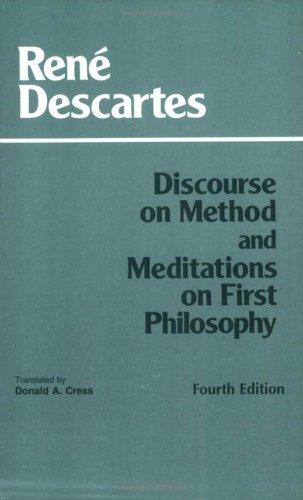
The Best Philosophy Books of 2023 (2023)

Scraped from fivebooks.com (2023-12-08).

Source: fivebooks.com

Sarah Bakewell · Buy on Amazon
"I don’t know any other writer who could pull off something like this. I mentioned already that Sarah managed to write a compelling group biographical study of the existentialists, which was no mean feat. But this was an even more difficult writing task. She’s covering the long history of humanism, not just the kind of humanism we think of as an agnostic or atheistic approach to life—humanist funerals that kind of thing—although that’s there. She includes humanism in the sense of the regeneration of interest in the Classical world that was characteristic of some writers of the Renaissance, and the humanistic traditions that can also be found within a religious context. What she’s managed to do is uncover common threads. All these thinkers, though diverse, are passionate in their interest in human beings, rather than in the physical world or the idea of the divine. She tells an interesting story and manages to do it in a very accessible way with humour and colour. It’s memorable, enjoyable to read, and full of insight all along the way. It’s quite brilliant. A book to dip into and return to rather than to read once, I think. One point of focus for her is that quotation from Terence: “I am human, and so nothing human is alien to me.” She points out that it was originally a kind of joke, the response of a character who is very nosy—‘the reason why I’m so nosy is that I’m human, I can’t help it.’ But it’s become a kind of motto for a certain type of interest in human beings, and the relationships between human beings. Bakewell’s not scared of taking on the darker, more disconcerting side of humans either, the side which is sometimes ignored by what I would call ‘happy clappy’ humanism, the optimistic, everything’s-going-to-turn-out-well view of the human predicament. Her other motto is from E.M. Forster —“only connect”. What she sees her book doing is connecting up lots of different strands of humanism. She’s generous in her inclusivity and the way she traces complex patterns of influence in the various forms of humanism. Yes, I think it’s superb. I’m a huge fan of Bakewell’s writing. She’s very modest and doesn’t show off, but everything is based on deep and serious scholarship. And she’s an absolutely brilliant writer. So this book is a joy."
Jean-Manuel Roubineau, Malcolm DeBevoise & Phillip Mitsis · Buy on Amazon
"I don’t think Diogenes had been given enough airtime until very recently, and now that’s happening. I regret not including him in my Little History of Philosophy . I should have done, but perhaps in the back of my mind I felt he was a bit risqué for a younger readership—you know, he famously masturbated and defecated in public and was renowned for being provocative and obnoxious. He’s the great performative philosopher, up there in that respect with Socrates . But Socrates gets all the attention. He was sometimes known as the mad Socrates. Socrates didn’t write anything down, but lived the life of a philosopher and died rather than compromise his conscience. Diogenes famously thought that human beings don’t need much to be happy, and owned just a cloak and a stick—he had a cup too at first, but he threw that away when he saw a boy drinking water with his hands and realised he didn’t really need it. Diogenes allegedly lived in a barrel at the edge of the city of Athens. One of the things I like about this very short book by Roubineau is that he has four or five pages discussing whether Diogenes did actually live in a barrel. It was more likely a big clay storage jar, and he wasn’t unusual in that, actually. There is a kind of resonance with contemporary Britain in the sense that homelessness became an issue in fifth-century Athens as a result of certain political decisions about going to war and the insistence that everyone lived within the city walls. A number of people were forced to live in very unsuitable accommodation, including these earthenware storage jars that—although smelly—offered protection from the elements. Yes, or maybe sleeping in a skip or a wheelie bin. A car sounds a bit luxurious. Diogenes was not doing it because he had to, but as a kind of philosophical statement. He enacted his philosophy and was very critical of philosophers who didn’t. There’s a quotation from him: Those who have virtue always in their mouths, and neglect it in practice, are like a harp, which emits a sound pleasing to others, while itself is insensible of the music. So Plato , to Diogenes, was like a harp, because he didn’t really live his philosophy, he just talked about it. Whereas for Diogenes, the whole thing was that if you believe it, you should do it. He was an environmentalist too. He was also arguably the first cosmopolitan, the first to say that he was a ‘citizen of the world’ when people asked where he was from. And he tried to live consistently as his own person, not accepting the values of those around him. Again, we know of him not from his own writings, but from the stories about him that other people wrote down. When asked about what should happen to him after he died, he basically said that he didn’t care, and the punchline implied that he would be just as happy to be torn apart by animals after death as buried. But Roubineau tells us that his wishes weren’t actually fulfilled—that there was a grave. All this really complements the book I recommended last year, How to Say No , which is more of a collection of anecdotes told by ancient authors of Diogenes; Roubineau’s book puts all that in the context of a life story, told in 106 pages. So it’s a good, quick read about somebody who embodied his philosophy. Diogenes was a bit like Joseph Beuys. Do you know Joseph Beuys? For one of his performance art pieces, he shut himself in a room with a coyote. That’s the kind of thing I could imagine Diogenes doing. He famously walked about an Athenian marketplace with a lit lamp in daylight, inviting people by his actions to ask what on earth he was doing. His answer was that he was looking for an honest man in Athens and hadn’t yet found one. You could imagine someone doing this outside parliament. There’s a great anti-Brexit protester, Steve Bray, who stands outside and shouts at Tory politicians as they walk into parliament. That’s the same kind of anarchic spirit, a bit punk, a bit unexpected, as Diogenes displayed in the ancient world. And Diogenes clearly had a good sense of humour – a rarity amongst philosophers."
David Edmonds · Buy on Amazon
"So Derek Parfit was an unusual figure and David Edmonds has collected a lot of information about just how unusual he was. As a philosopher, he came to notice in the early 1970s with a couple of articles about personal identity—what it is to be a self over time. I remember reading these as an undergraduate student, and they were very different to the typical philosophical journal article. But his basic position was that there could be good reasons for thinking that we might have more in common with the people around us now than we might with our future selves. That’s a Buddhist-like concept of the self, and he did explicitly draw some analogies with Buddhism . It was an unusual position to take for a mainstream Oxford philosopher, though elements of it were in a tradition that stems from John Locke . Then he went quiet for a bit before he produced, in the mid-1980s, under great pressure, a book called Reasons and Persons . It elaborated on what he thought about the nature of the self and how that impacts on morality and questions about altruism. Then he went on to the mission that occupied the rest of his life, which was that he thought he could and should prove conclusively the objectivity of morality—according to him what is right or wrong is not subjective, but absolutely objective. He wanted to do that without bringing in any kind of divine guarantee for this objectivity. He was very much an atheist, but as Edmonds’ biography makes clear, he followed a family tradition of being a missionary. His parents were literally missionaries. And Parfit had a sort of missionary zeal for proving and persuading people beyond doubt that morality was objective, meeting every possible objection and persuading his most eminent colleagues that this was so. Or at least trying to. He even said that his life would have been a waste if he didn’t succeed in showing that morality was objective. I think it’s generally accepted that he didn’t succeed in that. But he became obsessed … when I say obsessed, I mean he was obsessive as well. Quite a lot of the biography charts the fascinating arc of his life—from the good-looking, intelligent, young man, a brilliant student, who had always been exceptional in his intelligence, and the transformation that happened in later life. He was somebody who was…neurodiverse, let’s put it that way. He had some OCD characteristics, would clean his teeth for hours, would work absolutely obsessively. He doesn’t seem to have had the same kinds of connections with people that you might have expected of someone who writes in such an elegant, sophisticated way. I used to share an office with his wife, Janet Radcliffe Richards. She used to tell me some stories about him. He was always working—writing a paper, or reading a book, or commenting on other people’s writing. But he needed the fuel of coffee to keep him going. So rather than waste time making a decent cup of coffee he would use instant coffee and just turn on the hot tap. Janet said he sometimes didn’t even wait for the water to warm up. Parfit would be reading a book at the same time as making the coffee. He was unusual in other ways too: he could be incredibly generous with his time. For someone considered a high flyer—he had an All Souls fellowship, didn’t have to teach, could devote himself entirely to his research—he had a huge amount of time for anyone who wanted to discuss ideas with him. If somebody sent him an essay on something he’d written, he would return the next day with comments even longer than the essay. This was partly because he wanted to get everything right. For exercise, he would happily sit on an exercise bike in his underpants in front of the main window overlooking the street, absolutely oblivious to people looking in. And maybe he didn’t always put underpants on. It just wouldn’t have occurred to him that this might be found offensive or disturbing. Well, Diogenes’ philosophy wasn’t a written philosophy. He was performing philosophy as a series of gags, really, some of them visual. Derek Parfit was all theory. It was philosophy through words not performances. All he did for most of his later life was theorise, talk philosophy, write philosophy, communicate about philosophy, talk, give talks, and so on. Behind all this, there is an interesting question about what you’re doing when you’re writing a biography of a philosopher. There was a much-read profile of Parfit that appeared in his lifetime, by the New Yorker staff writer Larissa MacFarquhar. Like all of those New Yorker pieces, it was a very elegantly constructed profile, and focused very much on how unusual he was as a man. The question is, how connected is that kind of obsessive behaviour with his philosophy? That’s a question that Edmonds had to address too. It’s difficult to say. There’s a risk that he just gets remembered as this odd guy, who did strange things, was neurodiverse, whatever. There was a critical piece about Edmonds’ biography in the London Review of Books that argued that he should have written more about Parfit’s philosophy and by implication perhaps less about his quirks. And I can sympathise with that to some extent. But someone else can write the definitive book about Parfit’s philosophy. This is a biography. There’s a sense in which biography gives an opportunity to expound on somebody’s thought in historical context. Philosophers have philosophical ideas, and you have a duty to write about those in a biography. That’s what Ray Monk did so well in his biography of Wittgenstein. Edmonds did a great deal of research, talking to people who knew Derek Parfit well, and what lingers for them is just what an unusual man he was, as a man as well as a thinker. And that’s interesting for a wider readership as well, the mystery around how he developed into that obsessive workaholic from what he was as a young man. So once he’d done that research, Edmonds was right to tell that story. It’s very interesting. Many of the people who knew Derek Parfit well, (and there were a lot of them because he cultivated a network of philosophers who commented on what he wrote), really admire Edmonds’ book. It’s very difficult to achieve that when your subject has died so recently."
Andy Clark · Buy on Amazon
"So Andy Clark, with David Chalmers—whose book Reality+ was on my list last year—wrote a famous paper about ‘the extended mind’: the idea that something like a phone could be literally part of your mind. They argue it’s a mistake to think of the mind as necessarily contained within the skull or the skin, as people traditionally have. Together they put forward the argument that some things that we use as tools are integrated with our lives, and available to us, and are relied upon in similar ways to the memories in our brains. We might outsource the memory of phone numbers, for example, to our smartphones. And in cases like that, we can talk about literally extending our minds. There’s a long history of people doing just that, using all sorts of devices. But there’s a cut-off where you say, that’s just a tool, not part of the mind. That idea is discussed in this book by Clark, but the broader aim of the book is to give accessible insight into some of the most interesting interdisciplinary research in the area of cognitive science, about how rather than being passive recipients of information, we project expectations on the world. According to Clark, we should rethink everything about human beings in terms of predictive processing, the ways that our senses supply correctives of our projections, and don’t give us a reliable picture of reality that we receive passively. This is an idea that Anil Seth discussed in very interesting ways in his book Being You . It’s very much in vogue, as it were. But Clark is a very accessible writer, like Seth, and also like him a researcher in this area. The way he puts it is that potentially the prediction processing model of understanding our place in the world is something that can give us a unifying picture of the mind and its place in nature. It’s one of those hypotheses that has huge philosophical implications if we take it seriously. It’s not just about sensations, how we experience things, but our sense of self, how we relate to the universe, everything. Everything important will be transformed if we understand the world through this model, if we recognise that we’re not passive recipients of information but caught up in a range of hypotheses that we generate about the world. It’s almost as though we are hallucinating the world all the time. It’s one of those approaches to philosophy that is like that famous duck-rabbit illusion: you see the duck, then suddenly you see the rabbit. There’s a shift and you see the world differently. Clark’s book presents an accessible way into this different way of seeing the world. It’s a model of how to make complex ideas accessible to the general reader. I’m skeptical about that. It’s true that anybody who wants to understand the mind today has a very rich source of data in the sense that there’s an explosion of interesting discoveries in neuroscience. Computing power allows a much more refined understanding of the physiology of the active brain. There have been many counterintuitive discoveries. That has to be part of your understanding if you’re a philosopher of mind. There are people who don’t keep up with the science, who ignore it and go back to Descartes or other philosophers instead. But it seems very strange to turn away from real discoveries about the neuroscience of consciousness. But even with all this empirical research, philosophical questions about how to interpret and integrate those sorts of theories remain. Many of the best philosophers of mind, like Andy Clark, are immersed in the world of philosophy and that of neuroscience. There are plenty of philosophers who don’t carve up their way of thinking about the mind into ‘philosophy’ and ‘neuroscience’; we just want a picture of what the mind is like, and any sources of information about that are relevant. There are big questions about where consciousness comes from, how it evolved, what it is, and how we experience the world. There’s a cluster of unresolved issues, and plenty of them still have a philosophical flavour. Support Five Books Five Books interviews are expensive to produce. If you're enjoying this interview, please support us by donating a small amount . The neuroscientist Kevin Mitchell just published a book about the nature of free will: Free Agents: How Evolution Gave Us Free Will . It’s impossible to write intelligently about that as a neuroscientist, I think, without touching on the long philosophical history around that topic. And even if you want to be a hardcore neuroscientist saying, well, philosophy has nothing for me, moral issues don’t go away just by looking at the brain. Or, if they seem to, you end up with a very strange moral philosophy."
Rebecca Roache · Buy on Amazon
"So this is a fun book, but also a serious book. Rebecca Roache is very much a philosopher, and this is really a book on the philosophy of language. It actually draws upon some of the ideas of J.L. Austin, who we’ve already mentioned, the ordinary language philosopher who talked about performative utterances, acts which are performed by saying words—so, for instance, launching a ship by saying ‘I launch this ship’. Or the words ‘I do’ in a marriage ceremony. These are linguistic acts. And one of the themes in Rebecca’s book is how linguistic acts are performed when people utter swear words in different contexts. It’s a very wide-ranging book, but underlying it is serious philosophy about how we communicate with one another and the value we give to different sorts of words, which might be considered taboo in one context, or maybe just commonplace and expected in other contexts. I remember when I worked in a flour mill in Crayford, years ago, the toaster broke and this old guy said, ‘oh fuck, the fucking fucker’s gone and fucking well fucked itself again.’ It was incredibly expressive and creative, an almost baroque sentence that came out very naturally and perfectly communicated what he felt. So this is a book about offensiveness, partly, and it’s a book about particular words as well. Chapter thirteen is called ‘Cunt and ‘Cunt’’—so Roache’s not shying away from using taboo words: the fact there’s an asterisk on the front doesn’t mean this and other words are asterisked all the way through. I think it’s a great book because it combines Rebecca’s obvious joy in using swear words with serious philosophy about an issue that is all around us. And I think it’s highly original, because it’s not a topic that philosophers usually address. There’s an endorsement from Stephen Fry on the back: “Finally, a book that rips the fuck out of the arseholes who claim that swearing is the sign of a poor vocabulary or unnecessary. Bollocks to them.” Many people take great joy in swearing. It reveals all kinds of things about how we relate to people and the different ways in which we can communicate, threaten, or tease. I love this book, and I’m really delighted that she’s written it. There’s no sense in which she’s straining to include philosophy – it explains so much. Indirectly, she’s made a great case for there being much more philosophy about swearing, she has shown how swearing touches on all kinds of important questions. This would make a great Christmas present for your grandparents or parents-in-law… There are. Lyndsey Stonebridge’s book on Hannah Arendt, We Are Free to Change the World, will be out early next year. Philip Goff, who wrote a book about panpsychism that got a lot of attention, has just followed that up with Why? The Purpose of the Universe , an argument for belief in a kind of cosmic shaping force to the universe, based on something known as the fine tuning argument. I don’t agree with him, but it’s another example of good accessible public philosophy. Another biographically-driven book that will be coming out before too long is Emily Herring’s – she’s writing a biography of Henri Bergson. This will be excellent, I’m sure. And in the further future, David Bather Woods is writing a book about Schopenhauer . So these are two books in the pipeline by outstanding younger writers turning their attention to this combination of biography and philosophy, the flourishing genre of the moment."

The Best Philosophy Books of 2024 (2024)

Scraped from fivebooks.com (2024-12-12).

Source: fivebooks.com

Emily Herring · Buy on Amazon
"Berg- son . Emily is Anglo-French, and she has the perfect pronunciation of the name, not how English people pronounce it. Not that they pronounce his name very often, because Bergson is not well known in the UK and America, although he is still well known in France. Actually, in this biography, Emily gives some possible explanations for that. One is that Bertrand Russell absolutely hated Bergson, was very dismissive of his philosophy, possibly because Bergson was such a popular public speaker. He eclipsed Bertrand Russell in that in some ways. He was very much a public philosopher. Bergson, as Emily discusses, was responsible for the first recorded traffic jam in Broadway in New York when he spoke there. He was that popular! People used to hang onto the windowsills outside the lecture hall, ears pressed against the glass trying to hear what he was saying. So even though he doesn’t look charismatic, he was an extremely charismatic speaker, though sadly no recordings of his lectures exist. Something else that Emily brings out is that he had many, many woman followers. Perhaps this was due to his more poetic approach to philosophy, the language he used, and the openness to hinting at ideas rather than pinning them down in a strict, analytical way. This made him an appealing figure to a general audience, and particularly to women. Okay, so one of his most famous ideas has to do with time. He talked about the notion of durée , which is sometimes translated as ‘duration’ but more or less equates to ‘lived time,’ which is felt time, and very differently from clock time, which is divided into equal length units and measured strictly. He thought that a lot of discussion of time absolutely neglected the most important thing about time, in that it’s something that we live within, not measure, as it were. That’s quite a crude summary, but his notion of durée was in some ways a plea for acknowledging the subjective experience of time in an age of obsessive measurement and quantification. It certainly was influential and, for example, could have had some influence on the best man at his wedding, Marcel Proust. They were distant relatives. Proust was the younger of the two. Proust, according to Emily, was at pains to distance himself from the ideas of Bergson. Because Bergson was so well known at the time, and because people knew of their relationship, the novelist was frightened of his work being thought to be derivative of Bergson’s in his approach to memory and time in Remembrance of Things Past . And there are similarities and probably more influence than Proust suggested. Bergson was also very interested in evolution , and in the latest developments in science of his day too. He was a polymath. As a young man he was, as emerges from this book, a very brilliant mathematician; but he’s usually thought of as at more poetic end of philosophy. I’m no expert on Bergson. What I know about Bergson, I’ve learned from Emily, and I feel that, having read this book, I know enough to approach some of Bergson’s writing in a way that I didn’t before. But I wouldn’t want to summarise Bergson’s ideas only to get them wrong. So I recommend readers to go and read Emily’s book to get a foothold there. “It’s been a good year in the sense that some very good books have been published, but it hasn’t been a golden year” She’s a reliable source. Her PhD was on Bergson. But what I love about the book is she’s a great writer with a light touch. She finds ways of telling stories and relating ideas and thinkers and thoughts and social events that are completely compelling. This book has been very widely reviewed and universally praised. She’s just broken into the publishing world with this, and I expect she’ll write other biographies or philosophically-tinged books after this. It is a really significant debut and she is a writer to watch. I have to say I’ve got a slight vested interest, because I commissioned Emily to write a few essays for Aeon magazine that led to this book being commissioned, so I’m not completely disinterested. But The New York Times , Washington Post, TLS , and many of the major reviewing media have written very enthusiastically about the book. John Banville selected it as one of his books of the year for New Statesman as well."
Edith Hall · Buy on Amazon
"Edith Hall is a very interesting writer and thinker. She’s a Classicist and she’s a philosopher. She’s an Aristotle enthusiast. She also writes about poetry. She seems to publish the book almost every six months. This is a very personal one. It’s a mixture of autobiography, family memoir, analysis of Greek tragedy, philosophy and confession. It’s a book about suicide that arises from her own family history of suicide. And Edith herself talks about her own suicidal ideation at various points. She’s open about having been depressed and having seriously considered suicide herself. The big theme of the book is not just trying to understand her family and the impact the suicides have had upon subsequent generations, but also how much better the ancient Greeks were at discussing the impact of suicide than our contemporary commentators, including philosophical commentators. For Edith, ‘better’ means recognizing the generational impact of a suicide in a family. She quotes Sophocles line from Oedipus The Tyrant ‘The tragedies that hurt the most are those that sufferers have chosen themselves.’ Edith is very clear that the liberal account of suicide, where it’s an individual’s decision that doesn’t affect anybody else, is just not accurate. What really happens when a suicide takes place is that even people who don’t know that person very well can be deeply affected. People who know them, their family, and even people who haven’t yet been born, are all hugely impacted—almost inevitably. In ancient Greece people would talk about being being ‘chased by Furies.’ There could be a sense of a curse on the family. And there is a modern day equivalent. I know this from personal experience: my grandfather’s attempted suicide that resulted in him being put in a psychiatric hospital that thirty years before my birth, has affected me deeply even though I never knew him. For Edith, the deaths by suicide in her family have very much hung over her whole life. So one of her themes is that somebody who decides to commit suicide should, if at all possible, take that into account. There’s a sense in which moral decisions around suicide should acknowledge the complexity of relationships that we have with one another. Our decisions deeply affect those around us, particularly something as significant as the decision to kill oneself. Support Five Books Five Books interviews are expensive to produce. If you're enjoying this interview, please support us by donating a small amount . Like all of Edith’s books, this is extremely easy to read, despite the subject matter. It oscillates between dark personal memoir and really illuminating discussions of passages of ancient Greek tragedy. I wanted to include this book because I think it’s important to have a broad conception of what philosophy is. In an academic philosophy department in the UK, this probably wouldn’t be classified as philosophy. But so much the worse for philosophy departments! This book grapples with deep questions about life and death, just as Camus ’s The Myth of Sisyphus does. She does this by drawing upon ancient philosophy as well as Greek tragedy. It’s richly embedded in real life, in literature, and in philosophy. For me, it’s much more authentic than many abstract philosophical discussions about putative suicide attempts and what the implicit ethical implications might be, and it’s written with passion and honesty. It’s reassuring that she can write a book like this while remaining a British academic—she’s in a Classics department. But it’s very encouraging that she hasn’t been knocked off her path by obligations to produce a certain kind of monograph or series of journal articles. Having said that, she is a very dynamic person and no doubt is also producing academic research of a high quality alongside this."
Brian Leiter & Jaime Edwards · Buy on Amazon
"Yes, this is a very different kind of book. It’s from the Routledge Philosophers series. It has a textbook format. It’s an introduction to the work of Karl Marx . There’s also an interesting one on Henri Bergson in the same series by Mark Sinclair. I’d recommend that too for those who want to go a bit deeper after Emily Herring’s biography. What Edwards and Leiter’s book does is introduce Marx to the intelligent reader, as if you’ve never encountered Marx before. Which might be the case for many readers. Some people come to Marx through economics. They might come through politics and The Communist Manifesto . Others come through philosophical ideas about alienation or ideology. This book offers a superbly clear overview of Marx’s life, and most importantly his key ideas. I particularly like the chapter on ideology. Ideology, in Marxist terms, is the way in which the structure of society conditions all aspects of our lives without us realising it, and privileges the interests of the ruling class. But there are different notions of ideology within Marx’s writing, different emphases. Questions that are difficult for some Marxist theorists to answer are addressed here too—this isn’t a neutral summary. The book doesn’t shy away from engaging with Marxist arguments as well as spelling out what the mainstream interpretations of Marx’s writings are. It benefits from the huge secondary literature on Marx, but doesn’t get bogged down in it. Sometimes, in just a sentence or two, the authors illuminate things that I’ve never fully understood before. There’s a section on Georg Lukács, the Hungarian philosopher and political exile who was a significant Marxist thinker. In a few paragraphs, they gave me an overview that helped me understand references to his writing that I’d seen before and put them in a better perspective. Similarly, on Gramsci, the imprisoned Italian philosopher. There are well-written summaries and insights into other Marxist thinkers too. Including the glossary—which is, again, very useful—it is 275 pages. This is not a book that people would usually read all the way through. It’s a reference book. And it’s not the last word on Marx by a long shot. No doubt some Marxist philosophers will find fault with some aspects of it. But it is certainly an extremely useful book that should become a standard book for students and anybody interested in understanding Marx. Other books purport to do that, but not usually with this level of communicative skill. It’s written by philosophers who can write and who are thinking critically about what they are writing about. It’s not an inert summary, but something that brings Marxist ideas alive, and shows their strengths and limitations."
Jonathan Birch · Buy on Amazon
"Yes. This is an unusual book in that it’s available free online as an open-access PDF, but you can buy a hardback copy too. Jonathan Birch is a philosopher with a research team at the London School of Economics. He’s particularly interested in the idea that we ought to base our ethical interactions with animals on scientific studies of what animals are actually like. So he works with zoologists, ethologists, people who look very closely at animal behaviour. There are amazing studies that reveal, for instance, that individual honey bees are able to learn and are even capable of playing. An insect, which doesn’t seem highly intelligent and which normally functions as part of a hive, can exhibit surprising abilities if you look closely at what it’s actually doing, or put it in laboratory situations that allow those capabilities to emerge. Jonathan’s interested in a very wide range of species, and often in species that don’t have cute faces. We don’t tend to attribute the same sensitivity and capacity to feel pain to an insect that we might to a sweet puppy or a baby chimp. Take lobsters. They are killed in quite gruesome ways for culinary purposes. He’s been involved in research that suggests that lobsters have quite sophisticated neural networks and seem to exhibit pain-like behaviour in certain situations. There is sufficient evidence, he believes, to exercise what he calls ‘the precautionary principle.’ Yes. The precautionary principle is this: once you get over a threshold of evidence, treat animals as if they are sentient even though there is still some doubt. He’s not saying they are sentient, but that there is sufficient evidence to be more careful about how we treat them. So, you don’t want to drop them in boiling water and let them die slowly, for example. If we are set on killing them and it’s possible to stun lobsters or kill them electronically, then we should do this rather than resort to the boiling water in a saucepan method of killing them. As I say, he’s not conclusively arguing that they do feel pain. This is the driving force in the way he approaches moral issues around how we treat other animals. If it seems they have the capacity, and there’s scientific evidence to back that up,, then let’s be more careful than we have been to date. Obviously, a lot of factory farming would be beyond the pale for him. Agreed. But many people find it difficult to imagine that, say, fish or insects have sophisticated capacity for pain, even though the evidence supports the idea that they probably do. Birch is a superbly clear writer, and he’s very careful to adjust his belief according to the evidence. He’s not a sentimental animal ethicist who thinks, gosh, killing a mosquito is the same as killing a fox. He bases everything that he writes on the available science and sound reasoning from the best data we have."
Peter Godfrey-Smith · Buy on Amazon
"Well, yes, but Peter Godfrey-Smith’s book builds up to a discussion of how we should treat other animals in a different way. For Peter Godfrey-Smith, it’s all about the evolutionary story. Briefly: Living on Earth is a book about how human beings have come to have consciousness. But other animals have different levels of ability to sense the world in sophisticated ways, and some have a concept of themselves doing that, or seem to have a concept of that. It’s the third book in a trilogy that he’s spun out of his interest in observing animals—mostly, in the past, aquatic animals. He’s particularly known for his brilliant first book in this area Other Minds , which was a bestseller. That one focused on the minds of octopuses. This is an excellent book too and could easily have made the list. But I think, in the slot on animal minds, Birch’s sentience book is a really important new book by a thinker who will be much better known in the future. Peter Godfrey-Smith is already very well-known and has a serious following. Like Emily Herring, Jonathan Birch has really broken into the public consciousness in 2024."
Lyndsey Stonebridge · Buy on Amazon
"Yes, and in 2021 I chose Samantha Rose Hill’s biographical book about Arendt as well. It’s been a good few years for books about Hannah Arendt . This is another book written by a real writer . I mean, she’s a thinker as well as a writer, but the writing makes this an excellent read. She’s approached Arendt in a slightly different way from a straightforward birth to death and beyond biography, combining the events in Arendt’s with thematic questions. She has chapter titles like: ‘How to think like a refugee,’ ‘How to love,’ ‘How not to think about race’ (Arendt made some apparently racist comments at one point about segregation in American schools), ‘How to change the world,’ ‘Who am I to judge?’, ‘What is freedom?’. So, there are a series of questions rather than a sequence of events from Arendt’s life. But it’s richly informed by the biographical study of Arendt, because you can’t really understand Hannah Arendt except by tying her into her times and the places she lived, the people she interacted with. She wrote about totalitarianism as somebody who’d experienced it. She emphasized the importance of freedom and resisting dominant ways of thinking, having lived through Nazi Germany, and survived exile in Paris, and later a certain degree of alienation as an exile in America. She responded to her times. She was very keen that philosophy should respond to the present. She didn’t even see herself as a philosopher, strangely. This is something that Simone de Beauvoir said of herself as well. I think this was because the concept of a philosopher that both were working with was of someone who builds a grand scale metaphysical system, an Immanuel Kant or a Jean-Paul Sartre , or a Martin Heidegger (Heidegger was her tutor and lover). As well as writing books, Arendt was an intellectual journalist. She didn’t have a grand system. Lindsay Stonebridge finds very elegant ways through her work, making it seem relevant to today, teaching us to read Arendt not just as a historical phenomenon of the 20th century. She builds in autobiography as well. You get Lindsay’s personal take on Arendt through her interactions with places. Lindsay is there in the archive, or visiting a somewhere Arendt visited or lived. It’s not an impersonal book in that sense. It’s also an excellent book in the way that it doesn’t presuppose that you know almost everything about 20th century history. When she introduces ideas, she explains the context as she goes. Not in a patronizing way, but so that you don’t have to be a historian to understand references to, I don’t know, the revolution in Portugal, or who a particular thinker was. This is a very accessible book, even though it’s informed by deep scholarship. It complements Samantha Rose Hill’s book on Arendt as well. So, just as I’ve said: if you want two books on Bergson, get Emily Herring’s and Mark Sinclair’s; if you want two on Arendt, get this and Samantha Rose Hill’s. Well, one is Agnes Callard’s book Open Socrates: The Case for a Philosophical Life . Agnes Callard is an unusual, independent thinker. She’s a Classicist as well as a philosopher, and she’s passionate about the ideas she discusses. She’s quirky, and an excellent writer. That book is coming out in January and is one I’m looking forward to. Jonathan Webber has edited a collection The Penguin Book of Existentialist Philosophy— that’s due out at the end of February in the UK. I definitely want a copy of that. And, further ahead, I’m looking forward to David Bather Woods’ new book on Schopenhauer . He’s written several very interesting essays on Schopenhauer, a philosopher who is not so much discussed these days. I’m not sure if that will be out next year, but I know it’s in the pipeline. Like Emily Herring’s book on Bergson, this should be another young writer breaking into the mainstream with an interesting take on a major thinker."

The Best Philosophy Books of 2025 (2025)

Scraped from fivebooks.com (2025-12-05).

Source: fivebooks.com

Angie Hobbs · Buy on Amazon
"Angie Hobbs is a leading public philosopher who has a background in classics. She actually wrote a really nice, very short, illustrated Ladybird book on The Republic that, for some bizarre reason, has gone out of print. She’s very good at explaining Plato at all leves. This book is pitched higher—it’s not an academic book, but the scholarship is visible in the sense that she gives her sources and is careful to avoid oversimplifying. So you get some of the complexity of different readings of Plato . But her underlying theme is connecting his work to the present day, why we should read Plato now . Unfortunately much of what he wrote about politics and power is still very relevant. Some of what is most pertinent relates to questions of what happens when a tyrant gets into power, the phases of development in society when an immoral authoritarian leader takes the reins. Some of Plato’s predictions are uncannily accurate about the present day. Well, Classics is a really interesting subject area—or really a cluster of subject areas. Philosophers who study classical philosophy today are usually polymaths. They study history, they study theatre, they study poetry, they study philosophy, they study politics. Because they are studying Classical civilisation and all the intertwined elements of that, I think that probably makes them, as a group, more sensitive to context when they read a book of philosophy. Plenty of people read Descartes, but they don’t really contexualise him amongst his contemporaries. A Classicist will not read Plato naively, as a close reading of a text, without being aware of the Athens within which he was writing and the political tensions and historical precedents, in terms not just of philosophy, but of things that have happened that have shaped the way in which the writer is expressing himself. Then, Classicists are constantly under pressure to justify their existence – why study an ancient civilization, why take years learning Latin and Greek? So they are often keen to demonstrate the continuing relevance of what they do. The combination means that they read works in context, but also look for parallels in the present. Hobbs is someone who is very aware of the political aspects of Plato’s—and Socrates ’—life (Socrates was Plato’s mentor). The Dialogues are based on the historical Socrates, to some extent. Not all of them. But I think it’s fairly natural for a Classical philosopher to look at the shape of things politically. It would be difficult, anyway, to read some of Plato without being aware of just how prescient many of his ideas are. There is, of course, the cliché that all philosophy is just a series of footnotes to Plato anyway (that was Alfred North Whitehead’s quip). Hobbes outlines and explains and contextualises some of Plato’s key ideas. But there are so many parallels with the present. This is a rich book written by someone who has devoted much of her life to studying Plato. It’s not a rip-roaring read, I wouldn’t take it to the beach. It’s a serious book, that requires attention, but it is written for the general reader, and very rewarding. Yes. Callard’s book on Socrates is a much more personal take, and it focuses on Socrates more than Plato, although obviously what we know of him is largely through Plato’s writing. So there is an overlap, but perhaps not as much as you might expect. For Callard, the emphasis is on the fallibility of reason and the humility of Socrates in recognising that he might be mistaken, and what that means in terms of the pursuit of knowledge and how you might go about it. She presents Socrates as a kind of hero of reasoning and a model of how we should live, in the sense of constantly revising our thoughts in the light of new evidence and reason. Hobbs is more focused on Plato’s text and on interpreting it. They are both good books, but I’m choosing Hobb’s because I think it will last longer; it’s less idiosyncratic. You will either love or hate Agnes Callard’s way of writing and being. I think she’s a strong and sometimes quirky voice as a writer. If you know her, you hear her speaking as you read. But they are both in the same ballpark in the sense that they are looking at ancient philosophy and making it relevant to the present day. Actually, in this vein, I’d also like to mention a much earlier book that isn’t as well-known as it should be. This is Rebecca Goldstein’s Plato at the Googleplex . She’s a novelist as well as a philosopher. Yes. I really enjoyed interviewing her for that. Plato at the Googleplex is another book making Plato relevant to the present day. It’s very skilfully constructed in the sense that Plato is actually a character in the book moving through contemporary society, reacting to the present (hence the title). These three books together would make a great combination. They complement one another."
David Bather Woods · Buy on Amazon
"It’s very interesting the way academia has treated Arthur Schopenhauer . He dropped out of academia, lived independently, and was a powerful literary-philosophical outsider figure in his day. He was a superb essayist, influenced heavily by Immanuel Kant and his metaphysics, but also by Eastern philosophy. He was a wonderfully clear writer, but he doesn’t get studied much in philosophy departments—not at all during my degree, and I think in most people’s philosophy degrees—and that’s a shame. This despite his most important book The World as Will and Idea being an acknowledged philosophical classic. He should be studied more, not least because he’s a model of clarity in how he writes. For a German philosopher of the 18th and 19th centuries (he straddled both), that’s pretty unusual. The great champion of Schopenhauer in Britain was Bryan Magee. Schopenhauer, along with Popper, was one of his heroes and he wrote a very good introduction to his work The Philosophy of Schopenhauer that was published in 1983. But since then, there haven’t been many books about Schopenhauer at all, and nothing that I can think of that would appeal to a general reader. This book by David Bather Woods, who is one of a new generation coming fresh to the history of philosophy, is superb. It reminded me of Sarah Bakewell’s book on Montaigne , which was a huge success, and very widely-read. That combined biography with Montaigne’s ideas. Bather Woods has an elegance of style and is a good storyteller too. He’s really immersed in the world of Schopenhauer—he’s an academic expert on him— but he’s never boring or pedantic. This is a very readable book that also combines biography and ideas. And it does it very well. This would make an excellent Christmas present for people who enjoy reading about philosophy and philosophers. It has plenty of anecdotes and interesting insights that make it a pleasure to engage with in addition to the philosophical discussion."
David Edmonds · Buy on Amazon
"Yes. I should first disclose that he is my co-podcaster on Philosophy Bites . He’s quietly becoming a specialist commentator on thought experiments in philosophy. He previously wrote a book called Would You Kill the Fat Man ? —I advised him against that title—about the so-called ‘trolley problem.’ The title comes from a variant of the trolley problem—the thought experiment in which you have to decide whether you would allow a runaway train, or trolley, to run over five people on the track, or divert it to kill only one. In the variant you are standing on a bridge with a very large person, and the train is running towards five people below, and you could push this person off the bridge, and the weight of that person would stop the train but kill him in the process. Would you push him over the bridge? Many people say no, despite being happy to switch points towards a person on a track. The thought experiment is meant to suggest that there’s more than just a question of sacrificing one person to save five going on here. Anyway, that’s where the title of David’s previous book came from. Death in a Shallow Pond is also about a single thought experiment, Peter Singer ’s famous thought experiment about a child apparently drowning in a shallow pool of water while nobody else is around. You’re walking past—would you jump in to save the child, at minimal risk to yourself? It’s a shallow pond, but you happen to be wearing very expensive shoes, and they will be ruined in the process. Most people say, yes, of course I’d save the drowning child, if there was nobody else around, even if it ruined my shoes, why do you even ask? But Peter Singer says, aha, then why don’t you give the value of the shoes you would be prepared to sacrifice for this child to save a child dying in sub-Saharan Africa for not having access to clean water or basic medicines? Consistency seems to demand that you should. There are all kinds of arguments about whether that’s a reasonable conclusion to draw, but Singer’s suggestion is that you’re inconsistent in your principles if you wouldn’t give the money. He discussed many of the objections and psychological aspects of that thought experiment, trying to seal off objections. David has now put the various responses to Peter Singer under his microscope. He tells an interesting, accessible story. He’s also more sympathetic to Peter Singer’s overall consequenialist utilitarian outlook in relation to these cases than I am. I should say, in passing, that he included a devastating counterargument that I previously raised with Singer. By this argument, if the shoes you were wearing were valuable enough, then you should walk past the drowning child and auction your shoes without getting them wet, and save five other children with the proceeds instead. The fact that Singer concedes that under certain circumstances that would be right should be sufficient to undermine this thought experiment, but Dave clearly didn’t as, as he only put my objection in a footnote. A lot of people have said that. They’re an area in which philosophers can demonstrate their creativity in fascinating and sometimes entertaining ways. Often they’re like short stories, pared back to the bones. The idea is that they eliminate the irrelevant aspects of the kind of case you are discussing so that you can then tweak features,and run different versions. In reality, the richer details of life are what makes moral reasoning complicated and difficult. Thought experiments attract the kind of philosopher who likes chess problems and crossword puzzles and can sometimes get so far removed from real life that discussing them becomes an end itself without obvious applications. They can also have a strong rhetorical element. Philosophers assume, when they put forward a thought experiment, they can somehow intuit the reasonable response to that thought experiment. They often assume a universality of response. But experimental psychologists have shown that some sorts of thought experiments produce cultural differences of response —between different age and social class groups. So that element is slightly worrying too. I also have a perhaps idiosyncratic worry about some of these thought experiments. They often involve drowning people, running them over in trams, torturing people. They’re presented as imagined schematic scenarios, but I think that shows a lack of imagination—they are so reduced that they allow us to make jokes about torture, or wiping out humanity, trivialise these things. If you really thought about the reality of torture and the rest, you wouldn’t use an abstract example using, or at least you wouldn’t relish the details in the way some thought-experiment-driven philosophers do. It feels wrong to be glib about extreme situations of suffering like this, and at worst reveals a lack of moral imagination. Sorry, I don’t want to bog this conversation down. I’m at risk of ranting. But one more quick thing: if philosophers remove too many details, it starts to become a kind of geometrical exercise, rather than something that connects in an important way with the messiness of real-life moral decision-making. There’s a big question about whether you can reduce moral reasoning to that kind of simulation, a simplistic set of rules. Some philosophers think you can. Others, the ones I prefer, move backwards and forwards between thought experiments and real examples. David Edmonds does this to some degree. Jonathan Glover is a very good example of a moral philosopher who takes this approach, particularly in his books Causing Death and Saving Lives , and his book Humanity focuses on historical examples. When you’re dealing with actual complex human beings in far messier situations you might get a very different response. And that response might be the best one available given the specifics of the situation. I’m not sure that the thought experiments help us so much in those sorts of cases. There is a place for thought experiments in philosophy, and they have featured throughout its histroy, but I don’t believe they should provide the last word. Plenty of philosophers disagree with this, of course. And some make a career of constructing more and more elaborate thought experiments and not much else."
Anthony Gottlieb · Buy on Amazon
"This is in the Yale University Press ‘Jewish Lives’ series. Ray Monk wrote the classic biography, Ludwig Wittgenstein: the Duty of Genius . The subtitle is something of a giveaway. That’s an excellent read, which shows the influence of Wittgenstein’s background in Vienna and Cambridge in the early part of the 20th century on his thinking, writing, and life choices. Through that, we know various kinds of torments that he had as a man and as a thinker, and his intellectual interactions as an idiosyncratic genius with a difficult personality. Most people who have read that book think it unlikely to be bettered, even though it’s somewhat hagiographical in stance. Wittgenstein was, to my mind, not very good with people. He prioritised his own conscience above the impact of his ruthless honesty on others. He could be deeply offensive in his comments, really hurtful. He seems to have believed that most of his judgments—on philosophy, aesthetics, ways of speaking, how to live – were infallible, perhaps a result of his very privileged upbringing. Apart from all that, he seems to have hit a young kid very hard around the head and then lied about it when he was working as a schoolteacher. So, he wasn’t a wholly wonderful person, although there is no doubt that he was a very original thinker with a distinctives style of writing about philosophy. He was often aphoristic, encouraging the reader to think through a series of imagined examples: like the example of the beetle in the box, or his pronouncement that ‘if a lion could speak, we wouldn’t understand him.’ He used phrases and imaginative examples that are very quotable and very memorable and these have resonated far beyond philosophy. Ray Monk published his biography back in 1990, and the consensus was that nobody will ever produce a better biography of this thinker. And I don’t know that Gottlieb’s is the better biography, but it’s a different sort of biography. For a start it’s shorter – fewer than 200 pages. Anthony Gottlieb, like Monk, is a skilled writer. This new book is very clear and lively and interesting. At times Gottlieb moves quickly—very quickly—through Wittgenstein’s life. For instance: Wittgenstein was captured during the First World War. He was a prisoner of war and wrote some of the Tractatus in captivity . But there’s almost nothing about that in his book. So, this is a very good read but, necessarily, because it is so much shorter than Monk’s biography, it doesn’t go into depth on Wittgenstein’s philosophical contribution so much, particularly in relation to the Tractatus – a notoriously difficult book, despite the apparent simplicity of its language. But I’d recommend it. It’s primarily for people who haven’t read Ray Monk’s book. It’s a palatable way of understanding a very interesting and tortured soul in his context. There are some new things that Ray Monk didn’t know about or didn’t mention, too. One of my favourite insights comes from a description of the Wittgenstein family. They were immensely wealthy, a big family, but damaged hugely by an overbearing father. They would hold dinner parties, where guests always got a bit irritated because the Wittgensteins had the habit of talking to one another in fables and made-up stories to make a point, rather than just expressing themselves straightforwardly. This is interesting, you can see where Wittgenstein got his often oblique style from. In later life Wittgenstein was keen not to end up just writing a series of aphorisms. He explained why not in an aphorism: ‘Raisins may be the best part of a cake; but a bag of raisins is not better than a cake.’ (I call this Wittgenstein’s ‘Critique of Pure Raisin’). It’s a nice image, and something you could apply to many aspects of life. The things you most value, you might value because they are rare and enjoyable, not because you want a whole life of these and nothing else. I would recommend the book. It is very nicely produced, and would make a great present—although it’s not an alternative to Ray Monk’s. More of a gateway drug. Yes. Twenty years ago Princeton University Press very cleverly republished this 6000-word essay by Harry Frankfurt as a small hardback book. It became a massive bestseller. It’s a very clever analysis of a phenomenon that is distinct from lying. A liar knows the truth and tells you something else. A bullshitter doesn’t care about the truth at all. Harry Frankfurt explores that in this little book. Despite the title, this is not a jokey short read, but a serious work of philosophical analysis that gets more relevant by the day. It has sold over a million copies worldwide, which is phenomenal for a philosophy book—especially for one that had already been published as an essay somewhere else without making big waves. Now Princeton University Press have reissued an anniversary edition of the book. It’s definitely worth reading, a very significant contribution to public philosophy. In the age of AI, it has a different resonance. You might say that ChatGPT doesn’t seem to have a particular interest in the truth… Yes, it may be more accurate to talk about it bullshitting, than hallucinating—though I’m wary about attributing agency to LLMs – I prefer the view of them as ‘stochastic parrots’, and think there are real dangers of talking loosely about them as if they were thinking beings. Some claims about the value philosophy contributes to society by teaching critical thinking are overblown. If you begin with false premises, good thinking skills won’t guarantee you get a true conclusion. If you think of British politics, many if not most British politicians have studied PPE at Oxford —they’ve honed their thinking skills in philosophy tutorials. Has that produced better quality debate in Parliament? No. Many of these same individuals have resorted to mere rhetoric. This is certainly true of some of the most prominent politicians who have done much to make Britain a worse place, not a better one. Overconfidence in their ability to argue has sometimes been the problem, especially when that was tied with a cavalier attitude to the truth of their starting points. There are very few examples you can point to of books that focus on critical thinking, which could have a direct impact if their message is taken to hear. I think Bullshit is one of these, and should be compulsory reading for anyone becoming an MP. Thanks. It’s a classic. Obviously, my five choices are somewhat idiosyncratic and to a degree subjective. There may be excellent books that I’ve missed. But the five core books I’ve chosen, and the others I’ve mentioned, are very good books, are accessible to a general reader, and certainly worth reading."

Critical Thinking (2020)

Scraped from fivebooks.com (2020-12-04).

Source: fivebooks.com

Cover of Thinking, Fast and Slow
Daniel Kahneman · 2011 · Buy on Amazon
"This is an international bestseller by the Nobel Prize-winning behavioural economist—although he’s principally a psychologist—Daniel Kahneman. He developed research with Amos Tversky, who unfortunately died young. I think it would have been a co-written book otherwise. It’s a brilliant book that summarizes their psychological research on cognitive biases (or its patterns of thinking) which all of us are prone to, which aren’t reliable. There is a huge amount of detail in the book. It summarizes a lifetime of research—two lifetimes, really. But Kahneman is very clear about the way he describes patterns of thought: as using either ‘System One’ or ‘System Two.’ System One is the fast, intuitive, emotional response to situations where we jump to a conclusion very quickly. You know: 2 + 2 is 4. You don’t think about it. System Two is more analytical, conscious, slower, methodical, deliberative. A more logical process, which is much more energy consuming. We stop and think. How would you answer 27 × 17? You’d have to think really hard, and do a calculation using the System Two kind of thinking. The problem is that we rely on this System One—this almost instinctive response to situations—and often come out with bad answers as a result. That’s a framework within which a lot of his analysis is set. I chose this book because it’s a good read, and it’s a book you can keep coming back to—but also because it’s written by a very important researcher in the area. So it’s got the authority of the person who did the actual psychological research. But it’s got some great descriptions of the phenomena he researches, I think. Anchoring, for instance. Do you know about anchoring? That’s more or less it. If you present somebody with an arbitrary number, psychologically, most people seem prone to move in the direction of that number when you ask them a question. For instance, there’s an experiment with judges. They were being asked off the cuff: What would be a good sentence for a particular crime, say shoplifting? Maybe they’d say it would be a six-month sentence for a persistent shoplifter. But if you prime a judge by giving an anchoring number—if you ask, ‘Should the sentence for shoplifting be more than nine months?’ They’re more like to say on average that the sentence should be eight months than they would have been otherwise. And if you say, ‘Should it be punished by a sentence of longer than three months?’ they’re more likely to come down in the area of five , than they would otherwise. So the way you phrase a question, by introducing these numbers, you give an anchoring effect. It sways people’s thinking towards that number. If you ask people if Gandhi was older than 114 years old when he died, people give a higher answer than if you just asked them: ‘How old was Gandhi when he died?’ People use this anchoring technique often with selling wine on a list too. If there’s a higher-priced wine for £75, then somehow people are more drawn to one that costs £40 than they would otherwise have been. If that was the most expensive one on the menu, they wouldn’t have been drawn to the £40 bottle, but just having seen the higher price, they seem to be drawn to a higher number. This phenomenon occurs in many areas. And there are so many things that Kahneman covers. There’s the sunk cost fallacy, this tendency that we have when we give our energy, or money, or time to a project—we’re very reluctant to stop, even when it’s irrational to carry on. You see this a lot in descriptions of withdrawal from war situations. We say: ‘We’ve given all those people’s lives, all that money, surely we’re not going to stop this campaign now.’ But it might be the rational thing to do. All that money being thrown there, doesn’t mean that throwing more in that direction will get a good result. It seems that we have a fear of future regret that outweighs everything else. This dominates our thinking. Support Five Books Five Books interviews are expensive to produce. If you're enjoying this interview, please support us by donating a small amount . What Kahneman emphasizes is that System One thinking produces overconfidence based on what’s often an erroneous assessment of a situation. All of us are subject to these cognitive biases, and that they’re extremely difficult to remove. Kahneman’s a deeply pessimistic thinker in some respects; he recognizes that even after years of studying these phenomena he can’t eliminate them from his own thinking. I interviewed him for a podcast once , and said to him: ‘Surely, if you teach people critical thinking, they can get better at eliminating some of these biases.’ He was not optimistic about that. I’m much more optimistic than him. I don’t know whether he had empirical evidence to back that up, about whether studying critical thinking can increase your thinking abilities. But I was surprised how pessimistic he was. Unlike some of the other authors that we’re going to discuss . . . There has been a significant tendency in economics to talk about an ideal subject, making rational decisions for him or herself, and that didn’t take into account the kinds of cognitive biases that we’ve been discussing. The discipline of behavioural economics , which is very firmly established now, is kind of the antidote to that. You factor in these patterns of behaviour actual people have, rather than these idealized individuals making rational assessments about how they satisfy their desires. That’s probably a caricature of economics, but that’s the gist of it."
Cover of Factfulness: Ten Reasons We're Wrong About The World — And Why Things Are Better Than You Think
Hans Rosling · 2018 · Buy on Amazon
"Rosling was a Swedish statistician and physician, who, amongst other things, gave some very popular TED talks . His book Factfulness , which was published posthumously—his son and daughter-in-law completed the book—is very optimistic, so completely different in tone from Kahneman’s. But he focuses in a similar way on the ways that people make mistakes. We make mistakes, classically, in being overly pessimistic about things that are changing in the world. In one of Rosling’s examples he asks what percentage of the world population is living on less than $2 a day. People almost always overestimate that number, and also the direction in which things are moving, and the speed in which they’re moving. Actually, in 1966, half of the world’s population was in extreme poverty by that measure, but by 2017 it was only 9%, so there’s been a dramatic reduction in global poverty. But most people don’t realise this because they don’t focus on the facts, and are possibly influenced by what they may have known about the situation in the 1960s. If people are asked what percentage of children are vaccinated against common diseases, they almost always underestimate it. The correct answer is a very high proportion, something like 80%. Ask people what the life expectancy for every child born today is, the global average, and again they get it wrong. It’s over 70 now, another surprisingly high figure. What Rosling’s done as a statistician is he’s looked carefully at the way the world is. “Pessimists tend not to notice changes for the better” People assume that the present is like the past, so when they’ve learnt something about the state of world poverty or they’ve learnt about health, they often neglect to take a second reading and see the direction in which things are moving, and the speed with which things are changing. That’s the message of this book. It’s an interesting book; it’s very challenging. It may be over-optimistic. But it does have this startling effect on the readers of challenging widely held assumptions, much as Steven Pinker ‘s The Better Angels of Our Nature has done. It’s a plea to look at the empirical data, and not just assume that you know how things are now. But pessimists tend not to notice changes for the better. In many ways, though clearly not in relation to global warming and climate catastrophe, the statistics are actually very good for humanity. So this is critical thinking of a numerical, statistical kind. It’s a bit different from the more verbally-based critical thinking that I’ve been involved with. I’m really interested to have my my assumptions challenged, and Factfulness is a very readable book. It’s lively and thought-provoking. One of the big problems for an ordinary reader looking at this kind of book is that we are not equipped to judge the reliability of his sources, and so the reliability of the conclusions that he draws. I think we have to take it on trust and authority and hope that, given the division of intellectual labour, there are other statisticians looking at his work and seeing whether he was actually justified in drawing the conclusions that he drew. He made these sorts of public pronouncements for a long time and responded to critics. But you’re right that there is a problem here. I believe that most people can equip themselves with tools for critical thinking that work in everyday life. They can learn something about cognitive biases; they can learn about reasoning and rhetoric, and I believe that we can put ourselves as members of a democracy in a position where we think critically about the evidence and arguments that are being presented to us, politically and in the press. That should be open to all intelligent people, I think. It is not a particularly onerous task to equip yourself with a basic tools of thinking clearly. But statistics requires a kind of numerical dexterity, a comfort working with numbers, and for some people it’s a difficult thing to get to a level where you can think critically about statistics. But it’s interesting to observe it being done, and that’s what I think you’re being invited to do with this book, to see somebody think critically about statistics, on a number of measures."
Matthew Syed · Buy on Amazon
"Yes, quite a different book. Matthew Syed is famous as a former international table tennis player, but—most people probably don’t know this—he has a first-class degree in Philosophy, Politics and Economics (PPE) from Oxford as well. This book is really interesting. It’s an invitation to think differently about failure. The title, Black Box Thinking, comes from the black boxes which are standardly included in every passenger aircraft, so that if an accident occurs there’s a recording of the flight data and a recording of the audio communications as the plane goes down. When there’s a crash, rescuers always aim to recover these two black boxes. The data is then analysed, the causes of the crash, dissected and scrutinized, and the information shared across the aeronautic industry and beyond. Obviously, everybody wants to avoid aviation disasters because they’re so costly in terms of loss of human life. They undermine trust in the whole industry. There’s almost always some kind of technical or human error that can be identified, and everybody can learn from particular crashes. This is a model of an industry where, when there is a failure, it’s treated as a very significant learning experience, with the result that airline travel has become a very safe form of transport. This contrasts with some other areas of human endeavour, such as, sadly, much of healthcare, where the information about failures often isn’t widely shared. This can be for a number of reasons: there may be a fear of litigation—so if a surgeon does something unorthodox, or makes a mistake, and somebody as a result doesn’t survive an operation, the details of exactly what happened on the operating table will not be widely shared, typically, because there is this great fear of legal comeback. The hierarchical aspects of the medical profession may have a part to play here, too. People higher up in the profession are able to keep a closed book, and not share their mistakes with others, because it might be damaging to their careers for people to know about their errors. There has been, historically anyway, a tendency for medical negligence and medical error, to be kept very quiet, kept hidden, hard to investigate. “You can never fully confirm an empirical hypothesis, but you can refute one by finding a single piece of evidence against it” What Matthew Syed is arguing is that we need to take a different attitude to failure and see it as the aviation industry does. He’s particularly interested in this being done within the healthcare field, but more broadly too. It’s an idea that’s come partly from his reading of the philosopher Karl Popper, who described how science progresses not by proving theories true, but by trying to disprove them. You can never fully confirm an empirical hypothesis, but you can refute one by finding a single piece of evidence against it. So, in a sense, the failure of the hypothesis is the way by which science progresses: conjecture followed by refutation, not hypothesis followed by confirmation. As Syed argues, we progress in all kinds of areas is by making mistakes. He was a superb table-tennis player, and he knows that every mistake that he made was a learning experience, at least potentially, a chance to improve. I think you’d find the same attitude among musicians, or in areas where practitioners are very attentive to the mistakes that they make, and how those failures can teach them in a way that allows them to make a leap forward. The book has a whole range of examples, many from industry, about how different ways of thinking about failure can improve the process and the output of particular practices. When we think of bringing up kids to succeed, and put emphasis on avoiding failure, we may not be helping them develop. Syed’s argument is that we should make failure a more positive experience, rather than treat it as something that’s terrifying, and always to be shied away from. If you’re trying to achieve success, and you think, ‘I have to achieve that by accumulating other successes,’ perhaps that’s the wrong mindset to achieve success at the higher levels. Perhaps you need to think, ‘Okay, I’m going to make some mistakes, how can I learn from this, how can I share these mistakes, and how can other people learn from them too?’ Well, it’s also acknowledging that when you make an error, it can have disastrous consequence. But you don’t eliminate errors just by pretending they didn’t occur. With the Chernobyl disaster , for instance, there was an initial unwillingness to accept the evidence in front of people’s eyes that a disaster had occurred, combined with a fear of being seen to have messed up. There’s that tendency to think that everything’s going well, a kind of cognitive bias towards optimism and a fear of being responsible for error, but it’s also this unwillingness to see that in certain areas, admission of failure and sharing of the knowledge that mistakes have occurred is the best way to minimize failure in the future. I guess. But that’s a kind of pessimism—that you’re never going to achieve anything. Whereas I think Matthew Syed is a very optimistic person who believes that actually things can be a lot better, and the way they’ll get a lot better is by thinking critically about how we achieve things, about the best way to achieve success. Not to follow established practices which hide failure, but to see failure as probably a condition of success, not just a prelude to more failure. Though, in a way the Popperian line is that progress is a process of failing better, so perhaps you’re right."
Rolf Dobelli · Buy on Amazon
"Yes. This is quite a light book in comparison with the others. It’s really a summary of 99 moves in thinking, some of them psychological, some of them logical, some of them social. What I like about it is that he uses lots of examples. Each of the 99 entries is pretty short, and it’s the kind of book you can dip into. I would think it would be very indigestible to read it from cover to cover, but it’s a book to keep going back to. I included it because it suggests you can you improve your critical thinking by having labels for things, recognising the moves, but also by having examples which are memorable, through which you can learn. This is an unpretentious book. Dobelli doesn’t claim to be an original thinker himself; he’s a summariser of other people’s thoughts. What he’s done is brought lots of different things together in one place. Just to give a flavour of the book: he’s got a chapter on the paradox of choice that’s three pages long called ‘Less is More,’ and it’s the very simple idea that if you present somebody with too many choices, rather than freeing them and improving their life and making them happier, it wastes a lot of their time, even destroys the quality of their life. “If you present somebody with too many choices, it wastes a lot of their time” I saw an example of this the other day in the supermarket. I bumped into a friend who was standing in front of about 20 different types of coffee. The type that he usually buys wasn’t available, and he was just frozen in this inability to make a decision between all the other brands that were in front of him. If there’d only been one or two, he’d have just gone for one of those quickly. Dobelli here is summarising the work of psychologist Barry Schwartz who concluded that generally, a broader selection leads people to make poorer decisions for themselves. We think going into the world that what we need is more choice, because that’ll allow us to do the thing we want to do, acquire just the right consumable, or whatever. But perhaps just raising that possibility, the increased number of choices will lead us to make poorer choices than if we had fewer to choose between. Now, that’s the descriptive bit, but at the end of this short summary, he asks ‘So what can you do about this practically?’ His answer is that you should think carefully about what you want before you look at what’s on offer. Write down the things you think you want and stick to them. Don’t let yourself be swayed by further choices. And don’t get caught up in a kind of irrational perfectionism. This is not profound advice, but it’s stimulating. And that’s typical of the book. You can flip through these entries and you can take them or leave them. It’s a kind of self-help manual. It really is in that self-help genre, and it’s nicely done. He gets in and out in a couple of pages for each of these. I wouldn’t expect this to be on a philosophy reading list or anything like that, but it’s been an international bestseller. It’s a clever book, and I think it’s definitely worth dipping into and coming back to. The author is not claiming that it is the greatest or most original book in the world; rather, it’s just a book that’s going to help you think clearly. That’s the point. He’s optimistic too, unlike Kahneman. Dobelli’s not saying you’re caught up in all these biases and there’s nothing you can do about it. He’s saying there is a sense in which you can do something about all this. That may be just another cognitive bias, an illusion, but I’m biased towards thinking that thinking about things can change the way we behave. It might be difficult, but reflecting on the things that you’re doing is, I believe, the first step towards thinking more clearly."
Tom Chatfield · Buy on Amazon
"Well, this is a different kind of book. I was trying to think about somebody reading this interview who wants to improve their thinking. Of the books I’ve discussed, the ones that are most obviously aimed at that are Black Box Thinking , the Dobelli book, and Tom Chatfield’s Critical Thinking . The others are more descriptive or academic. But this book is quite a contrast with the Dobelli’s. The Art of Thinking Clearly is a very short and punchy book, while Tom’s is longer, and more of a textbook. It includes exercises, with summaries in the margins, it’s printed in textbook format. But that shouldn’t put a general reader off, because I think it’s the kind of thing you can work through yourself and dip into. It’s clearly written and accessible, but it is designed to be used on courses as well. Chatfield teaches a point, then asks you to test yourself to see whether you’ve learnt the moves that he’s described. It’s very wide-ranging: it includes material on cognitive biases as well as more logical moves and arguments. His aim is not simply to help you think better, and to structure arguments better, but also to write better. It’s the kind of book that you might expect a good university to present to the whole first year intake, across a whole array of courses. But I’m including it here more as a recommendation for the autodidact. If you want to learn to think better: here is a course in the form of a book. You can work through this on your own. It’s a contrast with the other books as well, so that’s part of my reason for putting it in there, so there’s a range of books on this list. It’s actually quite difficult to teach critical thinking in isolation. In the Open University’s philosophy department, when I worked there writing and designing course materials, we decided in the end to teach critical thinking as it arose in teaching other content: by stepping back from time to time to look at the critical thinking moves being made by philosophers, and the critical thinking moves a good student might make in response to them. Pedagogically, that often works much better than attempting to teach critical thinking as a separate subject in isolation. This approach can work in scientific areas too. A friend of mine has run a successful university course for zoologists on critical thinking, looking at correlation and cause, particular types of rhetoric that are used in write ups and experiments, and so on, but all the time driven by real examples from zoology. If you’ve got some subject matter, and you’ve got examples of people reasoning, and you can step back from it, I think this approach can work very well. But in answer to your question, I think that having some basic critical thinking skills is a prerequisite of being a good citizen in a democracy . If you are too easily swayed by rhetoric, weak at analysing arguments and the ways that people use evidence, and prone to all kinds of biases that you are unaware of, how can you engage politically? So yes, all of us can improve our critical thinking skills, and I do believe that that is an aspect of living the examined life that Socrates was so keen we all should do. [ end of the original interview. Update below ] ———————————-"

The Best Introductions to Philosophy (2018)

Scraped from fivebooks.com (2018-07-18).

Source: fivebooks.com

Thomas Nagel · Buy on Amazon
"I just dug through my bookshelves looking for this but I couldn’t find it. I’ve had a number of copies of this book but I always seem to end up giving it away, which I think is a good sign. It’s perfect for someone who wants to find out what philosophy is all about. First of all, it’s very, very short. Secondly, it’s written in prose that is completely unpretentious, unpatronising and clear. It’s the kind of book you could read in an evening, but at the same time you’d really have a flavour of what philosophy is. It’s got the authority of him being a significant philosopher in his own right, but if you had no idea who he was it wouldn’t matter. The writing is almost Orwellian in its simplicity and directness. As somebody who has tried to write clear introductory books, I know how difficult that is to pull off. Nagel begins with the observation – which mirrors my experience as a teacher and as a father – that philosophy arises naturally out of the human condition. People start asking philosophical questions from an early age. And there is a history of over 2,000 years of people discussing these questions – thinking critically about how we should live, what the nature of reality is, what consciousness is. Nagel goes through all these major areas of philosophy with a very light touch. In the introduction to the book, Nagel writes, “There isn’t much you can assume or take for granted. So philosophy is a somewhat dizzying activity, and few of its results go unchallenged for long.” He’s not pretending philosophy is going to tell you what it all means. It’s going to introduce you to the questions and help you think critically about them. If somebody comes to philosophy thinking they are going to come out after a few years understanding exactly how we should live and what reality is like, then they’re naive. That’s one of the things you learn from studying philosophy. As Socrates pointed out, true wisdom lies in knowing how little you know."
Cover of The Life You Can Save
Peter Singer · Buy on Amazon
"I was thinking, “How would you introduce philosophy to someone who didn’t know anything about it?” I think the central question in philosophy is, “How should we live?” And that’s a question about which Peter Singer has a lot to say. The book focuses on the terrible poverty and disease found around the world, and how we in the West are living in a luxury that we could adjust just a little bit in order to alleviate that misery. He suggests that we give maybe 5% of our wages to charity. He’s not saying you have to live in a sackcloth and give away all your possessions. Even a small gift of 5% would make a tremendous difference to other people’s lives. It’s not just him preaching, he gives arguments for his positions. And even if you disagree with him, the process of reading his work makes you think, “Why do I disagree?” He is in the tradition of Socrates – somebody who challenges your preconceptions and asks you to respond. Singer starts with a compelling thought experiment. Imagine you’re passing a pond. There’s a young child drowning in the pond and his head’s just about to go underwater. You’re on your way to work, you’re nicely dressed. But you’d surely jump in the pond and try to save the child, wouldn’t you? Almost anyone would do that unthinkingly, even though it would ruin their expensive clothes and make them late for work. Yet in our everyday lives, we know that through inaction we are allowing children to die of poverty who could otherwise be saved by a minimal contribution – less than the price of an expensive pair of shoes. What’s the difference between the situation described in the thought experiment and our inaction in everyday life? Singer thinks that there isn’t an important moral difference. He says there are ways in which we could act that would be the equivalent of saving the drowning child’s life – giving to charities that tackle poverty, disease and so on. He believes most of us could be much more generous at very little cost to our own lives, and that the result of this would be of huge measurable benefit to mankind. Singer is brilliant because you don’t have to agree with him, but he goes through all the standard objections to his view and presents counterarguments. Someone might say, “The difference is that if I save the child myself I know the child is going to be saved, but if I give my money to a charity it might be wasted.” Well, there’s a website that has been set up which analyses the comparative effects of money sent to different charities. It comes up with charities where the effect of your donation is most likely to save lives. So Singer has second-guessed you, and come up with a counterargument and a practical way of implementing the conclusion he’d like you to embrace. Singer is incredibly consistent in his positions. He used to be a chess player, but he believes that the point of philosophy is not to solve chess-like problems but actually to make a difference. If you really believe, as he does, in a form of utilitarianism – the view that the consequences of our actions determine their rightness or wrongness – then that’s not just an intellectual position, it should affect how you live. Singer is a counter-example to the stereotype of the philosopher in an ivory tower, whose life makes no difference, who leaves everything as it is."
Michael Sandel · Buy on Amazon
"The reason I picked this book is because I think Michael Sandel is an outstanding speaker and writer in his ability to bring philosophy alive. He can take a thinker like Aristotle and make him completely relevant to the present day, to show how his ideas have applications in our everyday lives. There was a golfer named Casey Martin. He was an excellent golfer, but he had a problem with his leg. There was a whole dispute about whether he should be allowed a golf cart to get around the course. There were even court cases about it. Sandel shows how the debates that arose about this issue were extremely Aristotelian in nature. They come down to questions like “what is golf?”, “what is the essence of golf?” and “what is the purpose of playing golf?” Is it a sport where the emphasis is all on the hitting of the ball into the hole, or is there – as some golfers argued – a physical endurance element as well? Is it unfair if one person is whizzing around on a golf cart whilst others are tiring themselves out walking around the course? Does that mean they’re going to be at a disadvantage in relation to this guy on the golf cart? And so on. To resolve these questions, we need to think about the ultimate purpose – what Aristotle would call the telos – of golf. But these questions also turn on questions of honour and prestige attached to the notion of physical endurance. Sandel adds a really nice observation here. He discusses how some golfers are touchy about how their sport is not a physical sport, so they have a vested interest in it seeming physically demanding. Sandel has also been extremely good at using the Internet to encourage people across the world to engage with his ideas. His justice course at Harvard is available on YouTube. Many politicians have studied philosophy, and that undoubtedly influences their thinking to some degree. There are very few examples of contemporary philosophers who have dramatically changed the course of politics. But there are some: Karl Popper, John Rawls and, in the modern era, Sandel to some degree. But possibly more important has been Philip Pettit, whose ideas were taken up by the Spanish prime minister, José Luis Rodriguez Zapatero. Pettit was actually invited in to assess Zapatero’s government according to the philosophical principles of republicanism. Pettit famously gave it nine out of 10. The idea that a contemporary philosopher should be involved with that kind of activity is really interesting. But for the most part, the study of abstract ideas with particular attention to reasoning is simply a useful skill for politicians. Of course you could be a Marxist and apply a single philosophical theory to every case, but what I’d prefer in a democracy is politicians who are prepared to think on their feet about changing situations, rather than just apply a ready-made theory and read off the conclusions."
Jonathan Glover · Buy on Amazon
"When I was an undergraduate, this book made me think philosophy was really worth studying. It showed me that philosophy isn’t nitpicking or school debating societies, but rather a subject that gets right to the heart of what matters. Like Peter Singer, Glover believes that your thinking about philosophical issues should make a difference to your life. It’s surprisingly unusual among academic philosophers – or it certainly was when he wrote the book in the 1970s. At that time, most moral philosophy was focused on very abstract questions in meta-ethics. Glover was an important part of a movement towards looking at real-life problems. This book looks at questions surrounding abortion, euthanasia, suicide and killing in war. The common thread is the theme of the morality of killing. Glover is as likely to quote Dostoevsky, Orwell or other literary writers as he is to quote philosophers. There’s an extremely humane feel to his work. He wants to combine the insights of utilitarianism with those of Kant – the idea that individual human autonomy is important and shouldn’t be overridden. That latter point is sometimes overlooked by utilitarian thinking. Glover is very good on questions about the sanctity of life. A lot of religious people believe that all human life is sacred and that it’s wrong to end a life ever. Glover’s emphasis is on a life worth living. He argues that there must come points where, for some individuals, life simply isn’t worth living."
Bernard Suits · Buy on Amazon
"I hadn’t heard of it myself until GA Cohen recommended it to me a few years ago. And then, independently, Simon Blackburn recommended it. So I thought given these recommendations from eminent philosophers, there must be something to it. It’s a slim book, first published in 1978. It’s all about playing games. Not only is that an interesting subject for a book, but it’s also written in a light-hearted way. It actually exemplifies some of what it’s arguing for. One way of reading the book is as a critique of Wittgenstein’s “family resemblance argument” about games. Wittgenstein says that there is no one thing in common that is shared by all games. Instead, there’s just a pattern of overlapping resemblances between the things we happen to call games. There’s no single, essential aspect of all games. Well, Bernard Suits thinks you can actually give a definition of games according to necessary and sufficient conditions. That makes it sound dry but it’s not a book about definition. It’s called The Grasshopper because the central character is, in fact, a grasshopper! It’s inspired by Aesop’s fable about the grasshopper and the ant. The industrious ant works all summer and survives the winter, whereas the grasshopper spends his time dancing and singing, so he has nothing to eat and starves to death. But at the same time, it’s a parody of a Socratic dialogue with the grasshopper in the role of Socrates, dying of starvation but choosing to die rather than give up his belief that the thing which has intrinsic value in life is play. He’d rather die of starvation than give that up. Oh no, it’s a book written for philosophers primarily. That’s what makes it so clever. It actually puts forward a whole theory about the nature of game playing. Suits argues that playing a game is “the voluntary attempt to overcome unnecessary obstacles”. Basically there are three features to all games, and for something to be a game it has to meet all these features. Games must have the “pre-lusory goal”, constitutive rules and the “lusory attitude”. The pre-lusory goal is the purpose of a game. Take mountaineering. The pre-lusory goal is getting to the top of the mountain. Now you could get to the top of the mountain by parachuting in from a helicopter. But for something to be a game it needs to have rules, which might exclude certain ways of achieving the pre-lusory goal. And then there is the third part, the lusory attitude – namely that you accept the rules not just because you have to. It’s all about participating in the spirit of the game. You’re following those rules because you want to. A few of the classic works of philosophy have been written as dialogues – Plato’s works of course, and also one of my favourite books, David Hume’s Dialogues Concerning Natural Religion . But it’s amazing how few successful dialogues there are in philosophy, given those great exemplars. The Grasshopper is Suits’s serious attempt to do it in a lighthearted way. Without being po-faced, Suits has found a way to make serious philosophical points. He believes that game-playing is the highest good, because in a utopian world where all our other needs are met, he believes human beings would just play games. They’d set themselves obstacles and willingly try to achieve these pre-lusory goals. They wouldn’t need to worry about anything else. If heaven were real, that’s how we would survive in eternity. Suits thinks games are the highest intrinsic good. That might be going a bit far, but he’s found a light-hearted way of getting to that conclusion – by using arguments and considering counter-examples. Get the weekly Five Books newsletter He builds in lots of jokes and he’s a skillful writer. Unlike the other writers on my list, he draws attention to his style. You can’t read this without noticing he’s playing with form. It’s a nice short book that deserves to be better known. It’s mysterious that it’s been so neglected, particularly given all the interest in Wittgenstein’s theories about games. _____________________________ 2021 update: There are certainly a couple. All the authors of the introductory books that I recommended when you last interviewed me were men. That’s probably quite representative of how dominated philosophy has been by men for all kinds of social reasons. But there are many women philosophers, academic philosophers around, some of whom have written some very interesting introductory books which are suitable for beginners, a few of which have been published since we did that interview. I’d like to recommend a Ladybird book, by Angie Hobbs (whom I interviewed about the pre-Socratic philosophers for Five Books). It’s a book about Plato’s Republic . Don’t be put off by the fact that it’s a Ladybird book, this is a new type of Ladybird book which is designed for, I guess, teenagers and adults, rather than for children. But it’s got the same format. It’s a short book of 50 pages, and around 24 of those are illustrations. Angie is a serious Classics scholar and yet she has a very light touch as a public philosopher. She explains ideas very, very clearly. And what she’s done in this book is pick out the key arguments that Plato —through the mouthpiece of Socrates —uses in the great philosophical work the Republic and summarizes them. Now, some philosophers, when asked about introductory books, say, ‘Well, of course, you don’t really need an introductory book, you can start with the great classics: you can read Plato’s dialogues, you can read Descartes’s Meditations , you can read Hobbes’s Leviathan – or at least parts of it. Why bother with an introduction?’ But I don’t think most people can actually get a huge amount out of those sorts of books by just picking them up. Somebody who’s a very competent reader could, but it might take them quite a long time. What a book like Angie’s does is point you to the arguments which philosophers have considered the most important in the history of reading this book. She gives you a map of what’s there, an overview, and a way of grasping something which you might lose in the detail on a slow, first reading of the Republic. I’m not recommending you read Angie’s book instead of the Republic . I think it’d be a great book to read alongside the Republic . The Republic isn’t a particularly difficult philosophical work, but some of the ideas about the theory of forms, which is at the heart of the book, can be quite easily misunderstood. And the importance of the simile of the cave, just what Plato was saying about how society should be structured, it’s very easy to slightly misread that. This book is a great way to teach yourself to read Plato’s Republic, as it were. If you’re going further, you’re going to read other commentaries on the Republic too . There are many excellent ones, but this is the shortest, clearest one I’ve seen and it’s written for an introductory reader. It’s also got pictures, which helps. I love books with pictures. I find they help me identify and remember particular arguments. And that’s also true of the second book that I’d like to recommend. The Philosopher Queens by Rebecca Buxton and Lisa Whiting, who have also been interviewed for Five Books . This is a brilliant book edited by two postgraduate students. It’s an anthology of introductions to key women philosophers, philosophers conceived in quite a broad sense—some of the people in the book aren’t conventionally within philosophy departments. It goes through the history of philosophy, it’s not just about contemporary, living philosophers. It’s women writing about women philosophers, with a bias towards the political end of philosophy, politics and ethics. These are great short essays, again, written for a general reader. They’re a wonderful way into reading works by these thinkers and a counterbalance to the male-dominated histories of philosophy that you will typically be given as introductory texts. And the pictures are great. We discussed them in a Five Books interview with Helen de Cruz, about illustrated philosophy books . They’re like pop art caricatures, but they also have a dignity about them. It’s a very nice way to punctuate the book and for you to remember which thinker is which. I think their ideal reader is somebody like they were when they were about 15 or 16, trying to find out about philosophy, picking the book up in a bookshop and getting a sense that it is possible to be a woman philosopher and to make a significant contribution to the field despite the historical dominance of men. It also links with the previous book, because the idea of a philosopher king or a philosopher queen comes from Plato’s Republic and it’s something Angie Hobbs discusses. Even though he is quite authoritarian and conservative in lots of other ways, Plato would have allowed women to rule society as philosopher queens – the important point was that they be philosophers, not that they were men or women. The great virtue of The Philosopher Queens is that you can dip into it, it’s got these discrete essays, which you can sit down and read in fifteen or twenty minutes. You don’t need to have read the other chapters to make sense of them. It’s a book to have by your bedside, I think, and a good way to come in gently to philosophy, without committing to a patriarchal history of Western philosophy. Bizarrely, when I first started writing philosophy books, in the late 1980s, there were hardly any philosophy books targeted at the general reader, and hardly any introductory ones. I was teaching undergraduates and 16-18 year olds philosophy at the time and I had lots of notes. The first book I wrote was partly based on my teaching — it’s called Philosophy: The Basics . It’s a general, topic-driven introduction to philosophy. It’s the kind of book that I hoped I would find, when I was 15 or 16, to help me understand what philosophy is. The publishers liked the format and title so much that they created a whole series of ‘Basics’ books with well over 50 titles now (unfortunately they forgot to credit me for initiating that!). Get the weekly Five Books newsletter Argument is central to the kind of philosophy that I’m interested in—making a case for a position without being dogmatic about what that position is. It’s a book that doesn’t presume any prior knowledge of philosophy, but I’ve also tried to write it as clearly as possible. The structure of it is that I present an argument that’s been important in the history of philosophy and give some criticisms of it in each case. There’s an engagement with the ideas, not just simply a summary of them, it’s meant to encourage the reader to decide how good they think the criticisms are, and to carry on with further reading if they want to. The second book that I wrote was called Thinking from A to Z . This is about critical thinking, the kinds of informal logic that are central to the philosophical method: reasoning tools, that complement the first book. The third one, Philosophy: The Classics , is slightly different. It’s approaching philosophy historically, looking at some key books in the history of philosophy, from the Republic to the present day. The book summarizes very briefly some of the key arguments from each book, and some possible criticisms of the approaches within the book. Again, it’s a book that’s meant to take you to the original books—not to be an excuse not to read them. Again, it’s written for a very general audience. I also edited an anthology of readings, called Philosophy: Basic Readings . That is meant to complement these three books. So that has short readings from a range of different places, on various topics and philosophers. More recently I wrote A Little History of Philosophy , which is in the Little Histories series that was spawned from a book that Ernst Gombrich wrote called A Little History of the World . So it’s in that format, written for a general readership. It covers some of the same areas as Philosophy: The Classics , and Philosophy: The Basics , but in a more story-driven way. I think it’s more accessible for a general reader. I’ve tried to bring in some aspects of the philosophers’ lives and context, briefly. The idea was that an intelligent 14 or 15 year old could get a lot out of the book and there’d be nothing threatening in terms of language or presupposed ideas. That’s a book that has surprised me greatly in the way it’s been taken up. It’s been translated into over 20 languages and has sales all around the world. I’m delighted to have been part of that movement to popularize philosophy through this dispersal of ideas. It’s very encouraging that so many people are interested in philosophy today. Lastly, I also wrote two slim books for people studying philosophy at university. One is called Philosophy: The Essential Study Guide , which is to help philosophy students understand how to approach being a student of philosophy (my original title for this was ‘The Seven Habits of Highly Effective Philosophy Students’, but the publisher didn’t like that). The other one is more general and is called The Basics of Essay Writing. It’s again a short book and applies particularly to writing philosophy essays, but to other subjects as well."

The Best Philosophy Books of 2019 (2019)

Scraped from fivebooks.com (2019-11-29).

Source: fivebooks.com

Kate Kirkpatrick · Buy on Amazon
"Yes, let’s start with what I think is a remarkable book, Becoming Beauvoir by Kate Kirkpatrick . French existentialism is an obvious topic for biographers, because many of the French existentialists were living public lives—in cafés, in bars, in nightclubs. They had their love lives and kept diaries about them. They were politically engaged: in ‘68, they were out there in the streets, speaking from podiums. Many of them were also novelists and playwrights—think of Albert Camus. They’re attractive, interesting, active figures. They’ve got more going on in their public life than the typical philosopher who spends most of his or her life in a room writing, attending conferences, or giving lectures to students. Simone de Beauvoir has been written about a lot, and this is certainly not the first biography of her. Her book, The Second Sex , is an important landmark in the history of feminism. But within a philosophical context, she’s written about mostly in relation to Jean-Paul Sartre. The usual focus is on the interplay between Sartre and Beauvoir, who had this very public, ongoing relationship. They began as lovers who decided to have an open relationship at a time, just before the Second World War, when that was considered deeply shocking. Sartre talks about their relationship being ‘essential’ and all the other ones around them as ‘contingent.’ “I find myself attracted to biography in philosophy when it’s done well” There’s also this story that Sartre was the real philosopher and Simone de Beauvoir merely his companion. Although she was a brilliant writer, novelist and intellectual, some people have thought that she simply applied Sartrean existentialism and Satrean ideas to different social and political contexts, like politics, and in particular to the position of women. That is a myth that Kate Kirkpatrick debunks in this book. What she reveals—based on thorough research, including diaries and early writings of Beauvoir that haven’t been much discussed in English prior to this book—is that she’d already started thinking about some of the existentialist themes that are usually thought Sartrean some time before she’d met Sartre. So it wasn’t that she was just picking up Sartre’s ideas and applying them. If Kirkpatrick is right, the simple story that Simone de Beauvoir was following in the wake of Sartre is just implausible and possibly partly due to sexist assumptions. What also emerges from the book is that the story of their relationship was more complex and less sexual than it’s generally portrayed to be. Physically it ended quite quickly, and they were not passionate lovers for their whole lifetime. They were great friends, but Simone de Beauvoir had other very intense love affairs that were extremely important to her. She lived with Claude Lanzmann, for example, and was in love with the American novelist Nelson Algren. The story of her life is quite a complex one and reading the book makes you realise how easy it is to caricature someone’s life when you don’t have enough detail. If you only have a few titbits about Sartre and de Beauvoir’s relationship, it’s easy just to repeat those. Becoming Beauvoir is a good corrective. It’s also a very skilfully written book: it operates at a level that is intellectually high, but Kirkpatrick wears her scholarship quite lightly. It’s still readable and enthralling. I found Simone de Beauvoir considerably more complex than she had seemed to be. Just to take one example: she personally replied to the thousands of letters that she received from women after writing The Second Sex . That’s not advertised. It’s not the kind of interaction with people you’d expect from a busy, famous intellectual. She was operating at a personal level as well as a public one. There was certainly sexism involved. To some extent, she played into it, because she helped boost Sartre by playing herself down. But she was a critic of Sartre’s existentialism. She wrote ‘Pyrrhus and Cinéas’ as an improvement on his existentialism. Oddly that book—or extended essay—has only recently been published in an English translation and was not widely known outside of France. In Becoming Beauvoir we get a more complete story of what she was doing philosophically, I think. Sartre was a genius but deeply flawed in many ways, morally and certainly as a writer. Although he was awarded—and turned down—the Nobel Prize for literature, the majority of his philosophy is on the cusp of being intelligible. It’s not because it’s not well thought out, but he wrote a lot of the later work literally on speed. He didn’t revise it sufficiently, and didn’t really care to make things more accessible to the reader. So you get these lucid passages that are almost novelistic, and then suddenly you’re immersed in neo-Hegelian prose that’s like treacle. Simone de Beauvoir was certainly a better writer than Sartre, but she wasn’t as systematic a thinker, constructing an edifice of thought. Sartre was building a big system. So they’re different, they were doing different things. Going back to the biography, this period in the 20th century—from the 1920s through to the 1980s—is a fascinating time in world history, particularly in France. That historical context also comes through in the book. But, for me, it’s primarily about relationships and their intricacies and problems. Simone de Beauvoir is not claiming to be perfect, you can very easily see her flaws. She’s a brilliant person thinking all the time about how she’s living, and the limits of her freedom, and it seems to be all there to sift through, because she kept such extensive notebooks and diaries. Many have been published, but there are more notebooks, which those published accounts were based on, which have further details. Kirkpatrick has researched those notebooks as well as the published ones. And so we get different levels of understanding. There’s a public persona, but there is more going on behind that public persona. Great! She was living her philosophy and rethinking her philosophy in the light of experience. It’s a particular classical model of a philosopher, as someone who is trying to live and to understand the nature of human existence. Beauvoir was designing her life while living it, making a work of art out of her life. That’s what she was trying to do. I’ve already mentioned Ray Monk’s biography of Wittgenstein— Wittgenstein was another philosopher who lived his philosophy. He was very much in that mould of intellectual honesty, of living a pure existence—in his case never telling a lie. For Simone de Beauvoir, it was about having authentic relationships and exploring the nature of what it was for her to be a woman, what it was to be a free human being in a particular epoch. For some other philosophers, the way they live and what they think about philosophically can be quite separated. Take the example of a lesser-known philosopher, Gottlob Frege. He was a brilliant philosopher of logic and on the side he was a virulent anti-Semite and racist. There’s no obvious connection between the two parts of his life whatsoever. Whereas with Beauvoir and Wittgenstein there’s a coherence in what they’re doing. Their life stories fit in with their philosophy. That is, I think, one justification for writing a biography of this kind of philosopher. One of the ways of understanding the world for both Beauvoir and Sartre was to put it into words. They wrote a lot, wherever they were. Sartre even called his autobiography The Words . He saw himself above all as a writer, unrestricted by genres. That was his fundamental choice in life, above being a philosopher. There’s something of that too in Simone de Beauvoir. Her letters and autobiography alone amount to more than a million words. She’s all kinds of other things, but she’s a writer. That is the way in which she understands the world, by communicating it in written words, even if just to herself. That said, if you look online, there are a couple of interviews with her on Open Culture and YouTube and it’s clear she was a superb speaker as well as a writer. She was a formidable and brilliant interviewee. There’s a level of seriousness in her conversation that you don’t often see. She was clearly an extraordinary person. I would. There are people who will say, ‘Well she didn’t hold an academic post in philosophy beyond a schoolteacher. What’s her system?’ Some people would say, ‘She’s a novelist, she’s an intellectual, she’s a feminist writer, she’s a social historian, she’s diarist, she’s a playwright, even. She’s all kinds of things, but is she a philosopher?’ It doesn’t really matter, because her ideas are philosophically interesting for sure, particularly her critique of Sartre’s existentialism , and the more famous The Second Sex, which is obviously hugely important, but dated in some ways. She knew she was writing for her time. She didn’t ever think she was doing something universal. Her philosophical contribution is a refinement of Sartre’s existentialism. Existentialists are obsessed with freedom. Sartre wrote as if anything were possible: whatever position you found yourself in, you could always think yourself out of it. Beauvoir was far more subtle in her recognition of the pressures that constrain what people can do and be. She gets criticised today for not being sensitive to issues of intersectionality or that she wasn’t aware of race or poverty to the same degree as some writers now. But she was far more sensitive to the complexities of actual lives and how those shape the choices people make than Sartre ever was. She said Sartre didn’t read much and even when he did, he didn’t seem to get the positions right. There’s a sense that he was a bit slapdash with his scholarship and just got on with his original ideas. Beauvoir is much more scholarly. She reads avidly and the list of books she read in her life is amazing, many of them in the original languages. “She was living her philosophy and rethinking her philosophy in the light of experience” Becoming Beauvoir is not just an outstanding philosophy book, it’s one of the best books I’ve read for a while. It’s of interest far beyond the narrow area of philosophy. Whether you love her or hate her, Simone de Beauvoir was a really significant cultural figure and it’s great to have such an interesting new biography of her. There is another biography that came out this year that I wanted to mention in passing too. This was Clare Carlisle’s biography of Kierkegaard, Philosopher of the Heart . It’s very different in style—more poetic and more experimental. In a sense, she was trying to be a Kierkegaardian as she wrote about Kierkegaard. That was another interesting philosophical biography about an important figure published this year."
Armand D'Angour · Buy on Amazon
"This is a book that’s impossible to write, in a way. It’s a biography of Socrates , who refused to write anything down, as a matter of principle. Socrates felt that the written word was a bad thing for philosophy (and life) because although it looked intelligent, every time you asked a question it always gave the same response, whoever asked the question. Whereas if you spoke to somebody, you could adjust what you said according to who was in front of you. You could be more subtle and not waste time giving a complex answer to somebody who couldn’t possibly understand it. Armand D’Angour has attempted to write the story of Socrates’s life using his knowledge of Classics and ancient history. He has analysed the sources that exist: largely Plato’s writings—his famous dialogues—and also Xenophon’s Socratic dialogues, which are quite different in style and present a different, slightly more ploddy Socrates. D’Angour has managed to tell what I feel, as an outsider, is quite a convincing story about Socrates. At its heart is the idea that Socrates had a very significant female mentor figure. According to the story D’Angour tells, it’s very likely he had a love affair with Aspasia, who had been Pericles’s lover, and that she was the source of the character Diotima in Plato’s Symposium . Support Five Books Five Books interviews are expensive to produce. If you're enjoying this interview, please support us by donating a small amount . Diotima is incredibly important in the Symposium , because Socrates talks about being told a story by her about the nature of love. It’s about how you move from falling in love with a beautiful individual—which in Socrates’s case would probably have been a beautiful young man—to admiring beauty in others, to admiring the concept of beauty. You move up what’s known as ‘Diotima’s ladder’ to admiring the nature of beauty, the nature of the good, and then bingo, at the top, is moral goodness. So somehow falling in love with a beautiful young person is a route to philosophy and the highest form of morality. It’s almost a kind of sophistry (which would probably be inappropriate for Socrates, incidentally). You could also interpret it as a moral story about not being too obsessed with the beauty of an individual, because you want to get beyond that to more abstract concepts of justice and goodness. These are not connected with the sublunary world of individual beauty, but with the actual concept of Beauty, the concept of goodness removed into the weird world of Forms that Plato—and possibly Socrates—believed to exist as the true nature of reality. In Plato’s analogy of the cave, the beauty of an individual is just the flickering shadow on the wall, whereas the Form is the abstract thing that lies behind it. I found Socrates in Love completely fascinating. It’s a very readable book, even for somebody who doesn’t know much about philosophy. Whether or not he’s right about Aspasia, it’s still an interesting hypothesis. It would be nice if it were true because it would make the most significant early philosopher—the man who has cast a shadow across the whole of Western philosophy—in some ways dependent on the ideas of a woman. Socrates is portrayed as the father of philosophy, but here’s a hint that maybe there was somebody who was a mentor to him who was a woman. Given the history of excluding women from philosophy, that’s quite an interesting story to tell. I’m sure it’ll fall on receptive ears, even if it isn’t true. No, as I’ve said, it’s speculative but based on Armand d’Angour’s extensive knowledge of classical history, classical sources and Greek philosophy. It’s a reconstruction from the fragments, but inevitably with the classical world we are dealing with fragments. We’re lucky that the ideas of some thinkers and writers exist pretty much intact, but for most of the ancient world, we literally have fragments of their writing, which we piece together to try and tell the best story we can, given the many gaps. As a book, Socrates in Love is great. It’s a very clever idea and it’s very artfully done. I found it a quick read, surprisingly, given it’s a book about ancient history and ancient philosophy. Those can often be quite difficult to follow, but this is an enthralling story and there are lots of rewards along the way, little glimpses of different places, different aspects of ancient Greek society and so on. It’s a very readable book and it’s admirable in all kinds of ways. There’s a public story that it was convenient for Plato to tell about Socrates. That’s part of the theme of this book, that that story may not be entirely based on who the real Socrates was. There’s always that problem in ancient philosophy, working out who Socrates was—as opposed to the character that Plato created in his brilliant dialogues. Those are clearly artistically shaped for all kinds of reasons that suited Plato. It’s not as if he felt he was writing history in any sense that we would recognise. Yes, I should have mentioned that Aristophanes’s play is one of our other sources, which has Socrates coming out of the clouds. The basic driving force of the book is, ‘What made Socrates Socrates? Where did this guy come from?’ He’s quite a remarkable figure who pulled together all these bits of what we would now call pre-Socratic thinking, and emerged as this charismatic interrogator of assumptions. His reputation has survived two and a half thousand years and, to me, he is still one of the most interesting figures in the history of thought. Being able to fill in some of the details of his life, even in a speculative form, is really interesting. To go back to your question about what kind of year it’s been for philosophy books for a second, it’s certainly been a good year for biographical writing in philosophy."
Eric Schwitzgebel · Buy on Amazon
"This is a completely different sort of book. It’s by Eric Schwitzgebel, an American philosopher, whose blog, The Splintered Mind , consists of thousands of his posts. Some of those are included here. In a sense this book is just the tip of the iceberg of this philosopher’s public working through of ideas that really matter or really interest him. What you get, cumulatively, is a glimpse of an incredibly fertile mind. I first came across Eric Schwitzgebel because he did an empirical study on whether academic philosophers—particularly ones teaching ethics—were morally good. He used criteria like how frequently they return their library books, or how late they are with their marking, things that he could find public data on. He revealed that ethics professors tend to be less morally good than other kinds of professors. So that was a fun bit of empirical research, but that then led him to speculate about why this might be and to reflect on the rationalisations or explanations of why philosophers in particular might behave differently from other people. That’s typical of his strategy. Take the title essay of the book, ‘A Theory of Jerks.’ You think that’s just a joke, but he actually makes the jerk a philosophical category of interest. He’s not worried whether it’s just philosophy or not, he does a bit of psychology as well. Here’s his definition of a jerk (from pages 4-5): “the jerk culpably fails to appreciate the perspectives of others around him, treating them as tools to be manipulated or fools to be dealt with, rather than as moral and epistemic peers.” So he actually comes up with quite a precise notion of what the jerk is. It’s partly a response to Aaron James, who wrote a book called Assholes: A Theory and Harry Frankfurt before that, who wrote a book On Bullshit . This all sounds like it’s just philosophers having a bit of fun writing about these categories, but Schwitzgebel then moves it up a level and says, ‘Look, there is this category of people for whom other people are always inferior.’ There’s been a prime example of this in British politics recently with Jacob Rees Mogg. He’s a politician who claimed that the people who died in the fire at Grenfell Tower were too stupid to realise they should have got out, even though the fire brigade recommended they stay in their apartments. To me, that’s somebody who culpably fails to appreciate the perspective of others around him and treats them as fools to be dealt with. There’s an unwillingness to recognise another’s perspective in its richness and complexity, faced with danger and not knowing precisely the circumstance of that danger. Schwitzgebel also goes into how you might avoid being a jerk. He gives you the reassuring thought that if you start reflecting on whether you’re a jerk, you may not be a complete jerk, or you may have already started not to be a jerk. He talks about discovering one’s ‘degree of jerkitude.’ He has fun. I love his iconoclastic approach. He never gets stuck on anything, he’s always moving on to something else. It’s a particular kind of mind he’s got and he’s selected 58 of these blogposts and edited them, not hugely but to some degree. The range is also interesting. A lot of the entries are about morality, broadly considered. I don’t think he fits into categories very easily, though he certainly writes often on ethics. He’s a philosopher in the sense that Socrates was a philosopher: he’s somebody who challenges assumptions. His reaction to received opinion is to challenge it. So, for instance, Immanuel Kant is held up as one of the greatest philosophers of all time and is revered by many philosophers. Schwitzgebel calls that into question with an essay called ‘Kant on Killing Bastards, Masturbation, Organ Donation, Homosexuality, Tyrants, Wives, and Servants.’ It’s pretty well known that Kant was a racist and he had absolutely obnoxious views in many areas, and Schwitzgebel goes through them at the start of the essay. Kant says masturbation is in some ways “a worse vice than the horror of murdering oneself.” Kant also thought a child that comes into the world outside of marriage is born outside the law and is therefore—and the implication is rightly—outside the protection of the law. It’s a very short essay, but Schwitzgebel goes on to say that it makes him slightly suspicious of Kant’s arguments in his Critique of Pure Reason , which are pored over by scholars and thought to be so brilliant. He’s raising the possibility that they might be quite shoddy arguments. They’re so complicated, perhaps nobody can really follow them all the way through or hold onto them. There’s a sense in which maybe Kant is just giving you the illusion of getting what you want. He makes all kinds of promises, about what he’s going to deliver in terms of blending rationalism and empiricism and finding the rational grounds for morality and so on, but does anybody follow the arguments all the way through? Schwitzgebel is prepared to be the child in the story of ‘The Emperor’s New Clothes’ and question that. It’s a really enjoyable book to dip into. I wouldn’t imagine anybody would read it from cover to cover. Yes, the classic trolley problem question. It’s fun, but there’s a serious thought behind most of these pieces. Some of them are very short. What he does—and what the best philosophy does—is he makes you think. You don’t have to agree with him and you won’t agree with him on everything, but he’s provocative. It would be difficult to read one of these pieces and not start thinking about what your own views on a subject are. There’s something about the tone he writes in. I can imagine a bigot writing a book like this and it would be dire. He’s obviously not a bigot. He’s adopting strong, controversial positions, but somehow he does it in a quirky, slightly weird way and I don’t find it irritating. There’s a persona behind it that is attractive, even though he’s sometimes saying some outrageous things. To me, it feels like you’re seeing somebody really thinking and it’s quite exciting to watch. It’s a philosophical personality that’s expressed through this book. Cumulatively there’s an effect. You get the sense that here is something you thought you understood and had a view on and he’s teasing you with it. He has an amazingly fertile imagination in terms of topics to write about. He seems to be able to find philosophically interesting material anywhere."
Philip Goff · Buy on Amazon
"Yes, I commissioned several essays from Philip for Aeon magazine about panpsychism, which is his particular interest, and we talked about his idea for this book a little before he pitched it to publishers. Panpsychism is the idea that, at some level, there is consciousness in all matter. This is a view which, on the face of it, seems absurd, but actually has several prominent defenders like Galen Strawson, for instance. He’s another thinker who seems to be adopting this view on the grounds that, although it’s seemingly implausible, it’s the best explanation of how we could possibly be both physical beings and able to have experience. Otherwise you get a gap: you can put together systems, but where does the qualitative experience come from? The argument of the panpsychists is that it was already there in the bits you put together, at a very low level. Somehow, putting those bits together in the brain of human physiology raises it to a higher level of consciousness. It’s not like something new comes in, it was there already. That’s the angle that Phillip takes. The title, Galileo’s Error , is explained in the book. Galileo, as well as being a scientist, had a philosophical take on the nature of reality, which was that you could plausibly divide the world into things which you could describe in quantitative language—like mass or size—and things which were qualitative or sensory qualities—like colours, smells, tastes and so on. So you could explain, say, the redness of a tomato in terms of the interaction between the stuff which you could quantify, the physical thing out there, which wasn’t in itself red, and its relationship to the sensory system of an observer. I look at the tomato and it looks red to me because that particular combination of physical stuff produces this qualitative experience in me. That immediately divided the qualitative and the quantitative—and science focused on the quantitative. Galileo’s scientific universe was all about the stuff you could quantify. The trouble is that that scientific approach, which focuses on what can be quantified—according to the story that Philip Goff tells—can’t possibly explain the qualitative stuff. He calls it a radical division between the physical science and the qualitative nature of experience. So the error in the title is of separating these things out and assuming that you couldn’t have qualitative aspects to the stuff that constitutes the universe. As he puts it (on p.23), “the problem of consciousness began when Galileo decided that science was not in the business of dealing with consciousness.” “Reading philosophy books is partly about disagreeing with what is said so that you stay alive as a thinker” What Goff argues is that panpsychism can provide a way out. It’s a different conception of science that will, in the process of changing our view of what the nature of reality is, also change our understanding of how we can possibly be conscious. The book makes the case for panpsychism, which, interestingly, the novelist Philip Pullman has also picked up. He’s quite sympathetic to the approach. It’s not a million miles from some of the things that he writes about in His Dark Materials and The Book of Dust trilogies. I don’t buy the story, and I don’t think Philip Goff is going to find a lot of converts to panpsychism. But he might find lots of fans for the book, because it’s very skilfully written. It takes into account a lot of different philosophical views. It covers many aspects of philosophy of mind and it’s very accessible for somebody who hasn’t studied philosophy before. Also, for me, one of the interesting things about the book is that he speculates at the end about what that implications would be if you were a panpsychist. If you took this view of the nature of consciousness and reality, how would it change your moral view of the world? When you think about the natural world, like a rainforest: for him a rainforest is teeming with consciousness. If you think value comes from consciousness, even though it’s at a low level, then trees have consciousness of a certain kind that gives them a certain value. Irrespective of their value producing oxygen, they have a value in themselves in the same sense that human consciousness does. So if you believe that human consciousness has a value then, depending how far down the scale you want to go, tree consciousness has a value. Even though it’s probably not the kind of reflective consciousness that we have, it’s got some of the things that we value built into its very nature. That might be another attractor towards panpsychism. No, I don’t believe it. He says on page one, line one, “We are conscious creatures embedded in a world of consciousness.” I think that’s far-fetched. He’s too ready to believe that the material account of consciousness won’t provide an adequate explanation of how qualitative experience emerges. I think it’s plausible. It may be that we don’t have the kind of intelligence that could understand our own consciousness. It could be that we’ve got a limit on what we can understand somehow built in, that doesn’t allow us to understand that. Or maybe, like lots of things that we’ve come to understand, like evolution, there could be a breakthrough that allows us to reconceptualise what we are. I think it’s too early to resort to such exotic explanations as panpsychism. But, that aside, I think it’s a great book. He has real skill at explaining philosophical positions in an entertaining way, so that if you read this book, you’ll know quite a lot about contemporary philosophy of mind and you’ll pick it up quite effortlessly. I doubt you’ll be converted to panpsychism. I certainly haven’t been. But I don’t think that’s a flaw in the book. He’s honestly presenting his view and it’s often easier to think against somebody, actually. As with the Schwitzgebel book, reading philosophy books is partly about disagreeing with what is said so that you stay alive as a thinker. He’s challenging you to think in a radically different way about the entire nature of the universe and what it’s made up of. That’s quite a big challenge and whether or not you accept it, it’s going to make you reflect on what you are, what matters, and what matter is. It depends what you mean by philosopher. If you include everybody who writes about the nature of God as a philosopher, then that’s not a surprising figure. Or maybe it includes people who won’t sign a piece of paper saying they’re a materialist because they have some sophisticated philosophical position about consciousness where they’re not a materialist because they believe mind emerges through some kind of software and it’s not a physical thing in that sense. It might be about relationships between things. But that doesn’t mean it can’t be researched by science. I think if you asked the question, ‘Do you think that neuroscience is the best route to understanding consciousness?’ you’d get a much higher percentage, but I might be wrong."
Andrew Hui · Buy on Amazon
"My last choice is not a book most professional philosophers will come across. It’s A Theory of the Aphorism: From Confucius to Twitter by Andrew Hui . He’s a professor of humanities, not a card-carrying philosopher, which probably liberated him to write about something which is very prominent in the history of philosophy but gets largely neglected in philosophical teaching, which is the aphorism . We’re often told that philosophy is a matter of giving arguments, of presenting reasons and conclusions, of teasing out the implied premises and all the logic of building up a case. It might be system building, like Sartre or Hegel or Kant: one of these people who’ve got these grand systems. In the history of philosophy the aphorism is something quite different from that. Andrew Hui actually captures this in something that could also become an aphorism. He says that, “aphorisms are before, against, and after philosophy.” ‘Before,’ in the sense that people like Heraclitus were writing aphorisms before philosophy. ‘Against,’ in the sense that it’s one of the easiest ways to attack philosophical systems, to come up with neat aphoristic intuitions about what’s wrong with them. ‘After’ is more controversial, but there’s a sense in which post-systematic philosophy, you can’t plausibly build up huge arguments. All you have is a lot of fragmented thoughts. This is not an easy book to read from cover to cover, partly because each aphorism mentioned is capable of multiple interpretations. Every aphorism is an invitation to stop and think and there are a lot of them quoted in the book. Obviously he’s selected interesting ones, like ‘nature likes to hide’, which is a very famous one. You stop and you think, ‘What does that mean?’ And he talks you through some of the possible interpretations, putting it in context and so on, but there may be others as well. It’s very difficult not to engage with the aphorisms when you’re reading them. So that’s part of the joy of the book, that it’s very, very rich in thought-provoking, isolated thoughts. “In my view, this book is groundbreaking. There should be a lot of other books about aphorisms because it’s such a rich area” What the book also does is draw attention to this important aspect of the history of philosophy, which is conveniently omitted from most stories people tell, apart from when they get to Friedrich Nietzsche. Then they’ll allow that Nietzsche made some contributions through aphorisms, but they’ll still tend to concentrate on more prolonged passages in his writing. The book’s subtitle is ‘from Confucius to Twitter’ and Confucius is the main non-western philosopher who appears in the book. Andrew Hui also zooms in on Heraclitus, the Gospel of Thomas, Erasmus, Bacon, Pascal—another great aphorist—and Nietzsche. So it’s very selective. There’s no Kierkegaard, who is one of the greatest aphorists in the history of philosophy. Wittgenstein only makes a small appearance very early on, even though much of his writing was decidedly aphoristic. “Whereof one cannot speak thereof one must be silent” is the famous aphoristic conclusion of his Tractatus Logico-Philosophicus . Wittgenstein’s philosophical investigations break down into aphoristic comments at certain points, where a lot is left for the reader to piece together or to understand the significance of the particular points that he’s making. In my view, this book is groundbreaking. There should be a lot of other books about aphorisms because it’s such a rich area. There’s an assumption in the way philosophy is often taught—in the West at least—that aphorisms are a quirky, awkward bit of philosophy that we’ll admit is there but we won’t focus on. I think it’s time other philosophers started thinking seriously about how aphorisms work. Are aphorisms part of philosophy? If they’re not, are you saying that you can restrict the ways in which people communicate? Because historically, an aphorism like ‘You can’t step in the same river twice’ has been more powerful than many complete works of philosophy. It’s certainly more generative of thought than many books. How do we deal with it? With Heraclitus we’re dealing with fragments, we don’t know the context, we don’t know what he meant. But with many aphoristic writers there is a sense in which the possibility of multiple interpretations is part of the reason they wrote in that more poetic style. Going back to Eric Schwitzgebel, he’s got a rant against obfuscation in philosophy. It’s an interesting question, whether aphorisms are a form of obfuscation, whether they’re a barrier to understanding what the thinker really meant and force you to do a lot of work to try and understand it. But I think they’re different. I think you find obfuscation in a writer like Slavoj Zizek , where much of it is just a smokescreen. In contrast, many of the best aphorisms have the quality of great poetry. The interpretations of them are profound, or at least interesting and stimulating. Hui does provide some historical context for understanding Pascal, and shows some of the richness of interpretation. But the book is just scratching the surface. Somebody could write a big history of the aphorism in philosophy. It’s yet to be done definitively. It’s weird that it hasn’t happened yet. This book is a start. It’s a particular individual’s take on some key aphoristic thinkers. It’s a really interesting and entertaining book and that’s why I’ve included it. It’s not a typical philosophy book, but it’s writing about something that is very important and deep and not discussed much in philosophy. I think aphorisms present a problem for people who like their interpretations clear-cut. I’m torn here, because I think the clarity of someone like David Hume , who is harder to misunderstand than Kant or Hegel , is a great virtue. But I wouldn’t want to preclude the possibility of doing serious philosophy through aphorisms that are designed to make you think and offer different interpretations to different people at different times. I think we need to find room for a poetic philosophy that makes us think in a different way about the nature of who we are, what our obligations are, and other big philosophical questions—and not be too restrictive about the styles in which people write, because clearly for some people this unleashes huge creativity. The other great thing about aphorisms is that they’re so portable—much easier to carry around than a pile of books. If you’ve got a good memory, you could remember thousands of them. And you can get them out at any moment: while you’re waiting at a bus-stop, or as you’re sitting on the tube. One little aphorism could be as nourishing intellectually as a whole book. I have to confess I like short books. I was a judge of the Baillie Gifford Prize for Nonfiction last year and I was appalled by how long many of the books on the longlist for that prize were. Sometimes there was an unwillingness to edit and get to the point, a kind of laziness, I felt. So this year there were a number of interesting short books published that didn’t quite make this list. I liked Angie Hobbs’s Plato’s Republic . Although it’s a Ladybird book, it isn’t a Ladybird book in the sense either of being a book for young children or one of those ironic Ladybird books about Brexit. It’s part of a new genre of Ladybird book—which I don’t think the public has quite latched onto yet—which is the Ladybird Expert Book. It’s 50 pages long, but roughly 25 of those are illustrations. So it’s a very, very short book which brilliantly summarises the main arguments of Plato’s Republic and engages with some of them. So I’d recommend that. Another shortish book, a bit longer, about 70 pages, is John Sellars’s Lessons in Stoicism which is a neat introduction to Stoicism as a practical philosophy of life that you can live. A quite old book, which saw a new edition published this year, is Quentin Skinner’s Very Short Introduction to Machiavelli . I thoroughly recommend that, it’s a brilliant book partly about another brilliant book. Quentin Skinner is a top historian, political philosopher, and thinker. Machiavelli’s The Prince , as well as his other writing, has to be understood in the context of Renaissance Italy and Skinner is authoritative on that, but also excellent at showing you the meanings of key ideas. So I think it’s the ideal companion to reading Machiavelli. Lastly I wanted to mention a longer book that has only just been published: How to Teach Philosophy to your Dog , by the novelist Anthony McGowan. It’s shouldn’t be possible to write 300 pages on the whimsical basis of the author strolling around London explaining philosophy to his dog, but it works brilliantly because Anthony McGowan is an excellent writer. Yes, it doesn’t presuppose any knowledge of philosophy. It’s done with a light touch and a great sense of humour. It’s very well-crafted. It would be a nice stocking filler for Christmas. Another good stocking filler would be Stephen Law’s What Am I Doing with My Life? which gives a philosophical angle on a range of frequently asked questions on Google."

Summer Reading: Philosophy Books (2020)

Scraped from fivebooks.com (2020-06-24).

Source: fivebooks.com

Emily Thomas · Buy on Amazon
"Emily Thomas’s original and fun book The Meaning of Travel is my top pick in a year when travel is going to be difficult. One of the joys of the book is she’s found so many great quotations from philosophers on the topic."
Lisa Duggan · Buy on Amazon
"If you want to understand what’s lurking behind the cruelty we’re seeing in the US political arena, try Mean Girl: Ayn Rand and the Culture of Greed by Lisa Duggan. This short, very readable book makes the link between the novelist/philosopher’s rather nasty attacks on concern for others and right-wing America’s contemporary greed and disdain towards the poor and those in need."
Daniel Kaufman, Massimo Pigliucci & Skye C Cleary · Buy on Amazon
"An antidote to Rand’s is How to Live a Good Life , which is a collection of fifteen essays about practical moral philosophy from Buddhism to humanism, taking in Stoicism , Christian ethics, Pragmatism , Existentialism and other schools along the way. Get the weekly Five Books newsletter"
Timothy Garton Ash · Buy on Amazon
"First published in 2016, but getting more relevant every day, Timothy Garton Ash’s Free Speech: Ten Principles for a Connected World is the best book I’ve read on the topic by far, written with great elegance, and filled with fascinating examples. If you want to know why Trump’s attacks on the press are so damaging to democracy, or think more clearly about tensions between freedom of speech and national security, this is the place to begin."
Cover of The Plague
Albert Camus · 1947 · Buy on Amazon
"Finally, it may seem a cliché to pick this book, but Albert Camus’s The Plague has justifiably become a bestseller this year. Camus is startlingly perceptive about the psychology of those in lockdown, and the ways in which different people cope with the fear of contagion. Previously most of us were told to read this novel as an oblique commentary on the Nazi occupation of Europe. Now we can appreciate it at a literal level too. Editor’s note: If you’ve enjoyed our 2020 philosophy summer reading list and are looking for similar recommendations, here is Nigel’s 2019 summer reading list ."

The Best Philosophy Books of 2020 (2020)

Scraped from fivebooks.com (2020-11-25).

Source: fivebooks.com

Lisa Whiting & Rebecca Buxton · Buy on Amazon
"This is the book of the year for me. Rebecca Buxton and Lisa Whiting are both graduate students in philosophy and they’ve co-edited this amazing book, which is basically the book that they wish had existed when they started thinking about studying philosophy. It’s a book that has 20 short essays about significant women philosophers. It’s skewed towards political philosophy and ethics, which is where their interests lie, but not exclusively, and it goes from ancient Greece to more or less the present day. It’s a selection of philosopher queens, women philosophers who’ve been neglected by mainstream curricula in philosophy. It’s also an illustrated book, which is unusual in philosophy. Philosophy books with pictures are relatively rare; Hobbes’s Leviathan is an interesting exception with an amazing frontispiece . The illustrations are all portraits by Emmy Smith. They’re stylized and colourful, almost caricatures of the philosophers. Most covers of philosophy books, if they illustrate the people they’re about, are galleries of blokes with beards. It’s remarkable to see a cover of a book which is not only visibly all of women philosophers, but also including a significant number of women of colour. It’s quietly a radical book in its selection of the philosophers discussed. I think the illustrations make the point very nicely, a point that is made by the whole book explicitly, that there aren’t enough women discussed in philosophy, and there have been women that we could be discussing in the history of philosophy that have been neglected largely for sexist or perhaps political reasons. The’ve got some excellent authors for these short essays and they’ve managed to keep them very, very accessible. So, for instance, there are short essays by two eminent biographers: Claire Carlisle, who is writing on George Eliot here, but who has recently written a biography of Kierkegaard ; and Kate Kirkpatrick, whose brilliant biography of Simone de Beauvoir was one of my selections for best of the year last year . The quality of the essays is generally very high. They tend to be celebratory, they’re not as nit-picky as many philosophy summaries can be. It’s a very positive book. “I’m always drawn to biography, because I think that’s a very good way into ideas as well as contextualizing them” It was published by Unbound , which is a crowd-funding-based publisher, so it was made possible by supporters. I guess as a declaration of interest, I should say I made a small contribution and received a hardback book as a result of that. I love that they managed to get so many people supporting their project. That support and enthusiasm has continued after the publication of the book too. There has been huge interest in the press, particularly in France where they keep appearing on television discussing what they’ve done. It’s just an amazing achievement and a really beautiful book. What I like about it is it’s a book to be dipped into. I guess some people will read it from cover to cover, but I tend to just dip into it. It includes thinkers who less frequently appear in philosophy surveys, like Angela Davis, an important civil rights activist linked with the Black Power movement. Most philosophy books steer very far from including Angela Davis. I think one of the best illustrations in the book is of her. It’s a beautiful, very stylized illustration of a black woman with an ‘Afro’ in the thinker pose. It’s everything that philosophers traditionally aren’t: a woman, black and young. She’s radical, and against the Establishment. As I’ve already mentioned, the pictures make the argument of the book very well and that image is one that shows well what they’re doing. This is a political gesture as well as an informative book. You could give it to any 16-year old who is thinking of studying philosophy and they’d get a lot out of it. I’m very happy to recommend this as my top choice of the year’s books. It’d make a fantastic present. I’ve met four of the people who are illustrated and one that really struck me is of Mary Warnock. It captures something of her personality very well, even though it’s a kind of caricature of her, in some respects. Something in her expression just really is her. That’s the title, The Philosophy Queens . It’s taken from the Republic. Plato wanted his republic to be ruled by rational, independent, well-trained philosopher kings, but he had a place for women in that republic. There could be philosopher queens, and women in the army. He wasn’t as sexist as many of his contemporaries. Somewhere philosophy went wrong in terms of how women were treated as sources of ideas. The difficulty with this kind of book is not seeming to be tokenistic. You have to recognize this is just a selection. There are many other selections. There are many women who aren’t here who could have been. I mentioned this selection was skewed towards political philosophy and ethics, but there is a really interesting phenomenon in the 20th century of very strong women philosophers in the philosophy of science. None of them make it in here. So that’s an interesting omission. I think it just reflects their particular interests as editors. Another book could be written with a completely different cast list which could be very strong. Whether they’ll do it or not I’m not sure."
Emily Thomas · Buy on Amazon
"When I was sent a copy of this book, I thought I knew what it was going to be about, and it wasn’t quite what I expected. It isn’t just a philosophical reflection on what it’s like to go on a journey, it’s actually historically informed by what philosophers have done when they’ve travelled and what they’ve thought about. Emily is herself addicted to travelling and has done a lot of it, including traveling across Alaska. That’s pretty amazing, and appears in the book. So, there’s a personal voice, a personal story, along with this really fascinating investigation of what travel has meant for a number of different philosophers and how it’s opened up new perspectives and unexpected ways of thinking. For instance, one that stands out for me is the meaning of mountains and why they might be attractive as places to visit. I’d never encountered the idea that the beginning of tourism to mountains coincided with views about mountains being God’s work and how that opened up a new way of appreciating mountains. “It’s a good time to stop and think about what travel means to us” She’s taken a series of topics from the history of travel, from the 17th century onwards, and showed why this is a really interesting and important area for philosophers to consider. The only other book I’ve come across previously about the philosophy of travel was Alain de Botton’s book, The Art of Travel , which is a much more whimsical, idiosyncratic book about the topic. Emily combines a personal voice with highly informative, well-researched glimpses of particular philosophical travellers. And she’s pulled off a really good book that is directed at the general public. It’s accessible and it’s entertaining, but also opens up interesting philosophical ideas. It’s very original. That’s one of the reasons I chose it. It’s not the book you’d expect somebody to write about the philosophy of travel – like a good journey it can surprise you. She’s also got a sense of humour; it’s not a heavy book. It’s the kind of book that in other times you might have read on a long journey, but actually it might have greater success because of the inability of most us to travel at the moment. It’s a good time to stop and think about what travel means to us. It’s much more poignant now, when you can’t travel. You can think, ‘What have I lost? Those encounters with otherness, how important are they in life?’ And I think Emily Thomas makes a case, through these cases studies, that it’s incredibly important, and that we neglect it at our peril. There is going to be a huge cost, imaginatively and intellectually, for many of us by being confined in our country or in our bubbles."
Cheryl Misak · Buy on Amazon
"My PhD supervisor Hugh Mellor, a Cambridge philosopher who died this year, was a huge fan of FR Ramsey and described him as Cambridge’s greatest ever philosopher. He made an excellent radio programme about him “Better than the Stars” . He ranked him above Bertrand Russell and Ludwig Wittgenstein . This is a man who died very young – he was only 26. He was a genius – no question. He made contributions not just to philosophy but to maths, game theory , and economics. He was taken seriously as an extremely young man by John Maynard Keynes and Wittgenstein, neither of whom suffered fools gladly. He was 19 or 20 and they were talking seriously with him as an intellectual peer. It’s quite remarkable. They immediately recognized his brilliance. He had such a fertile mind that he spun off these short papers that 20, 50 years later suddenly became the focus for game theory discussions or injected life into debates about knowledge and belief in philosophy. His contributions have had these afterlives, but unfortunately – and this gets back to the biography – they’re often highly mathematical, highly technical, and it’s not easy for a general public to understand precisely why he was so important. Because he was a polymath, they’re not just in one field, so very few people have grasped him whole. Economists latch onto one bit of his thought, game theorists onto another; philosophers another. What Cheryl Misak has tried to do is pull that all together in a biography, a book which is quite long for somebody who lived such a short life. She’s done something unusual for a biographer, which is to commission a number of experts to write a brief explanation of the key contributions that Ramsey made in that short lifetime. That’s an interesting decision. I’m not sure I’m completely convinced by it, but I’m not sure how else she could have done it. It would be very difficult for anyone to summarize all these contributions accurately, so it’s better, perhaps, to get a range of experts to summarize them. These are parts of the book you can skip, if you want. Get the weekly Five Books newsletter The biography as a whole is really interesting. Ramsey was very unusual. He grew up in Cambridge and the simplest explanation of how he came to be so clever is that his father was a mathematics don who gave him an excellent foundation in mathematics. He excelled at it as a schoolboy at Winchester College. He was an odd, very large child and then man and was very genial. He was on the left politically, involved with the Bloomsbury set and their ideas of openness in sexual relations. He got involved with psychoanalysis early on as well. He was an atheist, but his brother, Michael Ramsey, became Archbishop of Canterbury. He’s in this milieu of early 20th century Cambridge, which was a fascinating time with Bertrand Russell and Keynes and Wittgenstein around. Amongst other things, he translated Wittgenstein’s Tractatus from German – having learnt German extremely quickly – and had intense discussions with him. He came up with a brilliant line about the Tractatus . The Tractatus famously ends with the line, “Whereof one cannot speak, thereof one must be silent.” That’s just saying that the things that he’s explained in the book are all that you can meaningfully say, that there’s a very narrow range of things that can be spoken about. All the interesting, important stuff is outside that, which is almost a mystical conclusion. Ramsey said, “What we can’t say we can’t say, and we can’t whistle it either.” Wittgenstein used to whistle all the time. He was into whistling Mozart as he walked down King’s Parade. So it’s a joke at Wittgenstein’s expense. The point he’s making is that you can’t show something that can’t be said. If it really can’t be said, it can’t be whistled either. The Tractatus is an attempt to whistle it, as it were. It’s just remarkable that such a young man should be so clearly intellectually the equal (or perhaps even the superior) of somebody who’s been thought of as one of the most important 20th century philosophers. It’s so sad that he died so young. He got sick after swimming in the Cam and it’s possible he caught something there. He died pretty quickly of a fever, but it wasn’t clear exactly what he died from, possibly Weil’s disease. Yes, she’s a first-rate philosopher and she makes the case that as well as making contributions in his own right, Ramsey persuaded Wittgenstein to move in the direction that he later moved in—the later Wittgenstein’s concern with forms of life and the social context in which utterances were made, moving away from the more austere, logical Wittgenstein of the Tractatus . The discussions that Wittgenstein had with Ramsey were, she thinks, the triggers for that change. She backs this up with evidence too. But the book isn’t just fascinating as a biography of this genius. There are so many interesting features of the Cambridge world in this period just after the First World War . I think it’s the clarity of his thought and startling originality. He grasped where people had gone wrong and very quickly overturned disciplines which had been going in one direction. I think it’s a tribute to just how original he was. Amazing to think of somebody so young being compared seriously with Newton. There are just so many absorbing aspects to the book. Lettice Ramsey, Frank’s wife, was an eminent photographer and later photographed Ted Hughes and Sylvia Plath in Cambridge. The other bit that stayed with me about the book is that Ramsey’s mother was such a strong and interesting character. She studied history at Oxford and was a socialist thinker connected with the suffragettes. I almost wanted another biography just of her. It was very early for a woman to be studying at Oxford or Cambridge – I tend to think of Oxford and Cambridge as rather conservative, not radical places. It’s interesting to get a glimpse of the left-wing side of Cambridge between the wars."
Cover of The Murder of Professor Schlick: The Rise and Fall of the Vienna Circle
David Edmonds · Buy on Amazon
"The Vienna Circle was a group of scientists and philosophers who met regularly in Vienna to discuss the nature of meaning, trying to get clear about what we can meaningfully say. Wittgenstein was a major influence on them. They were extreme empiricists. They felt that many things which passed for meaningful statements about the world were in fact literally meaningless and shouldn’t be given much attention because they were untestable. They famously dismissed such utterances, often, as metaphysics . This is most clearly evident in A.J. Ayer’s summary and interpretation of the core ideas of some of the Vienna Circle’s thinking which was published in 1936 as Language, Truth and Logic . Ayer was a very young man at the time. He’d been to Vienna and attended meetings of the Circle, trying to understand what they were discussing. He focused on some of the key ideas and then wrote this iconoclastic book where he said that basically—and this is the key idea of the Vienna Circle—any meaningful statement must be either true by definition (like two plus two equals four, or, to take the clichéd example, ‘all bachelors are unmarried men’) or else empirically verifiable or falsifiable. It’s a two-pronged test for meaningfulness, basically. If it’s neither true by definition nor is there any empirical test which could show that it’s either true or false, then it’s literally meaningless. And when you apply this—as the Vienna Circle and various other people have tried to do—to areas of philosophy, it turns out that much metaphysics, where people reflect on the nature of reality, whether everything is one or whether being infuses the world and so on, turns out to be literally meaningless and not even any good as poetry, because it wasn’t written to be beautiful or rhythmic or whatever. Members of the Circle shared respect for science, for logic, and for mathematics, and a keen desire to find the limits of what can be meaningfully said. It was a movement that had an immense influence on 20th century philosophy, not just because of Ayer’s dissemination of the ideas in Britain, but because with the rise of Nazism, partly because many of the thinkers connected with the Vienna Circle were Jewish, and partly because of the effects of the Anschluss and then the Second World War, the group disseminated around the world, principally to the UK and America and continued to have a strong influence there. David Edmonds is my co-podcaster for Philosophy Bites and also a friend. He’s famous for an earlier book, Wittgenstein’s Poker , which is about a dispute that took place in the Cambridge Moral Sciences Club between Wittgenstein and Karl Popper. Wittgenstein was alleged to have shaken a poker in a threatening manner at Karl Popper and then stormed out. That book is a brilliant exploration of different people’s interpretations of that event and how the different people remembered it differently and what the significance of the conflict between the two philosophers was. That incident does re-appear in this book, and Wittgenstein and Popper are both important characters here as well. This latest book is a kind of broadening of the milieu, the context of that dispute. It’s quite complex in the sense there are many different intertwined life stories involved. Many of them have a similar trajectory and many of those trajectories don’t have happy endings. What David has managed to do is combine the biographical and historical with the philosophical, without getting too technical. A lot of the philosophy of the Vienna Circle was quite hard core, but he doesn’t get bogged down in the details. This is a book that’s accessible to a general reader. He’s very good about making clear what the importance of the debates they were having was, what their limitations were, why they were or were not influential, as well as telling these stories which connect very strongly with the rise of Nazism, including the murder of the title of the book. Schlick was a major figure in the Vienna Circle, and was murdered by a young man with psychiatric problems, but there was a reaction by some people that actually the murder wasn’t such a bad thing. So, there’s a murder at the heart of the book, there’s the rise of Nazism, the melting pot of Viennese intellectuals, the sense of impending disaster that was evident from the political divisions within Vienna and the anti-Semitism and sympathy of many Viennese for the Nazi standpoint. It made Vienna in the 1920s and early ’30s both an exciting and dangerous place to be, where ideas really mattered. What went on in the coffee houses in Vienna wasn’t just idle chat, people were passionate about their beliefs. This is the world of Freud, it’s where Wittgenstein came from, Karl Popper too… The key figures were Kurt Gödel, the mathematician—he was probably the most famous— Otto Neurath, Rudolf Carnap, and Moritz Schlick. They were inspired not just by philosophy but by contemporary physics, Einstein and his contemporaries. It’s really high-powered stuff. David has chosen a different route from Cheryl Misak. He hasn’t invited experts on the particular papers of the Vienna Circle to say why particular positions they took were important, but he’s given an overview, a flavour, and an assessment. What’s odd is that it has always been recognized in British philosophy just how important the Vienna Circle was for understanding the way philosophy went in the 20th century in Britain and America and Australia and various other parts of the world, but there have been very few books covering this movement. There’s a recent book about the Vienna Circle, Exact Thinking in Demented Times , but not much else. David’s take is that, ultimately, the core ideas of the verification principle in their strict formulation failed on their own terms. It’s not even clear that the verification principle itself passed its own test for meaningfulness. Nevertheless what he calls “the self-identifying merits of analytic philosophy”, such as its “meticulous attention to logic and language and the pursuit of clarity, the contempt for grandiosity, and the calling out of nonsense…suspicion of arguments that rely on ‘feel’ or ‘intuition’ over substance” – all these features of this iconoclastic movement and the way its members went about doing philosophy have certainly had an afterlife in academic philosophy and will continue to do so. The Vienna Circle helped foster a climate in which “they are so much taken for granted that they are virtually invisible”. There are a number of tragic personal stories within the book as well. It’s like sad music. It’s quite a poignant book. Yes, David has actually had two books out this year. I thought Undercover Robot , which I wanted to mention in passing, was excellent as well. It’s a story about an intelligent robot. It’s very witty with lots of in-jokes that adult philosophers will spot as they read this to their children."
Peter Godfrey-Smith · Buy on Amazon
"Peter Godfrey-Smith wrote Other Minds , a bestselling book about octopuses where he made the case that these soft, short-lived, rubbery animals are really like an alien life form. He’s an Australian philosopher who is also a scuba diver and snorkeler. He goes outside Sydney, dives a lot and observes carefully. Other Minds was a mixture of science, philosophy, and personal observations. He explained how the complexities of the octopus nervous system produce an animal that’s capable of complex behaviour even though it only lives for a few years, mostly alone. It’s an animal which learns a lot, which seems to have independent minds in its different tentacles, but has a very different sort of mind or minds from our own. That book is a philosopher’s take on that and it was brilliant. This new book, Metazoa , is about animal minds and the birth of consciousness. It’s a much more ambitious book, because he’s talking about the whole animal kingdom and how nervous systems have evolved, the ways in which various animals act in the world, and how these have given rise to different sorts of consciousness. His central theme is sentience, the capacity to feel things, to have a point of view on the world, and he’s trying to understand how that emerges in the history of animal development and which animals might be said to have a point of view on the world. This is a kind of spoiler, but the surprising conclusion is that insects, and some apparently quite primitive aquatic animals, have this way in which they act in the world, in which they sense and react to stimuli, that justifies thinking of them as on a continuum with human minds. Support Five Books Five Books interviews are expensive to produce. If you're enjoying this interview, please support us by donating a small amount . What makes this such an interesting book for me is the combination of the first person and the more scientific and philosophical analysis. I’ve already mentioned that the author is a scuba diver. He’s brilliant at describing just what he sees, the patterns of behaviour of the animals he observes, whether they’re little worms or parts of coral, sharks, whales, or whatever. I found reading the book stimulated me visually. It includes some photographs, but the verbal descriptions are so evocative that they’re barely needed. It’s a bit like the way Oliver Sacks had a great capacity to describe as well as to reflect on things. That first person description, while it’s delightful in its own terms, is also I think an important part of the argument of the book, because it would be hard to persuade anybody about the mind of an animal without getting a sense of how that animal encounters and moves around in the world. He’s such a brilliant, close observer of the way animals behave that this is completely convincing. And then he steps back and reflects, from a philosophical point of view. He’s very opposed to the idea that minds are things which you can simply upload like computer programs, that they’re just about relationships between neurons that could be instantiated in some kind of other system. His approach is much more tied to the flesh of animals as it were, it’s much more intimately connected with evolutionary development and how neurones have developed, and how animals operate in the world, and how minds are connected with action and particular sorts of action, and the complexities of the nervous systems that develop, which facilitate survival in different environments. Yes, certainly with computers at the moment. He thinks that’s not a useful way of thinking about minds and consciousness. He’s approaching these issues from a completely different direction, as a philosopher-biologist-naturalist, giving an evolutionary account. But it’s a subtle one that, as I said, combines first person observation with findings from scientific research. He gives you some science, and he gives you some philosophy, but it’s all in a very palatable form. One of the other things I like about his writing is that he doesn’t pretend he knows when he doesn’t know. He’s speculative, but still sceptical. He will speculate, for instance, on the way in which certain sorts of brains set up patterns of waves beyond the electrochemical reaction between individual cells. There are waves of electrical energy that pass across a complex system like a brain and he reflects on what the significance of that might be, but doesn’t claim to know, because the science hasn’t really determined that. He’s got sufficient humility not to claim things that he can’t substantiate, and you see him reflecting. It’s really interesting. It’s almost as if you’re witnessing an intelligent person grappling with ideas in front of you, rather than simply presenting the conclusion that he’s reached as an absolutely certain outcome about the world. I’m sure some people will criticize him for selecting some animals to reflect on and not others, but he’s a unique voice within philosophy. There are few philosophers who have such an intimate knowledge of animal behaviour. He’s obviously biased towards marine animals, that’s his passion. And so he moves a lot faster when he gets to discussing animals on dry land. The real strength of the book I think is in the parts where we’re underwater. It’s a great book. It doesn’t give you the last word, but it’s a book that makes you think differently about animals that you might have presumed to be more like little robots than they probably are. And he couldn’t resist including a chapter on octopuses. He’s passionate about understanding octopus behaviour. He’s not sentimental about them. He doesn’t think they’re smart in the sense that we’re smart, but it’s just that they have certain kinds of minds that are on a continuum with ours. He’s not claiming they’re super intelligent because they can solve some puzzles, but he suggests they might have nine minds, which is slightly weird, something like a central control system and then eight further minds, one in each tentacle. They act independently as well as in a coordinated way. It’s just such an interesting way of thinking about a different kind of mind from our own. Part of our best books of 2020 series."

Philosophy Books to Take On Holiday (2019)

Scraped from fivebooks.com (2019-05-24).

Source: fivebooks.com

Armand D'Angour · Buy on Amazon
"Just published, Socrates in Love is a fascinating attempt to uncover the early life of Socrates , one of the greatest thinkers of all time. Whether you accept D’Angour’s theory that the young Socrates was very different from the older man portrayed by Plato – lover, warrior, wrestler, dancer – the elegance of D’Angour’s prose, and the lightness of his touch, make this a very pleasurable read. The author is an Oxford Classics don, so the erudition is there, but he takes the general reader along every step of the way. Could Socrates have had a female mentor who taught him the meaning of love? It is a radical thesis. And it could be true."
Sarah Bakewell · Buy on Amazon
"Like Sarah Bakewell’s more recent book, At the Existentialist Café , this is beautifully written. How to Live is the story of the quirky 16th-century genius Montaigne, who was transformed by a narrow escape from death and by the early loss of a friend and became a reflective writer, retiring to his study to write brilliant and sometimes strange essays that can seem peculiarly modern. His digressive writing, often intimately confessional, playful, and challenging, all at the same time, is completely compelling. I challenge you to read Bakewell’s book without turning to the essays themselves. She gives their flavour and context, and discusses the best of them in a way that is both true to her subject, and is immensely satisfying to read."
Stephen Law · Buy on Amazon
"For those who are on holiday as a family, this is the ideal philosophy book to bring along. Written in short, humorous, easy-to-read chapters, with illustrations by Daniel Postgate, Law addresses most of the big philosophical questions, approaching them through imaginative sci-fi scenarios and thought experiments that are sure to get you discussing them. Is there a God? Should I eat meat? Where did the Universe come from? These are questions that children ask, and few adults can answer definitively. Once your children realise what you are reading, and how entertaining and stimulating this is, you’ll probably find them sneaking the book away to read themselves."
Cover of The Prince
Niccolo Machiavelli · 1532 · Buy on Amazon
"If you want to get a perspective on how the politics of power and ruthlessness work, or simply see some of the thinking behind Game of Thrones , this short, slightly fragmentary book, written in the 16th century, is still the best around. Machiavelli, after a successful career as a diplomat in Florence, was tortured and exiled by the Medici after they came to power in the city state. He wrote The Prince from his exile, possibly as a way of gaining favour with those who could bring him back to Florence. So extreme is Machiavelli’s willingness to recommend any means whatsoever to gain and retain power, that many have read this book as ironic. I think he was probably serious: if you want your city state to survive, you’d better be ruthless at times, and it isn’t safe to be honest and fair. The Prince is full of pragmatic wisdom on such issues as whether it is better to be loved or feared (both if possible, but if you have to choose, be feared), how much luck is involved in human affairs (quite a lot, but you can prepare yourself in ways that make you more likely to succeed), and the animals a wise leader should emulate (the fox and the lion, rather than the lamb)."
Christine Gross-Loh & Michael Puett · Buy on Amazon
"In one way or another, the previous four books I’ve chosen are all concerned with the fundamental question of how we should live. This fifth book follows the trend, but from a different perspective. Based on Michael Puett’s incredibly popular lecture courses on Chinese Philosophy at Harvard University, it provides a way into the ideas of a number of the great Chinese philosophers, including Confucius, Mencius, Laozi, Zhuangzi, and Xunzi. This makes it sound a tougher read than it is. In fact, this book is both entertaining and challenging at the same time – challenging, not because the prose is difficult or the thinking hard to follow, but because the perspectives on ethics, which are frequently communicated through stories or thought experiments, are so different from the usual fare of Western philosophy."

The Best Philosophy Books of 2021 (2021)

Scraped from fivebooks.com (2021-11-30).

Source: fivebooks.com

Anil Seth · Buy on Amazon
"Although Anil describes himself as a neuroscientist, he’s also very well read in philosophy. He uses a certain amount of autobiography in this book too — discussing the phenomenology of his own conscious life in order to illustrate points, drawing on his experience of witnessing a brain operation, and even his mother’s apparent loss of self at a certain point. It’s a book about the nature of consciousness, one of the most intractable problems that human beings have come across. How do we understand how we, as apparently material beings made of flesh and bone—and, in particular, millions of neurones—get to the position of having qualitative experience, through the experience of the world through our senses, reflection and experience. It’s not an easy problem to unravel. The philosopher David Chalmers talks about the ‘hard problem’ of consciousness, the problem of how you get from physical matter to conscious state—how you explain what the relationship between those two is. “The best writing that I’ve seen this year uses some kind of empirical evidence, whether that’s science, biography, history, or current events” Seth’s approach is more pragmatic in some ways. As a neuroscientist, his view is that we should deal with what he dubs the ‘real’ problem of consciousness; there is some kind of phenomenological thing that we want to explain, but by chipping away at a range of issues that connect physical processes in the brain with certain mental states, we can try to understand the relation and gradually piece together an understanding of what we are. His own take is that our conscious experience of the world around us is a kind of controlled hallucination created by predictions and revisions that we make. We are not passive recipients of sensory information, we project an expectation and gradually refine that through our interactions with the world. This produces some weird illusions and other phenomena when things go wrong. When things go very wrong, the loss of connection with the world means that the phenomenological experience is not something that other people necessarily share. But, in a sense, we are all hallucinating the world; none of us is getting a direct picture. We project a probable scene, but that’s tested against further sensory input, and a constructive reality emerges that is constantly refreshed. In very general terms, that’s what the book is about. It depends on the neuroscientist, I think. Anil Seth is somebody who is very philosophical in his approach, very thoughtful, and well-read in philosophy. He talks to philosophers and a range of other people interested in the mind. It would be hard not to, in the field of consciousness studies. And there are many contemporary philosophers who aren’t trained as neuroscientists, but who take neuroscience very seriously. Daniel Dennett and Patricia Churchland , for example. Both have been hugely interested in neuroscience. And in a younger generation, Keith Frankish . So there is a sense that those barriers are being broken down. I’m skeptical that philosophy will become obsolete, but it will become much more interesting through the interplay with science, in my view. Beautifully written, easy to read, hard to put down. It’s passionate, it’s not patronising, not simplistic or anything like that. But because he’s such an elegant writer with a light touch, he knows how to get in and out of an issue and on to the next one. In some ways it reminds me of Oliver Sacks’s writing because Seth is very humane and sensitive and thoughtful as a writer. It’s a great book."
Samantha Rose Hill · Buy on Amazon
"This is a part of a series called ‘Critical Lives.’ It’s an excellent example of an intellectual biography. Hannah Arendt was a super-powered intellectual, and was always, always thinking and writing, and thinking through writing—that’s one of the things she said she did: write to think. And when she wasn’t writing, she was mostly reading or listening to music, or just sometimes hanging out with friends. Arendt didn’t even see herself as a philosopher, but we tend to categorise her as one. I mean, she trained as a philosopher, but also wrote on a wide range of issues, probably most famously On the Origins of Totalitarianism , but also on the Eichmann trial where she famously coined the phrase ‘the banality of evil,’ and got into deep water as a result. This book is brilliant. It’s written by Samantha Rose Hill, who must know as much as anyone about Hannah Arendt. She’s dived into Arendt’s surviving papers, notebooks, and even poetry, spending many hours in the archive. She knows every little bit of paper that Hannah Arendt scribbled on. And what’s so great about this as a biography is that Hill has done something that biographers rarely do—she’s been highly selective in what she’s included. “Arendt is frequently misunderstood. Some people thought that by ‘banality,’ she meant that evil was commonplace” The main part of the book is only just over 200 pages of a small-format book. It could have been 700 pages. There’s no doubt that Hill knows enough and could have spun this out to make a much longer book. As a result, we have the benefit of a highly intelligent writer, selecting what she feels to be most important to bring out about Arendt. We don’t get the feeling of being overwhelmed by details of an individual life—how many cigarettes she smoked on this day, and who she bumped into on that—but rather get to understand what really mattered. We still get a flavour of her life and interactions with friends and critics and so on. All of this is seen in sharp focus through Hill’s critical eye. Here we have a very elegant story about Arendt’s life that brings out key moments and the most important themes in her thought. Another thing about biography is that most writers cop out and only quote, say, half a line. What Hill has chosen to do, now and then, is quote five or maybe ten lines from something written by or about Arendt. Quotations from private letters, that sort of thing. You get a better sense of her voice with this. But that’s very hard to pull off. If you do too much of that, it breaks up the flow. But I think it works perfectly here. And it’s nicely illustrated, with photos throughout. The most controversial aspect of Hannah Arendt’s life (apart from her affair with Martin Heidegger when she was his student), was her writing about evil. In 1961 she went to Jerusalem to witness the trial of Adolf Eichmann, the Nazi official. He was the person responsible for sorting out the deportation of people to death camps. Arendt was particularly interested to see a senior Nazi up close. She’d never seen such a high-ranking Nazi, one who had been responsible for so much evil. She wanted to try to understand that. Famously her reaction was to describe him in terms of ‘the banality of evil.’ This was in a commissioned article for a magazine, originally, but came to be the book Eichmann in Jerusalem . Hill zooms in on that issue in chapter 15. First of all, Arendt is frequently misunderstood. Some people thought that by ‘banality,’ she meant that evil was commonplace—that we’re all capable of doing the kinds of things that Eichmann did. But she didn’t mean that. What she was referring to was the banality of his thought, an attitude to the world which didn’t allow him to make any kind of imaginative identification with other people’s experience. What he lacked was what she calls “an expansive imagination.” In Arendt’s words, Eichmann was perfectly intelligent, but in this respect he was stupid. It was this stupidity that was so outrageous. And that was what I actually meant by banality. There’s nothing deep about it—nothing demonic! There’s simply the reluctance ever to imagine what the other person is experiencing She is saying that she wants to destroy the legend that evil is some kind of demonic force. This, and some other things she said in that book, resulted in a lot of criticism, particularly from some Jewish critics who felt she was wrong to talk about the complicity of the Jewish councils in overseeing the selection process for deportation. Some also criticised her ironic tone. I learnt from this biography that it wasn’t until 2000 that the Eichmann in Jerusalem was available in Israel; it was first published in 1963, and is generally thought of as a classic book, or at least one worth reading and thinking about. So it’s remarkable that it wasn’t available, either in translation or in English there, until so recently. She really was a very controversial figure. Hill covers this all in about 14 or 15 pages—it’s brilliant, so elegantly done. This is very skilful writing, to get all the ideas into such a short space, so lucidly and without feeling rushed. I’m left with a much better understanding of the coining of that phrase, ‘the banality of evil,’ and what was actually meant by it after reading 12 pages by Hill."
Myisha Cherry · Buy on Amazon
"This is very consciously written as public philosophy. All the books I’ve chosen for this list are written for a general audience, but Cherry is explicit that that’s what she’s doing. She’s a very clear writer. She draws on her own experiences of being a victim of racism a various points in her life. But she also confronts the wider issues in protesting against racism and draws on recent history to make her case. The general argument is opposing something that has its origins in a form of Stoicism . Seneca put forward the idea that anger is a form of temporary madness, and that, wherever possible, we should extirpate it. Get rid of it. It’s a bad thing because it makes people rash, makes them do stupid things. It clouds judgment and makes us do terrible things. We should instead be cool-headed and not bring that kind of passion into human relations, particularly political relations. Fairly obviously, anger has a close link with violence, so there’s the sense that once you get angry, you release the inhibitions that stop us harming other people. So, Stoics concluded it’s always a bad thing, and they even came up with exercises to help us eliminate it from life. Well, perhaps in some situations. Myisha Cherry makes the case for a certain kind of rage, rage being a subset of anger. Rage for justice in the face of injustice is her main focus. She calls this ‘Lordean rage’, after the black feminist, activist and writer Audre Lorde . Cherry’s argument is that the energy and the possibility of collective channelled action, inspired by rage, justifies this approach, and makes it superior to a more neutral response to something as outrageous as the cold-faced racism in Charlottesville, for instance. It’s been a theme in America, particularly, for hundreds of years: this refusal to treat people of different races equally, and enshrining that in law or institutionally, and also within the police where racism has repeatedly reared its ugly head, for example, as it has done to some extent in the UK. This book is an expansion of that idea, that rage can be a good thing and not something to be avoided. It’s clearly written, and easy to read. And it looks at specific cases in which anger has been used in positive ways. This is a case for seeing some instances of anger as positive, and important, and not as a psychological problem or something to fear. Exactly. That’s it in a nutshell. It’s not a complicated argument. But it’s certainly stands in opposition to some other philosophical writers in this area who have argued that we need is to reach the state of understanding and forgiveness, and that’s how we get political progress. Martha Nussbaum has, for example, taken this line . But Myisha Cherry thinks that righteous anger, which has a long and noble tradition, is something that should be celebrated and recognised within the struggle for greater racial equality and fairness of treatment. She’s not saying, ‘get angry when someone steps on your toe,’ it’s not a wholesale justification for rage. It’s this specific kind of Lordean rage that she’s celebrating. It’s very nicely done. Again, it’s very short—a small format book of under 200 pages. It’s excellent. It’s definitely of relevance to them, because it contains practical advice and justifications for it. But this is not just a book for activists. It also provides an understanding of how protests unfold, and how and why not to denigrate rage when it’s justified. She’s not advocating violence, but she is clear that there’s a place for this kind of motivational rage that works in the antiracist struggle very effectively—it inspires people and brings them together, collectively, to stand up against injustice."
Oliver Burkeman · Buy on Amazon
"Some people won’t see this as a philosophy book , but it is. It’s a book about what we do with our limited time on Earth, how we decide to prioritise and proportion our time. To that extent it’s a book of ethics in the face of inevitable death. Even if you or I live to 90, as he points out at the beginning of the book, that will only be 4,700 weeks of existence. I have to admit that when I read the title I checked the calculation because 4,000 weeks sounded far too few for a life. That’s frighteningly short. And, obviously, most people who read the book will have far fewer than 4,000 weeks left. It’s a combination of sometimes witty, sometimes terrifying exploration of the human condition, and at the same time an antidote to those time management books that tell you how you can maximise your productivity, taking on more and more tasks and completing them efficiently. As he says, you’ll inevitably end up underachieving on some things because your time and energy are finite (something that authors of those breathless self-help books don’t always acknowledge). He has the style of writing which draws you in and feels very personal and likeable, and he includes elements of autobiography too. He’s got a degree of distance, a degree of irony, but he’s immersed himself in the world of self-help and philosophy. It holds up a mirror to what we sacrifice, because we feel that work is the most important thing. Yes, he’s somebody who’s been absolutely caught up in all those schemes for making your life more efficient, ticking off achievements. It’s like a former alcoholic writing about drinking. He’s been there. He definitely doesn’t see busyness as a virtue, and even thinks it a good idea that we practise doing nothing. That’s an ingredient of a good life for him. There’s a great section of the book called ‘Cosmic Insignificance Therapy’ where he spells out why he believes ultimately most people won’t put a dent in the universe, and how we can turn that to our advantage. If my life is insignificant in the grand scheme of things—and ultimately all lives are—I don’t need to beat myself up for failing to achieve something that only a few dozen people in the history of humanity have ever achieved. Once I realise that I can enjoy a modestly meaningful life through a wide range of activities, I can also perhaps come to realise that the anxieties that take up so much of our energy are, if we zoom out a bit, irrelevant. That’s the idea anyway. Burkeman is very good at giving us permission to be satisfied with doing worthwhile things on a small scale, and failing to achieve things too, without being obsessed with productivity. That in a sense is the human condition. As with all philosophy books, you don’t have to agree with the author for this to be worth reading. This is a book that invites you to think, and possibly disagree with the author. In the process you’ll probably get clearer about what you believe matters and where you find meaning in life."
Lea Ypi · Buy on Amazon
"This is a book which I’ve only just finished reading. It’s written by an LSE professor of political theory, Lea Ypi, who is also an expert on Immanuel Kant. It’s mostly a memoir about growing up in Albania. But that doesn’t adequately describe the book, because, as its title suggests, it’s really about different conceptions of freedom, told through experience and reflection on that experience. It’s very different from my other choices here. It’s a really fascinating and wonderful book, and beautifully written too. You won’t regret buying this one, for sure. It’s not straightforwardly philosophical throughout, but the underlying political questions emerge through a child’s experience of growing up in Tirana as Albania’s form of socialism is collapsing, as it finally did in 1990. Ypi describes her childhood in a communist state, where she is so much in thrall to what she is taught about freedom under communism that she even goes to hug a statue of Stalin. Her curiosity about the world reveals that her world of certainties, particularly in relation to her family, is not quite what she thought it was. It’s a book about freedom both under Stalinist communism and in a liberal capitalist system, written from experience, and told through her and her family’s encounters with different ways in which their freedom has been curbed. Ypi thinks that if you believe you are free is a living in London, that is just as much a delusion as it was for her growing up in Tirana believing that she was free. It’s a book about a family and the degree to which historical circumstances shaped freedom for its members. Support Five Books Five Books interviews are expensive to produce. If you're enjoying this interview, please support us by donating a small amount . There’s a passage near the end of Free where Ypi describes how this book was originally going to be an overtly philosophical one about overlapping ideas of freedom in liberal and socialist traditions, but that as soon as she started writing it, the abstract ideas turned into people she knew, people who were the product of social relations for which they were not responsible. The result is unexpected and far more than just a collection of memories. We are very fortunate that she went in this direction. Not many writers could have pulled this off with such grace and elegance. Leaving Albania for Italy and ultimately for London was not a journey for her to a place of freedom. That would be the Hollywood version of her life. In a way this is a spoiler, but liberalism for her carries with it associations of the destruction of solidarity, and of turning a blind eye to injustice, with victims of the system whose lives are very far from free. There is a kind of ideological delusion that we suffer from in liberal societies, she argues. There are two books which caught my eye, both of which could have made the list, for different reasons. Both address contemporary issues using philosophical tools. Both are provocative, though in different ways. They force the reader to think. Amia Srinivassan’s The Right to Sex , a collection of essays on themes as varied as whether or not students should sleep with their professors (her answer is no, largely for psychological reasons about the relationship), whether we should think of people who sell sex as sex workers and decriminalise prostitution (yes), whether we should abolish prisons (ultimately, in an ideal world, yes), and much more. And, more controversially perhaps, Kathleen Stock’s Material Girls , which is a clearly-written argument about gender and the implications of allowing self-declaration to be a sufficient criterion for gender change. This is a book that has been much maligned, often by people who haven’t taken the trouble to read it. There are points I disagree with in both books, but I am grateful for both writers for helping me think more clearly about the issues they address. That, I think, is the role of good public philosophy. Part of our best books of 2021 series."

The Best Philosophy Books of 2022 (2022)

Scraped from fivebooks.com (2022-12-15).

Source: fivebooks.com

Diogenes and the Cynics, translated by Mark Usher · Buy on Amazon
"This is a personal favorite. Diogenes the Cynic was a real character and this book, How to Say No , is in the Princeton series ‘Ancient Wisdom for Modern Readers ‘, which was commissioned by the editor Rob Tempio. These books have selections from great thinkers of the Classical Age, introduced by academics. You get a particular take and a curated selection of writing by them, which is brilliant. This one is my favorite so far. Diogenes was Plato’s contemporary. When somebody asked, ‘How would you describe Diogenes?’ the response was ‘Socrates gone insane.’ As Mark Usher, the classicist who introduces him in this book demonstrated them in creative and often amusing or shocking ways, he showed as well as said, as it were. He famously walked around Athens with a lamp that was lit and when people stopped him in the marketplace and asked what on earth he was doing, he’d say, ‘I’m looking for an honest man in Athens and I haven’t found one yet.’ He lived a very frugal existence. He slept in a barrel—well, they say it was a barrel but it was actually probably an amphora—just outside Athens and had only a cloak as a possession. He originally had a wooden bowl to drink from as well but when he saw a boy drinking from a waterfall with his hands, he realized he didn’t need it and got rid of it. He famously masturbated and defecated in public and defied other conventions too. At the same time, he was a cosmopolitan in the sense that he didn’t identify with coming from a particular place. When people said, ‘Where are you from?’ He’d say he was from the cosmos. So he was very provocative in the way he operated. “When somebody asked, ‘How would you describe Diogenes?’ the response was ‘Socrates gone insane.’” There are so many stories about him. One of my favorites was what he did when he was called a dog because of the things he did in public and how he lived, a bit like a wild dog. Some boys were teasing him and chased after him, calling him Diogenes the dog—which is what ‘cynic’ means it’s from the Greek for dog. His reaction was to lift his rear leg and piss on them. He was a comedian. Plato, in his school of philosophy, was a little pretentiously defining the nature of what a human being was as a ‘featherless biped.’ Most bipeds have got feathers; we are a featherless biped. Diogenes appeared at the back of the hall with a plucked chicken, waving it around saying ‘Here, I’ve got a man!’ as a counterexample to Plato’s generalization about what a man is. Plato then refined his definition and said something like ‘human beings are featherless bipeds with flat fingernails, not claws.’ It was just a very visual, performative way of doing that. That’s what I mean by saying he was a performance artist. He was also one of the very few philosophers with a good sense of humor. Another famous story about him is when Alexander the Great came to visit him. Alexander had been taught by Aristotle and was interested in philosophy. He was very pleased to meet this profound thinker who managed to get by with almost nothing and made a virtue out of not needing anything, and not needing to abide by human conventions or the normal conventions of Athens. Alexander the Great said ‘I’m the most powerful person in the world at the moment. What would you like? I can give you anything.’ And Diogenes’ response was supposedly, ‘Could you move because your shadow is blocking the sun?’ Alexander the Great was then supposed to have said, ‘If I wasn’t Alexander the Great I’d have loved to be Diogenes’ to which Diogenes replied, ‘if I wasn’t Diogenes I’d have loved to be Diogenes too.’ Like a modern comedian, he made these fast-thinking quips which have got a degree of profundity about them as well. When somebody asked him, ‘what kind of wine do you like drinking?’ he said, ‘other people’s.’ Diogenes didn’t write; he was written about. In that sense, he was like Socrates. This book is a collection of the very few things written about him, together with other things written by Seneca and other people who were influenced by the Cynics. It has an excellent, very short introduction by Mark Usher that really gets to the point of what Diogenes did, why he was interesting and why he might be interesting to us today. I don’t know how tongue-in-cheek this is, but it includes his advocacy of the ‘less is more’ approach and Diogenes as an early de-clutterer because he got rid of all his possessions. So this book is quite light and often funny, nice as a balance to a certain sort of po-faced philosophy that takes itself very seriously. That’s really the essence of what Diogenes was, he was deflationary. A lot of the time, he was holding a mirror up to other people and saying, ‘It doesn’t have to be like that. Look how ridiculous you are.’ At the same time, Diogenes was embracing what would seem to us now a minimalist lifestyle that might make sense transferred to today. There is an important difference between needs and wants and we would do well to remember that. We don’t need that much to survive and live quite a worthwhile life, Diogenes thought, but we might want loads of other stuff and that’s the attitude we have to combat. It depends on where you’re doing that as to how feasible it is, but Diogenes did that kind of thing without worrying about what other people thought. In fact, he was probably the father of that way of thinking because he had one cloak. Most people have lots of clothes and he had just one cloak. I think he may have had a backpack, which he kept his bowl in, but then he jettisoned that too."
Laura Beatty · Buy on Amazon
"It’s about another ancient Greek philosopher. The book is called Looking for Theophrastus and it’s by Laura Beatty. This was a tip-off from Sophie , the editor of Five Books , who’d read it and liked it. I don’t know if I would have come across it in my reading generally. Laura Beatty is principally a novelist, I think, she’s written two new novels, two biographies, and a travel book. The subtitle is ‘Travels in Search of a Lost Philosopher.’ Theophrastus was slightly younger than Aristotle and came to Plato’s Academy when Plato was quite an old man. Then, when Plato died, he traveled with Aristotle, and was involved in Aristotle’s non-philosophical projects looking very closely at the nature of the world: the biological world, the geological world and so on. Theophrastus is probably best known for a book called The Characters . It’s not really famous amongst philosophers, although he was a philosopher. The Characters consist of descriptions of types of people in terms of their psychological patterns of behavior and so on, which seem very modern. But what Laura Beatty has done is take the bare bones of his life—because not all that much is known about him—and made a literal journey through the places where Theophrastus lived and tried to understand more about him. She tries to find him. Some of that involves a recreation of what might have happened. It’s imaginative biography, in a sense, and it would have to be imaginative biography to get to a book that’s around 300 pages because there isn’t so much reliable evidence about Theophrastus. It’s fascinating because even though she never steps back and says, ‘this is what I’m doing,’ she’s scrutinizing everything in the style of Theophrastus. She’s trying to describe that particular way of looking at things, where you pay attention and discover things, she’s trying to show us that through her writing. When she arrives in Greece, for example, you get a very novelistic description of her own experience of what she sees. At first, I thought it was a bit overwritten, with this colorful description of the context. But then I realized what she’s doing is actually embodying that way of seeing the world, trying to be like Theophrastus and showing us the kind of close attention to detail that he had and that is the essence of his way of doing philosophy. Get the weekly Five Books newsletter He’s actually a bit like a modern philosopher that I really admire, Peter Godfrey-Smith, an Australian who writes brilliantly about octopuses and other marine life. His book, called Other Minds , about octopuses, is exactly that kind of concentrated, receptive engagement with the biological world. Through his description, he reveals more than just something neutral. He achieves a different level of understanding through that receptive attitude of somebody who wants to know, the curious mind—which is the source of philosophy, people being curious about the nature of the world. In Aristotle and Theophrastus’s day, it wasn’t so demarcated as a subject. They were intellectuals trying to understand their world with the limited equipment that they had: not limited in terms of intellect, but limited in terms of scientific apparatus, and the existing framework. Peter Godfrey-Smith is doing something similar out there snorkeling, looking at cuttlefish and arthropods and crustaceans in the sea around Australia. These are supposedly primitive animals but aren’t, he’s paying attention to what their behavior actually is and through the description of the nature of their bodies and interactions with their environment Godfrey-Smith provides a very interesting take on the nature of other minds. An octopus mind can be very sophisticated. I think Theophrastus and Aristotle were forefathers of that way of thinking. This book is fun because Beatty in her own way is doing that as well in the descriptions of her travels. She has a receptive mind. I don’t know what Classicists will make of this book. Maybe they’ll think, ‘this is just speculation, and a bit spurious, and it may not have been like that at all.’ But the speculation is hung on a framework of historical evidence and of his of Aristotle’s writing. It’s not the definitive story of what happened with Theophrastus, and it doesn’t purport to be. You can’t miss that she’s hypothesizing, it’s almost like a daydream as you go where Theophrastus went. Was he looking at this? Was he doing that? It’s openly speculative. It’s not trying to say this is how it really was, but I don’t see how else you could get into his world."
David Chalmers · Buy on Amazon
"David Chalmers is probably most famous for the term ‘the hard problem of consciousness’. This is the problem of reconciling qualitative experiences that we have of the world with the strong likelihood that we are physical beings. How could material neurons give rise to such complex experiences as the conscious experiences that we have? That’s the hard problem. He’s also written on many other topics connected with the mind. This book is meant for a general reader, but it has an original take that drives it. It introduces many central questions about philosophy, but it does it through the angle of virtual or enhanced reality, and the way that tech has taken us in the direction of the possibility of a Matrix -like existence where you’re in this created world that has been simulated by computers or some kind of machines to give us a very convincing illusion we’re living in the real world. The interesting angle that David Chalmers takes that is unexpected in some ways is that enhanced reality and virtual reality are real, in the same sense that anything else is real. This book is, I suppose, a response to the classic philosophical problem that René Descartes introduced in the 17th century in his Meditations . He’s trying to find out what he can know for certain about reality and he takes a skeptical position. He recognizes that his senses are fallible, they make mistakes, so they can’t be a reliable source of knowledge. Even more extreme, he recognizes that he could be in a dream. He can’t tell whether he’s dreaming or not. But even more extreme even than that, he could be the victim of an evil demon that’s constantly manipulating his experience. So although Descartes, who was a mathematician, thought that two plus two equals four, maybe it equals five and the demon is just deceiving him all the time. That seems to be a very deep degree of skepticism: how could we ever know that we weren’t being deceived by this godlike, very powerful demon, to create an illusory world? Descartes’s famous response is, ‘Well, even if that were the case, I would know that I exist, because there must be something that’s being deceived. And so whenever I think, I must exist, the controversial cogito ergo sum of the Meditations . This book is, in some ways, a response to that line, because the modern successor of Descartes’s evil demon could be the creator of a Matrix -like virtual world that we find ourselves immersed in. What David Chalmers wants to say is that the reality that we seem to experience if we see a table in front of us is in some important sense real: it’s not an illusion. That goes against the Cartesian way of seeing those imaginary or created worlds. He gives reasons for this. He identifies five senses in which we use the word ‘real’ and four out of five of them are found in virtual worlds as well. That’s only part of the book, but that’s the main thrust of it. He’s very clever because he’s managed to then rehearse many of the key arguments that you would encounter in most philosophy courses, but through that lens of virtual reality—although I don’t think lens is necessarily the right image, it’s a bit of an archaic technology to use… Through the VR headset of created worlds. Yes. It’s an entertaining way of moving through philosophy and thinking about it. Even if you don’t agree with him, he leaves you room to disagree. It’s a very stimulating book in the way that it makes you think, because some of the key ideas are counterintuitive, some of the things he’s saying. But he does provide rigorous arguments to try and support those counterintuitive ideas. It genuinely is thought-provoking (or virtual thought-provoking). It’s well-written too. Chalmers in some ways reminds me of Daniel Dennett , another major thinker who has a great capacity to make ideas interesting and accessible to a wide audience."
Andy West · Buy on Amazon
"This is a very different kind of book. It’s largely memoir, but it’s a bit like Looking for Theophrastus in that it’s partly constructed memoir because it’s about Andy West’s involvement with prisons. Andy is a teacher of philosophy in prisons but he’s also somebody who’s had a lot of family experience in prisons from the inside, because his father, his uncle, and his brother, have all spent time in jail. So he’s got an ambivalent attitude to prisons and I think his family said, ‘What on earth are you going teaching in prisons for? That’s another one that ended up inside!’ He has a particularly interesting take on all this. The reason why I suggested that it’s partly fictional is that he discusses the sessions where he teaches philosophy to prisoners, but for reasons of privacy, he hasn’t revealed too much about the identities of particular prisoners and has openly produced composite case studies, as it were, of the kinds of thing that happen. He’s not purporting to describe exactly what happened, the exact conversations. But some of the things that prisoners say in the book absolutely ring true. He couldn’t have invented them completely, they’re drawn from his experience, though probably are mixed up a bit so you can’t just say, ‘that’s so-and-so, who was in for murder.’ It’s a really interesting book about teaching philosophy in this context. He replays some of the sort of sessions that have occurred, and it’s really fascinating. It depends on the individual and on the prison. The vision of a quiet, secluded cell in which to study is not actually how it is for most prisoners, though some long-term prisoners may get that kind of treatment. In the shorter term, it’s overcrowded, it’s noisy and smelly, and people are liable to denigrate what you’re doing if you’re studying just as much as celebrate it. I think it can be very difficult for people to concentrate in those circumstances. On the other hand, in a sense, prison has been presented to them as a kind of reflective break from the rest of their life, whether they like it or not, so people do reflect on their lives and on questions of morality and justice. What’s important in life, not least the importance of freedom, is made very clear to people in prison through experience. Also, a lot of people are mixing. They’re stuck in there having conversations. Conversation is an important part of people’s experience in prison. From my experience of that—and from what Andy says and what other people have said to me about teaching in prisons—it’s great to have something to talk about. Sometimes a little prompt from studying an interesting philosophical passage from a book or article or a thought experiment can stimulate genuine, deep discussions that go far beyond the classroom because people are all thrown there together. They’re passing time and conversation is a good way of doing that. So I think for many people prison both is and isn’t a good place for reflecting. “The modern successor of Descartes’s evil demon could be the creator of a Matrix -like virtual world” There’s another book about this that came out this year that I wrote an introduction to. It’s a more academic book and it’s called Philosophy behind Bars by Kirstine Szifris. It’s based on her criminology doctorate. She visited two very different prisons, teaching philosophy within those prisons, and then reflected on the kind of dynamics of what she was doing in the different prisons and how that played out. So if somebody wanted a more detailed response to that question that you asked me, her book is great for understanding how prison isn’t just one thing. The kinds of prisoners that go to different prisons are different, the kinds of circumstances you find yourselves in from day to day are different, and what’s possible in terms of teaching philosophy varies from prison to prison. There is actually a lot of philosophy taught in prison, which is great. It’s something got involved with when I worked at the Open University. Prisoners are very receptive, usually. There’s a charitable organization that is headed by a Five Books interviewee, M.M. McCabe, who recommended books about Socrates for us, too. She runs Philosophy in Prison , which helps to coordinate philosophy being taught in prisons."
Susan Stebbing · Buy on Amazon
"This book was first published in 1936 and has long been out of print. It was finally republished this year. Susan Stebbing was a very brilliant, hardcore, analytic philosopher, logician, and philosopher of science. She was amazing in that she was a respected contributor to philosophy in the 1930s, when academic philosophy was almost completely inimical to women in Britain. She was also a Humanist and head of the British Humanist Association, at one time, what’s now called, Humanists UK. Sadly, she died relatively young, in 1943 (she was born in 1885). Probably because she died during the wartime, her reputation was affected by not being part of that post-war recovery in society, and she got forgotten. When people talk about the important women philosophers of the 20th century, she’s rarely mentioned, the attention goes to Iris Murdoch , or Philippa Foot, or Mary Warnock —the next generations in the post-war period. But as well as making contributions in the academic world, Susan Stebbing published this very popular book in the genre of critical thinking. She was committed to spreading the word about philosophy, and she thought that it was a very useful subject for everyone, particularly logic, because it helped people get their thoughts clear about the things that mattered most in society. She was writing this book well aware of the rise of fascism and where things were heading in Europe. In fact, it was published in 1938 in that nice turquoise, Pelican series of popular books. There’s a lovely addition to the wartime version: she didn’t write this but on the back it says, “For the Forces: When you’ve read this book, please leave it at your nearest post office, so that the men and women in the services may enjoy it too.” The idea is to pass the book around, that’s really important. I can imagine people had it in their back pockets (it’s a very thin book in its original form) and pulled it out when they were bored or waiting for something to happen, or in a bomb shelter. It’s about avoiding the pitfalls of lazy thinking. As a disclaimer, I should say I wrote a very short foreword to this 2022 reissue of the book, though I won’t get any financial benefit if you buy it. (I was already paid a small fee.) One of the most feted recent books about thinking was Thinking, Fast and Slow by Daniel Kahneman. Stebbing intuitively or from observation of how people fall into psychological patterns of error anticipated some of the themes of that book. She’s a forerunner, in some ways, of Kahneman, but she’s also—and this might be an obstacle for some readers—a very passionate and unrelenting advocate of strict logical thought. As far as she’s concerned, the clearest thinking is logically sound thinking where the premises are clear and true and you can deduce the conclusion. That might be a caricature, but she really, really pushes the need for clarity in the way that you think. She also pays attention to language and propaganda and things that are not strictly logical, but where she’s at her most strident, she’s talking about people making mistakes of logic or falling into fallacious patterns of thinking. The essence of this book is in her preface, where she says, “I’m convinced of the urgent need for a democratic people to think clearly, without the distortions due to unconscious bias and unrecognized ignorance. Our failures in thinking are in part due to faults which we could to some extent overcome, were we to see clearly how these thoughts arise.” She says: “It’s the aim of this book to make a small effort in this direction.” So she doesn’t think that the book is going to cure this or stop the Second World War , but it’s a hopeful book nevertheless. She’s a really good example of a public philosopher. She’s knowledgeable about philosophy, and she’s concerned to communicate her ideas. She’s in touch with reality in that she draws from lots of contemporary newspaper discussions and events that have happened in recent history. She’s rigorous, but she’s writing for autodidacts, of which there were many in the 1930s, so she explains what she means. I’m sure she had a bigger impact than almost any other philosopher of her time on general thinking by the population, because those Pelican books, apart from being handed round amongst the forces, were printed in large numbers and were relatively cheap. She took the trouble to face outwards from the world of academe to ordinary people. The book is not in the least patronizing in the way that she does it. That’s part of her humanism as well, the underlying drive is that human beings can be better. We can all be better, we can all do better than we are. Something that can, in a small way, help improve everybody’s lot, is if they’re willing to put in the effort to think about how they’re thinking. That’s probably why I like what she does. I am interested not just in thinking about philosophy, but in trying to communicate to a wider audience. I think that everybody is a philosopher to some extent, when they reflect on the meaning of life, what they ought to do and how we should organize society, and so on, and that the long history of philosophy and contributions by contemporary philosophers have something to contribute to those discussions. Not everything, but there are contributions to be made. In the tradition of focusing on critical thinking as something which could be of much, much wider use I wrote a little book called Thinking From A to Z that’s in the same area as this book. I also did an interview about the best books on critical thinking which, interestingly, had the widest readership of any of the interviews that I’ve done for Five Books. Which makes the point that books like Thinking to Some Purpose have a huge potential effect on society. As long as they’re not claiming to offer a panacea, philosophers can really contribute to education in the general sense. What we need as participants in a democracy is people who recognize the difference between rhetoric and a good argument and are not swayed by surface detail but are able to analyze the way evidence is being used, counterarguments, implications, and so on. Those are exactly the sorts of things philosophers, if they’re any good, focus on. They’re not alone in that, but the subject encourages reflection. Get the weekly Five Books newsletter There were three other books that I didn’t choose, but that I would like to mention in passing. It should be obvious that not all public philosophy is about critical thinking. There were two books published this year that I think are contributions to public philosophy, which are really about how we live at the level of individuals trying to make sense of their lives. There’s Skye Cleary book—it’s got different titles in different places, but the American title is How to Be Authentic , which uses Simone de Beauvoir ’s thought as a way into discussing, particularly, what it’s like to be a woman in the 21st century. That’s really a framework for discussing problems about how we live. Then there is Kieran Setiya’s Life Is Hard, How Philosophy Can Help Us Find Our Way , which, like Skye Cleary’s, could be thought of as almost in the self-help area. Like her book, it draws on great thinkers of the past and the present, to illuminate real problems that people have, and suggest ways that we can engage with them. And also there is Massimo Pigliucci ’s recent book The Quest for Character which uses Socrates and Alcibiades as a way into discussing leadership qualities. So those are very different from the book Susan Stebbing wrote, which took the tools of philosophy and showed how they apply to analyzing arguments and the patterns of thought that people fall into, particularly in the area of political debate. Setiya, Cleary, and Pigliucci are more in the area of self-development, whereas Thinking to Some Purpose is, amongst other things, a contribution to political education and to citizenship education."

Suggest an update?