Bunkobons

← All curators

Sylvia Bishop's Reading List

Sylvia Bishop is a British author. She writes fiction for children and teens, and runs workshops for children, teens and adults.

Open in WellRead Daily app →

Award-Winning Fantasy Novels of 2024 (2024)

Scraped from fivebooks.com (2024-11-21).

Source: fivebooks.com

Cover of The Saint of Bright Doors
Vajra Chandrasekera · Buy on Amazon
"Yes! And it was also nominated for the Hugo. I think it’s a fantastic debut; I can’t wait to see more from Chandrasekera. We follow Fetter, the child of a god with an unwanted destiny. He is touched by magical power in ways more unsettling than useful – he is missing his shadow, he is able to see the creepy demons that shuffle among humans, and he’s in danger of floating if he doesn’t concentrate on staying grounded. He lives in the immediately-believable city of Luriat, where ‘bright doors’ are a nuisance: any door left shut for too long may refuse to open again, and become one of the city’s sacred doors. Some keen enthusiasts try to study them, while most people ignore them – one of the many ways in which this invented society feels utterly human and real. The book slowly crosses from the familiar-feeling to the numinous, as the powers controlling Fetter’s life mount. His godlike father returns, and his destiny begins to take hold. From here things cross into a mythic, spell-like mode. A fabulous debut – highly recommended."
Cover of Witch King
Martha Wells · Buy on Amazon
"Yes, this was also a nominee for both the Hugo and the Nebula awards. Wells has declined nominations for her sci fi series Murderbot twice now, because it has received so many already. It’s exciting to see her here with a very different sort of novel. The world of Witch King is one of demons and witches, and visceral spell-like magic that draws on pain for its power. There’s a chilling, water-logged atmosphere to the whole story, and the explanation of the magic is understated so that the world feels awe-inspiring, rather than pseudo-scientific. The story itself is pacey, following a political resistance across two timelines – before and after their victory. There is no easy sense of final battles or triumphant-good – this is a world where political victories are hard-won and partial. This is about work that is in ‘the spirit of the Inklings’ – the group composed of C S Lewis , J R R Tolkien and Charles Williams. The society describe mythopoeic work as ‘literature that creates a new and transformative mythology, or incorporates and transforms existing mythological material’. It’s a really interesting award to keep an eye on; the popularity of this kind of fantasy waxes and wanes, so it’s great to see it consistently championed."
Cover of Ink Blood Sister Scribe
Emma Törzs · Buy on Amazon
"Yes. This book is so much fun! In this world, books written in blood under the right conditions become spells, activated when read aloud. Two daughters are born into a family that keeps and protects some of these books behind magical wards. The wards hide the house – but one of the daughters is resistant to magic, so she has to leave, to avoid giving her family’s presence away. The other stays alone in their old house, never knowing why her sister left. The sisters, Esther and Joanna, don’t know exactly who their house is in danger from. We follow each of them, plus a third character Nick, who is living in a powerful spell library that neither of the sisters know about – and who is also navigating uncertain dangers. The three timelines keep us constantly guessing, piecing together what the dangers might be from the scattered information of each protagonist. And it’s worth the wait: it all comes to a satisfying conclusion. It’s a really appealing world to spend time inside. There’s the sister’s old and atmospheric house, Nick’s palatial and empty library, Esther’s current life on an Arctic research station… One to curl up with on a rainy day. Oh, definitely!"
Cover of The Reformatory: A Novel
Tananarive Due · Buy on Amazon
"It’s fascinating to see this one scoop the World Fantasy Award; it’s being shelved most often as horror . It’s also an excellent piece of historical fiction . So it slightly defies categorisation, in the best way. It’s a gripping read. It’s 1950s Florida, and our protagonists – siblings – are black, their father on the run after trying to unionise and being falsely accused of rape, their mother dead. Young Robert is sent to the Reformatory, an institute for juvenile ‘offenders’ (he kicked a grown man to defend his sister). Here there are haints, i.e. ghosts; premonitions are the other major fantasy element. The supernatural here is definitely on the disturbing side. But the haints aren’t the worst horror of the book. The Reformatory is a heart-breakingly cruel place, in perfectly earthly ways – it’s based on Florida’s infamous Arthur G. Dozier School for Boys. At times the haints feel like they offer some release from the too-real world you are reading about, somewhere for your imagination to escape. It’s a huge achievement, a really compelling book, convincingly fantastical while also presenting a real slice of history."
Cover of Thornhedge
Ursula Vernon, as T. Kingfisher · Buy on Amazon
"I loved this book! It’s a retelling of Sleeping Beauty, from the fairy godmother’s point of view. But that doesn’t do it justice at all. This isn’t a straight-up point-of-view switch, or a pointed review of the original morality. It’s a whole new fairy tale in its own right. Toadling has grown up in fairyland, with a particular group of fairies, a water-dwelling variety. There’s a wonderful sense of a whole world and its denizens just out of sight here. The baby princess is a danger that needs containing, and Toadling is sent to do the job with a well-worded wish, but makes a slip. She is left with the burden of guarding the sleeping princess and keeping the tower impassable, to prevent her waking, and make the best of her botched job. The story tells this story of her past, while also telling the present as she journeys with the man who has come to wake the princess. November 21, 2024. Updated: November 9, 2025 Five Books aims to keep its book recommendations and interviews up to date. If you are the interviewee and would like to update your choice of books (or even just what you say about them) please email us at [email protected] Support Five Books Five Books interviews are expensive to produce. If you've enjoyed this interview, please support us by donating a small amount ."

Award-Winning Sci Fi Novels of 2025 (2025)

Scraped from fivebooks.com (2025-12-03).

Source: fivebooks.com

Alexander Boldizar · Buy on Amazon
"This is such a clever book. Our protagonist, Preble Jefferson, can see five seconds into the future. More specifically, he can see five seconds into an array of alternate futures, and if there’s an outcome he wants he can start with that and work backwards – for example, if he wants to open a safe, he can work backwards to the present where he uses the right code. In a gunfight, he can find the future where he doesn’t die – in the next five seconds, that is. So he’s both a formidable force in some ways, and importantly limited. He gets into a fight with two police officers, which brings him to the attention of the authorities. As the implications of his gift sink in – the ways it could allow him to compromise any world leader, evade any authority – a manhunt gets underway. So begins a convincing parable about the relationship between fear and evil, as the conflict shapes Preble more and more into exactly the terror that they were trying to prevent, and the stakes rise and rise. A fortune-telling gift might sound like it belongs on fantasy shelves rather than sci fi . Boldizar gives us a neuroscience-infused version. He builds heavily on recent ideas about the brain as a primarily predictive machine, and intelligence as fundamentally the ability to predict the future. We learn which layers of Preble’s brain are overdeveloped, and speculate with doctors on possible causes of the mutation, and whether it is sufficient to classify him as a different species. On all counts. An anarchist lawyer will take you through the niceties of the political philosophy at stake; the story will walk you through the nitty-gritty of military and civilian power structures, and the incentives of decision-making; there’s a section in the Canadian wilderness that is lovingly packed with geographic and survivalist information. This is a meticulously researched book, which gives it a wonderfully convincing feel. It also won the CIBA Mark Twain Grand Prize Winner for Best Satire, and was shortlisted for the Foreword INDIES Book of the Year Award for Thriller & Suspense, and the Eric Hoffer Award – notably, none of those are sci fi awards. This is delighting readers across genres."
Sierra Greer · Buy on Amazon
"This is a clever take on the conscious-AI theme. Annie Bot was designed to be a ‘cuddle bunny’, a sexual partner for her owner, Doug. He’s chosen to make her autodidactic, which allows her to be a more convincing partner for him, but also to develop her consciousness in ways not fully understood. In Greer’s world, the consciousness of Annie is not in doubt – indeed, she has specialists interested in her particular development – but she doesn’t have any rights. And her emotions are set to want to please Doug. She finds herself also wanting specific forbidden things, or trying to cover up accidental mistakes, but her programming makes the idea of actively wanting to leave Doug off limits. To an extent, because of how she’s been set up, pleasing him and looking after her own welfare are fused together. And the reports we receive of him are through her eyes. Yes, but in a way that doesn’t make her feel hugely limited or inhuman. Greer has created a fully rounded protagonist who just has certain priors, and those priors aren’t different to real humans who would never consider leaving their bad relationships. The book feels like an exploration of that situation, and of the roles women may automatically assign themselves in relationships, more than of robot consciousness. It’s compounded by the fact that a lot of the time Doug is not behaving awfully, if you can stomach the fact that they have an owner-pet dynamic – there are worse human relationships! As The Guardian put it – “this is an intense, compelling tale that, like all good stories about robots, is ultimately about the human condition.”"
Cover of The Tusks of Extinction
Ray Nayler · Buy on Amazon
"The premise of this book is very neat: mammoths have been recreated, but they are also being hunted for their ivory, in a future where elephants have already gone extinct. We see a few different perspectives, including a boy dragged along with an illegal hunting party, a disgusted husband brought along on a luxury hunting trip – and a mammoth. Specifically, the mammoth has a previously-human consciousness. I won’t say more on that, as part of the enjoyment is slowly piecing together how the puzzling first few perspectives can all hang together. It’s done very well. For my tastes, Nayler does just the right amount – it’s not overdone, and I think it would be easy to get bogged down. He sticks to the interesting stuff: the sensory organs, and the behaviour of the herd. Our mammoth is the matriarch, so she has to teach and enforce this behaviour to the others. The novella explores its own past and makes relatively little progress through its present, certainly not reaching any world-altering new states of affairs. Locus magazine writes, “In its braiding of associations, the novella operates poetically… [it] unpacks, if not forgives, the forces and influences that lead to particular life choices or traps”."
Cover of The Dragonfly Gambit
A.D. Sui · Buy on Amazon
"This is a really tight piece of military sci fi , which functions as a thriller – you aren’t exactly sure who’s planning what, and therefore who’s winning. We follow Inez Kato, who is determined to bring down an intergalactic empire called the Rule, and has been brought to its heart to be forced into aiding it with her engineering knowledge. She is pitted against Ennis Rezál, running the Rule’s side in an ongoing war against the rebellion. Each main player is hoping to use the other. Also, they fancy the pants off each other. No, we stay with Kato, in first-person, so Rezál is a black box to us. And our narrator herself, we learn early, does not reveal everything to us. It’s not just a two-person cast – most notably there’s an ex-girlfriend and an old friend too, and the four are all intertwined together in different ways. But the others mostly function to flesh out the world as a place with history and depth. The core dynamic is tightly focused on those central two, which pays dividends in pacing and tension. Notably, for military sci fi, the military does not come off well. The characters are all difficult, but we forgive them because they are the products of their system. In our interview with A. D. Sui , she explains, “This was my attempt at military sci fi that was critical of the military-industrial complex… I wanted to play with the idea of the other side of military propaganda: how do people come out on the other end?”"
Chris Fenoglio (illustrator) & Ryan North · Buy on Amazon
"First, some context. Star Trek: Lower Decks is an animated series from Paramount+, and it explores the junior officers in the Star Trek universe. There have been five seasons, and accompanying comic miniseries, but this graphic novel tells a separate story, following Officer Beckett Mariner aboard the Cerritos as she tries to have a day off. It’s also the first interactive graphic novel in the Star Trek franchise. By interactive, I mean choose your own adventure. And more than that – a reason for the choose-your-own-adventure nature is baked into the story itself. It’s been very well received – Strange Horizons have described it as “a clever, delightful book”, and Comics Beat as “worth more than its weight in Latinum.” (The Strange Horizons review is also in choose-your-own-adventure format, to tickle any hard-core format-fans.) It’s really fun to see something formally playful take the graphic story prize."

New Sci-Fi & Fantasy Novels: The 2024 Nebula Awards Shortlist (2024)

Scraped from fivebooks.com (2024-07-11).

Source: fivebooks.com

Annalee Newitz · Buy on Amazon
"The Terraformers is, explicitly, a book concerned with imagining hopeful futures. In the far future, the Anthropocene is over: it ended in ‘The Farm Revolutions,’ a seismic event only ever alluded to in passing, which culminated in ‘The Great Bargain.’ This bargain is the foundation for rapprochement between life forms. Democracy is now directly participatory, and diverse life forms are included as persons with a right to inclusion; capitalism is still the organising principle, and an antagonistic force throughout the novel. The novel takes place on a privately-owned planet being terraformed, Sask-E. We begin from the perspective of a ranger from the ERT – the Environmental Rescue Team – but don’t get too settled: this is a novel in three parts, from the perspective of three protagonists who live centuries apart. Each is shaped by the political decision-making of the last, so that the overarching story is one of slow-burn political change, constantly in need of renegotiation. In each section, struggles over the use and ownership of the environment must be resolved, while the travails of personal relationships provide the book’s warmth. Newitz has enough ideas in Terraformers for ten novels – expect talking moose, an array of hominid species, and sentient trains – and tackles a whole range of themes. Personhood, and its relationship to intelligence and ability to consent, are particularly central: if personhood is tied to intelligence, but persons are designed and decanted with their intelligence pre-determined, what are the implications? And what labour can be asked of a conscious being without the intelligence to enter the bargain? The lines between artificial intelligence and organic have long been blurred in this world, and these questions affect everyone."
Cover of Translation State
Ann Leckie · Buy on Amazon
"Again we have three narrators, but this time their stories are interwoven. Enae is given a diplomatic mission to find a fugitive’s descendent, which no one expects hir—the novel develops its own rich system of pronouns—to fulfil. Reet is an ordinary labourer who finds himself unexpectedly caught up in embassy work and becomes Enae’s minder; his genetic history is unknown, and competing groups lay claim to him over the course of the story. Qven is growing up in the most alien world of this universe, a mysterious place where children are raised in groups, progress through bizarre developmental stages, and eat each other regularly. Those who survive are intended for an uncertain service – which becomes gradually clearer as the novel progresses. Leckie perfectly balances the drip feed of information. She withholds enough to let curiosity drive your reading; she keeps revealing enough to satisfy. Crucially, you want to understand the world better in order to know whether your beloved characters – and these characters are highly loveable – are going to be alright: what exactly are they caught up in, here? Plot development and world building , then, are cleverly tied together. This novel takes place in the Imperial Radch universe, alongside the Imperial Radch trilogy and two short stories, but it is self-contained. For readers of the trilogy, the political ramifications of the earlier books can be spotted here. It’s a great all-rounder: Berkeley Fiction Review said that with this newest novel, the series as a whole now “has something for everybody: power and politicking, friendship and found family, cannibalism and comfort food.”"
Cover of Witch King
Martha Wells · Buy on Amazon
"Witch King is an evocative fantasy novel. Kaiisteron is a demon, and given a body in our world by a bargain with the Saredi – a civilisation that is destroyed shortly after by invaders known as the Hierarchs. The novel jumps between two timelines: the resistance to the Hierarchs, and the later plot against the nascent new regime that took their place, the Rising World. In the one, we watch the development of the personal relationships that are now at stake in the other. Witch King is dripping in atmosphere: this is a world of flooded stone halls, captured boats and bespelled whales. There are some especially striking scenes in the metaphysically-mysterious underearth, true home of the demons; and a memorably claustrophobic hunt. The magic is underexplained, to good effect. Expect cantrips and intentions wielded by expositors and witches and the Immortal Blessed, and magic that draws on pain and death for its power – but don’t expect to know exactly what all of these are. This is a tonal departure from Wells’ most famous works, the Murderbot Diaries series. Wells previously declined two Nebula nominations for that series to open the floor for highlighting other writers."
S L Huang · Buy on Amazon
"The Water Outlaws retells the fourteenth century Chinese novel attributed to Shi Nai’in, The Water Margin . It begins with the viewpoint of Lin Chong, a rare female arms instructor, who quickly receives an infuriatingly unjust criminal sentence. From multiple viewpoints we are then drawn into two worlds, the ministers of the Empire and the rebel bandits who oppose them – and the complicit pawns stuck in between. Magical elements – gods teeth, dark demons and alchemy – are present, but these are only one kind of technology in a whole tool belt, and the most terrifying blows are often dealt with metal spikes and fists. The Water Outlaws never slows its pace. Huang makes it clear early on in the novel that horrific things can and will happen to people in this world, and are difficult to predict, depending as they do on the whims of the powerful. This ensures your rapt attention at every half-sign of danger. The bandits are loveable and varied, the villains truly teeth-grindingly villainous. In her forward warning readers of the themes to come, Huang concluded: “I hope this is primarily a joyous, toothy escapist adventure, one in which a group made up almost entirely of women and queer folk – who are in equal parts devastating, powerful, righteous, and terrible – stand up as self proclaimed heroes to tear the world asunder.” She succeeds."
Wole Talabi · Buy on Amazon
"Shigidi and the Brass Head of Obalufon is a museum heist and a love story, but the heist is on behalf the creator God, and the thieves – and love-story protagonists – are a nightmare god and a succubus. Strap in. We’re caught up in the political machinations of the Yoruba pantheon, organised here into the Orisha Spirit Company. Shigidi, an unprepossessing nightmare god, has been bringing in very little for the company and lives a hard life for a god. Nneoma, the succubus, has been working as a free agent, preferring to feed on spirit directly rather than be a company functionary. She persuades Shigidi to join her, displeasing his superiors, and ultimately resulting in their obligation to complete a heist – the retrieval of an artifact from the British Museum, kept behind both mundane and magical protection. This book is fun . It’s exactly as sexy as you’d expect, and the pace doesn’t let up for a moment. Gary K. Wolfe reviewed the book for Locus magazine , describing it as a “kinetic mix of noir heist fiction, erotic romance, political intrigue, and supernatural fireworks.” Well, exactly."
Cover of The Saint of Bright Doors
Vajra Chandrasekera · Buy on Amazon
"Fetter is unchosen: his deified father did not take him on as a Saint, but left him instead with vengeful Mother-of-Glory. She raises him as a weapon to kill his father. Refusing this destiny, Fetter tries to make himself a new life in the city of Luriat, joining a support group for other unchosen children and navigating city life as best he can. Luriati culture is full of fascinating touches, but one is key: in Luriat, all doors must have a window or opening of some kind. A solid door left closed for too long is in danger of sealing itself shut, vanishing from the other side, and becoming the strange Luriati phenomenon known as a Bright Door. Of course, Fetter cannot so easily leave his past behind. For a start, he has no shadow, can float, and sees devils. But more to the point neither Mother-of-Glory nor his father, the Perfect and Kind, will allow it. His destined patricide puts him in tension with forces both mundane and supramundane, driving the novel’s tension. The world of The Saint of Bright Doors feels real, as though Luriat and Fetter’s village of Acusdab might just be places you haven’t visited yet. The Bright Doors receive just the right amount and kind of attention from the Luriati, so that they feel like one of the unexplained phenomena of our own world; Fetter treats his hidden abilities to float and see devils just as any of us might treat a shameful difference or secret. This sense of reality is a fine art. In the novel’s more surreal passages, Chandrasekera achieves the equally-difficult quality of a dreamlike higher reality, that sits beyond the logic of our surface world but doesn’t seem less satisfying for it – rather it seems, somehow, more true. The Saint of Bright Doors is an astonishing debut. Writing for The New York Times , Amal El-Mohtar called it “the best book I’ve read all year. Protean, singular, original… I can’t remember the last time a book made me so excited about its existence, its casual challenge to what a fantasy novel could be.”"

Award-Winning Fantasy Novels of 2025 (2025)

Scraped from fivebooks.com (2025-12-09).

Source: fivebooks.com

Cover of Someone You Can Build A Nest In
John Wiswell · Buy on Amazon
"The title is literal. Our protagonist is Shesheshen, a shapeshifting monster, for whom lust consists of an overwhelming desire to plant her eggs in someone; they will then become a nest for the young who will feed on their corpse. Unfortunately, she has fallen in love as well as lust, and doesn’t want to subject her beloved Homily to this without her consent. Consent she will struggle to obtain, since Homily’s family is busily hunting down the monster – that’s Shesheshen herself – to lift a family curse. This neat set-up then undergoes a series of satisfying twists and turns. Neither Homily nor Shesheshen know everything there is to know about themselves. As readers, part of the tension comes from waiting to find out whether there is any configuration of the chessboard that would let them be together happily – the rest of the tension comes from constant threats to their lives. Yes and no. She’s relatable enough for us to crack on with the story. But her distance from humanity allows for a lot of fun: she observes human behaviour, from small gestures to social conventions, from the perspective of someone constantly trying to divine the meaning. Some of our peculiarities are endearing to her, some are baffling, many are downright annoying. It allows for Wiswell to make some very sharp observations. It allows for a beautifully unusual love story too, where the two partners can negotiate what their involvement means from the ground up. There’s not only Shesheshen’s nature to manage, but also Homily’s trauma in her monster-obsessed family, as well as simple preferences – so there’s nothing cookie-cutter about their relationship. It feels truly like a love story, rather than a romance story, if I can make that distinction."
Cover of The Tainted Cup
Robert Jackson Bennett · Buy on Amazon
"This sounded to me like it might be a classic epic quest from the title, but don’t be fooled. There’s something far more original going on here. It’s a murder mystery, set in a rich secondary world – beset by leviathans, defended by a sea-wall, building itself from lightweight fern-paper because of the frequent leviathan-quakes, and battling contagion – a terrifying affliction where plants take root within living humans and kill their host. This world features its own complex power structures, within which our protagonist Dinios Kol is apprenticed to something like a detective inspector. This inspector, Ana Dolabra, is a particular delight. She’s caustic and brilliant, and her dialogue sparkles. Dinios is her sublime, an enhanced human – in his case, enhanced to have a perfect memory. Multiple murders, enmeshed in layers of secrecy. It’s more thriller than cosy – whatever’s afoot is clearly a calculated and weighty plot, and more folks die as the novel moves along at a thoroughly entertaining pace. Grimdark Magazine describe it as a “whirlwind of a mystery novel”, and that’s absolutely true. But somehow, that’s not at the expense of the world-building – this world feels fully realised and lived-inside, accomplished without shaving a moment off the pace."
Cover of A Sorceress Comes to Call
T. Kingfisher · Buy on Amazon
"I love T. Kingfisher’s writing – both as Kingfisher, and when she writes as Ursula Vernon. There’s something so matter of fact and grounded about her tone; she could invent absolutely anything and I’d find her believable. And she imagines some wonderfully peculiar things. Here, the main magic we are acquainted with is ‘being made obedient .’ Cordelia’s mother can make her obedient, which means to control her body like a puppet, making it walk and talk as directed. For brow-beaten Cordelia, this is just part of her mother’s general reign of terror, and she is a little hazy on the distinctions between what is cruel, and what is cruel-and-unusual. She certainly doesn’t initially associate it with sorcery, a kind of magic generally accepted to be low-key and something of a joke. The extent of her mother’s evil is slowly revealed, and obedience is used in ever-more shocking ways, so that there’s a really satisfying ratcheting up of the horror. Yes. There are often influences like this for Kingfisher/Vernon. She told us in our interview that “The Princess and the Pea” was a jumping off point for Hugo-winning Nettle and Bone , and the Hugo- and Locus-winning Thornhedge is a re-imagining of Sleeping Beauty… Her familiarity with strange old fairy tales really shows in her writing, which has the resonant, deep feel of an old tale."
Cover of The Sentence
Gautam Bhatia · Buy on Amazon
"This is a legal thriller set in a futuristic fantasy world. We are in a city-state that is riven in two – High Town, and the anarchist commune of Low Town. A hundred years ago, there was a political assassination followed by the revolution that birthed the commune. A constitution was brought in to create peace, but it was only designed to last a hundred years. That one hundred years is about to be up: enter the lawyers (or in this world, Guardians). Except that our protagonist, Guardian Nila, isn’t one of the Guardians chosen to work on the case. Still smarting from her disappointment, she is contacted by the great-granddaughter of the assassin who started everything, and was given ‘the sentence’ – condemned to be cryogenically frozen, a workaround for a society that has abolished the death penalty. People are kept alive for as long as the technology allows, in case new evidence comes to light. After a set period, the freezing will be terminated. And that period is – of course – a hundred years. Nila has a week to prove the assassin was wrongly convicted, at the same time as the constitution’s clock is ticking, and the state’s fragile peace may break. In a really interesting, thoughtful way. Rather than spoon-feed us terrifying outcomes – “If this side wins, this terrible thing will happen” – Bhatia builds a world where the characters cannot know the outcomes of their actions. This starts with musings on the proper role of the Guardians – can they really be impartial, and does that excuse them from responsibility? – but expands as Nila grapples with the political implications of her case. It makes for a really interesting tension. As you watch her desperate hard work, you can’t help wanting her to win, but you aren’t totally sure whether she’s being played or exactly what winning would entail. Yes, and a public commentator on civil and constitutional rights in India. He uses his expertise in all the right ways – there’s a satisfying sense that the Guardians are going about their work in properly lawyerly ways, without us getting bogged down in legal technicalities."
Minsoo Kang · Buy on Amazon
"Yes, and it shows, in the best way. The novel is deeply concerned with the myth-making aims of a society’s history, in ways that are woven into both plot and form. Kang teaches a course called Historical Myth, looking at exactly these themes, and this is a really intelligent novel – as well as being a lot of fun. We follow three separate layers: a myth-like tale of gods, the life of a storyteller from the ancient past, and the life of a contemporary historian. The relationship between the three becomes clear as the novel goes on, but at first you are just enjoying each layer in its own right and waiting to find out why you’re being told all three. There’s something wonderfully assured about Kang’s style which makes you very happy to wait, confident that something is being unfurled for you. Yes. In our interview with him, Kang described the fictional version of East Asia he already has in his imagination, where instead of modern-day China, a confederation of states has evolved. The mythic layer draws on classic Chinese fantasy novels for its tone and world. It’s a wonderful blend of beautiful and irreverent. Locus magazine described this book as “inventive and intellectually provocative”, and that’s a good summary. I’ve covered why it might be ‘intellectually provocative’, but it really is inventive too – with a whole colourful cast of gods, a mischievous sky-baby, and a satisfying and original millennia-spanning mystery. December 9, 2025. Updated: March 27, 2026 Five Books aims to keep its book recommendations and interviews up to date. If you are the interviewee and would like to update your choice of books (or even just what you say about them) please email us at [email protected] Support Five Books Five Books interviews are expensive to produce. If you've enjoyed this interview, please support us by donating a small amount ."

The Most Beautifully Illustrated Fantasy Novels (2025)

Scraped from fivebooks.com (2025-12-13).

Source: fivebooks.com

Ursula Le Guin and illustrated by Charles Vess · Buy on Amazon
"The first thing to say is that this really is complete: six novels and four short stories. A lot of collected editions fall short of the complete set. This is everything from Earthsea, the archipelago world where Le Guin sets her fantasies (her other most famous world is the universe overseen by Hain, for her sci fi works.) First, if anyone hasn’t read Earthsea yet, you must. My personal favourite is Tombs of Atuan. All of them are beautifully written, lyrical and assured, but Tombs inhabits a strange, dark, unforgettable corner of the world. Overall, this world is for fans of very pure, classic fantasy, where magic is bound up in the Names of things and characters go on self-improving quests. Le Guin addresses that in her introduction to this edition. She was very anti, because even with cover art she was so often lumbered with wizards shooting stars out of their fingers or dinosaur-like dragons. So essentially she resisted until she had enough status and heft to choose the illustrations herself – as she did here. In fact, it sounds like she more than chose them – she worked very closely with illustrator Charles Vess, as he described to Tor magazine . There are fifty-six illustrations, seven colour plates, and maps. Vess worked on the project for four years, and received both the Locus and the Hugo in 2019 for Best Art Book."
JRR Tolkien and illustrated by Alan Lee · Buy on Amazon
"Yes! So the first thing to say here is that Alan Lee’s illustrations for Tolkien were first seen in the 60th anniversary Hobbit edition and centenary Lord of the Rings edition, and he was the conceptual designer for the films of The Hobbit and The Lord of the Rings. If you have a sense of how Middle-earth is meant to look, the chances are you’ve osmosed it from Lee. So this rendering of the world might well feel pleasingly ‘correct’. And whether or not that applies to you, these are beautiful. All four are boxed together, in hardback. There are seventy colour pages across the set, as well as many more illustrations. Lee’s art style is often compared to William Morris, whom Tolkien admired, and it just fits . It’s easy to see why he won the World Fantasy Award for Best Artist in 1998 when the centenary edition of The Hobbit came out."
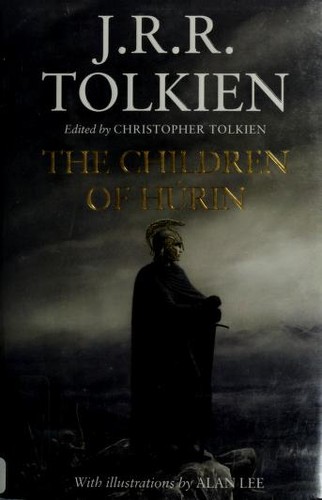
JRR Tolkien, edited by Christopher Tolkien and illustrated by Alan Lee · Buy on Amazon
Philip Pullman and illustrated by Chris Wormell · Buy on Amazon
"These illustrations! You must see these illustrations. Chris Wormell works by making wood engravings, then bringing them to life in rich colour. You can see examples online of how his sketches led to final wood engravings, and there’s a lovely interview with Wormell explaining his process on In The Reading Corner . You might recognise his style from the covers of Pullman’s new books in the same world, The Book of Dust trilogy. But these fully illustrated editions are something else. The illustrations are full colour; the edition is roughly A4, with two columns of text to a page."
Philip Pullman and illustrated by Chris Wormell · Buy on Amazon
"The main conceit to know is that in this world, people have daemons. These are a sort of external soul in the form of an animal – a psychically linked companion that can never move too far from you. By adulthood, their form is fixed, but children’s daemons can shapeshift. This is central to the plot, but also massively central to the fantasy appeal. Reading it, you want a daemon so badly."
Terry Pratchett and illustrated by Paul Kidby · Buy on Amazon
"There are a lot of huge series on this list. This is a standalone novella, so it’s a good one if you’re not quite in the market for these epic adventures. It’s illustrated by Paul Kidby, of course – if you don’t know the name, you’ll immediately recognise the style. He’s worked extensively on Pratchett’s writing. Here, the book was conceived as a fully illustrated, large-format edition. ‘Illustrated’ doesn’t do it justice. Even the text-only pages are given an aged-colour look and careful design choices. There are plentiful double-page spreads and in-text illustrations, all colour throughout. And perhaps my favourites, there are regular extracts from the notebook of mad-genius inventor Leonard of Quirm, self-consciously styled on the notebooks of Leonardo Da Vinci (even featuring Rincewind as the Etruscan Man); these are full of little notations, adding more detail than you find in the main text. Oh yes. Also Captain Carrot, and the Librarian, and Lord Vetinari, and a brief cameo from Death… In fact, this book is the ultimate tour of Discworld, because one unfortunate group of characters are hoping to drop off the edge and catapult themselves back round again. For anyone who doesn’t know, Discworld is carried by four elephants who are standing on a turtle. Maybe you didn’t realise that what you needed in your life was an illustration of the underside of Discworld, among the elephants, but now you know."
C.S. Lewis and illustrated by Pauline Baynes · Buy on Amazon
"And illustrated throughout! It’s a large hardback, with two columns of text to a page. Colour illustrations throughout, and a ribbon for keeping your place – I am a huge sucker for a ribbon. Baynes knew C. S. Lewis personally – actually, she met Tolkien first, who loved her work and introduced her. She did the original line illustrations for the books, which she has water-coloured here. If you grew up with the black-and-white editions, it’s a surreal stepping-into-Oz moment to see them in full colour."
C S Lewis · Buy on Amazon
"A little like Lee for Tolkien and Kidby for Pratchett, Baynes is the visual voice accompanying Lewis. This anniversary edition had to be her. And did I mention it has a ribbon?"

The Best Sci-Fi & Fantasy Novels, as Chosen by Fans: the 2024 Hugo Award (2024)

Scraped from fivebooks.com (2024-08-20).

Source: fivebooks.com

Cover of Translation State
Ann Leckie · Buy on Amazon
"Yes. As well as getting nominated for both lists, Leckie won the ‘best series’ Hugo for the Imperial Radch trilogy – and Translation State takes place in the same universe. So she has received a lot of well-deserved accolades here. You can tell, as you read Translation State, that you’re in a richly developed universe. There’s subtly drawn political intrigue between multiple groups, not easily reducible to the good and the bad. There are social complexities too, notably the highly developed pronoun vocabulary required to cover the gender concepts of the different species and societies. This latest book reflects the outcomes of political decisions made in the trilogy, so the world has a sense of history too. Translation State is totally self-contained. You are following three stories, which gradually become one – a diplomat investigating a fugitive, an ‘every man’ character of importantly-uncertain heritage, and a truly alien character who is being raised in a strange colony of even-stranger children, all destined for ‘matching’. What is matching? Why do these children eat each other, and why does no one seem to mind? Leckie reveals information at a masterfully controlled pace, keeping the reader curious. It’s this curiosity, and mortal fear for the characters, that keep the pages turning. But Leckie is the rare author that can spin a page-turning plot and build a truly interesting world . Two characters wish to declare themselves legally human, and must explore what it means; untranslatable cultural differences abound; readers are confronted with the idea of merging minds to form new identities. There’s lots to think about."
Cover of Witch King
Martha Wells · Buy on Amazon
"It’s exciting to see this fantasy from Wells, who is most famous for her sci fi series Murderbot . In fact, Wells declined a Nebula nomination for that series this year – for the second time – because it has already received so many accolades. This is another rich world, but it’s carefully underexplained. The effect is evocatively murky – quite literally sometimes, with dark scenes underwater and one in the ominous underearth. We are following a demon who is embodied in the human world now, but has origins in the underearth; he is pitted against Hierarchs, who use the magic of expositors; witches are present, on the side of the heroes; and the Immortal Blessed are a powerful and morally divided group. Magic is fuelled by pain, inflicted on the self or others. This makes for some chilling scenes. Yes, it concerns high politics, and there’s plenty of mortal peril for the characters. You are following two timelines at once – a past resistance, and now a plot against the still-young regime that the resistance birthed. The book is serious about the long, slow work of political change – when one character wants to burn the world, they are told, “Unfortunately, someone else has already burned it. We need to unburn it.”"
Cover of The Saint of Bright Doors
Vajra Chandrasekera · Buy on Amazon
"I really loved this book! It is the rare fantasy world that feels completely real, and at the same time strange and sublime in places. It put me in mind of Diana Wynne Jones , although she writes primarily for children; Chandrasekera has the same light touch, whereby high magical stakes can feel somehow secondary to your delight in exploring the world – a high stakes story that reads like a low fantasy, in the best possible way. We are following Fetter, the child of a god-like figure called ‘The Perfect and Kind.’ The Perfect and Kind abandoned both Fetter and his mother. The mother wants Fetter to assassinate his father; Fetter wants to live a normal life in the nearest big city, attend his support group for the unchosen children of powerful parents, and forget about it all. This is, of course, impossible. “The Hugo Award has been a fixture for speculative fiction since 1953” The city of Luriat feels South Asian – Chandrasekera is Sri Lankan – and entirely convincing. The magic woven throughout is beautifully strange. Fetter can see devils of all sorts that other people don’t, clinging to the sides of buildings or shuffling horribly down streets. His father’s Saints have powers of their own – one spends days surveilling the city from the skies, pacing in strange patterns overhead. And of course there are the bright doors: doors that were left closed too long, and now won’t open again. In Luriat, all doors are required to have openings or windows, to prevent them turning into bright doors. Yes! Things don’t really enter the realm of the surreal until Fetter goes to prison. Here, he walks and walks: you first realise that the prison seems to be a sort of city in itself, then slowly gain the impression that it is more than this, somewhere slightly beyond the normal rules of space and time. From this point on, the magic is more impressionistic and strange. Chandrasekera has led us masterfully to this point, so that we are ready for the more dream-like passages."
Cover of The Adventures of Amina al-Sirafi: A Novel
Shannon Chakraborty · Buy on Amazon
"This one is so much fun! Al-Sirafi lived a swashbuckling life as a pirate, but since she became a mother, she has tried to live safely and quietly. She is convincingly drawn out for one last job, first by rewards, then – as things get more dangerous – by threats. So an adventure on the high seas ensues – and it’s a rollickingly good time. More specifically, we’re on the Indian Ocean, in the 1200s. You can tell a lot of research has gone into this – both into the politics of the region, and the legends which infuse the story. We’re essentially in our own world – the existence of non-human entities is taken for granted by the characters, but their appearance is alarming, and not experienced by regular landlubbers who don’t meddle. But Al-Sirafi can’t stop running into them. Sometimes she’s fighting them; sometimes she’s receiving magical aid from them; sometimes she’s ill-advisedly marrying them. Yes, it has the convincing ring of a sea-going epic, with all the set-piece encounters along the way. And each one is really distinctive and exciting. There’s a loveable crew too, and the sad feeling of farewell when the story’s over and you have to leave them behind. The ending sets us up for more Al-Sirafi adventures, and I hope they’re coming."
Cover of Starter Villain
John Scalzi · Buy on Amazon
"This novel is pure entertainment, very skilfully executed. Charlie Fitzer inherits his deceased uncle’s business, which is – although the optics of the word is not always ideal – villainy. The FBI are almost immediately after him, so he relocates to the volcano island lair (which exists for purely practical reasons). He is soon swept up in managing a labour dispute with the dolphins, but the real problem lies beyond his island’s borders: the other villains. His uncle was not popular, and now, neither is Charlie. Oh, and his pet cat turns out to be part of an intelligent cat spy network. While laying this groundwork, Scalzi pokes plenty of fun at the tropes of villainy, wryly exploring the practicalities of really making it work as a business. Then the thriller gets underway, as negotiations between the villains begin, and we are caught up in the urgent need to understand who is double-crossing who. Lives are at stake. And everyone has zippy one-liners. This is very tight writing. The denouement makes satisfying use of apparently-trivial earlier details, and keeps you guessing until the very last reveal. Yes! With The Kaiju Preservation Society . A very similar vibe – if you enjoyed one, you’ll like the other. I think Starter Villain is my favourite of the two."
Cover of Some Desperate Glory
Emily Tesh · Buy on Amazon
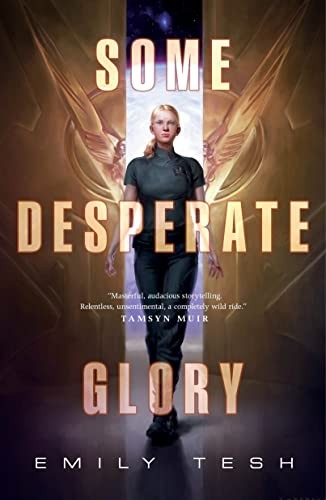
"Some Desperate Glory starts as a convincing, straightforward yarn about an outpost of human survivors on a space station, Gaea. Earth has been destroyed by an all-knowing benevolent AI, the Wisdom, and the humans left behind are righteously angry. No-one is more committed to their vengeful cause than our hero, Valkyr. But almost immediately, you see the cracks that she is blind to: this regime seems despotic and manipulative, and their cause and methods questionable. We join the story just as Valkyr is about to have her faith tested. This section of the book rattles along apace, but you may be surprised to arrive at what feels like the denouement with a hefty chunk of the book still to go. That’s because this is only the first denouement. The Wisdom hasn’t shown Valkyr everything it can do yet. Alternate universes are about to come into play. There is nothing complex about these universe-resets, but the result is satisfyingly twisty and rich, as characters with different sets of memories encounter each other in different timelines, and we see how different versions of reality shape their distinctive personalities. This makes for a compelling and moving character arc for Valkyr, as she adjusts her understanding of the people she thought she knew, of herself, and of her idea of victory. She is surrounded by characters we care about, and want to see in each new setting, which makes for a compulsive page turner. The mechanisms are not startlingly new, but the execution is excellent: thoughtful and thoroughly entertaining. The Chicago Review of Books said that “it’s hard to overstate how good this novel is at what it’s doing. Some Desperate Glory takes tried-and-true material and elevates it remarkably.” August 20, 2024. Updated: December 2, 2024 Five Books aims to keep its book recommendations and interviews up to date. If you are the interviewee and would like to update your choice of books (or even just what you say about them) please email us at [email protected] Support Five Books Five Books interviews are expensive to produce. If you've enjoyed this interview, please support us by donating a small amount ."

Five Lesser-Known Novels by Fantasy Greats (2025)

Scraped from fivebooks.com (2025-12-26).

Source: fivebooks.com

Terry Pratchett · Buy on Amazon
"This is Terry Pratchett’s first novel: astoundingly, he wrote it when he was seventeen. In the Author’s Note, Pratchett says of his younger self, “I thought fantasy was all battles and kings. Now I’m inclined to think that the real concerns of fantasy ought to be about not having battles, and doing without kings.” So when this book was reprinted after the success of Discworld , he did some re-writing – opening his Note with the intriguing announcement, “This book had two authors, and they were both the same person.” I don’t think so. It would be interesting to compare it with the original. This version is very Pratchett and really charming. The central conceit is that a whole civilisation lives in the carpet. The people are miniscule: for a sense of scale, a one penny piece has formed a vast unscalable bronze edifice from which they mine all the metal used in the world. Great hairs grow everywhere, a part of their world as natural as trees, and fluff forms the other major landscape feature. Geography is defined by furnishings and changes in the carpet. If you have a patterned carpet to stare at, this book will stick with you. Within this world, there are multiple peoples. Most are part of something very like the Roman Empire . Some others are loveable non-conformists. Some are very un lovable non-conformists, and they are the enemy to be battled. And there’s a wise elder race who see the future, although in true Pratchett fashion, this group are also gently mocked. Loosely, yes. Don’t expect any great tactical shenanigans, though. It’s mostly a jaunt through the carpet with some fun characters, enjoying the invention of the world along the way. And a chance to see where it all began for Pratchett ."
J R R Tolkien · Buy on Amazon
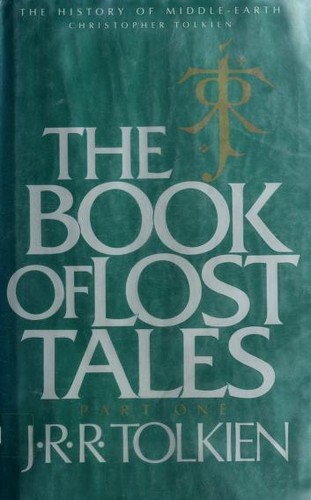
"Yes. The Book of Lost Tales itself is a work that Tolkien began in 1916-17, aged twenty-five, and is the first narrative work on the history of Valinor and Middle-earth. However, the subtitle – “A History of Middle-earth” – applies to a larger book series that also reproduces other work from throughout his life. The Book of Lost Tales takes up the first two volumes, but there’s more beyond that to explore. The editor is his son Christopher Tolkien, and there couldn’t be a better guide to the texts. In his forward, he discusses the process behind The Silmarillion , where he needed to make choices between inconsistent and messy extant texts to bring everything into a single coherent narrative. In this series, he presents pieces as they were left, without making editorial choices. It’s one for real Tolkien fans who would like to get in the weeds of his lifetime’s creation themselves. No, there’s always a commentary essay, but it comes after the text. Linguistic comments and changes to names are dealt with in annexes. The idea is that you can get at the text itself without interruption if you want, and also follow Christopher Tolkien’s editorial insights. Another Inkling. Yes, sure. The Inklings were a group of writers in Oxford who met to read and critique each other’s work – the Eagle and Child pub claims them particularly. The most famous members were Tolkien and C. S. Lewis ."
C S Lewis · Buy on Amazon
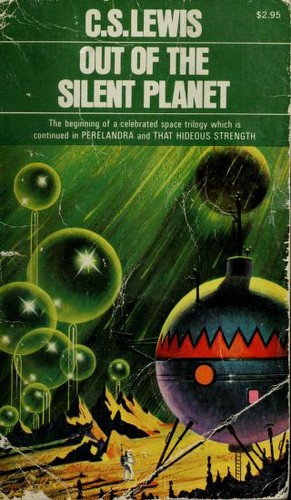
"Yes. This is the first in the Space Trilogy , and as implied by both titles, this is technically Lewis trying his hand at sci fi . But it reads like fantasy. There is something mythic and luscious about his version of Mars, which is not Mars in any meaningful sense at all. We might as well have gone through a wardrobe. Dr. Elwin Ransome is kidnapped and sent to Mars against his will. In keeping with elements of his fantasy, Lewis does not seem to think highly of those who want to cross worlds – Ransome’s kidnappers in this case. They are up to no good, out to line their pockets with limited respect for the life forms of Mars. Ransome, meanwhile, becomes engaged in a quest-like story to meet a great power on the planet. The fantasy feel strikes you immediately when you read it, and you don’t have to dig very far to confirm that it was very much Lewis’ intention; he wrote to one Roger Lancelyn Green, “I like the whole interplanetary ideas as a mythology,” and recommended Voyage to Arcturus by David Lindsay in the same letter as being “entirely on the imaginative and not at all on the scientific wing.” To Ruth Pitter, he wrote, “From [ Voyage to Arcturus ] I first learned what other planets in fiction are really good for: for spiritual adventures. Only they can satisfy the craving which sends our imaginations off the earth. Or putting it another way, in him I first saw the terrific results produced by the union of two kinds of fiction hitherto kept apart: the Novalis, G. Macdonald, James Stephens sort and the H. G. Wells, Jules Verne sort.” (Although, I should add, he abhorred the actual content of Lindsay’s philosophy). His aim, then, is to move you, myth-style, and I think he has a fair amount of success. It’s beautiful in places, and also interesting to realise he was writing against the implicit morality he saw in much other space exploration writing. Also, while we’re digging into the origins – Dr Ransome is a philologist and uses his specialism to learn the aliens’ language. There are definite shades of Tolkien there… We’re back at the Inklings again."
Lewis Carroll · Buy on Amazon
"This one’s only brief – you might want to consider a complete Carroll if you’re looking for a version to have on your bookshelf. But for me, the Snark is the standout of his non-Alice pieces. I think you either like nonsense poetry or you don’t. For me, the poems were the best part of the Alice books. I can still recite all of The Jabberwocky by heart; The Mad Gardener’s Song is a family favourite; if I’m feeling indecisive, I sometimes hear myself think, “Will you, won’t you, will you, won’t you, will you join the dance?” And The Hunting of the Snark has that same sticky quality. What can I tell you about the story? They’re hunting a Snark. ‘They’ being a baffling crew, particularly starring the bellman, a beaver, and a butcher with a special talent for beaver-butchering. And if you want to know how well the hunt is going, or what a snark is, this is not the poem for you. Exactly. Although in my view, Carroll is a master because he makes just enough sense. Meaningful things seem to be happening all the time – you just wouldn’t want anyone to quiz you on them afterwards. I could have put Mervyn Peak’s nonsense poems in this spot – A Book of Nonsense, or the posthumous and comprehensive Complete Nonsense. These are fun, and Gormenghast fans might appreciate that Complete Nonsense offers some intertextual interest. But it’s Carroll’s poems that still rattle around my head days after reading them. I think he’s the front-runner. If you read Snark , you will ever have these comforting words to recite in times of striving: “You may seek it with thimbles—and seek it with care; You may hunt it with forks and hope; You may threaten its life with a railway-share; You may charm it with smiles and soap.”"
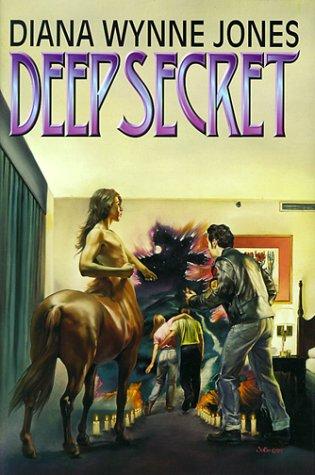
Diana Wynne Jones · Buy on Amazon
"Yes. Exciting news for those of us who grew up on Wynne Jones: she wrote the occasional book for adults. And while her children’s books often have that ageless quality, it’s fun to see her in a specifically adult vein. It feels like meeting up with an old friend from school who has bafflingly become a grown-up in the intervening years. Her life as a fantasy writer clearly infuses Deep Secret, adding to the feeling that you are on some level hanging out with real adult Diana: it is all set at a science fiction convention. One of our two narrators, Rupert Venables, is seeking out a new senior magid among the attendees, who are innocently going about their convention business. I like to imagine she started this in a convention hotel room… Oh, not at all. The magic is very on brand. We’re in a magical multiverse. It contains Ayeward worlds and Nayward worlds, which can be crossed magically but at great peril. As ever with Wynne Jones, the workings for this feel both practical and under-explained – as though we are seeing them through the eyes of somebody down-to-earth, with no interest in constantly asking why things work. There’s a second narrator, a convention attendee, which leads to some fun twisty storytelling. Wynne Jones’s other dual-narrative novel is The Merlin Conspiracy, which is back to her usual junior fiction – but it is, in fact, technically a sequel to Deep Secret. So for anyone who read Merlin when they were young, there’s an added appeal."

Five Lesser-Known Books by Sci Fi Greats (2026)

Scraped from fivebooks.com (2026-02-28).

Source: fivebooks.com

Ursula Le Guin · Buy on Amazon
"Yes – most of Le Guin’s sci fi is part of this universe. But it’s a universe , not a world, so it encompasses very varied settings. The most famous ones are Left Hand of Darkness and The Dispossessed , which are wonderful – particularly The Dispossessed , which is maybe the best exploration of political systems I’ve ever seen in a sci fi novel. But there are a handful of other Hainish novels, as well as short stories, that you hear less about. I’ve chosen The Telling because it’s so utterly unique. It’s the last novel she wrote in the cycle – it came out in 2000, when Le Guin was 70. It’s a sci fi novel that reads like a philosophical discourse, and also like a rebuttal of much of the ideology you might find in other sci fi. Our hero Sutty has been sent to observe the planet Aka for the Ekumen – the Ekumen is a league of planets that sends envoys to other worlds as anthropologists-cum-diplomats. Le Guin’s own parents were anthropologists, and it shows: her worlds are nuanced, real, and hard to pin down. In Aka, a scientistic bureaucracy has taken charge and is cracking down on old ways of life, including the religious tradition (a non-theistic tradition – Aka has no concept of God, or the soul). For Sutty, who left our own planet when religious fundamentalism took over, it is an adjustment to realise that the zealots here are the rationalists. Anti a certain strain of sci fi, for sure, although the genre has been shaped now by writers like her. Le Guin’s stories are always about humility and caution, not gung-ho advancement and adventure. But here her critique applies equally to much of religion, and to any system that makes people too certain. Sutty tells a state official that he is her enemy because he is “the true believer. The righteous man with the righteous mission. The one that jails people for reading and burns the books. “ She becomes deeply sympathetic to the old way of life, and its core institution, the Telling – the passing on of a vast medley of stories with no hierarchy or central theme. This puzzles her at first – “The jungle was endless, and it was not one jungle but endless jungles, all burning with bright tigers of meaning, endless tigers” – but she comes to appreciate its purpose. I won’t try and summarise its purpose, because it’s too multi-faceted for that. Really, this novel is not about the story – there isn’t much of one. You stay to learn more about Aka and the Telling, and because Le Guin is an astute philosopher. Here’s an example, where a character speaks, and we might be reading an existentialist novel: “Animals have no language. They have their nature. You see? They know the way, they know where to go and how to go, following their nature. But we’re animals with no nature. Eh? Animals with no nature. That’s strange. We’re so strange. We have to talk about how to go and what to do, think about it, study it, learn it. Eh? We’re born to be reasonable, so we’re born ignorant.” Some writers could make a novel like this amazingly boring. I’ve always hated Huxley’s The Island , where characters just drone on about the political and social arrangements of their world and how great it is. But Le Guin’s worlds are too complex and rich to be boring. It’s not didactic. It’s an exploration."
John Wyndham · Buy on Amazon
"If you don’t think you know John Wyndham , you need only hear his most famous titles: The Day of the Triffids and The Midwich Cuckoos , which besides the recent TV series was previously dramatized as the film The Village of the Damned. But he wrote many other wonderful books, including two short story collections. Seeds of Time captivated me as a teen, and I was prompted to re-read it when I interviewed Wyndham’s biographer , Amy Binns. Images from the stories had lived on so strongly in my mind that when I re-read it I kept feeling, “Ah – that’s where that’s from.” The stories are really simple, but haunting, cut off at infuriatingly well-chosen moments – what choice will the itinerant tinker make? Does the gun-wielding mother really do what Wyndham implies? What was next for time-travelling Tavia? They’re also interesting as a whole collection, because while the themes are all very Wyndham, the story types are very varied. Wyndham writes in his forward that the combination of sci fi with the “adventure-narrative form of story is primarily an accident of commercial exploitation,” and that when editorial tastes broadened post-war, he was able to write more widely: “the ten stories I have chosen here are (or were) virtually experiments, made at intervals during fifteen years, in adapting the science-fiction motif to various styles of short story.” He’s interested in the small human stories that will be created by big technological changes. Here, time travel causes a tangled love story, as do parallel universes; time travel also creates embarrassment and outrage for a small town who are being snooped on. Space travel causes humans to grapple with loneliness and to lose their humanity. The sci fi thought experiment is always merely a premise for a tight tale looking at how we do, or might, or mustn’t behave. He’s also a hopeless romantic, reflecting his own lifelong partnership, so there are a lot of love stories. And there’s his ambivalent presentation of women. This was published in 1956 and written over the preceding decade, so brace yourself for the gender norms, but often while the men are busy underestimating the women, the women are outsmarting them. It was fascinating hearing from Binns about this – Wyndham thought that marriage and motherhood enslaved and stupefied women, so he was both quite feminist in his ideas about the lives women should ideally lead, and not very positive about women as he in fact found them."
Douglas Adams & John Lloyd · Buy on Amazon
"Yes. As they explain in their foreword, there are a lot of daily experiences without words, and a lot of words that do nothing other than “loafing about on signposts pointing at places.” So they match place names – ranging from villages to countries – to new definitions, so that these useless words can “make a more positive contribution to society.” Douglas Adams is known for The Hitchhiker’s Guide to the Galaxy , the definitive comedic sci fi – equally-beloved in radio, book and TV form. Here he works with John Lloyd, who co-wrote some of the radio episodes with him, and is also the producer behind shows like Not the Nine O’Clock News , Spitting Image and Blackadder . It’s exactly as funny as you’d expect. Yes, and it’s amazing how much variety they get out of that. Many are of the “that’s painfully familiar” school – “ Samalaman n. One who fills in the gaps in conversations by beaming genially at people and saying, ‘Well, well, well, here we all are then’, a lot”, or “ Deventer n. A decision that’s very hard to take because so little depends on it – like which way to walk round a park.” But some are pure whimsy – here’s one at length that is a small world in itself: “ Grimsby n. A lump of something gristly and foul-tasting concealed in a mouthful of stew or pie. Grimsbies are sometimes merely the result of careless cookery, but more often they are placed there deliberately by Freemasons. Grimsbies can be purchased in bulk from any respectable Masonic butcher on giving him the secret Masonic handbag. One is then placed in a guest’s food to see if he knows the correct Masonic method of dealing with it. This is as follows: remove the grimsby carefully with the silver tongs provided. Cross the room to your host, hopping on one leg, and ram the grimsby firmly up his nose, chanting, ‘Take that, you smug Masonic bastard.’” Then you have the definitions referring to each other in a serial running gag – an “araglin” is a medieval practical joke which results in all sorts of follow-up archaic words for its consequences; the successive running gag – “Corriearklet” through to “Corrievorrie” all define the various stages of noticing-and-then-pretending-not-to-notice someone at the other end of a long corridor; and the almost onomatopoeic – “ Caarnduncan n. The high-pitched and insistent cry of the young male human urging one of its peer group to do something dangerous on a cliff-edge or piece of toxic waste ground”. Some of the definitions are given charming usage ‘examples,’ as in “‘She went all gallipoli in his arms’ – Noel Coward”. And after all these, they still catch you off guard with the occasional subversion of form you haven’t seen yet. I laughed out loud at “ Parrog n. God knows. Could be some sort of bird, I suppose.”"
Isaac Asimov · Buy on Amazon
"Yes. This was a tip-off from an interview for this site with Alec Nevala-Lee . He pitched it so well that I was immediately sold: “It essentially covers all of science.” He wasn’t kidding. The contents page is amazing: a series of headings like “The Particles,” “The Waves,” “The Atmosphere,” “The Microorganisms,” “The Machine”… Now, it was written in 1984, so it is of course not up to date. But it begins from the beginning, so that’s still a lot of human curiosity and ingenuity to cover. This is my favourite thing about it – he walks you through each topic in order of discovery, explaining what the question or problem or prevailing belief was, and how the breakthroughs came about. I was struck immediately by the opening of his first chapter, “The Universe,” in which he points out that the sky doesn’t look all that far away, and walks you through early theories about the firmament in a way that makes you realise how utterly reasonable they were. It’s a great book for awakening your scientific curiosity, and your appreciation for what an incredible edifice of knowledge we’ve built, from a world that reveals so few of its secrets intuitively or to the naked eye. Oh, absolutely. It’s up there with his novel writing. And you can see why. I’m not saying you’ll be able to charge through all 800-odd pages in one sitting, but it is clear and fascinating, and picking out a chapter for a train ride or a leisurely morning is well worth your time. And if you want to then go and read about the developments since 1984, you’ll have a really solid foundation – not just what we already knew where Asimov leaves off, but how we knew it, and what questions we were still grappling with. You become part of the quest."
Kurt Vonnegut · Buy on Amazon
"First, a word on classification. Vonnegut himself wrote, “I have been a soreheaded occupant of a file drawer labelled ‘science fiction’ … and I would like out, particularly since so many serious critics regularly mistake the drawer for a urinal.” He has never quite been taken out, though: it’s hard to avoid if you’re going to write about time travel and aliens. But yes, you’ll find a blend of genres within his books. And here, he turns essayist, and speechwriter, and occasional playwright – it’s a collage of his thoughts over the years in any form, put together thoughtfully with original material. Again, I first read this as a teen, and I had absolutely never read anything like it. I now realise that many of his tenets stuck with me. Love or loathe him, Vonnegut writes with a clarity and force that allows you to love or loathe him – he distils his meaning into such clear, forceful pages that you can reckon with him directly. He has something to say. And that matters to him, as becomes evident from accumulated comments in this volume. In “Self-Interview” he says, “I think it can be tremendously refreshing if a creator of literature has something on his mind other than the history of literature so far. Literature should not disappear up its own asshole, so to speak.” And in the chapter “How to write with style” he warns that style alone is useless: “The most damning revelation you can make about yourself is that you do not know what is interesting and what is not… Find a subject you care about and which you in your heart feel others should care about.” It’s a great book for writers, both for demonstration and explanation of a certain approach. It’s a great book for fans of his work, revealing the experiences behind them, and commentaries such as his own grading system (an A+ for Cat’s Cradle , a D for Slapstick ). And it’s a great book for some bracing, scattergun thoughts on how to live. He thinks “we are all experiments in enthusiasms”; he thinks we are all dogged by the “existential hum” of “embarrassment. I have somehow disgraced myself”; he thinks the best thing to be doing with our lives would be to “create stable communities in which the terrible disease of loneliness can be cured”, and lacking religion (a theme he explores at length), we also need urgently to “expound theories about life in which sane human beings… can believe”. It’s direct and opinionated, and even when you don’t like it, it’s galvanizing. And it’s more nuanced than it seems at first, too; taken as a whole, he’s doing something more subtle than any one sentence suggests. He’s getting at the same things good sci fi does, I think. You can feel his deep interest in how society shapes humans, and how society justifies itself in peculiar ways, and how insanely we can all behave. If you want to get back to why we should care about imagining humans in different societies, with different technologies, but still full of all their humanness – read Kurt Vonnegut . And letters, and a funeral address (which made me tear up), and columns… Plus original material he wrote to hold it all together. Not everything’s a winner. It’s a shame the tedious chapter on Genealogy comes up second – skip it – and I didn’t get anything much from his dramatized Jekyll and Hyde. But overall, there’s remarkably little fluff. Only in his parting essays do you suddenly see a real vulnerability, a sadness. He doesn’t preach as someone who feels he’s cracked living himself, by any means. There’s much that’s personal in this, but no overall just-so story of his life to be drawn from it – perhaps following his own writing advice: “All you can do is tell what happened. You will get thrown out of this course if you are arrogant enough to imagine that you can tell me why it happened. You do not know. You cannot know.”"

The Best Portal Fantasy Books (2025)

Scraped from fivebooks.com (2025-09-01).

Source: fivebooks.com

C S Lewis · Buy on Amazon
"Yes. It was written later, but in the timeline it comes first. I prefer it, and I think it’s criminally underrated. Polly and Digory are neighbours and friends, and they are exploring the attics joining their houses, when they realise that they have accidentally found a way into the forbidden study of Digory’s uncle. I think a lot of good portal fantasy starts with something that feels like it should lead to another world – anyone who explored a strange, liminal, slightly-off-limits space as a child will remember the feeling that they were on the brink of discovering somewhere entirely other. In Polly and Digory’s case, they find Uncle Andrew and his magic rings. And through some disgraceful trickery, he manages to get them both to touch the rings and so become his experimental subjects, transported at once out of this world. Beautifully, they aren’t immediately in another world as such – they are in the wood between the worlds, a peaceful forest full of identical round shining pools. It’s the pools that lead to the other worlds. It takes them a little while to work this out, and work out the magic of the rings. Well – in the end yes, and I don’t want to give away too much there – but first they find themselves in Charn, a dying world. They wake Queen Jadis, a formidable woman quite determined to go back to earth with them and rule it… If you’re familiar with the later books, you might be able to guess who she becomes. Along the way, they rip up a lamppost and plant a tree that is later cut down to become a wardrobe… There are so many lovely touches for readers who know The Lion, The Witch and The Wardrobe. But it’s also a beautiful little standalone."
Diana Wynne Jones · Buy on Amazon
"Yes, there are some striking parallels. This is also a standalone prequel written after the original (which was Charmed Life ), and it also features an in-between space that leads to the other worlds… There is some great research on the recurring features of childhood play, and one common motif is liminal spaces – spaces that don’t quite belong to one place or another, and haven’t got an allocated use – alleys and gaps and abandoned spaces. The unused attic space of old townhouses, in the case of The Magician’s Nephew . I think these between-world spaces really tap into that. But there’s an additional brilliant touch in The Lives of Christopher Chant , which is that this in-between space is accessed by dreaming. Christopher doesn’t realise that other people’s dreams aren’t like his. He simply gets up each night and finds the corner he needs to turn to enter ‘the place between the worlds’, a rather formless and unfriendly valley. That’s right, and I think it’s a big part of the appeal. All the adults in Christopher’s life have designs for him, and argue with each other over his future, and shunt him around to all these places he doesn’t want to be. But at night, he’s off exploring a series of worlds, and it’s not dangerous or scary or confusing – he’s very confident pottering around in them, enjoying some independence there. He hangs out with mermaids and breaks into temples and tries weird foods and just generally explores. It’s not a huge deal. Sometimes he’s too tired and he can’t be bothered. This is the beauty of Diana Wynne-Jones, I think. Her magic feels so real, because it’s never overblown. It’s just another fact in people’s lives. It turns out that Christopher can only dream this way because he’s a nine-lived enchanter, and that means he’s going to have to train to be the next Chrestomanci, a hugely important magical job – and he reacts as you would if you wanted to stay at your boarding school and play cricket, and instead you are sent to live with stuffy government bureaucrats. It feels incredibly real, and so easy to get immersed in."
Susanna Clarke and Chiwetel Ejiofor (narrator) · Buy on Amazon
"I love this book. I really, really love this book. As portal fantasy it’s a little unusual – we spend most of the book in the secondary world, and understanding the relationship to our world is an important thread in the book. Which I won’t spoil. But this book isn’t just unusual portal fantasy, it’s unusual full stop. I’ve never read anything like it. When I read fantasy, I really want it to surprise me, to do something I’ve never seen before – and Piranesi delivers in spades. Piranesi is our main character, who is writing in his journal, the text we are ostensibly reading. He lives almost entirely alone in a vast house full of statues, which is periodically flooded by tides. Everything about his survival here he undertakes alone, and it’s hard won, but he seems content. He doesn’t seem too sure about his past, or the nature of the House – he’s just here. And he doesn’t know anything about the Other, the only other person ever seen in the House. He thinks of him warmly, he’s always hopeful of seeing him. It really gets straight to your heart, this poor man – he’s named all the statues, as well as the bones of some mysterious previous inhabitants, just to populate his world. Ah, but it doesn’t feel that way, or not entirely. As Piranesi writes: “The Beauty of the House is immeasurable; its Kindness infinite.” There’s a real calm, a sort of terrible beauty – it’s a world full of water and lilies and clouds and impassive white statues, and Piranesi himself is so free of any pretension or angst. I think Clarke is evoking a state of mind, a kind of solitude, that can be appealing in its own way. And that provokes questions… but I’ll leave that train of thought there, not to spoil anything. It’s a really short novel. I recommend trying to read it all in a short space of time. It’s such a meditative piece, with such beautiful echoes in the imagery, that you don’t want it too broken up."
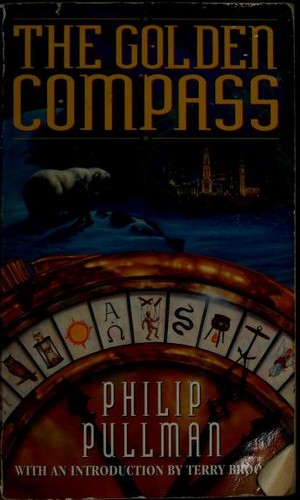
Philip Pullman · Buy on Amazon
"Full disclosure – when I read this book as a teenager, I found it very stressful, and it was hard for me to enjoy it. Right in the opening, the main character believes they have killed someone. I was an angsty guilt-inclined child, and that was in my mind the absolute worst thing that could happen to anyone, to have become a killer; and it was much too real to me. Now, I would say it’s to the book’s credit that I believed in such a bold opening so absolutely. And re-reading it as an adult, I could relax enough to appreciate the tour de force that follows."
Philip Pullman · Buy on Amazon
"Yes, and that’s where this book begins. It gives a fantastic realism punch. There’s a thrill, coming straight into this one from the first book: we’ve just left Lyra and daemons and talking armoured bears, and suddenly we’re in residential suburbia in Oxford, with a son worrying about his mother and her mental health problems and the very earthly authorities who might interfere. And you think, how is this going to relate? Am I really going to find out that this ordinary, fairly bleak reality, a piece of my reality, belongs in the same universe as Lyra? And that’s the beauty of portal fantasy – linking our world to the magic. I think it speaks to the way that sometimes there’s suddenly a new idea, or a new person, or a new decision, or a moment of transcendence – and, briefly or permanently, our ordinary world opens out."
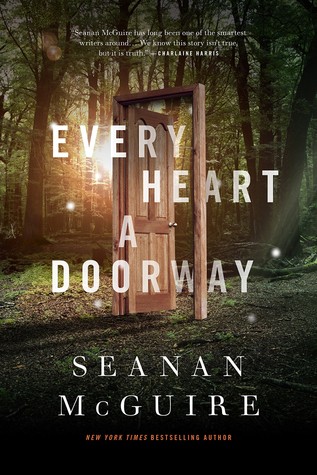
Seanan McGuire · Buy on Amazon
"Yes! Ah, it’s such a sad premise. In this book, there’s a special home for teenagers who have been through a portal, and come back, and can’t find their way out again. They love their worlds. Nancy has been in the land of the dead, and she desperately misses the slow, quiet transcendence of that world. Her heart is broken. Of course, no one believes her – until she is taken to Miss West, who runs the home and the others under her care, who have all gone through their own doorways. Nancy’s parents believe it’s a rehab-type institution, but really it’s a sanctuary. They are each other’s best comfort. All of them are deeply strange as citizens of this world, but perfectly suited to the world they left – pleasingly representing, between them, the standard gamut of fantasy and sci-fi vibes you might expect to find on a well-stocked bookshelf. The book itself is then structured around a murder mystery. It’s neatly executed. But it’s that core concept that has stuck with me. Yes, it’s a novella. It won the Nebula, the Hugo and the Locus for best novella. It reads perfectly as a standalone, but it’s the first in a series, so there’s plenty more there for people who would like to linger a little longer. Which, I suppose, is exactly the opposite of the wayward children’s predicament. Exactly! What a perfect idea."

Award-Winning Sci Fi Novels of 2024 (2024)

Scraped from fivebooks.com (2024-12-03).

Source: fivebooks.com

Cover of Some Desperate Glory
Emily Tesh · Buy on Amazon
"This is a cleverly crafted book, uniting several well-loved sci fi themes: space-station life, alien contact, AI overlords and alternate universes all come into play. But the overall result is fresh. The Chicago Review of Books put it well: “it’s hard to overstate how good this novel is at what it’s doing. Some Desperate Glory takes tried-and-true material and elevates it remarkably.” Earth is destroyed, and our protagonist Valkyr is part of the vengeful human contingent left behind, living a meagre existence on their space station base. This militia is shot through with bigotry and cruelty, and faithful Valkyr reproduces all of this in her beliefs and actions. I wouldn’t go that far; she’s a sympathetic character. You feel for her, but you can’t entirely like her – at the start. There’s a clear character-arc for her throughout the novel. This is cleverly moved forward when the universe ‘resets’ to new timelines, which allow Valkyr to meet herself and her friends in different possible realities, and be exposed to new ways of thinking. But this isn’t a ponderous character study: the action is pacy throughout, and the stakes high. It’s very fun."
Cover of In Ascension
Martin MacInnes · 2023 · Buy on Amazon
"Yes, this is a literary entry on the list. It’s as much about the family relationships and personal experience of our hero as it is about scientific exploration. There’s plenty of hard science in here, but it’s used not so much for boisterous adventure, as for a meditation on the wonder and strangeness of biological life. Not that there isn’t adventure. We follow Leigh, a biologist, first on a deep-sea dive and then on a space mission, both perilous. But the perils are uncertain and mysterious, and never become battles or action sequences. In space, Leigh’s role is the provision of fresh growing plants on board for the small crew to eat. Space itself is of secondary interested to her – in her own words, ‘“Life is already alien, is already rich and strange…We don’t need to say it arrived seeded on a meteor to make it more so.”’ This is a book to re-awaken your wonder: the Times Literary Supplement described it as “a primer to marvel”. Well, that’s sort of the point – Leigh isn’t making time for her mother, while her sister stays behind with her. So we reflect on their differences as people, their different childhoods and difficulty connecting with each other. It’s not two separate strands; all of this is blended into Leigh’s experience of the world."
Martha Wells · Buy on Amazon
"Yes, this is the seventh work in the Murderbot Diaries series. The series has garnered awards galore: the first, All Systems Red , scooped the 2018 Hugo and Nebula for best novella, while the fifth (and first full-length novel), Network Effect , won the 2021 Hugo, Nebula and Locus for best novel. Wells has turned down several further nominations. It’s best that way, and All Systems Red is a lovely bite-sized place to start. The world-building is deft but dense, and the character relationships are a large part of the joy, so working through them in order is more rewarding. And System Collapse follows straight on from Network Effect. ‘Murderbot’ is the self-styled nickname of the protagonist, a former ‘SecUnit’ (security unit) robot that has slipped its control program and acts as an independent agent. It has a charmingly ambivalent relationship with the humans in its life, and a preference for spending time watching the thousands of hours of entertainment downloaded onto its system and being left alone. But, begrudgingly, it doesn’t actually want its humans to die. Not letting the humans die is complicated in System Collapse . Our heros vye with corporate interests for the future of a planet and its colonists, who for their part don’t know who to trust. Muderbot’s team consists of humans, augmented humans, robots with organic parts and pure AI, all with their own well-sketched relationships. It’s fun, it’s fast-paced, it’s delightfully sarcastic and world-weary – full of lines like “we proceeded down the stupid tunnel, into the stupid danger.” Murderbot is all of us, getting on with the jobs we have to do, and doing our best to get on with the people involved. In this novel, Murderbot’s narrative is frequently interrupted by <redacted>; you have to wait until about a third of the way in to learn why. It’s a new playful layer in an already playful narrative voice."
Brian K Vaughan & Fiona Staples (Art Work) · Buy on Amazon
"Yes, this is the second Hugo for the Saga series – the first went to Volume 1 in 2013, so if you’re new to the series, you can start with another award winner. I’ve included it here with sci fi, but it’s regularly filed as science fantasy or fantasy too – and that’s indicative of the general playful richness of this world. Think space opera, with robots, but also with magic. It’s a very appealing world unconstrained by genre. It straddles the epic and the personal with the same flexible ease. In this volume, you’ll move between the politics of a planet and a moon at war with each other, the machinations of assassins trying to find their victims, and the daily struggles of a single mother and her two pre-teen children trying to make ends meet. These threads all belong together – the mother is among those hiding from the assassins, and connected to the war effort – and the telling of all three levels is cleverly spliced together, sometimes flicking back and forth at speed. The result is a satisfying sense of moving parts seen from above, the narrative pieces clicking into place as you read."
R.S.A. Garcia · Buy on Amazon
"Short stories are the lifeblood of science fiction ; it’s always interesting to see the nominees and winners in this category. Tantie Merle and the Farmhand 4200 is a great example of how much can be accomplished in a small space. Tantie Merle is having trouble managing her chores as she ages, with her children far away from her home in Trinidad and Tobago. To help out, her daughter sends her the highly sophisticated Farmhand 4200, which enthusiastically turns its learning powers to accomplishing any task Tantie Merle requires. This includes tying up the goat. Unimpressed, the goat eats it. So the little Farmhand reconstitutes itself and sets its steely will to devising a method of successful goat-wrangling. You can’t help rooting for the little guy, who lets itself be eaten so many times over, while learning to knit with Tantie Merle in its time off. The story is light and full of laughter, and you feel almost tricked when you realise you have just read a story about labour rights, personhood and dignity. And goats, of course. Part of our best books of 2024 series December 3, 2024. Updated: June 28, 2025 Five Books aims to keep its book recommendations and interviews up to date. If you are the interviewee and would like to update your choice of books (or even just what you say about them) please email us at [email protected] Support Five Books Five Books interviews are expensive to produce. If you've enjoyed this interview, please support us by donating a small amount ."

The Best Teen Fantasy Books Set in Britain (2024)

Scraped from fivebooks.com (2024-02-09).

Source: fivebooks.com

Neil Gaiman · Buy on Amazon
"Suitable for middle-grade readers and up, but beloved of adult readers too, Gaiman’s debut novel Neverwhere makes playful use of geography: place names in London take corporeal form. Gaiman is taking inspiration from language here as much as place. Richard Mayhew stops to help a young girl, Door, with dire consequences: he finds himself invisible to ‘London Above,’ and is forced to travel instead through ‘London Below’ – a hidden world of forgotten misfits, rats, and personified places. Teamed up with Door, his quest includes a visit to the Earl’s Court, a run in with the Black Friars, a little help with forging from Hammersmith, and a meeting with the Angel Islington – all references to London Underground stations. These London personae are mixed in with more obliquely inspired characters – the Marquis de Carabas is drawn from the tale of Puss in Boots, for example, while as far as I know Anaesthesia the Rat-Speaker is an entirely new creation. The result is one of my favourite effects in fantasy: the sense that a hidden world has left traces on our own world, in partial and jumbled fashion, just as a truly hidden world would . Of course one character shows up in a station name, and another in a legend, and another not at all. London Below, then, really feels as though it could exist. And it has one other important virtue: the magical conceit replicates, and magnifies, how the real place feels. Yes, you can become invisible in London, and you can lose yourself underground – so why not literally? And who would be surprised, on arriving in the world of London’s lost, to find out that the rats are important citizens?"
Diana Wynne Jones · Buy on Amazon
"Diana Wynne Jones also makes use of personified places in The Merlin Conspiracy , but here the geography encompasses all of Britain, which is visited on rotation by the King’s Court – the City of Salisbury is in play, as is down-at-heel Old Sarum , keen to remind anyone who will listen that he is only a poor rotten borough. But because this is Diana Wynne Jones, this idea is only a small fraction of the whole fantasy edifice. First, a personal reason to love this book: Diana Wynne Jones replied to my fan mail when I was a young fantasy reader, and told me that I might enjoy her next book, The Merlin Conspiracy . Reader, I did. And I still have that letter framed on my bookshelf. But I promise that the book is still well worth reading, even if you don’t happen to have a treasured signed letter from the author telling you about it… There are two protagonists, who tell the story in alternating chapters: Nick Mallory in our own Britain, and Roddy in parallel-universe-Britain, where the same recognisable geography is referred to as the Isles of Blest. The Merlin is a political office in Roddy’s Britain, alongside the King. The old Merlin has died, apparently of natural causes, but Roddy suspects foul play; and so she embarks on a perilous quest to uncover the political conspiracy at work, forced into an irritating alliance with Nick from the other-Britain. In a fashion typical of Diana Wynne Jones, we also spend time in liminal paths between the worlds. And we encounter co-existent, independent magic systems – Roddy’s father’s weather-working for the King’s Court has little to do with these liminal paths and the totems that live there, which have little in common again with the ultimate great powers evoked to save the day. The strongest powers in this world are those drawn from British mythology, with an appearance from Gwyn ap Nudd – the ruler of the fair folk and leader of the wild hunt in Welsh folklore – proving decisive. Again, there is the sense that magical reality has left its imprint on our layman’s knowledge in various ways: we know something of Gwyn ap Nudd , and we once had a Merlin, although to Roddy’s great surprise this important political office has faded in our own Britain."
Susan Cooper · Buy on Amazon
"A variation on Merlin also appears in The Dark is Rising , and other Arthurian characters will appear throughout the series. The Dark is Rising is actually the second book of the series, but much like The Lion, The Witch and the Wardrobe , it dominates its predecessor – Over Sea, Under Stone – in popular imagination. It is also much better than Over Sea, Under Stone , and there’s a special fascination in reading one after the other – and imagining what happened in the interim, when Susan Cooper took herself from a competent writer of magical capers to a compelling narrator of myth-like, atmospheric, under-explained epics. Will Stanton is the seventh son of the seventh son, and coming into his powers in a snow-buried village in Buckinghamshire round the mid-Winter solstice. He learns that he is the latest instantiation of one of the Old Ones, and locked in an ancient battle between Light and Dark. He needs to obtain certain signs, and keep them from the Dark Rider. This central story is a textbook fantasy quest. But the book is brought to life by the contrast between this deeply unsettling magical world, which Will is assured he has inhabited before and must now re-inherit, and the world where we first found him: the hordes of siblings preparing for Christmas, wassailing and wrapping presents and worrying about the logistics of journeys through the snow. Both worlds are happening at once, and some characters can cross between the two. Whenever Will is cosy at home, we are wondering if he will shortly need to confront a magical foe he barely understands. Best read around Christmas time, somewhere snug."
Frances Hardinge · Buy on Amazon
"In contemporary publishing, Hardinge is the queen of younger teen stories, a largely neglected space in young adult publishing right now. Her magical concepts are always elegant, with a single paranormal addition to our world that changes everything for the protagonist. Here, the premise is an unsettling one: some people have the capacity to store spirits of the deceased inside themselves – a living vessel for the dead. Our hero Makepeace loses her mother in the first English Civil War, when a riot breaks out between Parliamentarians and Royalists. She is sent to her relatives, where she discovers her own status as a living vessel, and flees to Oxford. This brings the story right back into the heart of the war, which is no incidental backdrop – this is historical fantasy, heavily entwined with the real conflicts of the time. Hardinge reliably offers rich reading for teens. Her books are thoughtful, and always packed full of an interesting ‘something else’ – here, the Civil War – in addition to the magical conceit. But the research never feels heavy handed, and Makepeace’s story is entirely compelling."
Melinda Salisbury · Buy on Amazon
"Another contemporary choice, Hold Back The Tide completely took me by surprise, and is an all-time favourite that deserves a much wider readership. It’s set in the Scottish Highlands, and follows Alva Douglas in her routine work checking the water-levels of the lochs. This odd task seems to be of great concern to her father. From the very opening, the tension is set to maximum: Alva’s father murdered her mother, and Alva has been biding her time until she can escape, fearing the consequences if he discovers her preparations and realises her intentions. From here, the dial is somehow turned up on the tension, as fantastical elements begin to creep into the narrative – and we no longer know who or what we should be most afraid of. The pace doesn’t let up until the shattering finale. This is one of those books where story and setting seem perfectly in harmony, and you can’t imagine the events taking place anywhere else. Tales of loch monsters as we know them don’t feature, but the same deep cold mystery that inspired those tales makes Salisbury’s monsters feel perfectly plausible. All these novels, in their various ways, are an homage to the feeling that lingers at the edges of Britain’s distinctive landscapes: ever-changing, often rain-and-wind-swept, and home to a tapestry of folklore that is deeply, joyfully bizarre. My own book, On Silver Tides , uses the folklore of rivers and lakes in particular. Mythic water creatures appear in horrifying, mutually contradictory accounts, but also show up in more commonplace ways – Jenny Greenteeth, for example, is a river hag who snatches children, but also a name for duckweed. This made it easy to create that half-remembered, hidden-world effect that I love so much. Here, the hidden world belongs to ‘silvermen’: a secretive amphibious community, living on houseboats and protecting the river. The story follows Kelda as she guards her little sister, Isla. Isla can’t breathe under water, and should have been sent away from the family’s boat at birth. When the waterways sicken, Isla is blamed, and they flee. From here, the journey was heavily constrained by the geography of Britain’s rivers – I quickly learned that travelling underwater drastically changes your view of the country! As well as following the rivers’ routes, I started viewing the country in terms of geology and its effects on water – where are the rivers sharp and acidic; where are they soft, running over chalk-beds; which would still be fed by groundwater in summer, and which would flood suddenly in winter? And topography too: in Scotland, the tumbling rivers aren’t navigable by houseboat until you reach the Caledonian Canal. That makes Scotland a semi-magical place to this boat-dwelling culture. It was a joy to write something so rooted in place. And it was British fantasy books and legends that taught me to love hidden, half-forgotten worlds: snowy lands at the backs of wardrobes, cities under cities, slumbering Old Ones, sleeping heroes, dragons-in-hills, ladies-in-lakes, and dangerous fairies in the hollows underground."

The Best Fantasy Novels of the Past Decade (2025)

Scraped from fivebooks.com (2025-01-05).

Source: fivebooks.com

N.K. Jemisin · Buy on Amazon
"The world of these books is so unsettling and compelling, really brilliantly drawn. We’re on a planet disrupted periodically by its climate, a harsh period known as ‘the fifth season’. People live within comms; a special sort of person, an orogene, should not stay in a normal comm, and should instead be sent to the Fulcrum and trained by Guardians. They have supernatural control over energy, particularly the seismic, and can be dangerous if uncontrolled. We follow three orogenes with different relationships to this system of governance. It’s deeply unnerving. There’s an image early on in the book, where one of our three protagonists is being taken from her home by a Guardian as a child, and he is telling her a story as they ride. His strong hands are wrapped around hers, and she is starting to feel soothed. Then, at the relevant point in the story, he breaks her hands. This is Jemisin’s gift – finding the unpredictable, creating a fascinatingly uncertain world that will force you not to look away. All three books won the Hugo, one after the other, three years in a row. It’s the only trilogy to win a Hugo for all three books, and Jemisin is the only writer to win it three years back-to-back. It’s a big deal!"
Naomi Novik · Buy on Amazon
"Yes! I adore this book! A wizard known as the Dragon takes a girl once every ten years from the villages in a valley; in return, he protects the valley from the Wood, a forest that occasionally corrupts livestock or lost humans with violent madness, and is constantly trying to encroach on more territory. Our hero Agnieszka is an unlikely choice for the Dragon, so of course she is chosen. In his castle she discovers and begins to develop her magical talents. Thus far the book is folkloric and unsurprising, although beautifully told. But as the Wood steps up its strategies in this slow war, the story becomes incredibly gripping and strange. It is impossible to be quite sure who is in the grip of the Wood, and therefore who is safe to trust. The exact nature of the Wood itself is slowly, beautifully revealed. You read on because of genuine fear for everyone involved, and because of the beauty of the magic – the good magic and the evil – which is truly entrancing."
Charlie Jane Anders · Buy on Amazon
"Yes – Anders plays with the trope very explicitly. There are two children: one can (frustratingly infrequently!) speak to animals. One is a scientific genius. The two are on course to represent fantasy and sci fi archetypes, and – according to a vision seen by a morose and largely inept assassin – eventually destroy the world. This book is so much fun. From the moment Patricia, our witch, talks to a bird who introduces himself as Dirrpidirrpiwheepalong, you know you are in the hands of a capable entertainer. It’s pacy, it’s unpredictable, it’s inventive. And it is very playful about the tropes of nature and magic going hand in hand – very intelligently playful, questioning this separation of ‘nature’ as its own other realm. Yes! The next fantasy winner was in 2022, for the Nebula."
P. Djèlí Clark · Buy on Amazon
"This follows on from the short story A Dead Djinn in Cairo . We’re in 1912 Cairo. All the global politics of the real world is underway there, but inconveniently, djinn are real and rampaging around the city. Phatma is part of the government ministry responsible for keeping them under control. She’s sassy, she’s excellent at her job, she gets herself in trouble. It’s a great ride. Djèlí Clark is a historian as well as a writer, and this shows. In an interview for Five Books , he said he wanted to use the full richness of Cairo as a crossroads, as an ancient city, and as a modern seat of great events – ‘I think so many times when people do Egypt’, he told me, ‘they go immediately back to ancient Egypt’. There’s some fun had with the ancient Egyptian gods, but it’s a treat to read a novel taking a broader scope, and using the rich mixing of cultures that Cairo represents. A really enjoyable read."
Cover of Babel: An Arcane History
R. F. Kuang · Buy on Amazon
"Yes! There’s such an original magical concept at the heart of this book. A silver bar is engraved with the ‘same’ word in two different languages. However, the translation can never be direct, and whatever is lost in translation is produced magically by the silver. For example, gardens can be made magically tranquil if the word in one language conveys this tranquillity, and the other word does not. The engraving must be done by a native speaker. The romance languages have been plundered for all they can offer at this stage, so Britain is looking for native speakers of other languages further afield, bringing them to work on silver in a prestigious department of Oxford University. So this fantasy device provides a neat, graspable stand-in for the extractive nature of empire, and puts the choice of perpetuation or rebellion in just a few people’s hands. Will you translate for Britain? Will you do so if the distribution is unjust, and worse injustices are being perpetuated? This is the dilemma facing our heroes. There’s a little band of them, so this gives scope for you as a reader to worry about everyone’s choices – the possibility of betrayal is real, as is the possibility of a violent end for any one of them. Yes, and at the same time it’s beautifully personal. You spend a lot of the book eating the delights of Oxford’s cafes and working late in student dorm rooms and admiring libraries. You want our heroes to just be allowed to ignore the wider problems, and belong, and have a nice time. And that’s the whole dilemma."
Ursula Vernon, writing as T. Kingfisher · Buy on Amazon
"Yes. I love this book! It’s completely original, but also completely captures the classic spirit of fairy tales. Marra is trying to rescue her sister, who has married into powerful royalty, and is being terribly abused. So there’s a quest, and there are three tasks, and a fairy godmother, and the goblin market; and all the magic has the haunting, under-explained quality of true fairy tales. The images in this book are so striking. There’s a wheel full of the dead that chases you around an underground labyrinth of tombs, trying to crush and subsume grave robbers. There’s a woman being controlled by a sadistic puppet that sits on her shoulder, but she can’t bear the thought of being cut free from its power. And there’s humour – a particular favourite of mine was a chicken that is really a demon, but at the same time, emphatically a chicken. It isn’t based directly on any fairy tale. Ursula Vernon (that’s T. Kingfisher’s real name, which she also writes under) told us that The Princess and the Pea was a jumping off point: ‘It’s a very lighthearted fairy tale on the surface: and then you start to ask questions like, why does the prince want a princess who bruises that easily, and is that sensitive? And it gets really unpleasant really fast…’"
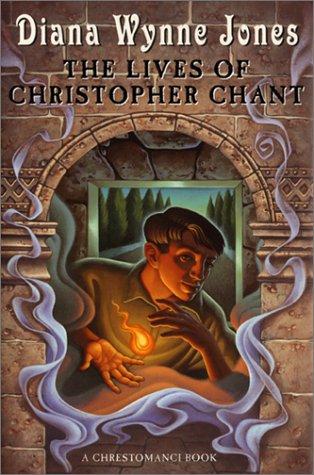
Cover of The Saint of Bright Doors
Vajra Chandrasekera · Buy on Amazon
"This is easily the book I’ve recommended to friends most often this past year – I think it’s one of those rare books that will please fantasy readers while also winning over non-fantasy readers. A real pleasure. Fetter is the son of a god. His mother wants him to commit patricide. He is not so keen. After an introductory look at his childhood, we meet adult Fetter, who wants to live in the nearest cosmopolitan city, go to a support group for the children of deities, and move on with his life. This is complicated by the inconvenient side effects of his legacy. He has no shadow, floats if he doesn’t concentrate, and can see the unsettling hoards of demons that cling to the sides of buildings and shuffle along ordinary streets. Other than this, he is getting on alright, to begin with – until his father comes to town. His world feels utterly real. Magic is mostly present in the form of minor unexplained phenomena, or religion; its creeping intrusion into Fetter’s life happens in a dreamlike way, and we are led expertly from magic-as-everyday to magic-as-numinous. A real masterclass in fantasy writing, and a joy to read."

The Best Sci-Fi & Fantasy Novels, as Chosen by Fans: the 2025 Hugo Awards (2025)

Scraped from fivebooks.com (2025-12-18).

Source: fivebooks.com

Cover of The Tainted Cup
Robert Jackson Bennett · Buy on Amazon
"Yes! This book also won the World Fantasy Award, and has been very well received – the New York Times describes it as “a thoroughly satisfying delight from start to finish.” There is already a sequel and a third planned, so this is well worth getting stuck into. It’s a murder mystery – the tense kind, where people keep on dying. It’s got the charm of a classic mystery, and in some ways a very conventional set up – our protagonist Din is a form of detective’s assistant, solid and reliable, while the detective herself is preternaturally brilliant, socially irreverent and thoroughly maddening. But that’s where the familiar territory ends. These are fantastical murders in a fantastical realm, all highly original. It’s damp and it’s dangerous. We’re in an outer canton of a world defined by the monsters at sea, the obliquely terrifying “leviathans”; and by the fearsome sickness “contagion”. The further you are from the seawall, the safer you are from both. This canton is not safe. It’s contagion that has kicked off the murder investigation. Spores took root in the victim, erupted into plant-life and sliced him open; and there is reason to believe that his infection was deliberate, an assassination. Din has been sent to investigate. He is an engraver, a person with an augmented memory, and will relay everything he sees to his superior Ana – who is something like a chief inspector. The world has its own (utterly convincing) political structure, so her actual title is Iudex. That’s the remarkable feat of this book – it creates a totally convincing secondary world without ever slowing the pace of the mystery to do so. Meanwhile, the mystery itself is pleasingly twisty, and the characters sparkle, especially Ana. I’m not surprised to see this taking two awards this year."
Cover of The Tusks of Extinction
Ray Nayler · Buy on Amazon
"This is another beautiful, unforgiving setting! The real world this time – we spend most of the book in Siberia. There are also some cutaways to Kenya. To understand the connection, you need to know the central premise: elephants are extinct now, but thanks to advances in genetics, mammoths are back. It takes a little while of perspective-hopping for the reader to sort out how the elephant-defenders of Kenya are linked to the threatened mammoths of Siberia – which is a satisfying process in itself. You spend much of the book joining dots and appreciating links between past and present; as Locus magazine expresses it, “In its braiding of associations, the novella operates poetically”. That feels true to me. Yes. Mercenary ivory hunters and luxury game hunters both feature. There is bafflement from Nayler about both these types – we see them from the perspective of reluctant members of their parties, appalled and alienated by the experience. There is a feeling that the luxury hunt is inexplicable, and both are unspeakably tragic. That’s reinforced by the fact that one of the perspectives we inhabit is mammoth. We see their slaughter through their compatriots’ eyes, as murder. The mammoth perspective is a particular delight – the most fantastical thing in this very plausible feeling world."
Chris Fenoglio (illustrator) & Ryan North · Buy on Amazon
"Yes! This is as far as we can get from Vo’s quick, tense story: it’s a choose your own adventure, so there are multiple twisty ways to work your way through it. As you do, you start to notice that the endings have something in common – and realise there’s something deeper at work here. There’s a reason for the multiple-ending format. Writer Ryan North has form with choose-your-own adventures, including Romeo and/or Juliet , and To Be Or Not To Be (a Hamlet take). It makes sense that he has written games, as well as his multiple comics and novels; this is a formally playful take on an already playful part of the Star Trek world. Yes. Lower Decks is an animated series looking at the lives of the junior officers – hence the title. We’re following, in the words of Paramount+, “the support crew serving on one of Starfleet’s least important ships”. As it sounds, this world is fun. Warp Your Own Way finds a lot of humour in the world-weariness of its protagonist and the chipper optimism of her friends (one of whom supportively tells the other “Aw… I like your murder plan too! And you came up with it super fast.”). Some of the quicker dead ends take you on charming detours – I elected not to help a friend with their tribbles (essentially a biohazardous guinea pig), but I was delighted to see that they were in there. There’s a Lower Decks comic miniseries too, also by North and Fenoglio. Fenoglio is a big hitter – he’s also worked on Star Wars , Batman , Goosebumps , and X-Files. Yes. As well as the Hugo, Warp Your Own Way also won the Aurora Award for Best Graphic Novel/Comic, and received rave reviews – “a clever, delightful book” from Strange Horizons , and “worth more than its weight in Latinum” from Comics Beat . Not one to miss for Star Trek fans – or fans of innovative storytelling."
Rebecca Roanhorse · Buy on Amazon
"Yes, and both the first two were Locus finalists. There’s gorgeous writing here, and some real originality woven in with the classic feel of an epic fantasy. We are in a world inspired by pre-Columbian Americas – an expansive world with convincing variety, and fractious inter-group relations. The worship of old gods has been banned, and the resulting godless culture is overseen by the Watchers, with the Sun Priest at their helm. There is a deep grievance held by worshippers of the Crow god, who suffered a massacre at the hands of the Watchers. That sums up the sides in the key conflict – although the world around these two camps is satisfyingly messy, with the marginalised semi-magical Teek people, other god-clans and magic users, and a criminal underworld all complicating the picture."
Rebecca Roanhorse · Buy on Amazon
"It must have been complex to write, but Roanhorse pulls off a smooth reading experience nonetheless. We jump back and forth in time, too, and that doesn’t confuse or distract either. You can relax and enjoy the drip feed of information, as the picture grows ever clearer."
Rebecca Roanhorse · Buy on Amazon
"Definitely. Grimdark magazine called Black Sun “a rare and wonderful fantasy novel”; Locus magazine a “brilliant work of art”. Really, all of these are a treat. It’s a wide-ranging list this year, with something for everyone."

The Best Sci Fi Novels of the Past Decade (2025)

Scraped from fivebooks.com (2025-01-17).

Source: fivebooks.com

Cover of The Three-Body Problem
Cixin Liu · 2008 · Buy on Amazon
"This book was actually written in 2006, but not translated into English until 2014. We now have the complete trilogy in English, as well as a Netflix adaptation, and it’s a big name among sci fi fans. Much of the book is spent guessing at the bigger-picture plot, so I don’t want to give too much of that away… The guessing happens in the company of nanotechnologist Wang Miao and detective Shi Qiang, who are investigating the multiple suicides of prominent scientists. In the course of their investigations, they play a VR game called Three Body. The challenge of the game is to help a planet whose climate is unpredictably destabilised by the presence of three stars in its sky; this produces cataclysmic changes which keep wiping out civilisations. Hence the title, The Three-Body Problem – the problem is a real unsolved problem in physics, how to predict the trajectories of three bodies that orbit each other if you have their initial positions and velocity. As this suggests, this novel is not one to read with half a mind elsewhere. You’ll have to concentrate. But you’ll be rewarded, both with the high stakes plot the game reveals, and with the satisfaction of the meditative read along the way. Yes! Very little of the enormous Chinese sci fi scene is translated into English, so it’s a pleasure to see this book so widely loved."
Cover of Annihilation
Jeff Vandermeer · Buy on Amazon
"Yes, and again there’s been a complete trilogy in the meantime, plus a fourth addition in 2024. Annihilation itself is very short and intense and creepy and beautiful. We follow four women on an expedition into Area X: the anthropologist, the psychologist, the surveyor, and our protagonist the biologist. We don’t know names, or much more about Area X; we are told very early that two of the band especially don’t need to be named, as they will die imminently. This is the whole tone of the novel – sparse, tense, mysterious. For all that, the descriptions are incredibly evocative. VanderMeer has said the inspiration was a walk through a wildlife refuge, and that shines through. There are accurately-labelled features of wilderness mixed in with the invented and uncanny – the nightly distant moaning, the increasingly-hideous ‘tower’ – so that the lines between the two are blurred. It’s a short read, and it grips you: a great choice if you feel a little out of the habit of immersive reading. Yes! That’s partly because the three books of N K Jemisin’s Broken Earth trilogy come in in 2016, 2017 and 2018, scooping the Hugo all three years, and the Nebula as well in 2018…"
Mary Robinette Kowal · Buy on Amazon
"Yes – and the Locus Award for Best Sci Fi novel, and the Sidewise Award for Alternate History. It’s 1952 – hence, the alternate history – and a meteorite has hit the USA. The immediate death and destruction is vast (and politically destructive too), but the real issue is down the road: as deduced by our protagonist Elma, the climate consequences are imminent and will make earth uninhabitable. The push for space begins. But it’s 1952, and sexism frustrates Elma’s push to be involved with the mission itself. When she makes it onto the team she’s a figurehead as the ‘lady astronaut’, and not everyone is pleased. Kowal is reliably fun to read; Reactor Mag said of Calculating Stars , ‘The end of the world is no laughing matter, but Kowal knows well the importance of levity, and the healing power of a laugh.’ Yes, you can follow this one up with The Fated Sky , and there’s also a short story, The Lady Astronaut of Mars . The complete set has been nominated for the Hugo for best series, too."
Arkady Martine · Buy on Amazon
"Yes! This is one for fans of careful politics, although at the same time it’s a high-concept space adventure. Our hero Mahit is beginning her role as ambassador from tiny Lsel station to the interstellar empire Teixcalaan. Lsel are underdogs, but they have a technological advantage which they guard secretively: the imago-machine, which allows the memories of one person to be integrated in the mind of another. Mahit’s predecessor died in mysterious circumstances and his imago is fifteen years out of date, so she is going without proper backup, and hasn’t had time to integrate him as she should. Both she and this new irascible voice in her head need to understand how and why he died, and deal with the greater political game that was afoot. The stakes are high, but Mahit’s moves must be careful. She is navigating a culture she isn’t entirely fluent in. When we spoke to Martine about the duology, she said, “They’re about assimilation. They’re about imperialism. They’re about languages. And they’re what I did instead of writing the book that was supposed to be the book of my postdoc, about Byzantine and Armenian history of the 11th century.” Yes! So both come highly recommended. A Memory Called Empire does resolve very satisfactorily; we meet the same characters a few months later in A Desolation Called Peace. Expect the same blend of the wildly imaginative and the thoughtful: The Guardian described the second book as “first-class space opera , with added spycraft, diplomatic intrigue and scary aliens, along with interesting explorations of perception, ways of communicating, and what makes a person.”"
Sarah Pinsker · Buy on Amazon
"Yes. The first thing to say about this book is that it was published in 2019, before Covid. I imagine most readers might assume otherwise now. It’s set in the near future: frightened by a combination of terror incidents and a pandemic, the world has gone inside and stayed there. Mass gatherings are still outlawed years later. If that didn’t feel enough like a post-Covid response, there’s even an illegal music venue called ‘The 2020’… It’s fascinating to read it now, and see what was psychologically insightful, what still resonates, what hits differently. For all that, this is not really a book about pandemics. It’s about live music. We follow a musician committed to live gigs, and a younger music fan who only faintly remembers a different world. The fan gets a new job: she’s employed by the corporation with an effective monopoly on the music business. This brings the two across each other’s paths. It’s a love song to watching and performing music live, and more broadly to making something, however small, rather than passively consuming. It’s a zippy read, driven by the page-turning missteps and misunderstandings. In amongst that, the sci fi elements – the near-future tech, and the implied commentary on our own direction of travel – are easily absorbed and believed."
Martha Wells · Buy on Amazon
"Yes, that’s right. The eponymous Murderbot has captured hearts. It’s a SecUnit, a robot designed to be a controlled thug, but it’s slipped free of its ‘governor module’. Now it works voluntarily with a team of its preferred humans, and it does fundamentally care about them, but that doesn’t stop it being an introverted, cynical, weary creature that mostly wants to be left alone to watch TV. So, it’s relatable. And very funny. Network Effect is the first full-length novel in the series. It’s worth starting at the beginning, with the novella All Systems Red : the series takes place in the future and in space, with a lot of new tech, and all the new political and commercial concerns of a navigable universe. You want to be brought into it all at the right speed, and if you read in order, Wells does it masterfully."
Cover of Some Desperate Glory
Emily Tesh · Buy on Amazon
"Yes! It was a tough field this year, so we have a very worthy winner here. Again we’re in the future, in space, with AI , but it’s an entirely different take. Earth has been destroyed, and we follow a young woman from the space station housing human survivors. They’re wronged, they’re angry, and they’re clearly being run as a tiny illiberal personal empire by their idolised leader. Valkyr only begins to wake up to this when she’s assigned to ‘nursery’ – child-bearing – instead of the soldierly posting she’d been expecting. From there, the unravelling of her world begins. You think you’ve got the measure of the book, and then you meet the central AI and its capabilities, and a whole new sci fi element is introduced that re-opens the game. From here we see Valkyr and other characters in different alternate timelines, wrestling to change the final outcome. Some Desperate Glory is pacey, imaginative and very enjoyable."

The Best Science Fiction & Fantasy Books of 2023: The Hugo Awards (2024)

Scraped from fivebooks.com (2024-02-28).

Source: fivebooks.com

Travis Baldree · Buy on Amazon
"Travis Baldree is the only debut author that made the shortlist for the title of ‘Best Novel’, and was also declared the winner in the ‘Best New Writer’ category. Legends and Lattes is a cosy low fantasy in a secondary world, in the cosmopolitan city of Thune, where magical inhabitants of all species are commonplace. We follow Viv, an ogre looking to change careers, as she opens a coffee shop and attempts to convert the denizens of Thune to the delights of coffee and cinnamon buns. Threats from personal vendettas fuel the tension, while a gentle romance and a cast of unlikely friends provide the real delight. As Baldree told me , “I wrote this as someone who did the same job into their forties and decided they didn’t like it, moved to a new city, started a new career, and discovered a whole group of people.” This is a novel about ogres and succubae, but it is mostly about finding a balanced and meaningful life. And it’s funny . A warm hug of a book; must be read with baked goods. The audiobook is a particular treat, as Baldree—an audiobook narrator by trade—reads the book himself. Legends and Lattes was acquired by Tor after initially being self-published, and it now has a sequel, Bookshops and Bonedust. (Seanan McGuire, when we spoke to her about the best urban fantasy books , confirmed that new book to be “delightful.”)"
Mary Robinette Kowal · Buy on Amazon
"Mary Robinette Kawal won this award back in 2019 with The Calculating Stars , in which a meteorite strike forces colonisation of the moon and Mars. Here, in The Spare Man , space is already inhabited; the futurist technology of the spaceship setting is richly imagined, but it is a backdrop to the plot, which is entirely unconcerned with space exploration or species survival. Instead, The Spare Man is a murder mystery . While some of the forward momentum derives from the need-to-know-who-dunnit, Kawal deftly holds readers’ interest through several mechanisms at once. The protagonist’s spouse is accused, building a powerful tension from the outset, and as the book unfolds the danger from both the true murderer and law enforcement mounts. This is intelligently crafted storytelling—as one might expect from one of the voices behind Writing Excuses , the writing podcast with a wealth of advice on plot and story drivers, which itself won a Hugo Award back in 2013 (for ‘Best Related Work’)."
Silvia Moreno-Garcia · Buy on Amazon
"Previously, Moreno-Garcia riffed on Edgar Allen Poe ; here she takes her inspiration from H. G. Wells ’ The Island of Doctor Moreau . At least, this is the most obvious inspiration. Moreno-Garcia herself has explained : I was not just looking at Wells—I was also very interested in the work of Ignacio Manuel Altamirano and his 1869 novel Clemencia . […] Altamirano and other Latin American writers were trying to create a different kind of book at this time, something that blends European Romanticism with Latin American specificities. I was looking back at Altamirano as much as I was looking at Wells. Moreno-Garcia’s novel The Daughter of Doctor Moreau takes place in Yaxaktun, Mexico, and follows two voices: Doctor Moreau’s daughter Carlota, and his mayordomo (household manager) Montgomery. The doctor is creating human-animal hybrids, claiming that they offer hope of medical advances—but he is also beholden to a patron, who hopes the experiments will ultimately provide cheap labour. The moral uncertainty is well-drawn, but takes a back seat to the human (or part-human) relationships. These feel real; there are no simplistic character choices made to serve romance or villainy, and the resulting relationships are unpredictable and compelling. The story also gains verisimilitude from its historical setting, with fact and fiction deftly woven together. The Daughter of Doctor Moreau feels plausible, set alongside the complex politics of indentured and immigrant labour. Moreno-Garcia has said that she likes grounding her work in historical fact “because the truth can be surreal. You can’t quite believe the things you find in footnotes.”"
Tamsyn Muir · Buy on Amazon
"Nona the Ninth is the third in Muir’s Locked Tomb series. Every installment so far has been nominated for a Hugo. Muir’s richly imaginative writing defies easy categorisation: of Gideon the Ninth, the Chicago Review of Books declared that “part of the delight of reading the novel is just how fearlessly it tosses together outlandish ideas with distinct elements from different genres. It’s a space opera about wizards; it shapes itself into cozy mystery ; it slides into slasher-horror, then cuts its way free with musketeer-level swashbucklery.” In Nona the Ninth, Muir steps seamlessly into more civilian, homely concerns. “Nona” has the body of Harrow, the titular character of the second book, and is suspected of having the mind of either Harrow or Gideon. Whoever she is, she is now amnesiac, and has a childlike mind in her older body. Forces far greater than Nona want her to be a weapon: she wants to play with a six-legged dog called Noodle. Family arguments and school days mix with necromancers and zombies, and with the potentially planet-destroying stakes that quite literally loom overhead. The result, writes Paste Magazine , is that Muir’s ‘hilarious prose is full of dark subject matter… but tons of heart’. The terrifying stakes are part of child-like Nona’s normal world, and the close third-person voice relays them with a chilling innocence."
John Scalzi · Buy on Amazon
"Previous Hugo Award-winner ( Redshirts , 2013) Scalzi returns with a sci-fi caper that begins in New York in the early days of the pandemic. The novel is, gleefully and explicitly, pandemic escapism – the book that Scalzi wrote when producing his intended brooding epic novel proved impossible. As Scalzi says in the author’s note: “It’s a pop song. It’s meant to be light and catchy, with three minutes of hooks and choruses for you to sing along with, and then you’re done and you go on with your day, hopefully with a smile on your face.” Right before the pandemic, Jamie Gray loses his job. From this starting point, Scalzi deftly escalates the gravity of Gray’s situation, so that by the time he is offered a vague but potentially dangerous job with a highly secretive organisation, we are willing him to take it. This sets the stage for his induction into the Kaiju Preservation Society – the body responsible for researching the monstrous inhabitants of another dimension. And, importantly, ensuring that they stay in that other dimension. A very funny and enjoyable caper ensues. Notably, no argument needs to be made here for an anti-extractive or environmentally cautious approach to the alien world. The good guys adopt this position as default; the bad guys are the bad guys precisely because they don’t, and the stupidity of this is treated as self-evident. The earlier arguments of writers like Ursula Le Guin have set the moral parameters."
Cover of Babel: An Arcane History
R. F. Kuang · Buy on Amazon
"Kuang previously won the Astounding award for Best New Writer – not technically a Hugo, but presented at the same ceremony – and her novel Babel has already won a 2022 Nebula award. Set in an alternate 1830s Oxford, it tracks several real historical events, but makes one elegant magical substitution: the source of the British Empire’s economic power. In this world, Oxford makes Britain rich through the production of silver magic. A silver bar is inscribed with the same word in two languages, and what is lost in translation is magically produced by the bar. As the conceptual gaps close up between European languages, more distant languages are badly needed. But there’s a catch: the magic can only be worked by a native speaker. This conceit allows Kuang to sharply clarify relationships of extraction, co-option and complicity. Four linguists are welcomed into the hallowed halls of Oxford. Their linguistic skills are directly required for the magic at the heart of the Empire’s power. The Empire is extractive: the benefits of the magic are not extended to the countries it relies on. What are our young linguists to do? We follow an orphan from Canton, Robin Swift. However, we are equally invested in his cohort, each of whom has a different experience and a different set of temptations and fears. The result is a very genuine tension: it is unlikely everyone will make it out both physically and morally intact, and the multiple possible dangers keep you reading on high alert. A thoughtful, intense read."
Ursula Vernon, writing as T. Kingfisher · Buy on Amazon
"Ursula Vernon—writing under her pen name T. Kingfisher—scooped the title of ‘Best Novel’ for the first time this year, but has previously won awards in the Graphic Story, Short Story, Novelette, and Series categories. Nettle and Bone follows Marra, the third and least important princess of a small kingdom, who is sent to a convent following her sister’s marriage to a powerful prince—he doesn’t want her producing any rivals to the throne. The tone is set: this man is trouble. When Marra understands just how much trouble, and how dire her sister’s situation is, she sets out to enforce justice. The journey is packed full of familiar motifs. She must accomplish three impossible tasks, visit a goblin market, encounter a necromancer-witch and a fairy godmother, and descend into labyrinthine tombs. Between these set-pieces and archetypal characters, we find a dazzling array of detail: a demon that is also, emphatically, a chicken; a woman voluntarily controlled by a horrifying wooden child; a crushing wheel of dead souls… This is fairytale fantasy. The magic is chilling and under-explained, considered supernatural even within the uncanny world of the book. And, as in fairy tales, that world is not universally good or kind. As the Chicago Review of Books has observed , Kingfisher’s novels “stand out from the particular trend in the speculative publishing industry to push for narratives that are more optimistic, agentive, and hopeful.” But Nettle and Bone is also very funny; as noted in Strange Horizons , Kingfisher “understands that humour and horror are twins.” Kingfisher herself has written of the need for humour and hope in heavy themes: “If a book can make you feel better and stronger and wiser, instead of paralyzed, then you can do something with that.”"

Suggest an update?