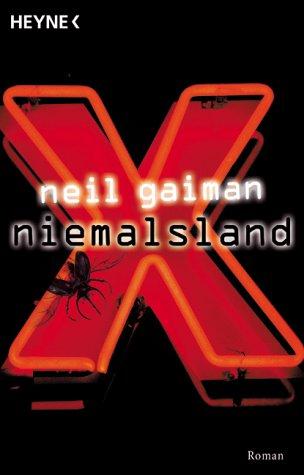
Neverwhere: A Novel
by Neil Gaiman
Buy on AmazonSuitable for middle-grade readers and up, but beloved of adult readers too, Gaiman’s debut novel Neverwhere makes playful use of geography: place names in London take corporeal form. Gaiman is taking inspiration from language here as much as place. Richard Mayhew stops to help a young girl, Door, with dire consequences: he finds himself invisible to ‘London Above,’ and is forced to travel instead through ‘London Below’ – a hidden world of forgotten misfits, rats, and personified places. Teamed up with Door, his quest includes a visit to the Earl’s Court, a run in with the Black Friars, a little help with forging from Hammersmith, and a meeting with the Angel Islington – all references to London Underground stations. These London personae are mixed in with more obliquely inspired characters – the Marquis de Carabas is drawn from the tale of Puss in Boots, for example, while as far as I know Anaesthesia the Rat-Speaker is an entirely new creation. The result is one of my favourite effects in fantasy: the sense that a hidden world has left traces on our own world, in partial and jumbled fashion, just as a truly hidden world would . Of course one character shows up in a station name, and another in a legend, and another not at all. London Below, then, really feels as though it could exist. And it has one other important virtue: the magical conceit replicates, and magnifies, how the real place feels. Yes, you can become invisible in London, and you can lose yourself underground – so why not literally? And who would be surprised, on arriving in the world of London’s lost, to find out that the rats are important citizens?