Steven Pinker's Reading List
Cognitive psychologist, linguist, and Harvard professor; author of The Better Angels of Our Nature and Enlightenment Now.
Open in WellRead Daily app →Steven Pinker's Top Ten Favorite Books
Curated for One Grand Books with personal commentary from Pinker.
Source: onegrandbooks.com

George Gamow · 1947 · Buy on Amazon
"A delightful introduction to number theory, Einstein's theory of relativity, higher dimensions, and other mathematical and scientific topics."

Richard Dawkins · 1986 · Buy on Amazon
"Perhaps the best display of expository scientific prose of the twentieth century. It gave me the idea to try my hand at the genre in The Language Instinct."

Donald Symons · 1979 · Buy on Amazon
"The founding document of evolutionary psychology, filled with insights about sex and the sexes."
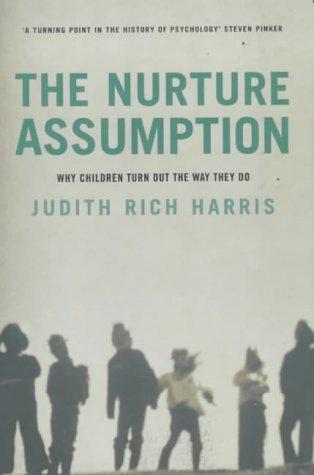
Judith Rich Harris · 1998 · Buy on Amazon
"A grandmother from New Jersey uses genetics, ethnography, and child psychology to refute the dogma that parents shape their children's intelligence and personality."

Rebecca Goldstein · 2010 · Buy on Amazon
"A moving, hilarious, and intellectually deep novel about religion and atheism."

Isaac Bashevis Singer · 1972 · Buy on Amazon
"Perhaps my favorite contemporary novel by someone I'm not married to."

Matthew White · 2011 · Buy on Amazon
"Brush up your history, and marvel at the cruelty and stupidity of our species."

Francis-Noel Thomas · 1994 · Buy on Amazon
"Perhaps the best analysis of writing style, and a major inspiration for my own The Sense of Style."
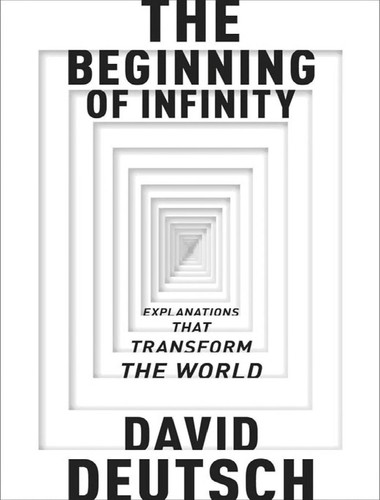
David Deutsch · 2011 · Buy on Amazon
"This 21st-century statement of the ideals of the Enlightenment offers fresh insight on a vast number of topics."

Stewart Brand · 2009 · Buy on Amazon
"The environment is not hopelessly despoiled and depauperate, says eco-modernist Stewart Brand."
Books from Intelligence Squared: Steven Pinker on Good Writing, with Ian McEwan (2014)
Extracted via LLM (gemini-2.5-flash) from auto-captions of Intelligence Squared (2014-10-11).
Source: www.youtube.com

Francis-Noël Thomas and Mark Turner · Buy on Amazon
"I've been influenced by a wonderful book called clear and simple as the truth by the literary Scholars Franc Noel Tom and Mark Turner."
James Joyce · 1922 · Buy on Amazon
"the genius was to use the resources of the English language... by issuing punctuation and doing many other things came as close as possible to using the resources of the English language to render a stream of Consciousness. He's a great writer."
The Decline of Violence (2011)
Scraped from fivebooks.com (2011-10-07).
Source: fivebooks.com

Oona Hathaway & Scott Shapiro · Buy on Amazon
"To my list I would add The Internationalists , in which Oona Hathaway and Scott Shapiro argue that the oft-ridiculed 1928 Kellogg-Briand pact outlawing war deserves much of the credit for the decline of war after 1945, when the United Nations put it into practice. The outlawry of war has functioned as a norm—“War is something that civilized countries just don’t do”—backed by economic sanctions and symbolic punishments. Those penalties are effective to the extent that nations value their standing in the international community—a reminder of why we should cherish and strengthen that community in the face of threats from populist nationalism today. To be sure, the norm is sometimes honored in the breach, most recently in 2014, when Russia annexed Crimea. But laws within a country are broken, too, from parking violations to homicides, yet an imperfectly enforced rule of law is better than no law at all. I’ve replied to various criticisms of Enlightenment Now here . [end of addendum] ___________________________ It was an obsession with human nature and its implications. In previous books such as How the Mind Works , The Blank Slate and The Stuff of Thought , I argued that evolution endowed us with a rich human nature – an intricate anatomy of emotions and ways of knowing. But the very idea of human nature raises, in many people’s minds, fears of fatalism, pessimism and nihilism. Does human nature doom us to perpetual violence, racism and oppression? I have always argued that it does not. Human nature is a complex system of many parts. And though it may have components that push us towards violence, it also has components that pull us away from violence. What can change over time is which of these components prevails. In How the Mind Works I briefly pointed out that rates of violence have changed significantly over history. Hunter-gatherer societies were far more dangerous than settled states. Rates of homicide have plummeted since the Middle Ages. Democracies have become more numerous. Forms of institutionalised violence such as slavery , harems and torture-executions – like burning at the stake or breaking on the wheel – have been abolished in most of the world. All these happy changes, I noted, represented the influence of components of human nature such as empathy, reason and the moral sense. Through a set of accidents, I came to expand those two or three paragraphs into a book of its own, The Better Angels of Our Nature . Violence has always been a source of inspiration for great dramatists and novelists, such as Homer , Shakespeare , and Tolstoy . But it also is a meaty subject for nonfiction writers. Some of the most intellectually substantive books on the history and psychology of violence are also written with great flair and wit."

Martin Daly and Margo Wilson · Buy on Amazon
"It is one of two books that first excited me about evolutionary psychology. The other was Donald Symons’s The Evolution of Human Sexuality . Homicide is a cornucopia of insights into human nature. The husband-and-wife team of Martin Daly and Margo Wilson were not so much interested in homicide itself as they were in human conflict – how the life goals of one person can clash with the life goals of another. They reasoned that homicides are the most extreme manifestation of violence, and that violence is the most extreme manifestation of conflict. As they put it in the book’s first sentence, “Killing one’s antagonist is the ultimate conflict resolution technique, and our ancestors discovered it long before they were people.” “Violence has always been a source of inspiration for great dramatists and novelists, such as Homer, Shakespeare and Tolstoy” The wonderful thing about homicide – sorry, you start to talk like that when you work on this topic long enough – is that it leaves behind unambiguous evidence. To wit, a dead body. Homicides have always attracted people’s attention, and they are easy to count. So homicide rates have been tabulated across the centuries and across societies in a more precise way than any other measure of conflict. By looking at the way homicides are distributed across different human relationships, you gain insight into the conflicts that animate social life more broadly. No, one of the striking findings about violence is how little of it involves physical resources. Tribal battles are often fought over women, sorcery and revenge. Police-blotter homicides are often triggered by insults, curses, jostling and other signs of disrespect, together with sexual jealousy. Very much so. That’s no coincidence. Shakespeare was one of the great students of human nature. Daly and Wilson approached emotion more prosaically. They divided killings by relationship: Homicides between unrelated men, spouses killing each other, siblicides, filicides, parricides, infanticides and various other kinds of -cides. Then they looked at the basic kinds of human conflict over resources like parental investment, sexual access, status and dominance, and how they could lead to antagonism and, in the extreme case, homicide. In other words: What do men and women have to fight over? What’s at stake in conflicts between unrelated young men? When do parents and offspring not want the same thing? These are the most fundamental questions one could ask about what brings people together, and what drives them apart. Daly and Wilson also reproduced in their book a graph from the social scientist Ted Gurr, which plotted homicide estimates in England from the 13th to the 20th century, and showed a decline by a factor of almost 50. I found this astonishing. Like most people, I had thought that the modern world had ushered in high levels of personal violence, like muggings, drug wars and drive-by shootings. I had no idea that by historical standards we were living in harmonious times. More than any other epiphany, that graph led me to write The Better Angels of Our Nature ."

Lewis F Richardson · Buy on Amazon
"This gem is out of print and hard to find, but it is revered among scholars who study war and genocide quantitatively. Richardson was an applied physicist who treated war as a statistical phenomenon. Writing in the early 1950s, when the ashes of World War II were still warm, the Cold War was in full swing and the nuclear arms race was underway, he defied every historian and pundit and wrote, “A long future may perhaps be coming without a third world war in it.” A half-century later, we know that the number-cruncher was right and the eminent historians were wrong. Yes, and intuition was exactly what he avoided. As the title of his book indicates, he approached war not as a narrative historian telling a story, but as a physicist looking at statistical patterns. Richardson was already a pioneer in the use of statistics to predict the weather, and he had also anticipated the invention of fractals by Benoît Mandlebrot several decades later. Get the weekly Five Books newsletter His main project was to assemble a database of 315 wars, from just after the Napoleonic wars to the early 1950s, and to test a variety of hypotheses about how they are patterned and what causes them. His first discovery was that wars start and stop at random. There are no cycles, no rhythm of tension and release. If you have a long period with many wars, that doesn’t mean that the world is due for a respite. Nor does a period of peace mean that tensions are mounting and inevitably seek release. Richardson also showed that the frequency of wars seemed to be decreasing over time – although the magnitude of wars, at least of the largest wars, may have been increasing. Subsequent studies have shown that he was right about the period from 1815 to 1950. But in the past half-century, both the frequency and the destructiveness of wars have been in decline. Any individual war has its causes, but the causes go in different directions for different wars, so in the aggregate there is no fine structure to the patterning of wars. Richardson did not deny that there could be a decrease or an increase in the rate of wars, even if their patterning was random. If you roll dice, the odds can change – for example from winning on 12 to winning on eight – while each throw of the dice, and the overall patterning, remains random. He pretty much stayed away from theory and tried to establish the quantitative patterns. But despite taking on a gruesome subject, he wrote with a puckish wit and interlaced the statistics with charming asides. He was a Quaker, and so by cultural background was predisposed to seek ways of minimising violence. His analyses, he claimed, were necessary steps in doing so. He writes: For indignation is so easy and satisfying a mood that it is apt to prevent one from attending to any facts that oppose it. If the reader should object that I have abandoned ethics for the false doctrine that ‘tout comprendre c’est tout pardonner’ [to understand all is to forgive all], I can reply that it is only a temporary suspense of ethical judgment, made because ‘beaucoup condamner c’est peu comprendre’ [to condemn much is to understand little]."

David Courtwright · Buy on Amazon
"Why is America so much more violent than other democracies? Why is the American South and Southwest so much more violent than the rest of the country? Why are African-Americans more violent than Americans of European descent? Courtwright takes on these puzzles in a rich narrative which weaves American history with evolutionary psychology and neurobiology. He argues that large parts of America were settled by young men living in anarchy. These are the ingredients for violent competition for dominance, which puts a premium on a reputation of toughness and resolve. He notes that young men’s competition for dominance was necessary for access to mating opportunities with women, in settings in which either the women are scarce and have to be fought over, or there is de facto polygamy, so a dominant man can have access to many females, leaving the not-so-dominant men mateless. The stereotype of the Wild West from the old cowboy movies is historically accurate. The American West – the gold rush towns, the mining camps, the itinerant workers’ camps in expanding America – saw horrendous rates of male-on-male killing. With murder statistics there was, as he puts it, “an abundance of other evidence that Gold Rush California was a brutal and unforgiving place. Camp Names were mimetic: Gouge Eye, Murderers’ Bar, Cut-Throat Gulch, Graveyard Flat. There was a Hangtown, a Helltown, a Whiskeytown, and a Gomorrrah, though, interestingly, no Sodom.” Courtwright also argues that the American West was eventually civilised by women. Once women started to seek their fortunes in the marriage market by moving west, they had the bargaining power to force the men into a civilised lifestyle more suited to their interests. The women spearheaded temperance movements to reduce drunken brawling, and joined forces with the church to force men into church and family life. They also worked to shut down the saloons and brothels, to steer the men away from their lives of boozing, whoring, brawling and gambling. I suspect that this combination of history and sociobiology solves a puzzle that has long baffled liberal America and Europe – why red-state America fetishises religion, sexual propriety and “family values”. Very much more so, and far more than in the northern and coastal United States – the divide we call “the culture war”. Based on Courtwright’s history, I suspect that the split arose from a history in which the American West, Southwest and South were largely civilised by women and the church, whereas the Northeast – like Europe – was civilised by government, commerce and the court system."

John Mueller · Buy on Amazon
"Not only is Mueller unfailingly insightful as a political analyst, but he is a stylish writer with a sardonic wit. In several books he has argued that war between states, particularly war between developed states, is almost obsolete. Though civil wars and clashes between militias persist, they shade into organised crime, and do far less human damage than two organised states mustering their might to destroy each other. Mueller first made this argument in the late 1980s, before the collapse of the Soviet Union and the end of the Cold War. He deserves credit for noticing the trend before it had come to fruition. He has been vindicated by statistics on wars in the decades since, which have shown that, in contrast to millennia of recorded history, today there are few wars between states and no wars between developed states. Mueller connects the repugnance of advanced countries towards war to a general humanitarian current that also led to the abandonment of slavery, foot binding, torture-executions, laughing at the insane and beating naughty children. In the West, war is no longer seen, as it was until World War I, as “noble, uplifting, virtuous, glorious, heroic, exciting, beautiful, holy, thrilling”. Now it is “immoral, repulsive, uncivilised, futile, stupid, wasteful, and cruel”. Quantitatively, there’s no comparison. Almost 60,000 Americans were killed in Vietnam, but less than a tenth of that number have been killed in Iraq and Afghanistan combined. Two to three million Vietnamese died, compared with some 130,000 Iraqis and 15,000 Afghans – the vast majority at the hands of their countrymen, not the Americans or the British. And this is to say nothing of the tens of millions killed in the World Wars. That’s very much a cause of the phenomenon. Even in America, the most truculent modern democracy, voters no longer tolerate massive casualties. One part of the explanation is that Hobbes got it mostly right. A disinterested judiciary and government with a monopoly on violence damps down cycles of revenge and vendetta, by taking people out of the role of their own judge, jury and executioner – in which they are bound to favour their own interests. If you put justice in the hands of a disinterested observer, disputes can be settled and aggression deterred, without cycles of revenge. Yes, that’s a large reason for the illusion that violence has increased. The human mind estimates probability from the ease with which it can recall examples. And since, in absolute terms, there will always be enough shootings to fill the evening news, as the news media becomes more effective at beaming images of violence to us we will naturally conclude that violence has gotten more prevalent. Perception is disconnected from the statistics."

Roy Baumeister · Buy on Amazon
"Baumeister reviews the various psychological roots of evil, and what we know about them from social psychology, history and criminology. He argues convincingly that aggression does not come from a single motive in humans, but from a variety of motives, such as practical means-end reasoning, moralistic vengeance, dominance and utopian ideologies. The widespread belief that evil acts come from evil minds is itself an interesting psychological phenomenon. Baumeister argues that the human conception of harmdoing, including violence, depends on whether one takes the viewpoint of the perpetrator or of the victim. A perpetrator psychology and a victim psychology can describe the same events in extraordinarily different terms. The perpetrator always believes that he is acting reasonably, that he was provoked by the circumstances, that anyone else would do the same thing, that the harm was minor, and that we should get over it and move on. The victim always thinks that the harmful act was deliberate, sadistic and inflicted only because the perpetrator delights in the suffering of the victim – that the damage is irreparable and that we all have a moral imperative never to forget it. Baumeister showed this in experiments in which people recalled a story about a minor harm as accurately as possible, while narrating it from the vantage point of the perpetrator or the victim. Though nothing was at stake, each emphasised details that the other omitted. Baumeister also notes that the viewpoint of the moralist is basically the viewpoint of the victim, whereas the viewpoint of the scientist overlaps with the viewpoint of the perpetrator. A scientist, who seeks to explain the causes of an evil act in terms of the context and general principles about human motivation, is bound to seem as if he is making excuses for the perpetrator, and minimising the harm the perpetrator has done. Moralists, by contrast, emphasise the harm, attribute it to an evil intention to make the victim suffer, and insist that the presence of evil in the world is ultimately inexplicable. Despite the risk of appearing to explain evil away, there is a moral imperative to understand the causes of evil, the better to minimise it. In doing so, we discover that many acts of evil are caused by motives that seem quite ordinary in the minds of perpetrators. Baumeister’s analysis overlaps with Hannah Arendt’s thesis of “the banality of evil”. That’s not a complete coincidence, since some of the classic studies in social psychology that Baumeister draws on – including Milgram’s famous experiment on obedience – were inspired by Arendt herself."
By the Book: Steven Pinker (2014)
NYT By the Book column (2014-09-25).
Source: www.nytimes.com
David Deutsch · 2011 · Buy on Amazon
"With the serene confidence that only a brilliant theoretical physicist can get away with, David Deutsch's "The Beginning of Infinity" defends the unfashionable view that the Enlightenment inaugurated an era of unlimited intellectual and moral progress."


Roger Brown · Buy on Amazon
"my adviser Roger Brown's 1958 classic "Words and Things""
Francis-Noël Thomas and Mark Turner · Buy on Amazon
"Mark Turner and Francis-Noël Thomas's "Clear and Simple as the Truth." Their model of "classic prose" — the writer directs the reader's gaze to something in the world — elegantly captures the differences between vigorous and turgid writing."

John Mueller · Buy on Amazon
"John Mueller's "The Remnants of War" explains how warfare has changed over the course of history, and how to deal with the remnants today."
Books from Conversations with Tyler: Steven Pinker on Coordination, Common Knowledge, and the Retreat of Liberal Enlightenment (2025)
Extracted via LLM (gemini-2.5-flash) from auto-captions of Conversations with Tyler (2025-09-10).
Source: www.youtube.com
Robin Hanson and Kevin Simler · Buy on Amazon
"Robin Hansen writes about that in his book with Kevin Similar where he gives some examples and I actually repeat them and add some of my own of cases where it's not an outright lie but it's a case where you there's some things that are true that you avoid saying."
Favorite books (2023)
Favorite books recommended by Steven Pinker, as compiled by radicalreads.com. Source article: https://radicalreads.com/steven-pinker-favorite-books/.
Source: radicalreads.com
Richard Dawkins (also rec’d by Neil deGrasse Tyson ) · Buy on Amazon
"Perhaps the best display of expository scientific prose of the twentieth century. It gave me the idea to try my hand at the genre in The Language Instinct , and had a strong influence on my own writing."