Sam Bourne's Reading List
Sam Bourne, a bestselling thriller writer, is the pen name of the journalist and broadcaster Jonathan Freedland . He has written a weekly column for The Guardian since 1997 and previously served as the paper’s Washington correspondent. His first novel, The Righteous Men , was a Sunday Times number one bestseller and his subsequent novels have all been top five bestsellers
Open in WellRead Daily app →The Best Classic Thrillers (2012)
Scraped from fivebooks.com (2012-02-20).
Source: fivebooks.com

John le Carré · Buy on Amazon
"This is an example of the meticulously supreme thriller. John le Carré really is the master of the form, and any list of thrillers has to include that book. It’s a very emboldening book for thriller writers, because it teaches you not to underestimate the understanding of your reader. They can be pushed and pushed. It is an incredibly intricate plot and yet, if you write it well enough, as he does, readers will stay with you. There are various leads that point in the direction of a traitor at the very top of the British intelligence tree. Our hero George Smiley, who has recently retired from his senior post in British intelligence, is brought back to find out who it is. It is brilliantly daring because much of the action is in the realm of shabby offices, manila envelopes, brown files and the mundane wheels of 1970s British bureaucracy, rather than James Bond-style action. Yet it is a brilliant book, and wholly absorbing. It is completely evocative of its era, and the plot is complex and intricate in a way that intelligence at that level actually would be. It is an amazingly satisfying read and just a perfectly constructed book."

Robert Harris · Buy on Amazon
"This book asks the question that many good thrillers ask: “What if … ?” The question here is: What if Hitler had won? That is such a bold and interesting concept. It is true that others writers had played with this concept before, but Robert Harris brilliantly executed it and sketches in an entire world of early 1960s Hitlerite Berlin. You have a Kennedy as president but it is Joseph Kennedy, which is a very ingenious thought about the United States with Adolf Hitler in Germany. What is so clever is that the book makes you read it as a suspense story when we already know the ending. The big twist is that there was a holocaust that involved the murder of millions of Jews, yet that is a huge secret. It is very daring that the revelation at the end is something that the reader already knows. As an example of a very well realised high-concept thriller, you don’t get much better than Fatherland. It paints a picture of a world that might have been, and that is a great achievement. Because if you see events through the eyes of a character and you buy into the internal logic of the book, then if the character doesn’t know it, that is suspense enough. So long as books like this have their own coherent internal logic, then all kinds of things are possible. In a funny way, knowing what the truth really is – for example that the holocaust did happen – gives the reader pleasure in seeing how it is being concealed. I have discovered that if you construct the internal world properly, then people will buy the action that takes place inside it."
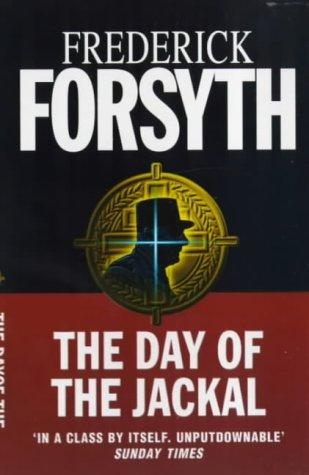
Frederick Forsyth · Buy on Amazon
"Again, the reader knows that Charles De Gaulle was not assassinated and therefore this book in a way should have no suspense, but instead it is full of suspense. I wanted to tip a hat to that. It is a book that excellently understood the importance of detail and process. Plenty of Frederick Forsyth imitators thought that is all you had to do, but actually you have to do a whole lot more. It is hugely important to get right the mechanics of how characters do things, and that can be enormously absorbing. The famous example from The Day of the Jackal is how the central character, the Jackal, creates a fake identity and gets a fake passport. Frederick Forsyth had discovered that there really was a loophole, where as long as you produced a birth certificate of someone who had died – which in those days was pretty easy to do – then you could pretend to be that person and get a passport. I have read somewhere that the loophole was cleared up as a result of the novel. And that is what makes the book compelling – you are observing the mechanics of an assassin who is a really blank character. He is unnamed, apart from being called “the Jackal”. He should be very blank, but it works because you buy into the idea of a traceless, faceless, ruthless killer. That’s right. It is so interesting how rules can be broken, because you would think that a character with no personality would be unengaging but actually it works very well. As you say, we can begin to speculate about what made this man like this. But there is also the procedural tension about how he will get from point A to B to C to D. It is one of those books that completely grips you."
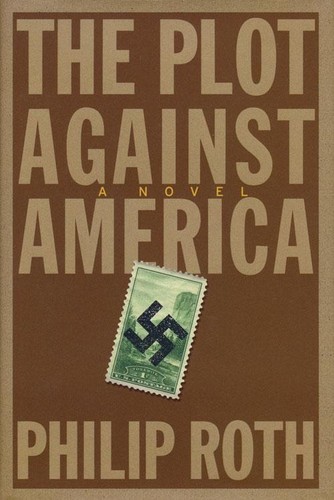
Philip Roth · Buy on Amazon
"Indeed. Critics might argue that it isn’t actually a thriller, but there certainly is a “what if?” element, and a changing of history. Philip Roth is obviously one of the world’s great literary novelists, so it is odd to call this a thriller. Nor is it one by any of the conventional definitions, because there is no solo protagonist who has to pull off some terrible feat. But it is very thrilling, and even if it doesn’t have a “man with a gun” dimension, as you have in The Day of the Jackal, it does have the “what if?” dimension and a hugely well constructed counter-factual universe, in the same spirit as Fatherland . Support Five Books Five Books interviews are expensive to produce. If you're enjoying this interview, please support us by donating a small amount . Roth’s “what if?” in this book is imagining that Roosevelt is no longer president, and Charles Lindbergh, an isolationist and anti-war politician, is president instead. So the idea is, “What if America had stayed out of the war and was morally on the wrong side?” I partly picked this because it is very much of the same period that Pantheon is set in. One of the things that writing Pantheon taught me is that the position we now take as almost a moral inevitability – that American and Britain were always destined to be on the other side, fighting the good fight against Hitler – wasn’t actually that certain at the time. It was contingent on sometimes quite marginal political calls. What got Philip Roth excited was that he read somewhere that the Republican convention in 1940 considered drafting Charles Lindbergh, the great aviation hero, as its presidential candidate. That is what gave Roth the idea. He began to think about what would have happened if the Republicans had drafted Lindbergh in. It was plausible to think that Lindbergh would have beaten Roosevelt and America would have stayed out of the war. That is what my research for Pantheon taught me – that both America and the UK were closer to making the wrong historical judgement than we like to think."

John Buchan · Buy on Amazon
"I haven’t read this for a long, long time. But it has stayed with me since reading it in boyhood. It is extraordinarily fast paced. A huge part of any good thriller is the chase, and this is very good on that. Buchan has a protagonist who is in some ways a precursor to James Bond, in that he is suave, sophisticated and ingenious. It is an espionage story, and the fate of the country is at stake. And it has what every good thriller story should have, which is that no matter how high-concept and overlaid with political intrigue a novel is, it has to be a cracking good yarn. This is one of those classic page-turner, fast, exciting stories. You know the beginning and you know the end. Your job is a bit like holding a reel of yarn and unspooling it very gradually and steadily. It is very tempting to let the reel start spinning and have all the yarn out in a matter of seconds. You will get to the end that way, but it is better to unspool it gently and steadily. Each scene should only reveal one more stretch of yarn at a time. Get the weekly Five Books newsletter In that sense it is quite different from journalism, where the first line of any news story essentially tells you what the entire story is. Writing a novel is the reverse. You shouldn’t know fully what has happened until you read the last line. A thriller should be slow release, even when it is a very fast-paced story – and that will keep people with you. In each chapter you give them another piece of the puzzle. It’s quite similar to how people tell a story. If you see people sitting around a table, they all do this. Both my parents, in different ways, are storytellers. When I was a child, they would tell me a little bit at a time and keep my interest alive. So – despite being a journalist – when I came to write novels, I found it less of a departure from everything that I had done before than I was expecting."