Myisha Cherry's Reading List
Myisha Cherry is an assistant professor of philosophy at the University of California, Riverside. Her research interest lies at the intersection of moral psychology and social and political philosophy. More specifically she is interested in the role of emotions and attitudes in public life.
Open in WellRead Daily app →Anger at Racial Injustice (2022)
Scraped from fivebooks.com (2022-06-21).
Source: fivebooks.com
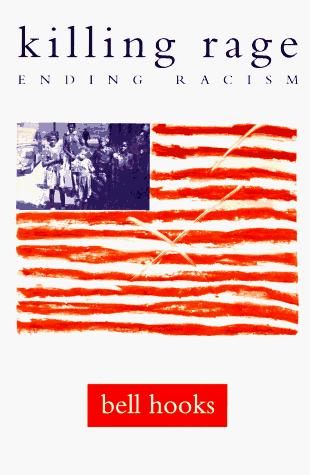
bell hooks · Buy on Amazon
"It’s humility. bell hooks is not even her given name. It’s a pen name. It’s as if the work is more important than the writer. This is a classic book that came out in 1995. It’s a collection of essays and it doesn’t just talk about rage, but it is foregrounded in the book. She discusses racism, and how we can end racism, but she begins with rage. So why even begin a book like that? She starts from a personal experience that she had on a plane, and the discrimination, or as we would say, explicit racism that she was faced with, coming from a particular passenger, a male passenger, and she began to feel that if she had been a white man, she wouldn’t have been treated in that way. The attendant was also in his corner, so she felt herself a victim of racism. She describes a visceral bodily response that she had to this, something like a killing rage. She was just trying to make sense of that emotion. First of all, she acknowledged that’s what she was feeling. She gave the reasons for why she was feeling that way. Black folks are constantly victims of racism and the misconception is that they just take it internally with a smile on their faces, but that isn’t accurate. She’s trying to make sense of this killing rage she felt. She then spends the next chapter defending rage. I had never read anything that attempted that before. She’s defending rage, she’s rejecting notions that it is pathological in black folks. She’s talking about its role, its positive role, how it can fuel action. She also gives a lot of warnings. Black folks and white folks are her audience. But she’s also giving a warning to make sure that it doesn’t go in a destructive way. She ends that chapter suggesting, ‘If we want to end anger, we probably want to start at ending racism. If anger is what people are so concerned about, if you have to get rid of this thing that you see people feeling, then perhaps you need to address the cause’. “Anger at racial injustice is probably the first strong emotion that I have a memory of” And then for those who may just be confused about the cause or be ignorant about the cause, she spends the next few chapters talking about racist encounters, institutional racism, and she challenges the reader to not only see it, but to tackle it as well. I found that illuminating. She has a tendency to talk about anger as an expression of love, which I borrow from her, and of how that love can be an act of resistance. I was just amazed by the work. It was so easy to understand, written in ordinary language, written to console the reader, in a way. I found that very persuasive. I’m not going to mention any specific news, but I was watching the news today, and I saw some things that broke my heart. It broke my heart because I just love humanity. I love people. I think people are due a certain kind of respect. So it breaks my heart when people are victims of racial violence. But it also breaks my heart to see people be perpetuators of that victimization. But it wasn’t just heartbreaking. As a result of witnessing these events in the news, anger began to arise in me and I just immediately shut off my social media. What was happening there? I’m angry in a response to the fact that I love people. That concern for people brings about this anger in that I am disappointed in their actions. But I’m also heartbroken that they’re being mistreated. Some people go on from this and like to say that the story just ends with the love. The story just ends with the compassion. But I think if you really desire justice, and you desire that people be everything that they say that they want to be, then when they don’t live up to that, and justice is not distributed, anger is going to come, it’s a response to a wrongdoing. So anger is not just compatible with love, as I argue, but it’s also an expression of love. My anger was at what I was witnessing, and it was an expression of the love that I was feeling for the wrongdoer as well as to the victims of that particular wrongdoing. bell hooks talks about love being a form of resistance. At one end, we have a tendency to think that rage is so radical, but then we also have a tendency to look at love as being less radical, as being a kind of acquiescing, almost accepting a form of oppression, for example. But we need to see that both of them have radical potential. hooks even talks in this book about her love being an act of resistance. To love, particularly to love a group of people who are not loved, who are despised, whose oppression is usually justified, to love them is an act of resistance. So if anger is an expression of that love, of course, that rage too is also going to be a form of resistance as well. We get all that from hooks. The title of her book is illuminating in this regard. The title of the book is Killing Rage , that’s usually written in bold. And then right beneath it, it’s still the title, Ending Racism . Now, you notice that it’s got an ‘-ing’, ending, right? It’s present action. And one of the things I find encouraging about bell hooks, is that she believed that even if you can’t totally eradicate it (and I don’t even think that should be the call), as long as you live your life and are participating in ending racism, then you get closer to what people have a tendency to think of as a utopian idea. Even if people can’t embrace what they may perceive as a utopian ideal of the eradication of racism, what bell hooks challenges us to do is constantly to engage in the process of ending it. What are you doing in your day-to-day actions? How are you responding to institutional racism?"

Cornel West · Buy on Amazon
"I love this book. It was written a year after the L.A. riots, in 1993. The L.A. riots took place in 92. This is also the book that put Cornel West on the public intellectual scene, all his other books were primarily academic. It’s a collection of essays responding to a moment in which lots of people were very angry, and were rioting, and when many people misunderstood that anger. He wrote this book both to explain what was happening, and to offer a guide telling us what we should do. It’s a book produced in response to black rage. What I get from this book is an understanding of racism . He begins by looking at what racism can do to you, before he even gets to the anger, because he doesn’t talk about black rage until he gets to the final chapter. But he constantly leads us there from an existential standpoint. He talks about how, given the racism that’s happened there, there’s a nihilism felt by many black Americans. He’s going to the soul here. He’s also talking about our relationships with each other. If we want to talk about solidarity, solidaristic emotions, how do we tackle black-Jewish relationships, for example? What is the goal or what should be the aims of black leadership, if we want to end racism? Get the weekly Five Books newsletter But what’s important—it’s my favorite chapter—is chapter eight, “Malcolm X and Black Rage.” He’s writing this in the 90s. I don’t know what it was like in London during this time, but I remember in the 90s, Malcolm X was resurrected by my generation. There were songs about Malcolm X, rap songs, employing his image, there were Malcolm X hats. Then Spike Lee came out with a movie about him. And West understands that Malcolm X’s image is being revived for my generation. And, as a result of that, Malcolm X’s rage started to be attractive. West is writing in response to black rage in relationship to the riots. And I what I think he’s trying to say to our generation is, ‘if this is the figure, Malcolm X, who’s inspiring to you, then it’s important that we have a full understanding of who he was so that we won’t just take his rage and think that that’s all this story is about.’ West’s fear is that we’re going to misuse it. So one of the things he says, going back to the love issue, is that if we don’t understand that Malcolm X’s rage came from a sincere love for black folk, then not only are we not going to be able to do something productive with that rage, the soul of it is going to be missing. He takes the reader into the depths of who Malcolm X was, his political philosophy, his existential philosophy, to remind us there is more to Malcolm than just an outrageous kind of rage. It’s okay for us to be angry. He challenges us, though, that with that anger should come love, should come care, should come compassion. He even cites bell hooks as being a model of what that actually looks like. It’s the first book that spoke to this moment that was just out there. I loved the way that he was compassionate to young people. It wasn’t condescending, it was affirming. And he gave us a full picture of what anger should look like and the existential and spiritual elements and tools that we should have alongside it. There’s no doubt that that is the picture. He won a Nobel Peace Prize for a reason, so anger wasn’t the defining emotion when we think about King. But that is not to say that he was never angry. It is not to say that he never used that anger. When the church in Birmingham was blown up and four little girls died, when he received information about the open letter the white clergymen delivered to him while he was in a jail in Birmingham, he talks about how he was furious about that letter. And he wrote the “Letter from a Birmingham Jail” in a cell, and it was fury that led him to write that. If we look really deep into his biography, there are moments when people witnessed his anger, and they witnessed what he did with that anger. I talk about this in my book. I think from a leadership perspective, there were strategic reasons why anger wasn’t or shouldn’t have been the defining kind of emotion when we think about King. But we ought not to reduce that to thinking that he was an individual who never felt anger, nor that he never used it. Most importantly, when we look at the work of King before his death in the late 60s, when there was beginning to be a more radical movement among young people — if you think about all the riots and the rebellions and insurrections that happen during that period, young people are getting angry, and expressing their anger — King responds to it. But he never tells them that anger is useless, that you shouldn’t be angry. He basically acknowledges it and he encourages them to come over to the movement, to channel that anger. I appreciate that. In some ways he shares the spirit of what I was just describing in relation to Cornel West, of not speaking down to young people, not being condescending towards them, respecting the emotion that they have, but then giving them tools to do something with it. We find in his speeches that’s exactly what he’s doing for those young people, suggesting that, ‘yes, I understand why you’re feeling that anger, but come over to the civil rights movement , and I can give you a lot to do in order to channel that in the right ways.’ The two books that I just mentioned, I never read them in any of my courses here in the States. I found them in black independent bookstores when I was younger. Cornel was just a force and so those were in regular books stores. But I heard about most of the important work in this area through the grassroots. Being an active teenager I discovered these books, but I didn’t come across them in college, unfortunately."

Nicholas Buccola · Buy on Amazon
"This is probably the only intellectual biography that I have on the list. This is a book that you finish reading and you’re mad you’re done, it’s so so so good. It’s much more recent than the others, it was written in 2019. Nicholas Buccola is a wonderful political theorist. He does a fine job of helping us to know Buckley and Baldwin in much greater depth. Why is it on my anger list? The whole purpose of the book is that it builds up to a finale. The two have a great debate at Cambridge. The debate itself is about race in America, but it’s also about the anger black folks feel in response to mistreatment. I mention Buckley a lot in these talks that I give. He thought there was no place for anger, that it would be counterproductive to the aims of black folk. It was only going to inspire white resentment, and wouldn’t focus on the future. So despite the injustice that they were experiencing, he thought it just had no place. I just found that debate fascinating. It’s a debate about race, but it’s also a debate about rage. I knew about this debate, but not really in detail about the figures, and how that debate ended up happening. So I found his book completely fascinating. William Buckley was responsible for reviving what we call the conservative movement in America. He was a leader of the movement and started his own magazine that is still in existence today. When I talk about reviving conservatism, the image is important here. I suppose if we’re conceiving of conservatives as these individuals who are not with the times, who are racist, belligerent, etc., etc., he kind of dignifies conservatism. Even as he’s speaking on these particular matters in regards to race, one might say that it’s not explicitly racist, although maybe paternalistic. It’s not what people are used to, as far as some of the white supremacist language in the United States. That was all part of the repackaging of the conservative movement. There’s a very interesting example of this when he engages in a debate with Gore Vidal . There is a fascinating documentary about that debate at the Democratic Convention that took place in the 60s. He talks as a stoic, as a man who’s in control of his emotions when they make these particular arguments, this repackaging. Then what happens in that debate that the documentary Best of Enemies displays, is that he loses it for a moment. He loses it for a moment emotionally and he calls Gore Vidal a homophobic slur. He never forgave himself for that moment, because the whole point that he was trying to do was to suggest that there’s a conservatism that doesn’t do that kind of name-calling, that can be rational. That was basically Buckley’s contribution, he was a conservative who repackaged conservatism in a very interesting way. Buckley’s a figure who is an aristocrat, WASP-y, coming from a place of privilege, but an intellectual nonetheless, trying to revive a particular movement. And you contrast this figure with James Baldwin , who’s also a writer, who is what he would call a witness to the civil rights movement. Baldwin comes up in poverty in Harlem. They couldn’t be more different but they’re both doing the job, their work in their respective spaces, trying to give attention to their particular concerns in their particular eloquent manner. And they come together in the UK and have this debate on race. Baldwin wins the debate. Buckley believes that the Union voted for him because he was just simply black and they felt that it was an opportunity for Baldwin to kind of beat up on white America and the British folks just loved that because they just have a hatred for America. He never got over that loss. And so it just gives us a good picture of looking at two particular figures who are not just figures per se, but they represent ideas. They represent affect and feelings of this particular time, come together in this particular moment in which they’re going to discuss race and rage to people who are not Americans, from their particular perspectives, their very different histories. It’s completely fascinating. Yes, he was in France. He also spent some time in Turkey. He was no stranger to Europe. They’re completely brilliant orators. That’s one of the things that I appreciate about both Baldwin and West. It’s one thing to write with eloquence on the page, but it’s another thing to do this and be so persuasive in speech. Not everyone has that gift. We’re philosophers, so we know there are a lot of people who can write, but put them in front of an audience, and they’re a complete bore. You’re confused, left thinking ‘How can this person be the writer of this text that blew me away?’ This is going to sound strange to a lot of people, but I also found Buckley to be elegant and eloquent in speech, a very charismatic figure. I’m intrigued by him as a figure, although our political and racial beliefs are so far apart. I think both of these individuals – Buckely and Baldwin – are fascinating. There’s a wonderful book about that. It’s called The Night Malcolm X Spoke at the Oxford Union : A Transatlantic Story of Anti-racist Protests by Stephen Tuck. It’s completely fascinating too. There’s a trend here in the books I love. I love debates, number one. And I love all biographies about said debates!"

Carol Anderson · Buy on Amazon
"Carol Anderson is a historian at Emory University. A few years ago, during the rise of the Black Lives Matter movement, she wrote an article for The Washington Post and it was entitled “White Rage.” In that 1,100-word essay, she’s saying, ‘hey, a lot of people are kind of afraid, kind of uncomfortable with the rage of protesters, and they think that this rage is going to be the end of America.’ And she says, ‘Well, the threat to American values and American ideals has not been black rage historically, it has been due to the rage and the resentment of white folks.’ In the book she takes us through this history: each chapter is a historical moment and shows what some describe as white backlash motivated by white resentment. She shows how that white backlash undid a lot of progress in the world. One of the things she talks about, for example, is the white resentment that arose after Brown vs Board of Education, which provided the opportunity to end segregation in public schools. This was a Supreme Court decision that outlawed segregation in all public schools in the United States. So now it was the case, in theory, that black kids and white kids could go to school with each other. There was psychological evidence to back up why this was so important. A very famous study was done with dolls, for example, in which black children were given a choice between white dolls and black dolls. A psychologist showed that the black kids prefer white dolls and when they were asked why, they would say, ‘They’re better, they’re smarter.’ What they concluded is that this was brought about by unequal access that they experienced in their lives. If you live in a segregated world in which white people are given things that you don’t have access to and becoming things that you can never be, you would think that they are better. So the moral and psychological underpinnings of the ruling were that segregation was having a tremendous effect on the lives of black kids who would eventually become black citizens and do we really want this to be the case? Okay, this happens, schools get desegrated and you might think, ‘Oh, this is a wonderful thing, more progress: we’re getting things right.’ And Carol Anderson basically says, ‘Well, there were a lot of white people who were mad. There were a lot of white parents who were resentful.’ So what actally happens? What do they do with that white rage? Well, in certain areas they closed those schools down, even if it risked educating poor white students. So the collateral consequences of this were white folks suffering too. It’s a good historical example of more progress, things are going well, and then white resentment comes on the scene, with this power, with these resources that not only undo the good, but also inflict more suffering. That’s just one example in the history that she underlines. The history of America is a history of white rage, and that’s something that we need to confront head-on. I believe that when the private and public intersect, that’s when you get the complicated political philosophy questions. I also feel that as much as we are individuals with our own particular unique needs and desires, part of the price we pay for being in a relationship and therefore being co-citizens with others is that that can only go so far. So when our needs and our desires become what I call exclusive, when those freedoms begin to infringe on the freedoms and opportunities of others, that’s when we know we’ve gone beyond the pale. So a simple response is that when you don’t want your children to go to school with other children, that’s okay, to a certain degree. Shut the school down, though? I understand that there are certain decisions you can make, but shut the school down in ways that so many people will suffer? That’s when we know we’re making decisions that are politically problematic. In my book, I don’t describe that kind of rage as ‘white’ rage because I don’t think that that kind of rage is limited to people of a particular race. I think there are a lot of decisions that can be made in that way, in which white people don’t necessarily participate. I describe that kind of rage not as white rage, but as ‘wipe’ rage. Wipe is the kind of rage that is motivated by hatred towards another group. Usually, when you hate a particular group, you kind of aim to eliminate them, wipe them out. This doesn’t necessarily mean that you want them dead, you may seek their social elimination, though. Right. And that’s a zero sum game way of thinking. That’s a perspective that influences that particular rage. If you think that there are limited resources, that if you win, everyone else loses, or that if someone else wins, you lose, then that is the kind of thinking and that’s the kind of action and that’s the kind of anger that you’re going to have. I want to say if you live in societies, such as the UK, such as America, listen, there really are enough resources to go around. History tells us that it’s not a zero-sum game. People can win and you can win too. I mean, we’ve been talking about white resentment here, or wipe resentment as I put it. We’ve been talking about conservatism with Buckley. Nothing stays the same. People upgrade their phones every two years. That’s an indicator that everything is in a constant transition. Going back to the school segregation piece, as much as those in power could have argued that their traditions have been infringed upon, they were not the only ones. A tradition of all-black schools, a tradition of being seen, not being minimized and dehumanized and being able to walk to your own school, as opposed to having to be bused was also interrupted in the lives of blacks. That also was a tradition for black students as well. And so they also have to break their traditions to be a participant in an egalitarian context. But you do that in order to benefit the whole, so that society can live up to its creeds. It’s not just white folks who are having to come in contact and go against their traditions. Black folks are also having to do that as well. That is what happens when you come together in a space of difference in order to live among one another in a democratic space. You sacrifice some things, right? And so white people are not the only people who sacrifice. People in power are not the only people who sacrifice. More often than not, it’s those who are attempting to be included that sacrifice the most in order to be included in these particular opportunities. Changing our way of thinking in that particular context can also change our rage as well. It was well received. I like to see this. I like to witness academics become public intellectual stars. Since then, Carol Anderson has come out with two additional books. The book that followed up on this one was about the right to vote and the book after that, recently, was about gun laws, which is completely fascinating. She takes us through a racial history of gun laws. I talk about expressions, being angry and angry expressions in the book. There’s no doubt that I think for lots of folks, whether that be Frederick Douglass , or whether that be Martin Luther King , these are individuals who are human beings who did respond angrily to the injustice of their particular time. But they were strategic, and they were prudent with this particular emotion. History shows us how both of those things can be present at the same time. What I find fascinating about Carol Anderson’s book is that what the history shows us is black people are angry. There’s no doubt that in the 60s we saw black rebellions. But for lots of people, that was the first time that they thought to themselves, ‘Oh, maybe black people are angry.’ I think for a long time the belief that has been perpetuated is that black people have taken their suffering with a smile, that black people are not angry. There’s a pernicious myth that even enslaved Africans were happy to be slaves. For a lot of people who fought for justice, anger wasn’t the kind of emotion that was at the forefront of their minds, particularly when you think about the abolitionists. There were strategic ways in which you presented this stuff, particularly given a context where anger couldn’t really be at the forefront, or even if protest was. So I’m hesitant to say that the white rage was a direct response to the black rage. For a long period of history, it was just not a good look for any indicator of that particular rage. But yet, white resentment can arise on the scene. That’s what she’s trying to bring to our attention."
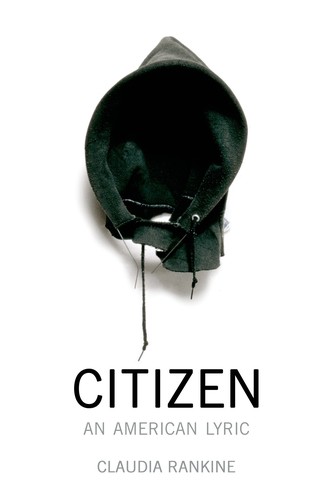
Claudia Rankine · Buy on Amazon
"This is a book that is different from all the others because it’s a book of poetry. I first came across this wonderful book while watching the news about a Trump rally. There were usually a variety of participants and supporters who were sitting behind Trump on stage. There was one young lady, a black American, who was sitting there listening to Trump. Then, after a while, we see her making faces, there’s a little bit of confusion and disagreement. And then you start seeing her just put the book in front of her face. So people are like, ‘What book is she reading?’ because you can see her in the camera. She basically tells the story about how she goes to the rally open-minded. She wanted to hear what Trump had to say. Then she just realized, ‘I just can’t. What he has to say, what’s happening at this rally, is just not good for American democracy.’ So she takes out a book that she happened to have in her bag and it’s the Claudia Rankine book. Support Five Books Five Books interviews are expensive to produce. If you're enjoying this interview, please support us by donating a small amount . Claudia Rankine is a poet. There is a meditation on anger in the book that I just found illuminating. What I found fascinating is she has a tendency not only to talk about anger and race, but she’s doing it in a way in which she’s positioning tennis star Serena Williams, as an example of how she wants to consider us to think about race and rage. She begins to talk about how, for example, there’s a kind of what she calls ‘commodified’ rage of oppressed people, and what she means by commodified rage is that you are allowed to be angry, as long as it can create capitalistic profit. So you can create angry music. We get hip hop in the 90s, that was very conscious, very angry, but we know that the owners of those record labels were white and it was feeding into an industry so people make money. Yes, that’s commodified anger. You’re allowed to have commodified anger, but there’s a kind of anger that you’re not allowed to have. And that is the kind of anger that arises out of being discriminated against, as a result of being mistreated, and it doesn’t make money. It’s not commodified, doesn’t benefit audience members, it benefits the person who’s angry. And the person that she uses as an example of this is Serena Williams. She’s using her as a black subject to allow us to understand how we view anger and rage on the black body, but also to show how we view it when it is embodied by a black woman. For those who are not tennis fans, there’s been a history of…whether you agree with these calls, or you don’t… unfair calls that have been made in relationship to Serena Williams when she’s playing tennis. At times Serena gets vocal about unfairness. She will always speak up for herself. And then you get instances in which she and Venus Williams would be explicitly victims of racism at these events from audience members, so much so that they had to boycott one of them, because there was specific racism. Claudia Rankine even talks about an example in which a white tennis player begins to imitate Serena Williams on the court by imitating her black body. She puts things inside her pants to make herself have a big buttock area – it was just completely racist, and the audience laughs at this. Rankine uses Serena Williams as an example of someone who’s had to take this kind of abuse. When an unfair call is made, all of that just comes out of her and she expresses the anger. That’s an example of what black rage looks like. It’s a boiling rage. Black people who’ve been oppressed have been trying to hold this in all this while, they continue to be mistreated, and then it just comes out. And then she talks about how people began to criticize Serena Williams about her reaction, these calls to civility, ‘oh, we don’t act like that in tennis.’ We’re talking about the asymmetry here, in which white men are allowed to do this, but Serena isn’t. It just goes to show that the asymmetry points to a larger issue of justice. These calls for civility to her, which kind of models calls to what happens when oppressed people are angry, people respond to that anger by reminding them that there’s a certain kind of way that they ought to act. Going back to your example of white male tennis stars—because it’s not just race, but also gender that can complicate things here. They are allowed to be angry, rightfully so, in ways in which women and black people are not allowed to be angry. She uses these meditations about anger in the embodiment of Serena Williams, in ways that makes us contemplate not only what she is experiencing, but what we put on black folks in general and their emotive responses in general. There’s something that you can do with poetic language that you can’t do in a traditional essay. We were talking about eloquence in relationship to Baldwin and Cornel West earlier, with this kind of methodology you can give illumination of not only Serena’s world, but our world in general. And that’s something that I really appreciated. I learned a lot from that."