Leo Hollis's Reading List
Leo Hollis is a historian, writer and urbanist.
Open in WellRead Daily app →Why Cities Are Good For You (2012)
Scraped from fivebooks.com (2012-03-26).
Source: fivebooks.com
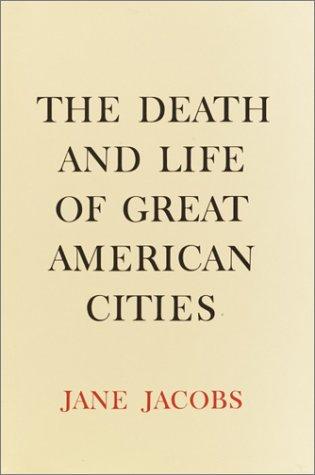
Jane Jacobs · Buy on Amazon
"Jane Jacobs was an architectural writer, not an academic, and she was in many ways an engaged member of the public. She was involved in the 1950s and early 1960s with campaigns to preserve Greenwich Village [in New York], which is where she lived. And out of this came the idea of The Death and Life of Great American Cities , in which she creates the fulcrum on which this new urban thinking is fixed. This book sums up these new ideas of putting people first – that the city is complex but not a place that needs to be rationalised. That you should look at life on the street, rather than the motorways, as a sign of what urban life really is. “Cities are where the 21st century is really going to happen. Cities could either be our coffin or they could be our ark.” She writes very simply about Hudson Street, where she lives, and various other parts of New York, and she gives the city a human face. She looks at people right at the heart of the city, and shows that a neighbourhood can be chaotic and rundown and still have more life in it than a gated community of millionaires. We’ve been experimenting in urban forms for about 9,000 years. The first cities were created in what one historian, Ian Morris, calls the “happy latitudes”. In other words, the latitudes around the equator which were the first to come back to life after the ice age, and around which the first communities were formed. We normally assume that the origins of cities began with a farm, then a village, then a town – that they grew incrementally. In fact, archaeologists have shown us that the very first cities were moments of extraordinary revolution. We assume that agriculture came before cities, but what has been shown is that there was a moment – lasting about 300 years – in which everything one thinks the city is was spontaneously created, and agriculture was part of that. The city created the technology to sustain it, rather than the other way around. So cities are completely different to anything that has come before. Since those 9,000-year-old origins, we’ve been experimenting with different forms of the city depending on climate and population. Technology has always been part of the mix of how a city works. Today, two of the technologies that drive us most – the Internet and the airplane – mean that we don’t need to be physically close to each other, and that we are spending more and more time travelling from city to city, respectively."

Steven Johnson · Buy on Amazon
"This book is not strictly about the city itself, although it does talk about the city as being extremely creative. Steve Johnson is a very interesting thinker who has written a number of accessible books on things like complexity theory and popular culture. He also wrote a wonderful book on the cholera epidemic in London in the 1830s. Where Good Ideas Come From is about creativity. He shows that cities are fantastically creative places, not just because they bring people together but because of the connections that people make once they come into cities. As a result, cities really are the places where good ideas are formed and developed. That’s certainly one level. Johnson also talks about a brilliant scientist called Geoffrey West, former head of the Santa Fe Institute [in New Mexico] which was a leading facility for the research of complexity theory. Geoffrey West was interested in metabolism – how quickly anything from an ant to a mouse to an elephant burn energy. He and his fellows at the institute studied whether a city has a metabolism. Johnson discovered, amazingly, that there is a particular, super-linear scale in which you can measure the metabolism of a city – in other words its creativity, its life, its energy. He combines this with Jane Jacobs to show that the life of a particular city street and this complexity theory are connected. What cities are good for, in terms of ideas, is that everyone has a half notion that needs to rub up against other things. You need to go around and find what’s lying about, and connect them with your new idea. For example, the creators of the first printing press looked at other technologies such as the winepress, and realised that that was exactly the way in which their new creation should work. Because the city is based on competition and diversification, and has a very competitive market, people are always looking for the edge or the golden opportunity. These opportunities come about not through a lone genius sitting in a room but through connections – through building up a network which gathers notions together until they form a good idea. It is quite Darwinian, and Johnson uses Darwin, in particular the coral reef, as a motive within the book. There is certainly a sense of evolution about it. One can simply see the capitalist market as a form of natural selection and mutation. Cities are also immensely efficient. If a city doubles in size, it actually increases its creativity and output by 115%, yet only needs 80% more energy."

Richard Sennett · Buy on Amazon
"Richard Sennett – a wonderful thinker who has been at the LSE for the last several years – has over a number of decades written very movingly about cities. Together is his latest book, about communities within the city. Cities might well be more creative and efficient, but if there is not that life on the street and community of togetherness, then what is the point? Togetherness, Sennett says, is something we need to learn and practise, not something that is given to us. I believe in that strongly, that we have to work at being a society and a community. If we all become atomised, then the city isn’t going to work. I do think, however, that because of the potential connections that one has, one is actually less likely to be lonely in the city. That doesn’t mean that people don’t die in their flats and their bodies are not found for many months, and it doesn’t mean that one can’t have an odd sense of existential anomie when standing on the train platform, but we have assumed for too long that cities are places of loneliness. It has become a trope without any actual evidence. They are undoubtedly places where people rub up against each other, and that is always going to cause problems. It’s inherent. We need to think on that, and design ways in which it is managed. Questions of density or crowding do create a sense of unease. These are things that we need to identify and then come up with solutions to. I don’t think it’s a barrier to the city, and I think it’s something that the city can address itself."

Teju Cole · Buy on Amazon
"This is a wonderful novel which came out last year, written by a first time Nigerian writer who now lives in New York, and is a prolific tweeter . In many ways it is a similar type of book to the work of [the late German writer and academic] WG Sebald. It’s a series of walks around New York, and is one of those books in which nothing happens and everything happens. He observes and is also an actor in the life of the city. It is one of the most powerful books on living in a city that I’ve read in a long time. I’ve included it on this list because I feel that we need to read works of fiction to understand cities too. We need to dream about the city as much as we need to see it as a scientific project. Novels about cities are some of the best ways that we come to learn about the places in which we live or could live. We still have a Dickensian idea of what London is, because of the power of Dickens’s imagination. Instead we need an up-to-date, modern vision of what it’s like to be not quite an outsider and not quite an insider either in a modern, globalised city. It is a search for belonging as well as a desire to remain an individual. There is a tug and a draw; but also a wish that one doesn’t get drowned in the city, that one maintains one’s own personality. Especially for immigrants and new arrivals, this has been a constant debate. Teju Cole’s book is also good on the people you bump into and the situations you cannot control as you wander around a city. So the city is not a lonely place, but it’s also a place of fear because you don’t know what’s around the corner."
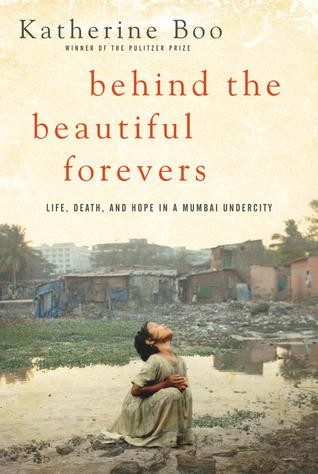
Katherine Boo · 2012 · Buy on Amazon
"This is an extraordinary book. Katherine Boo is an American writer for The New Yorker who married an Indian man and moved to Mumbai. This is a micro-portrait of a small community who live in a slum there, just near the airport, and it is an absolutely heartbreaking portrait of what life is like in the slums today. It’s not Slumdog Millionaire . She takes a handful of characters and follows them over two or three years. She really gets into family life, and what it’s like being at the bottom of society, invisible – as well as the deep desire that everyone has in the slums of making it, becoming somebody, and moving out to the next stage of life, as it were. That’s certainly part of it. I would say there are three reasons why people have rushed to the city. Firstly, there’s always the promise of jobs. Most people in slums are in full-time work, saving money, and when they are lucky they send money back to their villages. The second reason is that life in the countryside, in India at least, is incredibly difficult. People lose their land and their rights to the land, so they are forced to come to the city. And the third reason is that a slum is a halfway house between being in the countryside and getting into the city proper. Get the weekly Five Books newsletter Slums are what [journalist and author] Doug Saunders calls an “arrival city”. They can be the incubator of the next middle class – the place that people learn about city life, and start climbing up the ladder. When one walks around slums, one does see signs of self-improvement. There might be poor sanitation, but a lot of people have mobile phones, there is television, the Internet, and people are saving so that their children can go to school and can wear pristine, ironed school uniforms. There is a sense of sacrifice in order to invest in the future. Undoubtedly it will. Over the next 50 years cities are going to grow massively, and the majority of that will be in Africa and Asia. Mumbai already has a 50% slum population, and the majority of its growth over the next years will be into those slums. What we must do is tackle the situation that slums cannot continue as they are. How we solve that issue is a huge debate. One of the first things we need to do is stop using the word “slums”. Because they’re not the 19th century slums that we imagine; they are different. This is why we have new concepts like “arrival cities”. One solution is to use huge amounts of government money to demolish slums and move people. Another is to use speculators to rebuild housing for slum dwellers. My belief is that the best people to deal with the problems of the slums are the slum dwellers themselves – improving from within. There is no silver bullet or instant solution, but we can find a long-term solution by giving people the means to improve their own lives. I hope they would look fairly similar – and that anything built over the next 50 years would be sustainable and carbon neutral. I hope there will be fewer cars or more efficient cars on the road and new forms of public transport, as well as whatever the bicycle turns into. And I think one will see an interconnectedness between major cities. When you imagine the number of people who are going to move into the city, it’s important that we start planning for it now. That’s why debates on things like Boris Island [a proposed estuary airport in London] are crucial. My warning, however, is that as cities grow bigger and stronger, the rest of the country around and beyond them will need more and more governmental support. London is becoming so incredibly powerful that if you’re not within two hours of it by train then you really struggle. What this creates is mega-regions which will become the major power source and power base of the future, to the extent that cities will almost become states in their own rights. It has to be London. Absolutely. I think London delivers on historical liveliness, and I think heritage and history are important. It’s a deeply creative, beautiful city with real diversity – a world city in which the world has come to it as much as it goes out to the rest of the world. It produces excellence in a number of different areas which makes it a very exciting place to be and a magnet for culture. I think it has a difficult relationship with the financial markets, which clearly are important to its bottom line but also warp some parts of the fabric of the city. I can’t see any political solution to that in the next few years, although one needs to be worked out. And most importantly of all, it’s home. That is the most important thing. Feeling at home in the city."