John Quiggin's Reading List
John Quiggin is an economics professor at the University of Queensland and an Australian Laureate Fellow. He is also a fellow of the Econometric Society, and the Academy of the Social Sciences in Australia. He is a regular contributor to the blog Crooked Timber.
Open in WellRead Daily app →Utopia (2012)
Scraped from fivebooks.com (2012-05-21).
Source: fivebooks.com
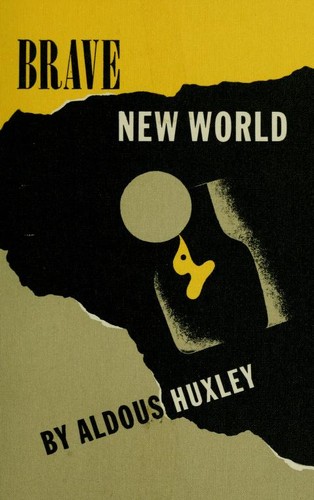
Aldous Huxley · 1932 · Buy on Amazon
"So, in the jargon that was popular 20 years ago, he’s presenting a Fordist world – Ford is the model. It’s one where the ultimate value is consumption. People keep working to consume, and there are incredibly elaborate opportunities for consumption provided to them. It’s obviously an anti-utopia. Yes. Of course, in a much more subtle way than, for example, 1984 , or your typical dystopia. It’s a society in which all our material needs are met and we get to have sex with anyone we want to. We all enjoy our jobs, thanks to a combination of genetic sorting and continuous hypno-conditioning. It’s a satire on a particularly narrow vision of utopia. The lesson I would draw from Brave New World is that the purpose of utopia is not so much as an achieved state, as to give people the freedom to pursue their own projects. That freedom requires that people are free of the fear of unemployment, or of financial disaster through poor healthcare. They should be free to have access to the kind of resources they need for their education and we should maintain and extend access to things like the Internet. Then we would have a situation where everyone is free to participate in whatever way they choose – rather than aiming for the mindless state of contentment that is the implied goal in Brave New World . If you had a society that was centrally controlled and run by corporations, that would be exactly the kind of thing that would be produced. You have the combination of a sharp class division, but one in which everybody knows their place and is happy about it, and in which the whole machine rolls along slowly with no real purpose except to reproduce itself. Exactly. The alternative is the world of the Noble Savage, the few people who live on a reservation. They haven’t been brought up in modern society. They live in squalor and dirt, but reproduce naturally and have both all the sorrow and all the joys that go with that. So in the end, the only really heroic figure is the Savage, and he ends up killing himself."
Iain M Banks · Buy on Amazon
"Iain Banks is the writer you probably think of as being furthest from utopia in all sorts of ways. But the underlying conceit is that this is a post-scarcity society where people are free from any kind of material concerns. If they want to tear down their existing planet and build a whole new one, they can just go ahead and do it. It’s quite a successful imagining of what things might be like, and how people might react to an end to scarcity. It is. It’s set indefinitely in the future – there’s space travel technology there to make the action work – but you have a situation where there are a vast number of species of various kinds out there in the universe and the heroes or central figures are a post-human culture called the Culture. They are pursuing this project of trying to make the galaxy safe for civilisation. So there are conflicts that go with that. In one of the novels, the Culture has interfered in this other society, they’re trying to bring them forward into this positive culture, and they produce this hideous civil war. The action, set some time in the future, flows from that ancient disaster. But the background to all of it is Banks’s ability to describe this society – how people would live without scarcity, what they would choose to do. It certainly is an exceptional achievement in terms of fiction, to produce a utopia that actually sounds appealing. Yes, that’s quite right. If you have all you need, if there’s no scarcity, you don’t need money. The Queen, supposedly, never carries money. In the Culture, everything is done with gift exchange – which is by no means utopian in the sense of being free from things like the bad and good motives that people have, but that’s one aspect of it. I don’t know – that’s a good question! The books capture, to my mind, the notion that we’re not looking at a static state of achieved perfection. Although Marx wasn’t in any way a utopian – and didn’t think incredibly carefully through this – in his early writings he talks about somebody who herds cattle by day and criticises literature by night, and switches from one to the other as they feel the need. That kind of freedom from alienation, and capacity to achieve your own projects, is what’s very evident in those novels. What we need is a utopian concept that recaptures the language of freedom, both from the authoritarian left of the past and from the market liberal notion that freedom is the freedom to work as hard as you want in order to have as large a bunch of consumer goods to choose from as you might desire. That’s because it can mean freedom for you to do what I want you to. But if you look at the question, when have people been most free to pursue their own projects? That freedom has been much greater in social democratic societies than it has been under either communism or market liberalism. To be free to do things, you also have to be free from want and poverty."
John Kenneth Galbraith · Buy on Amazon
"Galbraith didn’t invent the role of public intellectual/social critic but he certainly occupied it incredibly effectively. He’s making the point – about the US in the 1950s, but it’s even more true today – that at the same time as we have this incredible array of consumer goods, the goods which we rely on the public to provide are decaying. Private affluence and public squalor is the great catchphrase of that book. It’s in a vein of literature from the 1950s and going into the 1960s. In a different way, Betty Friedan’s Feminine Mystique made a similar point. Here is a society that has achieved material wealth beyond the imaginings of any previous society, and with a relatively high degree of equality. (The US at the time Galbraith was writing in 1960 was more equal than it had been at any time before or was to be any time since.) And, yet, it seemed as if, in important respects, the quality of life was well below what you might hope for. His diagnosis was that while the machine was doing a great job in producing market goods and services, the really valuable things – those which for a bunch of reasons have typically been left to the public to provide – were far less well supported than was needed for a good life. We were having an erosion of public space in all sorts of ways, so the quality of our public lives, the increasing ugliness of cities, the growth of air pollution, along with chronically inadequate health services for a large proportion of the population and an education system which only served part of the population adequately – all of those things were the kinds of lacks that Galbraith was pointing to. If you think about the gleaming 1950s kitchen, with all its labour-saving devices, and compare it to the hard physical labour involved in getting a house going with the technology of even 30-40 years before, it’s unsurprising that, in some ways, it seemed like we were living in a utopia. We’re used to that technology now, but it’s still a real achievement and one that’s largely to the credit of capitalism. But both Betty Friedan and Galbraith were saying, “That’s all fine, but it hasn’t actually delivered us the kind of freedom we really need.” I’m sympathetic, though people possibly get too hung up on the fact we’re mismeasuring things. There’s no doubt we are. Whether getting the measurements right would then lead to better outcomes is less clear. In important respects they would. I have a bunch of technical work on ways we could improve those measurements, but the point is to actually do it, rather than to measure it right. GDP, which is the classic target, is a really terrible measure. There are better measures even within the official national accounts. For example, there is something called Net National Income in the official accounts which is rarely headlined. That would overcome a bunch of the criticisms made of GDP. But I suspect the answer is that even though GDP appears as this important thing, most people don’t have a clue what the GDP of their country is, or what GDP per capita is. I’m not sure even policymakers are as distracted by GDP as some of the critics think. It’s much more the spell of market liberal dogma than the measurement issues that’s the biggest problem. Neoliberalism had a fairly plausible promise, coming out of the chaos of the 1970s and 1980s. It said: “Forget about all these utopian ideas, those things don’t work and never will. The only freedom that can be delivered is the freedom of market choices, and if we give those to everyone, even if the outcomes initially aren’t equal, everybody will be better off in the long-run.” A large part of my work is about pulling that down, saying, “Now we’ve had 30 years of this stuff, let’s look at what’s actually happened.” The answer is that in the US the average person is very little better off, in material terms, than they were 30-40 years ago. Real wages for high-school educated workers haven’t risen since the 1970s. There are more people below the poverty line now than there were in 1960. The model – in its most sophisticated and well-developed form – hasn’t delivered the goods. The people who are being paid incredible fortunes to manage it have shown themselves to be a bunch of incompetent screw-ups who continue to be rewarded. But we need more than critique. To overcome this intellectual capture, we need a plausible alternative. I find Mises pretty unreadable. Hayek is kind of slippery – you never quite know where you are with him. Look at The Road to Serfdom , a book which is most naturally read as predicting that the policies of the British Labour Party – which were, of course, actually implemented – were going to lead to a communist dictatorship. Obviously that didn’t happen. Then Hayek spends the next 40-50 years – the rest of his life and his successors going even further – trying to duck and weave whether they really were saying that, or whether, in the manner of prophets, they’d warned about something and it was their warning that averted it and produced moderate social democracy. Hayek is a clever writer, appealing in some ways. I guess, at the end of the day, I don’t trust him. But yes, one point I would concede to Hayek and von Mises is their critique of central planning. I’m actually about halfway through Red Plenty , a semi-fictional account of the Soviet Union in the heyday of planning. I haven’t finished it yet, but the idea that we could really achieve great gains by centrally coordinating everything is something which Hayek and von Mises criticised very effectively and that certainly has influenced my thinking about it. I don’t think there’s a mystery as to why countries rapidly catch up. The mystery, historically, is more why they failed to. The surprise coming out of World War II is how unsuccessful development was. Here was all this modern technology that these countries didn’t have but which was now easily accessible and any person could be trained to use. They could use money that they either saved and invested themselves or they could import foreign capital, depending on the system. Granted, these countries were starting from a long way back, but we ought to have seen a very rapid catch-up of the poor countries to the rich ones, at least in the space of a couple of generations. That didn’t happen. Particularly in the generation after World War II, many of the poor countries went backwards in relative terms. Paul Collier’s book The Bottom Billion is a good one to look at for this. He’s looking at the very poorest group, who if they’ve had a take-off, it’s only happened in the last 10 years. It turns out that there’s a trap there – that at a certain low level of development, studying hard, or setting up a business isn’t the right thing to do. The right thing to do is to go into the army, become a sergeant and sooner or later stage a military coup so you can just take what you want. So it’s getting out of that trap that’s really proved crucial. The appeal of just taking stuff is much greater than we imagine. So there are a wide range of institutions that are important, but the evidence shows that having a substantial role for government doesn’t stop you experiencing very rapid and strong economic growth, and certainly elements of it – for example a high quality education system – are essential. But I don’t think there are lessons for the countries that are already developed to learn from this, unless it is to disabuse you of the notion that unless you stick within the golden straitjacket, the fashionable prescriptions of the Washington consensus, you can’t possibly achieve strong growth. The evidence shows you need to have a decent education system and a society where the way for people to achieve things is to work and produce things. Achieving that is hard, but once you’ve achieved it, growth is actually pretty easy. Yes, it’s a great phrase. He was a social critic who did it with great panache. The word “affluent” was also a word that was in the dictionary but he brought it back into popular use. And my favourite, which hasn’t made it out of very limited circles, is the bezzle. The bezzle is the amount of money in the financial system that people have surreptitiously stopped away in hidden accounts. It grows and grows and grows until a crisis comes, at which point the accounts are inspected and everyone is caught and the bezzle shrinks to zero – it’s a big contraction of embezzlement. As an economist, Galbraith had some interesting ideas but ultimately didn’t have a lot of influence on the way the profession developed. But as a writer and a critic he was incredibly good. What’s really striking about the most recent crisis is that, on the one hand, the illegal bezzle was huge. Bernie Madoff’s came to $60 billion. Ponzi himself, adjusted for inflation, was but a tiny fraction of this. There were also a whole bunch of smaller Bernie Madoffs, who, because their thefts ran only in the tens of millions barely made it to the front pages of the newspaper. But all the Madoffs put together pale into insignificance when compared to what Goldman Sachs, Royal Bank of Scotland and so forth did – all of whom have been rewarded and promoted for their role in the disaster."
Erik Olin Wright · Buy on Amazon
"It does. It’s much more a book from the conventional left. It’s looking at the question, “If we abandon not only communism, but the whole idea of a revolutionary overthrow of the existing order, what kind of utopia can we think about?” Reorganising the labour movement, industrial democracy and things of that kind are a lot of the central themes of the book. The classic example that people look at is Mondragon in Spain, which is a quite large network of largely manufacturing enterprises that are worker controlled. The big question for utopians is, “Why hasn’t that model been replicated on a large scale elsewhere? What are the obstacles to achieving that kind of transformation? To what extent can we extend that kind of model? How many of the constraints on it are to do with the market economy, and the financial sector” and so forth? It’s a question I haven’t got a good answer to. Part of the problem is you need to have lived experience of these things. For me, as an academic, in a sense I’m part of a historical tradition that is very like that. But it’s hard to imagine a university faculty as a global model for the future. Part of the story has to be a return to the trend that was continuing for most of the 20th century – and has been reversed, particularly in the US – towards shorter working hours, more leisure and more generally a situation where bargaining powers are on the side of the workers rather than the employers. How can we reverse the huge erosion of trade union rights and trade union density and membership that’s happened, particularly in the Western countries, over the last 30-40 years, while, at the same time, avoiding the kinds of economic failures that happened in the seventies and eighties? The last time we seemed to be on the verge of achieving some of these things, the whole thing ended in this inflationary spiral and blow-up. As a result, all the goals that were being pursued, things like the Meidner Plan in Sweden, and the general push towards some form of industrial democracy were derailed. We need to not only restore the balance, but figure out how we can manage things better, based on the failures of the 1970s. Yes, my experience with Wikipedia has been like being a character in a Culture novel. On the one hand, it’s this incredibly utopian achievement – in the space of a decade or so, lots of people, including me, have built an encyclopaedia that has long since surpassed the best achievements of Britannica. On the other hand, you see people at their worst, fighting intense battles about a sentence or the spelling of a particular word. But to come back to the broader utopian theme, Wikipedia – and the Internet generally – does point to a way of doing things differently. Amateur efforts have built so much of the Internet, things like open source software, Wikipedia, blogs. The Internet itself was built, essentially, by the university sector. It outperformed and displaced a whole bunch of commercial networks that were attempting to extract rent. And the capitalist, or commercial, society has been very much parasitic on these efforts that weren’t driven by market motives. Dan Hunter and I have written a bunch of articles on this. Google relied on open source and public type efforts, the Internet protocols were all developed in a non-commercial framework. The same is true of blogs that things like Facebook and Twitter are commercial adaptations of. They still depend entirely for their value on the contributions of people, not on anything that is being provided by the enterprises themselves (beyond the framework on which this stuff happens). A very simple thing we would have achieved in the social atmosphere of the 1960s – which has been a failure because of market constraints – is free public Wi-Fi. That’s something a bunch of places have attempted, but because it’s had to pay its way and had commercial sponsors, it’s never really been achieved. But it’s something that governments, with the kind of visions they had in the fifties and sixties, would have laid on. We have a small attempt at this in Australia with the National Broadband Network, which is being rolled out now. It’s something that really cries out, to quote the cliché, for information wanting to be free. But the important thing in terms of the broader intellectual argument here is that all the really striking innovation of the last 20-30 years, all the real productivity growth, has come from the Internet, and the Internet itself has come, initially, from the university sector and then from the household sector, from people just doing stuff. All the attempts at applying a business model, to the extent that they haven’t been failures, have really just been taking advantage of the unpaid efforts and unpaid inputs of others."
John Maynard Keynes · Buy on Amazon
"Keynes was writing in 1930 or so, a time of deep depression in the UK, so it’s impressive he could have such an optimistic view of the potential for the future. He has quite a limited view of the world – a view very characteristic of a male academic, Bloomsburyite sort of person – and that comes through a lot in the essay. But the central point is that with technological progress, we’ll rapidly reach the point where the material needs of at least a male Bloomsburyite academic will be met for everybody. The number of working hours needed will be limited, which not only means extra leisure, but, more importantly, if we only need an average of 15-20 hours of work per week out of each person, we don’t need a powerful management to drive them to do that work. We can expect that people will be happy enough to do a fair bit of what we need, without the need for everybody to be driven hard by financial incentives. So we can move away from a situation where everybody is enslaved by money to one in which we do things primarily because we find value in doing them. At the time he was writing, Keynes was making the important point that it was really only in the 100 years or so since the Industrial Revolution that this idea was feasible. The living standard of the average person had barely moved in the thousands of years before that. Life has been radically transformed by the growth of technology, and there’s every reason to think that will continue. Also, Keynes only looked at the developed countries, but now we are finally in a situation where the world as a whole has the capacity to achieve the kinds of things he was talking about. A striking illustration of this is that some time around the turn of this century, the number of obese people exceeded the number of malnourished people. That says something about our capacity to feed the world. Just now I mentioned the bottom billion, the billion or so people who are still desperately poor. But at the other end of the spectrum you have a billion rich people whose income is many times that of these poor people. If we could arrange a quite modest transfer from the very rich to the very poor, we can eliminate extreme poverty very rapidly. Technological capacity is a precondition for a utopian vision, but we can’t really hope to achieve that in the context of utopia in a single country. It has to be something global. The lesson you learn is that just because something is technically feasible, doesn’t mean that it’s going to happen. Working hours in the US have generally been increasing for the last 30-40 years. That’s not because people inherently like working, it’s because we have a set of social structures where social inclusion demands that. So a characteristic feature of the market liberal economy – as it’s developed in the US – is an extreme polarisation on these things. On the one hand, you have the middle class, the top quintile of people who typically are the group most likely to be in stable marriages. You have these two income couples both on high incomes, both working long hours, at the same time as trying to raise children. At the other end of the income distribution, you have a huge number of people who have been displaced from the labour market altogether. As for the French, the 35-hour week wasn’t looking forward to a better future in total. It was a response to the macro problem of how we share out the work. The fact that Keynes’s prediction hasn’t happened, that attempts to achieve it have run into trouble, is why, I think, we need a utopian view. We need to inspire people with a view of a better society that we can achieve within our available resources. We can’t just think about it in a day-to-day managerial context. I’m not convinced by that. It’s true that if you look not at the calculations, but the idea of the good life that someone like Keynes would have advocated, the first thing is that he didn’t think about the question of who was going to clean the toilet. He certainly wasn’t going to, I’m sure! When he thinks about how easy it’s going to be he really is forgetting about the housework and all the drudgery that has to be done and still hasn’t been automated out of existence in any way. Also, there are plenty of people with much more of a focus on material goods and services than the kind of personal ideal that Keynes would have had. For example, I don’t know what his mode of transport was, but I don’t think having a big flashy car would have mattered to Keynes. And yet there are a lot of people for whom that really is a source of great joy. At the same time, I do think the US perspective tends to be a bit misleading. In Australia we had a huge increase in work intensity and the pace of work in the 1990s. That was very clearly imposed on us, because we’d had a terrible recession and people were scared of losing their jobs. In the last decade, times have been good for a number of reasons, and we’ve seen people slacking off much more. The figures of authority and the talking heads are constantly complaining about how terrible our productivity is, because essentially, we have recaptured a lot of the leisure that was taken away from us in the 1990s. I don’t think people are inherently and desperately keen to work hard to acquire more possessions. Rather, this is a complicated story about how society works, and you can’t easily opt out of it as an individual. In the Australian context the big thing that still has us trapped is our housing bubble. Unlike most places, ours hasn’t burst. People are trapped with huge mortgage payments that they have to keep working to pay, and that in turn makes them much more money-focused. This isn’t something that can be easily solved at the level of individual preferences, which is why I come back to this notion of putting forward a utopian vision where people work, they contribute to society, but ultimately they’re free. There will be some people for whom the work is so exciting and valid that that’s all they need, but there are lots of others for whom the goal in life is something quite different – whether it be restoring old cars, or running triathlons, or just reading a lot. Those kinds of goals you need a certain amount of income to support, but it is a pathology to think that the primary goal of life is to pile up more and more possessions. That’s very much the point Betty Friedan makes 40-50 years later [about the American middle-class housewife]. Keynes maybe was less aware of what was going on here than Friedan was. In both cases, what you’re talking about is an incredibly constricted set of opportunities that are open to people in that situation. Whether it’s middle-class American housewives in 1960 or British aristocrats in the 1920s, both are in a situation where although they are welcome to go along and help out at the church fête, they weren’t expected to take up kickboxing or anything like that. There was a limited set of projects that were available and approved for people, while also maintaining their social position. So I think the problem was this lack of freedom, rather than “What shall I do with all this leisure?” Maybe it’s a matter of disposition, but I certainly can’t imagine having too much leisure. There are so many projects that I look at and think that would be fun, but there’s simply no way I’ll ever get the time to do. I think that’s pretty common. If people have free time, and they have the resources to pursue their projects, I think most people will find good projects to pursue."
Learning Economics (2020)
Scraped from fivebooks.com (2020-02-07).
Source: fivebooks.com
Milton Friedman · Buy on Amazon
"It is. Of the people who take that view—it’s not my view—I find Friedman very much the most attractive. He’s somebody who genuinely believed that what he was promoting would be good for people, that all of the problems that critics pointed out could be met with a modicum of goodwill—which wasn’t really forthcoming when the policies he advocated were actually implemented. I could have recommended older books, like the work of Keynes, for example. Friedman isn’t talking much about the macroeconomy, unemployment, inflation and so forth in this book. But he rose to prominence because he was central to the debates over macroeconomic policy against the Keynesians in the crisis of the 1970s. That’s what gave him the platform to push the idea that people know best what they want—which is something that most of these books agree on— and the more controversial idea, that left to themselves markets will mostly deliver the best outcome and government’s attempts to make things better will typically not succeed and indeed make things worse. Yes, and of course that fell in a heap just a few years afterwards when Friedman and others advised the Pinochet government in Chile. Their economic policies were implemented in the total absence of political freedom. In a lesser way, the Thatcher government in the UK also undermined this notion that free market governments would also promote freedom in the ordinary sense of the term. Similarly, looking at countries like China today, the markets are there but there’s been no movement towards political democracy. As I said, a lot of people imagine economists are like the people you see on the TV making predictions and explanations that are obvious nonsense. Professional economists don’t have a brilliant record, but at least we’re better than that. When it comes to the idea of opportunity cost, it’s something that is thought about very widely across the profession. It’s sometimes said that if you get a left-wing economist and a right-wing economist in a room with a whole bunch of other people, pretty soon the economists will be arguing against everybody else. That’s because economists have a particular language to discuss their disagreements. “We’re in a state where we really don’t know very much about how the macroeconomy works” But it’s certainly true—especially over the last 25-30 years, I suppose—that the dominance of the Friedman view, which was a phenomenon of the 70s and 80s, has ebbed. There was a time, in the wake of the collapse of Keynesianism, when views like Friedman’s were dominant within the economics profession, but most of the interesting ideas since the 1980s have come, broadly speaking, from the left. What it argues for is some version of the idea of state capacity, which has come up recently in debates about libertarianism. In the absence of an economics training, when something goes wrong, your immediate instinct is, ‘The government should do something to stop this!’ Before you jump to that conclusion, it’s worth looking at the arguments Friedman puts up for why, for example, we shouldn’t restrict imports from other countries, or why we shouldn’t use conscription to ensure that there are enough people in the army. He makes all sorts of arguments like this, some of which stand up pretty well to scrutiny, others of which don’t. Friedman’s problem is that he doesn’t pay enough attention to the caveats and qualifications, which we’ll see in some of the other books we’re talking about."
Paul Ormerod · Buy on Amazon
"This is the only book on my list that focuses on macroeconomics—the area of economics that looks at things like unemployment and inflation and the economy as a whole. Mostly macroeconomists are not thinking about the process of going to work or buying and selling stuff, they’re thinking about the big macro numbers that people talk about on TV. What I like about Ormerod is that he points out just how badly the profession has performed in this field. When I was first doing the subject, we thought that Keynes had solved all the problems. Before Keynes came along, there were people who thought they had the answers. Later, Friedman and the critics overturned a lot of Keynes, but then their own policies didn’t work either. So we’re in a state where we really don’t know very much about how the macroeconomy works. My view—and other people like Krugman’s view—would be that we had a pretty good demonstration in the last 10-15 years that the ideas underlying austerity don’t work very well. But there are still plenty of economists backing those ideas. Ormerod does a great job in alerting people to the fact that although lots of ideas are put forward very confidently in this sphere, the actual degree of support for those ideas isn’t as strong as you might imagine. Get the weekly Five Books newsletter The weakness in his book is at the end: he has a bunch of ideas about chaos theory and butterflies and so forth. It’s interesting reading but doesn’t seem to make much of an advance on the previous stuff. What the book emphasizes is that when the macroeconomy isn’t working well, when there’s lots of people unemployed and unemployed resources and so forth, arguments like Friedman’s, about how the micro economy is working and how particular markets are working, are also suspect—because we simply don’t know that prices are reflecting opportunity costs. And that’s a theme in my book as well. It reads as if it’s much more contemporary than it actually is. I read it when it came out and I reread it just now to speak to you, and it stands up very well in terms of the criticisms he’s making. There really hasn’t been much of a shift in the areas he’s talking about, indeed we’ve had another round of back and forth. After the global financial crisis, Keynesianism came back in, it worked pretty well in my view, but it was pushed out by the European Central Bank, by the Republicans in the US and by the Cameron government in the UK. And so we went through this long period of depression apparently having learned nothing since the 1930s. If you jump ahead to the other books, what we’re seeing is a retreat from not only esotericism but also from idealized theories which, even if they’re not very complicated, simply assume away a lot of realities—like real business cycle theory. Most of the other books I’ve chosen are much more grounded in data and closer to the realities of the world than was the economics of the late 20th century that Ormerod’s talking about, though I should say there’s still plenty of pointless theory going on, particularly in the area of macroeconomics. I try and do a bit of both. I can’t really get into macro because it’s this closed literature, so I try and approach it from various angles, and arm myself with lots of mathematics in order to speak the language. In the macro, what I’m trying to do is support an old-fashioned Keynesian view with more modern arguments. It’s not a venture in which I’ve been incredibly successful, I have to admit."
Tony Atkinson · Buy on Amazon
"I’ve picked two books about inequality, partly because I care about it, but also because they’re nice books. One is by Tony Atkinson, who passed away recently. It’s called Inequality: What Can be Done? The other is by Thomas Piketty, Capital in the 21st Century , which was a big hit a few years ago. Atkinson has a traditional, public economics focus. He looks at what has happened in terms of inequality, how we measure it, what kinds of tax and welfare and other policies we could use to reduce inequality. Atkinson did a lot of the groundwork on this topic, because when he was first working on it in the 1990s it was quite controversial, just showing that the long increase in equality that had occurred throughout most of the 20th century was being reversed. That coincided with—and here I would say that it was a result of—the macropolicies of people like Thatcher and Reagan. So inequality, which had been declining steadily, started to rise in the 1980s and has kept on rising. The second point that comes out in the same literature is that contrary to the views often expressed in a “the Third Way” context, this isn’t a case of equal opportunity but more unequal prizes. What we see is that as inequality outcomes increase, so does inequality of opportunity. In the US in particular, not only has inequality gone up a lot, but if you’re born into the bottom part of the income distribution, your chance of getting out of it is has been diminishing over time. Atkinson had to do a lot of work just to show that inequality was in fact increasing, because these things can be measured in different ways: you can look at income, you can look at consumption, you can pick different starting and end dates. There was both a large world financial lobby that wanted to deny what he was showing and a bunch of people who sincerely didn’t believe that this was the story. That fight has, I think, been won. Similarly, the idea that equality of opportunity offsets the inequality outcome has largely disappeared, particularly in the case of the US which traditionally viewed itself as a land of opportunity. If you look at the political right, there’s no one with that optimistic view. In its rhetoric, the right is appealing to the so-called ‘left behinds’ and people like that. It’s not appealing to people who say, ‘Look, just get out the way, government, so I can get rich.’ It’s saying, ‘You’re poor, you’re miserable and it’s because of those bad people who are taking what you should have.’ It’s certainly much worse in the Anglo-Saxon countries and within that, oddly enough, Australia has actually come out comparatively well, because we had a relatively progressive version of the Third Way. What we saw was a big increase in inequality in most of the English-speaking countries when nothing much was happening, while the long-running trend towards equality was still increasing in social democratic countries in Europe. That turned around after the global financial crisis, when we see that movement towards inequality emerging in Europe as well. And indeed it wasn’t even immediately after crisis, but only with the sovereign debt crisis and austerity. Piketty finds evidence of it in France, his third country, but clearly the problems were much more severe in the UK and US. That coincides with the fact the US and the UK moved much faster and earlier towards the free-market policies that Friedman was advocating. I think it’s fair to say there’s now a dominant view within the economics literature which is way to the left of what is politically feasible. So, if you look at the kinds of estimates that people like Diamond, Saez and others have done, most of them suggest the top marginal tax rate, admittedly on very high incomes, should be around 70%. Now, in the US context, that’s the kind of view associated with the far left, people like Alexandria Ocasio-Cortez. So views are that on the extreme fringe of party politics are very widely held within the economics profession. It’s true there are economists who aren’t happy with these views, but they don’t have very powerful arguments. So there’s a bunch of stuff on the tax side. On the welfare side, he looks at things like universal basic income, which is the hot idea on the left at the moment. Possibly the idea I like best in the book is ‘participation income.’ This is not an unconditional payment like universal basic income, but if you’re doing something useful for society, you can be paid for it, whether or not it’s a market job generating market income. If you’re going to volunteer at the local school, for example, or raising kids, potentially—as long as you’re participating actively in society, you can get paid for it. It’s an attempt to get beyond the opposite trend, which has dominated social policy over the last 30 years, which is driving people harder and harder to find jobs that often don’t exist. The other thing I wanted to bring in is that there’s a nice term from an American political scientist, Jacob Hacker, which is ‘predistribution.’ So far we’ve talked about, ‘Well given the incomes people get out of the market, how can the tax and welfare system change?’ but there’s also a fair bit in Tony’s book, and more generally, about ‘what can we do to make the distribution of incomes coming out of the market more equal?’ These are things like reversing the decline of unionism. That’s easier to say than to do, but I think it’s very clear now, even to people like the International Monetary Fund, that the decline of unionism under the pressure of policies like Thatcher’s and Reagan’s—and reinforced in most cases by the Third Way—has significantly contributed to the growing inequality of market incomes, inequality within the wage distribution, and a decline in the relative share of labour. Changing that is the other part of the story. Yes. The other thing that has come out—and this has really developed as a theme more recently—is paying more attention to monopoly power and challenging that. This is the view that businesses that have monopoly power in their markets often also have ‘monopsony’—sole buyer power—over their workers. The world’s a long way from the free market with lots of employers bargaining with lots of workers that Milton Friedman implicitly envisages whenever he talks about these issues."
Thomas Piketty · Buy on Amazon
"I was hoping to read it, but these bushfires are driving us crazy here, so I’ll stick with Capital in the 21st Century . Although it’s a long book, I found it incredibly readable. Much of it is about the re-emergence of the inequality of 19th century. We’re going back to those levels, and Piketty illustrates this marvellously with discussions of 19th century English and French literature and talks about Jane Austen and Balzac. I’m a fan of David Lodge, the academic novelist. In one of his books, the central character is an English literature lecturer and he explains how, in these books, the hero or heroine normally ends up threatened with ruin and disaster and the only escape routes are marriage, emigration, a legacy or death. Obviously in Jane Austen everybody’s moving these 5000 or 10,000 a year around the chessboard. No one is earning a living and the idea that if you were poor you might make yourself rich by just working hard and saving your money and perhaps investing it just simply doesn’t appear. That brings in, in much stronger focus, this theme of inequality of opportunity that I’ve been talking about. As we’ve moved to these big accumulations of wealth, the chance of breaking out of it becomes smaller and smaller. Capital in the 21st Century is more data-focused, because where Piketty came to prominence was developing data on the top 1% of incomes. That really did change people’s views of what was happening. Certainly, until I read his and other, related, research, I thought inequality was a problem of the professional classes, of which I’m a member, and that everybody in that top 10-20% of the income distribution was pulling away. I thought it was something of a copout to say, ‘Let’s just tax the rich.’ When Piketty gets into the data, you really see that the metaphor is peeling an onion: the top 10% has done better than the other 90% but the top 10% of them, the 1%, has done much better again. The professional classes have held their own but not really gained much, and within that 1%, the top 0.1% has done really well and so on and so forth until you get to the 26 people who own more than the bottom three billion. Yes, this is still being fought about, to some extent, but the basic message is now pretty generally accepted, it’s very difficult to avoid it in the data. The people who are now trying to say, ‘It’s not so bad’ are definitely mounting a rearguard action. For Piketty it’s the idea that incomes accruing to capital or to people close to capital—the finance sector and top managers—are growing at the expense of everything else. That’s the technical meaning of capitalism. “if you get a left-wing economist and a right-wing economist in a room with a whole bunch of other people, pretty soon the economists will be arguing against everybody else” What I’m talking about more in my book is markets. Obviously markets and capitalism go together, in some sense, though people have imagined a market version of socialism. You can also criticize markets on grounds that are independent of the fact that they produce inequality. You can criticize the commodification and alienation that goes on. Or you can simply say, as I do in large parts of my book, that there are things that markets do well and things they don’t do well. Libertarianism is a contested term. It suggests people being free to pursue their own projects in various ways. Historically, there have been both left and right wing versions of it. In the US, the right wing version has definitely appropriated the term quite successfully. But what you see, when it comes to the crunch, is that the people associated with this group really only care about property and a fairly narrow range of government interferences that affect the owners of property, like gun laws. US libertarianism has fallen over very badly in protecting individual rights, and can’t handle climate change and global warming. It could potentially handle it by emissions permits of the kind they’ve adopted in the European Union, but that would be an admission that property rights are a social contrivance created by the state—rather than a natural right inherited from some sort of mythical social contract in the past."
Abhijit V Banerjee and Esther Duflo · Buy on Amazon
"It very much reflects the positive direction of economics over the past decade or two. It’s focused on data and randomized control tests. It’s about developing policy improvements that will make life better for people and working out which kinds of policy interventions actually work and which don’t—without an excessively dogmatic starting point. So the general spirit is to say, ‘Let’s look at interventions by making sophisticated use of data,’ rather than rely either on theory or on the fairly sloppy testing that was done in the past. This approach has produced some striking results. Firstly, that in all sorts of ways, people are surprisingly rational, but also that people characteristically fall short of rationality in various ways. What it implies is that a lot of time (but not always) the best way to help poor people is to give them cash. That is something that runs totally against a lot of common sense—that you shouldn’t give money to poor people because they’ll just waste it—but also against the trends of the past 20 or 30 years in public policy. Nearly all economists—from people you class as being on the far left in general political terms (like myself) to the right—have an appreciation of prices and how they work which is quite counterintuitive. In the absence of some kind of economics training, you get either this natural, medieval view of the ‘just price’— the idea that there’s a fair price for something and that’s what the price should be. Trade is really a matter—as Donald Trump would certainly see it—of the buyer trying to get more than the fair price and the seller trying to pay less. The idea that both parties can benefit is pretty much foreign to that way of thinking. The polar opposite of that is viewing the market as red in tooth and claw. It’s a Darwinian struggle and let the strongest win without any real concern for whether the prices bear any relationship to opportunity costs, my central theme. That appreciation of the power of prices in markets is uniform among economists, even those who would qualify it quite a lot. Support Five Books Five Books interviews are expensive to produce. If you're enjoying this interview, please support us by donating a small amount . Another area of disagreement is that the general public might think that if the government wanted to, it could intervene and protect every industry. But opportunity cost tells you that anything you do for one industry is going to come at the expense of another. Yes, I believe it does. I’m heavily focused on climate change and the human activities that contribute to climate change are so complicated that trying to figure out what people should do and telling them to do it is an incredibly inefficient way of setting about things. The European approach of having an emissions trading scheme , it was confidently predicted, would deliver a big reduction in emissions at low cost. Of course, if we’d thought about things, we could have predicted that there would be lots of rip offs and general problems as well, but in the end that really is what happened. That’s because once you have these prices they give people lots of incentives to seek out the best ways of reducing emissions. So that’s one area where economists have pointed us in the right direction and it’s also an area where the popular impression of economists is almost a 100 per cent wrong. I’ve recently been working with natural scientists, preparing statements about climate change and the bush fire disaster. A lot of them still imagine that economists are all about economic growth and GDP when, in fact, the vast majority of the economics profession is on side with quite extensive and radical interventions to reduce carbon dioxide emissions, to decarbonize the economy and so forth. You can criticize this or that aspect of economics, but this is an area where there is a high degree of consensus within the economics profession."