Emily Wilson's Reading List
Emily Wilson is professor of Classical Studies and graduate chair of the Program in Comparative Literature & Literary Theory at the University of Pennsylvania. Her translation of the Odyssey , published by Norton in 2017, is the first known complete translation by a woman in English. In 2006, she was named a Fellow of the American Academy in Rome in Renaissance & Early Modern scholarship. She lives in Philadelphia with her three daughters and three cats. Follow her on Twitter @ EmilyRCWilson .
Open in WellRead Daily app →The Odyssey (2018)
Scraped from fivebooks.com (2018-11-09).
Source: fivebooks.com

Aeschylus, Euripides & Sophocles · Buy on Amazon
"Aeschylus, according to legend, said that his own work was all slices from the banquet of Homer. Athenian tragedy can be seen as a genre at least partly invented out of a condensing and intensifying of motifs and plots from the Homeric poems. The tropes that Aristotle, in the Poetics , claims are essential components in tragic plots—recognition, reversal and suffering—are all there in Homer, as are the tragic motifs of conflict within families, of the brave, elite individual who is alienated from his or her community, of clashes between cultures, and of anger, grief, accidental and deliberate killing, and revenge. The Odyssey in particular, in the second half, sets up a sequence of one recognition-scene after another, within a grand revenge plot. Get the weekly Five Books newsletter Helen by Euripides is in many ways the most Odysseyean of the tragedies we have, not least because it features Helen as the central character. In many ways, she’s quite similar to the Helen from Book 4 of the Odyssey . This Helen seems to be untainted in certain ways by the bad reputation and horrors of the war. In the case of the Odyssey , she’s untainted because she’s managed to get back with Menelaus, and the ten years of her time in Troy is all papered over—although it’s notable that Helen also makes it okay by providing useful drugs that can numb everybody to any kind of pain; and she and her brash husband tell very different stories about how Helen’s capacity for using clever schemes and disguises played out on the battlefield. In the Euripides version, by contrast, Helen has never been to Troy at all; the gods have substituted a phantom for the real woman, and whisked her off to Egypt, where she’s spent the past ten years waiting for Menelaus to return from war. “ Helen by Euripides is in many ways the most Odysseyean of the tragedies we have” It’s a complete re-write, which turns Helen into a new version of the Homeric Penelope: she’s the miserable chaste wife, whose beauty brings her harassment from annoyingly, scarily persistent local guy(s), and whose marriage is defined by grief. Euripides’ Helen, like Homer’s Penelope, is smart and good at thinking of clever schemes to outwit her suitor: Penelope uses the fake-piety of insisting she has to weave a shroud for not-yet-dead Laertes when he dies, and Helen uses a similar trick, insisting she has to bury her not-actually-dead husband out at sea (which enables them to get away). But it seems that the Odyssey itself is already trying to imagine, ‘What if we re-wrote Helen, and she’s not actually on the walls of Troy as she is in the Iliad , but having a lovely life in this rich palace? And what if the Helen of myth, or the Helen of the Iliad , were reinvented as Penelope?’ There’s a lot of common ground between those two much-courted, clever women, both weavers and dreamers, whose chastity is always being questioned. In Euripides, Helen is obsessed with plot and strategizing. In this way, the Helen of Euripides is also similar to Odysseus of the Odyssey . She’s constantly scheming, constantly devising ways that her disguises—including her face, her beauty—are not the same as her identity. The question ‘Are you what you look like?’, which is also central to the Odyssey , is at the forefront of this play, as is the question of what it means to have a long-term marriage, especially with someone you have huge differences from. At the heart of both works, too, is the theme of foreignness, about what it means to be in a space that isn’t your home space. Helen is set in Egypt, and Helen is being courted by the barbarian tyrant. Penelope of the Odyssey is a version of that phenomenon. She’s conscious of her face as something she has to constantly veil. It’s a source of power, but also a source of vulnerability. Once she shows her face to any man, it somehow lays her open to being stolen—being raped like Helen, or taken away or claimed in some way. Penelope insists her face is vulnerable to time, marked by the years of abandonment and grief. But when Athena gives her the divine make-over and makes her show herself to the suitors, looking irresistibly attractive, that isn’t necessarily better or more empowering for her, in contrasts to the make-overs of Odysseus; it increases the men’s desire to claim her. The Helen of Euripides isn’t marked by time; she’s as beautiful as ever. But her beauty creates its own kind of vulnerability, and it makes her, like Penelope, constantly a target for male judgment and male misinterpretation. “In the Odyssey , Odysseus and Helen have so much in common. They can both be nobody.” You’re right that there is something fascinating about the idea that there might be an emptiness either at the heart of the construct of desire, or the construct of the desirable woman specifically. How does appearance match reality—or does it? I was trying to make the connection not only with gender, but also with Odysseus and his many disguises. In the Odyssey , Odysseus and Helen have so much in common. They can both be nobody."

Virgil · Buy on Amazon
"It’s an obvious choice in a way, because part of Virgil’s project is to set out to write the great epic of home in a way that will combine the two great epics of Homer. It combines the Iliadic epic of war with the homecoming epic of the Odyssey , but in a weird way. In the Odyssey , the home that Odysseus returns to is the same home that he left twenty years before, whereas in the Aeneid , the home that Aeneas is coming back to is a home that he’s never been to before. It’s a home that has to be invented. Moreover, it’s a home that lies in the future, rather than the sense you get from the Odyssey that going home means coming back to the past. For Aeneas, coming home means beginning the future that won’t actually exist for another five hundred years. The Aeneid is interesting as a poem deeply engaged with rewriting the Odyssey and re-imagining scenes from it. Reading it right after the Odyssey , you’re going to pick up echoes, for instance, at the start of Book 5, when Odysseus wants to leave Calypso. Sent by Zeus and Athena, Hermes comes down and informs Calypso that she has to let him go. In Aeneid Book 4, we have that same set of tropes: Mercury comes to Aeneas and tells him he must leave Dido and his adulterous love affair, and instead go found Rome. It’s the same scenario and even the same god (Mercury/Hermes), but also totally different. For one thing, nobody comes to tell Dido to let Aeneas go; the divine apparatus is all focused on the (Western) man, not the (African) woman. Support Five Books Five Books interviews are expensive to produce. If you're enjoying this interview, please support us by donating a small amount . It’s also radically different because Odysseus longs to go home, having got tired of being subordinate to Calypso, after seven years which presumably started out well. In the case of the Virgil passage, the Aeneas-Dido relationship is amputated much more abruptly, and there’s no unambiguous indication that Aeneas actually wants to go; in fact, he says he doesn’t ( Italiam non sponte sequor: “I’m heading for Italy against my will”). Unlike Odysseus, Aeneas doesn’t make a choice based on his own feelings or his own sense of himself; he has to go, to return to a home he doesn’t know yet. Of course, many people are going to be reading both the Aeneid and the Odyssey in translation, so the words are going to be a set of choices by an English-speaker, rather than by a Latin or Ancient Greek speaker. But even if you’re reading translations, you can see how the same story (or more or less the same story) can be absolutely transformed. I’ve talked already about Calypso and Dido, but there are other examples: how the athletic games of the Phoenicians are then re-invented in the athletic games in Book 5 of the Aeneid , or how the shipwrecks and storms at the beginning of the Aeneid are clearly modelled on the shipwrecks and storms of the Odyssey , or how the encounters with the dead in Book 6 of the Aeneid are modelled on the encounters that Odysseus has with the dead in Book 11 of the Odyssey . One of the most moving parts of the Odyssey becomes one of the most moving parts of the Aeneid . Odysseus attempts to embrace his mother, but she’s dead. He tries three times to embrace her, but she’s just a shadow; there’s nothing there. Maybe it goes back to Helen . What is it that you’re trying to hold onto with somebody else? Then, Aeneas does the same thing with his father—three times he tries to embrace him, and he can’t. There’s something wonderful about how there are so many ways to construct meaning. There are so many ways to tell a story and make it mean something specific, but a rich specificity that has many layers to it. “There’s something wonderful about how there are so many ways to construct meaning” I’m also excited by the way stories can accrue meaning by using the language of another story. Alluding to an earlier text or quoting an earlier movie in a later one can just be a game or gimmick. But with the Aeneid , as well as Euripides’s Helen , it’s not just a gimmick—it’s a way of explaining the story. It would be an utterly different text if there weren’t this earlier story hovering behind it. It becomes a commentary on that story, and draws your attention to the very deliberate departures and shifts from that story, as part of what it’s saying."

B. P. Reardon (translator) · Buy on Amazon
"This is a really fun text. It’s in two books, and the narrator, who’s completely unreliable, ends by promising to give us lots more of the story, which he doesn’t. It’s a true story in the sense that it’s a complete lie. The narrator starts off by suggesting he’ll be just like other historians, or just like Odysseus in the Odyssey : “I warn you that I am going to tell you the biggest lies that you have ever heard; and this is the only true statement in the whole book.” He then tells this wonderful sequence of stories about, for instance, going to the moon and encountering the battle of the Moon people and the Sun people. I included it on the list not just because the whole thing is a playful re-write of the wandering books of the Odyssey, but also because in the second book, the narrator goes to the Elysian Fields and encounters both Homer and Odysseus. There’s some wonderful satiric play with the ancient traditions of Homeric scholarship. The narrator cross-examines Homer and asks all about his birth-place, and why he started these poems in the way he did. And Homer has nothing interesting to say whatsoever during this interview. Maybe like me being interviewed. [ Laughs .] Then, he meets Odysseus, who’s very keen to re-write his own story, send a letter back to Calypso, tell her that he really regrets coming to Ithaca, and if only he could come back and be immortal with her, that everything would be so much better. “It can also be fun to be in multiple, different, strange new worlds” I love the playfulness of this text, but I also love what it brings out about the Odyssey itself. It shows how there’s a lightness and playfulness even in the Homeric poem. There’s a sense that you don’t actually quite know what’s going to come next, and some of it is kind of crazy, and fantastical, and unrealistic, and deliberately unrealistic. It’s not all very solemn. It can also be fun to be in multiple, different, strange new worlds. The playful whimsy is very important. The satire is much more biting against the genres that take themselves too seriously, which for Lucian are history and philosophy. In those genres, there’s a much more explicit claim that the author is going to be telling you the exact truth, either about how you should live or what really happened. By contrast, there’s a real gentleness in how Lucian is playing with Homer. Lucian knows that Homer isn’t actually telling you that. Homer is telling you, ‘Here’s this imaginary world which is truthful in a way different than philosophers’ claims to truth-telling.’ Yes. Not that kind of veracity, anyway. Maybe some other kind of truth, but not the ‘this really happened’ kind of truth. I actually do think the Odyssey is extremely truthful in many ways, about feelings and relationships and social structures, and the details of the material world and lived experience. But it’s not making moralizing injunctions or claims to literal historical truth."
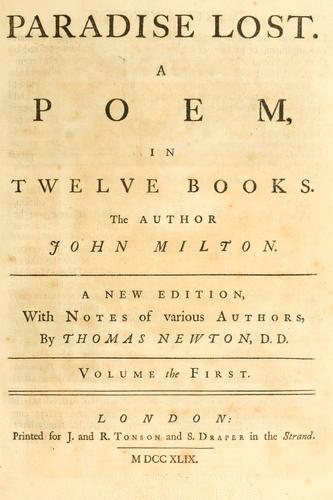
John Milton · Buy on Amazon
"This speaks to the way that allusion, working with earlier texts, can be a way of enriching what an author can say in narrative. Part of what Milton is doing is putting together multiple different epics as well as the “epic” of Genesis. It’s the Iliad , the Odyssey , the Aeneid , and The Faerie Queene all moulded together, along with the Biblical narrative. But the Odyssey specifically is interesting to think about in Paradise Lost because it’s both the wrong story and the right story. When he makes his journey, Satan is explicitly compared to Ulysses. He’s wandering through dark places in the universe; he doesn’t know where he’s going. That’s actually because, like Odysseus, he’s a deceptive, seductive leader whose rhetoric is going to lead people astray. Get the weekly Five Books newsletter On one level, Odysseus is the wrong kind of hero to be, but in later books the reunion of Adam and Eve after the Fall has elements of the reunion of Penelope and Odysseus. They also have to get back home, but they’re going to be away from home for a very long time. Paradise Lost is a homecoming story of marital breakup and martial reunion, just as the Odyssey is. They’re also both epics about redefining a community in the wake of a devastating war, and about whether there will ever be an end to war. The Odyssey existed in, and was passed down through, well-established scholarly texts, from at the very latest the C2-C3 BCE—the time of the Alexandrian Homeric scholars. It seems misleading to say it passed down orally till the end of Rome. Some people love the idea of the always-oral tradition, but honestly I don’t see any good evidence for it; there were oral performances, but there were also written texts. It’s almost like saying that Hamlet has always been passed down orally for the past four hundred years; it’s sort of true, but it seems insane to ignore the fact that actors use texts, and the same was true of rhapsodes. “It’s almost like saying that Hamlet has always been passed down orally for the past four hundred years; it’s sort of true, but it seems insane to ignore the fact that actors use texts” Paradise Lost is, like the Odyssey , an oral poem, in the sense that its author composed in his head and recited it to amanuenses, when he was being “milked” of poetry in the mornings. Milton’s literary and social position was still entirely different: Paradise Lost draws on multiple textual antecedents, rather than on a long, purely oral tradition. In some big sense, the Odyssey is a political poem. It’s about different social structures, about how to deal with cultural difference, class difference and economic difference, and about how societies cohere and fragment. Both the Odyssey and Paradise Lost are poems engaged with questions about what the ideal structure of a society is, and also both poems about conflict within a household, and within a community. Epistemologically, Paradise Lost is different because we know the poem is engaged with a specific civil war, with dates attached to it, whereas the Odyssey isn’t engaged with a specific civil war, and there isn’t an expectation on the part of the listener or the reader that this is about any particular Mycenaean palace, or any particular moment in history. “ Paradise Lost is, like the Odyssey , an oral poem, in the sense that its author composed in his head and recited it to amanuenses, when he was being “milked” of poetry in the mornings.” Of course there have been many attempts, in antiquity and more recently, to plot the places of the Odyssey onto real maps, and to locate the Trojan War in real historical time. We know that there were in fact many Trojan Wars; the city was destroyed and rebuilt several times. As I read it, the Odyssey itself isn’t so much interested in the historical specificity of real events at a particular date; Troy is a holy city far away to the east. That’s different from the way that Paradise Lost evokes a mythic Civil War (the War in Heaven), with specific allusion to the English Civil War which is still a fresh wound in the author’s memory. In the slaughter of the suitors and the (at least partial) outbreak on Ithaca in the final book of the Odyssey , what the poem is doing at least in part is tracing the question of how one war relates to another. Paradise Lost , too, is engaged with the question of how the war in heaven is related to later wars and future conflicts. Milton wonders, ‘How is the War in Heaven like or unlike the English Civil War?’ I think of Milton’s Eve as, in all senses, a much less veiled character than Penelope: she’s naked, and she’s in a position to be much more explicit about what she thinks and wants. We have hints at what Penelope wants, what she needs, what she feels, what she thinks, but they come through in her narratives of her dreams, rather than actual monologues in which she is able to communicate her thoughts and feelings. For instance, we get the great goose dream in Book 19, in which she weeps because the eagle killed her geese, which hints that she has some kind of attachment to the suitors. There’s an ambiguity there. Does she actually want Odysseus to come home and kill the suitors, or might there be other things she might want that wouldn’t be that? Or even if that’s the best outcome Penelope can hope for, are there ways that it’s not an ideal one? It’s not like she has infinite choices. It’s not that she could ever choose to be in a relationship where her spouse would be subordinate to her, rather than the other way around—whereas Odysseus, in choosing between Calypso and Penelope, has exactly that choice. The poem is very clear on the constraints that her position as a mortal woman entails; even though she’s clever, beautiful, rich and elite, powerful over a multitude of slaves and animals, she still spends most of the poem in her bedroom, crying, dreaming and sleeping. The pains that comes from being a mortal woman are really clear in the poem. Milton’s depiction of Eve is fascinating. We have that wonderful scene of when she’s first created (IV.450-465): I first awaked, and found myself reposed Under a shade on flowers, much wondering where And what I was, whence thither brought, and how. Not distant far from thence a murmuring sound Of waters issued from a cave and spread Into a liquid plain, then stood unmoved Pure as the expanse of heaven; I thither went With unexperienced thought; and laid me down On the green bank, to look into the clear Smooth lake, that to me seemed another sky. As I bent down to look, just opposite, A shape within the watery gleam appeared Bending to look on me, I started back, It started back, but pleased I soon returned, Pleased it returned as soon with answering looks Of sympathy and love; Early critics connect this passage to the myth of Narcissus, and of course Milton is using the Narcissus story from Ovid’s Metamorphoses . But Narcissus isn’t a narcissist; he doesn’t know his image is himself. And Milton’s Eve is certainly not a narcissist either. She’s not in love with herself; she’s in love with a figure who’s both beautiful and able to respond to her and listen to her—something she doesn’t get in her marriage. She’s excluded from the direct angelic education and careful tutoring that Adam gets given. She’s not heard, but objectified and thought to be mere external appearance. The image in the water gives her a reciprocity missing from the marriage that is nonetheless the only plausible marriage for her. “Part of what Eve gets from Satan is being taken seriously intellectually—having her ideas be heard.” Remember how the marriage to Adam is framed in terms of oxymorons: “thy gentle hand/ seized mine”. It’s gentle, but it’s a violent verb, and she doesn’t have much of a choice; she wants to stay in the reciprocal relationship with the image, but a booming male voice, maybe God’s, is telling her that her desires are wrong. Part of what Eve gets from Satan is being taken seriously intellectually—having her ideas be heard."
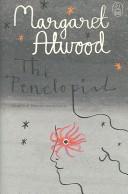
Margaret Atwood · Buy on Amazon
"I was conscious that there were multiple receptions of the Odyssey I could choose. I didn’t want a 100% male list. It seemed crazy to do that when there are so many good woman writers in the world, and have been for quite a long time. I really love the Penelopiad . It’s wonderful at bringing out some of what I already hinted was important in my work of a translator: teasing out the multiple perspectives, multiple voices, in this poem. It brings out some of what we’ve just been saying about the frustrations of Penelope, but it also brings out really wonderfully her guilt, too—that she’s complicit in certain things such as the deaths of the slave women, including her own quasi-daughter, whom Penelope says she raised like her own child, and who is one of the women hanged by Telemachus. In Homer, we never see Penelope grieve or triumph or comment in any way on those deaths. Atwood fills in that gap. I also love how it juxtaposes different styles and different voices. It has both ballad-like verse and prose intermixed, which is not what the Odyssey does, but I think it speaks to something which is in the Odyssey , about the mixture of different modes, different ways of seeing things. In the Odyssey , we encounter the spirit of Agamemnon in Book 24, and Agamemnon says of Penelope, Her fame will live forever, and the deathless gods will make a poem to delight all those on earth about intelligent Penelope. Not like my wife—who murdered her own husband! Her story will be hateful; she will bring bad reputation to all other women, even the good ones. He is idealizing the wife who doesn’t kill her husband, unlike his own wife Clytemnestra, who killed him; Penelope, on Agamemnon’s reading, is extraordinary because she was actually willing to accept her husband’s return. I love the way that this passage underlines a central question in the Odyssey , about whether it is or isn’t ‘normal’ for a wife to be loyal to her husband (for twenty years, or ever); if fidelity were imagined to be ordinary or natural, this celebrating of tear-stained Penelope would make no sense. It underlines the way that this particular patriarchal structure is fragile, and isn’t necessarily beneficial either for men or for women: it makes men vulnerable to other men (who may seduce or rape their wives), and it makes women vulnerable to censure, whatever they do or fail to do. The Penelopiad takes that hint from Homer, asking, ‘What would it be like if we had the whole story not through Odysseus’s perspective, but Penelope’s? What would it be like if we took the veil off Penelope’s perspective, and tried to see her not just as the waiting, passive character that she can be read as, but as the agent behind central elements in the narrative?’ If we do that, we may feel in some ways less comfortable with her than if she’s passive, waiting character. Have you read the Robber Bride? There’s a thread in Atwood’s fiction of the awful, scheming woman. She totally does, yes. Which I think is great. It’s gutsy. Atwood’s reading of Penelope is not the same as my reading of Penelope, at all, but I like the fact that she’s doing one, and that she’s taking seriously the whole project of trying to think through both the perspective of the slave woman and of Penelope. Just by the way: Atwood calls those slave women “maids” because that’s what most of the translators and scholars and commentators before me have called them. I think it’s a pretty misleading translation, since of course the world of the Odyssey isn’t like Downton Abbey . The slaves have no other home to go back to, as “maids” might do. Oh, goodness! It’s a really good poem. It’s good in terms of how well-written it is, which is hard to get if you’re reading in translation. But translations can show you how vivid the descriptions are, of places, of movement, of physical objects. It’s also a poem about essential and endlessly fascinating questions that are relevant for pretty much anybody of any age or background. It’s about cultural difference, globalism or imagining the relationship of small households and families to bigger communities and of communites with each other. It’s about what a home and a sense of belonging mean, which is relevant for all our current cultural debates about nationalism, immigration, migration and refugees, and about conservatisms, about the desire to go back to a real or imagined past. It’s about whether some way that you are always going to be forced to be different in a different place, for different people, for different times, and also whether it’s okay to insist on your own sameness, even that means that other people become changed or die as a result of your insistence on your own sameness. Support Five Books Five Books interviews are expensive to produce. If you're enjoying this interview, please support us by donating a small amount . I think those are really interesting questions, interesting for almost anybody. There are particular resonances now with contemporary global (as well as UK or US) cultures. But part of why I wanted to have texts from different eras, or as invitations to read alongside, is to say the Odyssey is relevant differently in different time periods. I think it’s totally relevant for us now in ways that are totally different to how it’s relevant for Milton, or how it’s relevant for Virgil. I didn’t talk about the fact that Lucian was a non-native writer of Greek (a Syrian); True History and the Aeneid are both, in different ways, picking up on how the Odyssey can be read as a poem about diaspora and migration of peoples across an expanding and confusing world. Another text I didn’t put on my list, because it’s a fragment of a poem not a whole book, is Sappho 16, a lyric poem about the speaker’s love and desire for her absent girlfriend, Anactoria. It’s yet another re-reading of the Odyssey , as a poem not (like the Iliad ) about war-ships and armies, but about desire, and how “what you love” is the most beautiful thing in the world. The Odyssey is grand and epic and long, but it’s also simple, personal, moving and human. If you are interested in stories, you’ll like the Odyssey . It’s so self-conscious about story-telling and about creating in-set narratives. Many people who haven’t read the Odyssey , or haven’t read it very well or very recently, think of it as this very simple kid’s story. Maybe at its core, it is simple, about things that matter to all of us, including people like my seven-year-old. It’s a simple family drama about being lost and coming home, and about a family that’s separated and comes back together. It also has this really impressive narrative complexity and interest in boxing stories inside stories inside stories, and thinking about what stories do for us, and what poetry does for us. It’s about imagination and transformation: Odysseus turns into multiple different kinds of character in the course of the poem, by telling different stories and lies about himself, and being disguised, and being recognized in different ways, as different selves, by different people. The poem itself is like that: it’s slippery, complicated, and like Odysseus, it’s very old and travel-worn, but it turns out to be very young, strong and surprisingly muscular at the same time, able to transform itself for different readers and cultures and moments in time."