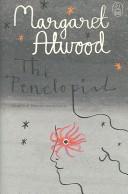
Homer's Odyssey is not the only version of the story. Mythic material was originally oral, and also local -- a myth would be told one way in one place and quite differently in another. I have drawn on material other than the Odyssey, especially for the details of Penelope's parentage, her early life and marriage, and the scandalous rumors circulating about her. I've chosen to give the telling of the story to Penelope and to the twelve hanged maids. The maids form a chanting and singing Chorus, which focuses on two questions that must pose themselves after any close reading of the Odyssey: What led to the hanging of the maids, and what was Penelope really up to? The story as told in the Odyssey doesn't hold water: there are too many inconsistencies.…
"I was conscious that there were multiple receptions of the Odyssey I could choose. I didn’t want a 100% male list. It seemed crazy to do that when there are so many good woman writers in the world, and have been for quite a long time. I really love the Penelopiad . It’s wonderful at bringing out some of what I already hinted was important in my work of a translator: teasing out the multiple perspectives, multiple voices, in this poem. It brings out some of what we’ve just been saying about the frustrations of Penelope, but it also brings out really wonderfully her guilt, too—that she’s complicit in certain things such as the deaths of the slave women, including her own quasi-daughter, whom Penelope says she raised like her own child, and who is one of the women hanged by Telemachus. In Homer, we never see Penelope grieve or triumph or comment in any way on those deaths. Atwood fills in that gap. I also love how it juxtaposes different styles and different voices. It has both ballad-like verse and prose intermixed, which is not what the Odyssey does, but I think it speaks to something which is in the Odyssey , about the mixture of different modes, different ways of seeing things. In the Odyssey , we encounter the spirit of Agamemnon in Book 24, and Agamemnon says of Penelope, Her fame will live forever, and the deathless gods will make a poem to delight all those on earth about intelligent Penelope. Not like my wife—who murdered her own husband! Her story will be hateful; she will bring bad reputation to all other women, even the good ones. He is idealizing the wife who doesn’t kill her husband, unlike his own wife Clytemnestra, who killed him; Penelope, on Agamemnon’s reading, is extraordinary because she was actually willing to accept her husband’s return. I love the way that this passage underlines a central question in the Odyssey , about whether it is or isn’t ‘normal’ for a wife to be loyal to her husband (for twenty years, or ever); if fidelity were imagined to be ordinary or natural, this celebrating of tear-stained Penelope would make no sense. It underlines the way that this particular patriarchal structure is fragile, and isn’t necessarily beneficial either for men or for women: it makes men vulnerable to other men (who may seduce or rape their wives), and it makes women vulnerable to censure, whatever they do or fail to do. The Penelopiad takes that hint from Homer, asking, ‘What would it be like if we had the whole story not through Odysseus’s perspective, but Penelope’s? What would it be like if we took the veil off Penelope’s perspective, and tried to see her not just as the waiting, passive character that she can be read as, but as the agent behind central elements in the narrative?’ If we do that, we may feel in some ways less comfortable with her than if she’s passive, waiting character. Have you read the Robber Bride? There’s a thread in Atwood’s fiction of the awful, scheming woman. She totally does, yes. Which I think is great. It’s gutsy. Atwood’s reading of Penelope is not the same as my reading of Penelope, at all, but I like the fact that she’s doing one, and that she’s taking seriously the whole project of trying to think through both the perspective of the slave woman and of Penelope. Just by the way: Atwood calls those slave women “maids” because that’s what most of the translators and scholars and commentators before me have called them. I think it’s a pretty misleading translation, since of course the world of the Odyssey isn’t like Downton Abbey . The slaves have no other home to go back to, as “maids” might do. Oh, goodness! It’s a really good poem. It’s good in terms of how well-written it is, which is hard to get if you’re reading in translation. But translations can show you how vivid the descriptions are, of places, of movement, of physical objects. It’s also a poem about essential and endlessly fascinating questions that are relevant for pretty much anybody of any age or background. It’s about cultural difference, globalism or imagining the relationship of small households and families to bigger communities and of communites with each other. It’s about what a home and a sense of belonging mean, which is relevant for all our current cultural debates about nationalism, immigration, migration and refugees, and about conservatisms, about the desire to go back to a real or imagined past. It’s about whether some way that you are always going to be forced to be different in a different place, for different people, for different times, and also whether it’s okay to insist on your own sameness, even that means that other people become changed or die as a result of your insistence on your own sameness. Support Five Books Five Books interviews are expensive to produce. If you're enjoying this interview, please support us by donating a small amount . I think those are really interesting questions, interesting for almost anybody. There are particular resonances now with contemporary global (as well as UK or US) cultures. But part of why I wanted to have texts from different eras, or as invitations to read alongside, is to say the Odyssey is relevant differently in different time periods. I think it’s totally relevant for us now in ways that are totally different to how it’s relevant for Milton, or how it’s relevant for Virgil. I didn’t talk about the fact that Lucian was a non-native writer of Greek (a Syrian); True History and the Aeneid are both, in different ways, picking up on how the Odyssey can be read as a poem about diaspora and migration of peoples across an expanding and confusing world. Another text I didn’t put on my list, because it’s a fragment of a poem not a whole book, is Sappho 16, a lyric poem about the speaker’s love and desire for her absent girlfriend, Anactoria. It’s yet another re-reading of the Odyssey , as a poem not (like the Iliad ) about war-ships and armies, but about desire, and how “what you love” is the most beautiful thing in the world. The Odyssey is grand and epic and long, but it’s also simple, personal, moving and human. If you are interested in stories, you’ll like the Odyssey . It’s so self-conscious about story-telling and about creating in-set narratives. Many people who haven’t read the Odyssey , or haven’t read it very well or very recently, think of it as this very simple kid’s story. Maybe at its core, it is simple, about things that matter to all of us, including people like my seven-year-old. It’s a simple family drama about being lost and coming home, and about a family that’s separated and comes back together. It also has this really impressive narrative complexity and interest in boxing stories inside stories inside stories, and thinking about what stories do for us, and what poetry does for us. It’s about imagination and transformation: Odysseus turns into multiple different kinds of character in the course of the poem, by telling different stories and lies about himself, and being disguised, and being recognized in different ways, as different selves, by different people. The poem itself is like that: it’s slippery, complicated, and like Odysseus, it’s very old and travel-worn, but it turns out to be very young, strong and surprisingly muscular at the same time, able to transform itself for different readers and cultures and moments in time."