Beth Blum's Reading List
Beth Blum teaches modern and contemporary literature at Harvard University, where she is an Assistant Professor of English. Her book, The Self-Help Compulsion: Searching for Advice in Modern Literatur e , was recently published with Columbia University Press (2020). Recent work has appeared in PMLA and the Chronicle of Higher Education .
Open in WellRead Daily app →The Best Self-Help Novels (2020)
Scraped from fivebooks.com (2020-02-24).
Source: fivebooks.com
Charles Yu · Buy on Amazon
"I really love that text. It’s interesting to me on several levels. One is because it’s not so common to think of sci-fi as having anything in common with self-help. The title ‘How to Live Safely in a Science Fictional Universe’ is very much invoking this tradition of time travel that you see in sci-fi literature and is usually read through that generic lens. We tend to think of sci-fi as being very escapist and fantastical, and not interested in the problems of everyday life or how to live. But what I love about this book is the way that Yu is combining the fantastical elements of sci-fi with the more practical, reflective orientation of self-help. So he’s using this conceit of time travel to think through very common and practical questions of how to deal with nostalgia, our parents, immigration , regret. It’s a really interesting take on what my book calls the ‘how-to fiction’ in the way that it’s reconciling those two traditions. Get the weekly Five Books newsletter Like Sheila Heti’s book, which is a work of autofiction that collapses the distinction between character and author, Yu’s book too is blending the protagonist and the author in this heady amalgamation. It ends up that the book that the character is reading is also the one he’s writing, and so he is using the time travel conceit to offer advice to his younger self. It offers moving advice and reflections on the difficulty of managing all kinds of different emotions, ambitions, and regrets that accompany everyday temporal experience. On the one hand, I think there’s a tendency to write off the ‘how-to’ conceit of a lot of these fictional works as being an overly high-concept or overly ostentatious gimmick. Both are at play. In Hamid’s book, another text on the list, you also see that the usage of the ‘how-to’ paradigm as a kind of parody, or satire, or joke. But at the same time, in all of the books on this list there’s a recognition of the inevitability that readers will come to the book looking for self-help and looking for advice. And also a recognition of the inevitability of the author using the writing of the novel as a form of therapy or self-help. There’s the attitude that, well, this is going to happen—whether you like it or not, self-help is going to happen. So how can we think about this in the most generative way? How can the novel place itself in relation to this inevitability in a way that is actually philosophical and meaningful, and not trite or commercialized?"
Mohsin Hamid · Buy on Amazon
"It is a bold thing to say, but on the other hand, it’s something that quite a few contemporary authors are saying. Not just Hamid, but Sheila Heti, Brenda Lozano, and others have made similar observations. Hamid’s book was really generative for me because each section is titled after a different self-help imperative: ‘move to the city’, ‘get an education’—things that you would find in a self-help manual. Well, that’s what’s interesting about the text; it’s using the second-person voice. So it’s at once describing things that everyone should do from that commanding, imperative voice of the self-help manual: move to the city if you want to be successful, don’t fall in love, things like that. But at the same time, it’s also describing the particular narrative of this one character, and it’s oddly collapsed in this figure of “you,” who is both the protagonist and the author, but also the reader, who identifies with the protagonist through the second-person voice. Each chapter is titled according to this self-help rule and then often begins with a kind of deconstruction or theorization of the self-help genre, or one aspect of it, in a way that I actually found really intriguing as someone writing a book about literature and self-help. “He began by thinking that self-help was funny and a little bit silly” You can read in interviews with Hamid this story of how, like many of the authors on the list, he began by thinking that self-help was funny and a little bit silly, but really that his relation to the genre evolved the more he thought about it and took it seriously and thought about what it has in common with other wisdom traditions, like the tradition of Sufi love poetry also invoked in the novel. The more he thought through the genre, the less easily he could dismiss it as something trivial. He’s particularly interested in the global status of self-help is something that’s as popular in Asia as it is in the United States now, and as something that’s come to take the place of more politicized or fraught sources of advice or authorities on how to live in these places—like religion, for instance. He’s interested in the way that self-help is taking up that space and offering a venue for thinking through problems of how to live. In a way, the story ends up a counter-example to the advice given by the self-help manual voice. So the self-help manual voice will say ‘don’t fall in love’, but the actual narrative is showing how, actually, the process of falling in love and family and all the things that are left out of this self-help manual actually become the most important and the most meaningful to the character’s life. It’s that ‘life is what happens while you’re busy making other plans’ kind of idea. But also I think that the self-help becomes a foil for these texts’ own kind of life philosophy or literary ethics that ends up emerging in contrast to the rules the self-help manual is laying out."
Sheila Heti · Buy on Amazon
"This novel was written at the same time that Heti was also working on a book of self-help with her friend Misha Glouberman, who’s also a character in How Should a Person Be? He and Sheila were collaborating on this volume of little short chapters offering reflections on experiences like impostor syndrome but also practical advice, such as how to quit smoking. It’s interesting to me that she was working on that at the same time as she was working on this novel How Should a Person Be? and she’s said that she really saw the two projects as companion pieces. Heti was also inspired by Samuel Smiles, the author of that first Victorian self-help book published in 1859 that I mentioned. A friend gave it to her and she became really interested in the way that Smiles was holding up the lives of these individuals from history as models and exemplars of how to live. What I find so interesting about How Should a Person Be? is the way that the existential quest of the character Sheila—who is also sort of like the author in this autofictional hybrid—is paralleled by the narrative’s quest for the right genre. You see the text working through these different possible genres before it settles on its final autofictional form. It even incorporates skeletal remainders of other genres it’s experimented with, like the aborted play Sheila writes. There’s a compelling parallel being drawn between the search for the right genre and the search for the right style of life or way of living. “There’s a parallel being drawn between the search for the right genre and the search for the right way of living” So much of the modernist tradition of Flaubert and Woolf and others is premised on this desire to remain aloof from the popular tastes and practical interests of everyday readers. And Heti explicitly positions her narrative against that, and says, ‘Yeah, I’ve thought about Flaubert, I’ve thought about impersonality and detachment and all that, and I want this book to be the opposite of all of those things.’ So again, we see this desire to embrace a lot of the tendencies that earlier literature had really been premised on suppressing or counteracting, particularly in terms of these more practical desires of readers. Yes. I think the moral trajectory of many of these narratives, Heti and also Hamid and I think others too, is showing the author/protagonist coming to actually purge themselves of the self-help axioms, values and ideals that they’ve inherited and absorbed through the culture. In the Hamid, we saw how he ends up embracing family and connection and human bonds and communities as an antidote to the ruthless desire for wealth and success. Sheila meanwhile learns to purge herself of the need to always please other people and to suppress the uglier parts of life and her identity. That’s embodied by her eventual embrace of this self-help motto ‘Who cares?’ which Sheila ends up embracing as a principle for life—a way of ridding herself of the baggage of a lot of this history of self-belaborment, and the obligation to always try to be improving oneself and adapt oneself to the desires of other people. Support Five Books Five Books interviews are expensive to produce. If you're enjoying this interview, please support us by donating a small amount . This learning not to care is also a trend that you see in a lot of contemporary self-help. This is the place where the contemporary novel and the latest wave of self-help are actually meeting: in this advice to learn to stop worrying so much about what other people think or about social standards or social conformity, and to learn to find your own compass for what’s meaningful and valuable to you about life. There’s a kind of cheekiness to so much of this: both the novels that are using the ‘how-to’ framework but also this self-help that’s writing against its own tradition. At the same time, there’s that line that I love from How Should a Person Be? where Sheila and Margaux decide that good writing is learning to find where the funny is, and I think that’s often true. The question is, are these self-help authors and novelists doing something more than trying to be cheeky, or is that where the joke ends? If that’s it, then the joke falls flat, because it’s not actually that funny, to use a ‘how to’ as a title for a novel. So there must be more to it than that. The cynical reading is that within the self-help genre, it’s just a way of trying to renew a field that’s come to attract a lot of resistance and skepticism; these industries always need to find ways of keeping themselves relevant and evading the growing skepticism of readers who are perhaps tired of being inundated with advice and directives about how to live. “These industries always need to find ways of keeping themselves relevant” But on the other hand. I think it’s also possible to read it more optimistically as a sign of the genre actually improving, and of it becoming more self-aware about the limits and consequences of the tradition of conventional self-help. And of a genre interested in opening itself up to more ambiguity and other kinds of insight, including literary insight, and other modes of being in the world that conventional self-help leaves out. Heti herself has a great line in an interview where she says that when men ask the question of ‘How should a person be?’ in a novel, it’s considered this great existentialist exploration of weighty philosophical problems, but when a woman does it, it’s dismissed as navel-gazing, narcissistic or puerile. And I think there’s a lot of truth to that. The same reception was seen with her next book Motherhood as well. Part of it may be that she’s really laying bare her own ambition in that book. She’s showing her own desire to be famous, a genius, a celebrity. That’s something that everyone feels, I suppose, but a feeling that people are supposed to keep to themselves or hide. But I do think there’s a double standard there: we’re used to characters like Stephen Dedalus wanting to forge the uncreated conscience of their race, or even somebody like Knausgaard wanting to write a great magnum opus. They seem to have a lot more liberty to explore the workings of their inner minds and their aesthetic ambitions than many of these women artists, like Heti."
Eleanor Davis · Buy on Amazon
"It’s less short stories than a series of vignettes told in graphic narrative form. They’re gorgeous, and they also have a very colorful, fantastical element. They each provide different windows into the question of the desire for self-betterment, for finding mechanisms for coping with one’s emotions and desires. So they’re a loosely related constellation around that theme. It’s a collection of Davis’s work that was put together after she had composed these different vignettes, so there’s a belatedness to the ‘how to how to be happy’ frame for this. She’s another author who’s talked about that process of coming to find that as a title. She describes how it initially began somewhat as a joke for her, but on the other hand, the act of reading self-help is something that she actually takes very seriously as an author. Self-help is something that she reads a great deal herself, so she felt a little bit guilty about using it in a tongue-in-cheek way for the title of her book. The unique thing about her book is that it begins with this big disclaimer: when you open it, it says this is actually not a book about how to be happy, and if you’re if you’re feeling depressed or if you really need practical advice about that, then read these other books. And then she refers you to more legitimate therapeutic or self-help material. That disclaimer is a sign of the compassionate approach that she takes to the problem of the quest for happiness, which I think is evident throughout the graphic narrative. The first episode shows these people who have developed this commune, and it describes the breakdown of the commune because the founder of it, Adam, can’t escape his anger management issues. He gets really mad when somebody sneaks something like a candy bar into the commune, which is against the rules. “The book is making you question what is true and what isn’t” All of them are sort of linked by this problem of how to escape oneself and one’s emotions, and she does it not in a didactic way, but in a very open-ended, inconclusive way. It’s a strange experience to read these vignettes, because you leave them and you really don’t know what to make of what you’ve just read. They’re embracing of both inconclusiveness and ambiguity in a way that contrasts with reading a traditional self-help book, which is so full of probably illegitimate certainty and authority. It’s formally modelling and enacting an alternative to the methods of a lot of self-help, which says ‘Do this, don’t do that’. Instead, this book is making you question what is true and what isn’t, and what is certain and what is not. Yes, and one that is so diffuse that it’s spread into all areas of conversation and life, and really isn’t confined to a book at all. It’s something you absorb through conversations, through advertisements, through the internet, music, everything."
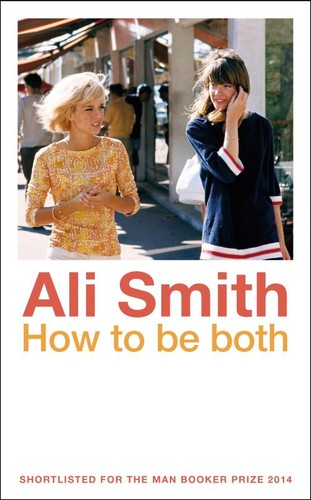
Ali Smith · 2014 · Buy on Amazon
"This is the novel that is least explicitly interested in the contemporary self-help genre, even though it is using this how-to title; it doesn’t actually make any explicit reference to a contemporary self-help manual. But it does reference this more ancient practice, this Renaissance tradition of textual advice, particularly in the form of painting manuals that the character Francesca reads in order to find advice not only about how to paint, but also about how to live. That was really interesting to me because it involves this whole tradition of people using self-help as a tool of self-teaching or auto-didacticism, who have been excluded from more official or traditional apprenticeship or educational possibilities. Francesca reads these painting manuals to learn how to be a painter, even though women were not considered legitimate apprentices for these artistic positions. How To Be Both is showing how a person can use self-help reading subversively for their own purposes, and that self-help’s influence is not always as authoritarian as one might think, but that actually there’s a lot of potential there for flexibility in terms of what readers take selectively from self-help. For example, well the book references two manuals, one is by renaissance humanist Alberti and the other is by the Italian renaissance painter Cennini. I think it’s the Cennini passage where Smith references: The great Cennini, though, in his handbook on colours and picturemaking, finds no worth and no beauty of proportion in girls, or in women of any age – except in the matter of hands in themselves, since the delicate hands of girls and women, providing they’re young enough, are more patient, he says, than those of a man, from spending so much more time indoors which makes them more suited to making the best blue. Myself I went out of my way, then, to be expert at the painting of hands and be good at the grinding of blue and the using of blue, both So that’s an example of somebody selectively adapting this advice that is really excluding their own group or identity from its purview and using it in strategic ways. In Smith’s work in general, although she’s not directly addressing self-help, she’s very much critiquing a lot of the intellectual or cognitive impulses that underlie the desire and demand for self-help. The idea of ‘how to be both’, the critique of dualistic thinking, polarizing thought and reductive solutions and facile answers—all of that is something that’s being challenged by the experience of reading her narrative, in interesting ways. How To Be Both becomes a kind of riddle as you’re reading it; you’re trying to figure out how the novel is going to answer that question. There’s so many different possibilities that come up when you read it. Is it how to be both genders? How to be in both times? Back to that theme of time travel we see with Yu’s book. It invites a more flexible and nuanced way of thinking that I think is offering a useful antidote to some of the tendencies that are encouraged by self-help literature, particularly the impulse towards reductive and overly schematic thinking. She doesn’t adopt the pretense of expertise upon which so much self-help relies. Another thing that really fascinates me about her is that she wrote her dissertation on modernist literature. Apparently it had something to do with modernism and ordinary life, or something like that—I would just love to get my hands on it and read that dissertation. No, I really think that anything that disseminates literature and gets people interested in literature and introduces people to literature is a good thing. And if it’s going to decontextualize literature, I don’t really mind that. For example, a lot of people first encountered the philosopher William James through Dale Carnegie’s handbook How To Win Friends and Influence People , because Carnegie quotes William James in that book. So their initial counter with James in Carnegie will be decontextualized, but then they’ll go and read more James and learn more about him and his context. It’s not the end of the story—it’s really just a gateway into further study. So I tend to have a less critical view of that particular work that self-help is doing. What I find really interesting about these literary engagements with self-help is their willingness to think about what self-help can teach us about reading and about literature, and about why people are interested in literature and what brings them to books. It doesn’t mean that they all end up supporting the way that self-help relates to readers, or the way that it supplies readers desires for flattery, consolation, or self-affirmation. Quite to the contrary, many of these novels end up subverting and complicating those desires and expectations. The conclusion is often that the individual’s desires are just not the center of the universe. Thank you. So there’s a real agency on the part of the reader that becomes possible through that. It’s not really the very hierarchical relationship that many people associate with self-help. Actually, the self-help reader I think has a lot more agency than has previously been recognized by a lot of intellectual work on the topic. Contemporary novels are beginning to see that there’s a lot to be learned and thought through by studying why people read self-help, and what self-help has in common with literature—even if they don’t agree with the kind of methods and aims of the traditional self-help book. To me, that’s the most exciting aspect of that relationship."