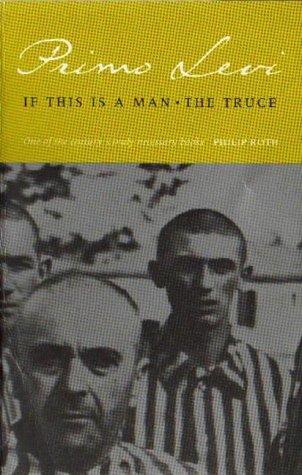
If This Is a Man
by Primo Levi · 1947
Buy on AmazonThe author's survival in Auschwitz and his travels through Eastern Europe and Russia are the subjects of this memoir.
Recommended by
"It’s called Survival in Auschwitz in the US to give it a positive spin – that’s the American publishing world: the Holocaust is all right as long as there are survivors. Primo Levi was an Italian Jew, arrested in 1944 after Italy capitulated and the Nazis took over. He was shipped off to Auschwitz, but because he had a chemical degree, or because he was lucky – which was how he saw it – he was working in the chemical factory in Auschwitz, which was a technological venture. So he managed to survive and see the end, and in fact the book also deals with the last ten days when the Nazis abandoned Auschwitz and the Russian troops had not yet arrived. Levi went back to Italy, indeed to the very same apartment where he was born, so his life was interrupted horribly. And then he wrote about his experiences, and eventually he committed suicide. He bears witness to the Holocaust, but he’s a scientist, and he needs to understand the ethical system, as it were, behind those crimes. However perverted it is, he’s trying to understand how it works. So he talks about individual experiences, including his own. They’re always examples of a larger – I don’t want to say theory – but of a larger proposition or explanation. He unpacks the formula, as it were, behind it all. So it’s the victory of reason – or the proper kind of reason, as opposed to the Nazi kind of reason. The Holocaust was not madness: it was a technology, a system, and therefore rational. And Levi regains reason, by treating his experience in Auschwitz as something that is subject to rational analysis."
Man’s Inhumanity to Man · fivebooks.com
"Primo Levi was an Italian Jew and he was arrested as a member of the anti-fascist resistance towards the end of the war, after Germany had occupied Italy. He was deported to Auschwitz . He survived and then he wrote a book about his experiences there. This really is a book that everybody should be made to read because he very sensitively describes what people become in a concentration camp . What went on at Auschwitz were some of the most serious crimes that were addressed in Nuremberg . If you read Airey Neave’s book, many of the senior officials in the Nazi regime simply denied that they knew anything about these concentration camps. They would say: ‘I knew nothing about the extermination of the Jews.’ When you read Primo Levi’s book, you cannot possibly imagine these people did not know about the industrial killing of millions of people. Absolutely. He is showing us the situation where we could very easily lose our humanity. It’s an absolutely shocking book. More than anything, he examines human behaviour and how people adapt in order to survive."
War Crimes · fivebooks.com
"My second choice is Primo Levi’s If This Is a Man . It’s about his 11 months in Auschwitz . I was reading this over the weekend—just to bone up for this interview—and just like every other time I’ve read it, it stretches my ability to comprehend. The physical and emotional pain is extremely intense. Even the most inured cynic is taken aback by the infrastructure of human cruelty in the camp. Where Altan’s story is an ‘I will survive’ book, Levi’s is not. When it was published in the US it was called Survival in Auschwitz , but every time I see the cover to that edition, I imagine it would have made Levi feel upset. He carried a chronic sense of survivor’s shame. He kept asking himself ‘Why did I live when the others didn’t?’ There’s a chapter in there called “The Drowned and the Saved” where he says that those who managed to survive in Auschwitz did so mostly through theft, deception and wiliness—and that it was no credit to your character if you survived the place. We’re so lucky they did republish it because although it’s a very painful read, there are insights into the human condition which you don’t get from an ‘I will survive’ book. The sentences are elegantly simple. Levi has no need for linguistic or grammatical pyrotechnics because he possesses genuine wisdom. We spoke earlier about Altan’s inner tussle between bravery and honesty. Like Boethius and Frankl, Altan meets the challenge of prison by reframing his experience. By contrast, Levi writes a lot about being naked. The way the Nazis stripped his clothes off when he first arrived and shaved his head. It was as if starvation made him even more naked. When the prisoners knew the Nazis were planning a round of executions, they would show each other their naked bodies and ask one another ‘Do you think they’ll pick me? Do I look strong enough for them to keep me alive?’ Levi’s book is a naked confrontation with imprisonment, cruelty and death. It’s like the most hellish form of death row, where at any minute a guard could point you towards the gas chamber. That’s one reason the book was called ‘If ‘ this is a man. He’s alive, but only tentatively. Levi shows what existence is like when your existence is absolutely provisional. You could read much of If This Is a Man as a phenomenology of a dehumanised human. It’s not that there’s no spiritual survival, redemption or hope in this book, it’s just not a programmatically redemptive or hopeful book. He hasn’t run a shining narrative arc through the story. There are moments of alleviation. However, they reveal another pain. There’s a scene where he describes being in hospital in Auschwitz. As long as your injury or illness wasn’t that bad, you could spend a few days in bed. If it was too severe, you’d go straight from there to the gas chamber. So if you were going to be injured or sick, you had to be in the Goldilocks zone if you wanted to stay alive. It was a reprieve from the long days of labour to be in the hospital, but after a few days, he started to think for the first time about everything that was happening to him and everything he’d lost. Get the weekly Five Books newsletter There’s another occasion where after the camp has been liberated a tremendous homesickness comes over him, which he hadn’t felt until then. And I think perhaps the most painful example of this is the thaw in spring, when the snow has finally melted, and for the first time in months, the prisoners weren’t freezing. They stand and enjoy the warm air on their skin. But another prisoner turns to him and says, ‘If only we weren’t hungry.’ Levi’s observation from this is that pains don’t necessarily amass or add together to create a greater quantity of pain. Rather, one type of pain is obscured by another. Alleviating one pain reveals another one buried underneath. That could sound hopeless, but pain was complex in Levi’s situation. He wrote that “it was the very discomfort, the blows, the cold, the thirst that kept us aloft in the void of bottomless despair.” There’s a phrase I’ve heard on the landing of almost every prison I’ve worked in: ‘Keep your head in jail’. Don’t think about life outside. Don’t think about the fact that your ex-partner is in a restaurant right now, your children are playing in the park. Your student would have had to open himself to the world when he left the prison in the morning and and when he came back to prison in the evening to close himself off again. It must be hard to put your head back in jail when the air from the outside world is still in your lungs. Yes. Some say he never really left the camp. After Levi’s suicide in 1987, Elie Wiesel wrote, “Primo Levi died at Auschwitz 40 years later.”"
Philosophy and Prison · fivebooks.com
"La Tregua is an extraordinary book. Levi wrote his first book, If This Is a Man , immediately after being repatriated to Italy after his time in Auschwitz, so that book was much more vivid. He wrote this book 20 years later and it is much more considered and, in many ways, more carefully constructed. The events occur after the liberation of Auschwitz and the book is almost a picaresque novel. Initially the prisoners are kept in the camp, but they are fed and more or less looked after. It’s a very curious slant on the whole period and is actually very funny in places. Later he undergoes this extraordinary odyssey around central Europe, being shifted here and there by the Russians over a period of about almost a year. Get the weekly Five Books newsletter The Russians were dealing with so many displaced people and Levi is actually extremely complimentary towards the Russian army. Again, there is this acceptance. The question of forgiveness is an extremely difficult one. Primo Levi was directly involved as a victim. Giorgio Bassani was involved slightly less directly because he was never imprisoned although he had to take to the hills to escape the Fascists. None of them actually in any way say ‘I forgive’, but they do accept their past. I think yes for Bassani, but with Primo Levi you never really know. There is this mystery surrounding his death: did he commit suicide or not? I once sat next to his sister at a dinner party but feebly didn’t dare address the question directly as to what she thought had happened, although I believe the family think that his death was an accident."
Forgiveness · fivebooks.com
"I first read this in my twenties. It was my introduction to the Holocaust . This is when I began to understand what the Holocaust had been. Primo Levi was an Italian Jew and an industrial chemist who was sent to Auschwitz. It is about his existence in Auschwitz. Reading it, horror follows horror. It’s hard to believe that the human frame can survive under such circumstances, let alone survive to write something like this. There are two moments in it that particularly struck me. Auschwitz is in Poland and it’s winter. The hard labour is extremely difficult and it is very cold and bitter. The prisoners are going to be synthesizing rubber in a factory near to Auschwitz, so there is a chemistry exam. And it’s the most infernal exam in the world. This person who has been reduced to something that is almost sub-human now has to try and remember his chemistry from his degree. If he can remember he will be able to work inside in the warmth, and he won’t die. There’s something about being a scholar and thinking about your knowledge under such circumstances that is very powerful. Support Five Books Five Books interviews are expensive to produce. If you're enjoying this interview, please support us by donating a small amount . He does get to work in the factory, which probably saves his life. There is a scene in which he is going with a very young prisoner to get soup and suddenly a line from Dante’s Inferno comes to his mind. It’s the Ulysses canto, where Ulysses is saying, “I’m not meant for men like these but men who strive after excellence” and Primo Levi tries to remember it. Trying to remember it is this moment of confirmation that he’s still human. The young man he is with is French and doesn’t see what he’s talking about, but senses that it is really important. Levi doesn’t remember the whole canto, but he remembers enough snatches of it that he’s just about got it. I’d like to say that this proves the enduring, humanising power of literature, but I’m not sure you can. George Steiner has pointed out in his great book Language and Silence that people who read Goethe and listened to Schubert in the morning then went out and did their work as guards at Auschwitz. So I don’t think literature improves you. Nonetheless, it is a moment worth registering because it is this remembrance that means so much to him and he says, “I would give my day’s soup ration to remember that line.” You’d have to read this account to know how much a day’s soup ration matters. Yes, I absolutely agree with that. The writing of this, and similar Holocaust memoirs, is a reaffirmation, it goes back to combat gnosticism. It’s hard for anyone who hasn’t been in that situation to talk about reaffirmation, because it’s hard to imagine just what you would have to come back for. He writes with extreme candor and a remarkable lack of self-pity. I think there’s this sense, in theories of representations of the Holocaust, that if you deviate even slightly from the truth then you risk letting in the deniers. And so the place of literature in relation to the Holocaust is a very delicate subject. As readers, we have to be very, very aware of the potential of slipping into sentimentality, or trying to make something good out of it that just isn’t there In a way it just makes the bravery of the writing—not only of If This Is A Man but all his other works, which never leave this subject—the more extraordinary. There is something about surviving to bear witness, it is an incredibly brave thing to do. He strikes me as an absolutely heroic person. My next project is going to be about literature and silence. It grows out of the last chapter of the book I’m writing on veterans which is called “The End of the Story”. The penultimate chapter is about veterans who never stop talking about the war as a model of literary creativity. And the final chapter is about veterans who won’t say anything or can’t say anything or don’t say anything. Support Five Books Five Books interviews are expensive to produce. If you're enjoying this interview, please support us by donating a small amount . We neglect the silences in literature. I’m interested in the acoustic use of silence in poetry or drama and in things that aren’t said, and how we know they’re not said. It’s terribly difficult if you’re not going to say something or write something in protest, how do you register that? You’ve got to sort of hedge it round with words. But I think we can try and listen to those silences. And silences, as we know from the two minute silence, are incredibly powerful. I want to try and understand this better, and understand how we can see silences in texts that are there, and also maybe texts that aren’t there, or texts that aren’t as they would have been. It’s looking into the realm of the subjunctive, into the hypothetical, into the not said."
The Best War Writing · fivebooks.com
"Yes. When it came out in the States it was known as Survival in Auschwitz . I think it’s a work of genius. And you’re quite right, some of it is testimony. But what I admire so much about it is that it is a book without pathos, or sentiment. Levi was a scientist, a radical empiricist. His ability and his care in describing the camp structure is unrelenting. It’s almost as if he answers his own question: have we got rid of rational man? Answer: No, because here I am, observing, writing, and thinking. Our generation read this in the ’80s and ’70s—it was standard fare where I was growing up. When we were first reading it, people were not talking about the Holocaust all the time, but when I’ve taught the book to students who are used to Schindler’s List , they are surprised because they are used to a more popular Holocaust literature, or Holocaust testimony. This book doesn’t use the usual tropes of Holocaust literature. It does, actually, have a deep pathos, but it is a book without sentiment. What Levi does is reveal the Hobbesian nightmare that was deliberately created in the camps. In a world without contact with one another life is indeed nasty, brutish and short. What had been recreated in the center of post-Enlightenment Europe was its own worst nightmare, the very thing that it was built to prevent. He turns his scientifically trained and unrelenting gaze on what it means to live in a system where there is no ‘why?’ At the beginning of the book, Levi describes being brought into the camp. He was Jewish-Italian and, as a member of the resistance, he was caught late on in the war, which meant he could survive. He describes coming into the camp, and they were already thirsty – he reaches out of one of the barracks to pick an icicle to suck, to drink, and it’s snatched away by one of the guards. And he asks him why he had done that, and the reply was, “Here there is no why”. “Books that are classics of their time often don’t get recognized as classics of their time at the time” His analysis of modern forms of horror and the organization of modern forms of horror is brilliant. But he also poses a question about literature and humanity, right in the heart of the camp. There’s a chapter, which I’ve never been able to forget, “The Canto of Ulysses”. It describes Levi having a conversation with a younger camp inmate, a French guy called Jean whom everyone calls ‘the Piccolo’. The Piccolo’s job, because he’s young, is to go and get the soup from the other end of the camp for the workers every day. All the other guys vie to be the one who goes to help Piccolo because it means that you can walk across the camp and you can actually have a conversation and be outside the unremitting horror for a bit. One day it’s Levi’s turn and he goes with Piccolo. He says he’s suddenly filled with a need to talk to Piccolo about Dante, about the Inferno . Piccolo is French and Levi is Italian. Dante is written in vernacular Italian, which is supposed to make the journey into hell every man’s story, as everyone could speak it. So, there’s this great scene where Levi is trying to translate into French, from the Italian, just because he wants to hear it, just because he’s desperate to communicate to this young man this great, great story. And in the end, he says, ‘Obviously, I’m not going to be able to do this, but Piccolo understands what I’m trying to do. He’s heard I’m trying to tell the story.’ And that act of storytelling, of transnational, trans-lingual, trans-historical storytelling affirms their humanity at that particular moment. It doesn’t redeem it, but it affirms it at the gates of hell. It seems to me the telling of stories is a way in which we do affirm each other’s humanity. And the great works of literature and the not-so-great works of literature are doing that work all the time. If I had to have one book out of these five, it would be this one and for that reason. We don’t know. It’s hard to know. People get tired. But I think you’re right about showing and not telling because, with things like the Holocaust, things like slavery, it’s not as if we need adjectives to bring the horror home. If we did we’d have gone morally wrong already. It’s enough just to approach it, I think, without asking how you are going to get people interested in mass death – which is a pretty obscene question in itself. The over-sentimentalisation of the atrocious things we do to each can become a way of not telling the story. Whereas Levi and Woolf are truth tellers—maybe all of the writers I’ve chosen are truth tellers, reality tellers. Yes, more and more I think that’s the case. I did my Master’s degree in Critical Theory. But I came to literature through studying it with philosophy . I wanted to understand what it was like to be a person with other people. And I think that’s what most students of literature come to literature to do. If people spend the time trying to make the world real to one another—and writing is hard work—the least you can do is respond to that."
Human Rights and Literature · fivebooks.com
"Primo Levi, “If This Is a Man” (original, “Se Questo È un Uomo,” 1947). At one level, Levi’s book is about how as a young Italian Jewish chemist joining the resistance during World War II, he was captured, sent to Auschwitz, and survived."
By the Book: Jared Diamond · nytimes.com
"My mother-in-law, Paula, suggested I read Primo Levi's If This Is a Man. The memoir made the experience even more meaningful."
By the Book: Katie Couric · nytimes.com
By the Book: Selma Blair · nytimes.com