Kate McLoughlin's Reading List
Kate McLoughlin is Associate Professor of English at Harris Manchester College, Oxford. Her books include Authoring War: The Literary Representation of War from the Iliad to Iraq (2011) and Martha Gellhorn: the War Writer in the Field and in the Text (2007). She is a former government lawyer, an Associate of the Royal College of Music in piano performance, and a poet: her collection Plums came out in 2011.
Open in WellRead Daily app →The Best War Writing (2016)
Scraped from fivebooks.com (2016-02-12).
Source: fivebooks.com

Penelope Farmer · Buy on Amazon
"This book is the first war book I read and it made a deep impression on me. I read it when I was about nine or ten. It’s a book for children , published in 1969. The Charlotte of the title is a twelve year old girl who goes to boarding school and goes to sleep in a dormitory in a bed which has a funny set of wheels on it, and wakes up fifty years earlier in 1918. She has swapped places with a girl called Clare, who in 1918 was sleeping in the same bed. We don’t hear from Clare’s point of view, what she makes of 1969 or 1968, but we do hear about Charlotte, who finds herself in the final year of the First World War . They swap backwards and forwards night after night. The plot twist is that Charlotte gets stuck in 1918. She and her younger sister are evacuated to a house where the son has gone to war thinking it was going to be a fantastic military heroic adventure, and it turns out it wasn’t. They play with his toy soldiers and the family hold a séance. It made a huge impression on me because Penelope Farmer has this incredibly deft way of making you get a sense of the shock Arthur feels on going to war and finding it was nothing like his toy soldiers and his ideas of bravery. There is another poignant moment surrounding a teacher in the 1918 school called Miss Wilkins. She’s very bright—a little bit plump, she’s sort of birdy and beady—and Charlotte likes her very much. When she eventually gets back to her own time there’s a Miss Wilkins who’s white haired and a different person altogether, her fiancé died in the First World War. It’s a way of showing how, without being graphic in the slightest, this enormous worldwide conflict had very personal consequences. I think it’s an extraordinary novel and a very thought-provoking one, with many interesting details for children to use to think about war. You don’t want to overwhelm children with the seriousness and magnitude of war, but on the other hand there are children who have no choice but to live through war. The children who are told about it are the lucky ones. But I think doing it in this way, having details of the home front, makes it extremely vivid. There are other fantastic war books for children. Carrie’s War by Nina Bawden is another good example. That also involves an evacuation. It is dear to my heart because my dad was an evacuee. That sense of the impact of war on children comes across very convincingly, very vividly. One of the strange things about war is that when we’re in one, we don’t know when it’s going to end or indeed if it’s going to end. And this was very pronounced in the First World War, so people like Vera Brittain, who wrote Testament of Youth —which is another amazing war book—said, I think it may never end, I just don’t see any coming out of this. That’s quite difficult to portray in narrative. Many war novels will try to do something strange to the narrative to keep open more than one temporal perspective. Ian McEwan’s Atonement does it, Kurt Vonnegut’s Slaughterhouse Five does it, this book does it. They create the sense that there can be more than one ending, and we don’t know which ending’s actually going to happen. This mirrors the awful experience people had of getting those telegrams saying “missing in action” when you didn’t know whether they are alive or dead, sometimes for years, and just had to live in that terrible state of uncertainty."

Homer · Buy on Amazon
"The Iliad is absolutely extraordinary. I read it every so often, and from the beginning it has the most incredible evocation of place, on the beach with the camp fires and Achilles sulking in his tent. There’s such a sense of camaraderie between these warriors. It’s an ancient culture, completely foreign to us now, and yet somehow we are brought to feel their day-to-day emotions. Not just on the Greek side, on the Trojan side as well. There are poignant moments, for example where Hector’s going in to fight and his wife Andromache doesn’t want him to. It’s an extraordinarily vivid account of war and a very graphic one. Get the weekly Five Books newsletter The edition I read it in first, and still read it in, is E. V. Rieu’s Penguin Classics translation. When I’m doing my academic work, I check it against the Loeb Classic edition where it’s very literally translated. Rieu fought in the First World War. He was in the Maratha Light infantry in India and then in the Second World War he was in London in the Blitz, when he decided to start translating the Odyssey . He did the Odyssey first and then the Iliad . This is a veteran in war, translating the great book of war. It continues to inspire. There have been so many writers who have been influenced by it. For an epic, it manages to do both things: it has an enormous scope, but then it really focuses in. To write vividly about battle you need that human interest angle. Monomachia or hand-to-hand fighting comes out in other much later works of war literature, which focus on a single individual and their fate in war. I’m thinking now of C.S. Lewis in Surprised By Joy . He fought in the First World War and when he got to the western front he said, “This is war, this is what Homer saw.” I’m sure it was nothing like it actually, it’s dubious whether Homer was one single person and it’s unclear whether he could see. But it still carries the weight of all these centuries of cultural baggage. I think that’s possibly true. I’m not a military strategist, but what I gather is that we’re always prepared to fight the last war. We’ve learnt the technology from the last war, and so we’re ready to fight that, and the present war always comes as a surprise. A lot of people who had public school educations, classical educations, might have gone into the First World War thinking that they were fighting Homer’s war. The obvious person that comes to mind is Julian Grenfell, a graduate of Balliol College, Oxford. He wrote a poem called “ Into Battle “. He had this public school education and believed it was all heroic warfare. The morning he died—he was in a hospital—he saw the sun come through the windows and he said, “Ah, Phoebus Apollo.” When you think of the awfulness of the Western Front it’s hard to believe that you could hang on to those cultural stereotypes."

Leo Tolstoy · Buy on Amazon
"The last hundred pages are dull, but if you can stick out the first 1200, then you might as well stick out the last. For the first 1200, it’s a kind of ebb and flow between war and peace, and I think each is equally engaging. When you get to the war parts, Tolstoy is always having the characters think about how they can talk about war. So Nikolai Rostov has these very heroic ideas of going into battle, but then it’s not quite as heroic as he imagined, it doesn’t go as well as he thought, and then when he’s asked to talk about it he realises his listener seems disappointed, so he very quickly slips into a standard heroic war tale. Tolstoy didn’t fight in the Napoleonic wars, but he did fight in the Crimean war, so he drew on his experiences in that when he wrote War and Peace . That’s true of most of the choices here. Tolstoy is writing in the 1860s about the beginning of the nineteenth century, Homer is writing about an imaginary war, Joseph Heller’s Catch-22 is published in 1961 and it’s about the Second World War . Penelope Farmer was writing a good fifty years after the First World War . I think people do write about previous wars and partly it’s a way of avoiding contemporary rawnesses. The difference is writing with hindsight. It’s easier to tie up the pieces and draw some kind of moral, if you think that war literature can do that. There’s a great writer called Tim O’Brien—one of his books, The Things They Carried , nearly got on my list—who said that if you think there is anything uplifting about any war story, you’ve been the victim of a very old lie."

Joseph Heller · Buy on Amazon
"This is the great war book of the twentieth century. It’s laugh-out-loud funny. He’s talking about the Second World War , which is thought of as the good war. He picks up on an aspect of war which has gone on since Homer. You have an overarching war strategy which might make sense, but, for the individual, the things they’re asked to do can seem absolutely ludicrous — in this case to fly death-defying, practically suicidal missions. It’s completely illogical, being in the war zone. He captures that brilliantly: through repetition, through completely farcical situations and through extremely harrowing moments as well. Laughter and war are almost natural companions. But I wouldn’t say laughter implies funniness or a lack of seriousness, and nor does comedy. Catch-22 gets you to the point where you can’t apply your reason any more and laughter takes over. It’s the laughter of the absurd which might not be to do with funniness, but is to do with preposterousness or incongruity or disbelief. It’s that kind of, “I can make no sense of this,” laughter and I think evoking it is incredibly skilful. Get the weekly Five Books newsletter Another person who does it is Spike Milligan. I love his war memoirs. The first one is Hitler: My Part in His Downfall . Just the title conveys the ridiculous. He is one person who mostly spends his Second World War in Bexhill-on-Sea doing maneuvers. He does convey them graphically. He makes it absolutely clear that man is mortal. A character gets chopped in half and there’s someone else who’s horribly wounded in an air accident and you find out the contents of his stomach. It’s literally visceral, his kidneys are there with the tomatoes he had for breakfast. He’s very good at conveying that sense of the absolute mortality and carnality of the human body. “There’s nothing like war to show the fragility of the human body, its destructibility.” There’s a recurring character called the Soldier in White, who’s a soldier in the hospital completely encased in white plaster cast. In another scene the characters discover the solder in white is gone and an identical one is in his place. Although his arms are different lengths and his body’s a different length, he’s still encased in white, so there will always be a Soldier in White. People become absolutely indistinguishable from one another, which conveys this sense of man as organic matter. There’s nothing like war to show the fragility of the human body, its destructibility. I was stunned by Life After Life . I think that idea of the world turned upside down, and particularly the house turned inside out, is quite common. I can only imagine what it must feel like to have an intimate room like the bedroom suddenly on show in the street, and have all your possessions out in the street. It’s the complete opposite of civilized living. Writers use it quite often, “ The Land-Mine ” by George Macbeth described how the war has ripped off the front of houses. The sort of ruinscapes produced by the Blitz are fascinating as well. Writers will talk about the rubble but also growth proliferating, vegetable growth, and whether that is nightmarish or comforting. In the long history of ruins we’re meant to think on ruins and be wiser, but whether you do so is another question."
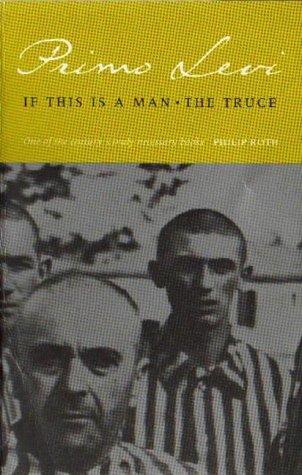
Primo Levi · 1947 · Buy on Amazon
"I first read this in my twenties. It was my introduction to the Holocaust . This is when I began to understand what the Holocaust had been. Primo Levi was an Italian Jew and an industrial chemist who was sent to Auschwitz. It is about his existence in Auschwitz. Reading it, horror follows horror. It’s hard to believe that the human frame can survive under such circumstances, let alone survive to write something like this. There are two moments in it that particularly struck me. Auschwitz is in Poland and it’s winter. The hard labour is extremely difficult and it is very cold and bitter. The prisoners are going to be synthesizing rubber in a factory near to Auschwitz, so there is a chemistry exam. And it’s the most infernal exam in the world. This person who has been reduced to something that is almost sub-human now has to try and remember his chemistry from his degree. If he can remember he will be able to work inside in the warmth, and he won’t die. There’s something about being a scholar and thinking about your knowledge under such circumstances that is very powerful. Support Five Books Five Books interviews are expensive to produce. If you're enjoying this interview, please support us by donating a small amount . He does get to work in the factory, which probably saves his life. There is a scene in which he is going with a very young prisoner to get soup and suddenly a line from Dante’s Inferno comes to his mind. It’s the Ulysses canto, where Ulysses is saying, “I’m not meant for men like these but men who strive after excellence” and Primo Levi tries to remember it. Trying to remember it is this moment of confirmation that he’s still human. The young man he is with is French and doesn’t see what he’s talking about, but senses that it is really important. Levi doesn’t remember the whole canto, but he remembers enough snatches of it that he’s just about got it. I’d like to say that this proves the enduring, humanising power of literature, but I’m not sure you can. George Steiner has pointed out in his great book Language and Silence that people who read Goethe and listened to Schubert in the morning then went out and did their work as guards at Auschwitz. So I don’t think literature improves you. Nonetheless, it is a moment worth registering because it is this remembrance that means so much to him and he says, “I would give my day’s soup ration to remember that line.” You’d have to read this account to know how much a day’s soup ration matters. Yes, I absolutely agree with that. The writing of this, and similar Holocaust memoirs, is a reaffirmation, it goes back to combat gnosticism. It’s hard for anyone who hasn’t been in that situation to talk about reaffirmation, because it’s hard to imagine just what you would have to come back for. He writes with extreme candor and a remarkable lack of self-pity. I think there’s this sense, in theories of representations of the Holocaust, that if you deviate even slightly from the truth then you risk letting in the deniers. And so the place of literature in relation to the Holocaust is a very delicate subject. As readers, we have to be very, very aware of the potential of slipping into sentimentality, or trying to make something good out of it that just isn’t there In a way it just makes the bravery of the writing—not only of If This Is A Man but all his other works, which never leave this subject—the more extraordinary. There is something about surviving to bear witness, it is an incredibly brave thing to do. He strikes me as an absolutely heroic person. My next project is going to be about literature and silence. It grows out of the last chapter of the book I’m writing on veterans which is called “The End of the Story”. The penultimate chapter is about veterans who never stop talking about the war as a model of literary creativity. And the final chapter is about veterans who won’t say anything or can’t say anything or don’t say anything. Support Five Books Five Books interviews are expensive to produce. If you're enjoying this interview, please support us by donating a small amount . We neglect the silences in literature. I’m interested in the acoustic use of silence in poetry or drama and in things that aren’t said, and how we know they’re not said. It’s terribly difficult if you’re not going to say something or write something in protest, how do you register that? You’ve got to sort of hedge it round with words. But I think we can try and listen to those silences. And silences, as we know from the two minute silence, are incredibly powerful. I want to try and understand this better, and understand how we can see silences in texts that are there, and also maybe texts that aren’t there, or texts that aren’t as they would have been. It’s looking into the realm of the subjunctive, into the hypothetical, into the not said."