Andy West's Reading List
Andy West teaches philosophy in prisons. He is the author of The Life Inside: A Memoir of Prison, Family and Philosophy.
Open in WellRead Daily app →Philosophy and Prison (2022)
Scraped from fivebooks.com (2022-03-08).
Source: fivebooks.com

Ahmet Altan · Buy on Amazon
"Yes. The first writer we’re going to look at today is just that kind of prisoner. It’s called I Will Never See the World Again by Ahmet Altan. The first thing to say about it is that it’s exquisite. Altan was arrested in 2016 for allegedly sending subliminal messages in his writing to encourage a coup against the government. This book is written from his cell. The book opens on a quiet morning. Altan is in his pyjamas. The police are at the door. He lets them in and they turn over his whole house searching for something—they flip the mattress, pull out the drawers, cut open the bottom of the sofa. Altan’s seen this before, because 45 years earlier his father, who was also a writer, had been arrested on some trumped-up charges as well. So Altan just makes himself a bowl of muesli and sits there eating while it’s all happening. He’s arrested, but the reality of it doesn’t hit him until he’s put in a cell (or ‘the cage’ as he calls it). He looks around and sees numerous people, people who haven’t been out for a number of years. Altan realises that he is never going to get to go to a restaurant again. He’ll never make love to a woman again. He’ll never get to go out for a stroll in the middle of the day. He will never see the world again. The reality of it has him by the throat. He can’t see how he’s going to cope. He gets pulled into the interrogation office. The police officer sits down and offers him a cigarette. Altan says, “No, I only smoke when I’m nervous.” He says that he didn’t know where those words came from. He was as surprised as the officer to hear himself saying them. But the moment he heard those words, he thought, “I’m going be okay. I’m going to be okay, because I have irony and all the possibilities of language. Because I’m a writer, I am going to survive this situation.” “Questions about time are more intense when you’re discussing them with people who are serving an indefinite sentence” Later in the book, his cellmate shares a story with him about a happy episode that happened in his life 10 years ago on a snowy day. Altan envelops himself in the other man’s story, imagining the snow landing on his face. He transports himself outside the prison walls. I Will Never See the World Again is in the lineage of books like Boethius’s The Consolation of Philosophy and Viktor Frankl’s Man’s Search for Meaning . Boethius is lamenting in his prison cell when Lady Philosophy visits him to tell him that “Nothing is wretched only thinking makes it so.” Frankl describes how in a Nazi concentration camp he discovered that there is a gap between stimulus and response and we choose our own attitude to a situation. Altan’s message is the same: ‘I am not going to let reality conquer me, I am going to conquer reality.’ One of the chapters in I Will Never See The World Again is called “The Writer’s Paradox” where he talks about Zeno’s arrow. Altan says that when he was younger, he learned that Zeno’s arrow is both where it is and where it is not at the same time and it reminded him of the feeling he got from being a writer. As a writer, he was in prison but also not in prison: he was in St. Petersburg, or in Rome, or standing next to Odysseus on deck—in all of these places, and not in them. Altan survives prison not by grinding out stoic mantras, but by his beautiful turn of phrase. The book becomes even richer when Altan interrogates the idea of using writing to survive. He says that being a writer is his way of being brave. But he also believes that a writer should not be brave. A writer should be honest before anything else. He worries that his bravery is an expression of dishonesty and that in relying on writing for survival he is sacrificing the thing he values most about writing. There’s a tension and vulnerability within his fierce, writerly resistance. He got out of prison after writing this. And then, days later, got arrested again on another trumped-up charge, spent a long time inside again, and was released in April 2021. Incredibly dangerous. He’s living in Istanbul and still lives with the threat of random prosecution. He refuses to go into exile. When I was writing my own book, I became a prison memoir nerd. I found myself scribbling my uncle’s name in the margins of this one a few times. My uncle Frank loves to entertain me with stories about his times inside. Altan is a literary heavyweight, whereas Frank needs me to fill out his benefit forms for him, but I think both of them have faith in the alchemic power of storytelling, that it can transform suffering and and give you access to power when you are powerless. In putting the emphasis on the power of the imagination to transcend the physical incarceration, this sounds reminiscent of Jean Genet, the famous French prison writer, who basically just fantasizes his way out of his cell, which actually led to him physically coming out of the cell because he was championed by the intellectuals of the day. I can’t see that happening in Turkey. It was mostly international pressure that lead to Altan’s release. The Guardian led a campaign. I Will Never See the World Again was translated into 28 languages, but it still hasn’t been published in Turkey. I think Altan wants to show that he can maintain his dignity no matter what they do to him. Genet had the opposite strategy. He describes how he loved to smell his own farts in his prison cell, wafting them towards his own nostrils. He embraced the shame identity of the criminal. As a man criminalised for his homosexuality, he was told he was depraved, so he went on the offensive by delighting in his depravity. I didn’t know that. I think it’s a good example of the tensions that arise when philosophers talk about memoirists. In conceptualising a life, you risk running roughshod over the messy details of it."
Primo Levi · 1947 · Buy on Amazon
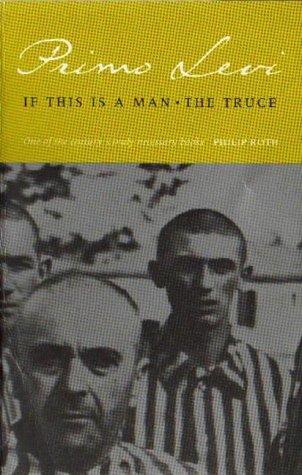
"My second choice is Primo Levi’s If This Is a Man . It’s about his 11 months in Auschwitz . I was reading this over the weekend—just to bone up for this interview—and just like every other time I’ve read it, it stretches my ability to comprehend. The physical and emotional pain is extremely intense. Even the most inured cynic is taken aback by the infrastructure of human cruelty in the camp. Where Altan’s story is an ‘I will survive’ book, Levi’s is not. When it was published in the US it was called Survival in Auschwitz , but every time I see the cover to that edition, I imagine it would have made Levi feel upset. He carried a chronic sense of survivor’s shame. He kept asking himself ‘Why did I live when the others didn’t?’ There’s a chapter in there called “The Drowned and the Saved” where he says that those who managed to survive in Auschwitz did so mostly through theft, deception and wiliness—and that it was no credit to your character if you survived the place. We’re so lucky they did republish it because although it’s a very painful read, there are insights into the human condition which you don’t get from an ‘I will survive’ book. The sentences are elegantly simple. Levi has no need for linguistic or grammatical pyrotechnics because he possesses genuine wisdom. We spoke earlier about Altan’s inner tussle between bravery and honesty. Like Boethius and Frankl, Altan meets the challenge of prison by reframing his experience. By contrast, Levi writes a lot about being naked. The way the Nazis stripped his clothes off when he first arrived and shaved his head. It was as if starvation made him even more naked. When the prisoners knew the Nazis were planning a round of executions, they would show each other their naked bodies and ask one another ‘Do you think they’ll pick me? Do I look strong enough for them to keep me alive?’ Levi’s book is a naked confrontation with imprisonment, cruelty and death. It’s like the most hellish form of death row, where at any minute a guard could point you towards the gas chamber. That’s one reason the book was called ‘If ‘ this is a man. He’s alive, but only tentatively. Levi shows what existence is like when your existence is absolutely provisional. You could read much of If This Is a Man as a phenomenology of a dehumanised human. It’s not that there’s no spiritual survival, redemption or hope in this book, it’s just not a programmatically redemptive or hopeful book. He hasn’t run a shining narrative arc through the story. There are moments of alleviation. However, they reveal another pain. There’s a scene where he describes being in hospital in Auschwitz. As long as your injury or illness wasn’t that bad, you could spend a few days in bed. If it was too severe, you’d go straight from there to the gas chamber. So if you were going to be injured or sick, you had to be in the Goldilocks zone if you wanted to stay alive. It was a reprieve from the long days of labour to be in the hospital, but after a few days, he started to think for the first time about everything that was happening to him and everything he’d lost. Get the weekly Five Books newsletter There’s another occasion where after the camp has been liberated a tremendous homesickness comes over him, which he hadn’t felt until then. And I think perhaps the most painful example of this is the thaw in spring, when the snow has finally melted, and for the first time in months, the prisoners weren’t freezing. They stand and enjoy the warm air on their skin. But another prisoner turns to him and says, ‘If only we weren’t hungry.’ Levi’s observation from this is that pains don’t necessarily amass or add together to create a greater quantity of pain. Rather, one type of pain is obscured by another. Alleviating one pain reveals another one buried underneath. That could sound hopeless, but pain was complex in Levi’s situation. He wrote that “it was the very discomfort, the blows, the cold, the thirst that kept us aloft in the void of bottomless despair.” There’s a phrase I’ve heard on the landing of almost every prison I’ve worked in: ‘Keep your head in jail’. Don’t think about life outside. Don’t think about the fact that your ex-partner is in a restaurant right now, your children are playing in the park. Your student would have had to open himself to the world when he left the prison in the morning and and when he came back to prison in the evening to close himself off again. It must be hard to put your head back in jail when the air from the outside world is still in your lungs. Yes. Some say he never really left the camp. After Levi’s suicide in 1987, Elie Wiesel wrote, “Primo Levi died at Auschwitz 40 years later.”"

Stephen Reid · Buy on Amazon
"One of the ironies about prison literature is that the most ubiquitous prison books are often written by the sorts of people you wouldn’t usually find on the landing. Most people in prison are from the working class and the underclass. Many have a limited ability to write and don’t have the social capital that you often need to publish a book. So we read about the experiences of intellectuals in prison like Aleksandr Solzhenitsyn and Nawal El Saadawi , or from upper-class people like Jeffrey Archer , but very rarely get books from people who are inside for shoplifting, drugs, or killing someone whilst they were drunk driving, etc. Yes, there is a genre. Absolutely. Erwin James’s Redeemable and John Healy’s The Grass Arena are other examples. I love these books, but perhaps one thing to note is that they are so often redemption stories. They’re about people who came out the other side and who have, through art or chess or becoming a prison reformist, found salvation. But the book I’ve chosen is more a kind of de -habilitation story. It’s by Stephen Reid and it’s called A Crowbar in the Buddhist Garden . Reid was a serial bank robber. He was known as ‘the stopwatch bank robber’, because he always wore a stopwatch around his neck whilst he was robbing a bank. He believed in getting the job done within two minutes. He was asked how it was that he was so efficient and would reply, ‘robbing a bank is not rocket science.’ When he’s in prison, he starts writing. He meets a creative writing teacher who is a famous novelist, gets out, marries her, has some beautiful kids and a stable home. Thirteen years after his release, he’s living life as a publicly redeemed figure and he’s written critically acclaimed novels. Then, he robs a bank, only this time he’s off his game and he’s there for over four minutes. It ends up in a shoot-out and Reid shoots at a police officer and a civilian. He finds himself going back to prison and that’s when he wrote this book. He robbed the bank during a relapse into heroin and coke. Later in the book, Reid tells us about how when he was 11 years old, an older man who was a doctor invited him into his car, injected him with morphine and sexually abused him whilst he was high. Reid spent the next four decades chasing after that high, whilst also trying to run away from that trauma. He did some crazy things in that turmoil. He says he wishes he could give a meat cleaver to a metaphysical butcher who would just cut out the 5% of him that was violent and dangerous and leave him with the sane, caring, good-natured parts of himself. Instead, he must sit in prison, a man unredeemed and “all out of illusions.” Boethius tells us that remembering reason can console us, but it’s Reid’s irrationality that makes me open my heart to him. Many people who keep coming back to prison have similar stories of self-destruction. When my brother was in his late 20s, he was in the throes of a drug addiction. When he took heroin it subtracted all the fear from his body. But when it wore off, the fear had multiplied. He had some very debilitating OCD habits: washing his hands, opening and closing doors three times, when he changed the volume on the TV he had to go up and down according to particular patterns. One night he was robbing a sixth form college, and he was upstairs with a mate getting all the DVD players that they were going to take to a pawn shop. When he came downstairs, there were two police officers waiting for him. He dropped the DVD players and legged it through the corridor, pushed open the fire escape and ran outside. A few seconds later, he realized he hadn’t opened and shut the door three times. He turned back and, as he got to the door, the police officers pushed him to the ground and arrested him. ‘For fuck’s sake!’ my brother said. “There’s a phrase I’ve heard on the landing of almost every prison I’ve worked in: ‘Keep your head in jail’” In prison, I see a lot of people frustrated with themselves like Reid and my brother were. In my classroom, we talk about Sisyphus, who was condemned by the gods to push a boulder up a mountain and watch it roll down to the bottom and push it back up again and watch it roll back down and so on into eternity. A lot of prisoners relate it to themselves, how they get out of prison, resolved that they are never coming back, but then do something impulsive, irrational and self-destructive and are back inside again a few months later. I had one student recently who has been re-convicted after only being out for two weeks. Like Reid, he’s a very self-aware and smart person. When he came back, I saw him on the landing and nodded at him. He looked down at his feet, embarrassed. But I felt humbled by him. He’s lived through so much of our human frailty and fallibility. Reid isn’t trying to sell us anything. He’s way past spiels about rebellion, redemption and pity. Camus says we must imagine Sisyphus happy. Reid doesn’t ask us to imagine that he’s either happy or miserable. In his case, what doesn’t kill you makes you stranger. He’s in Vancouver Island prison—which is unfenced on the side that faces the sea—and Reid describes combing the beach and looking for little objects that have washed up, like chip packets, a baby’s car seat, a broken piece of plywood with the words FORBIDDEN ZONE written on it, and making stories out of how they got there and who they belonged too. He finds a small pink vibrator which he takes pride in cleaning up, sourcing a battery for from another prisoner and making it work again. That probably wasn’t the sort of ablutions the judge had in mind for him when they sent him to a correctional facility. I’ve always agreed with Jean-Paul Sartre when he said that Stoicism keeps both master and slave in their places. But when I started teaching in prison, I met a man who loved Epictetus and tried to live by his ideals. He said to me, ‘I’m in prison but I’m free in my mind. People on the outside are not free in their mind. I’m more free than they are.’ That didn’t change my position that Stoicism keeps the oppressed oppressed. But it did give me more admiration for the focus that Stoics have. I think some people in prison put a lot of faith in personal agency. Once, I was talking to them about Gregg Caruso’s free will scepticism and his idea that we should see crime as a public health issue rather than looking at it with the lens of moral responsibility. A lot of them reacted by saying ‘No, I’ve put myself in prison, I can get myself out.’ To me, the evidence suggests that we are unlikely to have free will. If we do, it is only in rare moments of herculean strength or at times when our environmental conditions are on our side. But, like you, my concerns with free will scepticism is what it would do to our motivation and view of the world if we really took it into our ethics. What would we gain and what would we lose? In prison, I see people who embody that Stoic detachment. It’s impressive and maybe even optimal in that setting, but I suspect that self-tyranny comes with a cost. But I think that’s what’s so compromising about being in prison—the things you use to protect yourself damage you in their own way."

Reginald Dwayne Betts · Buy on Amazon
"My next book is Felon , a poetry collection by Reginald Dwayne Betts, from Maryland in the US. When Betts was 16, with his friends, he carjacked someone using a gun. Betts wanted to hold the gun because he knew that if his mate held it he would probably panic and things would get messy. The boys took the driver’s credit cards and went spending for the day. Betts was arrested, tried as if an adult, and given a sentence of nine years in prison at age 16. Whilst in solitary confinement, someone slid a copy of Dudley Randall’s The Black Poets under his door. Betts read it and he started to write himself. Betts’s story brings to mind other black writers who found more opportunity to learn about black history and culture in prison than they did at school. Like Malcolm X, who read about colonial history in prison and the novelist Alex Wheatle who, after growing up in care, was sentenced to time in HMP Brixton, where his Rastafarian cellmate spoke to him about Jamaican history and identity. When political dissidents like the Nigerian writer Wole Soyinka go to prison, their writing tends to deconstruct the system of oppression that is pressing down on them. At the other end of the spectrum is Reid’s book, which focuses more on internal questions about agency and personal fallibility and less on socio-political analysis. What’s really rich about Betts’s writing is that he does both. He never minimizes the crime he committed and violent crime generally. But he also pans out to look at what his situation means in an America where mass incarceration is in full swing and he is a young black man. This sometimes makes for an experience for him of what the philosopher W.E.B. Du Bois called double consciousness. There’s a poem called ‘Parking Lot,’ which just starts with “A confession begins when I walk into a parking lot”—he is talking about his crime. Over the page, there’s the same poem, again, only it’s called ‘Parking Lot, Too.’ One of the first lines is: “A confession begins when I walked Black out of that parking lot.” Betts is looking at his crime from within, but he’s also looking at himself as white supremacist society would be looking at him. In Felon , the poems are about life after prison, when Betts is out, but he is still a ‘felon.’ That has all sorts of implications for whether you can vote and what you have to write on forms for jobs and housing and more besides. If you’re 16 and your brain is still plastic and then you spend nine years in prison, what’s it like to come into the outside world after that? Betts is not in prison anymore, but he’s not quite free, either. There’s yearning in his poems, like freedom and happiness are right there, but ‘right there’ is a world away. “A lot of people in prison feel themselves to be victims” Many young heterosexual men in prison lay in their cells thinking about being with a woman, but with no reality to test those fantasies against, they don’t relaize the images they are conjuring are idealizations that are further putting them adrift from the real world. When they get out and they have sex with a flesh and blood woman, they have to reach through that mire of dreamery in order to experience real intimacy with another person. In one of Betts’s poems, he shows how sexual closeness can be blocked not just by the projections ex-prisoners put onto their lovers, but also by the projections they receive too. In a moment of carnal passion with his partner, she says to him, ‘You’re mine’, and his automatic thought is, ‘No, I belong to the state.’ He remembers he’s supposed to be a violent criminal and becomes self-conscious about his lust for her. He loses the moment. Then she’s left yearning. These moments of masculine vulnerability are all the more powerful when you think that 93.5% of prisoners in the US are men (in the UK the number is 95%). Masculinities are a huge factor in crime. Prisons themselves are hothouses of patriarchy, predicated on domination, hierarchy and violence. Betts writes about his sons. He’s aware that soon they will become men. When he was on the brink of becoming a man, he did something violent and went to prison. It’s painful because children often offer parents a vicarious experience of innocence, but unable to forget that he is a felon, Betts is anticipating how he is going to have to tell his sons about the things men do, particularly the things men do to women. Betts is doing a PhD at Yale in law, so his poems contain a wealth of personal, social and intellectual perspectives. His viewpoint is also informed by working through his own conflicting feelings about the justice system. When he got out of prison, his mother told him that she had been raped whilst waiting for a bus. Today, Betts believes that mass incarceration is a social evil, but he also thinks that the harms of certain crimes get lost if we only talk about justice as an issue in mass incarceration. Betts is not someone you should read if you want easy answers: that’s what makes him one of the most essential voices about questions of crime and punishment. I try and keep the entry point to the class as accessible as possible. In my class I sometimes have someone with a PhD sat next to someone who can’t read, so I don’t usually use texts. Also, Covid has created a huge backlog of cases in UK courts at the moment. Some prisons have 75% of their population on remand, awaiting a hearing. This means the churn is high in prisons. I can’t say, ‘I’m going to give you this book and in a week’s time, we’ll talk about it’, because tonight they might get transferred to another prison. Teaching in some prisons is like teaching in an airport; you can’t rely on people being around for long enough for you to develop a relationship with them. Prisoners don’t want to invest in relationships they know might disappear in the morning. That’s one reason prisons are such emotionally detached places."