Virginia Feito's Reading List
Virginia Feito was raised in Madrid and Paris, and studied English and Drama at Queen Mary University of London. She worked as a copywriter until she quit to write her debut novel, Mrs. March . She lives in Madrid.
Open in WellRead Daily app →Historical Novels Set in the Victorian Era (2026)
Scraped from fivebooks.com (2026-01-27).
Source: fivebooks.com
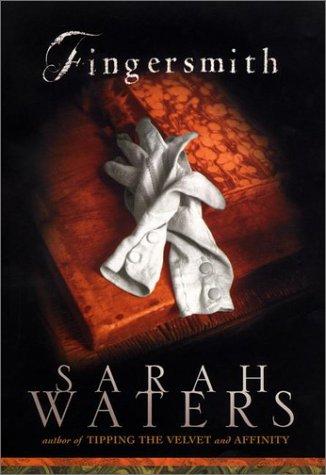
Sarah Waters · 2002 · Buy on Amazon
"Sure. This is a classic of the Victorian historical novels, and is universally accepted to be one of the very best. I wondered if it was almost too traditionally packaged—it does feel very close to an original Victorian-era novel, but it also includes sexuality and more complex character psychology and moral ambiguity. So it was a bridge for me from Victorian literature to the Victorian historical novel. So it’s a very traditional novel, but with subtle modern elements slowly creeping through. And it opened the door for me to enjoy the more experimental historical literature that I went on to read. It’s almost indistinguishable. Except, of course, for what would have been a very controversial sexuality plot, too graphic for the era. But there are places where I could have been fooled into thinking it was a legitimate Victorian novel. I still remember the impact that the twist had on me when I first read it, when I was a teenager. I guess the most obvious inspiration for it is The Women in White , and it touches on all these elements from that era: confused identities and inheritance plots and aliases. Changing identities was a big theme of my first novel, Mrs. March , and something I played around with in Victorian Psycho , where I gave all my characters silly, pun names. Absolutely. Although I’d argue that today that is just as easy, at least in a metaphorical sense. There are so many ways to pretend to be someone you are not. I think it’s something that we will always be drawn to, down through the generations."

Margaret Atwood · Buy on Amazon
"So this is the story of a house servant, who was convicted of murdering her employer and his housekeeper. In the novel, she is hired out of prison as a domestic servant and claims not to remember anything about the murder. She begins to recount her life to this psychiatrist who is trying to determine whether she deserves a pardon. Through her sessions with the doctor, we explore her traumatic past. The central tension is whether she is guilty, although at the same time it almost doesn’t matter. The novel, which I love, subverts the whodunnit trope; you’re not trying to discover the truth, you’re trying to uncover her character. I really remember the dreamy quality of it, and my frustration over the ambiguity of the case. I was very drawn into the complex psychology of it, and what it was trying to do. I don’t know if that’s what you liked about it? Yes, she is really cunning in the way she talks to the psychiatrist. Is she a blameless victim of her circumstances? Or is she using her sex to manipulate the doctor? And which would I admire more? I love what it says about each reader—why it frustrates you and from which angle will tell you something about yourself. I think it’s really intelligent. Obviously Margaret Atwood is a genius, but this is possibly my favourite of all her novels. It has something special, dug deep inside, under all these layers, and you don’t know what it is. It’s one of those books you can re-read forever and keep changing your mind about it, which is very special. I haven’t talked much about the setting. But I guess that mattered to me least as I was reading it. It’s set in that time, but it feels almost timeless, which I really love. Yes, almost a psychological thriller . There’s something about ‘ historical fiction ’ that makes it sound like it is meant to be boring. But it can be set in a period without being limited to any rules. A lot of the novels I have chosen are, I guess, character studies. First, I have to hear the voice of the character. Also, the voice of the novel. Those are not necessarily the same thing. I do the research before, after, or during the writing. But I have to hear the voice first. Of course, it helps if I’ve been doing research, and I can hear the language they used, what was in style at the time. It’s interesting, too, to research the previous time period, to see what the character must have absorbed as a child, and incorporate that. There is no one way to do it. I just go all over the place, to be honest. There’s always a point at the beginning where I’m so overwhelmed by information that I feel like I’m drowning. But, hopefully, with time, I know what to use. The Victorian period was so packed that sometimes it felt like I was just doing exposition. This happened, then this other thing happened. I’m interested in how trauma shapes identity, and how familiar trauma can feel throughout different historical periods. The trauma of being a woman through different historical contexts."

Ottessa Moshfegh · Buy on Amazon
"Yes, it’s narrated by an alcoholic sailor who has been accused of murdering his best friend and shipmate. He also can’t remember doing it, which echoes Alias Grace . So he’s trying to remember what happened that night, but it’s fragmented and confusing. He’s unreliable, so we get glimpses of his memories in a very intense, vivid, stream-of-consciousness style. This was one of my biggest inspirations for Victorian Psycho . It feels so visceral, so unique. Reading it is almost an experience of the body. I felt like it was repeatedly slapping me in the face until the end. I was so struck by the voice, again. I know Ottessa Moshfegh has said that writing this book was like a possession, and it feels like that for the reader, too. You’re possessed by the spirit of McGlue. It was also based on a real case that Moshfegh found in a newspaper. It’s so rich. I was really struck by the historical details that are peppered throughout—very specific details that encompass a whole era. Ottessa revealed to me in an interview that she realised what the ending should be thanks to a woman she went to, a psychic in Rhode Island, who said she could touch people and tell them what the body was hiding from the mind. I don’t want to spoil it, but the woman told her what the feelings were between McGlue and the murdered friend. It’s a little work of art. It packs so much into such a slim space. I was awestruck by this novella, and it inspired me too."

Catriona Ward · Buy on Amazon
"It’s so multi-layered, I’d need 10,000 words to describe it. I can say that, once you’re in it, the atmosphere completely envelops you, and it begins to feel like a classic that you have already lived. So it’s not confusing at all. I don’t know how she did it. It’s incredible—it was her debut. So, Rawblood is told by different narrators through different timelines, spanning from the early Victorian era up until 1910 or so. It is centred on this 11-year-old girl, Iris, who lives on an isolated estate known as Rawblood. Here are Gothic themes: the big, crumbling house—which is on Dartmoor, in this case—and for generations, the family has been haunted by a curse, which is: if you love or marry, ‘She’ comes. And that means a violent early death for everybody involved. So this girl grows up under the control of her manipulative father, who uses the curse to control her. As she matures, she begins to question the history she has been told, and the nature of the supernatural haunting. It’s told through fragmented memories and unreliable narration. There are shifting timelines. And it creates the sense of increasing dread that is incredibly resolved at the end. I won’t give it away. It’s an insanely ambitious story for a debut. The structure and plot is designed like a fine clock, and it has all the best Gothic elements of Victorian literature—although the way it is written is so modern, so psychological. Her writing is just so good. I’m in awe. All of her novels are incredible. Her most popular is probably Last House on Needless Street . But Rawblood is especially dear to my heart. She’s very good at exploring how stories can be used to control people. I can’t recommend her enough."

Jean Rhys · Buy on Amazon
"True. It was at the beginning of a tradition of literature that subverts the Victorian novel, right? To take a classic and twist it, make us see it completely anew. You can see in Wide Sargasso Sea a current that would develop through the coming decades—it’s the beginning of a wave of prequels that turned the concept of the villain and turn it on its head. Which then led to Wicked and Maleficent and other, similar prequels. My first reaction to what is essentially a prequel to my favourite novel ever was indignation. Like: this is fan fiction, at best. But then I read it, and I was blown away. It felt so transgressive. I didn’t know we could do that! I’ll never forgive Jean Rhys, though, for ruining Mr Rochester for me. I mean, I was so in love with him, growing up. He was my first literary crush. She destroyed him. But her language! It’s so economic. I find it mesmerising. I think she was very underappreciated. They accused her of only writing what she knew, apparently, which is hilarious because that’s now a writing prompt. But, yes, this is two things: a transgressive, experimental historical novel set in Victorian times; and also an early example of the villain’s origin story. I don’t know if it’s the first example, but it was the first time I encountered it. And I’m glad I discovered it. I was kind of immature in my reading tastes when I read it. I was so obsessed with Jane Eyre —that was it for me. I didn’t want to know anything else. But I’m so glad that I came to understand how amazing this was, and how it moved literature forward. How often can you say that of a book? And it’s another slim book as well. Another slap in the face. I wouldn’t presume to compare myself to any of these writers. I ended up wanting to do this almost accidentally, I didn’t set out to do it. It happened organically, as I say, grown out of the anger I felt doing research, and from reading the Bronte biographies and seeing everything they went through. I was just in that mood. I found this very aggressive character who offered me an outlet through dark humour, by subverting Victorian literature. I think all of these novels push that a little further. And, as freedom hopefully increases, and we have fewer taboos, then hopefully we can always have different angles to the same story."