← All books
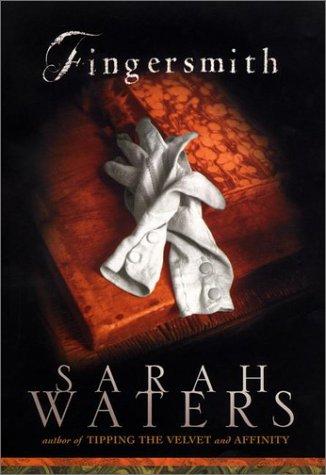
Fingersmith
by Sarah Waters · 2002
Buy on Amazon
Sue Trinder is an orphan, left as an infant in the care of Mrs. Sucksby, a "baby farmer," who raised her with unusual tenderness, as if Sue were her own. Mrs. Sucksby’s household, with its fussy babies calmed with doses of gin, also hosts a transient family of petty thieves—fingersmiths—for whom this house in the heart of a mean London slum is home. One day, the most beloved thief of all arrives—Gentleman, an elegant con man, who carries with him an enticing proposition for Sue: If she wins a position as the maid to Maud Lilly, a naive gentlewoman, and aids Gentleman in her seduction, then they will all share in Maud’s vast inheritance. Once the inheritance is secured, Maud will be disposed of—passed off as mad, and made to live out the rest of her days in a lunatic asylum.…
Recommended by
"Sure. This is a classic of the Victorian historical novels, and is universally accepted to be one of the very best. I wondered if it was almost too traditionally packaged—it does feel very close to an original Victorian-era novel, but it also includes sexuality and more complex character psychology and moral ambiguity. So it was a bridge for me from Victorian literature to the Victorian historical novel. So it’s a very traditional novel, but with subtle modern elements slowly creeping through. And it opened the door for me to enjoy the more experimental historical literature that I went on to read. It’s almost indistinguishable. Except, of course, for what would have been a very controversial sexuality plot, too graphic for the era. But there are places where I could have been fooled into thinking it was a legitimate Victorian novel. I still remember the impact that the twist had on me when I first read it, when I was a teenager. I guess the most obvious inspiration for it is The Women in White , and it touches on all these elements from that era: confused identities and inheritance plots and aliases. Changing identities was a big theme of my first novel, Mrs. March , and something I played around with in Victorian Psycho , where I gave all my characters silly, pun names. Absolutely. Although I’d argue that today that is just as easy, at least in a metaphorical sense. There are so many ways to pretend to be someone you are not. I think it’s something that we will always be drawn to, down through the generations."
"This is a tour de force . It came out in 2002, and was her third novel. Her first, Tipping the Velvet , is rumbunctious and great fun. Her second, Affinity , is beautiful and complicated. But Fingersmith is an astonishing piece of work. The lead character, Sue Trinder, is an orphan. She’s brought up a “Fagin-like den of thieves” by this terrible adopted mother, Mrs Sucksby. Sue’s job is to go with a man known as ‘Gentleman’ and together to convince a wealthy heiress, Maud Lily, to elope with and marry this man. The plan is he will have control of her fortune and consign her to an asylum for the insane. That’s the premise. You’re completely in it, and you’re worried about Maud, you want to save her, and you can’t believe Sue would be conspiring in such a terrible scheme, although she has nothing. She’s like the Artful Dodger in female form. Then the most incredible twist—when they get to the asylum and it’s Sue who is taken. Because the real plot is between Maud and XX Gentleman. The novel is divided into three parts. The second part is Maud’s story, in which essentially she was given as a child to a revolting man who makes her catalogue a library of pornography. It’s very a very unpleasant, sub-respectable Victorian society story. So you get Maud’s backstory, why she might have engaged in such a plot. The third section return to Sue’s point of view and then a very satisfying, though not sentimental, resolution. Sarah Waters creates a fabulous sense of place, the violence of those Victorian institutions, the impossibility of a women ever getting out again if she was confined. It’s a novel that requires a lot of its reader—who is tricking who, who is the most morally bankrupt. What is wonderful is how one’s sympathies go backwards and forwards between Sue and Maud. They hate each other, then they find each other again, they fall in love properly, and you believe in the possibility of a happy ending. It’s an extraordinary novel. I don’t think any modern writer does the underbelly of the Victorian period better than Sarah Waters. The only sadness with adoring her work is that she takes a very long time to write novels. Fingers crossed there will be a new one in 2026!"
"I could have included any of Sarah Waters’ books here—they’re all extraordinary—but Fingersmith has remained my favourite because it’s a glorious mystery, it has a fantastic, gripping plot, and also one of the best twists in the business. Obviously, I can’t give away what that is, but the structure of it is just brilliant. It’s set in Borough in South London in 1862 and it follows the life of Sue Trinder, who is a thief—or a ‘fingersmith’—from a criminal family. She is drawn into an elaborate scheme to dupe a lonely young heiress called Maud Lily out of her inheritance. But when Sue meets Maud, the story begins to change. Although she knows she can’t abandon the plan, she also doesn’t want to carry it out, and both Sue and Maud find themselves caught up in something far greater. And it’s also about erotica and Victorian porn, which is great fun. It’s historical fiction, but you forget it’s historical fiction—the people come throbbing off the page. It’s so visceral and real. Sarah Waters manages to create these amazing Victorian characters, but she makes them fresh and new, and I think that is a real achievement in a historical novel. It’s a thriller, but it’s also a love story, and it’s modern. So we get the gloves and the stockings and the rustling skirts, but it also feels very up close and new. And she uses the vernacular of 19th century London to create a very original and striking voice for Sue Trinder. I don’t know. The advantage of writing about Victorian Britain is that it’s very well documented, as I realised when I was writing The Unseeing . There are huge amounts of court records, records of what the prisons were like, what society was like and what people were thinking and doing, and there is so much amazing fiction set in that era as well, and—of course— Dickens . So, in a way, it’s easier than other eras and places to construct, which may be why there’s so much of it. But it also means that writers have to do something fresh when they present it, otherwise it can feel a bit rehearsed. I think we can talk about that. Sue and Maud have various adventures over the course of the novel, in which Sarah Waters uses some of the Victorian clichés, like women in asylums. It’s absolutely something that happened, it was a way of dealing with women who society didn’t want hanging around and who were inconvenient. But it is also a cliché in the sense that if you read any historical novel set in Victorian England, it will almost certainly feature a lunatic asylum. In this novel she makes it original—it becomes about an escape from a lunatic asylum, it becomes fun. I think Sarah Waters is brilliant, and I want her to publish another one."
"picking up some vast immersive novel, like Sarah Waters’s “Fingersmith”: a book which, when it was new, I read as if I were a child, utterly thrilled and beguiled by it."