Tracy Chevalier's Reading List
Tracy Chevalier is a British-American historical novelist, author of 11 books. Her second novel, Girl with a Pearl Earring , based on the painting by Johannes Vermeer, catapulted her to international fame.
Open in WellRead Daily app →Historical Novels Set in Italy (2024)
Scraped from fivebooks.com (2024-09-10).
Source: fivebooks.com
Harriet Constable · Buy on Amazon
"The Instrumentalist is a novel about an all-girls orphanage in Venice, where they’re brought up on music. They learn to play the violin and sing, and Vivaldi teaches them. This is a true story! The novel focuses on one of the orphans, Anna Maria della Pietà, and her relationship with Vivaldi. She becomes not just a star student and a really great violinist, but she starts composing, and Harriet indicates that she may influence Vivaldi as much as he influences her. I was so impressed with how deeply Harriet got into not just the history of this relationship and the orphanage, but also Venice itself. She just describes it beautifully. In fact, there were a couple of passages where I smiled and thought ‘I could have written that (though maybe not as beautifully as her).’ There were just these little details we both picked out. I also thought that she handled describing music really well. It’s very hard to describe music in words. She very cleverly has her heroine have synesthesia , which is a crossing of senses. So when she hears music, she sees color, and Harriet describes all the color. That makes it much easier to imagine the music as a reader. I thought that was really clever. We don’t know. She definitely composed and was written about. People talked about her being a composer, and that her compositions were really good, and had a touch of Vivaldi in them. I suppose Harriet was transposing that—couldn’t it be the other way around? It’s speculative, that part. There are no recordings, obviously, and whatever she composed is lost now. So we don’t know what it sounded like. It reminded me of what I do sometimes, which is to take a real story and see where the gaps are and try to fill them as commonsensically as possible. Yes, it’s about a family of glassmakers on Murano, which is the glass island off of Venice. All the glassmakers were moved there in 1291 because they wanted to prevent fires breaking out in Venice itself from the furnaces. It’s where they still make glass today. Glass was a really important trade for Venice. A lot of money was made off of it, through the Venetian merchants. But it was mainly men who made it and very, very few women. I wanted to write about glass beads, because they were one of the few things that women did make. The thing I loved is that they made them at their kitchen tables, over a little lamp. I just imagined a woman doing that, and she became Orsola, my heroine. Over the course of centuries, she learns to become a really good beadmaker, a maestra . The book is really about how glass affects Venice, and Venice affects glass over the centuries. Also, how it takes 500 years for Orsola’s family to accept her being a glassmaker. Women were dismissed for the longest time. So that’s the flow of the book. I think there is a bit of me in there, always, in these processes. Definitely. Good. I think it might be a little surprising for readers. It certainly was surprising for my editors. When they first read the draft I sent them, they were wondering what I’d done. They said, ‘The story’s great, the characters are great. You’ve done all your research. But shouldn’t they all be dead?’ I guess I was curious about Venice, this wealthy center of trade in the 15th century, becoming what it is now. I think most people don’t really know why and how that happened, me included, so I wanted to cover that whole sweep. Also, the fact that it takes that long for women to finally be accepted in glassmaking. But I didn’t want the family to die off. I didn’t want us to have to follow the descendants of the heroine. I was struggling with how to reconcile those two things and then, one night, I just thought, ‘Oh, well, I just won’t have them die.’ I don’t know, somehow it just seemed to make sense. So yes, Orsola is a girl when she starts out in 1486 and she’s a woman in her late 60s in 2022. It covers the full sweep of it. Admittedly retrospectively, my justification was, ‘Venice is a timeless place and so maybe time runs differently there.’ I think I was affected so much by Venice that I didn’t even realize that I had taken on the timelessness until other people pointed it out."
Maggie O'Farrell & narrated by Genevieve Gaunt · Buy on Amazon
"The Marriage Portrait is by Maggie O’Farrell , who is a friend. I had read all of her other books and I loved that she was slowly making her way into historical fiction. She did write The Vanishing Act of Esme Lennox , but she wrote mostly contemporary novels until Hamnet . I thought she did Hamnet beautifully so when The Marriage Portrait came out, and I saw it was set in Italy—and I was also writing a novel set in Italy—I wondered how she’d done it. Maggie writes so beautifully, just on a sentence-by-sentence basis. Her metaphors and similes are always fresh, and her characters are so deftly and fully written. I just loved this book . It’s the story of a young woman whose older sister dies just before she’s meant to marry, and the fiancé switches over to the younger sister, just like that. That’s pretty bizarre to begin with, but Lucrezia is really young—I think she’s 13 when they’re betrothed. She’s forced to marry Alfonso, the Duke of Ferrara, and then goes to live with him. He has a painter come to do her portrait—that’s the marriage portrait. It’s celebrating their marriage, but it becomes clear very quickly that she is meant to breed and breed fast and have a baby and have a boy. This does not happen. And the longer that goes on, the clearer it becomes to her, partly through the painter and through outside agents, that she is expendable. The book is really about how she figures out how to make herself not expendable, how she can escape this trap that she’s been forced into. The plot is fine, but what I really loved about the book was the detail of living in this castle-like place, the politics (her husband is a politician), the petty politics, the daily life of the servants and her. It’s just really intricate and yet easy to follow and limpidly written. It’s really beautiful. Yes, “My Last Duchess” is a poem about the painting. A painting does exist of this young woman in real life. And she does die very young. She was ludicrously young, for what she had to go through. The portrait is very mysterious, there’s just something about it. I don’t know what made Maggie write the book, but I suspect she saw the portrait and thought, ‘Oh, wow, there’s a story there.’ That’s what I would have done. That’s what I did!"
Elena Ferrante · 2011 · Buy on Amazon
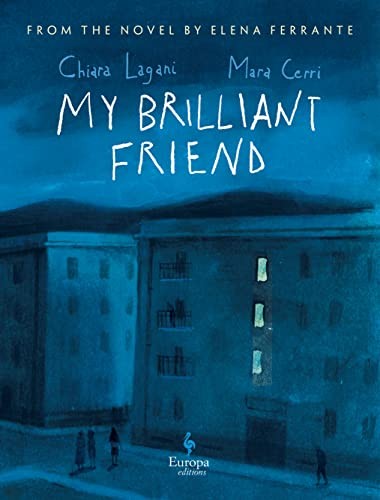
"This brings up the question of, ‘How do you define historical fiction?’ Some people have lived through the 1950s and they wouldn’t call it historical at all. I was born in 1962 so I’m a little bit post this, but I’ve heard people call novels set in the 1970s historical, and I think ‘What?!?’ So it’s borderline, though I’ve read that anything that’s set over 50 years ago counts. It’s such an evocative novel. It sets the scene of these poor, working-class neighborhoods in Naples so well that I couldn’t not include it in this list. It’s the story of a friendship between these two girls, Elena and Lila, growing up in Naples. One of them, Elena, is a dogged student. She’s going to do well. She’s working class, but she’s going to go to university. Lila is more of a prodigy, more naturally bright, but her parents don’t want to pay for her further education, so she ends up dropping out and marrying at 16. So the two go off in different directions, even as young girls, and yet they’re so close. It’s about their interactions with the community, and how they are part of the community and yet not. I was completely entranced by two things. One is the details of life. Elena Ferrante must have lived through 1950s Naples to be able to evoke it in this way. It’s just incredible. The other thing I liked is that it’s so simply written. It’s very bare of flowery metaphors. I appreciate that in a book. I don’t think everybody should write like that. It reminds me a little bit of Elizabeth Strout , who also writes incredibly simply. It’s not fancy writing. My Brilliant Friend and all of the subsequent books are not fancy writing. There’s just something about it that draws you in, it’s almost mesmerizing. You keep reading because it’s so easy to read, so smooth, and yet…once you’re in, it feels jagged. There is this seduction, and yet there’s also a lot of darkness in it, a lot of poverty and violence. It’s an incredibly violent neighborhood and a lot of the relationships between men and women…It’s quite a read. I think it’s probably not for everybody, but it certainly was for me."
Elena Ferrante · Buy on Amazon
"Yes, I read all of them. I know that there’s been a TV adaptation of them, which is apparently brilliant. It’s done by Italians, thank God: they’ve haven’t Americanized it or anything like that. But I couldn’t quite bring myself to watch it, because I know what Lila and Elena are like to me, and I want to retain that."
Sarah Winman · Buy on Amazon
"Yes, World War Two and all the way through to the 1970s. This is one of those books that you don’t read for plot, because not that much happens. It has its flaws, but I put all that aside because it so badly made me want to go back to Florence! I haven’t been to Florence since 1988, mainly because it just sounds like it’s so overrun with people that it’s hard to actually enjoy it. I should go, because Venice is like that and yet it is perfectly possible to have a good experience there. Florence is so fantastically painted in this novel. It’s about a soldier named Ulysses. Towards the end of World War Two, there’s bombing going on, and he’s hiding in a cellar in Tuscany and meets an older woman named Evelyn, who’s an art historian. She’s there to check some paintings and they spend an evening together. She tells him all about the art that’s in Florence. He’s never really thought much about art, but what she says sticks with him. He goes back to London. His own family has been a bit of a disappointment and fractured, and his marriage doesn’t work out, and he gets the opportunity to move to Florence. He takes it, and a couple of his friends go with him. It’s basically about how this man learns to love art and creates what they now call a ‘chosen family.’ He brings together people from his past and people he meets in Florence. I think what attracted me to the book is that if My Brilliant Friend is about growing up in a neighborhood and being a part of a community your whole life—from when you’re born to when you die— Still Life is about a stranger, a foreigner, coming to live in what seems like quite a closed community, and slowly making his own way and being accepted into that community. I’m an American who moved to the UK and, for the longest time, it was quite hard to make friends and understand how to be American without irritating everybody. But you learn how to accommodate. This is a book, in a way, about accommodating your own foreign-ness and finding your place. Yes, that’s probably another reason why I like this book so much. It’s very beautifully written, and very visual. You really feel like you’re in Florence. Even if you haven’t been there, you feel like you could describe it or paint it. I guess I’ve always loved art. My father was a photographer, and I don’t know if that did it. I don’t take photographs particularly well, but I understand what storytelling is through visuals. When I write, I have a tendency to picture what’s going on in a scene. It’s almost like a little film or slideshow in my head, and then I write down what I see. There’s a big visual element to it."
Jeanette Winterson · Buy on Amazon
"We are. It’s set in the early 19th century in Europe and then in Venice. I reread it when I was writing The Glassmaker , because I was curious how Jeanette Winterson would handle Venice, and the feeling of Venice. I was really taken with it. It’s about a soldier, Henri, who roasts chickens for Napoleon. That’s his job. He goes around during, before and after the battles, making sure that Napoleon has enough roast chicken. At some point, he meets a prostitute named Villanelle. Villanelle is a gondolier’s daughter from Venice, who has webbed feet. So already we know we’re in magic realism territory, but not too much. It’s like rich pastry, this book. The two of them go across Europe and end up in Venice, and Venice transforms them both. Villanelle has an affair with a noblewoman, but it’s slightly unrequited. Henri loves Villanelle, but she doesn’t quite love him back the way he wants. They start cross-dressing. They murder somebody and have to escape. They’re going through the canals on boats, and it’s incredibly dark and magical. It’s like the way Venice is. You can go there, particularly during Carnival, when everybody wears masks, and become transformed into something other than yourself. I think she captures incredibly well that powerful feeling of Venice being like that. There’s a quote I just have to share. She says, “In this enchanted city, all things seem possible. Time stops, hearts beat, the laws of the real world are suspended.” When I read it, I thought, ‘Oh, that’s exactly what I’m doing with time in my book!’ Apparently, Jeanette Winterson didn’t go to Venice before she wrote the book. I was so impressed that she managed to capture this intangible quality of Venice in words, without having been there. That really surprised me. Yes, very much so. It won a couple of awards. Everybody was reading it. It came out in 1987, when I had just moved to the UK. It felt like everybody was talking about it. It’s funny how it seems to have been set aside. It’s still in print, but I guess Jeanette has gone on to write a lot of other books in different directions. This was one direction which she didn’t subsequently pursue: I don’t think she’s written any other historical novels. There was one before this one, called Sexing the Cherry , which is also historical. Those two together made a package and then she moved on to other things. Do you mean have I murdered somebody and then escaped through the canals?!? I’ve been going to Venice for a long time. I used to go every two years for the Biennale, my husband and son and I. We had our honeymoon there 30 years ago. But a place changes when you write about it, and you start researching it. You’re at a certain level as a tourist and then it goes deeper and deeper, and now I understand more of the history. So, for instance, the wealthy city it was, that center of trade, built all of those beautiful buildings—or a lot of them, anyway. Those buildings are still there, but the wealth isn’t, and that’s what made them crumble. It’s been a tourist attraction for centuries. The carnival became a big thing, and there was a lot of gambling, a lot of prostitution, a lot of licentiousness. It had a reputation for the freedom of the mask and being able to do what you wanted. Until Napoleon came in 1797 and conquered it, and then it went downhill. The Austrians took it over for a while, and it just crumbled. I didn’t know any of that. When I walk around, I understand it better now. Some of it is really practical. There are these places in Venice that have straight, broad passageways. The Austrians wanted to bring their horses in, so they covered over canals to build those. Then there are other parts that are very different and much older and you think, ‘Oh, the Austrians didn’t get to here.’ The other thing is that it was a city that was built around water, so the front doors of these big palazzi were on the canals. I didn’t really see that until I went kayaking through the canals. Somebody took me in their boat through the canals, and I could see the front doors. They’re all blocked up now, but you can see what it was like. They have floods all the time. So the ground floor, the androne , is always marble or stone that can be flooded, and then washes out. Everything else is up top. You never buy an apartment that’s on the ground floor. You always leave it empty. It’s just things like that I didn’t really understand until I spent a lot of time there and actually researched it. Go in November or January, that’s what I always recommend. January is fabulous. It’s cold, but there are no tourists, and everybody’s really nice and friendly. The city becomes itself again."
Trees in Literature (2016)
Scraped from fivebooks.com (2016-03-11).
Source: fivebooks.com

Charlotte Brontë · 1847 · Buy on Amazon
"I couldn’t resist this. Rochester proposes to Jane there, and then the next night it’s split in half by lightning. It’s a heavy-handed symbol but it’s still incredibly satisfying. It’s not even that the tree is struck down and killed, it’s split in half. The idea of marriage is that two people are going to become one, but here you know—because of the mad woman in the attic—that it’s one thing about to be split in two. Yes, because trees often do do that. A tree seems dead and then something grows out of it. It works very well in this instance."
E M Forster · Buy on Amazon
"Mrs Wilcox tells Margaret Schlegel of a superstition about the wych elm which grows by her family home, Howards End. The village people have embedded pigs’ teeth in it, so that if you have a toothache, chewing the bark from the wych elm is supposed to cure it. Margaret and Mrs Wilcox bond over this, whereas Henry—Mrs Wilcox’s husband who later marries Margaret—is very dismissive of that sort of superstitious folk history. The tree, and the tales surrounding it, represents a more organic and rural way of looking at the world, while Henry is more urban and modern. The two clash and, in the end, when it all falls apart and Margaret has to prop Henry up because his son is going to prison for having knocked over and killed Leonard Bast, there’s a resurgence of an older way of thinking. Perfect! There’s something very solid and important about that tree. And it’s in the film—you know a part of a book is good when they actually translate it into the film."
Conrad Richter · Buy on Amazon
"It’s a really weird book in a wonderful way. It predates the beginning of At the Edge of the Orchard by about thirty or forty years—I read it as research for this book—and it’s about this family called the Lucketts. The family, with five or six children, moves into this heavily wooded part of Ohio to hack out a living there. There’s a lot of detail about dealing with trees. The trees are so strong and permanent that in order to survive there, you have to uproot the trees and they’re constantly pushing their way back in. It was in this book that I began to understand how hard it is to uproot a tree. If you’re going to plant a field full of something, you have to clear the land first, and the trees do not want to give up their roots very easily. It’s hellish getting them up. You start to wonder why on earth this family has moved to this place when it’s so difficult. Towards the end, one of the younger daughters disappears. She’s gone to bring the cows home, and she doesn’t come back. Her older sister Sayward’s theory is that the trees have taken her—they’ve snatched her and they’ve eaten her. It’s really spooky and strange, and also really well told, and unusually told too. Exactly, and the trees here take the place of the fairies. In reality, what probably happened is that Native Americans took her, but Sayward can’t quite cope with this, so she blames the trees instead."
Betty Smith · Buy on Amazon
"Yes, and it’s completely different. It’s about an Irish-American family living in Brooklyn at the beginning of the 20th century. It’s a poor family: the father is an alcoholic and never really works, and the mother works every hour there is. It’s about all the different things that happen to the family, the ups and downs—but mostly downs, as it gets worse and worse. Again it’s slightly heavy-handed symbolism, but the tree in the book is a tree of heaven, which is a tree that’s seen as invasive. It’s also an immigrant; it’s also scrabbling to survive. People are always trying to get rid of it: they chop it down and they pull it up, yet from the chopped-down tree springs a new tree. They never can seem to get rid of it and it grows in the courtyard of the tenements where the family lives. At the end, the family falls apart and yet still survives, just as the tree continues to grow. One of the reasons I put it on the list is A Tree Grows in Brooklyn is such a great title. It’s the best tree title ever."
Frances Hardinge · Buy on Amazon
"It is, it’s really surprising. The novel starts out as standard historical fiction. It’s set in the 19th century and is about a family. The father is a naturalist. He’s been run out of town because it’s revealed that he falsified the fossils he claims to have discovered. The story is told from the point of view of his fourteen-year-old daughter Faith, who’s very clever but—of course—being a girl, she isn’t allowed to study even though she wants to. The family move to an island called Vane to get away from the scandal. Or at least that’s what Faith thinks. Get the weekly Five Books newsletter She discovers that her father has brought a specimen with him, which he hides in a cave. Faith follows him and sees that it’s a tree in a pot, a really small one, maybe two feet high. The tree, she finds out, is a tree that feeds on lies. So if you tell it a lie that people believe, it grows a piece of fruit, and if you eat this fruit, you go through a hallucinatory experience and discover truth in your dreams. The story becomes incredibly gothic and strange. This tree grows and grows in the sea cave. It’s hard to get there by boat and the water comes up and cuts you off and you’re stuck in this cave in the dark. The tree doesn’t like light so you have to keep your lantern really dimly lit, and it grows to completely fill this space, and there are these snaking vines all over the place, and it grows like this over the course of just a week or so. I don’t know how Frances Hardinge came up with this crazy idea that a tree would feed on lies. Nothing really prepares you for the book going so off-piste and that’s what I love about it—it’s really wild! I thought it was an incredibly creative way of using a tree. Yes, definitely, and in the book there is speculation that it actually is the tree of knowledge, or came from the very first tree of knowledge. The whole thing about truth and lies refers all the way back to that. Absolutely, and I knew that, but I tried very hard not to think about it too much when I was writing At the Edge of the Orchard . I thought otherwise the symbolism would become really heavy-handed and I’d use it in a way that would just irritate people. So I tried as much as I could to keep that to a minimum, but I know that readers will have it in their minds. Yes, I’d never thought about it that way. I wonder if people who read a lot and touch pages a lot feel that extra-special connection to trees. I’ve noticed when talking to people about trees that most people’s relationship with them develops in childhood. I don’t know quite why, but I think it’s partly because when we’re young we climb them and we don’t tend to climb them as adults. There’s something when you’re actually touching it and sitting in it and hugging it and being there with it that makes you feel much more attached to a tree. Maybe the adult connection to trees is more indirect, and it’s through the pages of books."