Susan Llewelyn's Reading List
Professor Susan Llewelyn is an Emeritus Fellow and Dean of Degrees at Harris Manchester College, at the University of Oxford. She is also a consultant clinical psychologist, and works for the British national health service providing advice on strategic organisational development, leadership and team working.
Open in WellRead Daily app →Clinical Psychology (2019)
Scraped from fivebooks.com (2019-06-21).
Source: fivebooks.com
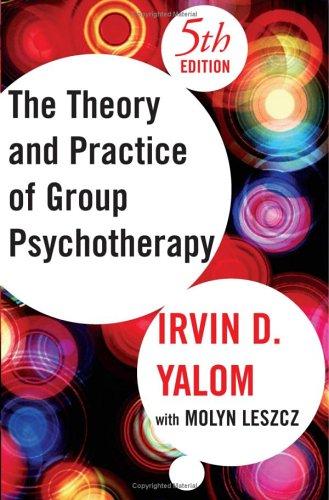
Irvin D Yalom · Buy on Amazon
"I came across it when I first started working with patients in the National Health Service. We had much more demand than we could possibly meet. So it was of practical interest: could we use group therapy? I soon realized that that can’t be the main rationale for using a therapy, that you can treat lots of people at the same time. But, actually, it was a very effective form of treatment. In many instances, group therapy is more effective than individual therapy. Yalom’s book was really helpful. All the way through, my question is: ‘What on earth is happening, and how can I make sure it’s most effective?’ What Yalom said—from his clinical experience, but later backed up by researchers including some of my own studies—was that there are 11 curative factors that can describe what is going on. “In many instances, group therapy is more effective than individual therapy” So, I found the book very helpful because it does focus on what the curative factors are. This is going back to my central question: how do people change? The two key factors, according to Yalom and subsequent studies, are group cohesiveness (which is people’s need to belong to a group) and interpersonal learning (which is what you learn from other people.) So, it’s not the centrality of the therapist that really matters; it’s social. It’s the group: it’s the other patients who are working the change. Most people come to therapy because they’ve got difficulty with other people either in their present or in their past. It’s helping people to learn more about those things by learning together, which is a really key factor. It’s interesting. It’s a very exhilarating experience, being in group therapy. Because, yes, there’s a lot going on, but you’re not there on your own—you’re there with a whole lot of people who want to understand themselves. It’s like being in a laboratory. People can find out: ‘Am I really the awful person I think I am?’—which is what people coming to therapy may be thinking—or, ‘Am I as different from others as I think I am?’ People then have the experience of learning together. It’s a wonderful experience to be there with a group which is working well and helping group members to understand themselves. It’s very exciting. Almost more so than individual therapy because there’s so much happening."
Anthony Ryle & Ian B Kerr · Buy on Amazon
"Well, I got into this really because of the key question: ‘How on earth is it that people change?’ When I was learning as a trainee, I was taught in one particular school of therapy about how change could happen. I then went to another institution which taught me a very different model of therapy. And in both cases, each of the two schools spent a lot of time slagging off the other school, saying, ‘No, no, this is not like this, it’s like that.’ In each case, they said there’s no way change would occur if you used the other model. But my experience was that actually change occurred in both models. I thought, what on earth is going on here? It lead me to my own research, which actually tries to identify the common factors that bring about change. But what Anthony Ryle did was very much the same. He started from the same position, which is: ‘Hey, there are lots of schools of therapy which can be helpful. Can we not distil the really important bits from all of them?’ He tried to pull together ideas from cognitive therapy, about our thoughts and how we think, together with dynamic therapy, which is based on psychoanalysis but has been changed over the years, to being more about the models we have in our head of relationships. “CAT tries to help you to understand why you are behaving in ways which actually defeat yourself” So, he’s putting together how we form relationships with others—and in particular how the models in our head, often derived from childhood, influence how we relate to each other in the present—together with how we think—the cognitive bit—into a formulation of the problem. Central to cognitive analytic therapy is a formulation which you draw up collaboratively with your patient as to what’s going on. A systematic analysis of the patterns of behaviour that people get into. Here’s an example. I’m exhausted. Each time I get home from work, I’ve got my kids screaming for food in the car. At that point, I feel as if I’m a bad mother and a bad, selfish person because they are crying, and instead of being at home I’ve been out at work all day. Say I then start making a very nice homemade quiche or something, which they turn their noses up at. I then scream at them because they’ve turned their nose up at it, and they get all upset. What they want is a beef burger. And I then decide that proves what a ghastly mother I am, which makes me strive even harder to do even better next time, which is to make an even better meal for them, which makes me even more exhausted. It is actually completely dysfunctional, because what I’m trying to do is solve a problem—my belief that I’m a bad mother and a bad person—using old patterns and ways of thinking, and not really attending to what’s going on in my own life. So, in that sense, I am perpetuating, despite the best of intentions, dysfunctional ways of behaving. So what Cognitive Analytic Therapy (CAT) does it to try help you to understand why you feel like your own worst enemy and you’re behaving in ways which actually defeat yourself. Yes and no. Again, behaviourism is an important school within psychology. When I first trained in clinical psychology back in the 1970s, we only had two or three main set of theories to draw on. One was psychoanalysis, which I won’t go into now, and the other was behaviourism, which really says that what we need to do is to look at what people do, and change the consequences of what they do or the rewards they get to change their behaviour. In some situations, that works very well. But in the 1970s, people started thinking that we actually needed to add in the way people think. And so Cognitive Behavioural Therapy (CBT) was a combination of the behavioural ideas with the cognitive ideas. Increasingly now, cognitive therapy is popular rather than cognitive-behavioural. But going back to CAT—that is combining the cognitive bit and the psychoanalysis bit, and actually there’s some behavioural therapy in there as well, and there’re some systems thinking in there as well. So, cognitive analytic therapy is at least four different theories, buried in together and centralized by trying to formulate it for the individual patient."

Gillian Butler, Tony Hope & Nick Grey · Buy on Amazon
"Yes. I’ve started with the systemic—which is the Yalom—then moved to the more integrative—the Ryle book—and now this book is more focused on the cognitive. It also does something I found interesting: decentralise the importance of the therapist. It says, actually, you can do this for yourself. The central idea is that you should value yourself and recognize that you can change, and here are some ideas as to how you might change. So the authors de-professionalise and de-centre the importance of the therapist. They say: ‘You’ve got resources inside you. Here are some ideas as how you could make yourself fitter.’ It explains how you can deal with uncertainty better; rather than sit and worry about things, you can make changes. It explains how to deal with depression more effectively. I like very much that it’s not just the therapist who does this, it’s the patient themselves. It’s a good book. They’re good authors."
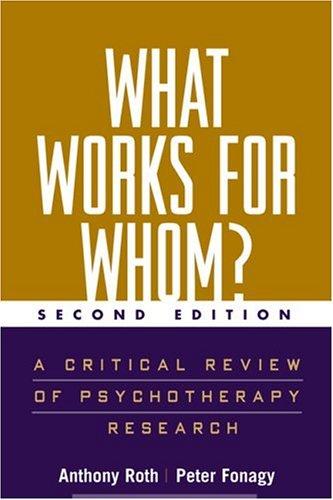
Anthony Roth & Peter Fonagy · Buy on Amazon
"As you will have gathered, there are lots of competing ideas or competing theories in the field of clinical psychology. And what you tend to find is that if you’re in a particular school, you tend to think your ideas are the best, and that nobody else’s ideas are right. What Fonagy and Roth are doing is reviewing the effectiveness of all different therapies as fairly as they can. This was an area I worked in too, though not as effectively as they did! The question they’re trying to answer is: what is it that’s most helpful to people? Many therapists don’t use evidence; they use their own biases—which often are what you were taught first. The good news is that there’s a lot of good evidence for psychotherapy in the broadest sense, which is better than some other approaches which have been tried to reduce psychological distress including some medical approaches. But the bad news is that there’s still a lot we don’t know about what is most likely to be most helpful for any particular person with their own specific difficulty in their unique personal and social circumstances. So, we need more research. “Many therapists don’t use evidence; they use their own biases—which often are what you were taught first” This it isn’t a book to sit down and read from cover to cover. It’s more like a reference text. What it really says is: if you’re going to get help, you need to know what it is that’s most helpful for your condition, under what conditions, with what kind of therapist, with what kind of therapy, for how long, with whom. It’s a complicated thing. Compare it to medicine. You know: if you have diabetes, arthritis and a cold, you wouldn’t expect to have the same medicine prescribed for all those conditions. You’d expect there to be very fine difference in the drugs prescribed for each, depending on your age and your condition. But within psychological therapies, there was a tendency for schools to give the same treatment for everything. Which doesn’t make any sense. What Works for Whom is really saying, ‘let’s work out, given your condition, what the evidence say will be most effective for you.’ And that’s complicated. There are so many different factors involved, so it’s not surprising we don’t always get it right. But a book like this helps therapists when faced with a patient with a particular condition. So, rather than give you what I know how to do, let’s work out what the evidence shows you would be best with. It’s tricky, though, because we don’t have enough therapists—so you sometimes just end up often getting what is there. Absolutely. And that’s always difficult when you’re trying to earn a living; you’ve got set time aside to go and learn a new method. I think the interesting thing is when you look right back—and again, why I was interested in Tony Ryle’s ideas—as dispassionately you can, actually most therapies, if conducted professionally and respectfully and ethically, are reasonably effective for quite a good number of the people they treat. Even though they may have very differing—and in some ways conflicting—ideas; behaviour therapy is very different from cognitive therapy, which is different from psychoanalysis—done properly, they can all be helpful. It seems that what is necessary is the therapist having some coherent understanding—which is a little bit different from that of the patient—which allows a fruitful debate between the two of them, and allows a possibility of change to occur. So, as a therapist, you’ve got a theory, some practice which challenges and maybe helps to unstick the patient. It almost doesn’t matter which theory you’ve got. But you’ve got to believe in it. Which is a bit of a paradox."

Helen Dent · Buy on Amazon
"It’s a lovely book by Helen Dent, a lovely summary of attachment theory. Attachment theory underpins a lot of psychology—the simple observation that as humans, we need to relate to other people. In fact, you can’t survive as a human if you don’t have relationships. Your baby, just by itself, would literally die. It has to have a parent or committed carer. All the way through our lives, we need other people. I know there are one or two hermits in the middle of nowhere. But they’re a tiny, tiny, tiny minority. Most of us are social and need and relate to other people. So, attachment theory really underpins much work in current psychology and child work and developmental work. It’s lifelong: our attachment patterns affect how we relate to others. So it helps us to try and understand what our particular patterns of relationships are. “Attachment theory underpins a lot of psychology—the simple observation that as humans, we need to relate to other people” Most people have a reasonably secure attachment and have had good enough relationships with parents that our relationships with others are reasonably stable and we meet our needs, more or less. There are some who, based on unfortunate childhood experiences, have more difficulties in relationships. Attachment theory helps us to try and understand what is going on with those people who have later difficulties in their relationships. I think this book very nicely lays it out. Again, it’s written for the layperson—so you can look at your own attachment and understand what you might do differently. I like the fact that it’s not written merely for the academic. I think I would encourage them to get as wide an experience as possible, including doing things which aren’t technically labelled psychology: talking to lots of people, having lots of life experience, and reading a lot of novels. I was very tempted, when you asked for my five books, to name five novels. Those are my parallel learnings, if you like. Just talking to people, attending to people, and reading the distilled experience of others, in the form of stories. I said novels, but I also mean plays, drama, and so on. Stories often have, at their centre, a human dilemma: how do we relate to people? How do we deal with people abusing power? How do we survive relationships and their problems? How do we thrive? And so on. Yes, empathy. I can’t know the life experience of everybody. So reading novels about other people’s lives is very important. Reading about the lives of people who’ve come to live in a different country, what it’s like to be an immigrant, what it’s like to be old or young. It’s very difficult just from your observation of life, as the people you know tend to be more like you. So, actually going out and reading stories can tell you more about other people’s experiences. As a therapist, you don’t just draw on all these five lovely books that I’ve been talking about, important though they are. They’re there to help you to know what to do next, as I mentioned. They’re good theories which are practical. But you also draw, of course, on your own experiences and your own relationships. Your own feelings of despair or hopelessness or envy or love or friendship. You know about them through your own experience and through reading stories. So, I think novels and literature are enormously important too."