Stephen Baker's Reading List
Stephen Baker was BusinessWeek ’s senior technology writer for a decade. He is the author, most recently, of Final Jeopardy : Man vs. Machine and the Quest to Know Everything, a behind-the-scenes look at an IBM team’s development of Watson, the computer that recently competed on the American general knowledge game-show, Jeopardy!
Open in WellRead Daily app →Watson (2011)
Scraped from fivebooks.com (2011-02-25).
Source: fivebooks.com

James Bailey · Buy on Amazon
"This book is by James Bailey. He wrote it in 1996, at the dawn of the age of the Internet. It’s for generalists, and it’s a very interesting look at the history of maths and science. Bailey’s thesis is that we create mathematical systems that fit with our needs and the tools that we have available. The Greeks wrote on papyrus, and the question they wanted to address was, ‘Where are we in the universe?’ In order to answer that, they came up with geometry, which also fit their medium. You can draw right angles and circles on papyrus. A little bit to the east, in Persia, people used reed styluses to poke in clay tablets. It was harder to do geometric forms that way, so they worked in algebra. With the Scientific Revolution, all of a sudden you had mechanical clocks. The question was no longer ‘Where are we?’, but ‘How do we measure or predict the pace of change from one place to another?’ So Newton and Leibniz came up with calculus. Lines and circles do not work well in movable type, which is what they were using, and so they described their findings with algebraic formulae of letters and numbers. If you move ahead to the 1920s, the job of the first electronic computers was to replace people doing computations, and speed that process up. But now, Bailey says, we’re entering a new age, where what we’re looking for is patterns in enormous sets of data. He argues that we need new types of maths — and new types of machine configurations — to address that. It’s an extremely interesting and well-written book. Bailey worked for one of the early super-computing companies, founded by Danny Hillis. They were doing sophisticated parallel processing. They divided up the work and distributed it to a lot of different computers, analysing enormous amounts of data and looking for patterns. Watson does this too. It’s a different kind of thinking. Bailey claims that we’re not educating ourselves for this; we’re educating ourselves and our children for the kind of maths Galileo needed, not the kind of maths the founders of Google or the Watson people are using. I found it a very engaging book, and I have trouble with maths and science books – I don’t usually finish them."

George Dyson · Buy on Amazon
"Dyson is looking at the genesis of thinking machines. Well, machines that do something like thinking. He is really good on the history of computing. One of his early chapters covers Samuel Butler, who in the mid-19th century took a ship from London to New Zealand and set up a sheep farm there. He was on the other side of the world, both literally and figuratively, and yet, around 1860, a boat came into the harbour carrying a copy of Charles Darwin’s Origin of Species . Butler read it, and it provoked him into some very interesting thoughts. Humans aren’t really evolving much physically: we have pretty much the same brains and bodies that people had in ancient times. Machines, on the other hand, are moving ahead very, very quickly. In other words, the evolution of humans is actually taking place through our tools. Our intellectual advance is going to be tied to our tools. He was thinking this when the telegraph was still very new, and the machines he was thinking about were steam engines. So for him to come to this conclusion was brilliant. He foresaw the age when we would create smart machines that would take cognitive leadership of the planet. Hopefully, the machines will be kind to us, the way we are to animals we care about… Our tools, and the know-how of our fellow humans. I couldn’t farm; I couldn’t build a house or a car. If I were reduced to my own abilities, I would really be living a Stone Age type of existence. We should all take a moment to appreciate engineers, because they take this stuff and they make it happen for us."
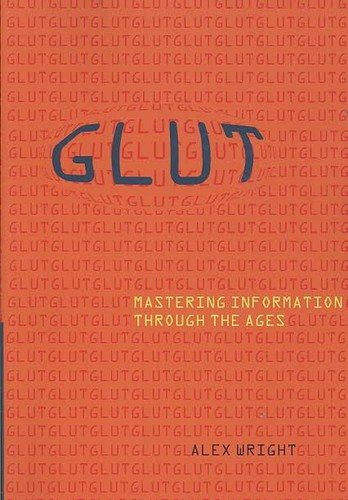
Alex Wright · Buy on Amazon
"This is a fascinating book. It’s by a young guy called Alex Wright. He looks at the beginning of information, starting from single- and multi-cell organisms and how they transmit information, and goes right up to the Ice Age information explosion. From there he goes on to the Ancient Library of Alexandria, and then Gutenberg. It’s a whole history of information and what we, as humans, decide to keep in our heads. This is something I wanted to deal with in my own book, Final Jeopardy , about Watson. With machines like this, we have to say, ‘OK, so these things are becoming an external lobe or a brain that we all share. And if it’s an external lobe, what do we keep in the part of the brain that is between our ears?’ You mentioned GPS. Alex Wright deals with it very intelligently, and he has great stories about information economies that I never knew about. For example, he talks about Ancient Peru, where messengers used to travel across the Andes carrying woven threads known as ‘quipus’, or talking strings. When a messenger arrived at his destination, he would deliver his news while reeling off knots in the string like a rosary. For the Incas, people of no written language, the quipu served as their core information technology — it was a newspaper, a calculator, even a repository of laws. There’s a lot of interesting stuff in the book. And he finishes up with the Internet. From the time of Gutenberg, we’ve settled on the written language as the basis of learning. Now, with the Internet, we are reverting to a more oral, conversational tradition. Each one of us will have a different answer to that. But when you learn about Watson, and see Watson getting built, you see not only what Watson is strong at, but also what it struggles mightily to do, and what it is utterly incapable of. That’s a road map of where the greatest potential is for us. Watson has no capacity to come up with original ideas. It cannot carry on a conversation; it cannot create theory; it has no understanding of causal relationships. All of these are areas where we can, for many decades to come, remain masters in the world of information. A lot of us like having information; it’s nice to have information up in your head. If you look at the knowledge Ken and Brad have, you can say, ‘Well, I can find out those things by asking Watson, or by looking it up on Google.’ But if you have knowledge in your head, ideas come from that. It’s much harder to have that magic occur when you have to look up 20 things on Google first, and then figure out the connection between them and come up with a brilliant idea. It’s more likely to happen if it’s already up there."

Tor Nørretranders · Buy on Amazon
"This is by Tor Nørretranders, who is Danish. It’s about how our minds and our memories work. What he focuses on is the tiny bit of bandwidth through which information can go into our brains. It can handle very, very little information at any one time. Much of what we experience in the world is furnished by our memory and what we expect to see. For example, I’m looking outside. I’ve looked out this window many times, and I see the tiles with the last bit of snow melting on them. My eyes are focused on one particular tile with a little bit of snow on it. Around it, the shed across the street, the trees, I’m not really seeing them. I have an image of them, but it’s furnished by my memory. That’s important in Jeopardy! and all kinds of areas of our life. We, as humans, fill in the blanks with what we expect to see, or what we expect to think or hear or know. Very little is actually coming from our senses. I’m going to experiment on you, based on something I read in this book. Here’s my question: How many of each type of animal did Moses bring onto the ark? You fell for it! It should be zero. Because Moses did not have an ark. But your mind says two because you’re focusing on the important part of the question, which is how many animals went onto the ark. That’s what we do. Jeopardy! creates clues to stump players sometimes, and the funny thing is that Watson actually falls for those tricks too. Watson too will think, ‘Animals, ark, Biblical figure, I’ll answer two, even though it shouldn’t be Moses but Noah.’ The other fascinating thing in the Nørretranders book relates to information theory. He spends a lot of time on the second law of thermodynamics, and extends that into the world of information. You’ve got all this information and it’s subject to entropy. It’s all over the place; there’s no intelligence to it; it’s just a flood of data. You’ve got to use a whole lot of energy to distill that information into intelligence. And that is what Watson — and computer science generally — is all about."

Tracy Kidder · Buy on Amazon
"This is a highly acclaimed work by Tracy Kidder. He was embedded in a team at a computer company called Data General (which no longer exists). It was 1979, and they were building a mini-computer. He was introducing to the world this group of people that later became known as ‘nerds’ — though I call them the numerati. These were computer scientists and electrical engineers, and they were putting together this machine that for most of us was utterly foreign back then. We knew NASA used computers; we knew they were important; but they weren’t part of our lives. Kidder was introducing that engineering culture to us — the way they thought, the way they analysed things. It’s a marvelously detailed book, and I found it very inspiring, as I tried to write a book that, in a way, had a similar goal, as I followed a team at IBM that was building a machine. It’s also an interesting way of looking at how computing has utterly changed in the last 30 years. They were building a machine, but all it could do, from our perspective, was count things and put things into columns and calculate stuff. Now these machines are dealing with music and images and ideas and facts. They’ve invaded our world. If you look at Watson, it made some foolish mistakes and it struggles to understand English. They’ve made remarkable progress in that area, but there is a whole lot of refining to do. Yes, the language in understanding the clue, and also in the information that it is searching through. So finding meaning and then figuring out not only that it has an answer, but also that it has enough confidence in that answer to bet on it. That’s the remarkable thing. There are all sorts of critics out there who pooh-pooh Watson and say, ‘Oh, it’s not that smart — it’s just looking up facts.’ But this in itself is a very hard thing to do, and Watson only does it well enough to win a game of Jeopardy! , which means it gets about 85% of questions right. So Watson has a lot of learning to do. It has to get a lot smarter and also a lot cheaper, so that we can all have access to this kind of information technology. And we all will, because we need it. We are all swimming in vast oceans of data that we ourselves are creating. All of that data has little bits of intelligence in it, but we can’t find them. Let’s say you’re a neuroscientist. Every day, neuroscientists are doing brain scans and creating massive amounts of data and studies about how the brain and the nervous system work. And they’re publishing their findings. Last year alone, there were some 50,000 academic studies published on neuroscience. If you’re a neuroscientist, how could you possibly be on top of your field? You need machines to help you with that. Sometimes a machine like this, if you ask it a question, will come back with 10 possible answers, and confidence in each one. A number of those might be stupid. One or two might even be outlandish. But if it comes back with some good ideas, then the humans, with our superior brains, can pick out the ones that are worth pursuing."