Skye C Cleary's Reading List
Skye C Cleary is a philosopher, the author of Existentialism and Romantic Love (Palgrave Macmillan, 2015) and the co-editor of How to Live a Good Life (Vintage, 2019). She is the associate director of the Center for New Narratives in Philosophy at Columbia University and also teaches at Barnard College and the City College of New York.
Open in WellRead Daily app →Philosophy of Love (2018)
Scraped from fivebooks.com (2018-09-03).
Source: fivebooks.com
Edited by Robert C Solomon and Kathleen M Higgins · Buy on Amazon
"It’s The Philosophy of (Erotic) Love by Robert C. Solomon and Kathleen Higgins, which includes lots of excerpts from ancient philosophers including Plato and Sappho, right up to contemporary philosophers such as Martha Nussbaum . This book is a really great overview of philosophies of love, because it shows different methods of philosophising, not only through abstract, armchair classic philosophers like Hegel , but also through extracts from Shakespeare’s plays , D H Lawrence ’s novels, Rilke’s poems, letters between Héloïse and Abelard, and others. And it also shows how hugely divergent thinking about love is. There are psychological ideas from Freud and Jung, and feminist ideas from Shulamith Firestone, who believed that romantic love was a conspiracy to keep women in their place because it calls for them to sacrifice so much of themselves. We can see seeds for ideas like this in an earlier section on Simone de Beauvoir who thought that patriarchal social structures limit possibilities for authentic loving because it robs women of the chance to be agents in their own lives and create their own futures. Yes, and it’s so strange because Plato’s Symposium is one of the most famous philosophy books of all time, and it’s all about love. It was written almost two and a half thousand years ago and it’s about a group of men at a dinner party who were all hungover from the night before. To pace themselves so that they don’t get too drunk too quickly, they decide that each of them will give a speech about love. Socrates is the last to speak and towards the end, Alcibiades crashes the party. He is so drunk that a flute-girl has to help him walk. He’s heartbroken and frustrated because he’s in love with Socrates , but Socrates isn’t interested. In Martha Nussbaum’s terrific critique of Symposium in The Philosophy of (Erotic) Love , she says that Socrates is weird; he’s like a statue because he’s emotionally stone cold, he is ultra-rational, and he views passion and lust as something quite inferior. She calls Symposium a “cruel and terrifying book” because it finishes with these two men – Socrates and Alcibiades – competing with our souls pitting reason against passion, and the philosophical against our humanity. This is one of the central dichotomies of love, the tension between thinking and feeling, that we see repeated throughout history. Right. He presents passion as a necessary first step, but also something that ultimately needs to be overcome. What’s interesting is that Socrates, when he explains this, is recounting what a woman, Diotima, has taught him about love. She describes a ladder on which the first step is appreciating one beautiful body, the second is appreciating two beautiful bodies, the next is appreciating all beautiful bodies, beautiful acts, knowing beauty, and so on until the top of the ladder where we can come to appreciate the Beautiful with a capital B, a pure Form. “Martha Nussbaum says that Socrates is weird; he’s emotionally stone cold, he’s ultra-rational, he views passion and lust as inferior” This anthology is like a gateway book to other philosophies of love because, for example, Diotima’s full speech isn’t in it and it’s missing one of my favourite stories about the birth of Love. Diotima explains how at a dinner party of the gods, the God of Resource drank too much nectar and passed out in the garden. The Goddess of Poverty saw him, lay with him, and thus Love was conceived of Resource and Poverty. I love this metaphor, because it’s another way of illustrating the tensions of love. Love can be super intense and overflowing, but it’s also a lack. It’s needy, but also creative. We have this idea that love is beautiful and wonderful, the other side of it is that it can also can be really harsh. The book doesn’t give a definitive answer, but it’s my top pick because it opens up a myriad of possibilities for thinking about love. However, in the conclusion, Robert Solomon suggests that rather than thinking about love as a force or a mystery, we ought to be thinking about it as virtue. In his view, love is an expansion of the self, but not in a narcissistic way. It’s a dialectical and creative process – involving loving and being loved, and defining ourselves as individuals as well as with one another."
Simone de Beauvoir · Buy on Amazon
"This was published in 1949, and it was so controversial when it was released that the Vatican banned it because it gave so many details about women’s experiences and women’s bodies. Beauvoir argued that we need to be free from oppression in order to be free to live and love authentically. The problem is that women, throughout most of history, have been subordinate to men. Not because of any particular struggle, but because women have accepted the story that it is in their best interest and that their highest destiny is to get married, to be a mother and housewife, and to raise children – all under the guise of love. “All too often marriage has been a socially acceptable form of slavery” Marriage has been marketed to women as being of such importance that women came to be defined by whether and to whom they were married, but all too often it has been a socially acceptable form of slavery: housekeeping in return for financial guardianship. The existential problem is that it imposes roles on women that they did not actively choose. If they’re forced into it, it’s oppression, and if they go along with it blindly, then they’re evading the existential responsibility for being agents in their own lives. It was a critique of romantic love, but also a critique of those who find their meaning in life second-hand through other people rather than creating it themselves. So that can be through romantic love, like people who define themselves through their partners. But there are other ways that people can use love to escape being what Beauvoir called ‘sovereign subjects’ – through narcissism, mysticism, and motherhood. For example, the ideal of maternal love is supposed to involve self-sacrifice: the greater the sacrifice, the more ideal the mother. If a mother turns herself into being a slave to her children, deriving all meaning in her life from them at the expense of her own projects, then that presents a potential existential problem. No, of course it’s okay to love your children and be proud of them. However, I do think she underestimated the meaning that children do bring to parents’ lives. Beauvoir did not have children, and I sometimes wonder if her philosophy would have been different if she had. Yet, her point was that if children become the only meaning in a person’s life, then that’s a problem. One of the things Beauvoir didn’t go into was that sometimes people take some time out to do that sort of thing, and then go back to their other projects. Beauvoir was writing in the 1940s when fewer women were in the workforce, but she makes an excellent point: she wrote The Second Sex almost 70 years ago, but we’re still seeing statistics that show women’s careers suffer much more than men’s when they have children. Now, economic independence isn’t the only path to freedom, but she was right that it can make it easier. Beauvoir was well aware that existentialism had a reputation for being negative, but I think her vision of authentic love is positive – and it applies to all kinds of love, not only romantic. She says: “Authentic love must be founded on reciprocal recognition of two freedoms; each lover would then experience himself as himself and as the other: neither would abdicate his transcendence, they would not mutilate themselves; together they would both reveal values and ends in the world. For each of them, love would be the revelation of self through the gift of self and the enrichment of the universe.” In romantic love, an ideal relationship is where lovers are able freely to choose one another rather than coming together out of a dependent or weak situation, or from a desire to possess one another. Yes in Being and Nothingness , Sartre implies that there isn’t really any way out of that vicious cycle; but Beauvoir’s philosophy is a direct response to that. She thought we could overcome it with generosity and equality. Also, Sartre later came closer to Beauvoir’s way of thinking and conceded that he might have missed something about reciprocal recognition of freedoms. In Notebooks for an Ethics he says that maybe authentic love is possible. Maybe we can “rejoice” in others without trying to possess them. However, he wasn’t entirely convinced because he also suggests that to overcome sadism and masochism might be to overcome love itself."
Hazel Rowley · Buy on Amazon
"Tête-á-Tête is a dual biography that focuses on Jean-Paul Sartre and Simone de Beauvoir. The Second Sex was Beauvoir’s theory, but this book explores the practical application of her and Sartre’s philosophy. I think this is an important book because Beauvoir and Sartre wanted to create a philosophy that could be lived, and attempted to live it as much as possible, through breaking free of social conventions like marriage and monogamy and being engaged in social activism. On the one hand, it’s voyeuristic because there are deeply intimate and often unflattering details about their relationships. On the other hand, they wrote prolifically about their intimate lives though their novels, which were not-very-concealed accounts of their actual relationships, as well as autobiographies, and personal letters. This book brings a lot of that together. “It started with Sartre not wanting to commit to one girlfriend, but grew into a whole philosophy” It started with Sartre not wanting to commit to one girlfriend, but grew into a whole philosophy. He would say to his girlfriends: freedom is the most beautiful gift we can give one another. They all went along with it for a little while, but gave up on him eventually. Then when he met Simone de Beauvoir, she embraced it. But the thing was, it wasn’t just about the freedom to have sex with other people, because they thought that would be a cheap and meaningless form of freedom. They wanted to be braver and give each other the freedom to fall in love with other people. Right. And they did form deeply meaningful relationships. That’s what made it so difficult. I think they underestimated that when you allow yourself to fall in love with other people, it raises the stakes a lot more than a meaningless sexual encounter. Sartre didn’t really like sex anyway: he preferred croissants. Some people have suggested that’s why Beauvoir went along with it, because she had desires that Sartre couldn’t fulfill. They had affairs with students, and they broke a lot of hearts. Bianca Bienenfeld had a nervous breakdown, and Évelyne Rey committed suicide. The book does a good job of highlighting the ideals and hopes, and tragedies and risks of their lives. There were a couple of lovers who came very close to threatening the primary relationship between Sartre and Beauvoir too. Beauvoir acknowledged later that they didn’t take the third person into account enough, and she thought that was a flaw in their system. Even though Sartre and Beauvoir freely chose their relationship and came pretty close to being authentic – although there is some suggestion that they did lie, or rather that Sartre lied to Beauvoir – they were having intense, loving relationships with others who weren’t existential, and these people tended to get very hurt and be jealous. For example, Nelson Algren was not impressed that Beauvoir described their relationship in quite some detail in one of her novels. Algren said: “I’ve been in whorehouses all over the world and the woman there always closes the door, whether it’s in Korea or India…But this woman flung the door open and called in the public and press…I don’t have any malice against her, but I think it was an appalling thing to do.” They did not mean that everyone should do as they did. Rather, they were successful because they challenge us to reflect on our own relationships and situations. They encourage us to think about what is authentic for us. I don’t think they claimed to be role models, and they acknowledged that they didn’t always live up to their own ideals. Sartre said he wasn’t authentic, but he wanted to point the way for others."
Tullia d'Aragona · Buy on Amazon
"Not many people have heard of her. And yes, it’s a Platonic dialogue of the sixteenth century, between Tullia d’Aragona and her friend, Benedetto Varchi. It was published in 1547, but it was probably written a few years earlier. The preface includes a note from her friend Muzio who says that he hopes d’Aragona doesn’t mind, but he thought she was being overly modest in using a pseudonym. Muzio knew it was her voice and thinking, so changed the name in the dialogue to Tullia d’Aragona, and published it – all without her consent. Yes. D’Aragona takes a Socratic gadfly-style approach and provokes Varchi with questions about the nature of love. The key question in the dialogue is: is it possible to love within limits? To answer this question, they break it down into other questions: what is love? Is love a noun or a verb? Is it a cause or an effect? If love ends, was it really love? If it ends, does that mean it hit a limit? They propose that love is a desire to enjoy a union with someone who is beautiful, or who you think is beautiful. And the answer regarding whether love is infinite is that it is potentially infinite, but not actually infinite, because it’s impossible to love, or truly love, with an end in sight, or with a goal. No, d’Aragona’s saying that to love with a goal in sight – for example, to stop loving after seduction – is a vulgar form of love. It reduces love to a vile and sordid act. It’s still love, but not ideal or virtuous. She does talk about love as a merging of body and soul. Her dialogue partner, Varchi, theorizes about love, but she thinks he’s too abstract and tells him to “bow to experience,” which she trusts more than any reasons any philosophers can come up with. She jokingly hints that she should know – because love is her profession. Get the weekly Five Books newsletter I wouldn’t officially categorize her as an Empiricist, since her approach is to suggest and question rather than decree, but she certainly proposes that experience can inform theory in important ways – which is especially important when it comes to thinking about love. It’s short. About 50 pages. I don’t agree with everything she says because, despite her interlocutor and friend being homosexual, she makes a few homophobic comments. I chose this book because it’s witty and fun, it raises some fundamental questions about the nature of love, and also it’s a fascinating insight into society at the time. Courtesans were among the few women who were educated, since they were expected to entertain with their mind and their body, but they still had to be careful with what they said. D’Aragona is very careful with her language in the dialogue. She is modest and self-deprecating, referring to her “lowly condition” and excuses herself at the beginning of the dialogue with statements like “I might blunder” and “I do not possess either sufficient learning or verbal ornaments…” but she’s also sassy and assertive, telling Varchi when he cuts her off that, “If you hadn’t interrupted me you might have understood better.” “The key question in the dialogue is: is it possible to love within limits?” Some people have suggested that we shouldn’t be including women in the history of philosophy because it’s revising history, but d’Aragona and other women were writing, and they were influencing people. She also wrote an epic poem, Il Meschino , which is currently being translated into English, and she wrote sonnets – some of which are available in a book called Sweet Fire by Elizabeth Pallitto. She hosted philosophical salons at her apartment, prominent authors attended, and they wrote about her as an intellectual character in their own works. She was influential, but she has just been overlooked. There are male philosophers, such as Plato, Rumi, Soren Kierkegaard, and Stendhal, who wrote extensively about love. Either/Or by Kierkegaard is one of my favourites because he addresses one of the key themes that we’ve discussed: the tension between passion and reason, between emotion and intellect. He – or I should actually say his pseudonym Victor Eremita – sets up the book as a choice between either the aesthetic or the ethical, but the question really at the end is can you have both/and, or is there something else? Stendhal wrote On Love to try to understand his obsession with a woman named Matilde, a political activist who he said was as beautiful as Luini’s Salome in Florence’s Uffizi Gallery. Stendhal wrote the book for himself, didn’t expect anyone to buy it, and warned that the precondition for reading it is to have been made miserable by love – which I suspect is most people, and why it has become a classic and I was really torn about whether to include it on this list. You’re right that women do seem to have taken the topic of love more seriously. One reason might be that it has played a more significant role in women’s lives. bell hooks said that men who have written about love have tended to stay at the theoretical end, and fail to explain the reality of love. While this might be true of Plato, it’s not true for Rumi, Kierkegaard, or Stendhal."
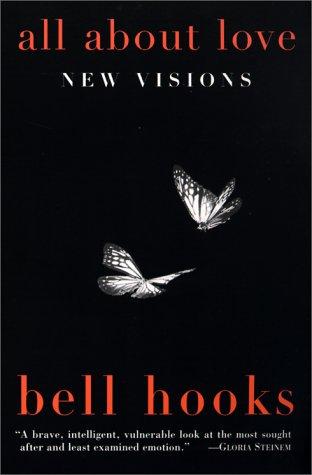
bell hooks · 2000 · Buy on Amazon
"All About Love by bell hooks is an optimistic book, a little sermonic at times, which draws upon the Spanish mystic Teresa d’Ávila, Trappist monk Thomas Merton, American philosopher and activist Cornel West, as well as psychologists like Erich Fromm and M. Scott Peck. hooks – who spells her pseudonym in lower case because she wants the focus to be on her ideas and not her name, although I suspect lower case brings more attention to her name – argues that love can be transformative, both individually and socially, but we’re not taught to love well, we’re not taught what love is, and we’re not talking about love in any meaningful way. She says that the family is meant to be the original school of love, but most families are dysfunctional. Quite often, they’re hotbeds of psychological terror and autocratic, patriarchal realms of power and domination. She’s particularly critical of the nuclear family because it encourages women to be dependent on individual men and makes children dependent on individual women, which makes abuse of power easy. She was an advocate of more communal family structure. True, and yes, she is particularly critical of the heteronormative, traditional structures and doesn’t address homosexual relationships in any detail. Some philosophers we have discussed do talk about homosexual love. For Plato in Symposium, male homosexual love is the highest type of relationship. Beauvoir says in The Second Sex that lesbian loving can provide a model of the ideal authentic reciprocal relationship she had in mind. Still, hooks is interested in the practice of love in everyday life for love in general. “For Plato, male homosexual love is the highest type of relationship” One of the problems she sees is that we tend to treat love as a noun, when really it’s a verb. Love is as love does, she says. This reminds me of Jean-Paul Sartre’s idea that love only exists in the deeds of love. Similarly, for bell hooks, love is a choice and an action. So love doesn’t exist if there’s abuse in the relationship, because you’re not acting lovingly. She also brings in a spiritual element; she defines love as nurturing your own and another person’s spiritual growth. Now, what she means by ‘spiritual’ is somewhat ambiguous, but her vision is for a more interconnected society; love should be an active force that creates greater communion with one another, but we’re far from achieving anything like this, and capitalism is partly to blame. Capitalism exploits our confusion about love because we’re bombarded by advertising that is trying to convince us that our emotional void and our spiritual hunger can be filled through materialism. Many people define themselves by the mentality ‘I shop therefore I am.’ We’ve become a mass-consumerist culture and, hooks writes: “We may not have enough love but we can always shop.” We’ve come to worship money and possessions, which makes us more narcissistic, and that’s a problem for our relationships too, because it tempts us to see them as disposable. She’s urging us to give up the will to shop, our will to power over one another and, instead, learn to love better because, as Thomas Merton wrote, “we discover our true selves in love.” She’s talking about love between any kind of human beings – love of children, love of friends, love of things, as well as love of romantic partners. I teach ‘Philosophy of Love and Sex’ at the City College of New York and it’s a popular class. It’s always at capacity. I don’t know why more philosophy departments aren’t offering this as a main topic. Philosophy has always been about love. It means love of wisdom. Beyond that, it is a fascinating theme that affects all of us. Students do come in with a lot of preconceived expectations. Many believe in soul-mateship, so I often start with exploring the roots of that myth with Plato’s Symposium and the Aristophanes story that we used to be creatures with two faces, four arms and four legs. One day we upset the gods and Zeus split us in two and since then we’ve been searching for our ‘other half’. Some students assume that love is just a matter of biology or survival of the species. Many of their assumptions are heavily influenced by religion or pop culture. I hope that they leave with a lot more questions than answers, and have some of their prejudices shaken. And that tends to be the case, by showing how many different ways there are to think about love and introducing criticisms of some of the common assumptions about relationships. Recently I came across Mary Wollstonecraft’s Vindication of the Rights of Woman , which is another under-appreciated work . Wollstonecraft writes that because women weren’t educated, they spent their time trying to inspire love rather than pursuing more noble ambitions. She described marriage as legal prostitution because men wanted to enslave women, and women wanted to fall in love with men who were wealthy enough so that they could survive socially and live comfortably. This was England in the late 1700s, and Wollstonecraft advocated for education for women and equality of the sexes, because then, she hoped, that boys wouldn’t be so debaucherous and selfish and would treat women as human beings rather than as objects of lust; and girls wouldn’t be quite so caught up in frivolous pursuits which make them weak and vain and arrogant. Love: A Very Short Introduction by Ronald De Sousa is a good concise synthesis of thinking about love. He argues that love is a condition or a syndrome, that involves emotions as well as thoughts, desires, and actions revolving around another person. He discusses polyamory, too, as does Carrie Jenkins in What Love Is: And What It Could Be . She proposes that love has a dual nature: it’s both biological and social. For example, love with a robot can’t be romantic because the robot lacks the requisite brain chemicals and the biology. She notes that society is starting to change to allow for more possibilities in relationships, such as same sex marriage, and hopes that society will become more accepting of other types of consenting adult relationships, particularly polyamory. I would also recommend Alain Badiou’s In Praise of Love , a short manifesto in which he describes romantic love as a tenacious adventure that gives meaning and intensity to our lives. And, for the serious student, there’s also The Nature of Love by Irving Singer – a massive three-volume history of the philosophy of love."