Samira Shackle's Reading List
Samira Shackle is a freelance British-Pakistani writer and reporter based in London. She is the editor of the New Humanist magazine, and a regular contributor to the Guardian 'Long Read'. Her first book, Karachi Vice , tells the story of five ordinary citizens of Pakistan's largest city.
Open in WellRead Daily app →The Best Narrative Nonfiction Books (2021)
Scraped from fivebooks.com (2021-02-24).
Source: fivebooks.com

Anna Funder · Buy on Amazon
"The book is about people’s lives in East Germany before the fall of the Berlin Wall. Anna Funder is an Australian journalist who was living in Berlin after the fall of the wall. She was really interested in the fact that the stories of East Germans just weren’t being told. When she brought this up with German colleagues, they were quite dismissive, and said: ‘oh, if there were stories of resistance, they would have come out by now. People were just quite downtrodden and miserable, and sorry for themselves, you know. No one is interested in that. We’re moving on. It was a failed experiment.’ She didn’t agree at all with this assessment. The book is the account of her attempts to find these stories. She speaks to people who were resisting the Stasi – the secret police that controlled East Germany – and to people who were involved in the regime. It’s incredibly gripping, an eye opening account of the ways that people’s lives were touched—sometimes in small ways, and often in huge, seismic ways. Through these close, personal retellings she builds up a compelling view of the whole infrastructure of control. I think it’s a really good example of what we’ve been talking about. Exactly, exactly. You can empathise with people and see the impact of major world events. If you’re reading about two young people whose love affair was interrupted by this regime, you’re immediately drawn in, in a way that you might not be if you read a more technical account of the mechanisms of control in East Germany at the time. If you see lives pulled apart, their ambitions thwarted, and all these human things—love, careers, family, and so on—being impacted, these are things we can all understand. I think it’s a very effective way of showing how things work in practice."
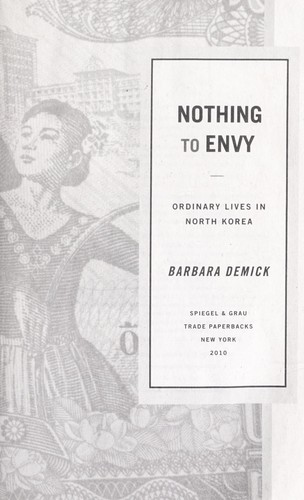
Barbara Demick · Buy on Amazon
"This is probably my favourite work of narrative nonfiction ever. It’s such an amazing book. She’s written about life in North Korea , which is one of the most difficult to access, closed regimes in the world, and she’s done it through very, very detailed interviews with North Korean defectors, mainly in South Korea, where she was based at the time, working as a foreign correspondent. It’s so compelling. It reads like a novel, a real page turner. You see the experience of life under a dictatorship so vividly. It goes through all sorts of major events—a famine, and so on. You get a powerful view of the complete brainwashing that takes place under such an extreme regime. “This is probably my favourite work of narrative nonfiction ever” It’s all the more interesting, I think, because she’s managed to reconstruct this having not been to many of the places she’s writing about. There’s actually a part at the end where, having seen these characters in North Korea and followed them through this time, you get to see behind the screen. She talks about her encounters with them in South Korea, and the ways they’ve changed but also the ways the scars of their experiences have stayed with them. It’s a huge, amazing feat of reporting. Plus it’s just so well written. So vivid. She is open about the challenges, and says in her author’s note that she visited North Korea several times – but of course she was limited by the country’s intense travel restrictions, and only went to Pyongyang and the demilitarised zone and the areas surrounding those. For the places she couldn’t get to, she sourced video footage and photographs from archives and taken by defectors. As well as this, she talks about her process of cross-referencing accounts, and verifying her subjects’ stories by interviewing other people who knew them, or by checking against documentation and historical accounts that are already out there. She’s a well-respected journalist, and it’s rigorous; she interviewed hundreds of people and didn’t include the claims she couldn’t verify in some way. You get these brief moments in the book that relate to her reporting, but the vast majority is an immersive third person account of her characters’ lives. It’s really impressive. She also points out that all the people she’s spoken to have defected at some point. That affects the story too—they’re a particular type of person. In that final section that I mentioned, when she goes behind the curtain, she talks a little about how many of the people she spoke to are quite tricky in one way or another."
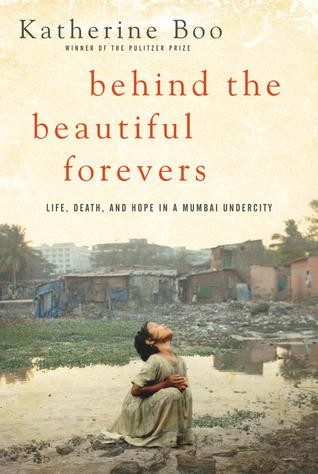
Katherine Boo · 2012 · Buy on Amazon
"It’s a really interesting book. Katherine Boo is an American journalist, and this is an incredibly detailed, very novelistic—even more so than the others I’ve mentioned—account of life in a slum in Mumbai, India. She researched it over the course of several years, and reveals in a quite detailed author’s note at the end that not only did she spend substantial time there with translators,—and interviewed people hundreds of times in some cases—she gave some residents GoPros, cameras and recording devices so they could record things even when she wasn’t there. Then she pieced it all together. There’s something quite amazing about reading this note right at the end of the book, because, to be honest, when I was reading it the first time, I found myself thinking, ‘how could you possibly know this?’ and assuming that she must be extrapolating her own observations, presenting them as if they were her characters’ thoughts. In fact, you get to the end, and you realise that she did know what this place looked like when this guy was on the run from the police… because he was wearing a GoPro and filmed it. So it’s a pretty amazing level of attention to detail. It’s a bold stylistic choice. Most of the books we are talking about today use, as I said, devices of fiction. But I think this one does that the most. You hear what people were thinking during certain moments in a way you wouldn’t necessarily associate with journalism. It’s confronting to read, but it’s quite amazing, and amazingly in depth. Exactly. The other books have amazing personal stories but this is different. It has a plot. It follows three families, primarily, and gears up to this big climax where one neighbour sets herself on fire to incriminate another family. We see the escalating tension that leads up to it, and the fall out that follows. It’s quite remarkable that this was captured. Of course, real life never feels like a plot, and – going back to what I was saying about working on my own book – you select your material and shape it. This is on a whole different scale in terms of the amount of material she must have had. It’s got a shape that means it doesn’t read like nonfiction at all. I was very conscious while researching my book that you are taking up a lot of people’s time, and often asking them to recount quite traumatic memories. Plus, people’s memories of traumatic incidents, in my experience, can be quite inconsistent. Sometimes you’ll ask someone something and they’ll give you an anecdote, then you’ll ask about it again three months later and they’ll give you a different version of it. That’s just how memory works. All of those things are challenging, and what you’re asking people to do is really exposing. I was almost surprised that anyone would agree to it, and I’m extremely grateful that they did. The amount of time people gave me was so generous, and you have to be mindful of that. Support Five Books Five Books interviews are expensive to produce. If you're enjoying this interview, please support us by donating a small amount . I’m assuming in the case of Katherine Boo that she must have become part of the furniture in the slum, if she’s doing this over the course of several years. But it’s definitely something to consider—you might be preventing people from getting stuff done. People have kids, or work to do, things that don’t involve sitting around and talking to you. So it’s a balance you need to strike."
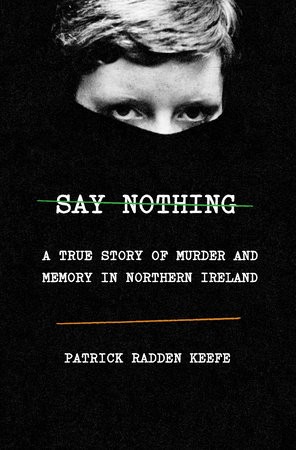
Patrick Radden Keefe · Buy on Amazon
"So this is a fairly recent book. It’s loosely structured around a single murder, the murder of a mother of ten children, after she was accused of informing on the IRA. She disappeared, was murdered, and the case was never solved. I say loosely structured around it, because the book starts and ends with that, and returns to it at various points, but actually the book spins out into a much broader story about the IRA, the British state, and by following particular figures, we learn about conditions in British and Irish prisons, the functioning of elite units in the IRA, political action and shifting public perception of the Troubles. A lot of what I’d read about this book presented it as a sort of murder mystery . And it does offer a resolution of this unsolved case. But although that’s a thread that runs through the book, it’s much broader than that, while managing to remain really, really vivid. “I’m very interested in the question of how we remember history, particularly recent history” If you’ve grown up in the UK, Gerry Adams and other prominent Republicans will be familiar figures. But seeing them rendered like this, we get an incredibly intimate view of the movement and how and why people got involved. It doesn’t shy away from the brutality, and you get a very clear view of the complicity of the British state. It does that, again, through close personal retellings. So it’s wide, but also focused. You move between different people who were affected and involved. It’s very vivid, very gripping, and illuminates a familiar and very close part of history, at least for those of us living in the UK. Exactly. I’m personally very interested in the question of how we remember history, particularly recent history, and a few of these books engage with this very directly. Stasiland suggests that it’s almost harder to look at the recent past than long ago events, and Say Nothing deals with that too. It raises all these questions about the nature of historical memory and unresolved legacies. And in a very readable way."

Ben Rawlence · Buy on Amazon
"Yes. It’s about the Dadaab refugee camp, the biggest refugee camp in the world, on Kenya’s border with Somalia. I guess you occasionally hear about this camp in the media. Sometimes it’s described as an incubator of terrorism, or discussed as one of those big international problems. It started decades ago and basically functions as a city, but its people are trapped there in this miserable limbo. Ben Rawlence worked for a human rights NGO before he became a writer. He spent a lot of time there, and here he focuses on several young people and tells their stories in granular detail. What I really love about the book is that it’s an account of how people form and continue their lives in the most extreme and challenging circumstances; people cling to these bits of normality and construct a life that, although so different to that of the reader’s, you can recognise – their aspirations and goals and desire for an education or good job or love, or whatever it is. I find something very appealing about that; the bravery of finding a semblance of normality in these extreme situations. Ultimately, it’s a sad story. Because it’s a story of limbo, of being forgotten by the international community, and their lives blighted by political stasis on refugees. But you find yourself so invested in these lives. So often, refugees’ lives are talked about in a very particular way, a politicised way, and not given this kind of attention. So I think it’s very powerful. Though there’s a kind of hopelessness, the book gets a real shape and momentum by occasionally stepping back and talking about the wider political picture—Kenya’s clashes with Somalia, al Shabaab attacks in Kenya, or the UN’s and other international organisations’ repeated inaction. You get a sense of what’s happening at the macro level, but what sticks with you is the determination of the people who live there to carry on."