Ruth Harris's Reading List
Ruth Harris is a professor of European history at Oxford University and a fellow of the British Academy. Her book The Man on Devil’s Island: Alfred Dreyfus and the Affair that Divided France won the Wolfson History Prize, the National Jewish Book Award and was a New York Times Critics Choice.
Open in WellRead Daily app →The Dreyfus Affair and the Belle Epoque (2012)
Scraped from fivebooks.com (2012-07-25).
Source: fivebooks.com

Emile Zola · Buy on Amazon
"Emile Zola was basically the father and the greatest protagonist of naturalism in letters. The reason he’s so interesting is that he has been sanctified as the ultimate hero of Truth and Justice. But actually for the Dreyfusards, he was a very ambiguous champion. He was considered by many lovers of French literature to be the ultimate pornographer for novels that described sexuality and violence, and was consequently vilified for having introduced all kinds of reductive, scientific and experimental ideas into fiction. His belief in the power of heredity and milieu focused attention on deterministic forces and undermined the potency of free will in human action. Moreover, his own personal morality worried many Dreyfusards. He famously had two homes – one containing his childless wife and the other his mistress and two children. J’accuse is an open letter he wrote in 1898 in the newspaper L’Aurore , just after the real culprit in the Dreyfus affair, Esterhazy, was acquitted of spying. J’accuse is an extraordinary polemic in which he deployed all his formidable literary talent. In it he accuses the military of a cover-up and cites a number of individuals. What’s interesting about the letter is that it does have a number of errors. Zola wasn’t particularly concerned with the details and was, in fact, rather a late convert to the Dreyfusard cause. More than 300,000 copies of J’accuse were printed, so many that it caused a paper shortage in the capital. It caused a great storm and almost immediately Zola is charged with defamation. He is found guilty and has to escape into exile in England. But it’s at this moment that the Dreyfus affair really takes off, and reveals its peculiarly combustible mixture of literary polemic, popular journalism and the mass public agitation. It’s very interesting that Zola, a man who’s famous for depicting crowd scenes, goes to his trial and is surrounded by people who are trying to attack him. He’s amazed because he finds himself no longer writing about the unthinking nature of group activity, but becoming the sacrificial victim in a mob scene. Frightened to death, he calls them “the cannibals” and realises that demagoguery and anti-Semitism are real dangers to democracy. Zola is distinguished among the Dreyfusards because at the centre of his advocacy is a real struggle against anti-Semitism – for many this is not the case. He had anti-Semitic traces in his writing prior to the affair, but he came to reject it profoundly and work towards a cure for this malady in French society."
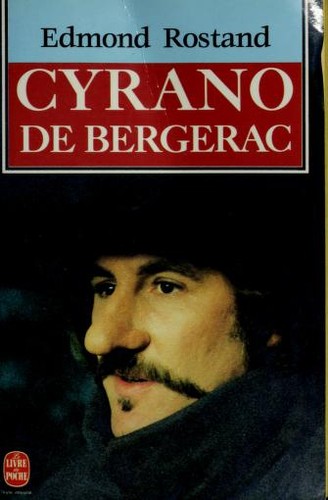
Anthony Burgess (translator) & Edmund Rostand · Buy on Amazon
"It is set in the 17th century. Cyrano de Bergerac is the play’s hero, a cadet – a nobleman serving as a solider in the French army – and he’s deformed, with a nose so enormous that people come from far and wide to view his “protuberance”. He falls madly in love with his cousin Roxane, who is witty and leaned, but because of what he believes to be his outward ugliness he cannot proclaim his love for her. Instead, an extraordinary triangle emerges. Christian de Neuvillette, who like Cyrano is a cadet, is absolutely beautiful but very inarticulate. What Cyrano does is lend him his words and between them they become the perfect man. But it’s Christian not Cyrano who takes the prize with Roxane not realising that she has fallen in love with the wrong person and it’s only at the end of the play, many years after Christian dies in the siege of Arras, that she comes to grips with this fact and understands that her real devotion should be for the ugly Cyrano. I think it’s interesting that Cyrano has a big nose. I don’t know if this was subliminal, but the fact is that a big nose was one of the most important features in the caricatures of Jews. This is something that’s not widely discussed but it’s very interesting that this was the deformity that Rostand picks on to create a great hero who, in this regard, departs from the classical model. It came out as the Dreyfus affair was just heating up, and it quickly became a play around which the French could unite at a time when the affair was tearing them apart. What people loved about Cyrano de Bergerac is that it seemed to display a distinctive French quality – panache . The play’s emphasis on verve and wit that overcame adversity enabled men and women of often different values to identify with particular aspects of Cyrano’s character. Cyrano asserts an aristocratic sense of noblesse that appealed to the right. At the same time, he is a remarkable swordsman and dueler, which both artistocrats and republicans endorsed in this period as a virile manner in which to settle disputes. He is also characterised by an independence of thought and a refusal to be patronised, a quality which attracted him to the left. In this, he seemed to resemble the early “intellectuals” of the affair. What’s also really important about the play is the era in which it is set. It’s France of Louis XIII and the ancien regime , before the great centralisation of Versailles and the Sun King. It also depicts a France that successfully beats the superior Spanish forces. This victory confirmed a French sense of grandeur in the 1890s,when they were still smarting from defeat in the Franco-Prussian war in 1871. So virtually all the French love this play, but at the same time it was something which inadvertently revealed Dreyfus’s insufficiency by comparison. Dreyfus was as obsessed as the play’s author Rostand with conceptions of honour. But whereas Cyrano is absolutely eloquent, Dreyfus was stolid, spoke French with a lingering German accent, was inarticulate and lacked any theatrical presence. When he finally comes back in 1899 for his second trial, he has lost some teeth and has problems speaking after living in solitary confinement for almost five years. People were so disappointed with Dreyfus. They wanted a Cyrano, but what they get instead is Dreyfus – a Jew who is not rooted in the soil of Gascony like Cyrano but somebody who lacks verbal virtuosity and appeal. Instead they pair Cyrano with Georges Picquart – an army officer who submitted evidence to his superiors showing Esterhazy’s guilt – who was dashing and brilliant and, importantly, not Jewish."

Iain Pears · Buy on Amazon
"I’m going to confess right away that this is a novel written by my husband. The reason I chose it is that I know it so well and that he would be the first to say that much of it was taken from ideas that I have been thinking about for the last 25 years, and which he had rendered in fictional form. Stone’s Fall starts off in London and then it goes back in time, first to the crisis at Barings Bank in Paris in the 1890s and then to Venice in the 1860s, prior to Italian unification. What the book shows is the enveloping crisis of World War I and its European-wide context, hence the three countries it’s set in. Above all, it really reflects long and deeply on the underside of the fin de siècle and the Belle Epoque. We have mutual protagonists, John Stone himself and, ultimately, his wife Elizabeth. They are both in business. She is first a spy and then an elegant courtesan, with all her illustrious so-called “shareholders”, who support her in extreme elegance in Paris – in other words each day one of the “shareholders” pays for the sexual favours and cultural cultivation that she can bestow. John Stone is an industrialist modelled on the great armaments manufacturer Basil Zaharoff, whose wealth and influence was so enormous it was said to have had an important impact on the foreign policy of many European states. What he did was sell arms to a number of countries, thereby triggering an arms race in which he could never be the loser. I can’t tell you the ending because that would spoil the story, but only by following it to the novel’s climax do we find out that Stone’s fall is all about the question of degeneration and primal transgression. At the end of the 19th century people became obsessed with hereditary degeneration, a naturalised vision of the Christian belief that the sins of the fathers would be revisited on the sons. In the book these questions of degeneration and transgression are interwoven into the most intimate aspects of the protagonists’ lives, above all Stone, who thinks that with the calm manoeuvrings of capital he can control the diverse elements of his empire like so many strings of a marionette. He is deluded in this fantasy of control. There are forces of attraction towards sexual violence and violence more generally that lead to his downfall. The greatest transgression in the novel is World War I itself – the ultimate transgression that leads to the unleashing of new technological weapons on European populations."

Hilary Spurling · Buy on Amazon
"I think this is an extraordinary biography – the story of a late bloomer whose career only really takes off when he’s 35. It interests me as a professional historian because it puts its finger on the cross-currents of culture in this period. As I mentioned earlier, on the one hand we see in France the continued preoccupation with the old regime, which was so evident in the massive acclaim for a play like Cyrano de Bergerac . On the other, there were these avant-garde artists like Matisse who would break with the form of many classical conventions. What Matisse shows is the development of a modernist aesthetic. It’s also a very complicated one. His modernism is in some sense deeply affected by industrialisation. He comes from a textile town in Flanders and throughout his life he would collect fabric and use its exuberant colours and textures to inspire his art – that’s why the whole decorative side of Matisse is so important. He is also a northerner who initially only painted with palettes of browns, but is transformed by his wife’s Corsican heritage and his first trips to the light of the south where he considered colour anew. He develops a new colour aesthetic in Fauvism – which is the French word for “wild beast” and describes the iconoclasm of some of his works in the first decade of the 20th century. But it wasn’t just for the sake of breaking the rules: He used colour as a means of expressing his own subjectivity, and his paintings proved so powerful because of the emotion they seemed to convey. So modernism emerges in the midst of the long summer of the Belle Epoque . The conventional view is that modernism was a complete break with the past. But I would insist – and I think that this biography shows it beautifully – that a modernist like Matisse builds on older traditions, especially in content if not in form. Like many other artists of this period, he is also influenced by empire and made paintings of women from North Africa in a very similar way to 19th century realists. What is also interesting about Matisse is that he becomes self-consciously decorative. He didn’t necessarily want to disturb, but rather wanted a modern art form “as comfortable as an armchair”. That was very different from the view of art of his great rival Picasso . It’s interesting to reflect on how many different types there were in the melting pot of modernist aesthetics – they were not all intent on jarring sensibilities. That’s why I think this book is so wonderful. Not because it’s just an art history drooling over the beauty of the artworks of Matisse – although she does really appreciate his art – but because Spurling understands these many different cultural elements and also the intensity of his life – his insomnia, passions and fears – and how they all contributed to his artistic output."

Barbara Tuchman · Buy on Amazon
"This is a very strange book for me to choose. For many people, it is the ultimate old-fashioned diplomatic history. But it enthuses me for several reasons. First of all, it’s an extraordinary narrative. It reads magnificently and is a breathtaking horizon of events and people. Secondly, like me, she is obsessed with people. In the first chapter we have the funeral of Edward VII in 1910, which is attended by 10 European kings. She uses this funeral as a way of demonstrating the fundamental contradiction of pre-war Europe, in which increasingly bourgeois, urban, sophisticated industrial societies remained none the less monarchical, with only France as a major Republican power. Militarism and court cultures intermingled to an extraordinary extent. What Tuchman does so well is to document the kind of thought patterns that pervaded the many national rivalries, which was all to do with imperialism, social Darwinism, but, above all, military planning and strategy. Again, what I love about this book, and in this way there’s an affinity between Tuchman and me, is that it describes the importance of irrational forces and charts their implications. She tries to look at why the war took the course that it did and discovers the many miscalculations of the leaders at the same time as describing their utter inability to shift course. Like the soldiers in the trenches that lined the Western Front after the Battle of the Marne, decision-makers simply dug in and a generation of men were lost. Leaders, for example, couldn’t grasp that free trade wouldn’t make a short war and peace inevitable. The Germans didn’t realise that by invading Belgium they actually invited the British into the war. I also love the book because it is a history within a history. It became an immediate bestseller when it came out in 1962 and was the bible of key Cold War politicians, particularly US President Kennedy. What interested them was how to learn not to make the same mistakes. Apparently Kennedy kept citing it during the Cuban missile crisis where he resisted the advice of the military top brass. The shadow of World War I and the terrible mistakes and miscalculations of that war were constantly on his mind. His handling of the Cuban missile crisis was probably his finest achievement in an otherwise lacklustre presidency. Rarely are there lessons in history in an obvious or reductive sense, but in this instance this book seems to have had an important influence on how a president faced a terrible crisis."