Robert McCrum's Reading List
Robert McCrum is an associate editor of the Observer . He was born and educated in Cambridge. For nearly 20 years he was editor-in-chief of the publishers Faber & Faber. He is the co-author of The Story of English (1986), and has written six novels. He was the literary editor of the Observer from 1996 to 2008, and has been a regular contributor to the Guardian since 1990. His most recent book is The 100 Best Novels in English .
Open in WellRead Daily app →The Best Novels in English (2015)
Scraped from fivebooks.com (2015-12-11).
Source: fivebooks.com
Jane Austen · Buy on Amazon
"You’ve got to have Jane Austen. She’s the first serious novelist. She is treating the novel in a way that we understand and creating an art form. I chose Emma . It would have been easier to choose Pride and Prejudice because it’s everyone’s favourite—it tops polls regularly. But if you want something a little bit more considered… It’s the most mature of the seven. I also happen to think the character of Emma is delightful and fascinating. She has all of the classic Austen heroine characteristics but, at the same time, she’s a bit more than that. She seems almost modern. You can imagine having a conversation with her on a train or a bus. You couldn’t necessarily imagine doing that with someone like Anne Elliot in Persuasion . It’s also a book that I first read when I was at school, so it’s a personal favourite. That’s the other thing we have to acknowledge: All these lists are faintly ludicrous–more than faintly. It’s bound to reflect a lot of personal bias and Emma was the first one that I ever read so it brings back happy memories. Yes, every single one of the books on this list has been. Some of them rather patchily. For example, a book like Tropic of Cancer just about scrapes in. It’s quite hard to find but it is in print. All the others are. Some of them have been through lots of different editions: Gulliver’s Travels has been published for children, for teenagers, as a political book and so on. It’s got many different forms and it’s endlessly being republished. The Folio Society couldn’t exist without that kind of book. Yes I quite agree. Well, one thing that’s certainly true is that women read fiction more than men. If you ask any publisher they’ll tell you that the people that buy their books are women by ratio of two to one. You can’t really succeed in fiction if you aren’t appealing to a good chunk of women. Yes, they are rom-coms aren’t they? Hmm, what should you read? The Good Soldier —that’ll put you straight! Getting married is a big plotline but Austen is also about village life isn’t it? It’s about families."
Emily Brontë · Buy on Amazon
"So this is thirty years after the death of Jane Austen, it’s a generation on. It’s light years away. You couldn’t imagine anyone further from the world of Mr Woodhouse than Healthcliff. It’s about as far as it’s possible to get. But it’s very influential and Romantic. It fits into the Romantic movement in a way that Austen doesn’t. It means a sensibility that celebrates being set free from convention. They’re very subtle, but every single character in Austen is—in one way or another—conventional. They pay tribute to the conventions of ordinary life. Whereas Cathy—and all of Emily Brontë’s characters—are more or less feral. That’s why we love them. It’s a different world, it’s a mad world. In some ways, Emily Brontë is more of a poet. But she has inspired many subsequent writers of fiction. You couldn’t imagine Lawrence without her, for example. You couldn’t imagine some of Hardy. It’s always said, isn’t it, that you’re either a Jane Eyre-ite or you’re a Wuthering Heights-ite—it’s one or the other. I think we like that don’t we? We want to have somebody investigate the bleakness of human nature. It’s not a feel-good novel. There are two options: you can either stay on the surface or you can go deep. There’s not much in between. Yes. Also, one of the things about these books is that they all talk to each other. In a strange way, they’re connected. There’s an internal dialogue between one book and another. Sometimes it’s quite explicit: in the preface to the second edition of Jane Eyre , Charlotte Brontë acknowledges quite freely her debt to Thackeray—which is interesting, I think. Yes, it is important. It’s the same with Virginia Woolf and the stream of consciousness, as well as the rigorous use of point of view—what point of view you’re adopting—which is comparatively late. The novel is an evolving form and, at one time or other, it is different. Clearly the novel now is not what the novel was—even twenty years ago."

George Eliot · 1871 · Buy on Amazon
"It’s partly the sheer ambition of it. Eliot was absolutely determined to paint a serious, detailed picture of provincial life. The other radical thing was to do it from the point of view of a disappointed woman. Dorothea is a very enthralling portrait. It’s not that explicit. It’s more about the choices that you might make as a woman—or indeed as a man. Yes. That’s another element of the book, that it has a very strong moral core. This is why someone like F. R. Leavis chose it in The Great Tradition . That’s a new development. Until Eliot’s time, the primary consideration was to be entertaining. Virginia Woolf famously said Middlemarch was “one of the few English novels written for grown-up people.” I think that’s quite a good description actually. It’s also an amazing portrait of a moment, like a cathedral. It’s vast and seems to extend in every direction when you’re in it."
Mark Twain · Buy on Amazon
"Yes, I think we have to have it. Hemingway said that all American fiction comes from Huckleberry Finn . That’s true, in the sense that Twain invented a way of looking at the American experience and putting it into fiction. I think almost every American writer has to acknowledge that. He is for Americans as important as Chaucer might be for us. He’s a pioneer and shapes the terms of trade of American fiction writing for a long time. He was able to turn the American vernacular into literature. Well, it’s partly a sequel to Tom Sawyer which was a story for boys, so yes. But, at the same time, it’s also about race which is a very important question. It’s about the American frontier, which is also a very important: you can’t imagine a book like Kerouac’s On the Road or a lot of Hemingway without it. It’s a very important dimension in American life, the frontier, and Twain nails it completely. Yes, he’s drawing on his life on the Mississippi . If you read his Life on the Mississippi , you find a portrait of life on the river which feels like outtakes from the novel, in a way. Huckleberry Finn is written in at least two—if not three—parts and begins in fairly high spirits and gets darker and darker. It was written over quite a long period. Its darkness, in some ways, is quite unsatisfactory from a narrative point of view because it becomes very bleak. You talked about bleakness: he was very, very bleak. Yes, in America there are periodic attempts to get it banned by various mad, bigoted high schools."
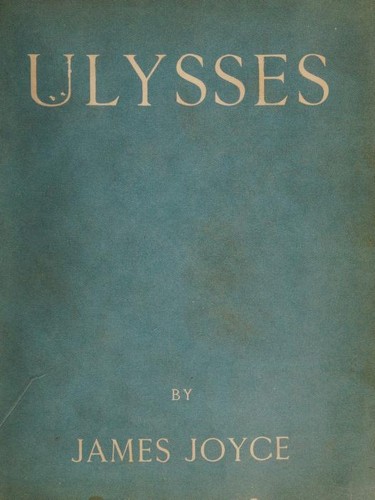
James Joyce · 1922 · Buy on Amazon
"Interestingly, that’s the same year as The Waste Land . You get these two modernist masterpieces in the same year—one at the beginning of the year, one at the end. One barely fifteen pages—one closer to a thousand pages. It’s like the North and the South Pole. It’s a novel published after about 1910. It’s a novel that takes the traditional elements of place and time and mashes them up and reorders them. It attempts to capture the flow of human thought and human experience on the page in words and has no apparent interest in the conventions of the Victorian novel . It’s trying to represent the ordinary world in prose. Ulysses is a very brilliant, highly original attempt to put one man’s experience on one day to the pages of a book. That’s certainly true about a lot of novels. I was reading this year’s Booker Prize shortlist and every one of those feels like a footnote. They’re just so trivial—each doing one thing that Joyce is probably doing a hundred times more brilliantly and in more different ways on any given page of Ulysses . Get the weekly Five Books newsletter Listening to it is a good way because you hear it differently. Also because Joyce’s ear for the music of language is so extraordinary. I recommend it very highly. It helps, yes. The more you know about Joyce the more you understand and Ulysses certainly repays close attention and study. But you don’t need to bother with Finnegan’s Wake . I don’t think anyone has ever managed to read all the way though Finnegans Wake , it’s almost impossible. It’s about Leopold Bloom’s day in Dublin. It’s about the trials of a middle-aged man, essentially, flashing backwards and forwards in time. It’s about his relationship to his wife. It’s also a portrait of a man in a place: a portrait of a man in Dublin—a Dublin that you can’t find anymore because it’s been so modernised. It used to be quite easy to find Joyce’s Dublin, it was quite available, but it has disappeared, I’m afraid. Not necessarily. There are some books which do make that demand and are taken more seriously because they make that demand. But it’s not a cast-iron rule. There are plenty of Dickenses which are a romp. I think some of the trouble we’ve got into in the near past was the idea that the more difficult it was the better it was."
US and UK English (2010)
Scraped from fivebooks.com (2010-10-07).
Source: fivebooks.com
HL Mencken · Buy on Amazon
"This is a marvellous book by someone I really idolise. H L Mencken was a terrific journalist flourishing in the 1920s. He wrote for the Baltimore Morning Herald – he was known as the ‘Sage of Baltimore’ – and was very combative and polemical. He saw his job as making trouble as a columnist but in his spare time he was a passionate advocate of what he called the American language. He wrote the book to clarify the discrepancies between British and American English and to define the distinguishing characteristics of American English. In his own way he was as much a nationalist about his language as Johnson was in the 18th century. So they are a kind of pair. His book describes how American English evolved after the Revolution into the way it was in 1920. He saw it as being an international force. Although one of his friends was the English broadcaster Alistair Cooke, he was fairly anti-British and saw the evolution of the American language as a way of defining the nation´s identity. He was very pro what at the time was seen as slang. He thought that was a cause of celebration. His study is undoubtedly the most scientific linguistic work on the American language to date and continues to serve as a definitive resource in the field."

Thomas L Friedman · 2005 · Buy on Amazon
"Yes, this book inspired some of the ideas in my book. Although it is at times a bombastic account of the global economy. It describes how one of the biggest changes that took place in the 1990s and in the last ten years was when the big global market took off on a colossal scale. Globalised English had become this extraordinary means of international communication. He explains what the flattening means to countries, companies, communities, and individuals; and how governments and societies can, and must, adapt. This book isn’t particularly well written but it is fizzing with good ideas. ‘The world is flat’ means that it is a level playing field and if you are in India or China you have as many opportunities as you would have if you were in Manchester or Detroit. We are all connected through the internet and all have the same opportunities. I think that they will co-exist. There will obviously always be people who want to learn Mandarin because China is such a big player. But the interesting thing about China is that it shows no signs of wanting to break outside of itself. If you follow the relations between the Chinese and Google, their response to Google was to behave like a mollusc and to withdraw into themselves defensively. And that is what historically they have done in the past when they saw themselves as the centre of the earth with anyone on the outside referred to as a barbarian. On the other hand, you have the Chinese middle class who are desperate to learn English because they want to go to American universities, so you have this tension between them standing apart and wanting to get involved. By the way, I should make it clear, I love the Chinese – they are really good fun and feisty but they are being forced to make an accommodation with globish because that is the dominant language. For example, if a Chinese, a Korean, a Brazilian and a Nigerian meet in a trade fair anywhere in the world, the default position is bound to be globish and this is a comparatively new phenomenon. Twenty or 30 years ago there would have been an attempt to use French or Spanish but that has all gone now. For native English speakers it is not necessarily something you would recognise as your own language but the point about it is that, although it is imperfect and rough and ready, it does work. When I was growing up, say 20 years ago, and you went to France and attempted to use your pathetic French they would respond in French, albeit reluctantly. Now you go to Paris and start with your pathetic French and they immediately respond in English."
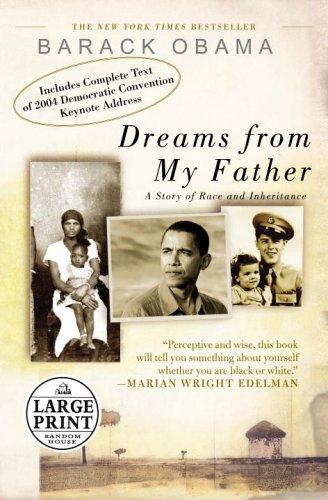
Barack Obama · Buy on Amazon
"He is really is a globish president and a brilliant writer. He is of Kenyan origin, grew up in Kansas and Hawaii. His reference is America, Kenyan tribal customs, Indonesia. All of these are explored in his book which finally takes him to Kenya to track down his father’s family and to find out what the man who his white mother talked about so much was actually like. And I think Obama really is a global citizen who says he has a special relationship with the English. But at the same time he can say the same thing to India and the Chinese and it will sound authentic in a way it never would if Gordon Brown or David Cameron said it. I was writing my book during his campaign and he really is a case in point of what I am talking about. Now the power is east to west where as in the old days it really was north to south. And Obama is fine with that as he is able to operate in any situation because of his roots which he so vividly writes about in this book."

Aravind Adiga · 2008 · Buy on Amazon
"This book won the Man Booker prize and I think it is a wonderful book which is written in this very gripping Indian English. It is very high octane. Here is someone who has taken this phenomenon of the liberation of English into the global arena and turned it into literature. He is Indian, highly educated and a very good writer and he has taken a what can be sometimes incomprehensible global form of English and transformed it. It is all about Balram Halwai, the ‘white tiger’. Born into an impoverished family, Balram is removed from school by his parents in order to earn money in a thankless job: shop employee. He is forced into banal, mind-numbing work. But Balram dreams of escaping – and a chance arises when a well-heeled village landlord takes him on as a chauffeur for his son (although the duties involve transporting the latter’s wife and two Pomeranian dogs). From the rich new perspective offered to him in this more interesting job, Balram discovers New Delhi, and a vision of the city changes his life forever. His learning curve is very steep, and he quickly comes to believe that the way to the top is by the most expedient means. And if that involves committing the odd crime of violence, he persuades himself that this is what successful people must do. It is very fresh, very vigorous, doesn’t take itself too seriously and completely characterises what I think are the very qualities of the English language."