Peter Taylor's Reading List
In the course of a distinguished career spanning nearly 40 years, multi-award-winning BBC reporter and documentary maker Peter Taylor has frequently come face-to-face with terrorists and their victims in his attempt to explain the actions of the individuals behind some of the world’s most notorious terror attacks
Open in WellRead Daily app →Al-Qaeda (2011)
Scraped from fivebooks.com (2011-06-24).
Source: fivebooks.com
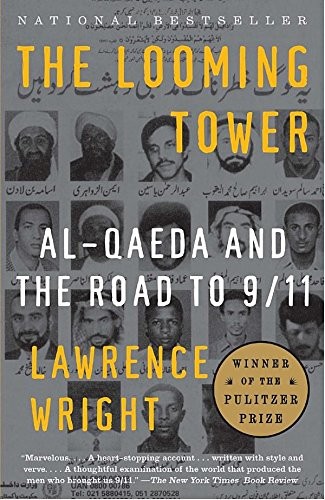
Lawrence Wright · 2006 · Buy on Amazon
"I remember reading this book quite a few years ago now and being impressed by two things. One is the detail and the contacts that Lawrence Wright had in writing this book, and second is the way in which it is written. The style is very accessible – it takes nothing for granted on the part of the understanding of its readership – and if anybody wishes to understand what Al-Qaeda is, where it came from and what it is trying to do, I think that this is the key book to read. It was written about events prior to 9/11 and 9/11 itself, so the book doesn’t go beyond that. But I suspect it is being updated, if it hasn’t already been, to coincide with the 10th anniversary of 9/11. He has good contacts like I have good contacts. He has worked on them and established a reputation. He is an academic, and in a way academics in this particular field of terrorism and political violence have more acceptable credentials than journalists do. Also he is in America. I have interviewed many of the people that he has interviewed, like Ali Soufan, an Arab-American FBI agent – a key source – and people have talked to Lawrence Wright because they trust him and he is highly respected as an academic. They know that whatever they say won’t be abused. They think that 9/11 was a legitimate attack in response to the sufferings that they, as Al-Qaeda supporters, believe America and Israel have inflicted on the Ummah – the Muslim community in general and certain parts of the Muslim world in particular. They draw upon what was happening in Iraq, what is happening in Afghanistan, the number of innocent civilians who have been killed by American raids and coalition raids on the ground. At the time, 9/11 was perceived by Al-Qaeda and its supporters as a legitimate attack on the great Satan – America."

National Commission on Terrorist Attacks · Buy on Amazon
"It certainly is, and the remarkable thing about The 9/11 Commission Report is that it is a government report. Normally we journalists pick up government reports with a degree of trepidation because they tend to be thick tomes, not easily digestible, and you have got to mine the report for the things you want to find out. Luckily, this report is diametrically the opposite. It is incredibly thorough and it is incredibly well written. It actually reads like a novel or a thriller, and given that many hands were involved in the writing of it, it has a unity and a style and accessibility that is, I think, probably unique in any government report. I would rank it alongside Lawrence Wright’s account, The Looming Tower . And because it was done by a commission it is infinitely more detailed. As a source resource it is unparalleled. If any of your readers want to get hold of it, it is important that they get hold of a copy with the index, because without the index it is hard to navigate your way through it. It is huge. The way that I used it when I was looking at the origins of Al-Qaeda, the names of certain individuals and things like the interrogation of Khalid Sheikh Mohammed, was I would simply check in the index. I know that what the report says about individuals and what they did is as accurate an account as you are ever going to get. It was indispensable."

Jane Mayer · Buy on Amazon
"Because it is a remarkable account of a remarkable period. I was covering Northern Ireland in the late 1970s when there were allegations of abuse – the IRA called it torture, although I didn’t believe it was torture. But there were allegations of IRA suspects and a few Loyalist suspects being beaten up by police officers during interrogation. I investigated those allegations, decided they were basically true and wrote a book about it called Beating the Terrorists? I think that is probably a pretty definitive account of what was going on in that particular period of the history of the Northern Ireland conflict. When I was covering Al-Qaeda in the 10 years since 9/11, I never really came to terms with CIA black sites, with extraordinary rendition, and in particular with enhanced interrogation techniques. Yes, they are, and I think there is probably more than a grain of truth in that. But I am not convinced that the intelligence about the courier came from waterboarding. Although both of those involved – Khalid Sheikh Mohammed and Abu Faraj al-Libi – were subjected to the enhanced interrogation techniques, and the CIA are saying the intelligence about the courier [Abu Ahmad al-Kuwaiti, who led investigators to Bin Laden’s hiding place] came from those interrogations, ergo the interrogation techniques were justified, I am not absolutely sure about that. It is a really interesting spin-off from the death of Bin Laden. But coming back to your original question, I felt that I had been remiss in not really focusing my attention on that critical area. So when I came to do my last series for BBC Two earlier this year, called The Secret War on Terror , I realised that you have to grasp the nettle of enhanced interrogation techniques, extraordinary rendition, torture and all that goes with it. I read Jane Mayer’s book and was just amazed at the forensic detail, the way it was written, the sources that she had. Although many of the sources were ones that she had mined via the freedom of information – sources that were out there on the Internet because of declassified documents – also there are all the interviews she had done. And again it is really well written. All the five books that I have chosen are well written, which I think is really important. They are readable, accessible and also informative, and if you add those various qualities together you get some really important books. So when I read Jane Mayer’s book and I thought of my book, Beating the Terrorists? , which was written in 1980 and provided the background context to the hunger strikes of 1980 and 1981, I thought, “Gosh, this is really good and is the book I should have written and I didn’t”. In my book Talking to Terrorists I do actually grasp that nettle, but Jane did it first and I am sure did it much better! I think there is no doubt about it – that the enhanced interrogation techniques and the allegations of torture helped to radicalise them. This isn’t just my view, it is also the view of Eliza Manningham-Buller, the director of MI5 whom I interviewed for my last series. She believed that waterboarding was torture. Undoubtedly, not just those techniques but CIA black sites and what was happening there did contribute substantially towards the radicalisation of young Muslims all over the world. And that was on top of Iraq, Afghanistan, Abu Ghraib and a whole range of things. I don’t think you can put radicalisation down to one particular factor, but I think the treatment of the prisoners was all part and parcel of it."

Michael Scheuer · Buy on Amazon
"I first met Michael Scheuer almost a decade ago, when I started to try to understand the phenomenon of Al-Qaeda post 9/11. Before I met him, I remember getting hold of his book and reading it on a beach in Greece. And again, it was well written. He has written several books since then, he has just done a new one on Bin Laden. But as head of the Bin Laden unit, which was set up before the [1998] East African embassy bombings, the crucial thing about this first book is that he viewed Al-Qaeda in a different way. Just like me, he was trying to understand the nature of the organisation, the kind of people involved, their background and motivation, and critically why they were doing what they were doing. When I read this book I thought it was a really, really important book, because it challenges many of the myths and stereotypes about terrorism in general, and Al-Qaeda and Bin Laden in particular. I am just writing this at the moment for the paperback, and I am doing a pretty detailed account of the operation, how it was carried out, the background to it, but also the repercussions of it. Yes, and I am not categorical in my prognosis. I always thought that one day I would wake up and hear on the news that they had got Bin Laden, if he hadn’t died of natural causes. Well, I wasn’t surprised it was in Pakistan because it was always thought he was in the tribal areas of Pakistan, hiding away in a cave somewhere in the mountains along the Pakistan-Afghanistan border. But I was, like everybody else, utterly amazed that he was living about 80 miles from Islamabad in a compound with up to 18-foot-high walls, only a few hundred yards from Pakistan’s leading military academy in effectively a garrison town, not unlike a cross between Sandhurst and Aldershot. Everybody was utterly amazed at that, and I am sure the CIA equally so. Whether certain elements of the ISI [Pakistan’s intelligence agency] knew about it is the key question. I find it virtually inconceivable that Bin Laden had been living there for five years and there was no inkling of who he was or who was living in that compound. It was unfortunate. Inevitably, conspiracy theories are going to arise because the world is full of conspiracy theories about Al-Qaeda and 9/11 and [the] 7/7 [attacks on the London transport system in 2005]. I think what was surprising is that the same meticulous planning and care that went into the operation appears not to have been applied to the publication and dissemination of it. So you start off with statements from the White House implying that he went down with all guns blazing, using his wife as a human shield. Then the White House have to counter this by saying he was unarmed at the time, his wife wasn’t being used as a human shield – in other words that he was killed as an unarmed person. And that raises whole questions about what the orders were. Was it a kill or capture mission? Was it ever likely that he was going to be captured and brought back to trial? Highly unlikely, I think. I think perhaps because they simply didn’t know. They assumed that he would be armed and they assumed that he would have resisted. I had always thought that Bin Laden was in a cave surrounded by bodyguards, who would be protecting him 24/7 and anybody who tried to kill him would have to kill all the bodyguards first. It could not have been more different. He had no bodyguards. The only person who resisted the Navy Seals was the person who appears to have been the courier, who opened up on them with an AK-47 and was shot dead. Bin Laden’s son was unarmed and so were the others who were killed. And I think the assumption from the White House, fed back by the Navy Seals, was he did resist or he would have resisted. It was all slightly unclear. Get the weekly Five Books newsletter But I can understand that once the Seals were out in their helicopters, leaving the crashed one behind, Obama and the White House were just keen to get the news out, and perhaps they were a little over-hasty in giving an account that was proven not to be true. Maybe it was an adrenaline rush that they had, but the fact that they had to revise the story fuelled all the conspiracy theories. Well, it still exists. It doesn’t have a charismatic head like Bin Laden, but just because Bin Laden has gone it doesn’t mean to say that Al-Qaeda is dead and buried. Al-Qaeda has an organisational structure and it appears that Bin Laden was still very much involved in it whilst he was in the compound, but all its various affiliates are still going strong. Al-Qaeda in the Arabian Peninsula and in Yemen were much more directly involved with Bin Laden in Pakistan than we ever thought they were. Many of the most dangerous attacks recently have been carried out not by Al-Qaeda central and Bin Laden, but in particular by Al-Qaeda in the Arabian Peninsula. The fight against Al-Qaeda isn’t over, and anyone who thinks it is because Bin Laden is dead is living in cloud-cuckoo-land."

Peter Bergen · Buy on Amazon
"Peter Bergen was able to do what I have never been able to do, which was to actually interview Bin Laden. He is a first-class journalist who probably knows more about Al-Qaeda than anyone else. I differentiate between him and Lawrence Wright, who is an academic. Peter Bergen is a journalist who has become an academic. Interviewing Bin Laden was still very difficult in the 1990s but Peter Bergen managed to do it. After 9/11 it became totally impossible. There is no substitute for a journalist having actually met and interviewed an individual because you get a first-hand account. My judgement of so-called “terrorists” is very much guided by the impressions that I get when I meet them. Peter Bergen is streets ahead of me in his hinterland, because he has been doing it longer than I have and, critically, he met the man himself. Support Five Books Five Books interviews are expensive to produce. If you're enjoying this interview, please support us by donating a small amount . The impression that most of the few people who have interviewed Bin Laden leave you with is that he was calm, he was composed, he was thoughtful. He wasn’t what you expected him to be. And that is the case from my experience of many so-called terrorists I have met. When you meet them they challenge the stereotype, and I think the lasting impression you get from Peter Bergen’s interview with Osama bin Laden is that he was not what you would expect. June 24, 2011. Updated: September 10, 2020 Five Books aims to keep its book recommendations and interviews up to date. If you are the interviewee and would like to update your choice of books (or even just what you say about them) please email us at [email protected]"