Peter Salmon's Reading List
Peter Salmon is an Australian writer living in then UK. His first novel The Coffee Story was a New Statesman book of the year. His biography of Jacques Derrida, An Event Perhaps , was described Prospect magazine as ‘Brilliant ... one of the clearest introductions to 20th-century continental philosophy available – a scintillating account of Derrida's life and thought’ and ‘Thrilling’ in the Times.
Open in WellRead Daily app →Deconstruction (2021)
Scraped from fivebooks.com (2021-02-10).
Source: fivebooks.com

Jacques Derrida & translated by Gayatri Chakravorty Spivak · Buy on Amazon
"Well, I chose this because you can’t really get around it when it comes to deconstruction. It is the urtext and it is also one of the books which either draws you into deconstruction and leaves you stuck there for years and years, or that pushes you away from deconstruction. It’s also one of those books that probably more people have claimed to have read—and not to have read—than virtually any other book other than Ulysses . When I was doing philosophy at university, I certainly pretended to read Of Grammatology . And for me, part of the problem here is the reception of Of Grammatology. It is classed as a book of philosophy, which it is. But with books of philosophy, we tend to have a set of expectations. One of the expectations we have is that we’ll find a fairly logical argument. We start with one proposition, there are building blocks, there are contradictions and so forth. And the argument progresses cogently, even in someone like Nietzsche or Heidegger . We expect that from a philosophy book. Of Grammatology doesn’t really work like that. I describe it in my biography of Derrida as ‘bonkers’. I think in the first draft I actually called it ‘batshit crazy’, but that didn’t get past the publishers, so we went with ‘bonkers’. Get the weekly Five Books newsletter In a sense it is exactly that. This is Derrida, who was 37 when he wrote it, who had these ideas that he hadn’t really found an outlet for yet. It’s one of those books where he just throws in everything he knows at that point, almost unashamedly. It’s about writing; it’s about deconstruction; it’s about language. There’s a vast section on Rousseau and masturbation, and sections on supplementarity and pictographic language, all these things are thrown together. It’s also a mash up of two different essays that he’d written separately, but put together clumsily—he always felt he had put them together clumsily. It’s all of these things. And, because it’s so forbidding, it does turn a lot of people off deconstruction altogether. I think that the thing to do is to read it, in a sense, as you would read a piece of fiction. You can dip into it, you can understand a few paragraphs, and then not understand a couple of paragraphs. We are used to doing that with some fiction, particularly with something like Ulysses , to use an obvious comparison. We are comfortable with the idea that meaning will gradually emerge as we read along. And if we don’t understand something, we can dump it and come back to it. But for me—and I’m sure for many, many people—you sit down with the first paragraph and think, ‘I don’t understand this’ and stop. I say, don’t panic, and don’t stop. Yes, which is a risk. But you know, all reading is a risk – which is a very Derridean thing to say. We take that risk any time we open a book – we risk wasting time. Now, obviously, with a book of this level of influence, I would hope people would think it has something to say, and so you would take that risk. And I think what gradually happens, and it took me a long time—and again, like Ulysses —it’s one of those books where every time you go back to it, you understand a little bit more. It’s one of those books where gradually the meaning grows on you. For Derrida, one of the central things is that meaning is not fixed, that any declarative statement has to be questioned. So Of Grammatology avoids declarative statements in a way that other philosophy books don’t. It puts things in quotation marks; it uses lots of the tactics of novels; it uses bits of dialogue; it uses epigrams; it uses hyperbole – all of these things. It uses all of those as its tactics, not gratuitously, but because it’s performing deconstruction as it goes along. The footnotes are vast, the endnotes are vast. You really have to allow yourself to get lost in the thick of it."
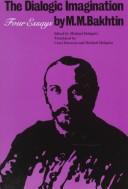
Mikhail Bakhtin & translated by Michael Holquist and Caryl Emerson · Buy on Amazon
"One of the other problems I think people have with Derrida—and this is something shared by both his acolytes and his detractors—is that he’s seen as emerging out of nowhere. But he didn’t. The book I want to talk about is Dialogic Imagination , which is a collection of four essays by Mikhail Bakhtin. Derrida came from the tradition of phenomenology in France. But he also drew on a long tradition of critical reading and dialogic imagination. Bakhtin was a Russian theorist, who wrote a lot in the 1920s, ’30s, and ’40s. He was more or less unheard of in the West until after his death in 1975. He was very interested in the way that language functions as a type of dialogue. He saw fiction as the epitome of this. In fiction , there are various voices going on, the voices of the characters, the voice of novelistic technique, the voice of the narrator, the voice of the time—all of these dialogic things were clashing with each other. He was particularly interested in Dickens and Dostoevsky , and also Mark Twain, whom he saw as exemplars of this sort of method. Yes. But the literal dialogue is not necessarily two characters talking. The dialogue is also where a given character is talking in dialogue with all the other books that are being written, with a literary style, with what I think, with what the reader thinks. One of the things about dialogue is that it creates meaning. Now you and I, we’re having a dialogue here. We’re both saying things, and possibly thinking things that if we weren’t talking to each other, we wouldn’t say or think. So we’re creating meaning in some sense by dialogue. That is something that novels can do. But for Derrida even a philosophy book is talking to other books of philosophy, it is talking to its times, it is talking to its reader, and it is talking in the voice of the person speaking. This book by Bakhtin is a precursor of Derrida in many ways, arguing that you can’t just treat a book as characters doing stuff over the course of some period of time, with a final resolution. There are many other things going on, all this meaning being created and conveyed. Yes, it’s much more normally written. Just about everything is more accessible than Of Grammatology … Yes, absolutely. Bakhtin analyses Dostoevsky, giving an extended look at Dostoevsky’s work. Again, you have that familiarity, something to latch onto, whereas Derrida sometimes almost spins in space, or is referencing unheard of Sumerian texts, that sort of thing. Yes, definitely. That’s part of it. When you’re reading a book, you shouldn’t treat it as a realist thing. Fiction, even realist fiction is, of course, a created thing under a set of conventions. So, you need to be very aware of that. But he’s also fascinating on the way that language works in this way. People tend to think language conveys singular meaning in many cases. One of the ways of looking at him, I think, is to compare him to someone like Hegel , with his thesis, antithesis, and synthesis. In a sense, Bakhtin’s approach is similar, but without the synthesis. You don’t have this resolution that takes primacy. He, like Derrida, is fascinated by the way that language moves along like a river, as it were, and just keeps going and going and going and accreting meanings, developing meanings and changing meanings over time."

Geoffrey Bennington & Jacques Derrida · Buy on Amazon
"Circumfession . It’s actually called Jacques Derrida/Circumfession . The bit called Jacques Derrida is written by Geoffrey Bennington, who was one of his main English translators. The bit called Circumfession is written by Derrida and, again, this is performing deconstruction. In a sense, the top half of the book is Bennington talking about Derrida and going through his theories. The bottom half of the book is a series of footnotes, which is Derrida telling his life story, but a very partial life story, a life story based very closely on St Augustine’s Confessions . To deal with the Derrida part first. For him, confession was a very interesting thing. Obviously, he wrote a lot about Rousseau and Rousseau’s autobiographical Confessions . In addition, he was very intrigued by St. Augustine’s Confessions , particularly chapter 10 where Augustine says, ‘Why do we confess when we’re confessing to God, who is the one entity who actually knows everything we’ve done?’ So confession actually isn’t about explaining to God. Confession is something else, about self-justification, about talking, about speaking, about thinking, about writing. Derrida is performing this down at the bottom of the text on the page, and he sticks fairly closely to St. Augustine’s methods and structure. Most of the chapters start with a little quote from Augustine . It’s also very close because Augustine wrote about the death of his mother. That is one of the main things in the Confessions , the death of Augustine’s mother. Rebecca West thought it the most moving moment in all of literature. Derrida is also writing about his own mother dying. So he’s drawing these parallels all the time, but also exploring the nature of what confession is, of what secrets are, and what sins are. He’s doing that down at the bottom of the text and, I think, writing very beautifully. There are people to whom Derrida is anathema. They just think his writing is nonsense—and some Derrida is. But I think sometimes Derrida writes incredibly movingly, especially about himself, and about guilt, and about secrets and mourning and those sort of things. So he stayed on the bottom of the page, while above him Beddington is basically going through the theories of deconstruction. In that sense, it’s a dialogue as well. “All of these writers are trying to get away from the idea that you can just declare things” One of the challenges that Derrida set Bennington was that Bennington wasn’t allowed to quote Derrida when he’s describing deconstruction. Bennington’s having to come up with his own words. In a way that’s sealing off the idea of Derrida being in the top half of the book, Derrida’s own words don’t have access to the upper half. There’s this beautiful dialogue that happens between them. It’s one of those books where it’s annoying when you first open it, because you don’t know if you should be reading the top or if you should be reading the bottom, or one then the other, or what’s going on. But, again, it requires that reading where you open yourself up to moving between the two, and more and more meanings come out of that. It’s performing deconstruction as much as saying what deconstruction is. It was written in 1993. Yes. One interesting thing: early on, Derrida would not allow himself to be photographed, because he didn’t want Jacques Derrida, the man, to get in the way of the philosophy. He also—I think, quite rightly—hated author photos. That fits with his philosophy. He, as author, shouldn’t have any greater say over the text than anyone else, so the author doesn’t matter all that much: although eventually that position, not being photographed, was unsustainable. But early on, he also eschewed autobiographical writing generally. But gradually, as his thinking evolved, more and more he came to see all philosophy as a sort of confession of the philosopher, that you’re this certain person who has written a book. This particular person has written Hegel’s works, this particular person has written Heidegger’s works, and you can’t pull the person away from that, you have to analyse that. His writing became a lot more autobiographical. Quite movingly, the end of the book consists of lots of photographs of Derrida throughout his life, which in some ways is a sort of arrogance or showing off. But I think he thought of it as performing arrogance. He was performing this idea of, ‘here is me, here is this thing now’ having, throughout the book, had this very self-deprecating, in many ways quite sad version of himself. Yes, absolutely. And I think they are obviously in dialogue with each other about this. I’m glad you brought up Camera Lucida . That kind of sadness, and that sense of mourning that is in that book, I think, is very much in Circumfession . Derrida later had a collection called Work of Mourning , which was a collection of writings about, and even funeral eulogies of, his contemporaries who had died. It is a book about the idea of mourning – that any friendship has mourning built into it, in the sense that, at some point, you will lose each other. One of you will die, or the friendship will be broken off. Of course, in this particular book, as with Barthes’s Camera Lucida, the mourning is for the parent. Derrida says something like, ‘this woman who’d never read a word that I’ve written is going and therefore, he, Derrida, is becoming a different person through that process.’ These philosophers wanted to bring the feeling self into that. A lot of them, of course, grew up during World War Two and in the aftermath of World War Two, after that calamity. You can’t shrug that off from any of these writers—whether France was implicated in the calamity or had resisted it. All those things were built into their way of looking at the world."

Catherine Clément, Hélène Cixous & translated by Betsy Wing · Buy on Amazon
"Newly Born Woman by Hélène Cixous and Catherine Clément. I put this in to show some of the wider effects of deconstruction. One of the things I was pleased to discover when I was writing my biography of Derrida was that he did try and learn from the lessons of feminism or feminisms. Cixous was very close to him in lots of ways. He actually said that, for him, Cixous was the best French writer of the late 20th century. They were both Algerian, and they had an incredible solidarity. They did a lot of books together as dialogue. She was almost as prolific as him. And, in many ways, she’s even more rebarbative with some of her stuff, if you’re not used to reading these things. She came to prominence in the Anglophone world with her essay “The Laugh of the Medusa”. In that and in Newly Born Woman , she’s trying to create or recapture what she calls a ‘feminine mode of writing’. There are often lots of complexities around that now, to do with gender and sex and so forth but, at the time, she was trying to write against a masculine text. And for her, the way of doing that was retaining the feminine body as present in the act of writing, speaking through that body’s mode of being, in the way she argues that most men, in her view, retain the masculine body in their writing, as a sort of undisputed normality. In a sense, I’m using this book to represent a lot of different modes of thinking, which deconstruction allowed to come into the philosophical realm. The book is a complex taking apart of the masculine text, the female text, and a building up of possible ways of writing and possible ways of disrupting the normal voices of philosophy. It looks at a lot of psychoanalysis and a lot of literature. It’s quite a confronting and challenging book, in the same way as Of Grammatology is. You are meant to feel uncomfortable reading it. You are meant to see someone battling against those hierarchies that Derrida was also interested in turning over—man, woman, good, evil. Like Derrida, Cixous doesn’t just want to turn the hierarchies over, as in putting them the other way around. She wants to see how they are in dialogue, how they battle with each other, how they create each other. One of the famous essays in there is called “Sorties”. She’s making ‘sorties’ against the masculine voice, against the conventional voice. She’s going out, gathering what she can, going back in and trying to write her ‘own’ text. It is intimidating, but it’s supposed to be intimidating. One of her sorties is against just being able to have a nice, casual read of some good conventional stuff. I would probably recommend “The Laugh of the Medusa” for a first reading of Cixous, although it’s less of a deconstructive text, which is why I didn’t include it here. It’s much more of a scream of pleasure, anger and joy, and all of those things. It’s a more conventional book in that sense. But she’s very interested in trying to get away from a straight narrative telling of everything. One of the things about Cixous is that she embraces plurality, in language and meaning and female embodiment. Her writing constantly and consciously goes around in circles, circle after circle after circle after circle, to try on the one hand to reinforce meaning through repetition, but on the other to make it suspect, through the accretion of difference. I think there’s an argument for saying it’s a good thing and there’s an argument for saying it’s a bad thing. I think it depends on the text that you’re reading. Derrida said “if things were simple, word would have gotten around”, which I think is terrific. Exactly. By its nature, deconstruction is saying that simple declarative statements are suspect; that clarity is a tactic. Sometimes it’s a justifiable tactic. In science, for instance, or analytic philosophy, or lots of philosophy, clarity is a virtue. It is the best way of doing it. But you shouldn’t mistake that for absolute truth. If a scientific truth could be given by something that’s doesn’t possess great clarity, then you would use that too. All of these writers are trying to get away from the idea that you can just declare things. They are also very open to the ways that meaning is generated by fiction, as we’ve covered, or by the methods of fiction. We read a piece of fiction, which is obviously made up characters doing things; it’s like playing with dolls. These writers are quite happy to use those sort of tactics in order to produce something philosophical as well as literary. Many of them are described as ‘post-modernist’. I see many of them, in fact, as using modernist techniques, the literary techniques of the 1920s, and so forth. Take Ulysses as an example. Being rebarbative, being difficult to get to, can sometimes make things more rewarding and sometimes can reveal truth. Support Five Books Five Books interviews are expensive to produce. If you're enjoying this interview, please support us by donating a small amount . When it’s done badly, it’s terrible. I think Derrida does it badly sometimes. I think all of them do it badly sometimes. I think there are just some bad writers in this tradition too. One of the things you can do with deconstruction, which happens too often—and Derrida didn’t do it as much as he’s accused of—is just taking up a pun or an etymology and flogging it to death for page after page after page. There are some writers who do that. Derrida didn’t do that, although he occasionally slipped into that. He occasionally was almost doing ‘pretend Derrida’. I think if you’re looking for a very simple, easy read, or you’re looking for a very clear read—and why not look for that, a lot of philosophy requires that—then, possibly, these are not places to go. Yes, you’re correct. He’s performing the work by doing it. But Plato writes in dialogue, which I actually find quite rebarbative and which I struggle to read. But he’s doing that for a particular reason, to get this meaning for us. And I think the basic thing is that, if something is written clearly, that doesn’t mean it’s good. If something is written rebarbatively—to keep using that word—it doesn’t mean it’s bad. Derrida is performing deconstruction as he’s thinking it up or through. And just to bring up one book: he does, in the 1970s, do a book called Glas , which I think goes a bit too far. It’s written in two columns, one column is on/by Jean Genet and one column is Hegel… Quotations, but also analysis and footnotes and all that sort of thing. It’s a beautiful-looking book. It is performing the fact that books are constructed things and are in dialogue. In performing it I think that he goes a bit too far, in the sense that he makes you forget that even just a normally written book is also doing that. He’s performing it to an absurd point. I find it almost unreadable. So that’s the hard limit for me of Derrida. Absolutely. With those conceptual art pieces—not all obviously, the great stuff is great—it’s actually the catalogue that tells you what you need to know. And for me—obviously, there’s stuff going on that maybe I’m not picking up—but I just don’t think it’s worth the effort to be honest. Glas for me is a bit like that, the explanation is the book. But many disagree."

Georges Perec, translated by David Bellos · Buy on Amazon
"Yes. I thought I’d push the boat out a little bit. This is a book called “ 53 Days” by Georges Perec. Perec was a novelist best known for his book, Life: A User’s Manual , which is 600-and-something pages, set in one second, in an apartment block. It’s quite a complicated and interesting book. The chapters are a ‘knight’s tour’ from chess of this apartment block, although he sets up a 10-by-10 square rather than 8-by-8 when he travels around it, just to make it more difficult for himself. In each chapter, again much like Joyce did with Ulysses, he had strict rules—a colour has to be used, a place has to be used, a quotation from another novel and quotations from one of his own have to be used. So it’s like a puzzle to be solved—and it is in fact about jigsaw puzzles. And the whole book covers one second in time… “The author’s intentions have no more authority than anyone else’s” Perec also wrote another book translated into English as A Void , which is a brilliant translation. It’s a novel which doesn’t feature the letter ‘e’. The whole book does not have a single ‘e’. This is a neat trick, but also has a deeper purpose—Perec lost his mother in the Holocaust and his father was killed early on in the war, fighting in the French army. This book, therefore, is unable to include the word mother and father in French. That’s part of the underlying structure, their presence and absence. Absolutely. He pulls it off. The translation A Void does a similar trick—a void, the gap, the missing thing. So it’s quite a feat of translation, but the original book is quite astonishing. Perec sets himself these little problems that he has to work out, and they generate his fiction and thus meaning. So, “ 53 Days”— the title is in quotation marks. A lot of books are described as ‘post-modern’, but I think this is actually a deconstructed text. Perec was going to Australia to teach for 53 days, which he realized was how long it took Stendhal to write Charterhouse of Parma . So he decides he’s going to write a novel in 53 days, why not?! The book then incorporates a lot of stuff from his time in Australia: characters named after the pizza shop he goes to; the Commandos who descend on one scene are named after New South Wales train stations. But he’s also writing a murder mystery about a stolen book, which is itself a murder mystery. Perec, at one stage, is narrating the story of the narrator who’s narrating the plot of the book, which has a novel in it, the plot of which he’s narrating to us. There are boxes inside boxes. First of all, because the novel is in quotation marks. This was a trope of Perec’s – one of the lovely things about Life: a User’s Manual is that he starts the knight’s tour of the book in apartment No. 66 and ends in No. 99. Those are the quotation marks around the novel. So “ 53 Days” is an invented novel about an invented situation about an invented novel about an invented situation. But, also, I think it’s deconstructive in the sense that—and this wasn’t Perec’s intention—he never finished it, he couldn’t get it done. He couldn’t get it nailed down. For a start, he couldn’t do the book in 53 days. He left behind all these intriguing notes. It’s also deconstructive because he was attempting, as he always did, to ‘perform’ what I think is a really interesting idea of Perec’s, which is the idea of the ‘clinamen’. A clinamen is a fault within the system. So, for instance, in Life: a User’s Manual , the knight’s tour of 10 by 10 should cover all 100 apartments, a chapter for each. But there are only 99 chapters. He sets up these schemes, like there’s got to be a colour in every chapter, and then one chapter will be missing that colour. In a sense, he’s performing this incoherence of the text or this fact that the text can’t be fully realized. And he was fascinated by this idea of ‘clinamen’. For me, that is, in a sense, what Derrida’s doing when he looks at texts. Derrida called them ‘aporias’, things that couldn’t be resolved within a text, which prevented the text being whole. Wholeness is a misbelief which we impose from outside without realising we are doing so. Perec and Derrida draw attention to this. So, I think “53 Days” , in particular, is a very interesting case of that, deliberately through a clinamen, although we don’t know what the fault he was building was because he didn’t finish the book, and ‘accidentally’, by not finishing the book. In a sense, this itself is a beautiful deconstructive gesture as well, although I’m sure he didn’t mean his death to do that. But it does. It’s an unfinished text and therefore meanings continue to generate themselves, puzzles, clues, and new readings. His final gleeful mystification."