Mohsin Hamid's Reading List
Mohsin Hamid is the author of four novels, Moth Smoke , The Reluctant Fundamentalist , How to Get Filthy Rich in Rising Asia , and Exit West , and a book of essays, Discontent and Its Civilizations . His writing has been featured on bestseller lists, adapted for the cinema, shortlisted for the Man Booker Prize, selected as winner or finalist of twenty awards, and translated into thirty-five languages. Born in Lahore, he has spent about half his life there and much of the rest in London, New York, and California.
Open in WellRead Daily app →By the Book: Mohsin Hamid (2022)
NYT By the Book column (2022-07-28).
Source: www.nytimes.com

Antonio Tabucchi · Buy on Amazon
"If you have not read "Pereira Maintains," by Antonio Tabucchi, you should."

F. Scott Fitzgerald · 1925 · Buy on Amazon
"I learned that if you read "The Great Gatsby" aloud to your 12-year-old daughter she might not want to stop and go to bed in the middle of a chapter."
The Best Transnational Literature (2017)
Scraped from fivebooks.com (2017-03-02).
Source: fivebooks.com

Chinua Achebe · Buy on Amazon
"I read No Longer at Ease when I was going to school in Pakistan. It was the first novel by an African writer that I had ever read. In some sense it felt familiar. The main character leaves Nigeria, goes to study in Britain and is, as the title suggests, no longer at ease. It’s a novel that stayed with me, in part because it broadened my sense of who could write literature and what literature was supposed to be about. No Longer at Ease explores not just moving to a country but leaving a country and returning. The dynamic of somebody who moves in two directions—abroad and back again, was of real interest to me, as someone who had done that myself. I’ve bounced to and from Pakistan and America, and other places as well. The sense that we’re changed by migration—that home is no longer the same because we are no longer the same—was very powerful in that book and that’s part of why it sticks with me. So often the novels of migration that we read are the stories of migrants coming to one country and staying there. The Reluctant Fundamentalist isn’t that. It’s a story about not just immigration but emigration, return and the responsibility associated with return. In that sense, No Longer at Ease was a precursor—but not necessarily one that I had in mind as I was writing. What is interesting is that the book is ultimately about complicity. This character dreams about undermining colonialism but, in the end, after a career during which he resolutely refused to take any bribes whatsoever, he finds his life destroyed for taking a tiny bribe. This novel is about how we end up entangled in what we try to resist."
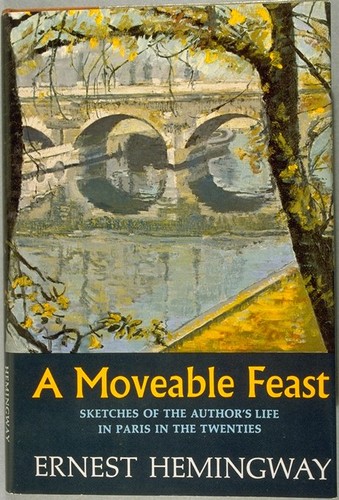
Ernest Hemingway · Buy on Amazon
"We think of Hemingway as an American writer, but much of his writing is set outside of the United States, just as much of his life was set outside of the United States. Farewell to Arms was set in Italy and Switzerland. For Whom the Bell Tolls is set in Spain. The Old Man and the Sea takes place in the Caribbean. A Moveable Feast takes place in Paris . It’s Hemingway’s memoir of the time he spent there with his first wife and it was stitched together by his last wife. It gives you the sense that he yearns for his first wife and the time when they were young together in France. “One never gets the sense that Hemingway questions whether he can or should be in Paris. There seem to be no visa issues or racial questions.” It is important to this topic for a couple of reasons. One is that it reminds us that not all transnational stories move towards America. There is a long and illustrious tradition of literature about moving away from America. Hemingway is changed in important ways by his time away from America. The title refers to the change that Paris works on him. It’s a “moveable feast.” Very often transnational literature is concerned with abrogating an implicit border of belonging. And very often it concerns the question: Does one have the right to be where one is or where one wishes to be? But in A Moveable Feast one never gets the sense that Hemingway questions whether he can or should be in Paris. There seem to be no visa issues or racial questions. Perhaps there is a sense of entitlement to the expatriate experience that the rest of transnational literature lacks. At the same time, it’s a book about a border that cannot be crossed—the border between past and present. Hemingway is reaching back into his past. It turns out even our most manly of writers can be wistful."

Sara Suleri · Buy on Amazon
"Meatless Days refers to a time in Pakistan, immediately after independence, when the state was struggling to survive. There was not enough meat; so to stretch supplies it was decreed that you couldn’t buy meat on certain days of the week. This occurred as Sara Suleri was growing up in Pakistan, as the daughter of a Welsh-born professor of English and a very famous Pakistani political journalist. So this is a memoir of life in Pakistan as this new nation was finding its feet. “I see myself as multi-territorialized; it is not that I don’t belong to any territory, it is that I have a sense of belonging to many territories.” I first read this book as a college student in the United States. Reading about Lahore in a memoir by a Yale literature professor—who was reflecting back on her own youth in Pakistan—had a strange effect on me. It was like being caught in a hall of mirrors. There I was in America, reading about Pakistan, where I come from. It hit me with an enormous sense of nostalgia and also admiration for how Sara Suleri combined the strands of politics, autobiography and cultural criticism. I suppose I too, to a certain extent, have become de-territorialized by my life journey, living in so many different places. But, to me, the word de-territorialized suggests someone who is free of place. I see myself as multi-territorialized; it is not that I don’t belong to any territory, it is that I have a sense of belonging to many territories. In Sara Suleri’s work you see something quite similar. She is of New Haven and Lahore. Suketu Mehta, a wonderful writer and a friend, says that people who migrate don’t become multinational they become multi-local. I think that is true of Sara Suleri and myself. All of the places I’ve been have accreted onto how I write and who I am."
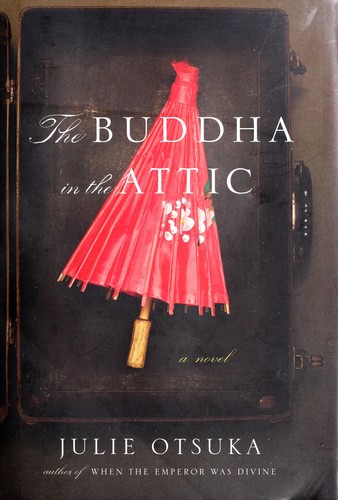
Julie Otsuka · Buy on Amazon
"Julie Otsuka’s novel is an amazing first-person plural account of the mass migration of what were called Japanese ‘picture brides’ in the years leading up to, and during, World War II. It is a story about a group of women told in a voice that is quite unique—the voice of we. It is not a narrative of generalities. It is composed of composite individualities and particularities. It depicts what drove these ‘picture brides’ to leave Japan, what sort of lives they forged when they arrived and their internment during World War II. I’m always looking for the right form for a story. Usually I spend several years trying to write my stories and failing before I find the right form. How to Get Filthy Rich in Rising East Asia had the form of a self-help book. It explains how you can get rich in rising East Asia, the self-help form frames the novel. There are multiple reasons I wrote it that way. “You see the rise of nostalgic, nationalistic, tribalistic movements in not just Afghanistan or Pakistan or Syria, but also in America and Britain.” Among those reasons was my desire to interrogate the notion that we read literature because it’s good for us, because it’s supposed to teach us about the world or about ourselves. If that is what literature is supposed to do, I thought: Why not be explicit about it? I also chose that form to explore whether self-help is possible through the practice of reading literature. So it is simultaneously a cynical examination of the way literature is marketed and a true believer’s exploration of what literature does for readers."

Jorge Luis Borges · Buy on Amazon
"When I first read Jorge Borges , I was amazed by what I encountered. Borges explored how stories work by situating us inside the analysis of a story. In this book, you have essays about a work and world of literature that exists only in the imagination of Borges. There is a transnational quality to Borges’s writing. He has references rooted in Europe, Africa and Asia in a way that is so audacious as to be unprecedented. He wrote about the world and from a global perspective at a time, pre-internet, when it was difficult to do. I was always attracted to writers who created an emotionally impactful and honest experience while writing free from the boundaries of consensus realism. I don’t think consensus reality exists. Whether you’re a Sufi poet or a contemporary neuroscientist looking at the brain inside a magnetic imaging machine, what you realize is that the self and what we perceive are constructs, stories that we construct. Borges realized this as fully as anyone. Certainly Borges was one of the pioneers of what became magical realism. Get the weekly Five Books newsletter In my own writing, up until Exit West , I’ve worked with plausibly realistic narratives inside of unrealistic frames. For instance, the story at the core of The Reluctant Fundamentalist is framed by an implausible conversation. In Exit West , for the first time, I’ve knowingly bent the laws of physics inside the main story of the manuscript itself. For a long time, the notion that there is a center and a periphery—in literature, economics, politics and culture—has been under threat. Cities like London and New York, the center for so long, are now experiencing problems once associated with the periphery, places like Pakistan. You see the rise of nostalgic, nationalistic, tribalistic movements in not just Afghanistan or Pakistan or Syria, but also in America and Britain. You see politicians trying to undermine the press and intimidate judges, not just in Pakistan and Afghanistan and Syria, but also in America. We are seeing echoes from place to place that we are just not used to seeing. This is perhaps a new era of globalization; the problems of the periphery are now transnational."