Michael Puett's Reading List
Michael Puett is the Walter C. Klein Professor of Chinese History in the Department of East Asian Languages and Civilizations and the Chair of the Committee on the Study of Religion at Harvard University. He is the recipient of a Harvard College Professorship for excellence in undergraduate teaching.
Open in WellRead Daily app →The Best Chinese Philosophy Books (2018)
Scraped from fivebooks.com (2018-03-24).
Source: fivebooks.com
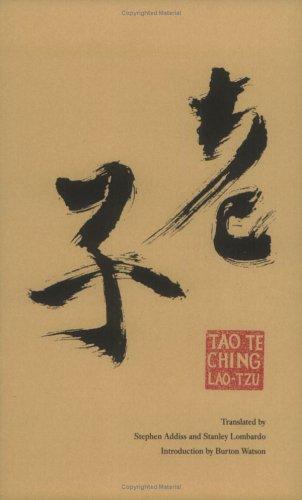
Laozi · Buy on Amazon
"Yes. Daoism is a body of thinking that comes from the text of the Laozi. The ‘Dao’ in Daoism refers to the Daodejing which we usually translate as ‘the way.’ Exactly. The idea of calling it The Path is a play on the Chinese notion of the Dao, which is the path you are building by the way you live your daily life—either in a dangerous or a powerful way. You’re either failing to live your life well or succeeding. It’s the notion of a path, not in the sense of a pre-given path, but rather of a path you make. This book is radically different. If the Analects consist of lots of stories about what Confucius does, how he talks to disciples, and so on, the Laozi, in contrast, contains no stories. There are no examples, there are no anecdotes, there are no references to historical figures at all. It is simply a series of extremely paradoxical-sounding statements, very gnomic, very difficult to decipher, and yet extraordinarily powerful once you work through and get a sense of what the underlying philosophy is. The opening line of the Laozi is often translated—and it’s not a bad translation but it misses some of the wordplay—as, “The Way [Dao] that can be spoken of is not the enduring way.” Now, what you miss in the English translation is that the word we’re translating, ‘spoken of’, is the same word: ‘dao.’ A literal translation would be, “The way that can be wayed…”—in other words, made into a self-conscious path— “…is not the enduring way.” What it means is that, if you try self-consciously to decide, ‘I will plan out everything perfectly in advance and that will be my way’ you’ve missed the point. That’s not the enduring way. You’ve created a pre-set way, but it’s not the way that you should be trying to make sense of . It is. And part of the argument is that you’re learning to gain a sense of how things emerge in the world— how situations develop, how trajectories develop. The goal is to train yourself to be able to sense that and alter those trajectories for the better. The key here is that you don’t know exactly where everything is going to go in advance. It’s all of those. A good way to think about the Way is that it could be absolutely everything in its completely undifferentiated sense. If you could imagine the world as completely interrelated, that’s the Way. Then imagine that things emerge from the Way. Cosmologically, you could say everything emerged from the Big Bang. But think of everyday life in the same way. Situations emerge from the Way and the way they emerge is part of the Way. The reason it’s put in this seemingly paradoxical way is that we, as humans, tend to focus on momentary differences in the world. We think there is me , there is that person, and we’re in this situation. If you’re thinking about the Way, what you’re thinking is that what that person is doing is related to things that I have done—because I’m implicitly affecting things. We’re being affected by the world around us and certain trajectories are being set in motion all the time. The more I can gain a sense of those larger trajectories, the more I’m gaining a sense of the Way, in other words, how everything is in fact interconnected—and therefore how these little things I’m doing can shift the Way or not. It’s more of the latter. One intriguing difference between the Laozi and, say, Buddhism is that in the Laozi the world around us isn’t illusory. We are creating the world around us which, in that sense, really does exist. The danger is that we’re usually creating it passively and very poorly and following it with very dangerous trajectories. What you’re training yourself to do is to sense how you can alter and work with these larger patterns without the dangerous sense that I, personally, can control everything. But, unlike Buddhism, the ultimate goal is not to withdraw and see the world as illusory. On the contrary, we are creating the world that really does exist and, usually, we’re creating it in a very dangerous, poor way. It’s all about training and self-cultivation. Part of what we’re training ourselves to do is to cease seeing the world in terms of simple dichotomies, simple rules, simple laws, simple ways that allow us to quickly—we think—understand what’s going on. All of these, in fact, are usually based upon very limited understandings of what’s happening around us. You’re training yourself—to use this terminology—to sense the Way, to sense how everything is interconnected, how things we’re doing are leading to certain consequences, often very dangerously and so how you can shift and work with the world around you. You are training yourself to spontaneously sense situations. Early on, this means training yourself to sense the complexity of situations. You’re pushing against our tendency to follow rules of thumb and easy patterns of thinking. But overall, over time, you’re training yourself to become so intuitively good at this that you’re able to sense situations, sense the patterns playing out in situations, and sense the little things you can do to alter these. “One of the arguments is to try to be like water: water is very powerful, of course, but it flows” One of the intriguing ways it’ll speak about is influencing the world not in terms of things like power, control and domination. Instead, think of it in terms of softness, weakness, suppleness. You’re training yourself to sense the complexities of situations and the ways that, through little things you can do, you can alter those trajectories. You’re not dominating situations, you’re not even rationally controlling situations in a mental sense, you’re sensing them and working with them. That comes directly from the Daodejing , from this text. One of the arguments is to try to be like water: water is very powerful, of course, but it flows. It exercises power by working with the flow, not fighting against it."

Zhuangzi (aka Chuang Tzu) · Buy on Amazon
"Zhuangzi, we are told, lived in the fourth century BCE. We actually don’t know much about him. In truth, all that we have from him—apart from later stories that are told about him—is this one text, which is extraordinary. It is a text that will later be categorised as a Daoist text, so as part of the same way of thinking as the Laozi . I tell my students to think of it as a very different take on a somewhat similar set of ideas. But it really is a different take. As far as we know, Zhuangzi didn’t know the Laozi . The term ‘Daoism’ did not exist at the time. It’s a later term that is aimed at bringing together these texts. In a nutshell, what the Zhuangzi is trying to do is to break us out of our patterns of thinking. But the way it will do that is not simply through very short, gnomic paradoxical statements. The way the Zhuangzi will do it is through this extraordinary, imaginative prose that will try, in the very way it’s written, to break us from our limited perspectives. So, as you’re reading it, you will take the point of view of a butcher, you will take the point of view of a bird, of a piece of bark, a fish. Zhuangzi is trying to break us out of our limited understandings so that we begin to get a sense of the world as endless flux, endless transformation, in which, if we can train ourselves to do so, we can begin to understand its tremendous multiplicity. It’s in between the two, and there’s also an element of a third part as well. Unlike a meditating, decentring process, it’s about training yourself to sense this multiplicity. A lot of the stories, for example, will revolve around skill-based activities. A butcher is one of the examples: a butcher, by the very ways that he undertakes his butchering activities, is learning to break away from his tendencies to think in very limited ways, and to sense the complexity of situations. It’s a very telling story. It’s meant analogically, of course. The butcher will begin simply slicing up pieces of meat according to a very rational calculation. Every slab is cut in exactly the same way. And, because that means you’re digging through all these bones and muscles and sinews, he has to constantly stop to sharpen his knife. Then the argument is that he slowly begins to realise, as the years go by, that the meat in fact has its own patterns. There are places where, say, the muscles will wrap around the tendons, which wrap around the bone, and every piece of meat is slightly different. There is no single way of understanding that. What you must do is learn to sense where these patterns flow. And he becomes so good at it, at a certain point, that he’s able, not with his mind but with his spirit, simply to sense these patterns and take his knife and slide it through the patterns of meat so flawlessly that he’s able to cut them perfectly without ever having to sharpen his knife again. That’s a perfect analogy. One is training oneself in a sport to become so good that you’re no longer thinking about what you’re physically doing—you’re just sensing situations perfectly. Learning a musical instrument would be another good analogy: you’re training yourself, over the years, to play the musical instrument, to affect the room, by being sensitive to the situation. The argument of the Zhuangzi is that we should do this in our everyday lives. Imagine, in our everyday lives, training ourselves with the same kind of work that we would do to train ourselves in a sport or when we learn a musical instrument. We would be training ourselves in our lives, not to be battling through the world, not to bash against the world, but to sense situations, work with situations, alter situations as we work with them. In other words, in your daily life, you would be performing the same sort of work that we otherwise think of doing in these restricted, skill-based activities. Very much so. Now, there were some thinkers in early China who did begin developing arguments a little bit like Kant’s, but much more consequentialist: they tried to develop a utilitarian calculus that we should be following to determine what to do and what not to do, how to become a good person, how not to become a good person. But, indeed, the texts we’ve been discussing so far are very Aristotelian. They’re pushing against such attempts and saying, ‘No, no, no it’s all about personal practice, about gaining the ability to sense situations well, of becoming virtuous over time by the way one senses situations.’ They are, therefore, very suspicious of attempts to say we can work out by some kind of a calculus—whether that’s deontological or utilitarian or what have you—what to do. Extraordinarily so. These are ideas that have been incredibly important throughout Chinese and, indeed, all of east Asian history. In the 20th century, many of these texts were burned. There was a strong push against them, as a result of the self-conscious attempt to build a communist society that stood very strongly against these old traditions. Now, intriguingly, they’re coming back. The texts are being read again, they’re being debated again. Of course, this is not just happening in China: it’s really a global phenomenon. These texts are coming back to life. Very much so. We are also physically uncovering many old texts. There are many old texts that are being found and studied for the first time. China is rediscovering its old traditions. It’s a really extraordinary moment."

Mengzi · Buy on Amazon
"Mencius lived in the fourth century BCE, so he’s a rough contemporary of texts like the Zhuangzi . I say ‘rough’ because we don’t know the exact dates. Unlike Zhuangzi, Mencius saw himself as very much developing Confucius’s teachings. Indeed, in the fourth century BCE, he is seen as the great Confucian master of his day. This is a fascinating and profound text. Like the Analects, it consists mainly of dialogues, in this case dialogues that Mencius has with disciples, with rulers and with fellow philosophers that he’s disagreeing with. They tend to be much longer than in the Analects . You get the whole debate unfolding, so you really get to see the complexities of the arguments. It’s also an intriguing text because Mencius is portrayed in very ambivalent ways. He is clearly seen as brilliant, someone whose philosophy is extraordinarily powerful, and yet the text will—despite having been written by his own disciples—present him as sometimes failing. It’s part of the power of the text that it shows someone trying, on a daily basis, to live up to his own philosophy and, at times, failing to do so, and then learning from that. It’s a very complex portrait of a human being. Yes, there is one very poignant example. Towards the very end of his life, Mencius decides that the time is right for these ideas finally to be put in place at a wider political level. Thinking himself to be the great Confucian of his age, and certainly seen by others as such, he goes from court to court trying to gain an audience with rulers, to explain these ideas. He succeeds in gaining a significant ministerial position within one kingdom—the kingdom of Qi—and the king seems to be listening to him. Mencius clearly thinks that he’s about to become the great sage minister, leading to the emergence of a great new dynasty based upon the teaching of Confucius as interpreted by himself. He begins to be a little arrogant and a little too convinced of his own greatness. Then it becomes apparent to him that the ruler is simply using him—twisting his ideas to rationalise his own policies of self-aggrandisement. Mencius is forced to leave the state in total disgrace. There’s a very poignant moment where he’s leaving the state and one of his disciples says, ‘But Mencius, didn’t you once quote from your great master Confucius who said that you should never resent what heaven does—in other words you should never resent the things that happen to you in life, you should simply try to respond well to them—and Mencius don’t you seem a little bit resentful?’ The response is extraordinary. He says, ‘Well look, the time is obviously right for great things to happen. We need a great sage. Obviously I am the great sage, and yet, for some reason, heaven has prevented me from beginning a great new sage.’ Clearly, he is reeking of resentment. It’s a powerful moment where he visibly fails to live up to his own philosophy, overtaken by his arrogance. That is, in fact, how the book opens. The first two chapters of the book consist of these dialogues without commentary. Support Five Books Five Books interviews are expensive to produce. If you're enjoying this interview, please support us by donating a small amount . The rest of the book consists of Mencius simply trying to be a good teacher, arguing through these ideas with his disciples, training the next generation to be good. I think the layout of the book is saying that Mencius, at this key moment, failed and then learned from it. He realised that the way to change the world, in this case, would be, having failed politically, to be an extraordinary teacher and try to help the next generation be extraordinary beings. The layout of the book is a way of trying to give you a sense of a human being, in all of this complexity, trying to be great, failing, and then learning from that experience. It’s extraordinarily powerful for this reason. It would be much less powerful if it were simply Mencius spouting these brilliant ideas. It is more powerful to have Mencius saying brilliant things, but then, in practice, for the reader to see the complexities of him as a human being. Part of what I find so powerful about these texts is that underlying them all—for all their many differences—is a sense that the world is messy, that it’s complicated. We, as human beings, are very very messy and complicated, and the world around us is extremely difficult to understand—in fact, impossible to understand in the simplistic terms we attempt to do so. One must deal with this messiness. One must deal with this complexity, and, by definition, as one tries to do so, one usually fails. And then one hopefully tries to learn from it and create slightly better worlds the next time around."