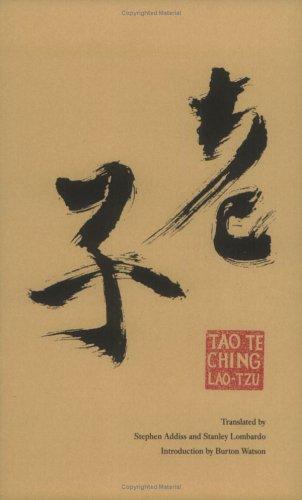
A couple years ago, a handful of coaches and I would take a chapter at a time throughout the season. We’d read the chapter, make some notes about it, and then sit and talk about it. And the beauty about the 81 principles is that, as soon as you’re done, you read them again. You know? One at a time. So we’d sit, athletes and coaches, and go through chapter by chapter, and just talk about it. It brings up ideas. Like, ‘Okay, that was cool 2,500 years ago, but what about now? How do we apply that now?’ It just begins to open us up to different ways of looking at the very concrete world of sport. What precedes that concrete expression is the invisible world of imagination and thought. Yeah. Those people who are able to decouple what they do and who they are have a radical advantage in life. What ends up happening for many very talented people is that they’ve been on the doing path for a long time. And it’s easy to identify as the ‘do-er.’ Part of the exploratory self-discovery process behind becoming the man or woman that one wants to be is recognising that we are far deeper, and far greater, than just the acts that we do. That they are the expression of how we line up our thoughts, and our words. “What makes the most powerful people in the world is that they are able to line up their thoughts, their words, and their actions in any environment” Some of what makes the most powerful people in the world—whether they are political leaders or philosophers or artists or activists or athletes—is their ability to line up their thoughts, their words, and their actions—in any environment.
"A couple years ago, a handful of coaches and I would take a chapter at a time throughout the season. We’d read the chapter, make some notes about it, and then sit and talk about it. And the beauty about the 81 principles is that, as soon as you’re done, you read them again. You know? One at a time. So we’d sit, athletes and coaches, and go through chapter by chapter, and just talk about it. It brings up ideas. Like, ‘Okay, that was cool 2,500 years ago, but what about now? How do we apply that now?’ It just begins to open us up to different ways of looking at the very concrete world of sport. What precedes that concrete expression is the invisible world of imagination and thought. Yeah. Those people who are able to decouple what they do and who they are have a radical advantage in life. What ends up happening for many very talented people is that they’ve been on the doing path for a long time. And it’s easy to identify as the ‘do-er.’ Part of the exploratory self-discovery process behind becoming the man or woman that one wants to be is recognising that we are far deeper, and far greater, than just the acts that we do. That they are the expression of how we line up our thoughts, and our words. “What makes the most powerful people in the world is that they are able to line up their thoughts, their words, and their actions in any environment” Some of what makes the most powerful people in the world—whether they are political leaders or philosophers or artists or activists or athletes—is their ability to line up their thoughts, their words, and their actions—in any environment."
"Yes. Daoism is a body of thinking that comes from the text of the Laozi. The ‘Dao’ in Daoism refers to the Daodejing which we usually translate as ‘the way.’ Exactly. The idea of calling it The Path is a play on the Chinese notion of the Dao, which is the path you are building by the way you live your daily life—either in a dangerous or a powerful way. You’re either failing to live your life well or succeeding. It’s the notion of a path, not in the sense of a pre-given path, but rather of a path you make. This book is radically different. If the Analects consist of lots of stories about what Confucius does, how he talks to disciples, and so on, the Laozi, in contrast, contains no stories. There are no examples, there are no anecdotes, there are no references to historical figures at all. It is simply a series of extremely paradoxical-sounding statements, very gnomic, very difficult to decipher, and yet extraordinarily powerful once you work through and get a sense of what the underlying philosophy is. The opening line of the Laozi is often translated—and it’s not a bad translation but it misses some of the wordplay—as, “The Way [Dao] that can be spoken of is not the enduring way.” Now, what you miss in the English translation is that the word we’re translating, ‘spoken of’, is the same word: ‘dao.’ A literal translation would be, “The way that can be wayed…”—in other words, made into a self-conscious path— “…is not the enduring way.” What it means is that, if you try self-consciously to decide, ‘I will plan out everything perfectly in advance and that will be my way’ you’ve missed the point. That’s not the enduring way. You’ve created a pre-set way, but it’s not the way that you should be trying to make sense of . It is. And part of the argument is that you’re learning to gain a sense of how things emerge in the world— how situations develop, how trajectories develop. The goal is to train yourself to be able to sense that and alter those trajectories for the better. The key here is that you don’t know exactly where everything is going to go in advance. It’s all of those. A good way to think about the Way is that it could be absolutely everything in its completely undifferentiated sense. If you could imagine the world as completely interrelated, that’s the Way. Then imagine that things emerge from the Way. Cosmologically, you could say everything emerged from the Big Bang. But think of everyday life in the same way. Situations emerge from the Way and the way they emerge is part of the Way. The reason it’s put in this seemingly paradoxical way is that we, as humans, tend to focus on momentary differences in the world. We think there is me , there is that person, and we’re in this situation. If you’re thinking about the Way, what you’re thinking is that what that person is doing is related to things that I have done—because I’m implicitly affecting things. We’re being affected by the world around us and certain trajectories are being set in motion all the time. The more I can gain a sense of those larger trajectories, the more I’m gaining a sense of the Way, in other words, how everything is in fact interconnected—and therefore how these little things I’m doing can shift the Way or not. It’s more of the latter. One intriguing difference between the Laozi and, say, Buddhism is that in the Laozi the world around us isn’t illusory. We are creating the world around us which, in that sense, really does exist. The danger is that we’re usually creating it passively and very poorly and following it with very dangerous trajectories. What you’re training yourself to do is to sense how you can alter and work with these larger patterns without the dangerous sense that I, personally, can control everything. But, unlike Buddhism, the ultimate goal is not to withdraw and see the world as illusory. On the contrary, we are creating the world that really does exist and, usually, we’re creating it in a very dangerous, poor way. It’s all about training and self-cultivation. Part of what we’re training ourselves to do is to cease seeing the world in terms of simple dichotomies, simple rules, simple laws, simple ways that allow us to quickly—we think—understand what’s going on. All of these, in fact, are usually based upon very limited understandings of what’s happening around us. You’re training yourself—to use this terminology—to sense the Way, to sense how everything is interconnected, how things we’re doing are leading to certain consequences, often very dangerously and so how you can shift and work with the world around you. You are training yourself to spontaneously sense situations. Early on, this means training yourself to sense the complexity of situations. You’re pushing against our tendency to follow rules of thumb and easy patterns of thinking. But overall, over time, you’re training yourself to become so intuitively good at this that you’re able to sense situations, sense the patterns playing out in situations, and sense the little things you can do to alter these. “One of the arguments is to try to be like water: water is very powerful, of course, but it flows” One of the intriguing ways it’ll speak about is influencing the world not in terms of things like power, control and domination. Instead, think of it in terms of softness, weakness, suppleness. You’re training yourself to sense the complexities of situations and the ways that, through little things you can do, you can alter those trajectories. You’re not dominating situations, you’re not even rationally controlling situations in a mental sense, you’re sensing them and working with them. That comes directly from the Daodejing , from this text. One of the arguments is to try to be like water: water is very powerful, of course, but it flows. It exercises power by working with the flow, not fighting against it."