Michael Burleigh's Reading List
Michael Burleigh is a Senior Fellow at LSE Ideas , the world’s premier university-based think tank. He has written fifteen books, including most recently Day of the Assassins: A History of Political Murder (Picador 2021) and Populism: Before and After the Pandemic (Hurst 2021). His Third Reich: A New History (2000) won the Samuel Johnson Prize for Non Fiction.
Open in WellRead Daily app →Assassinations (2021)
Scraped from fivebooks.com (2021-08-13).
Source: fivebooks.com
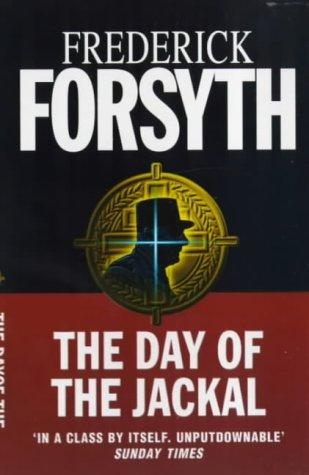
Frederick Forsyth · Buy on Amazon
"Forsyth wrote the book after he’d been sacked from one of his jobs as a foreign correspondent. He decided to bash out a thriller in six weeks, which is an amazing achievement. And, interestingly, he took as his plotline something that all the readers in 1971 knew hadn’t happened, because de Gaulle had died in his bed. He wasn’t assassinated. Forsyth—preposterously—insinuates that the French can’t manage even to assassinate their own president and had to hire a professional British shooter, from Mayfair, who, it is rumoured, killed Trujillo in the Dominican Republic. In fact, Trujillo wasn’t killed by a lone assassin at all. The CIA provided some submachine guns, which some local people used to kill him. They went after him because they were plotting to murder Castro and they needed to kill a right-wing, Caribbean dictator for presentational reasons. The reason I chose this book is that it very much influenced how I wrote my own. Essentially it consists of two interlinked hunting stories. You have the jackal, the assassin, who is stalking de Gaulle. And then you have the police and the intelligence services trying to pre-empt him, stalking him. To make a huge generalisation, for 90% of our 300,000 years as hominids on this planet, we were hunter gatherers. It is very much in our nature, which I think explains why people are so fascinated by assassination. About a third of everything you can see on Amazon Prime, or Netflix involves assassination, mainly relating to Colombian or Mexican drug cartels. It’s a fascinating subject. So I picked this book because it appeals to that underlying instinct of ours. There’s an exceptionally fine BBC filmmaker from the 1980s and 90s called Alan Clarke, whose most famous movies are Scum and The Firm , which is about football hooligans and launched the career of Gary Oldman. But he made a short, 38-minute quasi-documentary called Elephant, about Northern Ireland, where he took police reports on 18 IRA killings and made a film using a Steadicam. That’s very characteristic of his style, you just have this camera following people walking. So, on each occasion you see one or two blokes walking with no soundtrack, and no dialogue, down a street into a mini cab firm or swimming baths or a warehouse and blasting somebody. Then the camera just lingers a bit too long on the dead body. Then you go on to the next lot of men walking and, at the end of it, they walk or run away. It’s just an incredible depiction of their activity. These guys really are hunting. It gets worse. Never mind Carlos the Jackal. Both Mehmet Ali Aga, who shot Pope John Paul II, and Yigal Amir, who shot and killed Yitzhak Rabin, read The Day of the Jackal several times. It was their favourite book. I’m hoping that no one treats my book as their favourite, I will not be responsible!"

Boris Volodarsky · Buy on Amazon
"This is an absolute masterpiece. It started out as an LSE PhD, supervised by Paul Preston, because a lot of the book deals with the Spanish Civil War . It wasn’t so much the story of Alexander Orlov—his pseudonym and the actual subject of the book—that fascinated me, as the story about all the NKVD people that Stalin dispatched to the Spanish Civil War, basically to murder people—dissidents on the Republican side, and indeed any captured nationalists. Orlov was just one of them. He claimed to be the top one, but he wasn’t. I got very interested in the lifestyle of these NKVD agents, because they went in under diplomatic cover, and they took along women who pretended to be their wives. Then they availed themselves of all the GRU secretaries and wireless operators who were there and had affairs with local Spanish women, too. It must have been like paradise after living in the Soviet Union in the 1930s to end up in Madrid or Barcelona, living the life of Riley. These people became highly efficient assassins. Most of them were Lithuanians and reconstructed themselves gradually as Spanish people or Latin Americans and then went on an international spree murdering people. Many of them were Jewish and had relatives in New York and elsewhere, they could easily move around in these circles. One of the interesting revelations in the book is about the family of the financier Bill Browder, Putin’s biggest enemy. His grandfather, Earl Browder, had been head of the American Communist Party. Bill explains that this had bad consequences for his own father, a mathematician who never really got a top university job because of the grandfather. What I didn’t know was that most of the family members were agents of the NKVD in the United States. The whole book is just full of revelations. Get the weekly Five Books newsletter I don’t know quite how Volodarsky did it. I assume that when he left the collapsed Soviet Union he might have taken a whole load of files with him for his own personal use, which found their way into this book. The material is just quite extraordinary. The best story in the book is about Orlov, when he notices that far too many of his colleagues in Spain have been called back home in 1937-38 and have just disappeared (in other words, shot). He decides this is not going to happen to him. So he writes a letter and leaves it with the Russian consulate for the attention of Nikolai Yezhov, the head of the NKVD at the time—who would subsequently be shot himself. By this time Orlov had stolen $60,000 from NKVD funds to fund his life in exile with his wife. He writes to Yezhov, and the letter has a long appendix pointing out every assassination he’s been involved in, that he was the person who, for a brief time, controlled the Cambridge spies, Burgess, McLean and Philby. He writes to Yezhov that none of this would ever come to light, provided that nothing happened to his elderly mother in Moscow. It was a clear blackmail threat, but he managed to blackmail one of the most sinister and unpleasant people who ever existed. The whole book is just stunningly interesting."

Harris Dousemetzis · Buy on Amazon
"I’m very interested in Africa . I did a lot on it in my book Small Wars, Far Away Places , about the Congo. But I’d never really done work on South Africa, so I thought I would really go to town on this one. I did a lot of work on the origins of apartheid and Verwoerd’s role in it. He was an academic sociologist, concerned with the fate of the white working class and gradually devised apartheid. Verwoerd was Dutch by birth. The Dutch political system is based on something called ‘pillarisation’. That’s the most literal translation of the Dutch, but a better one would be ‘silos’. You grew up in a silo, as a social democrat, or as a Catholic, or Protestant, or as a conservative. And you never really go out of that milieu. It’s weaker today, but historically, that was the case. At the same time, Calvinist theology says that the worst nightmare is the Tower of Babel, where everything just dissolves into one great diverse whole. So apartheid is really designed to restore the lines, the boundaries, the red lines, which Verwoerd certainly did. He was also an anti-Semite who turned away ships full of Jewish refugees, and he had strong sympathies with Nazi Germany. In fact, the man he appointed head of the South African Broadcasting Association, christened his son Izan, which is Nazi spelt backwards. That’s perhaps all we really need to know about these people! There were two attempts to kill Verwoerd. The first attempt, virtually unknown, was by an English farmer called David Pratt, whose daughter has recently written quite an affecting memoir about her dad. David Pratt was driven in a chauffeur-driven Rolls by one of his servants to the Rand Show, where Verwoerd was handing out the prizes. He walked up to him and shot him in the face with a pistol. Unfortunately, it wasn’t a very high-powered pistol. Verwoerd survived and was out of hospital in about six weeks. He said it was a bit like having bad sinus trouble. But Pratt had a long history of depressive illness, and he’d done things like follow his Dutch ex-wife back to the Netherlands, where the police and customs people stopped him. He had a loaded revolver in his luggage and was going to shoot her. He wasn’t a happy man on all sorts of levels. Some of his businesses had failed. He’d tried to go into trout farming to provide trout to Johannesburg restaurants and that was a disaster. Everything he touched was bad. They ended up putting him in an asylum. They said he wasn’t fit enough to stand trial. He allegedly hanged himself with the sheets a year later. The second assassin did kill Verwoerd in 1966 at the state opening of Parliament—while working as a parliamentary messenger. He was a Greek-Mozambican former merchant seaman called Dimitri Tsafendas and came from a long line of Cretan communists. His father was a very active person and had fought the royalists and the Nazis. He was a rather overweight youth, and clearly had some mental problems. He also suffered from a tapeworm in his childhood (that’s quite significant). He tried all sorts of jobs and for political and other reasons couldn’t build a stable career. So he became a merchant seaman, going off on ships. “When looking at assassinations, it’s the unforeseen consequences of them that interests me more that the fulfilment of immediate, planned objectives” This is where it gets interesting. Whenever he was trying to stay in countries he wasn’t allowed to enter, he conveniently had a mental breakdown the moment he got on shore and would be put into an asylum. Now, in one asylum, I think in America, an Irish inmate told him that it was no good saying to the shrink that he didn’t feel well or that he was hearing God’s voice from the radiator, but that he had to think of something really clever to get their interest. So Tsafendas said, ‘Well, what about if I had a tapeworm in my stomach giving me orders?’ The Irish inmate said, ‘Yes, that’s it!’ From then on, he’d roll this story out every time, in every asylum. When he was put into one in Paddington, which was a real dump, he heard there was a much more deluxe asylum on the Isle of Wight. So he rolled out the tapeworm story, and then they transferred him to the Isle of Wight luxury conditions. It was all quite crafty. After the assassination, the South African police quickly got all of his medical records from all over the world, as he’d been in nine or ten asylums in different countries doing the same thing. They saw that after a while they would give him pills and let him go and off he would go, back to sea. Another problem for the South African authorities was that he was mixed race. He was ‘white enough’ for them not to want to put him on trial for killing the architect of apartheid. He was of mixed race. They decided they couldn’t do that, so they tortured him for weeks and then got him to come out with this nonsense that the “dragon worm” told him to kill Verwoerd. At that point, they said he was unfit to stand trial and declared him mentally incompetent and insane. Interestingly, at first they imprisoned him on Robben Island in solitary confinement, near Mandela . And you don’t do that if a person is insane. Then they moved him to Pretoria Central Prison, where they put him next to the death cell where they executed people. Every year he heard over 100 people being hanged through the walls. He was badly treated all through his stay there. Finally, maybe five or 10 years before his death, he was moved to a rural psychiatric asylum, which was the first time he’d ever been near an asylum after the assassination. Yes, it was. The ANC didn’t take any interest in him whatsoever. He had killed Verwoerd, but it didn’t make much difference, because John Vorster, who was Verwoerd’s replacement, was an even more evil character. I was interested in all this and in Verwoerd himself. I didn’t realise that he wasn’t a native Afrikaner. He was born in the Netherlands. And his parents took him to South Africa as a boy. He was, in a way, plus royaliste que le roi —he became a more fanatical Afrikaner nationalist than the locals. I found that fascinating, as well as the whole question of whether Tsafendas was mad or not. Both he and Pratt gave very good reasons for killing Verwoerd. Yes, of course. And they didn’t want his assassin to be white, either, because that rather got in the way of the impression they were trying to create. While I was reading all these books on apartheid, I was writing an LSE Ideas pamphlet about Brexit, England and Ireland. One of the other two contributors was at Queen’s University, Belfast and was one of the main people I’d read on the evolution of apartheid, Adrian Guelke. He specialises in South Africa. In the 1990s, a South African agent, based in London at the embassy, got wind of the fact that there was somebody with Sinn Fein sympathies co-ordinating the party’s connections with the ANC. And they wanted this person dead. But what this agent did was to substitute Professor Guelke’s name on some documents, because the agent wanted him dead as well, because of his books on apartheid. That was then slipped to some loyalist terror organizations, who one night came into his house and shot him in his bed. He wasn’t killed because the gun jammed after a few rounds. But it was done quite deliberately, to confuse the two men’s names to get him killed. He had no connection with Sinn Fein whatsoever. I just thought that was extraordinary, the way the South African secret police went around the world knocking people off—which undoubtedly they did. Yes, of course it is. It’s the sharp end of what people nowadays would call transnational repression. Mossad’s got a disgraceful record, as you can see when you read my book. Ronen Bergman, who’s written a big book about the assassinations of Mossad, has worked out that they’ve killed 2,700 people in the last 70 years or so. They present it as the result of weighty moral deliberation, that they almost reluctantly decide to kill somebody. In fact, they make mistakes and people get put on to the list of targets for quite arbitrary reasons. In the case of Khaled Mashal, the Hamas leader, they tried to poison him in Amman, Jordan—only because the top target had American permanent residency, so they weren’t going to kill him. The operation was botched and Mashal survived. He lives in Doha now. As far as I know, he hadn’t been involved in any terrorist activities at all, they just wanted him gone. Then they’ve made absolute mistakes. When they were on the hunt for the Black September people who carried out the hijacking of Israeli athletes at the Munich Olympics in 1972, they thought they’d got the leader of that, a man in Lillehammer in Norway, and went after him and killed him, shooting him in the street in front of his pregnant girlfriend. In fact, it turned out, he was a completely innocent Moroccan waiter who also had a daytime job as a swimming pool attendant. The idea, which is often put about in films and TV programmes, that they’re these super professional, super cool killers is just nonsense. They’re not."

Chris Woods · Buy on Amazon
"We’re living in a time where drones are increasingly the weapon of choice , particularly if you have to get at people who are living in countries with which you’re not technically at war. America is not at war with Yemen, or Somalia, but they use drones there to kill people. That’s the first point about it. Secondly there is the whole question of whether these things could, potentially, become so sophisticated, they could act without much human involvement. In March 2020 what people are calling the first ‘lethal autonomous weapons system’—they’re called LAWS in the trade—was deployed. It was a Turkish manufactured killer drone, which was operating above General Haftar’s forces in Libya. It loitered around and then, without any human input, saw a convoy of troops or people, swooped down in kamikaze fashion and blew up. That’s the first instance anyone can think of where a drone was just programmed to look for certain types of targets, and found them. “Drones really will change the nature of warfare” The Turks make very good drones and are selling them all over the place at present. Poland has just bought some. It all interests me, as does the whole phenomenon of people sitting in a Portakabin in Nevada or New Mexico, dealing out death in Afghanistan . They’re just going to work in the morning. Apparently backache is the big problem. In fact, the last time I went to the O2 arms show in Docklands, I was very struck by a stand which had ergonomically designed seats for drone operators. We’ve reached a real nadir here, worrying about their backache, but they do long shifts. Apparently, psychologically, they get very, very interested in the lives of the people that they’ve got eyes on, that are under surveillance from reconnaissance drones. They say, ‘Oh, look, there’s that old woman with a cart of apples coming across that square. I wonder what she thinks, or is doing.’ You take an interest in the life of a tribal village, basically. And then comes the point where you have to zap somebody, and you just press a button. Within seconds, a hellfire missile will blow somebody to pieces—hopefully not entirely innocent people, although that regularly is the case. The idea that it’s somehow antiseptic is quite wrong, because you have to look at the aftermath. And if you see so much as a hand twitch, you send another missile in to make sure the person’s dead. Some of them do suffer from post-traumatic stress disorder, even though they haven’t actually been near a battlefield. Yes. We’ve just seen the devastating effect in the latest bout of fighting between Armenia and Azerbaijan. Armenian armour was just smashed into scrap metal by Turkish supplied drones. You can see the footage of it happening—these Turkish weapons, which Azerbaijan had bought, smashing up all this Russian supplied armour. It’s amazing. Drones really will change the nature of warfare. They’re a win-win weapon, because there are no casualties on your side. It’s not like losing a highly trained and expensive air force pilot, if a plane is shot down. There’s nothing to capture, no hostages. It just does its stuff. ISIS started to dabble in this area with hobby drones, which you can get from Amazon. There’s not that much difference between an Amazon drone and a military drone, especially the small ones. Ukraine has a lot of people with high technical competence and a very developed tech sector. Western Ukraine has become a big centre for CGI for the movies and some software development. It also has a large number of hobby-aircraft people. They’ve made all sorts of drones to attack Russian troops and rebel troops in eastern Ukraine. They’re pretty sophisticated. I think we’re going to see more and more of this, because they’re cheap as chips relative to a modern big weapon. There are also Predator and Reaper drones, which are not cheap— we’re talking $20-25 million, and then, say, $300,000 per hellfire missile. Get the weekly Five Books newsletter It’s a very good book. Chris Woods has really done his work on the legal aspects of it, on the psychological status pre-op because drone pilots are quite low-status compared to top gun Air Force pilots. A lowly drone guy just gets in his car and goes to work in a cabin with two other people. And then, at five or six o’clock, he knocks off and half an hour later it’s bath time for the kiddies. Until recently they refused to give them military decorations, no matter how many terrorists they’d killed. He’s very good on all of that. It’s a marvellous book."

Jonathan Rugman · Buy on Amazon
"The reason I picked this one is related to the reason I wrote a book on assassination in the first place. Long before Jamal Khashoggi was killed, I wrote some very critical things about Mohammed bin Salman in The Times , saying that his various projects, like NEOM, the high tech city in the desert , were a crock of shit. I ended one of these articles by saying that maybe it would be a good idea if King Salman changed the line of succession. The next thing I get is a lot of death threats on my then Twitter account in Arabic, with my byline picture helpfully attached. The next development after that was that one day WhatsApp on my phone goes off and there’s a message from the Saudi embassy with a link enclosed in it. About a fortnight before this happened, I’d read about a Saudi dissident in Canada who had had a similar link sent to him. It was Israel’s NSO supplied software, which took over his phone, turned on the microphones, cameras and drained all the contacts. So I didn’t open it and deleted it. I’m not on WhatsApp anymore. Anyway, I thought I’d had enough of this. Then they killed Khashoggi. At that point, I wrote a huge piece in the Daily Mail , which I believe had the headline—I don’t write the headlines—‘Muhammad, the Murderer’. By that time, I’d decided I was going to write a book about assassination. As far as Khashoggi goes, Jonathan Rugman, who’s a very good Channel 4 reporter, got there first, and wrote a very detailed account of what happened in the consulate, where, of course, Turkey’s MIT intelligence service had bugged the entire building. Although the Saudis had swept it for bugs and found many of them, they hadn’t found the ones built into the walls. So you have a blow-by-blow audio account of what happened to Khashoggi when he got into the consulate to have his marital status sorted out. And the Turks had all this information, and very cleverly dripped it out to the media, forcing the Saudis to change their initial account of what had happened to him, putting all the onus on the Saudis to admit eventually what had happened. And then they said that it was rogue elements who had rocked up in Istanbul and murdered this man, which is preposterous, of course. And then they had to organise a pseudo trial. All this is brilliantly chronicled by Jonathan Rugman in this book, and he also covers the international responses to it—President Trump doing his best to pretend that nothing out of the ordinary has happened, that he knew his friend, MBS, would never, ever countenance this sort of thing. It’s part of a pattern of where domestic lawlessness is projected out. If you think of the disgraceful hostage-taking of 250 very wealthy leading Saudis in the ballroom of the Ritz Carlton, one of whom died of a heart attack when he was being beaten up, and the rest clearly put under all sorts of duress—attacked and threatened—to write out big checks, allegedly because they’re corrupt. Some of these people are still being held in Saudi Arabia. If their adult children are allowed to travel abroad, they’re terrified of being watched, and their phones being mucked around with. They’re not allowed to take their children with them. They’re basically hostages. So it’s a very repressive, unpleasant regime. Support Five Books Five Books interviews are expensive to produce. If you're enjoying this interview, please support us by donating a small amount . I’m very interested in that. And if that starts becoming catching—Putin getting away with murdering journalists, which his regime has certainly done, and then the Saudis start doing it—when does this stop? Anybody could get killed. There’s a very good Russian film, which I strongly recommend, called Leviathan . It’s about a rather rackety alcoholic old bloke who has a nice clapperboard house on the Barents Sea. The local oligarch wants the beachfront to build luxury condominiums. So he uses the courts and the Orthodox Church to wreck this man’s life. In the end, they shoot him. They just destroy his life. People talk very facilely about the rule of law . But imagine that you or I were driving through a country road in a bashed up Volvo and the son and daughter of an oligarch sped by and hit our car. First of all the bodyguards would get out and beat you up. You’d say, ‘Well, this is outrageous, I’ll call the police.’ The police would turn up and they would laugh at you, and then arrest you for assaulting the bodyguards. That’s what the absence of the rule of law really means. And I think it’s incumbent on all of us to keep that very much in mind and to make that point as often and as loudly as we possibly can. Otherwise people will be knocked off all over the place. Of course. I wouldn’t like to be an investigative blogger or journalist in Malta right now, having seen what was done to Daphne Caruana Galizia, who was blown up in her car a year before Khashoggi was killed. We all know Malta is a terribly corrupt place. But what’s interesting is the way the government then hired a PR agency in London to smear her and the former head of Luxembourg’s intelligence service to lay a trail saying the killing was done by Azeris, because of some link with Azerbaijan. This smearing and cover-up stuff comes from here in the UK. Likewise, when Khashoggi was killed—I won’t name any names—the Saudis invested a lot of money in PR companies here and in Washington DC. It didn’t take long for all sorts of slightly unpleasant articles to appear in certain newspapers saying that he was an active member of the Muslim Brotherhood. Well, he wasn’t. This all happens here. We can’t pretend it’s just all ‘over there’. And that really does bother me in quite a fundamental way."
Hitler (2011)
Scraped from fivebooks.com (2011-01-28).
Source: fivebooks.com

Konrad Heiden · Buy on Amazon
"Yes. For Frankfurter Zeitung. He’s the only journalist of the time who got on Hitler’s case from a very early date and recognised that his oratory and so forth were very powerful, and he pursued him relentlessly. So much so that when Hitler came to power Heiden had to go into exile. I think he worked as a professor of journalism in the United States. He certainly wasn’t a supporter. Rather than an academic writing about it, he did what any good journalist would do and started to look into Hitler’s finances and his relationships with women and all that sort of stuff. He delved. He got down to the grubby detail. Well, things like the fact that Hitler was living with his niece and she shot herself in the 20s under odd circumstances. Presumably his intentions or his controlling nature became too onerous. It took some guts to write about that, given that these Nazis were armed and violent people. Money was coming in from all sorts of covert directions with secret donations from businessmen. It’s a better book than all the ponderous tomes on Hitler, because Heiden was actually there – it’s of the time. I think that can be more interesting than people who write about things afterwards. I don’t think he did actually talk to Hitler, no. But he dogged his steps until 1934 when Hitler decided to murder about 80 people, the leadership of the Brown Shirts, and to dress that up as a restoration of good public morality. They were all depicted as a nest of homosexuals who needed cleaning up. He also killed anybody else who had crossed him, like General Schleicher, a previous chancellor, who was shot and, indeed, Mrs Schleicher who opened the door to the assassins. And the owner of a Munich pub who’d annoyed him. Anybody who crossed Hitler in some way got killed."

Brigitte Hamann · Buy on Amazon
"Brigitte Hamann was a contemporary Austrian academic who went to great lengths to study his life. It’s quite tricky because Hitler provided his own account in Mein Kampf , which includes an account of his childhood and his time in both Vienna and Munich before and after WWI , so you appear to know. She used an incredible amount of legwork to separate the reality from the mythology. He constructed his whole life, his odyssey, as a form of political mythology. “He was somebody who never did a day’s work in his life and loafed around, going on a downward trajectory and lived in doss houses before WWI.” Well, for example, he says he conceived his hatred of Jews when he arrived in Vienna from his home town. The reality was that he was selling his painted picture postcards to Jewish commercial art dealers, who were selling them for him. In the book he says that the people he particularly detests are the eastern Jews from Poland, Orthodox Jews, many of whom were living in Vienna. But there he is having actually quite normal relations with Jewish picture dealers. No, no! I’m not saying that. I’m saying it’s a bit more complicated. He stereotypes them by saying they’re wandering about the streets in their beards reeking of garlic, but actually most Jews in Vienna were highly assimilated and he was dealing with them. Just his bizarre lifestyle, really. He was somebody who never did a day’s work in his life and loafed around, going on a downward trajectory and lived in doss houses before WWI. He didn’t go to Germany until shortly before the war. Ironically, he was Austrian and didn’t become a German citizen until 1932… Did you know that? But he didn’t get citizenship until 1932, which means that, given his political agitations in the 1920s, he could quite legitimately have been deported if anybody had been minded to deport him. He was trying to avoid serving in the Austro-Hungarian armed forces. He got his papers and fled to Germany. Well, it’s more complicated than that. It was quite an extended family with a lot of changes of names and peculiarities. He just didn’t have any money, he didn’t work – and there was no social security net, so he went down. By going to Germany. He claimed that Austria-Hungary was a kind of multi-cultural mishmash that he wouldn’t have wanted to fight for anyway. Whereas, of course, Germany was a different proposition because he was an ultra-German nationalist, so he served as a runner in the WWI on the Western Front. Well, he did get decorated for bravery. One author said the real men in the trenches at the front would have been vaguely contemptuous of him, running backwards and forwards between the command posts where he got given the written orders to take up to the front for the officers to execute. I find that a bit of a spurious distinction though. I mean, there would have been bullets flying around and shells, whether you were a runner or not. I think on one occasion one of the command bunkers he was running for was obliterated by a shell, killing everybody in it. Well, a lot of people had post-traumatic shock and went on to leave unexceptional lives in the post-war period. He was gassed and blinded, which he again dramatises, waking up blinded and gassed and facing Germany’s unconditional surrender. It’s very bizarre – you can see what they were on about in the sense that German armies were way into Eastern Europe on one front and right out in France and Belgium on the other and they hadn’t actually been militarily defeated. They would have been crushed to pieces if it had gone on any longer, but if you were a German soldier you’d have found it all quite mysterious. Of course, Hitler then blamed it on internal subversion. She certainly makes it vivid. His obsession with Wagner operas, for example. He went to see Parsifal 70 times or something."

J P Stern · Buy on Amazon
"He was a literary scholar who applied much more attention to matters of language , looking at the rhetorical concepts that someone like Hitler was using. So everything gets reduced to these militaristic concepts of struggle and battle. Really, it’s about the way in which someone like that successfully turns his own quite odd life story into the story of a country. All political extremists do this. You convert your individual grudge or grievance into a bigger narrative. That would be true of Islamist radicals in this country right now, as well as Nazis. Someone like Hitler successfully made his own life story emblematic. Yes, exactly. He was making himself into an animated version of the unknown soldier on the war memorial. He was the ordinary person who came back to articulate the alleged views of the people killed in their millions in the First World War. Yes, on the largest scale. J P Stern is very well placed to talk about his, as he knows about language, probably from reading Karl Kraus , the great inter-war satirist who also wrote very astute things on all this. Hitler’s speeches have very particular patterns in them. It’s essentially the redemptive story – there we are down in this abyss and I’m going to lead you out of it. No, no! I don’t think that at all! I’ve listened to lots of his speeches, including things like opening a motorway or something, and you’d be surprised at the level of economic analysis, and then, of course, there are these moments when he just goes off on a completely wild tangent, whenever he touches upon the subject of Jews. Like all anti-Semites. “ The Hitler Myth is about how grannies would knit socks for him, about the whole interaction with the German people” Supposing you and I were having lunch and one of us looked down at the salt cellar and said: ‘It’s a well-known fact that the Jews monopolised the Medieval salt trade in the South of France.’ That’s what he would be like and that would lead on to some other aspect of their perfidy. That’s an incredibly complicated subject. In a way there’s a type of contempt and hatred with a sneaking admiration for their biological pertinacity. That they survive everything. It’s a love-hate relationship, though with a great deal less love, obviously. What I mean is that he would have thought they maintain their racial integrity, which he admires. Yes. And it’s a very complicated relationship. If you go to Israel the Polish Jews always talk about the snobbery of German Jews, who are the most cultured and sophisticated. The most German, basically. Ironically, they were assimilated and non-religious so that their point of identification was with German culture. Of course. He must have been. It’s also the way in which he offers a transgressive temptation. In other words he is inviting you to think dark thoughts. He’s articulating dark thoughts people had in their heads anyway and giving them voice. A bit like that, yes. He’s tempting people to think things and go along with things he’s articulating. The whole thing was set up and he would deliberately hold the speeches in twilight or in darkness, all of which he says he got from being inside Catholic churches which use twilight and candlelight to manipulative effect. He deliberately set out to do that because people become emotionally susceptible in that kind of environment. If you factor in the darkness, the flaming torches, the drum rolls and trumpet blasts it would have been almost tribal in its power. It was quite deliberate. Also because he didn’t get up for most of the day. He didn’t surface until late in the day. He reversed time. He was a night operator. They all were. Stalin was another one. Well, it was very frustrating for the nine-to-five bureaucrats. It would have disordered orderly government and then the other annoying thing if you were a general was to have some little bloke who constantly harped on about his worm’s eye experience of WWI to people who’d been to the most intellectually rigorous staff colleges of the world. They’d spent five years doing this intellectual training to be told by this little jerk: ‘What do you know? I was there.’"

Ian Kershaw · Buy on Amazon
"I know he’s written a huge two-volume biography . If that’s what grabs you… but it doesn’t grab me. His earlier book, The Hitler Myth , is much more effective because it looks at how he interacted with the German people and how his image was manipulated after he got into power to turn the negatives into pluses. For example, the fact that he was sexually dysfunctional and had non-relationships with women was turned into the idea of the Führer denying his natural manly instincts to work all the time for Germany. This is an old trick. If you think back to Ingres’s portraits of Napoleon at his desk at three o’clock in the morning with the candles all burnt out. It’s a pretty constant form of image making. God knows. I’ve never thought about that one. People just think he was. No, The Hitler Myth is about how grannies would knit socks for him, about the whole interaction with the German people. Rather like any famous person, when they walk into a room you somehow think their eyes have connected with you. If you touch the hand you don’t wash it; you tell your mates you really touched him. That’s true, but the book is about how he becomes the fulfilment of people’s wishes. Yes, I’m sure he did. That’s the thing. Having read lots about Hitler and all his own ruminations, his informal ramblings, his Führer monologues (because somebody was jotting down everything he said late at night, on such subjects as what soup the Spartans drank – seriously) he does come across as something of an enigma. There was nothing there. Everybody was desperately trying to keep their eyes open and he was going on about how marvellous it was that it only took a few hundred Brits to keep down millions of Indians – that’s what we need to do. Yes. Maybe it’s like any sort of problem – you’re missing the most simple thing. But the more you look at it, it’s like there’s nothing there. It’s hard to explain. There’s a lot of feeling but it all seems quite bogus and empty. Of course, the strict theological definition of evil is the absence of good, so it does actually suggest a vacuum, oddly enough. So it’s right. Yes. I read a very interesting book once, a German book that consisted of all the letters ordinary people wrote to Hitler. They are extraordinary. Some of them are just opportunistic, a baker wanting to call a cake a Hitler Torte. Hitler said no. And marriage proposals. Endless marriage proposals."

Joachim Fest · Buy on Amazon
"He died a couple of years ago. He was the editor of Frankfurter Allgemeine Zeitung . He was a very grand German journalist who also wrote marvellous history books . It’s beautifully written and very astute about him. Obviously he finds him to be an appalling individual. He spends a lot of time talking about whether or not he’s a ‘great’ historical figure , who made a huge impact on his time. I’m ambivalent about that since all he left were ruins and dead people. But it’s a brilliant biography of him as a politician and warlord. It’s a life of the man rather than an attempt to do the times and somehow to put the man in it. Germans do fewer biographies , in fact. Here and in the US there is so much about fascism because it indirectly bolsters the left as the force of anti-fascism. Nazis provide the left with their anti-fascist credentials."