M G Leonard's Reading List
M. G. Leonard is the bestselling author of Beetle Boy and Beetle Queen, as well as a writer of books, poems and screenplays. She has a first-class honours degree in English literature and an MA in Shakespeare Studies from Kings College London. She works as a freelance Digital Media Producer for clients such as the National Theatre and Harry Potter West End, and previously worked as a Senior Digital Producer at the National Theatre, the Royal Opera House and Shakespeare’s Globe. She spent her early career in the music industry running Setanta Records, an independent record label, and managing b
Open in WellRead Daily app →The Best Nature Books for Kids (2017)
Scraped from fivebooks.com (2017-05-03).
Source: fivebooks.com
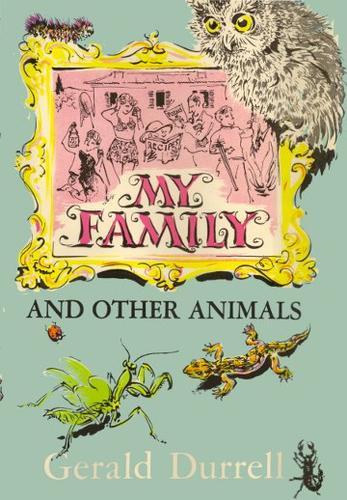
Gerald Durrell · Buy on Amazon
"I think every child should read My Family and Other Animals. I only read it for the first time recently and it’s the best book I’ve read in years. It’s a real work of genius and should be on every child’s bedside table. One of the important things about this book, which is different from the other books on my list, is that it’s written by a naturalist. This is a book that opens your eyes and provides you with a vocabulary, to describe and think about the creatures you encounter in the natural world – no matter how old you are. The book is divided into three parts – the three different villas in which Gerald and his eccentric family live at various times in Corfu. Durrell manages to capture a child’s point of view of the adult world perfectly. His observations of his family are similar to his observations of the creatures he collects or observes. When I read it I feel 10 again. And his powers of observation and his prose are extraordinary. It’s not complex language, but it is beautifully expressed. The descriptive prose is shockingly good. The narrative is not held together so much by plot as by humour, which I think is an important ingredient in a children’s book. This book is very funny, with proper laugh out loud moments. There are delightful childish details, like he has these two little dogs called Widdle and Puke, and then there’s the moment with the scorpions…so good. And it’s one of the few books I’ve found that has large sections about beetles in it! “In writing Beetle Boy it was important to me not to let the beetles down. I reached out to an entomologist, Dr Sarah Beynon, and before any of my books come out, she proofreads them.” People talk about narrative voice, I think this book has narrative eyes – or a narrative view. We see the natural world as Gerald Durrell did, as a boy and, of course, he grew up to be a famous naturalist. As an adult writer, he could so easily have browbeaten the reader with all his knowledge, but it’s handled with a light touch. He describes Ulysses, his pet owl, waking up: “He would yawn delicately, shiver violently, so that all his feathers stood out like the petals of a wind-blown chrysanthemum.” I delight in this kind of descriptive prose. Sign up here for our newsletter featuring the best children’s and young adult books, as recommended by authors, teachers, librarians and, of course, kids. There are some dubious moments, when the young Gerald does things that are now illegal – he steals eggs. That particular kind of exploration can’t happen anymore because of the damage it would do, but the subject does raise interesting questions. When the young Gerald goes out on his expeditions to collect and watch creatures – or to explore — he has a freedom and autonomy that children don’t have today. One of the things that unifies all the books on this list is that, while they all may have been written for children, they are all books that can be read and enjoyed by a reader of any age. I understand why, in today’s bookshop market, we categorise books, but sometimes this can stop a book finding a broad range of readers. This book should be read by everyone, children and adults."
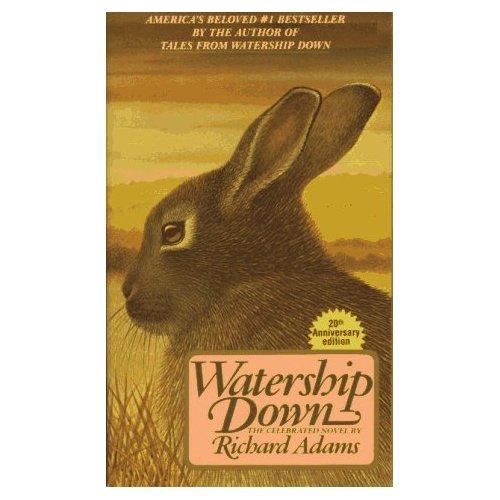
Richard Adams · 1972 · Buy on Amazon
"Which brings me on to my next choice, Watership Down (1972) by Richard Adams . This book scarred me as a child. The impact it had on me when I first read it was profound. I’m not sure I knew what I was getting into when I first picked it up. It’s brutal. Richard Adams writes about all of life: hope, freedom, sex, violence, death and evil. The rabbits in Watership Down are fleeing man-made destruction and persecution by human beings, but in the rabbit world there are parallels with the human world. “As children approach adulthood, it is important that they feel empowered to protect endangered species and the environment.” The biggest impact this book had on me was that it changed the way I saw the countryside. Before reading Watership Down, my idea of the countryside was informed by Wind in the Willows and the Hundred Acre Wood in Winnie the Pooh — wonderful, benign creatures having tea. Then I was hit with Watership Down . I cared so much about those rabbits. It is one of the first books that made me think about the impact of humans. I later discovered that Richard Adams was a campaigner for animal rights. His observations of the real life of rabbits is a major part of the power of the book. In writing Beetle Boy it was important to me not to let the beetles down. I reached out to an entomologist, Dr Sarah Beynon, and before any of my books come out, she proofreads them. I try hard not to inaccurately represent the beetles. I hope that means that there is an inherent truth in there that people subconsciously recognise. I felt this inherent truth while reading Watership Down . It lends credibility to the world the author is creating. My view of the countryside changed forever after reading the book, and it is the first book that made me think about the rights of animals. We are in such a state of loss now, a time of mass extinction. As children approach adulthood, it is important that they feel empowered to protect endangered species and the environment."

Frances Hodgson Burnett · Buy on Amazon
"The Secret Garden (1911) by Francis Hodgson Burnett. I read this book when I was about 10 or 11. I love the idea of a secret place – of having a key to a place where nobody else can go. Of all the books that have had an impact on my consciousness, this has had the biggest — although I didn’t realise it at the time. When I first read it, I read it on a superficial level – a recently orphaned girl is sent to stay with distant relatives, there is a mystery, there is a cool kid who knows about gardening and there is a sick kid. But it has stayed in my head in a way that other books haven’t. The redemptive power of the natural world and gardening was something that struck a chord with me, because it was absent from my life – I didn’t garden. “All the books I’ve chosen have steered me – formed me, created me. They made me see beauty and wonder where I hadn’t before.” The idea that wondering at and communing with the natural world has a positive effect on your physical and mental health is powerfully expressed in this story. Even though I didn’t understand it this way when I read it, it had a meaningful impact on me. So much so that later in life, when I did get into gardening in my 20s, I re-read it. I like that it doesn’t assume any gardening knowledge on the part of the reader. I took a look at my copy this morning and I landed on the passage where Colin and Mary are talking about the secret garden. She is pleading with him to keep it a secret and trying to explain why it is wonderful, describing an English spring, which is new to her as she grew up in India. Of course, there are problematic elements of the story, colonial points of view which have no place in today’s society – but, ultimately, this book is about two children who have no connection with the natural world finding it for themselves – and it benefitting their lives. “The idea that wondering at and communing with the natural world has a positive effect on your physical and mental health is powerfully expressed in this story.” When I got into gardening, I felt like Mary. I had issues with anxiety and depression, and I discovered that going into the garden, hearing the humming of the insects and digging in the flower beds, makes me happy. It puts being alive into a context with all other living things – we are all food for worms and if you are a keen gardener you are pretty much going to be ok with that. If I hadn’t read this book when I was young, I might not have felt that it was ok to go and get my fingers dirty later on in life. When I was a teenager, I didn’t like the countryside. I thought it was green, wet and uninteresting. I can sympathise with my children when I drag them outside and they grumble. But now I know enough about plants and insect to be able to find and make them interesting. Yes, and I believe it is important for our mental health. I’m no expert, but children today are more removed from the natural world than ever before, and developing that relationship, for me, has been a positive, healthy experience. All of the books I’ve chosen I love and, I think, foster a wonder of the natural world, express powerful truths, and are set now, or in recent times."

Colin Dann · Buy on Amazon
"My next choice is The Animals of Farthing Wood (1979) by Colin Dann. This is the story of woodland animals that have to flee their home because of human intervention. Under normal circumstances, some of them would be predator and prey, but in order to make the journey together they make a pact not to eat each other. So the impact of human beings on these woodland creatures is to force them to live in an unnatural state. I’d probably recommend children reading this before Watership Down, because it is not as harrowing. Yes, that’s true, animals die in this book and it’s shocking. However, one of the saddest things about this book is that some of the animals in the story are now extinct in reality — for instance the red-back shrike. This is our fault. Even more are endangered — the adder, the hare, the vole. These are all creature whose habitats have been reduced to the point that their existence is under threat. The Animals of Farthing Wood was intended to draw our attention to these wonderful creatures whose habitat we destroy, so we can change our ways and protect them. Sadly a great many woodlands have been lost since it was written. Yes, nature can be harsh, but it is the humans who are the worst foe in this story, and this is an important reason to read this book – to develop empathy. It is important to empathise with non-humans – to put your reader into the perspective of the woodland creatures."

Kenneth Grahame · Buy on Amazon
"My last choice is The Wind in the Willows (1908) by Kenneth Grahame. If you ask me today, what is your favourite book, I’d be torn between The Secret Garden and The Wind in the Willows . But the book I read and re-read was The Wind in the Willows . It is very special to me. The characters are alive in my head and I love every single one of them. I thought that the Thames Valley, as described by Kenneth Grahame, was what a wood was really like. As a child I identified with Ratty — I was Ratty, and I loved Toad because he was so naughty. Badger was the grown-up and scared me a little. This book evokes a wonderful wild wood of Edwardian England, but it’s not entirely benign. The story features intrusions by modernity – the motor-car and trains crashing through the countryside. Industrialisation is encroaching on the countryside and having an impact on the character of the countryside, and this change is wrought by humanity. “ The Wind in the Willows is my literary spine. I love it in a way that means I can’t be rational about it.” When I was fifteen, my mother took me to see Alan Bennett’s adaptation of Wind in the Willows, directed by Nicholas Hytner at The National Theatre. It thrilled me like nothing I had ever experienced. I can remember the show vividly today. It cemented an idea in my head, that I wanted to work in the theatre. Twenty years later, I went to work at The National Theatre and Nicholas Hytner became my boss. I even got to work with Alan Bennett and Mark Thompson, the set designer who brought the world of The Wind in the Willows to life on stage. The Wind in the Willows is my literary spine. I love it in a way that means I can’t be rational about it. I feel like this book has guided me. Whilst working at The National Theatre, I learned about storytelling, and I wrote Beetle Boy on my way to work there, and front of house, in my lunch breaks. All the books I’ve chosen have steered me – formed me, created me. They made me see beauty and wonder where I hadn’t before. Now, I choose to write for the insects, to open the eyes of children and adults to the industrious charm of the beetle, and, I hope, create a little wonderment at the natural world – to encourage respect and appreciation, for the benefit of everyone."