Julia Lovell's Reading List
Julia Lovell is a prize-winning author and translator. She is lecturer in modern Chinese history and literature at Birkbeck, University of London, and has also written on China for The Guardian and The Economist . Lovell’s books include The Great Wall and most recently The Opium War , which is shortlisted for the prestigious 2012 Orwell prize
Open in WellRead Daily app →Maoism (2019)
Scraped from fivebooks.com (2019-07-25).
Source: fivebooks.com

Michael Schoenhals & Roderick MacFarquhar · Buy on Amazon
"What I find particularly convincing about this book is its wide-ranging quest for blame in the Cultural Revolution, which is one of the most puzzling and unprecedented events in the history of global Communism, in that a leader—Mao—mobilises people at the grassroots in order to destroy the Party-state that he has built. The book begins with and does not spare Mao as a driving-force, but also carefully analyses Mao’s own motivations and complexities. Under the pen of MacFarquhar and Schoenhals, Mao was driven by both ambition for power—the desire to purge comrades whom he resented for sidelining him in the early 1960s—and by some degree of ideological conviction that this was the way to rescue the world Communist revolution from the corrupting influences of the Soviet Union. But responsibility for the political culture that made the Cultural Revolution possible spread far beyond Mao: two of the principal victims, Liu Shaoqi and Deng Xiaoping, were themselves deeply implicated in the PRC’s culture of political violence and humiliation. Technically, the book is a tour-de-force. It offers a survey of Cultural Revolutionaries at every level of Chinese society; it makes use of a fascinating range of primary sources including interviews, memoirs, pamphlets, posters and diaries."

Edgar Snow · Buy on Amazon
"It’s worth remembering that at the time Snow’s book was groundbreaking. He was the first foreign journalist to risk this trek to the forbidden Communist state in China’s West in the second half of the 1930s, when it was under heavy blockade by the Nationalist government. Snow invested a lot of time and energy in bringing an untold story out into the world. But as you say, there is also much that is troubling about the book, especially Snow’s unquestioning, even adulatory, response to Mao’s story about the Communist past and present. I’ve chosen the book due to its importance as a global vector for Mao’s ideas. From the year of its publication in 1937, it very quickly became a world bestseller, and the book turned Mao into a political celebrity—an affable, poetic patriot. It translated the man and his revolution to a very wide group of people, from anti-British Indian nationalists, Chinese intellectuals and Malayan guerillas, to anti-apartheid fighters in South Africa, German hippies, and American presidents. It really has had an extraordinary reach and afterlife. Edgar Snow himself, a happy-go-lucky globetrotter from Kansas, was a very unlikely intermediary for international Maoism. So the tale of Red Star Over China and its global travels is emblematic of the wider travels of Maoism itself—the phenomenal, often surprising translatability of Mao and his ideas, within and beyond China. It’s true that Western Europe and the US in the 1960s witnessed something of a Mao craze, and this took place for a number of reasons. One is that it was an era of intense youth discontent, and of student dissatisfaction with their universities and their governments. In this context of youthful rebellion, many student radicals identified Mao’s Cultural Revolution as a youth protest rather than a political purge. These Western admirers adopted some of Mao’s slogans that seemed to fit with their own counter-culture movement, such as “it is right to rebel” and “bomb the headquarters”. “Western Europe and the US in the 1960s witnessed something of a Mao craze” It’s also important to remember there was an international political backdrop to the Western enthusiasm for Mao. The late 1960s was an epoch of widespread disgust at US intervention in Vietnam . Many Western radicals felt solidarity with Mao’s China, which was America’s chief international detractor. Sympathy with Mao’s China also merged with outrage over the mistreatment of ethnic minorities who started to think of themselves as “internal colonies” inside the US, particularly black, Latin and Asian Americans. The militant wing of the African-American liberation group, the Black Panthers, were impressed with Mao’s denunciation of America’s foreign policy, and channeled Mao’s ideas about political violence to challenge the white American ruling establishment. You’re right that is was a lot easier to be ignorant about what was really going on in Mao’s China in the 1960s and 70s than it is now. At the same time, there were sources of accurate information, such as from Hong Kong’s listening posts. But many of Mao’s admirers, French and Italian intellectuals and so on, were not prepared to be sceptical, and were true believers in the PRC’s propaganda dream of an egalitarian utopian state."

Aditya Adhikari · Buy on Amazon
"Nepalese Maoism as an intellectual and a grassroots phenomenon goes back to the 1950s. There were multiple different Communist groups working in Nepali politics and society then, many of which were sympathetic to Mao’s revolution. But it was only in the Maoist Civil war, which started in February 1996, when these political tendencies took on an instrumental power to change Nepali politics. A small unit, 36 members, of the Communist Party of Nepal (Maoist)—a recently formed splinter group—attacked a police station in northwest Nepal, beginning the Civil War. Get the weekly Five Books newsletter A decade later, the Maoist insurgency’s impact on Nepal was huge: in 2006, the Nepali Maoists, often using quite a textbook version of Mao’s military strategies, had fought their way into a position of decisive political influence, pushing back against the superior fire power of the Nepali police and army. Their own People’s Liberation Army was 10,000 strong, and they had taken 80% of Nepali territory out of state control. The Maoist civil war was the principal reason for the collapse of the Nepali monarchy and the establishment of a federal republic in Nepal after 2006. And in the ten years following, two members of the Maoist party have served three terms between them as Nepali Prime Minister. So although the Maoists didn’t realise their ambition of unchallenged control of the country, as the CCP did in China, Nepal is the only country in the world where you can encounter self-avowed Maoists in power. One of the most surprising adaptations that Nepali and Indian Maoists made to the original creed was to use Mao’s ideology to champion the rights of underprivileged ethnic minorities. Even the critics of Maoism in Nepal would acknowledge their contribution in giving voice to ethnic minorities and low castes who had been marginalised by high-caste elites. However, many Nepalis today feel that this inclusive promise of the Nepali Maoists has not been realised, and that they squandered the radical potential of their movement to help the poorest and most neglected in Nepali society. There is a strong sense that the Maoists, when in power, compromised too much with high-caste elite politics in Kathmandu. There are two incorrect ideas about Maoism that I often picked up on when researching the book: firstly that Maoism is only a story of China; and secondly that Maoism is a story of the past. But Maoism is a force that has changed not just China but many other parts of the world as well, between the 1930s and present day. My book tries to tell it as both a Chinese and a global story, of the past and present. “Maoism is a force that has changed not just China but many other parts of the world as well” The ideas of Mao’s revolution spread practically to every continent, beginning with the de-colonising world. Mao’s ideas strongly influenced the Malayan Communist Party as it fought the British state in Malaya, one of the first hot conflicts of the Cold War. There was a big impact on the North Vietnamese Communist state, and also on the Cambodian Khmer Rouge, between 1975 and 1979. States and insurgencies in Africa borrowed Mao’s ideas, and benefited from Chinese aid programmes. Left-wing Latin Americans also acclaimed Mao’s revolution as the path that needed to be followed in their own continent. One famous example is Abimael Guzmán, who began the Shining Path war against the Peruvian state in the 1980s. So this is a very wide-ranging story, that takes in the tea plantations of north India, the sierras of the Andes, Paris’s fifth arrondissement, the fields of Tanzania, the rice-paddies of Cambodia and the terraces of Brixton."

Timothy Creek · Buy on Amazon
"I teach Chinese history at Birkbeck College at the University of London, and this is a great book to teach with, because it takes in such a diversity of approaches and perspectives, from a range of top scholars. The essays also offer an entry point into individual scholars’ longer work. For example one essay by a German scholar, Daniel Leese, is an excellent introduction to his full-length book on the Mao cult. The contributions are varied in their subject matter, so they all provide a valuable, distinct perspective on the vast complexities of Mao’s life and ideas, but I found Delia Davin’s piece on Mao and women particularly helpful; as is well known, Mao was extremely contradictory in his statements and his behaviour towards women. His own womanizing fell very far short of his statements of gender equality, and Davin’s essay thoroughly explores that paradox. And an essay by Michael Schoenhals analyses Mao through fragmentary episodes and commentaries. It illuminates in truly eye-opening fashion how deeply unconventional and contradictory an individual Mao was. There are major elements of Maoism that spring from earlier guises of Communism, from Marxism, Leninism and Stalinism. Although Mao had personal quarrels with Stalin, he also had a huge respect for the Stalinist political legacy. In a way, that was one of the significant drivers of the Cultural Revolution: Mao felt that the Soviet Union under Krushchev was turning away from Stalinism, and it was up to China to continue this legacy that Mao was so attached to. Support Five Books Five Books interviews are expensive to produce. If you're enjoying this interview, please support us by donating a small amount . Yet Maoism distinguishes itself in various ways from earlier forms of Marxist thought. As an ideology born in China, Maoism gave center stage to a non-Western, anti-colonial agenda. Mao declared to radicals and revolutionaries in developing countries that Russian-style Communism should be adapted to local national conditions. He also told revolutionaries to take their struggles out of the cities and deep into the countryside. Mao was a passionate advocate of the doctrine of voluntarism, which holds that by sheer audacity of belief the Chinese could transform their country; revolutionary zeal, he preached, was more important than economic strength or weaponry (though, paradoxically, he was very eager to acquire the atomic bomb). Like Lenin and Stalin, he was determined to build a militarised, one-Party state that worshipped its supreme leader, but he also, especially in his last decade, championed anarchic insubordination. As he declared during the early years of the Cultural Revolution: “It’s right to rebel.” Bear in mind, however, that Maoism across its 80-year history frequently defies tidy definitions. It is a set of very contradictory, often unstable ideas, and over the decades it has meant many different things at different points in time, all around the world. In Vietnam and Cambodia, it stood for militarized party-building; in Western Europe, it stood for counter-culture rebellion; in Peru, it inspired a tiny band of under-equipped ideologues to challenge the government and army."
The Opium War (2017)
Scraped from fivebooks.com (2017-05-16).
Source: fivebooks.com

Frank Dikotter, Lars Laamann and Zhou Xun · Buy on Amazon
"This book is very informative and thought-provoking in its discussions of the substance over which the war was fought. Opium was an illegal narcotic in China from the 18th century onwards, and the Chinese state crackdown against it particularly intensified during the 1830s. The standard narrative about opium – both in modern China and in a more muted way in the West – has long been that it was an apocalyptic blight for China. It was frequently thought that any Chinese person who tried opium would inevitably end up an opium slave, squandering their entire family’s fortune and destroying their health. This is a view that Frank Dikotter, Lars Laamann and Zhou Xun try to nuance. They don’t deny that opium claimed many victims. But at the same time, they are usefully trying to complicate our understanding of the way that opium culture worked in China, from the early modern period through to the 20th century. They move away from the idea that opium turned every casual smoker into a pathetic victim, because when you think about it such a view is implicitly racist, in the assumptions that it makes about Chinese moral and physical weakness. In Britain, if somebody had a glass of wine , we wouldn’t assume they were one step away from becoming an alcoholic. What is also eye-opening about the book is how it illuminates the complexity of the way in which opium was used – not only its recreational but its medicinal importance. Dikotter and his co-authors argue that opium was China’s aspirin until the 1920s and 30s. They also fascinatingly describe the intricate aesthetics of opium culture. Opium was a social drug, and for the best families smoking it necessitated all kinds of exquisite objects. To be a truly discerning smoker, you needed the long, beautifully carved dark wood chaise longue to recline on, and the bejewelled pipes made of silver and ivory. This material culture that grew up around the drug turned smoking opium into the perfect act of conspicuous consumption – sending money up in smoke."

Carl Trocki · Buy on Amazon
"This book explores the drug’s key importance to the British Empire. Carl Trocki explains how economically central opium was to the building and maintaining of the Empire. He observes how the expansion of the empire during the 19th century coincides almost precisely with the heyday of the opium trade. And when the empire started to go into decline, in the early years of the 20th century, again it coincided very closely with the winding down of the opium trade. So opium as a commodity was essential to the workings of the British Empire. This was because increased sales of the drug, especially in China, reversed Britain’s trade deficit with Asia. Sales of opium gave British merchants silver with which to buy silks, ceramics and particularly teas for the British market. When this tea travelled back to Great Britain, before it disappeared into British tea cups the government extracted its customs duties. Those customs duties – paid for largely by opium money – covered a large part of the cost of the Royal Navy. And the navy kept the British Empire afloat. So without the financial boost of opium, you would absolutely not have seen the same expansion of the British Empire through the 19th century."

Peter Ward Fay · Buy on Amazon
"This book is hugely readable, because of its sure grasp of historical narrative. I love the way that Peter Ward Fay uses individual stories, testimonies and voices to bring the story alive. And as you just said, it spells out very clearly the trade triangle involving opium, tea and silver between India, China and Britain. Importantly, it also shines a light on links between British merchants in China and Indian merchants. This Anglo-Indian story is a very important one of the Opium War and of the opium trade, and I think it has often been overlooked. The economic impact of the opium trade on India itself has long been relatively forgotten. There is one niggling criticism I have of the book, which Peter Ward Fay himself acknowledges, in that he neglects the Chinese story. It’s an account told from European and mainly Anglophone materials. He himself admits he is no Sinologist. And that is a curious feature of the landscape of much Western writing about the Opium War. Until 20-odd years ago, most accounts written in English made detailed use of the English language sources while neglecting the rich array of Chinese evidence. So readers were left with a collection of rather Euro-centric interpretations."

James Polachek · Buy on Amazon
"I chose this book to contrast with Peter Ward Fay’s, because of its immersion in the Chinese side of the story. Polachek behaves a little like a detective in this book, picking his way through an intricate, opaque mass of internal Chinese sources, policy debates and abstruse connections between members of the imperial bureaucracy – which make you think that not very much has changed in Chinese politics over the last 150 years. The Opium War in both Chinese and Western historiography has taken on a momentous significance as an almost mystically pre-destined clash between the two big civilisations of China and Great Britain. Polachek, by contrast, argues amongst other things that the Opium War was triggered by Chinese policy makers in a fit of bureaucratic haste. Many of the key policy makers in China were too busy worrying about domestic issues to size up the new British enemy on their maritime borders. Very few top-level officials had actually thought through the implications of the Qing crackdown on opium in the 1830s on relations with Great Britain. So, in Polachek’s account, the Opium War becomes an almost accidental occurrence."
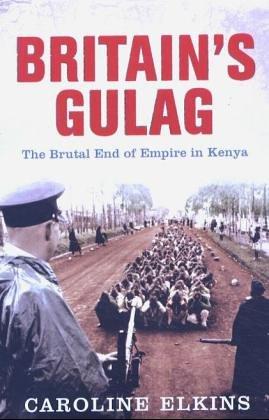
Caroline Elkins · Buy on Amazon
"I wanted to include this because, although it’s not to do with the Opium war, it raises very important and broad questions about how we in Britain remember our imperial past. Thinking specifically about the opium trade, it’s fair to say that Britain’s role in these events is not particularly well understood or known in Britain today. Even the physical traces are neglected – our old East India docks have been overrun by wild birds, or redeveloped into glass and steel apartment blocks. As a British student, it would have been quite easy for me to get through the history curriculum without ever encountering the Opium War, if I hadn’t chosen to study Chinese. And back in 1997, at the time of the handover of Hong Kong, there was no mention in the dignitaries’ speeches of opium wars fought over it. I can’t say whether we’ve forgotten about our Opium War out of laziness or out of guilt, but I do think that there is a tendency in Britain to think of ourselves as post-imperial, and avoid reflecting on some of our colonial misdeeds. The uncomfortable fact remains that a large slice of the British Empire was bankrolled by opium money, and opium is a highly addictive and illegal narcotic. That is a very inconvenient truth. Some historians of the Opium War, and politicians and merchants at the time, argued that we just brought the opium to China, and the Chinese didn’t have to smoke it – or that if the British hadn’t sold the opium, some other country would have. But you can’t escape the fact that it was the British who were growing the opium in India, and selling it for profit in China. When I first read Caroline Elkins’s book, I was shocked by the crimes committed by the British colonial regime in the 1950s. Her revelations about torture and forced slave labour perpetrated by the British in Kenya completely refuted the lazy idea you sometimes hear that the British were somehow “less bad” as colonial overlords than the French or the Belgians. So the book really throws open the debate about the benign nature of the British Empire, and about how we should think about this period in our history, which is still so defining to us. Although we think of ourselves as postcolonial, our experience as a vast empire still shapes many of our foreign policy decisions today. Why were we in Iraq? Why were we in Libya? Why are we in Aghanistan? Because of the assumption that Britain should have a global policeman’s role. I think we need to ask questions about what originally bankrolled our international influence (namely opium), whether we are entitled to play that global role, and how we have played that role in the past. We certainly didn’t play it very creditably during the Opium War."