Jessica Stern's Reading List
Jessica Stern is an American scholar and academic on terrorism. Stern serves as a research professor at the Pardee School of Global Studies at Boston University. Earlier she had been a lecturer at Harvard University. She serves on the Hoover Institution Task Force on National Security and Law. In 2009, she was awarded a Guggenheim Fellowship for her work on trauma and violence. She served on President Clinton’s National Security Council staff in 1994-95.
Open in WellRead Daily app →Who Terrorists Are (2010)
Scraped from fivebooks.com (2010-12-27).
Source: fivebooks.com
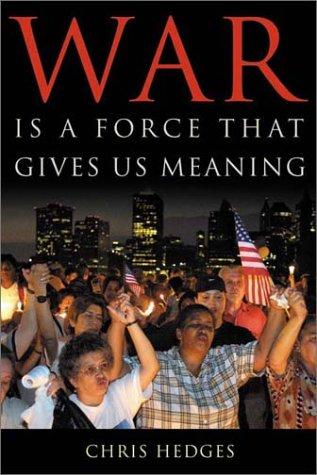
Chris Hedges · Buy on Amazon
"This is one of my favourite books for explaining the emotional aspects of why people are drawn to violence. It looks at the addictive quality of war and terrorism. I have seen that, when they begin their careers, terrorists often believe that they are making the world a better place. But over time violence can become addictive, as Hedges makes clear. One mujahid even said to me, “I am as addicted to jihad as you are to writing!” War simplifies life. So does terrorism. There is an enemy. The enemy is evil, and we are good. There is a reason for living and all the ordinary confusion of life falls away. The adrenaline becomes addictive. Hedges talks about war providing a kind of high. He says, “War is an enticing elixir. It allows us to be noble.” That is so relevant to terrorism. Terrorists believe themselves to be noble, fighting for a higher cause. Later on they can become quite cynical but at the beginning they often see themselves as saints. There is this idea that violence with the aim of furthering some political or religious goal gives them dignity or nobility. What I love about this book is that Chris admits that even though he wasn’t serving as a soldier, he was not immune to the addiction. Those who serve in war zones – even if they aren’t fighting – can become addicted to war too. Hedges admits that it even happened to him."
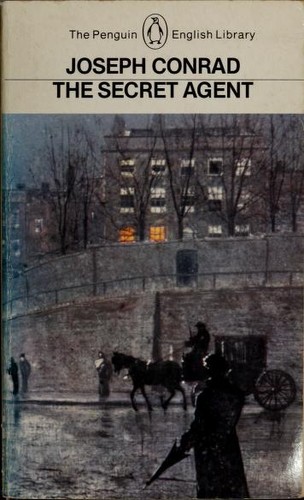
Joseph Conrad · Buy on Amazon
"Yes, I thought I was being clever and unique and didn’t realise so many other people had made the connection. The book is based on an incident that actually did occur when an anarchist tried to blow up the Royal Observatory. In the novel, a group of hapless anarchists are trying to incite a rebellion. Their main concern is that British society is too liberal and they want to demonstrate that this kind of thing can occur. What I loved about this book is the cynicism that Conrad has in looking at the zealot. He makes clear that a person may start out as a true believer but over time they are doing work that they may or may not believe it. It is the silliness of zealotry that becomes really clear. Did bin Laden and his close circle of followers really believe that what they were doing was making the world a better place? It’s ironic that the mission of this organisation shifts so regularly and is so highly dependent on the audience they are trying to reach that you do question the extent to which bin Laden believes his own rhetoric. Bin Laden started out with the goal of forcing Soviet troops out of Afghanistan. Next he aimed to force US troops out of Saudi Arabia. Next he claims to be representing the interests of all the world’s oppressed. At one point Zawahiri tried recruiting African-Americans with messages referring to Malcolm X. Now al Qaeda claims to be fighting global warming and is urging followers to help those suffering from the floods in Pakistan. Yes, I do."

Louise Richardson · Buy on Amazon
"What I love about this book is that first of all she makes clear that you can’t fight a war on terrorism any more than you can fight a war on dynamite – that terrorism is a technique. I would define terrorism as deliberately targeting innocent non-combatants with the aim of influencing an audience. The goal might be ‘freedom’. But terrorists slip over the moral line when they deliberately target the innocent. “You can’t fight a war on terrorism any more than you can fight a war on dynamite” Deliberately targeting non-combatants is forbidden by all three monotheistic religions. It is also forbidden by the Judeo-Christian Just War tradition and the Islamic Just War tradition. I think she simplifies what terrorists are after, which is, in her view, revenge, renown and reaction. Revenge for some kind of perceived slight or crime. And she has this very important observation that terrorists want attention and they also have this kind of vanity. They want to be famous. What Louise suggests, and I think she is right, is talking to them. That isn’t the whole solution, obviously. I see perhaps a bigger role for military action under certain very limited circumstances with very strict requirements. Where we do agree is that there is often a downside to military action, which I would say enables a terrorist to mobilise further. I think we have to be careful using that military instrument. Get the weekly Five Books newsletter We both agree that when there are obvious war crimes on our side that is a coup for the terrorists. Louise very strongly opposed the Iraq war as did I because it seemed that it had nothing to do with September 11. Now that view is commonplace, but when Louise and I were making these arguments early on, some of our colleagues probably found us naive. Louise also makes a very powerful argument, which is that terrorists aim to get us to overreact. This comes out of her long-term study of the IRA and related groups. The goal is to get the government to overreact, which serves their interest. The reason I like to use this book in teaching is because it explains what terrorists want in a very clear way."

Pumla Gobodo-Madikizela · Buy on Amazon
"This is a complicated and moving book about the nature of good and evil. Pumla is a South African psychologist who spent a lot of time in prison interviewing people like Eugene de Kock, the commanding officer of state-sanctioned apartheid death squads. He is currently serving 212 years in jail for crimes against humanity. He directed ‘the blood, the bodies and the killing’ against apartheid’s enemies. She walks us through her recognition, “that good and evil exist in our lives and that evil, like good, is always a possibility”. Anybody can say this but because she exposes us to what happens to her as she is interviewing de Kock, we come to a more visceral understanding of this capacity for evil. She explains how she ends up really empathising with him, and possibly even sympathising with him. De Kock oversaw the killing of innocent people and it is incredible that this black South African psychologist was able to sit down with him and physically touch him. She recognised a side of him, a capacity for good, that unfortunately never evolved. He was responsible for truly horrific crimes. And yet she came to empathise with him. It’s extremely uncomfortable for her, and for the reader, to recognise the capacity for good in persons whose actions we condemn as evil. Yes. There were a few terrorists I talked to who seemed to have become truly evil. They seemed to have lost their capacity for empathy. You get this feeling that the hairs are standing up on the back of your neck. But that wasn’t the case for the majority of terrorists I spoke with. In many cases I felt that they were caught in a web of lies, that they were vulnerable boys who had been manipulated by leaders to do terrible and terrifying things."

Eric Hoffer · 1951 · Buy on Amazon
"This is a brilliant book. Hoffer points out that zealots can be attracted to zealotry itself. Leaders of revolutionary movements go after people who are so dissatisfied with the status quo, and with themselves, that they are willing to put everything at risk, to create a new, better, purer world. The trick is to provide them with an identity as part of something bigger than themselves. One of the fascinating things Hoffer does is to look at how the Nazi and Communist Parties were recruiting from the same pool. He has these examples of people who switch. Reading that book got me interested in extreme left ideologues who switched allegiances to become neo-Nazis, and Communists who switched allegiances to become radical Islamists. When we see zealots switching their allegiances as if they were changing clothing, the shallowness, of their extreme beliefs becomes clear. “When we see zealots switching their allegiances as if they were changing clothing, the shallowness, of their extreme beliefs becomes clear” Terrorists claim to be making the world a better place for the population they claim to be serving. But over time it may become clear that the terrorists’ ‘customers’ don’t want the service the terrorists are providing. When that happens, some terrorists – the ones whom Hedges might describe as addicted to war – find a new ideology. Ideology is often just a marketing tool."