Jeremy Noel-Tod's Reading List
Jeremy Noel-Tod is a lecturer in the School of Literature, Drama and Creative Writing at the University of East Anglia. His literary criticism has been widely published, in the Daily Telegraph , the Literary Review , the Times Literary Supplement , Prospect , the New Statesman , the Guardian and the London Review of Books , and he has been the poetry critic for the Sunday Times since 2013. His books as an editor include the revised edition of the Oxford Companion to Modern Poetry (2013) and the Complete Poems of R F Langley (2015). You can follow him on Twitter @jntod .
Open in WellRead Daily app →The Best Prose Poetry (2019)
Scraped from fivebooks.com (2019-04-15).
Source: fivebooks.com
Gertrude Stein · Buy on Amazon
"I suppose we stay in Paris , which is where Stein was living at the time of the publication of Tender Buttons (though she began to write them while she was on holiday in Spain.) I think that might be significant because in The Autobiography of Alice B. Toklas (1933)—Stein’s autobiography told from the point of view of her partner—she directly connects what she was trying to do in Tender Buttons with the Cubist painters she knew at the time and what they were doing: breaking up the visual plane of these three-dimensional objects, things on café tables, and presenting them in strange, overlapping, abstracted ways. She says that when she wrote Tender Buttons , what she was doing was sitting down, taking an object (like a tumbler, or something), looking at it, trying to get a picture of it in her mind, and then creating a “word relationship” in response to its name. The titles in Tender Buttons are things you might find in any well-to-do domestic interior, like Stein’s apartment in Paris. She was fascinated by this idea that you could write a poem, she said, in which you name something without naming it. You write around the solid impression that it makes in your mind. In that sense, I do see Stein as being continuous with Rimbaud and his Illuminations . It’s been suggested that Stein might have been stoned when she wrote Tender Buttons. [ Laughs ]. And Alice B. Toklas did later publish a recipe for hash brownies . . . But certainly, she, like Rimbaud, had an idea of trying to unhook her rational mind when it came to writing these poems, and letting it follow its own intuitive course. If these poems are still lives, they are not seen from one point of view—she wanted to find a way, she said, of “mixing the inside with the outside.” Support Five Books Five Books interviews are expensive to produce. If you're enjoying this interview, please support us by donating a small amount . Tender Buttons in particular was the book that made her notorious. It was a small press publication, but it got picked up by the American newspapers, who began to quote it, parody it, and generally mock it as nonsense. Later, in the 1930s, she goes to the United States on a lecture tour and there’s a little audio clip of a journalist saying to her, “Miss Stein, what do you say to people who don’t understand what you write?” and she says, “I say, if you enjoy it, you understand it.” She emphasizes this in her Steinian way: “if you enjoy it, you understand it.” And then she says, “If you don’t enjoy it, why do you bother about it?” Which I think is a great response. She knows that there is something about her writing that fascinates people, and it fascinates them partially because it irritates them. But it irritates them because they’re sort of attracted to it, and don’t know why. It irritates the rational part of the mind which expects to be able to explain things. “It’s been suggested that Stein might have been stoned when she wrote Tender Buttons ” She says this elsewhere about ‘classic’ art—that there’s a period when most classic works are not recognized as classics, and to most people they’re actually more irritating than beautiful. People reject them because they’re new, and they don’t know what to do with them. But then they become accepted as a classic, and everybody forgets what it’s like when they were irritating. But, in a way, they were more interesting when they were irritating. With Tender Buttons , somehow Stein has managed to write a book that has become a classic, and yet still has that quality of niggling at you. You can’t read Tender Buttons easily. I enjoy it—I love reading some of it out loud; its rhythms are amazing. But I’ve never read a critical account of Tender Buttons which really satisfactorily explains it. It has this effect on you that nobody has ever quite managed to put into words. Yes. I like that—it’s a sort of modernist mind experiment. And yet, at the same time, I think one of its satisfactions is that it’s a really sensory book. On one level, you can accept the fact that it’s talking about, say, roast beef or custard in its “Food” section, and if you hold your mental picture—your memory of those foods in your mind—as you’re reading, you can connect that pleasure with the intellectual pleasure of the poem. Definitely. Stein scholarship has made a good case for taking a reading in that direction: the private erotic language that she had with Alice B. Toklas. Her poetry has the same passionately enigmatic yet emphatic quality. It teases and it pleases. “Poetry [is] really loving the name of anything and that is not prose”, as she says. It’s a book that asks you to enjoy the fact that prose doesn’t have to really make any kind of sense that you were expecting, while at the same time reminding you of all kinds of other prose that you read, every day. For example, if you set one of the Tender Buttons alongside a typical recipe book of the period, you would immediately see its resemblance to, say, a description of how you would produce a jam roly-poly. There’s the same brisk, confident, shorthand precision. Actually, on Twitter, there’s even a bot which mashes up Tender Buttons with phrases from a 24-hour shopping channel. It’s called Gertrude’s Gifts ."
Francis Ponge · Buy on Amazon
"There is certainly a shadow history to do with the rise of prose in general here. I realize also that we’ve basically stayed in Paris for all of these books, one of the great modern metropolises. And these are places which are increasingly dominated by prose as the way in which an increasingly literate population consumes information and entertainment, in cheap books and newspapers. Some of Baudelaire’s prose poems, for example, first appeared as feuilletons , literary snippets in a daily newspaper. Get the weekly Five Books newsletter In an age of mass literacy, prose is also essential to political influence— Mein Kampf sells millions of copies—as well as being the medium of the administration of power, and so also empire: ‘Caesar himself is patron of our grammar books’, as Charles Bernstein says. For a poet to inhabit this medium, as Ponge does, and bring it to bear on the most apparently modest of objects—to make tentative propositions in prose—is to in some way try to recover the life of prose, because so much prose is effectively dead or deadening. Yes. In the 1930s, Ponge worked in a publisher’s offices, which he hated. He was a union representative who went on strike and later joined the Communist Party—and then during the war, the Resistance. His first, classic collection of poems, Le parti pris de choses (1942), has recently been translated as Partisan of Things , which I think brings out its spirit of opposition to what Marxists would call ‘reification’: turning people into things, through their labour. All poems, he thought, should be considered “reasons for living happily.” Unfinished Ode to Mud is perhaps my favorite translation of Ponge, although there are a number of other good ones. In the history of the prose poem, there’s a case for saying that that Ponge brings it to a kind of perfection. This is not to say that everything after him is a disappointment, but he somehow discovers an essence of the poetic in prose which comes from the way in which he proceeds by very simply trying to define the thing in front of him. It’s as though he takes a step back from Gertrude Stein, and just takes the object in front of him as it is, like the oyster or the blackberry. He doesn’t do what Stein does, which is to go around it; he tries to focus on it. But he’s so attuned or sensitive to the dangers of closing down a definition that he develops this style where what he’s saying is always open to a further refinement. He writes in a very provisional manner, as though he’s just drafting a poem—as if these prose poems are just notes towards verse poems that he’s going to write and then doesn’t. But all that is part of his extremely charming irony: he’s actually becoming very precise indeed about his perception of this object. I think that’s very nicely put—and it’s borne out by the influence Ponge had on so many prose poets after him, which is something I tried to show in the anthology. His method is ostensibly scientific: he takes prose as a supposedly objective medium. From childhood, he was fascinated by reading the dictionary. It’s as though he puts on this white coat of prose to go into his laboratory, but then the great joke—and I do think of Ponge as a kind of comedian—is that actually, everything he’s dealing with is slippery and alive. And as soon as he starts to describe it objectively, the subjective enters. Every sentence of Ponge is metaphorical and self-reflexive; whatever object he’s describing, it turns out he’s describing a metaphor for the process of writing, too. “Whatever object he’s describing, it turns out he’s describing a metaphor for the process of writing, too” For example. What is rain? You could give a one sentence definition of it, but instead, in “Rain” Ponge gives you amazing, dazzling paragraphs which really attempt to capture that sense of what it is to look at rain, what it’s doing, out of a window. To really attend to how it splashes differently in different places—and how prose might be a way of catching every single perception. This, of course, works exactly against that tendency to close down and define. So there’s this constant tragicomic struggle against trying to be simple. In Ponge’s poetry, words are always coming alive and running away from him, like Mickey Mouse’s brooms and buckets in “The Sorceror’s Apprentice.”"
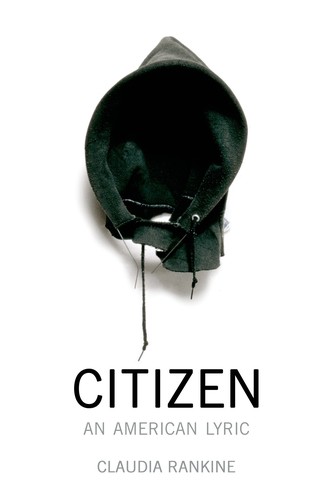
Claudia Rankine · Buy on Amazon
"Like a lot of definitions, that refers you to the definition of something else. This is one of the reasons that the epigraph to the introduction of my anthology was Gertrude Stein: “What is poetry and if you know what poetry is what is prose.” Because sometimes these arguments become rather circular. People ask, ‘How do you define a prose poem?’ My response to them is ‘Well, how do you define a poem?’ It’s not as though that’s a question with an easy answer. When we define a poem now, we usually mean ‘lyric’—that form of intense emotional expression associated with song, but obviously, in written poetry, increasingly detached from a musical setting. (Though I have sometime wondered if one analogy for prose poetry in popular music is the spoken-word song, such as Tom Waits’ “What’s He Building in There?”). Support Five Books Five Books interviews are expensive to produce. If you're enjoying this interview, please support us by donating a small amount . I think when Rankine calls Citizen ‘an American lyric’ and calls her previous book, Don’t Let Me Be Lonely (2004), an ‘American lyric’, she is deliberately challenging the definition of lyric. She’s in the tradition that goes back to Wordsworth and Coleridge calling their poems Lyrical Ballads , and thinking of how ‘lyrical’ has a certain high-culture association with the refined, literary way of writing poetry, and ‘ballads’ has the low-culture association of oral literature and folk song. Like Wordsworth and Coleridge bringing together those words, by juxtaposing those two terms ‘America’ and ‘lyric’, Rankine is saying that we need a new working definition of ‘lyric’, and perhaps a better definition of ‘American’ too. ‘An American lyric’ has the sort of oxymoronic quality that ‘prose poem’ does. These little two-word phrases that challenge you to rethink your definition of both parts. I think shape-shifting is right for Citizen . Obviously, it’s been admired and acclaimed, but I do feel the general reception of it has underplayed its artfulness. Its technical subtlety and overall arrangement has been neglected, because it has been classified as a kind of documentary work. The focus has been on its vignettes of everyday micro-aggressions, not its more extended argument. Yes, and ‘shape-shifting’ is a nice description, because if you read Citizen as a through-composed work, as a complete thing, it changes its form. The plain documentary prose—which has come to characterize it—is only part of it. There’s the critical essay on Serena Williams. There are passages of verse, too. Rankine is clearly a writer who admires Stein; sometimes, her sentences sort of do what Stein does, which is to knock through the walls of grammar and just let words run up against each other. “Rankine is saying that we need a new working definition of ‘lyric’, and perhaps a better definition of ‘American’ too” At the start of Citizen , I think it’s the first sentence, she says, “You are alone and too tired even to turn on any of your devices.” That’s immediately a bit Ponge; it’s clueing us in to the fact that this is going to be a reflexive sort of writing. It’s saying: I’m too tired to use any of the devices that you might associate with lyric poetry. But over the course of the book, it’s full of devices, in that artful sense. It’s also a book which needs to be read out loud. Like Tender Buttons , it’s a book that needs to be heard and felt to have its full effect. Rankine was interviewed on the Guardian podcast when the anthology came out and she summed up her reason for using prose with a strikingly Steinian phrase—she said it was ‘the perfect form . . . to create the music of the narrative of the devastation altogether’. Anyone who can come out with something like that on the spot is, as far as I’m concerned, a bona fide genius. Yes. Racism is structural and prose is a means of exposing that structure. There’s a great review of Citizen by the poet Vahni Capildeo, where she compares it to a “crystalline aggregation”, a “lump of geological fact”. She says, “fits no human palm without spiking it somewhere.” In using prose, Rankine wants to look the reader directly in the eye—not to go around the subject. But I think there’s another side of that, which is that she wants to also draw you in. Her lyricism wants to establish an interiority. One of the really important passages in the book is where she talks about Robert Lowell. She doesn’t name him directly, but it’s apparent that she’s addressing Lowell and in particular thinking of his book Life Studies (1959), which has a prose memoir as its middle section. Your ill-spirited, cooked, hell on Main Street, nobody’s here, broken-down, first person could be one of many definitions of being to pass on. The past is a life sentence, a blunt instrument aimed at tomorrow. Drag that first person out of the social death of history, then we’re kin. […] Listen, you, I was creating a life study of a monumental first person, a Brahmin first person. If you need to feel that way—still you are in here and here is nowhere. Join me down here in nowhere. It’s such a powerful passage because she’s directly addressing the author of the most famous book of post-war American verse, Life Studies , and the way he mixes prose and free verse to present that apparently open and confessional portrait of himself. She’s challenging that and how it has dominated the idea of the ‘American lyric’: Lowell, as a privileged white man, has been able to do such a thing, to make such a full and open confession of himself. But what would have happened to a black woman who had tried to do that in 1959? Because prose poetry often comes from the margins of the literary canon, scholarship on the prose poem perhaps has a slightly better-than-average track record here. Three important studies that come to mind, for example, are by women: Marguerite S. Murphy, Nikki Santilli and, most recently, Jane Monson. And its hard to account for it as an avant-garde form without acknowledging Stein. But I do think that the available accounts of prose poetry in English have tended to be very American-centric. That was something I wanted to try to shift in the anthology, to look at the way prose poetry has this international existence, and how important translation has been in developing it as a form that leaps almost simultaneously into multiple languages in the modernist era: from French into English, Russian, Chinese, Bengali, German, Spanish, Japanese, and more. And then, of course, Anglophone poetry is not just written in the UK and the US, but also in Australia, New Zealand, India, the Caribbean, Africa. Get the weekly Five Books newsletter To come back to your question, Stein, as I’ve already mentioned, suffered a lot of mockery before she was admitted to the modernist canon. There’s also Amy Lowell, who was almost totally forgotten because Pound won the propaganda battle to claim Imagism as this sort of pared-down free verse, whereas Lowell was developing what she called ‘polyphonic prose’, which is full of exuberant music and imagery. When I first read her “Spring Day” (1916), I thought wow, there’s a whole other side of Imagism here which is prose poetry, and it’s almost never mentioned. There are various points all along the way where you find people have been written out of literary history. They’re often women, or queer writers like Jack Spicer—Spicer’s Letters to James Alexander (1958–59) is a sequence of wonderfully direct prose poems—or black writers. Ron Silliman suggests in his essay on prose poetry, ‘The New Sentence’, that possibly the first American prose poet is an African-American called Fenton Johnson, who writes this unforgettably poignant monologue called ‘ Tired ’—although, according to my own chronology, Johnson is predated by Emma Lazarus, the Jewish American poet best-known for the sonnet that hangs inside the Statue of Liberty, whose sequence “By the Waters of Babylon” is subtitled (after Baudelaire) “Little Poems in Prose”. So, yes, I think there is still work to do in re-writing the history of modern poetry to bring those voices back in. There’s so much more that I could have put in the anthology, if I hadn’t had a page limit—a whole other book . . ."