James Robertson's Reading List
James Robertson is a poet, editor and writer of fiction. He has published seven novels, including The Fanatic (2000), Joseph Knight (2003, recipient of both the Saltire Society and Scottish Arts Council Book of the Year awards), The Testament of Gideon Mack (2006, long-listed for the Man Booker Prize ), and And the Land Lay Still (2010, Saltire Book of the Year). He is also the author of four short story collections, most recently 365 : Stories which was the basis for a live show and on-line collaboration with folk fiddle player and composer Aidan O’Rourke). James Robertson is also co-founder
Open in WellRead Daily app →Landmarks of Scottish Literature (2021)
Scraped from fivebooks.com (2021-09-08).
Source: fivebooks.com
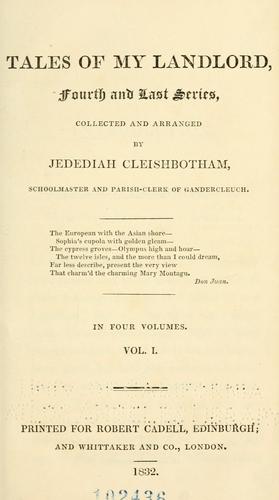
Walter Scott · Buy on Amazon
"Well, all the books I have chosen were also landmarks in my own understanding of Scottish literature. I could have chosen any number of books. But I start with this one because until I was in my twenties, I had never read a Walter Scott novel. I’d read some of his poetry, but none of his fiction; I had tried when I was younger, but never got very far. It seemed hard-going and the books were very long. Anyway, I was doing a postgraduate degree in Scottish history and I began to realise that I was going to have to focus a lot on Scott, and ended up reading virtually everything he’d written. It was a revelation to me. I hadn’t appreciated what a major figure he was in our literature, and how he shaped so much of what happened subsequently. The Heart of Mid-Lothian was his seventh novel, and to me it’s his masterpiece. It’s a big book, longer even than most of his other novels. It’s set in 1736, so thirty or so years after the union of parliaments— —and he deals with the politics of the Union, and whether it’s working or not working, and how people feel about it. But he also has another story going on, the story of two sisters: Jeanie and Effie Deans. It seems to me quite a contemporary story, which is one of the reasons why I think it’s still relevant. Effie and Jeanie are the daughters of this very upright Presbyterian man. They live on the outskirts of Edinburgh. Effie’s been having a secret affair, and she’s fallen pregnant. She doesn’t tell anybody about it. Then her child is born, but nobody knows where the child is. As the law stood in those days, if it was known that you had had a child but you couldn’t produce it, then the assumption was that you had done away with it and you would be found guilty of the child’s murder. “Scottish literature is best understood if you treat it as something distinctive and separate” So Effie’s facing execution, and Jeanie believes her sister’s telling the truth when she says she didn’t kill it—but Effie still refuses to say what’s happened. Eventually Jeanie walks all the way to London, to try to seek an audience with the queen, and get her sister pardoned. There’s a lot more going on, but that’s the guts of it. There’s a very human story about these two sisters, set against the backdrop of this big political and cultural shift. It’s a huge, panoramic kind of novel. There’s a big set piece in the first few chapters, the Porteous Riots, which is a historical event. Scott wonderfully brings it to life in fiction. And—this is one of the reasons why I think Scott is so important, and why this novel in particular is so good—he has fictional characters rub shoulders with real historical figures. Jeanie meets the Queen, the Duke of Argyll and others. Walter Scott is the father of the modern historical novel . It’s a fantastic book, full of great characters, and many of the characters speak in a really beautiful Scots. It’s a real shame that Scott isn’t more widely read now, because his best novels are very good. One of the reasons I write big novels myself is that I want to try and emulate the sweep and skill of a novel like The Heart of Mid-Lothian. Obviously I try to write in my own voice, but I can’t deny that there’s probably a wee bit of Walter Scott’s influence in some of what I’ve written in the past. Scott, and Robert Louis Stevenson, and other favourite writers from that period who we will come on to. There’s no question that the way they wrote about history has influenced and affected me."

Robert Louis Stevenson · Buy on Amazon
"For exactly the reason that you just gave. Lots and lots of people know the phrase, that ‘Jekyll and Hyde’ means a split personality: good on one side, evil on the other. They might even have seen one or two film adaptations of the book. But I think one of the things that would surprise folk who haven’t read the original book, first of all, is that it’s very short. It’s a novella, only about 150 pages long, yet it’s dealing with such amazingly deep themes. It’s a real turn-the-page thriller , but it’s also a psychological and moral exploration. Stevenson asks: What’s the nature of good? What’s the nature of evil? Can they exist in one person? Another reason why I chose this book is that Stevenson is, to me, the bridge between the world of Walter Scott and the modern world. He died at a young age, at 44, but if he’d lived another decade or two he would have been writing into the 20th century. And I think he was already moving to write some very modern work. There are elements of that in Jekyll and Hyde , and in some of his later books as well, particularly what he wrote in the South Seas . Jekyll and Hyde is almost a template for what’s going to happen in the 20th century, when there is a shift from the panoramic novels about social life of Scott, Dickens and other great 19th-century writers, towards fiction that is more about the internal life of individuals. That’s what I think is going on in Stevenson’s little book. Also, today we all know what happens, in a sense: Jekyll concocts and drinks a potion that makes him turn into Hyde, who goes out into the London streets and does terrible things. When he comes back to being Dr Jekyll, he’s back to being the good doctor. That’s the heart of the novel. But when it was first published in 1886, people didn’t know that. They didn’t know about the transformation until they read to the end of the novel. It must have been quite shocking. Reading Jekyll and Hyde in 1886 must have been like going to the pictures in 1960 to see Psycho for the first time. The shock of that transformation, of not knowing about it until it happened, was what made it an immediate huge bestseller. I think he got the idea for the character from Deacon Brodie, who was a very upright citizen of 18th-century Edinburgh by day, but a housebreaker at night. I think that kickstarted the book. But although it’s very Edinburgh-based in terms of ideas, the setting is fog-bound, Victorian London. Yes. It was brilliant to set it where he did, because it’s full of mystery. You can’t see what’s happening. There are lots of secret stories going on in the book too—other male characters who may be having not entirely innocent night-time adventures. I’ve read this book ten or twelve times, and every time I read it I find something new."

John MacDougall Hay · Buy on Amazon
"Again, this feels to me on the cusp of the 19th century and 20th century, towards the end of the phase of Scottish literature dominated by what are known as Kailyard (‘cabbage-patch’) novels. Those were set in rural Scotland, often in small communities where there was a minister, a schoolmaster, a shopkeeper and so on. These characters all had their foibles, fell out with each other, made friends again… There were various stock characters that appeared over and over. By and large, they were sentimental novels that didn’t challenge the reader too much. Happy or sad, they usually ended up making the reader feel good. Gillespie is completely different. It came a few years after George Douglas Brown’s The House With the Green Shutters , and these two novels seemed to set out to break the mould of Kailyard writing. John MacDougall Hay was a minister in Tarbert, Loch Fyne, and the novel is set in a town called Brieston—very closely modelled on Tarbert. It’s a dark story of this man, Gillespie, who becomes an arch-capitalist merchant who has everybody in thrall to him, including his wife and children. He’s a complete monster. He’s fascinating and horrible. “ Jekyll and Hyde is almost a template for what’s going to happen in the 20th century, when there is a shift from panoramic novels of social life, towards fiction about the internal life of individuals” You’re gripped by him, and the fact that the other characters are determined to get vengeance upon him at some point. It’s interesting that it was written by a Church of Scotland minister; you can see that this man Gillespie is riding for a fall. It’s not expressed quite in this way, but he’s supping with the devil. There’s only one outcome, and of course it ends with a ghastly tragedy. It’s so dark, but gripping. And there’s some really, really brilliant dialogue there in Scots, again. Gillespie is a manipulative, scheming bully. When I read it for the first time, I thought: I didn’t realise you could write a book that was so dark, about such an unpleasant person, and yet have the reader absolutely hooked. It’s quite a big book, too. The size of a Walter Scott book, maybe 450 pages. But it’s worth getting hold of if you can."
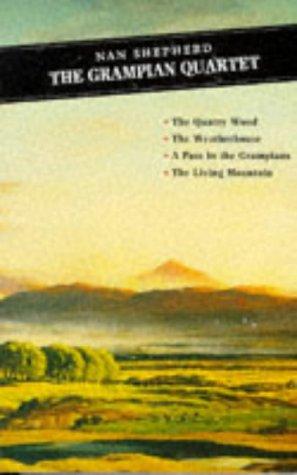
Nan Shepherd · Buy on Amazon
"I almost chose Lewis Grassic Gibbon’s A Scots Quair , which is of course absolutely brilliant. Sunset Song was a really important book for me when I read it. I was about 22. Whereas I didn’t read Nan Shepherd until she was ‘rediscovered’ in the late 1980s, when she was brought back into print. I reread all of the Grampian Quartet last year, which comprises three novels and The Living Mountain , and it’s a quite remarkable achievement. Shepherd was one of a number of female writers working in the northeast of Scotland around this time. I’m thinking of Violet Jacob , Marion Angus , and one or two other prose writers. But Nan Shepherd is interesting because her trilogy— The Quarry Wood, The Weatherhouse, A Pass in the Grampians —came out between 1928 and 1933. Lewis Grassic Gibbon’s Scots Quair came out slightly after that. So she wrote her trilogy before his, but his is the one that has had all the fame and attention. I mean, rightly. They are amazing, brilliant, wonderful books. But I would like to see Nan Shepherd’s novels treated with the same kind of reverence because they are just as good and just as interesting, though they are very different. “Nan Shepherd wrote her trilogy before Lewis Grassic Gibbon wrote his; I would like to see her books treated with the same kind of reverence” Lewis Grassic Gibbon’s main character is Chris Guthrie. And he writes beautifully about this woman going from childhood through to adulthood, through a few marriages into middle age. Nan Shepherd is coming from a different perspective. I think the two trilogies really complement each other. They’re also both Modernists , experimenting with style and structure. The thing that comes very clearly through Nan Shepherd’s books is that women are frustrated by the political and social expectations of the time – the things they’re not allowed to do or be. They’re not allowed to go off to be doctors. They’re prevented from studying, not simply by the education system, but by the social and familial expectations placed on them. They’re certainly not expected to go to university. In The Quarry Wood , the heroine Martha is clearly a very intelligent girl, but she has to fight all the way to get to go to university in Aberdeen. Subsequently in The Weatherhouse and A Pass in the Grampians, even though they’ve moved on in time, the women are having to fight to have their voices heard, to bypass the strictures and the condemnation of the men in their lives, whether that’s their fathers or brothers or husbands or whatever. So Nan Shepherd was writing about things that were absolutely and completely relevant to women at that time. An awful lot of it still speaks to today. And then you’ve got The Living Mountain at the end of the Quartet . It’s just the most stunningly brilliant book. Again, it’s like Jekyll and Hyde , a very short book, but my goodness it’s packed with quality. Profound is a good word. Again, with a lot of nature writing , there’s an awful risk of people over-romanticising their relationship with nature. She doesn’t do that at all. I think her relationship with the Cairngorms is real, and it doesn’t stop her thinking really hard about what that relationship is. I never get the sense that she sentimentalises the mountains. She knows her place in the mountains. She’s not trying to conquer them, her appreciation is just in being there and experiencing what they have to offer. She wrote it during the Second World War , I think, and it wasn’t published until 1977. I remember reading it a few years after that, and thinking it was good. Then it kind of disappeared. But now it’s become a classic of nature writing. It’s a shame she never got to see it so successful. I think that’s true. There’s the sense that humanity is living close to nature in all of those books. Not so much in Gillespie , that’s centred on town life, although the town’s life is dictated by the fishing and the farming seasons. I do think it’s a very strong element in Scottish writing. A lot of contemporary Scottish writing is much more about life in the city, but I don’t think you can get away from the fact that the landscape and nature have had a big impact upon writers in Scotland. They still have that effect on me."
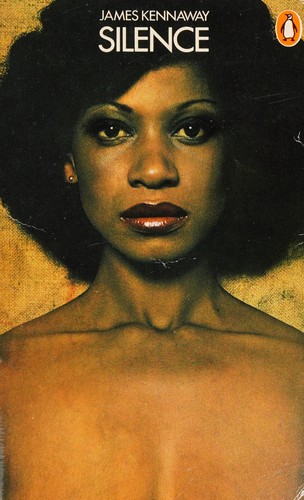
James Kennaway · Buy on Amazon
"Again, another very short book. Even shorter than Jekyll and Hyde. I first came across Kennaway’s novels in the 1980s when they were reissued in new editions. He’s probably best known for his first novel, Tunes of Glory , which was made into a very successful film with Alec Guinness and John Mills. That was about life in a Scottish regimental barracks in Perth. It really made his name. It was published in 1956. He went on to write another half dozen novels. Unfortunately he was killed in a car crash in 1968, when he was 40. If he were still alive, he would be in his nineties, the Grand Old Man of Scottish literature. But in some respects he sits slightly outside Scottish literature, because he moved away. He went to London, then Europe for a while, America briefly. So his novels are unquestionably Scottish, that’s where his roots are, but he also writes about other people in other places. This novel, Silence , was published after his death, in 1972. It wasn’t quite finished, but they managed to piece it together. It’s based in an unnamed American city, loosely based on Chicago. It addresses the issue of race, and the division between the poor urban black population and the middle-class, wealthier, white population. A young white woman, it’s said, has been raped by a black man, and a group of men, members of her family and their friends, make a vigilante raid into the area of the city where the black population lives to try to capture the culprit. The whole thing goes horribly wrong, a riot erupts, and a man—the girl’s father-in-law, a doctor—gets separated from the people he’s with, goes into hiding in an empty building where he is guarded and saved from being lynched by a mysterious black woman who doesn’t speak. She’s an extraordinary, almost a mythical, figure. He calls her Silence. For some reason she protects him, but at a dreadful cost to herself. Somebody reading it now would say, well, yes, this is definitely written from a white, middle-class point of view. Nevertheless it seems to me a powerful, powerful book, in spite of its brevity. Near the end, there is a scene in which the doctor tries to save Silence from retribution. She is bleeding profusely and he says, ‘Notice the blood, it is also red.’ To me, the novel says, we’re all human beings. It’s very perceptive for the times it was written in and perhaps prophetic in some ways as well. I think what’s changed is that it’s much more possible to be a writer and stay in Scotland. A couple of generations ago, if you were really trying to make it in the publishing world, the pressure to go to London, or somewhere else, was immense. It’s possible to stay in Scotland now and make a living. It’s not easy, unless you happen to be very, very successful, but it’s possible in a way that perhaps it wasn’t a few years ago. Another thing: Scottish literature has burgeoned. I was a bookseller in the 1980s and 1990s. You used to be able to fit the entirety of ‘Scottish literature’, as it was in print, onto about three shelves—poetry, fiction, you name it. Now that’s impossible. There’s no way you can keep up with all the new Scottish writing. There’s so much of it. Prose, poetry, fiction, nonfiction, crime fiction… there’s just a tsunami of writing coming out of Scotland. Inevitably some of it will not last, and some of it will end up forgotten, and have to be rediscovered. But we’re in a very different place. Scottish literature was not really regarded as of great significance or distinction a generation or two ago, but that’s changed, and people by and large, and certainly within Scotland, think of ‘Scottish literature’ as having its own entity, not just as an adjunct to English literature. I’ve been thinking about it for about five years, so it’s taken a while for it to come together. I wanted to write a novel that was set in one place, but that took place over a huge amount of time. So I invented this glen, Glen Conach, which is, in my head, not far from where I live. There are three stories going on: the story of Conach himself, an 8th-century Christian missionary to the Picts who becomes a hermit in the glen; then a story set in the early 1800s, where Charles Gibb comes to the big house in the glen to look at this manuscript about the life of Conach; and finally a modern story narrated by a woman called Maya, one of the oldest residents of the glen in the year 2020. It would appear that there are no connections among these stories other than the fact that they’re taking place in the one place, but the more you read, the more you realise there are threads linking them. Themes of refuge, of arriving and leaving and looking for a place of safety. That’s one of the biggest questions facing us today: people are on the move, forced to move because of war, famine, lack of jobs, political collapse, whatever it is. People are on the move because they want a better or safer life for themselves and their children. Who can deny that that is a legitimate and basic aspiration for any human being? There are a lot of double standards being applied at the moment. I was trying to explore the idea of how people are received when they come to a community from elsewhere. One of the things the world needs at the moment is more kindness and generosity. So the book is about that as well."