Dinyar Patel's Reading List
Dinyar Patel is Associate Professor of History at the S. P. Jain Institute of Management and Research (SPJIMR) in Mumbai and an affiliate at the Lakshmi Mittal and Family South Asia Institute at Harvard University. Previously, he was Assistant Professor of South Asian History at the University of South Carolina. He is the author of Naoroji: Pioneer of Indian Nationalism (2020), which received the 2021 Kamaladevi Chattopadhyay Book Prize awarded by the New India Foundation.
Open in WellRead Daily app →Modern Indian History (2024)
Scraped from fivebooks.com (2024-03-29).
Source: fivebooks.com

Barbara Metcalf & Thomas Metcalf · Buy on Amazon
"The reason I chose this book is that it is one of several books that has been written that has attempted to consolidate everything in modern Indian history from the time of the Mughals until now. There are several books that have attempted to do that, and it’s an extraordinarily difficult task, because you deal with how society has evolved over a territory that was never fully unified under the same banner and which has, for the past seventy years, been split up into two main countries, India and Pakistan, and then eventually, of course, three, when you get Bangladesh entering the picture, plus places like Bhutan, Nepal, Sri Lanka, etc. It’s extraordinarily difficult to do this task of condensing down a history of five hundred or six hundred years into a volume. But, in many ways, this book does it the best. First of all, like all the other books that I’ve recommended here, it is clear and simple and easy to understand. It’s easy to read. It doesn’t get bogged down in jargon, which is something a lot of academics love to do. And it doesn’t get bogged down in theory or historiography. Many books that attempt to consolidate scholarship tend to be a description of ‘this scholar said this; this scholar said that.’ This is not terribly important or relevant for the average reader. In contrast, this book sticks to giving not just a general narrative history, but giving an understanding of how our broad notions of Indian history have changed over time. The perspectives on Indian history have transformed dramatically over the past fifty or sixty years, and the historians who’ve written A Concise History of Modern India have seen many of those transitions and have reflected them in their book. It’s also nice in the sense that the book gives you insights into things that are fun to learn about in Indian history, like how architecture has changed. Thomas Metcalf wrote a great book about thirty years ago on the history of architecture in India, An Imperial Vision: Indian Architecture and Britain’s Raj . Some of his insights are distilled here, so you get an understanding of the symbolism of different types of architecture, say, the types of buildings that were built during the British Raj, all the way up to what people like Le Corbusier built. At the same time, it zooms in on India itself after 1947. Many other books that look at South Asia in general look at everything after 1947, and it can get very confusing because the paths taken by, say, India and Pakistan, or India and Sri Lanka, diverge quite a bit. I think there’s some use in just sticking to the frame of talking about India because there you limit yourself to an area where it’s much easier to trace particular narratives."

Ramachandra Guha · Buy on Amazon
"This book was pioneering because when it came out in 2007, it was still common to encounter the idea that India’s history ended in 1947, and Indian political science began thereafter. Even when I was in graduate school, when we were studying Indian history, 1947 was in many ways a full stop. This book (I think, really, for the first time) treats the whole period from ’47 onward in a historical manner, and in a serious historical manner that tries to draw certain continuities with the past. At the same time, it points out the fact that India’s trajectory after 1947 cannot just be thought of in terms of a colonial framework or experiencing something that wasn’t a colonial framework and how it adopted and adapted, and that India’s experiments with democracy and social transformation and economic transformation need to be taken seriously. It is a tremendous work of scholarship, at around eight hundred pages. For a history of a billion people spanning over six or seven decades, one could write a much longer book. So, it is remarkably concise and to the point. It will take you some time to get through all eight hundred pages, but even if you sit down and read it in one sitting, you can make out certain themes. One idea that Guha emphasises is that from the time of Indian independence, globally, people who have looked at India’s experiment with democracy have oftentimes been quite pessimistic or questioning, and have always approached a particular crisis as a moment where India could fall apart or its democracy could fail, and India has eluded those cynical pronouncements. It’s useful in showing us where oftentimes political science predictions have gone wrong in the past, and a historian can bring a good lens towards understanding that. Also, it does a very good job in interrogating the performance of Indian democracy. When Guha wrote this book, he talked about Indian democracy being 50 percent democracy and 50 percent something else. Since then, as he’s updated this book, he’s decreased this. In the current political moment, it’s 30 percent or 20 percent democracy. He gives a very good overview of where Indian democracy has worked. Certainly, there have been moments where Indian democracy has really been quite remarkable, in terms of accommodating massive difference, in accommodating former insurgent groups and allowing them to take part in a democratic process, and in allowing certain groups that have been historically marginalised in a horrific, brutal way to finally take part in a political process. He also points out the weaknesses, and he’s very clear on these systemic weaknesses, whether it is India’s relationship with places like Kashmir, where elections have oftentimes not been free and fair, whether it has been the sometimes very heavy-handed approach that the government has taken towards particular movements or, after the 1960s, the adoption of populist policies, which have tended to relegate what is in the law to a sheet of paper and what exists in practice to something very different from the law. It’s a huge task to set before yourself the goal of even writing a history of India for the seventy-plus years that it’s been independent. This still is the one volume that I would recommend that everyone go to, to get an overview of all the complexities of that period."

Ashok Gopal · Buy on Amazon
"Yes. This is the only biography in my list of five books. There are a number of really excellent biographies that have come out, so if you had asked me to choose six or seven books, I would have suggested a few others. Ramachandra Guha’s book on Verrier Elwin, Savaging the Civilized: Verrier Elwin, His Tribals and India , is one of my favourites. Elwin was a British man who stayed on in India after independence. His work was with Adivasi people who have historically been some of the most marginalised people in India. Ambedkar is someone who’s dealing with another group of people who have been extraordinarily marginalised: the Dalits, formerly called ‘untouchables’. The reason I’ve included this book is twofold. Firstly, I think more people outside India need to know about Ambedkar. He is not just a person who is essential to understand modern Indian history, but he’s someone who’s important to know, just in the general theme of social justice anywhere in the world. His ideas can be applicable in so many different contexts. During the Black Lives Matter movement, you had some general transmission of some of Ambedkar’s ideas into American public discussion. In the past few decades, if you were in a place like South Africa or Ghana, you’ve increasingly seen a lot of intellectuals talk about the importance of Ambedkar. He’s someone who I think is increasingly globally important, and most people outside of India don’t know much about him. Secondly, this is the best book in the English language to give an objective, comprehensive history of the man and his ideas. It is a remarkable work of scholarship, building on Gopal’s ten years of close study and research. There have been many biographies of Ambedkar beforehand (some are in English, many are in Marathi, which is the language that Ambedkar spoke), but this is the first book that deals with his entire corpus of writings in English and Marathi and understands him not just as a person who was historically important for uplifting Dalits or writing the Indian Constitution, but also someone who thought very deeply about democracy in general and how democracy could be applied in the Indian context. He was someone who issued many worrying pronouncements about how democracy could fare in India after independence: some of which have not come true; many of which have. One particular idea that he talked about a lot was in a democracy you need liberty, equality, and fraternity to coexist. He took many of the ideas of people like John Dewey and applied them to the Indian context. He asked, ‘In an Indian context, where you have caste (where still today, if you are a member of a certain religious group or you’re a member of a certain caste, you cannot get a house in a particular area) what does that do to the quality of democracy?’ He was someone who, no matter how high he rose, kept on having these humiliating experiences that reminded him of who he was. There’s a wonderful series of essays that I give my students called “Waiting for a Visa,” which Ambedkar wrote in the 1930s, where he summarises about five or six accounts from his life and one or two from the lives of other Dalits. He talks about one particular instance. He had studied in the United States, he had studied in Great Britain, he went on to earn two PhDs and one law degree, and yet, when he came back to India to work in the princely state of Baroda as an official, it was impossible for him to find a house. He found a living quarter where he had to disguise himself as a Parsi (a member of my community). After a while, he was found out, and he was violently kicked out of that particular accommodation, and the only place he could really go was a bench in a park. “A lot of intellectuals talk about the importance of Ambedkar. He’s someone who I think is increasingly globally important” Here was someone who had studied at Columbia and LSE, knew some of the brightest minds around the world, was working for the government of the Maharaja of Baroda (a very progressive and important leader), but he couldn’t get a house. Those humiliations stalked him throughout his life. Ambedkar talked about how his politics were informed with a great degree of anger. He said that was necessarily a good thing because there was a reason for where that anger came from. That anger needed to be used in positive ways to make sure that the humiliations of the past were not repeated."
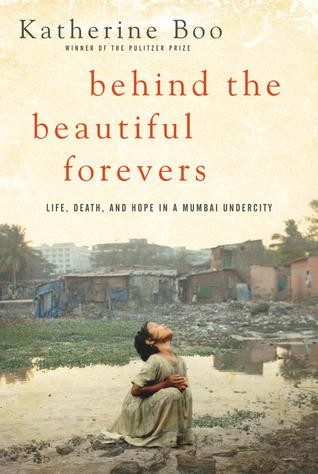
Katherine Boo · Buy on Amazon
"Yes. The last two books I’ve given you are about Mumbai, and all of the books I’ve given you also are, to a very large degree, about Mumbai as well. Ambedkar’s political career unfolds in Mumbai. His house is not far away from where I’m talking to you right now, and it’s still, today, a place where people go either on pilgrimage or to venerate the political ideas that he stood for. If you read Guha’s India After Gandhi, a good part of the economic, political, and social activity it describes takes place in Mumbai, especially when he talks about India’s urban transformation. If you look at Metcalf and Metcalf, again, Mumbai is a central character in the story of the development of modern India. Maximum City and Beyond the Beautiful Forevers look at contemporary Mumbai, which is the place that I’ve fully lived in for the past five years. Since I’m not a native Mumbaikar, these two books have been useful for me to understand the city that I live in and the city that I study. The reason why I picked Beyond the Beautiful Forevers is that it is a great book to understand the widening differences that you see playing out every day in Mumbai between the rich and the poor, the privileged and the non-privileged, those people who have things like recourse to the law or access to proper schools and hospitals and those who don’t. It’s an account of the lives of various individuals, in a slum that I believe no longer exists. It was taken over in the early 2000s to expand the international airport, which, again, is a telling commentary on where a lot of people get shunted out from the story of modern India. It is an account that is remarkable on many levels. First of all, the detail that Boo was able to bring to us about the lives of these individuals (who, more often than not, are written out of newspapers and written out of historical accounts) is quite dramatic and really is a testament to her journalistic skills. It is written in a very detached manner. Nevertheless, you can detect the author’s anger and frustration at the sheer injustice that these people face. Of the several characters in the book, many die. Some die horrific, violent deaths. For an outsider like her, someone who is not from India, not from Mumbai, chronicling this in a book and doing so in an objective manner, where her goal is just to set out the larger framework of why bad things are happening to these people without getting caught up in the tragedy of their lives, is quite an achievement, in my opinion."

Suketu Mehta · 2004 · Buy on Amazon
"When I was moving to Mumbai, or, at least, beginning to study the city in general, I used to read this book on the local trains. It’s a book that can sometimes seem a little over the top, but, in that sense, I think it is quite accurate in terms of its representation of the city it describes. Maximum City is a very appropriate term to describe Mumbai. It’s hard to describe what you get when you pack 30 million people into such a small space and one of such dizzying complexity and diversity. I think Mehta does a good job of bringing out the many different tensions you have within the city today, and how the city has transformed since liberalisation, in 1991, where not just the Indian economy has expanded, but the government of India’s social ambit has changed dramatically and political parties have transitioned from being organisations that might have, at least rhetorically, talked about social welfare and equality and such, to being, in many ways, money-making enterprises. “Mumbai has in many ways been the lodestar of the future in India” He’s very condemnatory of organisations like the Shiv Sena, probably the dominant political party in Mumbai at the moment, which was led by a man called Bal Thackeray. Thackeray is a looming figure in modern Mumbai’s history. He was someone who made his name following a very Carl Schmitt-like orientation of ‘us versus the enemy.’ First, he did this by pitting Maharashtrians against South Indians, then, he transitioned to other groups like North Indians, and finally he made his name by demonising Muslims. He was fond of quoting Hitler and revelled in the fact that Western observers would be aghast at the fact that he idolised Hitler, which gives you a good insight into how politics in the city functions. We are all familiar with the ugly histories of urban politics in, say, a place like New York or London. In the 1800s, you have “Boss” Tweed or, say, machinations in the East End of London from 150 years ago. Reading Maximum City is a good reminder that history repeats itself, but it repeats itself in different ways. A lot of those machinations and political business combines and political criminal combines that you saw in other urban agglomerations from, say, 150 years ago, are being played out on steroids (if you will) in a place like Mumbai today. Maximum City , in many ways, stands in for the urban transformation going on in cities across India as we speak. If you look at a place like Delhi or Bangalore, the same levels of corruption and massive socioeconomic stratification are playing out. It’s just that in a place like Mumbai, they seem to be magnified, due to the size and scale and importance of the city. Guha’s book first came out in 2007, before the BJP was in power nationally, and Maximum City came out in 2004, well before Narendra Modi’s time in power as prime minister, so neither are speaking to the current political moment. I know that Guha has updated his book. The subtitle of the book was ‘ The History of the World’s Largest Democracy,’ but in the last edition he dropped that subtitle which, I think, gives you an indication of his opinions, at least, of India’s backsliding on democracy. In all of these books, you can see signs of where we are today. India has not reached this political position today just under Modi—it’s been a much longer and deeper slide. Again, straying from the mission of talking about five books, there are many other books that have talked about how India’s current democratic crisis is the product of much longer histories. I recently finished reading a book by Taylor Sherman called Nehru’s India: A History in Seven Myths . It talks about how even under Nehru (which is considered to be the high point India’s liberal democracy), there were grave worries about the sustainability of Indian democracy, and, indeed, grave democratic crises, from Kashmir to Kerala. Even under Nehru, the commitment to socialism might have been there, but the results could oftentimes be quite shaky. We do have a general narrative of how India has backslid democratically since Modi’s rise to power. What you and I can say in public or in print now, versus in 2014, and compare that even to 2010, is dramatically different. But, just as in the United States or Hungary or Brazil or the Philippines, there is a much longer story of populism and democratic backsliding to explore, and that story extends back decades."