Diarmaid MacCulloch's Reading List
Diarmaid MacCulloch is Professor of the History of the Church at Oxford University and co-editor of the Journal of Ecclesiastical History . He is perhaps best known for his work on the Reformation in England and Europe, including Reformation: Europe’s House Divided 1490-1700 and biographies of Thomas Cranmer and Thomas Cromwell . His book, A History of Christianity: The First Three Thousand Years , was made into a television series, presented by MacCulloch, for the BBC.
Open in WellRead Daily app →The Best History Books of 2024: The Wolfson History Prize (2024)
Scraped from fivebooks.com (2024-11-29).
Source: fivebooks.com
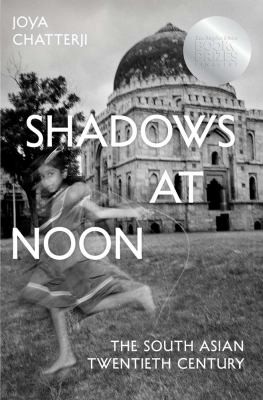
Joya Chatterji · Buy on Amazon
"The book is about India in the 20th century, which means taking it from the late Victorian period, when it had become an empire under Queen Victoria, through to its present form, which consists of three large nations—India, Pakistan and Bangladesh—important on a worldwide scale. That is not an easy task, because the history is crowded with agendas and assumptions. There is the assumption of Britain being a good imperial power or a very bad imperial power. There is the assumption that in 1947 a tragedy happened, Partition. As I read it, I was testing my own assumptions against these inherited ones and found the book extraordinarily fresh. It is written by a citizen of modern-day India, but she has examined her own assumptions, her own experience, and created something which I found surprising and new. There is perhaps an optimistic message behind the book, that despite all the tragedy of the history of the sub-continent in the 20th century, these are three countries which have much more in common than many of their leaders admit. Behind the rhetoric, they have quietly cooperated across borders. There’s the striking story of the subcontinent’s ability to feed itself in the 20th century. That’s remarkable and includes distributing water. It doesn’t sound dramatic—it’s not as dramatic as a war—but it’s absolutely essential to the way that India’s, Pakistan’s, and Bangladesh’s agriculture have been transformed from catastrophe under the British Raj into that enviable and absolutely necessary ability to feed their own people today. It’s very clever. Joya Chatterji is an old hand at writing high-class history. You don’t know what your readers know. And so underlying the surprising detail and the new perspective is that quiet sense of narrative and structure, which is really impressive, I think. As you say, there are absolute nodal points in this story which the reader needs to know. There’s 1947, there’s 1971 and you need the story built around that structure."
Nandini Das · Buy on Amazon
"This one is very different in scale from Chatterji’s book. It’s the story of one incident, an unsuccessful embassy of a remarkable English Jacobean diplomat to India. So it’s uniting two places which previously had had virtually no contact, at a very specific time. In 1615, Thomas Roe arrived as an ambassador to the Mughal Emperor from the court of King James I of England and VI of Scotland, hung around for three years, and really didn’t achieve anything. He was constantly ill. He misunderstood customs. He bigged himself up in his own mind but, very revealingly, left no trace in the diaries of the Mughal emperor, Jahangir, whom Roe presents as a bosom buddy and hugely impressed by him. Clearly, Jahangir wasn’t. Roe was a bedraggled person from a puzzlingly faraway country with which the emperor had very little dealings and not much interest. In the past, Roe’s embassy has been presented as part of the grand narrative of British triumph in India—the first stirrings of the symphony. And in a sense, it was: perhaps by its failures, it taught the English, and then the British, what the problem was. But it is fascinating because Roe was involved in the Jacobean court back home in London. He knew how courts worked, and so his observations are very interesting. He’s looking at a far greater, more powerful court in Delhi. He is often misreading situations, but applying the insights that a Jacobean courtier might apply. And he was a man of considerable world experience. He had traveled across the Atlantic as well as getting to India. He’s not naive but he is soaked, as we all are, in his own culture and finds it very difficult to understand what’s going on around him."
Nicholas Radburn · Buy on Amazon
"It is a deeply depressing subject. It’s hugely important, because once you’ve read this book, you can’t sustain complacent cliches about the Western part in the slave trade. The detail is extraordinary. What I found particularly interesting and different was the sense of the commercial dynamic driving it. The story starts with one monopoly company, the Royal African Company, chartered by the English monarchy. It’s based in London but is elbowed out of the way by provincial merchants in Bristol and Liverpool. They create a trade that’s far more profitable because it is much better organized, with absolute cynicism about the subject of the trade: human beings. They’re treated as commodities with advantages and disadvantages. There are the young, the elderly, the weak, the sick, and then there is the absolute prize: healthy young adult males. The essence of the trade is to acquire those assets, sort them out, and get them across the Atlantic with minimum loss, i.e. death. Radburn describes the ways in which these systems evolved. And it’s not just a story of bashing Europeans. He makes it quite clear that an essential part of this new, innovative, improved structure of the slave trade was a set of merchants who were African. It’s a tripartite trade. That’s a familiar phrase, but he’s very good at showing us how there are three sorts of actors organizing the trade. There are English merchants, African agents and collectors of people, and American merchants of English and Scots descent. For the trade, it was essential that these three sets of actors worked together and understood each other. Yes, the enslaved people have to be rescued from anonymity. It’s quite difficult to do that, because an essence of the trade was to make them non-people—to take their names away, to remove them from individuality in the human race. Radburn has got to the sources which work against that demonic aim. There were people from the 18th century who told the story from within and were encouraged by Europeans to do so. This was a small minority of people, initially, who hated the trade and linked up with those who were the subjects of it."
Andrew Seaton · Buy on Amazon
"This is a very big book about an institution which inspires enormous loyalty and that title, Our NHS , is absolutely on the mark. The story is beautifully told. The author, Andrew Seaton, feels very much part of the story of the NHS, but shows the difficulties of saying whose NHS it is. There is what he describes as a sort of nationalism around the NHS. There’s a great pride engendered by the Labour Party—who created the NHS—in it being a uniquely British institution, and it is often contrasted with the dysfunctional state of US medicine. There are all sorts of ways in which the book reflects on its own preconceptions. ‘Our’ NHS: What about all the immigrants who have made it work since the 1950s? It could not have survived without them. It also could not have survived without patients feeling that they had a wonderful deal from the NHS, against the forces of ‘neoliberalism’ (a word he uses a lot) and those who would wish to monetize it and turn it into a private enterprise. Mrs. Thatcher started down that road and found it difficult. So those who have never been enthusiastic about the NHS have had to persist with this organization. It is in a terrible state now because of the various assumptions about trying to make it profitable, and yet it is still there. There was the ambiguity, during COVID, of people clapping for the NHS. It started as something spontaneous and joyful and defiant against an illness. The government tried to capitalize on that, and the clapping died away because people recognized they were being enlisted in a government propaganda project. Not entirely, no. An honest historian should not make their work about how things must go on. Historians are not good prophets. What we can do is show the reality of the past and its complications, its complexities, and highlight particular features of that past. The theme of immigrants being the absolute bedrock of the service is really important, and that’s well taken. It has been said that the NHS is the national religion now, rather than the Church of England. I’m sure that’s right: people esteem it for all its faults and are angry with it for not living up to their ideals in a way that religion once was."

Jonny Steinberg · Buy on Amazon
"This is a hugely impressive book. It takes a very well-known subject—which has created stories of heroism and good triumphing over evil—and makes it much more complex. There is an intense evil in this book, which is the system of Apartheid which was the background against which the Mandelas had to live and exist. What Steinberg’s book so brilliantly shows is how the system damaged them. It made them both lesser people than they might have been. It brought out their worst features. Steinberg is also a wonderful myth-buster. Winnie and Nelson are heroic figures, but there’s a lot which is not at all heroic about them. It’s a ‘portrait of a marriage’, a very loaded phrase, because it’s warts and all. It’s warts which many historians had not talked or not known about, and previous biographers had left out (which just illustrates how biography is such a treacherous thing: it can be utterly misleading by omission). At the crudest level, we hear about the love affairs of both parties, the way in which they emotionally tried to cope against the crushing, evil machine that they were fighting. It’s both a history of South Africa with a freshness and a chilling detail that I hadn’t appreciated, but also makes one feel tremendously sorry for the two principal characters, in a Greek tragedy sort of way. Sometimes you’re just really cross with them. How could they end up doing such self-destructive things? In other words, the book brings the reader very close to two fascinating people who changed the world. Well, I’m sort of relieved that he isn’t, because it suggests that others can be like that. You don’t need to be utterly exceptional and a saint. He was exceptional, but you can go on having faults and still do wonderful things for the human race."
Frank Trentmann · Buy on Amazon
"This is a story of redemption. It’s a story with a constant moral edge. There is nothing wrong with history taking a moral stance, but there are so many that you’ve got to take about this story. It’s a complicated story of two countries struggling out of the ruins of one, and their eventual reunification. It starts in Nazi Germany with the stories of individuals, illustrating the moral dilemmas of being part of a nation which is doing something utterly evil to some of its own people and to others too. Then there is the utter desolation, the devastation of 1945. Germany was a bit like an alcoholic, it had to reach utter baseness, utter defeat and destruction in order to recognize its problem. Then the next decades, as Trentmann lays them out, are interesting. They are a story of what happens when you, or most of you, have utterly rejected the ideology in which you’ve lived. You’ve painfully reconstructed something which the victors imposed, but which is very different in its embrace of democracy and its obstinate wish to tell truth. It’s a complicated story, because both the republics which emerged from World War II handled their past in different ways. They both repudiated it, but East Germany, the DDR, was much better at facing its past than the Federal Republic. West Germany had so much evasion in its first few decades about who was a Nazi and who wasn’t, who deserved punishment or repentance and who didn’t. Then there was that terribly painful set of generational conflicts in the 1960s and 70s, in both republics, but particularly in the West, where the furious, younger generation added a moral imperative to all the generational conflict they’d feel with their parents anyway. I remember it because I was there—on the streets, busking in the 1970s—and I experienced it at firsthand. Trentmann tells us the East German story too. I did feel that occasionally he was harder on the East than other writers have been. He’s very much a Federal Republic person, but we all come from somewhere in our books. Ultimately, it’s a celebration of a country which had nothing and reconstructed two different things. Now they’re one, and we see troubles again, but there is a sort of dogged optimism about the book which is encouraging. He lays out the evidence to allow you to draw a different conclusion if you want, but you see why the problems of the present day have emerged from the book. My analogy throughout was of the recovering alcoholic. You can never cease to be an alcoholic, but you can learn from your past, and you can build a life in the awareness of it. The important thing is remembering it and being aware of it. This book is a profoundly impressive document about remembering that past."
The Best History Books: the 2019 Wolfson Prize shortlist (2019)
Scraped from fivebooks.com (2019-06-09).
Source: fivebooks.com
Matthew Sturgis · Buy on Amazon
"I was surprised that a book could say anything new about Oscar Wilde , but it does. It’s just a wonderful all-round picture of this extraordinary, complicated man. It deals with his finances—which he was thinking about half the time and then not thinking about at all the other half of the time. But to understand his extraordinary explosion of creativity and then the terrible fall and all that came after, you’ve got to have an idea of how his genius made him money. I thought that was fascinating. “I was surprised that a book could say anything new about Oscar Wilde, but it does” The book goes well beyond the old Richard Ellmann biography, which for years seemed to be absolutely authoritative. It delved into his early life, which is fascinating. He came from this extraordinarily unusual family, which had its own share of scandal, and then made it from the Irish Protestant Ascendancy into an English world where he was clearly determined to be exotic. I think the author has to demonstrate that it’s important. It’s always interesting when people show that a subject we hadn’t noticed is important. Of course everyone knew about Oscar, and Oscar made sure that everyone knew about him. So the challenge of a book like this is illuminating a subject which we thought we all knew about. Support Five Books Five Books interviews are expensive to produce. If you're enjoying this interview, please support us by donating a small amount . The importance of Oscar Wilde is the writing at the middle of it. It’s the extraordinary brilliance of some of the best writing and the variety of it: The Happy Prince at one end, which makes you cry, and then The Importance of Being Earnest which you can laugh at, even if you’ve experienced the play again and again and again. Then there’s the way in which a great figure can be so self-destructive in a particular culture. All that seems to me to be hugely important. Then there is his posthumous significance as a gay icon, but he’s really not a very good example, not someone you could quote to young gay men as the way to go. But, still, it tells you a huge amount about sexual attitudes of his time and ours. Yes. That’s one of the great arts of historical biography, that you have to get past the self-perception of the subject and also the self-presentation of the subject. Oscar was all self-presentation; the whole life was a huge performance. So Oscar: A Life is very good at taking a cool look at Wilde and revealing just how self-destructive he was and how destructive he could be to those around him."
Miles Taylor · Buy on Amazon
"It’s often the way with the modern British monarchy, that people ignore it because they think it has no power. I think of Ben Pimlott’s wonderful life of Queen Elizabeth II : there was a Labour stalwart writing about a most unexpected figure and revealing just how important this impeccably discreet person was. You might say that Queen Victoria was the first attempt at doing that as a constitutional monarch and that’s what Miles Taylor shows in Empress . He has got a feel for the way that apparently formal institutions, which don’t have real power, actually do. Get the weekly Five Books newsletter Queen Victoria took an enormous interest in India and had an instinct for how to brand it in a new way. In India the British monarchy was faced with scores of other monarchies, which needed to survive in this new uncharted territory of a British Empire. The queen was an extremely good way of integrating them into the Empire. And she enjoyed it. Hugely. In India she found a world in which she had far fewer limitations than she did in Great Britain. That was partly because, as a British possession, India was feeling its way from a chaotic set of structures which the East India Company had built up. It gave her a stage on which to play which she wouldn’t otherwise have had. I suppose that’s because she happens to be a woman and therefore you can define her quite simply as the ‘mother,’ a role which she emphatically was biologically and which she loved to play. She looked the part. In many ways, it’s two needs finding each other: there’s the need of the queen to be assertive and there’s the need of India to make sense of what had happened to it."
Jeremy Mynott · Buy on Amazon
"This is a wonderful book. I opened it thinking, ‘Oh dear. I’m not that interested in birds. Will I get anything out of this? Is it the work of an engaging eccentric?’ But I was drawn in by it so quickly. There’s a certain randomness about it, which is the randomness of ornithology, I suppose. It’s the sheer learning of it which is so engaging. It’s extremely learned in a field—natural history—where not all that many people are learned in this particular way. What particularly impressed me was the accomplished translations of classical literature. They’re all Mynott’s translations and they’re so idiomatic, so elegant. Then there is the wit and the beautiful illustrations. There are so many things to like about this book and it looks great. It tells you about ancient people as well as ancient birds. Exactly. Here’s a perspective on the ancient world which I wouldn’t have thought of and you wouldn’t think would be a coherent theme, but it is. And that was rather cheering, really. It’s taking a relationship between humanity and the natural world and illuminating the cheering side of human and animal relations. What it demonstrated to me was just how different human mindsets can be across time. It’s by no means the first thing we think about now—though I still worry if I only see one magpie first thing in the morning. So, that does slightly unite that world and this. “The ancient world was silent relative to ours because there was no background hum of engines—but there was a far greater roar of animals and bird noises around” But priorities have so radically shifted. Now we regard birds as signs of the damage that we’re doing to nature by their diminution in numbers. The worries when the sparrows disappeared from Trafalgar Square, for instance. It’s a different sort of sign now, but we’re still keeping our eye on them, because it tells us about us when we look at birds in a certain way. It was, wasn’t it? The ancient world was silent relative to ours because there was no background hum of engines—but there was a far greater roar of animals and bird noises around."
Mary Fulbrook · Buy on Amazon
"There are so many books about the Nazis and the Holocaust . Mary Fulbrook clearly is one of the great names in the period but I opened the book with a gloomy expectation. What new could be said? The first part of the book is wonderfully done, but we’ve heard the story before. Support Five Books Five Books interviews are expensive to produce. If you're enjoying this interview, please support us by donating a small amount . What makes the book distinctive is the second half: the way that she pursues what happened to victims and perpetrators in the years after 1945. She tells different stories: the story of the Federal Republic of Germany, and the story of the DDR, the German Democratic Republic, and the way in which reactions to the Holocaust contrasted in these settings and the reasons for that—the political configurations after 1945 and the Cold War. All of that is absolutely fascinating and not just at the political level. She pursues individuals into their evasions, their proclamations, their quests for justice, their acceptance of the awfulness of the past, their denials. That makes the book really stand out in a vast literature. It’s a very personal book and it gives the lie to the idea that historians are free of bias and ought to be. We shouldn’t. We have attitudes to things and we make moral judgments. This is a book which emphatically makes moral judgments—perhaps easier to do in circumstances of such horror—but that’s what gives it a compelling quality. How could you tell this story in a neutral fashion? True—that’s another book—but it’s also not true, because there is so much denial, there is so much evasion, even now, alongside much honourable reassessing of the past. You’re also drawn into wondering how it would have been if it had been us. We would have been no better and we might have been worse. Given the present illusions of many British people about World War II in relation to Brexit, I don’t think that Germany comes off too badly in this book."
Margarette Lincoln · Buy on Amazon
"What surprised me with so many of the books on the shortlist was how much I enjoyed them, even when they were about subjects that I don’t naturally warm to—like ships and shipping, which bore me rigid. But when I opened this book, I became absolutely fascinated and drawn in by it, because it appealed to a positive obsession of mine, which is local history. This is supremely clever local history, magnified as a prism to look at national and global history. She bounded it in a very interesting way. Physically it’s bounded because it’s about an area of East London which had grown up with one function in mind, which was to serve a great overseas trade. She’s also describing a well bounded period, both in national history and in local history, from the 18th century—when Britain became a real global power—to the early 19th century, when a new British Empire was about to be developed. In the 1820s and 30s a vast enterprise of building new docks happened in East London which completely transformed the area, literally gouging bits out of it. Historic buildings were demolished in order to create docks. Very much so: war seen at a distance and the effects of war. It also reminds one rather depressingly of the stimulus that war gives to trade and the money to be made out of war by all sorts of levels of people: not just arms profiteers, but ordinary people keeping pubs in Rotherhithe. It’s also about the extraordinarily varied nature of trade in 18th century Britain. It’s a very crowded world, isn’t it? It’s crowded on the water and it’s crowded on the edges of the water. It was a world feeling its way to how to cope with this extraordinary concentration of people, who were so ill defined and so multifarious in nature. But in the book there is also the reassuring sense that despite all the apparent chaos, 18th century administrators and local officials could just about manage it all. It was no more chaotic and sleazy than modern London. “18th century London was no more chaotic and sleazy than modern London” That’s one of the fascinations of the book, that it’s very, very high-class local history—that knows every street, that understands the way buildings functioned—and yet looks at the wider implications of all that."
John Blair · Buy on Amazon
"What I like particularly is the way in which history and archaeology and landscape history all came together to tell us so many new things about Anglo-Saxon England. I was very pleased that we could include this book, because it’s not natural territory for the Wolfson Prize. It’s difficult to make Anglo-Saxon England come to life, but this book does because it’s got such an eye and an ear for what remains. For instance, the book takes place names which are familiar to us, like Burton, which you hear all over England. You wonder, ‘Why are we hearing this name Burton all over the place?’ John Blair makes sense of it. He takes us back to a world in which it had a particular function. I thought that was tremendous. Get the weekly Five Books newsletter I’m an archaeology fan, and a nerd for churches, and all that was in there and yet there is a sharp political focus as well. The future of England was not Mercia, it turned out to be Wessex and yet the big historic, political hero of the book is the kingdom of Mercia. Mercia has been lost to obscurity because the archive was lost. We have very few documents. But what we do have is the landscape—and also extraordinary things like the Staffordshire Hoard—to remind us that this was once the future of what might have become something other than England. Yes, he is straddling two worlds which don’t always talk to each other properly. Historians often despise archaeologists and can’t understand what they’re on about and archaeologists sometimes are not good at keeping up with the way that documentary history has gone, though I think that’s less true than the other way around. This is a wonderful example of how you do both and that there’s no gap between them: when there aren’t documents you just go to the archaeological record. It means that identities were being created which, in the end, created something which you can call England. But if you had no hindsight, that’s not where you might expect it to go. That’s what I mean by Mercia being a future which didn’t happen. It was Wessex, but it could have been Merica—in which case we’d have had something which wasn’t England. It might have been some entity whose headquarters was Birmingham or Tamworth forever. And we’d have had a greater Tamworth instead of a greater London. Read more in the best books of 2019 interview series."
The Best History Books: The 2021 Wolfson Prize Shortlist (2021)
Scraped from fivebooks.com (2021-05-14).
Source: fivebooks.com
Rebecca Clifford · Buy on Amazon
"Its title gives the book away. It’s an investigation, looking at a set of particular children who went through the Holocaust experience in concentration camps , and somehow came out the other side. It seems a very straightforward and simple idea to do that. Frankly, when I approached the book, I thought, ‘Oh, no, here’s another Holocaust book , another concentration camp book .’ But I was completely won over because of the original angle, which is listening to these children, whose very early experiences were formed in a bewilderingly irrational and hostile world, and yet, who lived for decades afterwards, became adults, and could now reflect on their experience. It’s an extraordinarily clever thing to do to get these voices. “What was delightful about this list, as with all our recent lists, is the sheer variety of good history around” It raises all the problems of oral history, and actually seizes on them and says, ‘This is what these people remember. Let’s think about how they’ve adapted these stories in order to avoid insanity or breakdown or sheer bitterness. But listen to the resourcefulness that these children had and the memory they present of that.’ That’s what captivated me and, I think, my fellow judges about this book. There are, of course, diversities, and they are as diverse as the ways in which human beings manage to cope with atrocity. But a common theme does emerge. There is a very longstanding myth that people didn’t talk about the Holocaust after the Second World War for a very long time. And the memories of these children show that they did. Reflection has been different over the accumulating decades, but it’s been constant."
Sudhir Hazareesingh · Buy on Amazon
"I think he brings to it a very accomplished sense of a transatlantic world in which you’ve really got to take seriously all the parts of that world. This is a biography that manages to span a world because its subject spanned a world. Toussaint has been dealt with at length before. But there is new material here. There’s a deep understanding of what late colonial Saint-Domingue was like, and how it became Haiti . Get the weekly Five Books newsletter There is a person in the middle of it who’s quite difficult to get hold of. And that’s partly the nature of the records, he’s someone who began life in an enslaved culture. But it’s partly that mythmaking happened during his lifetime. He made myths about himself. But also he has been the subject of myths because he is so deeply connected with the founding of a particular place. It’s fascinating that he is now honoured in the Panthéon in Paris, when the French actually destroyed him. One of the themes underlying the book is the way in which the French Revolution turned on itself. We’ve all known that since Charles Dickens , if not before. But here is a man who was given his opportunity by the collapse of the old regime in France, and yet, in the end, became the victim of the very revolution of which he was a part. It’s there throughout the book. The book’s divided into four parts. And the last part is called ‘The leader and his myths’, which leads you on to what happened next. And the story of Haiti, of course, is enormously mixed. It has needed heroes because it’s got plenty of villains. Yes, although this book is not hagiography at all. It’s very easy to look for a great liberation hero. But this book shows a deeply flawed man who clearly didn’t make the lives of those who became free, all that much freer. He wanted hard work. There’s a certain ‘ Animal Farm -ness’ about the story. And yet, what an achievement it was for this little island to stand up to one of the great powers of 18th century Europe and create the first predominantly Black-run republic in the world. It’s extraordinary."
Judith Herrin · Buy on Amazon
"This is just a delight. In a sense, it’s quite an easy task writing a glittering book about Ravenna, because if you go there, you see these relics of an astonishing culture. But Judith Herrin is absolutely the master of Byzantine and late Roman imperial history. She is someone who knows the whole context—it’s not just a book about a marshland town in Northern Italy. “All of these six books are beautifully produced” It’s the story of the paradox of how this marshy place became the centre of the world for a while and became the hinge between Eastern and Western civilization while they were still connected. It was a bridge place. It gets to how Ravenna as a marshy and not very picturesque place was an essential part of the story. It was a place you could defend and it was a place with water which took you to so many other places. Judith knows the archive, and it’s extremely rich and unusual, with an unusual cache of papyri for a Western European place—the sort of thing you expect in Egypt actually survives in the town archives in Ravenna. You get really intimate glimpses of ordinary domestic life in Ravenna at the same time as you’re looking at the fate of imperial dynasties, and seeing horizons that take you as far as Northern Europe and Western Asia. Power pulled apart from Ravenna, leaving it in the middle. So the eastern, Byzantine Empire shrank so that Ravenna was on the edge, because new powers were arriving in the west. To start with, some of these new rulers made Ravenna their capital, but then they created other capitals far to the west, so the town gradually shrunk away. You could say the story is one of anti-climax, if you like, leaving us with this astonishing legacy of really dramatic buildings stranded in a small, damp Italian town."
Helen McCarthy · Buy on Amazon
"Yes, it is. In that sense, I suppose, the canvas is the smallest of all our canvases. It’s a hugely impressive look at how women have managed to manage families, and manage work over this whole period. You get a sense of the unsung heroism and the fact that to begin with, work and motherhood was not a combination that at least men approved of. Often, women didn’t approve of it either. To begin with, it’s the story of people whom society doesn’t really want to exist. And yet, by the end of the story, it’s become one of the norms of our society. So it’s intriguing, it’s substantial and it’s original. It’s a very carefully bounded subject, and what is nice about that is that it shows the complete turnaround on the subject, from working women as problems or victims to being the norm. There’s a really strong sign-off conclusion, which takes quite a nice swipe at some male historians. I won’t name names. It starts in the late 19th century, and goes into the 20th. It’s a century story within a particular country. Inevitably, it’s both because if you didn’t use oral history, you’d be missing out on so much. But it manages to cover the whole range of sources you might look at. So, newspapers, official archives, private reminiscences and letters, as well as oral history. It’s a nice balance."
Richard Ovenden · Buy on Amazon
"Well, the delight of this is, firstly, it’s by someone who isn’t actually in what you might call a formal academic historian job. Librarians can often be treated rather as second class citizens by historians because they’re the people who often seem to be stopping you getting the books while you’re drumming your fingers on the desk, waiting for them to arrive. But what Richard does is to take the experience of being a librarian, and the most senior sort of librarian you can get, and use that as part of the fabric of the book. And he’s constantly, unashamedly, delightedly referring to one particular library, Bodley’s library in Oxford, and the book is full of delightful illustrations of Bodley. But that’s against the background of the theme, which could be so depressing and in many parts of the book is depressing—destroying books. There is a slight consolation about the picture, that the process of destruction has been so long, going right back to the Sumerians. It’s not a book that’s simply about some of the awful things that happened in the 20th century. It’s showing the constant impulse among the powerful to destroy stories that are inconvenient to them, but also a constant impulse, maliciously, to destroy the memory and identity of those who you’re fighting against. Some of the most horrible stories really are 20th century. There’s a really depressing chapter about the university library of Leuven which has been destroyed twice in the 20th century. It was a calculated atrocity in the First World War by German soldiers. They deliberately set fire to it. And then the same thing happened again during the Blitzkrieg in 1940 in the Second World War. This time the Germans were a bit embarrassed and tried to claim that the British had filled the library with gasoline, which happened to be hit by bombs—not convincing. That library has been destroyed twice, but restored twice. There is a superb library again in Leuven. “There’s a theme all through this of heroism, and it’s the unheroic heroism of librarians who quietly fight—librarians have to be quiet all the time—against the destruction” Another story this book tells is the horrific, calculated destruction of the National Library in Sarajevo during the Bosnian War. And it’s told in all its horror. Again, there’s a story of patient, heroic rebuilding, against very considerable political odds and against forces which didn’t want to see that library restored. There’s a theme all through this of heroism, and it’s the unheroic heroism of librarians who quietly fight—librarians have to be quiet all the time—against the destruction. And there’s a very touching chapter on librarians fighting back against the Nazis destroying Jewish libraries. So the book ends on a positive note, and it’s just full of wit and personal experience. They’re all must-reads!"
Geoffrey Plank · Buy on Amazon
"This is a book which, you might say, has been written before, because I’ve read world histories of this long period, even as an undergraduate. But there’s a freshness and an excitement about the way that Jeffrey Plank knows the world. There is a boundary to his subject, which is the Atlantic Ocean. But that’s a pretty big boundary. His period goes right back to the Vikings and he manages to show how wars that happened on one side of the Atlantic can affect the other side. There is the obvious triangular trade of the slave trade, but the book is not just dominated by that. It’s looking at so many other wars, which from the 15th century were becoming world wars. And that’s perhaps the most distinctive thing about the Atlantic, that it introduced us to the ‘world war’ in a way that other oceans haven’t. And that the transformations of power that have occurred across that ocean have been greater in their impact on the world, so far, than any others. Support Five Books Five Books interviews are expensive to produce. If you're enjoying this interview, please support us by donating a small amount . It’s the way in which he’s managed to integrate themes across the book with a constant progress through the centuries that is really clever. It’s compellingly written, it’s clearly written. That’s not always the case with books covering such a wide area. There’s a terrible feeling you get in some such books of, ‘Meanwhile back in Cape Town…’ but you don’t get that here. You constantly feel that he’s on top of a particular scenario or a scene, which he’s going to take you through. So it’s an exciting read, a compelling read for newcomers and for those who’ve seen the same sort of thing happen before. One final general observation. All of these six books are beautifully produced. Physically they are a pleasure to read. I think that one has to remember that’s why books survive. We just like handling them. It’s why the Kindle, although it’s good for reading Agatha Christie late at night, will never replace a book, which looks like one of these books and feels like one of these books. Part of our best books of 2021 series."
The Best Books on the History of Christianity (2018)
Scraped from fivebooks.com (2018-08-23).
Source: fivebooks.com
the Venerable Bede · Buy on Amazon
"Bede lived in the 7th and 8th centuries of the Christian era. He lived in England, and he’s very, very conscious of being what he would call an Anglus, or Englishman. He’s writing about 130 years after the English had first experienced Christianity, and so one reason to choose Bede is that if you’re in any sort of English-speaking tradition, his history is the first really, really big piece of history in that tradition. If you’re in the United States or in Australia, you’re still in a sense the heir to this man’s book. “If you’re interested in numbers, the future is bright for Christianity.” Another reason it’s important is that when he was writing there wasn’t a thing called England. There were these people, many of whom would call themselves Angli, and he calls his book An Ecclesiastical History of the English People , the Gens Anglorum. He doesn’t use the word ‘England’ because it didn’t yet exist. Bede is actually one of the people who creates this sense of Englishness – and it’s very much associated with the idea of the Church. His book is a celebration of the English becoming Christian, and, in the centuries after him, these people, the Angli, will think of themselves as a single nation, England. It’s a very important piece of history – the first real, proper history that the English wrote about themselves – and it’s one of the earliest pieces of church history. The third thing about it is that it’s just delightful. Christian history had been going for six centuries or so; there were little fragments of history in some big books. But Bede is really readable. He has wonderful stories, human interest stories, and he talked to people – very old men who remembered things before his time. He was careful about getting documents, and there are all sorts of little ways in which he feels a bit like a modern historian. I find that very engaging and exciting – that you can meet someone from this very remote place, this very remote world, and still feel, ‘Yes – I could talk to this person.’ It’s a very Rome-centred history, because the mission that came to England was sent by the Pope and that was very unusual; popes weren’t great at starting missions at the time. The English were very, very proud of that fact. They felt really drawn to Rome, and united with Rome. So Bede’s story is celebrating his people’s association with this far away place, Rome, which was the centre of the Roman Empire. The people who also shared his land, the British Isles, – the Celts, the Irish, the Welsh, and the Scots – were not as loyal to Rome. He makes a big point about this and sort of sneers at them. I’ll read you a little bit: ‘The Britons [in other words the people who aren’t Angli] for the most part have a national hatred for the Angli and uphold their own bad customs against the true Easter of the Catholic Church.’ That was a big sticking point, at that time, which date they celebrated Easter on. So you get a sense that for him being in a relationship with Rome is what it is to be true, and yet also curiously what it is to be local, to be where he is in the north of England."

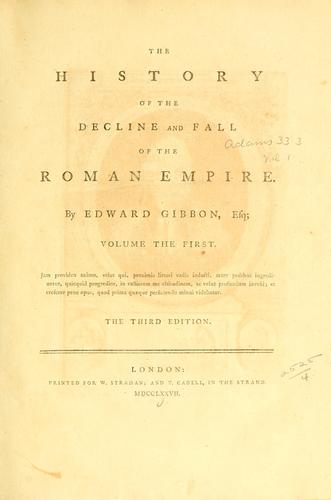
Edward Gibbon · Buy on Amazon
"Gibbon is terribly different from Bede. Bede is such a devout and enthusiastic servant of the church (he’s a monk). Edward Gibbon was a very self-absorbed 18th-century Englishman, and yet also a citizen of the world. He felt that the enlightened, sceptical outlook that he held was the way people ought to be. He left us a wonderful account of his life – a rather solemn and not terribly humourous autobiography – in which you get a picture of a snobby, rather prissy, self-important man who likes everything just so. Such people don’t always have an easy time with the rest of the human race, and, like a lot of people who devote their time to writing, he was very selfish: very few other people ever got in the way of Edward Gibbon and his building a life to suit himself. I think he once fell in love, but it didn’t really work out. Otherwise, he was a single man who devoted his time to writing this immense book. I’m just looking at my own copy, which is a lovely, nicely bound copy from 1813. It’s in 12 volumes, which gives you a sense of the scale he was writing on. It’s a formidable task to read it, but it’s very readable, because although Gibbon was humourless about himself, he has a tremendous sense of humour about the rest of the world. All the time there is a wonderful, slight edge to what he is writing. It’s a distancing thing, but it does also incorporate human sympathy for the past. I think he may have enjoyed the past more than the present. No. For a start, the book is called ‘The Decline and Fall of the Roman Empire’, but it covers 1500 years, from Augustus to the capture of Constantinople by the Turks. It’s absurd to call that a story of ‘decline and fall’ – it’s far too long. What modern historians would say is that this is a story of transformations, and one of those transformations was the alliance between emperors and Christianity, which made the Empire very different. Far from the Empire falling after Christianity, it lasted another 1000 years, in the form of Byzantine Christianity in Constantinople. So that idea doesn’t really work. But what you do see in Gibbon is a very exhilarating rejection of priestcraft, the claims of the Church to absolute authority, and the attempts of the Church to boss people around in their lives. It’s an attitude which seems to me to be hugely important at the present day. I would love to hear Gibbon’s comments on fundamentalism in the United States, or in Saudi Arabia and Pakistan. He would be searing in what he said. In his day, the big enemy was the Roman Catholic Church, but all the same things applied. He was not an atheist, he was not anti-religious, but he was anti-clerical, he distrusted clergy – and that seems to me a very healthy instinct. Oh, by no means. He tells us that great story about going to Rome and standing in the ruins of the forum as the friars chanted in the background. He was gripped by this great civilisation which was in ruin in his day. The end of the 12 volumes is a wonderful portrait of a ruinous Rome in the 15th century, and then it moves to his own time, and he says, ‘Look! This city is small compared to what it was.’ There is a real fascination with pre-Christian Rome and I think it’s because felt that Rome, once it had allied with Christianity, was not a patch on what it had been. Yes. What I have done so far is to give you two of the great classics of Christian history. The other books I’ve chosen are wonderful forays into particular bits of history, and illustrate the way that history ought to be written at the present day."
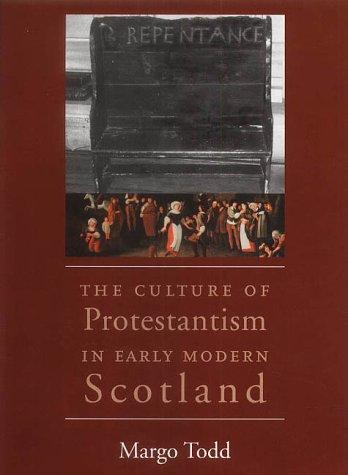
Margo Todd · Buy on Amazon
"So first of all I’ve chosen a book by a modern American scholar, Margo Todd. She is writing about the Scottish Reformation, which produced the Presbyterian Church of Scotland (still the Scottish national church). Traditionally a lot of writing about the Scottish Reformation presents a picture of an enormously gloomy, repressive society – and there’s something in that. But what Margo does is present this wonderfully rich, detailed picture of the lives that people led. It was a very disciplined society. For example, the Scottish Protestants invented a new piece of church furniture which they called the Stool of Repentance. Sinners in the parish sat on it at church until they’d been absolved of their sins. And you think, ‘Gosh, that’s so tyrannical!’ But the great thing about the society she is describing is that everyone was involved. The whole congregation would stare at these people Sunday after Sunday and then, at the end, the whole congregation would welcome them back, hugging them and shaking their hands. This was a discipline that came out of ordinary people’s lives and gave them a sense of power – because it was a society with no policemen and no security forces to speak of. It was a very scary world in which anyone might burst into crime, and you can see how attractive this sort of structure would be for people. She has the most wonderful stories about these disciplines: for example, one sea captain who was visiting from the Netherlands and went out on the razzle one night and had a wonderful time drinking and fornicating and when he had a hangover the following day he felt so guilty that he went to the local church and offered himself for penance before the congregation. You get the sense of people struggling with their own consciences and trying to fit into this world. And there’s another lovely story about the Stool of Repentance. It only existed in Scotland, and an Englishman came up to visit Edinburgh one day, and he went to church on a Sunday. He was looking around for a pew, and the church was crowded, but he saw one empty pew at the front, and he thought, ‘Oh, I’ll sit there – I’m a gentleman, I’m important, and it looks an important seat.’ So he sat down on it, and of course it was the Stool of Repentance and the whole congregation burst into laughter at seeing this stupid foreigner sit where you should never sit. And it goes on like that. It’s a great book. It was an absolutely huge turnaround, part of a real reformation of manners. Society moved from a society where the festivals of the church were hugely important, to one where discipline was valued. Scottish society remained full of festivity, but it had a rather different relationship with the Church. The Church was generally on the side of buttoning yourself up after the Reformation, whereas beforehand it might well be on the side of unbridled fun. It depends where you start from. It’s easy for us 21st-century liberals to feel it was dreadfully repressive, but if society is constantly on the edge of violence, as that society was, I think we’d feel rather differently about the community disapproving of people stepping out of line. We all make bargains with the society we live in, and theirs were just a different set of bargains. It’s not up to us to criticise them."
Adrian Hastings · Buy on Amazon
"This is one volume in a long series called the Oxford History of the Christian Church. I chose it because its author, who is sadly now dead, was not only a great historian but also a participant and observer. He was a Roman Catholic priest who went to Africa and worked particularly in Mozambique. He’s one of the few people in modern history who can claim to have brought down an empire single-handed, by reporting, in Europe, on the massacres that the Portuguese army was carrying out against the local population as they tried to win their independence. And it really destroyed the credibility of the Portuguese, the last people in Europe really to defend their colonial empire. It made him very unpopular in certain circles at the time. The expertise that Hastings brought to what he did was quite exceptional, and this history is just entrancing. It is beautifully written, it is beautifully organised, it’s full of wonderful human interest stories and a great sympathy with ordinary people, and it sets standards for the way that we all write. More than that, because the Christian Church has been in Africa, in Egypt, since the 1st century of the Christian era, and it’s been in Ethiopia since at least the 4th century of the Christian era. That’s the story he tells first – he has the most wonderful chapter on Ethiopia, which is one of the weirdest Christian stories in the world. They more or less got on with being Christian, without much contact with the outside world, for centuries, and became pretty odd in the process. And he’s got a great deal of sympathy with that. He tells the story of the European colonialists in the 15th and 16th centuries, which is a Portuguese/Spanish story, and he tells the story of the English and their missionary efforts, evangelicals for the most part, in the 19th century. Then he starts showing the reader how from that initial mission from outside, Africans took over and made this religion their own. He’s very good at portraying that world of African Christianity. It is absolutely central over the last 150 years. Africa has become half a Christian continent and half an Islamic continent. It has made both these faiths African, and the destiny of South and West and East Africa is Christian now. It’s one of the powerhouses of Christianity, and it’s emancipated itself from any colonial taint. When all the African states became independent in the 1960s, all the bien pensant liberals across the world said, ‘Oh, this is the end of Christianity – it’s associated with colonialism.’ But what happened was that all these states fell apart and the Christian churches just grew and flourished. People trusted them more than the politicians. So that is the future of Africa now. You see African church leaders getting involved in politics in ways I would normally profoundly disapprove of, and which I do think are potentially very dangerous for their moral integrity. But they represent a much more authentic leadership than some of the terrible, corrupt leaders of the 1960s and 70s."
Christoph Baumer · Buy on Amazon
"This is a wonderful book, and it brings me back to where I started – the Christianities we’ve completely forgotten. These are the Christianities that began by speaking the language of Jesus Christ – he didn’t speak Hebrew, he spoke Aramaic as his first language. They were the churches of Syria, the coast of the Eastern Mediterranean, and they spread, not westwards into the Mediterranean, but eastward into what is now Iraq, Iran, then to Central Asia and finally to China, possibly Korea and certainly Japan. They did this by the 7th century. In other words, when Bede was writing in England, there were Christian bishops in the Chinese empire. This historian, Christoph Baumer, has produced a beautiful picture book. He’s travelled as far as China, throughout Central Asia, and to India, taking beautiful colour photos. The book is a pleasure to just flick through – but it’s also a very able history of this virtually lost Christianity. He’s Swiss, so it’s actually a translation from German by Miranda G Henry. It is a Christianity which is, in many ways, closer to the Christianities of the generations after Jesus Christ. Whether that is more authentic is debatable, but it is a Christianity that rejected a lot of what the churches of the Mediterranean said Christianity was. There was a huge council of the Church, within the Empire, at a place called Chalcedon in 451 AD, which established what imperial Christians wanted to say about Jesus Christ. The representatives of the churches in the East either didn’t go to that conference, or they went and said, ‘Well, we don’t agree with you and we’re not going to sign this agreement.’ And that was one of the great turning points for the Church. Those eastern Churches could easily have been the future of the Church, and the centre of Christianity could well have been Baghdad and not Rome – because the bishops of this Church of the East had just as many people under their pastoral care in the 7th and 8th centuries as did the Bishop of Rome. If one of these bishops had converted a Chinese emperor as Constantine the Roman emperor was converted, you could have got a completely different future of Christianity. But the coming of Islam prevented that. It’s a different view of the way in which the human nature of Jesus Christ relates to the divine nature. This Church of the East tried to keep them more separate. They didn’t feel that it was reverent to mix up the idea of God with humanity as much as did the frankly compromising formula of the Council of Chalcedon. One consequence of that is that they had a rather optimistic view of human nature. Because if you say there is a distinct human nature of Jesus Christ, alongside his divine nature, you can say, ‘Well, that human nature is quite like us.’ You can aspire to be like God – and it may put a terrible responsibility on you. Some of the monks of this tradition were austere, savage people who punished themselves to be as pure as possible. They have suffered terrible, terrible disasters in the last 150 years. The Ottoman Empire had tolerated them and given them an honoured place in its setup, but a terrible intolerance set in in the 19th century, I think provoked by anger against the West. These Christians suffered, and they’ve been suffering more and more through the 20th century. Virtually all of them have had to flee Baghdad. And so you end up with many of the leaders in exile, in Australia or Chicago. It is a miserable story of persecution and suffering. Support Five Books Five Books interviews are expensive to produce. If you're enjoying this interview, please support us by donating a small amount . It’s hugely on the rise. It is the largest world religion, and there is no sign of it decaying. In Europe, it’s becoming a minority practice, but Europe is completely untypical. There are perhaps billions of Christians we don’t even know about in India and China. If you’re interested in numbers, the future is bright for Christianity. It’s all sorts of different forms of Christianity, you really cannot say yet what form is going to dominate. My own selfish hope is that no form dominates. It’s very bad when one identity of a religion becomes the top dog. But my money is on Pentecostalism, and whatever happens next to Pentecostalism (no, not necessarily the jumping-up-and-down, happy-clappy, tambourine-bashing version). Pentecostalism represents a listening to the spirit, not relying on text, on the Bible all the time – and a lot of its success has been to do with getting beyond words, because that can also leap cultures. One reason for its success is that it empowers people, particularly those who don’t feel they have power in any other way. If you look at the enslaved peoples in the southern part of the United States in the 18th century – these are people who had no choice in their lives. One thing that evangelical Christianity offered them was to make a choice: to choose to turn to Jesus. Instantly that gives you back a sense of self-respect. Again and again, in all sorts of different societies, it is that sense, that however unfortunate you are, however powerless in political terms, you’ve got access to a different sort of power. That image of a man who died on the cross, absolutely helpless, and who yet has more power than you could possibly dream of – that’s a constant at the centre of Christianity. When your life is sorted out, that may be a very good reason for not needing it. But that sounds like complacency. I think another factor in Europe is that we experienced the effect of tidy-minded ideologies during the 20th century at first hand. We saw what it was like to offer people a simple way to salvation – and some of those ways were apparently non-religious: Nazism, Stalinism, Communism. Christianity did not come out too well in its encounters with these totalitarian ideologies, and I don’t think Europeans have forgotten that."