Charles Fernyhough's Reading List
Charles Fernyhough is a writer and professor of psychology at Durham University in the UK, where he conducts research in inner speech, hallucinations, and child development. He directs Hearing the Voice, an interdisciplinary project on the experience of hearing voices, based at Durham University and supported by a Strategic Award from the Wellcome Trust.
Open in WellRead Daily app →Streams of Consciousness (2016)
Scraped from fivebooks.com (2016-08-08).
Source: fivebooks.com
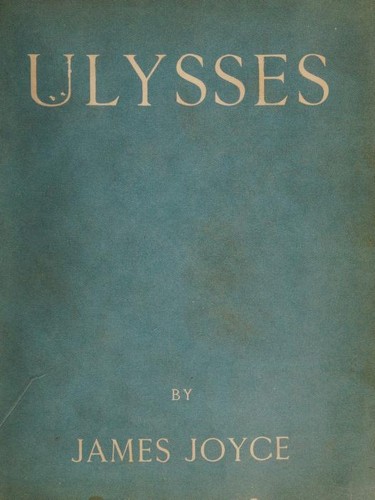
James Joyce · 1922 · Buy on Amazon
"It is seen as the archetypal stream of consciousness novel. With more ambition than possibly any other writer, Joyce tries to get us into the inner monologues and dialogues of Leopold Bloom, Molly Bloom, and Stephen Dedalus. He didn’t invent the technique. He credited the French writer Édouard Dujardin in a novel from the 1880s as starting to explore this technique, but others have argued that the stream of consciousness style started much earlier than that. In fact, the term ‘stream of consciousness’ appeared in literature for the first time in a discussion of the British novelist Dorothy Richardson’s work. So Joyce didn’t invent it, but he makes it flourish in the most extraordinary way. I’m particularly interested in how he depicts inner speech. He gives us a stream of consciousness that doesn’t seem like a standard novelistic narrative. He is trying to capture the particular qualities you would notice if you listened to someone else’s inner speech. “If Joyce was trying to depict inner speech as it really is, he must also have been aware that that’s an impossible task” It aligns beautifully with the psychological work on how inner speech develops that inspired me. For example, one theory posits that inner speech develops out of social dialogues: it should have a dialogic quality. When you’re talking to yourself, it really should be like a conversation with yourself. You can see this in passages of Leopold Bloom in a monologue. He is actually in dialogue. He is talking to himself, asking himself questions and then answering them; making statements and then commenting on them. Another feature of inner speech is called abbreviation. When you are sitting in your living room late at night and you hear a loud crash from outside, you don’t say to yourself, ‘The cat has knocked over the dustbin,’ you just say to yourself, ‘the cat,’ or, ‘the dustbin.’ That way you abbreviate what you are thinking to yourself for all sorts of reasons, including the fact that you already know much of what the topic of conversation is, so you can cut it down like that. And again, Joyce depicts this absolutely beautifully, particularly in Leopold Bloom’s inner dialogue. I think there’s certainly a historical story. I think you can make that case. What’s interesting is that some people, possibly quite a lot of people, reject the Joycean view of inner dialogue. They say, ‘Actually, I don’t think my inner speech is like that.’ And then, of course, you get into the fascinating scientific questions of how we can find out what people’s inner speech is like. I think it is an open question and, in fact, when we come to discuss the other two novels, the reasons for choosing these three novels is so illustrative that these three writers are trying to do something similar, but going about it in quite different ways. Well, writers certainly are very different, thank God. I think it is also worth pointing out that even if Joyce was trying to depict inner speech as it really is, he must also have been aware that that’s an impossible task. Not least because if he had really been able to depict Leopold Bloom’s inner speech, it probably would have been completely incomprehensible. If I could listen into your inner speech, I really wouldn’t make any sense of it, I’m sure. What Joyce gives us is something that is reconstituted or represented in a way that makes it an enjoyable reading experience. But, of course, even within Ulysses , you get this variability. Molly Bloom’s inner speech is really quite different to Leopold’s, isn’t it? Different people will have different styles of talking to themselves and, of course, writers will have different ways of approaching it. It is hard to see that any other art form tries to do this particular thing, and in the great modernist novelists of the early 20th century that this experiment comes to a high."

Russell T Hurlburt and Eric Schwitzgebel · Buy on Amazon
"I had the privilege of working with Russell Hurlburt in the last few years. He is one of the most extraordinary scientists I’ve ever worked with. He is somebody who has swum against the stream for decades. He has tried to describe inner experience in a way many people think is impossible, while trends in psychology and neuroscience have been going in the opposite direction. He’s done it by using a method he calls ‘descriptive experience sampling,’ which works in a beautifully simple way: you carry this little beeper around with you and wear an earpiece, and every so often the beeper goes off. You report what was in your experience just before the beep went off. It is a really hard thing to do. People are rubbish at it when they first do it. But after about 4 or 5 days, most people are really good. I’ve seen this plenty of times. On day 1 people pack in all these preconceptions and myths, self-mythologies, and just give them back to the interviewer, and then the interviewer says, ‘No, I don’t want your preconceptions or theories about what you were thinking. I want the best possible description of that tiny moment of experience, not the moment before it, not the moment after it. Just that moment.’ We did a study with this method in Berlin a couple of years ago, and we’ve been publishing the data including the first ever integration with MRI. We were able to look at what people were reporting using this method and map it onto their brain activation. Get the weekly Five Books newsletter This is one of the most interesting books you can read on the nature of consciousness. It has an extraordinary structure. It is the story of one woman and her sampling through descriptive experience sampling over the course of five days, going into details about what she said about these moment of experience, how she got better at doing the method and at reporting on her experience, with fascinating scientific and philosophical asides drilling down into some of the phenomena that she describes. But, most importantly, the book is set up as a dialogue between two people: Russ, who is the inventor of this method and the champion of this approach, and Eric Schwitzgebel, who is a philosopher, and who has become well-known as a sceptic about introspection. Neither quite wins the other one around, but on the way, they have this extraordinary discussion: beautifully written, completely compelling and insightful."

Virginia Woolf · 1925 · Buy on Amazon
"It is one of the books that comes to mind when people talk about the stream of consciousness novel. I wanted to put it up against Ulysses because it is such an interesting comparison and contrast. You’ve got a similar sort of structure: this high society woman Clarissa Dalloway preparing for a party. All this book really does is follow her and some other characters wandering through London over the course of one day. It is clearly responding to Ulysses with that structure, but the book reads very very differently. “Septimus Smith hears the birds singing in Greek at one point; the same thing happened to Woolf” One interesting difference I find is that Joyce’s approach is to get into a perspective and master it. I find it very satisfying as a reader. I’m there, I’m Stephen Dedalus for that period of time. Woolf is interested in the intersections between minds. She’s trying to show how minds bleed into each other. Joyce is more ambitious, I think, in just depicting the contents of consciousness, whereas Woolf hedges around more by using phrases like he thought, she thought, more old-fashioned constructions. But what Woolf gives us that Joyce doesn’t is psychopathology. The character Septimus Smith is traumatized by his experiences in the Great War, particularly the death of his friend, Evans, and you see Smith hallucinating. For example, seeing a Skye Terrier turning into a man at one point. I have a particular interest in the experience of hearing voices or auditory verbal hallucinations, and Woolf was somebody who actually had these experiences, wrote about them, and cited them, tragically, in her suicide letter. Septimus Smith hears the birds singing in Greek at one point and the same thing happened to Woolf. It is an experience that she reported herself."

William James · Buy on Amazon
"James coined the term ‘stream of consciousness.’ He had fascinating things to say about how our experience works in that stream-like manner, and how different parts of our experience come to the foreground, and then drift into the background as we move from thought to thought. He doesn’t actually use the term ‘stream of consciousness’ that much—he uses ‘stream of thought’ more—but he is credited with coining the term. He is an extraordinary psychologist and philosopher. He is probably the most influential psychologist of all time, if you look at the different streams of thoughts he influenced, unless we count Freud as a psychologist. As an empirical psychologist, thinking about cognitive mechanism, he is incomparable. He is not read as much as he should be. Every psychology student should read James. “William James is probably the most influential psychologist of all time” He is so big hearted, as a scientist. He writes about the mechanisms of the stream of consciousness in a beautiful, engaging, literary, rich way, but he doesn’t dismiss other aspects of experience. His famous work is on varieties of religious experience. Many people these days would just dismiss that as not something we should be studying as psychologists. James takes religious experiences seriously, as he takes a whole range of other experiences seriously. He also had very important things to say about the methodology of how we study the mind. It is an extraordinary work and compulsory reading for psychology students, even though this book is well over a hundred years old."

Edna O'Brien · Buy on Amazon
"Edna O’Brien is one of the greatest living writers in the language, and this extraordinary short novel from 1972 was out of print for a long time. It was republished a couple of years ago. I’d want to pick it in any case, but in comparison with Ulysses and Mrs Dalloway it gives us a completely different approach to depicting the stream of consciousness. There’s nothing that could be more stream of consciousness than this novel. You’ve got this woman, Mary Hooligan, who’s lying alone in a four-poster bed. She’s just taken a pill to help her sleep, the curtains are drawn, she is alone with her thoughts. The way she ranges, the way she travels internally over the period of time in the novel, is incredible. “She revels in consciousness, in memory, in language, in the ability of the human mind to seek connections in the darkness” With Joyce you’ve got this attempt to depict what someone’s inner speech would sound like if you could put a microphone in their head. With Mrs Dalloway you’ve got this attempt to orchestrate the multiplicity of minds, minds in interaction. With Edna O’Brien, you’ve got more of a journey through memory and that’s it. What Mary Hooligan’s stream of consciousness involves is these extraordinary enfolded narratives and memories. She is thinking about her childhood in the town of Coose. Tiny things trigger new memories. At one point, she sees a feather on the bed and that triggers connections. On another occasion she is dreaming of custard. She is remembering her mother and her funeral and portraying the funeral as a rather comic affair. She is remembering all sorts of sexual encounters, which are bracingly honest and explicit. It is extraordinarily sexually honest for the period. And she is just revelling in consciousness, in memory, in language, in the ability of the human mind to seek connections in the darkness, connections with other people, but also to seek its own meaning, to seek to draw the thread of a life together. I think, yes. Often when you ask people about their inner experience, they say it can’t just be related in the way you can relate an utterance. It then becomes a question of, is it language? Is it some other kind of communication of the self with the self? And certainly you find that when you ask people to describe moments of experience in fine details. They say, ‘Look, there aren’t any words. There are no words. There are no images. There’s just the thought. There’s just an experience.’ Get the weekly Five Books newsletter Russ has a term for it; he calls it ‘unsymbolized thinking.’ It is a kind of thinking that happens without any symbols at all. It doesn’t have words. And I wonder whether some of that stuff is actually your inner speech that has been so thoroughly condensed and abbreviated, like how Joyce is depicting Bloom in a speech that’s stripped down, telegraphic, condensed, compressed. Maybe when that process goes to its ultimate end you end up with something that is in speech, but just about everything in its language has been stripped away from it. I don’t really know what that thing is. I don’t know whether that is language. A psychologist would give one answer, a philosopher would give another. Maybe what you end up with then is just another kind of thinking, another kind of thought. These are really fascinating questions, but I do think we need to ask them, and literature gives us a really interesting way in."