Chan Koonchung's Reading List
Chan Koonchung is a Shanghai-born writer who has lived in Hong Kong, Taiwan and the US, and currently lives in Beijing. He is author of The Fat Years and The Unbearable Dreamworld of Champa the Driver
Open in WellRead Daily app →Dystopia and Utopia (2013)
Scraped from fivebooks.com (2013-08-06).
Source: fivebooks.com
Edward Bellamy · Buy on Amazon
"This book came out early, in the 19th century. At that time there were many utopian novels. It’s set in America, where a future socialist state will solve or eradicate all the ills of society of late 19th century American capitalism. The protagonist Julian West doesn’t see those ills at the beginning of the novel: but the author contrives to put him to sleep for 100 years. When he is woken and he adjusts to his new life, he sees how different things are in the future – an industrial society where everyone shares the capital equally. He begins to regard the past, which is the author’s and the contemporary readers’ present, as nightmarish. “If you talk with the people in China’s major cities, sometimes you wonder – why are they so optimistic, so euphoric?” Bellamy is envisioning a better world, that’s his intention. It was supposed to be a utopia, and it was very popular – many people identified with this kind of socialist state at that time, even in North America. But it was criticised too. The world he imagined is a world of nationalistic “industrial armies”, not the kind of artisan-libertarian socialism in another famous utopian novel News From Nowhere , by his contemporary William Morris. It was very prescient, in the sense that Bellamy almost tells the future of a certain Communist country that came two decades later."
Jack London · Buy on Amazon
"Many dystopian novels are cautionary tales. I’m sure the authors have that in mind when they write – it’s a warning to their contemporaries. Jack London wrote about a world where American democracy degenerates into an oligarchic state, very similar to a fascist state. I don’t think he ever used the word fascist, but it was a fascist state. That was his warning at the time, in the early decades of the 20th century. This is a tradition that we need to remind ourselves of when we think about contemporary China. It also aroused a lot of interest in the United States after 9/11, when Bush junior’s new policies were branded as a new form of state fascism – that’s a bit of an overstretch, I know."

George Orwell · 1949 · Buy on Amazon
"In some parts of the world, people do not care about Nineteen Eighty-Four too much because they think it’s a thing of the past now that the Cold War has ended and the former Soviet Union has collapsed. But to Chinese intellectuals, it’s still very important for their understanding of what’s happening inside China. Nineteen Eighty-Four is seriously read in China by intellectuals, who see similarities between the world of George Orwell and present-day China, though they also know there are a lot of differences. Nineteen Eighty-Four describes a society of scarcity, and wherever you turn to, you’re being watched by Big Brother. It’s a little bit different in China because [contemporary China] is a society of abundance, and you probably enjoy certain personal freedoms."
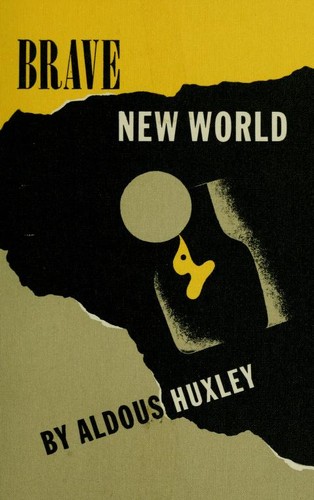
Aldous Huxley · 1932 · Buy on Amazon
"Brave New World was written in the 1930s, and the book portrays a happy dystopia. People are happy all the time because they have this happy drug, soma, and the pleasure principal is honoured. There is an abundance of sex. People have a good time. In this sense it’s closer to what we can see superficially in China than Nineteen Eighty-Four . It’s popular, but far less popular than Nineteen Eighty-Four . Those who read dystopian novels tend to be very political, and because Nineteen Eighty-Four is about an authoritarian state it can feel more pertinent. But Brave New World shows there’s another side to a new totalitarian state – a consumerist totalitarian state. That’s exactly what’s happening in China. Also, you don’t know what’s happening to others – to the marginal people like the barbarians of Brave New World – because you are not in contact with them. There are certain very marginal groups in China whom you never notice. For instance the petitioners [to central government authority against local injustices] in Beijing. There are thousands of them, they are everywhere if you look out for them. Right, because you can chose not to see them, or what’s happening in Tibet and Xinjiang. Most people don’t care what’s happening there, because they don’t see it. Unless you go to these places – just like in Brave New World , where the characters leave the normal, happy world, and encounter different people. So in a way Brave New World and Nineteen Eighty-Four complement each other when we try to measure what is happening in China now."
Katherine Burdekin · Buy on Amazon
"The book was written in the mid 1930s, before the Second World War. The author is warning that the Nazi state will win a major war and then rule for seven centuries. It’s very possible that the Nazis and the fascists could have won, so it’s a kind of alternative history. The book was read by many socialist book clubs in the UK at the time, but after the war it was forgotten, because fascism was defeated in many people’s minds and it wasn’t relevant anymore. Get the weekly Five Books newsletter A recent revival of interest in the novel is mostly from a feminist angle, because in this ruthless state people are discriminated against and women are considered inferior – fascism emphasises masculinity and makes a myth of fraternal feeling. But I was interested in its description of a sustainable fascist state. In the book, there could be no end to a fascist state. I see it as a cautionary tale of how a new type of Chinese state could stay in power. I was looking for dystopian novels about fascism. I always suspected there were novels in the thirties warning against fascism, even before the Second World War. Somebody must have known what would happen if they won, writers must have come out with some ideas about it. I thought it might be useful for me to imagine what China could be. That’s how I came across Iron Heel as well. He wrote this in 1902, predicting that by 1962 China would be the leading country in the world, that everyone would come to and praise China. It’s almost like today – almost, but not quite yet. He was very optimistic. I think if China didn’t go through the detour of Maoist rule, something like that would probably have happened in the sixties or seventies, as in Japan, Singapore, Taiwan, Korea and Hong Kong. It would be a capitalist world, with an export-orientated economy and cheap labour. The coastal cities would be very prosperous. There would be inequality, probably something like the present day with great disparity of wealth between the urban rich and the rural poor. Without the communist detour, something similar to today would have already happened. It’s very rare, this kind of utopian novel in China. For the longest time, people did not follow dystopian or utopian novels. During the Cultural Revolution and the eighties there were only a few kinds of novels you could write. It was always a romantic vision of the Communist Party. In a way that’s a kind of utopia – it has only positive things to say about the coming society. After that, understandably, writers turned to realism, trying to expose what went wrong in the Cultural Revolution. They were trying to write about change – the Chinese saw themselves in yet another abrupt change after the Cultural Revolution, swaying from one thing to another. A lot of people wrote about these changes, and that is what drew everyone’s attention. On top of that there was censorship, so you had to come up with a very literary way of treating your material. Magical realism was popular for quite some time, because you couldn’t write about the present directly, you had to do it in a roundabout way. Magical realism allowed you to do this, to write about the reality of something imaginary. So in the eighties and nineties most of the better novelists were writing about the past. They were not really thinking ahead. There have been more futuristic novels in the last ten years or so – I am told there is more and more serious science fiction coming up now. That could be indicative of something."