Ana Lucia Araujo's Reading List
Ana Lucia Araujo is a professor of history at Howard University. Her work explores the history of slavery and the Atlantic slave trade and their present-day legacies, including the long history of calls for reparations for slavery and colonialism. Her latest book is Humans in Shackles: An Atlantic History of Slavery.
Open in WellRead Daily app →The History of Brazil and Slavery (2025)
Scraped from fivebooks.com (2025-01-31).
Source: fivebooks.com

Angela Alonso · Buy on Amazon
"Yes, she’s a sociologist. She works in this intersection between history and sociology. The important contribution of this book is that it focuses on the movement for abolition in Brazil as a social movement, which with her background in sociology is interesting. It covers the years 1868 to 1888 which is the moment when the abolitionist movement started in Brazil, and goes up to when slavery was finally abolished. The book shows how this movement in Brazil emerged very late: she compares this timeline with Britain or even with the United States when it starts in the late 18th century. In Brazil, as an organized movement, it only starts by the middle of the 19th century. She is able to show how we had people of different backgrounds engaging in this movement to abolish slavery in Brazil. There were the Afro-Brazilian activists. Some of them were journalists, others were public figures who had ancestors who were enslaved. Many of them had an important presence in the press. These abolitionists built alliances with different groups in Brazilian society, including the poor who were not necessarily descendants of enslaved people. This group was also in dialogue with abolitionists in other parts of the globe because at this point Brazil, along with Cuba , was the only slave society that was still in existence. So, they were in dialogue with abolitionists in the United States and in Europe . She shows the different methods they used to fight for the end of slavery. In many ways, it is also an intellectual history because these abolitionists were active in publishing newspapers. They created societies that published important pamphlets and other written texts. They were also active in theater and other kinds of performances that brought the abolitionist movement to a larger number of people in Brazilian society. Moreover, it was a movement that emerged in urban areas, in particular Rio de Janeiro, which was the headquarters of the government back in the time when Brazil was still a monarchy. So, a lot was going on in the capital. It’s these interactions that she brings out in the book. That’s hard to answer. First, it’s because Brazil was a society that really relied on slavery since the beginning. It wasn’t like in the United States, for example, where plantations were much more concentrated in the south and there was a gradual abolition. In Brazil, slavery was widespread—in urban areas, in rural areas where plantations existed and in the mines. It was an institution that existed across the country. Also, it was an institution that was still profitable during the 19th century. The 19th century was when Brazil was having a phase that we call ‘second slavery.’ It was a revival of slavery associated with the development of new technologies. The coffee plantations were very important during this period and the main driver of profits of slavery. Many of these slaveholders were also associated with the elites of the country, which was still a monarchy. The monarchy that held the country together allowed these elites to hold power, even if they were a minority. This is how Brazil was able to stay backwards, keeping the institution of slavery for so long, among others."

Júnia Ferreira Furtado · Buy on Amazon
"Usually when we think about slavery, we think about plantation areas, where the majority of the enslaved people were. This book, however, is about a mining region, in the southeast of present-day Brazil, where there were gold and diamond mines. This was a very important region in Brazil during the mining boom of the 18th century. It’s the moment when the Portuguese started colonizing Brazil more broadly, because of the discovery of gold. Women who were born in Africa and their enslaved descendants were very important in this areas and although they were not miners, they performed work in the domestic environment and also sold food and provided resources to the cities. This story matters because it shows how enslaved women in these regions had social mobility through various means. They were sometimes able to buy their own freedom. In other cases, they were freed by their owners. In the case of Chica da Silva, she was purchased by a man who became her lover and, just after he bought her, he freed her. Men would buy women to benefit from their sexual services, and enslaved women were sexually exploited. But in this particular case, he freed her after purchasing her and Chica da Silva became his common-law wife. They were not legally married, but they had children who inherited property and were educated, and Chica da Silva herself became a slave owner. That is something that would happen in Brazilian urban areas, that women who were formerly enslaved, once they were emancipated, to survive in this society that was heavily based on slavery, they would become slave owners themselves. So Chica da Silva became a wealthy and powerful woman during this period, and she also became a mythical figure in Brazil. There has been one motion picture and one soap opera based on her life. There are songs and carnival parades based on her life. She became a mythical figure, but she existed, and her story is interesting because it shows that enslaved women could have social mobility by having sexual relations with their owners. Enslaved women could use it to their advantage, though most enslaved women were sexually exploited and violated by their owners. Chica da Silva had access to this mobility, probably in a situation where true ties of affection with her common-law husband existed. It’s an interesting case. Of course in the Caribbean or in Brazil there were cases like hers in which women were able to get social mobility. The problem is that once her case becomes part of the popular culture, the idea becomes widespread that slave owners were having sexual relations with enslaved women and that there was no violence associated with that. But even if you have exceptions, like the case of Chica da Silva, most of the time that was not the case. She was an exception because there was no need for this slaveowner to free her. In my own book, I show cases in which slaveowners refuse to free enslaved women, even when they had the money to pay for their freedom. But in this case he gives Chica da Silva her manumission for free. She didn’t have to purchase her own freedom: he gave it to her. And this was rare because of the connection that he had with her. When he bought her, he probably already had the intention to have her as his ‘common law wife’, even if they were never married—because this was a man of Portuguese origin, and she was a black woman. I wrote it first because it’s intended as a book to reach general readers. The books that I am talking about here are all academic books that are focused on very specific topics. My book is a panoramic view of slavery in the Americas that is accessible to a person who has never read about slavery in Brazil or in the Americas in general. They are able to read my book and understand what they are reading. They can also go to the notes and the bibliography to get more information about the topic in several languages. So this was one aim, to make the story accessible. It also is a book that covers the continent, and not only one particular country or one particular region. All the books that offer panoramic views—by Robin Blackburn, David Brion Davis—barely touch Brazil. They mention Brazil, but these authors do not focus on it or read and examine primary sources and secondary literature in Portuguese. I wanted to write a book that would do justice to the importance of Brazil in this story, as well as the important role of Africa from the beginning to the end of the Atlantic slave trade and slavery. Also, I wanted to write a book that would give a place to enslaved women. Many of the books that cover the history of enslaved women are segregated—they only cover the history of enslaved women, whereas the history of enslaved women is usually absent from the general narratives. I wanted a general narrative that would include enslaved women as well. The general ratio for enslaved Africans being brought to the Americas—and in Brazil as well—was two men for every woman. This was for several reasons. Men were being sent to work, especially in the sugar plantations. The death rate in these plantations was very high and the Portuguese would replace those who died. It was the same in the Caribbean: those who died would be replaced with new Africans. The ratio of men to women also has to do with the African markets, where there were more men available to be sold to the market in the Americas. Women tended to be sold internally to the Muslim slave trade and were also kept locally to perform agricultural activities. But despite being fewer in number, women had important roles in slave societies. Especially in urban areas, they were very visible and very present, and had important economic roles as domestic servants, street vendors, nannies, etc. Also, even if there were lower imports of enslaved women from Africa, it’s by enslaved women giving birth that new enslaved people emerged. In the United States, the legal status of a slave came through the mother. If the father was enslaved, but the mother was free, then the child was free, but the children of women who were enslaved would be enslaved. So women were crucial to keeping the slave system running."

João José Reis · Buy on Amazon
"This is a book that has followed me for a very long time. João José Reis is, I would say, the most important Brazilian historian of slavery alive. He worked specifically in the region of Bahia in Brazil. This book is about a rebellion that happened in 1835 which was the largest urban slave rebellion in the Americas. It gathered together mainly African-born men who were formerly enslaved or enslaved and had common ethnic origins. They came mostly from the region that is called the Bight of Benin, which is present day Republic of Benin, Togo and Nigeria. They were people who were captured in that area and brought to Brazil. Many of them were Muslims and Yoruba speakers—they had already converted to Islam—and this brought them together. Religion and ethnic origins often played an important role in bringing people together in rebellions to resist against slavery. Even though some people came from the plantations to the city, the rebellion took place in the city of Salvador in Bahia. The plot was eventually dismantled. What happened after the rebellion, which is similar to what happened elsewhere as well, is that fearing that other rebellions like this would happen, there were a series of measures repressing people who were born in Africa. This led to some of the people who were allegedly involved in the rebellion being deported to West Africa as punishment. Many others followed them. This led to the creation of an Afro-Brazilian community in countries such as present-day Republic of Benin, Togo, and Nigeria. Towards the end of my book, I write about this return to Africa, because we hear a lot about Marcus Garvey and the ‘back to Africa’ movement as a phenomenon of the 19th and 20th centuries. But here we already have it happening in the early 19th century, so it’s important to include Brazil also in this conversation. Some of the people who allegedly participated in the rebellion had already purchased their freedom but were born in Africa. They had a legal status in terms of their citizenship that was in limbo because they were free, but they were born abroad. They were not Brazilians, so they were deported. Many people around them followed them, either because they were part of their families or their networks. Others decided to return to Africa because the repressive measures that followed the rebellion were so bad. For them it was perhaps an opportunity to try to rebuild their lives elsewhere. There were several measures preventing them from purchasing property, they needed to have their papers all the time. There was a growing surveillance. That’s what led to this migration that started, especially after 1835, but would continue until the end of the 19th century."

Luiz Felipe de Alencastro · Buy on Amazon
"This is an essential book. It’s dense and longer than the other books, and it covers an earlier period. It’s important for understanding how Brazil could not have existed without the region of West Central Africa, what is present day Angola . The Portuguese arrived in West Central Africa in the 15th century, and it became a Portuguese colony between the end of the 16th century and the first decades of the 17th century. What the Portuguese were doing in that region, and what they were doing in Brazil, was connected. They were transporting enslaved people from West Central Africa to Brazil. When the Dutch invaded Brazil in the 17th century, they also invaded Angola and there were Portuguese troops fighting them on both sides of the Atlantic. There are several other layers in this book that are also important. For example, it covers the beginning of the plantation economy in Brazil in the Northeast, when we still had enslaved indigenous people working side-by-side with people of African descent and born in Africa. So this book tells this story about how Angola was part of the formation of Brazil and it’s essential for understanding how Brazil owes its existence to Angola. There have been other books that have come out since. There’s the book by Roquinaldo Ferreira that Mariana Candido mentioned when she gave her interview , there is Candido’s own book of 2013, and a book by José Lingna Nafafé, published in 2022. But in The Trade in the Living Luiz Felipe de Alencastro was the first to show how the Atlantic Ocean connected Brazil and Angola instead of separating these two regions. I think in many ways people feel those connections and live them in their daily lives. There are words from African languages such as Kikongo and Kimbundu that are incorporated in Portuguese. The food that we eat, the dances, the music, the rhythms, all this is shaped by Africa. It’s something that is natural, it’s not necessarily something that people have thought about. When I was growing up, the religion, the deities, the carnival—all this was present and connected to these traditions. But in school we were not taught the history of Africa until the beginning of the 21st century. For people of African descent, they had memories of their families and what was passed down to them, they had this consciousness, but it’s not something that was officially recognized until the 1990s and the early 2000s. It has started being officially recognized over the past 25 years, I would say. This is why the work of historians is important, to give a basis to it. But in people’s lived life, in their lived experiences, it has been there all the time."

Jane-Marie Collins · Buy on Amazon
"This book goes back to the same region where the slave rebellion took place in 1835. It’s by a British historian, Jane-Marie Collins, who worked in Bahia and it shows how enslaved women who were mothers used petitions to demand their own freedom and how motherhood played a role in the discourse that they developed. Even though it is an academic book, this book is important because it brings to light the importance of enslaved women in this region. Most of the books that deal with enslaved women focus on the region of Rio de Janeiro or São Paulo whereas she is focusing on Bahia. Her work intersects with the work of other historians who worked on enslaved women, but she is looking at an important region, and showing how motherhood mattered to enslaved women in Brazil, in particular in Bahia."
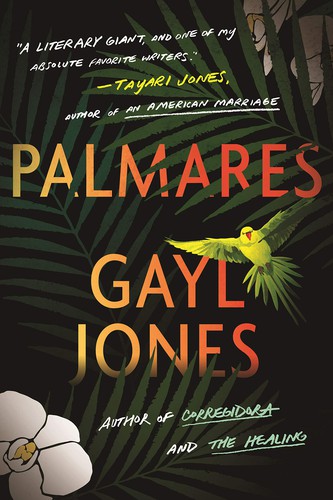
Gayl Jones · 2021 · Buy on Amazon
"Palmares was the largest runaway slave community in the Americas and it existed for almost 100 years. At some point, there were perhaps 10,000 members of this community. The Dutch fought against them when they occupied Brazil, and eventually the Portuguese defeated them. One of the last leaders of this community was Zumbi. In Brazil he has become, like Chica da Silva, a historical hero. Today the date of his death, November 30th, 1695, is commemorated. It’s now a national holiday in Brazil. It had been a holiday in different cities but this past year, for the first time, it was observed nationally. Again, Zumbi and Palmares are symbols of resistance. Yes. Originally the quilombo —though there are other terms, like palenque or cumbé in the Spanish-speaking regions of Latin America—were communities of fugitive slaves. Brazil had the largest number, and the largest one that lasted for longer than any other in the Americas, Palmares. But you had these communities in the British Caribbean, in Mexico, etc. Some of these communities have survived. After Brazil ended its dictatorship in 1988 after more than 20 years, the new constitution gave these black communities that were remnants of the quilombos official status. It allowed these communities to own the land that they were occupying. Later on, the government expanded the notion of quilombos to include historically black communities. Today we also call communities that were formed after abolition quilombos. That’s why if you compare the period of slavery and now, there are more quilombos today. For example, in the city I come from, in the south of Brazil, there are quilombos within the city, including one in a very rich neighborhood. These were communities that were occupied by black communities after abolition. They had occupied that land, and they were recognized and some of them got land titles to permanently occupy those lands. Of course, all this is a long process. They have to prove a number of things in order to do that, but this is why these communities are still so present. I cover the story of Palmares, but I don’t go up to the present. It’s mentioned, I would say. Thank you, Sophie. It was a pleasure."