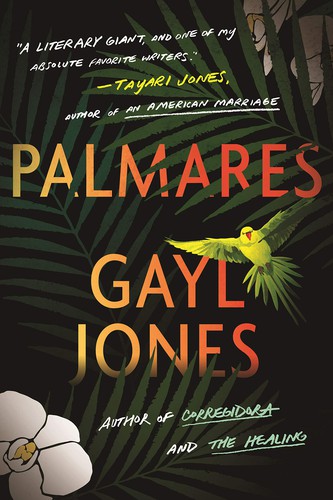
Palmares
by Gayl Jones · 2021
Buy on AmazonFinalist
Recommended by
"Palmares was the largest runaway slave community in the Americas and it existed for almost 100 years. At some point, there were perhaps 10,000 members of this community. The Dutch fought against them when they occupied Brazil, and eventually the Portuguese defeated them. One of the last leaders of this community was Zumbi. In Brazil he has become, like Chica da Silva, a historical hero. Today the date of his death, November 30th, 1695, is commemorated. It’s now a national holiday in Brazil. It had been a holiday in different cities but this past year, for the first time, it was observed nationally. Again, Zumbi and Palmares are symbols of resistance. Yes. Originally the quilombo —though there are other terms, like palenque or cumbé in the Spanish-speaking regions of Latin America—were communities of fugitive slaves. Brazil had the largest number, and the largest one that lasted for longer than any other in the Americas, Palmares. But you had these communities in the British Caribbean, in Mexico, etc. Some of these communities have survived. After Brazil ended its dictatorship in 1988 after more than 20 years, the new constitution gave these black communities that were remnants of the quilombos official status. It allowed these communities to own the land that they were occupying. Later on, the government expanded the notion of quilombos to include historically black communities. Today we also call communities that were formed after abolition quilombos. That’s why if you compare the period of slavery and now, there are more quilombos today. For example, in the city I come from, in the south of Brazil, there are quilombos within the city, including one in a very rich neighborhood. These were communities that were occupied by black communities after abolition. They had occupied that land, and they were recognized and some of them got land titles to permanently occupy those lands. Of course, all this is a long process. They have to prove a number of things in order to do that, but this is why these communities are still so present. I cover the story of Palmares, but I don’t go up to the present. It’s mentioned, I would say. Thank you, Sophie. It was a pleasure."
The History of Brazil and Slavery · fivebooks.com
"I struggle with how to describe a book as singular as Palmares. Suffice it to say that Gayl Jones’ latest book, some 40 years in the making, comes after she disappeared from the public eye for two of those four decades. Jones’ Palmares is a hidden colony of runaway slaves, Indigenous peoples and Portugese colonials in 17th century Brazil. There’s a brave heroine, a love story and an epic journey, all of it infused with the magical realism and interiority that are Jones’ trademark. The writing is luminous, the story nonlinear. Best to let it wash over you and savor the journey."
NPR Books We Love — 2021 · apps.npr.org