Adam Minter's Reading List
Adam Minter is an American writer who has covered the global recycling industry for more than a decade. He is Shanghai correspondent for Bloomberg World View, and has written about a range of topics for publications including The Atlantic, Slate, The Wall Street Journal, National Geographic and Foreign Policy. His first book, Junkyard Planet: Travels in the Billion-Dollar Trash Trade , is an insider’s account of the hidden world of globalised recycling, from the US to China and points in between
Open in WellRead Daily app →The Trash Trade (2014)
Scraped from fivebooks.com (2014-02-10).
Source: fivebooks.com

Susan Strasser · Buy on Amazon
"I can’t say enough good about this book. It’s one of the great social histories written in the last twenty years. It broadly focuses on something that I wish more Americans and more Chinese would think about, and that is the history of American wastefulness. One of the things Strasser does which is so valuable is she resurrects the history of American thriftiness. It’s very funny to bring this up with some people, because we all have this image of the wasteful American – but that wasn’t broadly true even 75 years ago. The US was a colony, and even though it had access to a lot of raw materials it was a very poor place. When you’re out on the frontier, you use everything you have. And that ethic of reuse and thriftiness – which I guess you could say is a Protestant ethic – persisted in American culture into the 1950s, until the development of the modern American consumer and modern American marketing. Strasser talks about how the American housewife had traditionally been the centre of thrift in a household, but marketers transformed her into a consumer who was using disposable products and generating waste on a scale that no household in human history has seen before. One of the most famous chapters in the book – one that makes some people cringe a bit – concerns the development of the disposable sanitary napkin, which believe it or not has a fascinating history that traces American development from a society that re-uses into one that disposes. The other thing that Strasser covers is the profit motive that’s long driven the recycling industry. On the scrap metal side of things, Strasser writes about the scrap metal drives during World War Two, the idea that we all needed to help the American military industrial complex collect metal to make weapons to help our boys overseas. Strasser points out that it was a very well intentioned idea, but wasn’t actually very effective at getting the metal delivered to the factories that needed it. A much more attractive, profitable and efficient way of doing this was to let the small scrap businesses do it, which had a profit motive. It’s an absolutely magnificent book, and anyone interested in the subject should read it. It’s very well written as well. Right. How we got hooked on goods, and started filling up our landfills. It was a slow process, but you really started to see the beginnings of it in the 1920s, with companies building for obsolesence. The question of whether American automobile companies built their cars to wear out is a controversial one. But by the 1950s something had changed. American wealth had reached a point where they could waste more, and that drove the development of this wasteful consumer culture."

Carl Zimring · Buy on Amazon
"Carl Zimring is a marvellous historian, and he’s done the legwork of putting together the data and history to show that this is not a new business. He dove into the statistics from the 19th century, that showed England had been exporting rags and steel to the US as early as the 1850s. The idea that the scrap export trade started with the US dumping things on China is completely wrong. So long as there was a demand for raw materials and there were the logistics to fill it through recyclables, there was a scrap export trade. Zimring goes into the colonial period and discusses how small companies – by which I really mean small family workshops – at the time of the industrial revolution would go door to door for people’s old metal pots and pewter mugs. They would buy them, bring them home, and melt them down in blacksmith shops. That really is the origin of the scrap trade. He covers the US, but of course this process also happened in the UK and everywhere else where the industrial revolution was going on, with the suddenly intense demand to make stuff. Zimring puts together in a very readable way the true outlines of what this business looked like before we even had the word “recycling” – which actually didn’t exist until the 1920s and didn’t properly come into its modern usage until the 1960s. Of course if you want to go further back, the scrap recycling industry has been around ever since someone suggested beating a sword into a plowshare… That’s something that Susan Strasser covers in her book as well. It started to emerge in the late 1960s and really came into its own in the 1970s, in the US primarily. It came out of a nascent environmental movement and paralleled the growth of that. We tend to forget how polluted the US was in the 1950s and 60s. There was a popular backlash against pollution and environmental degradation, and part of that was to ask how people could preserve more of the resources they were allegedly wasting. If you read some of the trade journals in the 1960s and 70s, there’s almost irritation on the part of the scrap recycling industry, the people who had been doing this business since the dawn of the industrial revolution, that this was seen as a new concept – when they had been doing it on an industrial scale for many years. There’s almost a class aspect to what recycling means in the developed world. I’ve found that if I speak to environmental groups, I can show them images of an American junkyard that processes millions of tonnes of material in the course of its lifetime, and they will ask me questions about “real recycling” – which is when we have that kind of stuff put into the proper blue and green bins and it’s taken away to an environmentally sound recycling facility. One of the messages in my book is that those blue and green bins are very closely connected to what happens in your local junkyard. And that’s something that your local recycling movement has had a hard time getting their mind around – that there is something legitimate about the recycling industry that predates their interest in it."
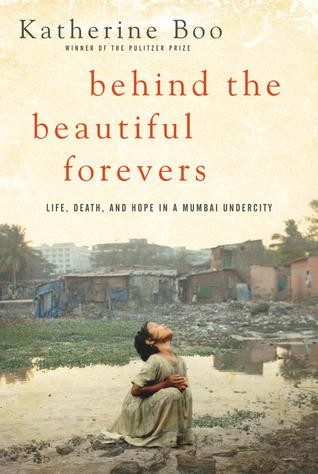
Katherine Boo · 2012 · Buy on Amazon
"What I love about this book is how it highlights the point I made earlier about the dignity of working with scrap. We have the image of garbage pickers in China and India as exploited masses, but it’s a far more complicated story than that, and in many ways it’s a business story. Katherine Boo, better than any writer I’ve encountered, was able to tell that story by going into the slum, spending time with families and with characters like Abdul, a teenage garbage picker. She teases out the various things that these people do, not only to acquire the trash, but what they do with it once they have it. Clever trash pickers are able to better themselves and their neighbours by creating a business and a future. To me it’s a really attractive message, and it’s a very tender and sympathetic portrait of these people. There are very vivid scenes in the book of walking down Mumbai’s Airport Road, which is lined by shacks and trash pickers, and then behind them are walls, and behind them are some of the finest five star hotels in India. I’ve been to some of those places, but it hadn’t occurred to me before I read this book how dependent these trash pickers are on the volume of travellers coming through Mumbai. Boo also points out how in 2008, with the global financial crash, global demand for raw materials crashed and it had a very deleterious effect on the ability of these trash pickers to make a living. At one point, when there aren’t enough people in the hotels, they’re resorting to eating frogs because there is just not enough trash being generated by the wealthy. It depends how you look at it. Roughly 60% of scrap that’s generated in the US remains in the US, and that probably holds true for Europe as well. But the stuff that flows into the developing world is significant. Scrap recyclables is the number one export to China both in the US and the EU. Modern China was, in part, built on the developed world’s waste. It’s not a matter of dumping – there’s very much a transaction going on."

Nancy Zafris · Buy on Amazon
"This is a great book, and a rare kind of novel because it’s about a scrap metal family. It’s about John Bonner & Son Metal Shredders, a family scrap business not unlike the one I grew up in, and the complicated dynamics that often exist in these kinds of families. There are often tensions, and what Nancy Zafris describes could well have been my family. There are succession issues, issues of having a lot of cash in the business and where that cash goes, issues with customers you’ve known all your life who might have started out with you as junk peddlers but you got bigger – these are all very literary themes, and she does a wonderful job of describing what the Bonner family is about. One of the interesting things about the scrap business is that it’s an outsider business. Nobody aspires to be a junk peddler, to pick junk off the street. So at the early stages at least, it tends to attract outsiders, immigrants, the illiterate. For the ones who then become succesful, that creates all kinds of interesting and sometimes troubling clashes, because when outsiders in any industry become successful they find themselves struggling against the idea that they are part of a mainstream successful business. They try to stay true to their roots. The Metal Shredders really draws out that dynamic, and that’s one of the reasons I love the book so much. It’s a beautiful novel, and brings home so many themes that those of us who grew up in the industry know so well."

Paolo Bacigalupi · Buy on Amazon
"This is a marvellous novel as well, and a little bit different from the other books I’ve talked about. It’s considered a young adult novel, but that categorisation surprises me as it’s often violent and deals with some very adult themes. One of the reasons why I wanted to include it is because when so many people think about this industry, they think about the trash compactor room in Star Wars . Junkyards often seem to appear in futuristic science fiction, and I think that’s because we know there’s going to be a price paid for our wastefulness at some point. Ship Breaker is about a young ship breaker called Nailer, a couple of hundred years in the future on the Gulf Coast of the US. The book opens with descriptions of ship breaking yards, which are obviously based on real ship breaking yards in India, only now it’s the US which has been plunged into the poverty of having to do this kind of work. And better than journalists who have written about this, Paolo Bacigalupi describes this work – what it’s like to go into these ships, and crawl around in these tight spaces and airducts, pullling out wire, and how you can end up dead very quickly if you aren’t careful doing it. It also brings up resource scarcity. These ships are being extracted of raw materials for unseen corporations with big names who need them. Paolo Bacigalupi calls them “blood buyers”. I like the book not only for being a thriller, but also because of the descriptions of how dangerous this work is, while someone else is getting rich off it. It brings that feeling home on a very gut level. I think we’re going to see a lot more intensive recycling, and a lot more money made from recycling. One of the images from Paolo Bacigalupi’s novel that I found troubling and yet so very real is that when people are breaking these ships two hundred years in the future, if they find pockets of oil in the ships, a couple of buckets of it is enough to buy their freedom from whoever has bonded them, because oil has become so valuable, along with all the other materials that we have built the modern world on. I don’t think oil’s going to be worth as much as Ship Breaker predicts, but I do believe that as the developing world wants more and more of the stuff that we as consumers have enjoyed in the developed world, the price of these materials is going to go up as they become scarcer. There is a limited amount of copper. There is a limited amount of steel, or of oil to turn into plastic. I can’t say when this stuff is going to run out, but I can say that it’s worth a whole lot more today than it was 30 years ago. And as it becomes worth more, there’s more money in it for people who do the business – which is going to drive more recycling. Scrap is a far bigger part of our lives than most of us realise. I still cover this industry, and every so often I find out about something else that is recycled and transformed into another product that I had no idea about. Recycling is not a new, revolutionary idea – it’s an activity that has been going on since the dawn of the industrial revolution, and in fact much further back."