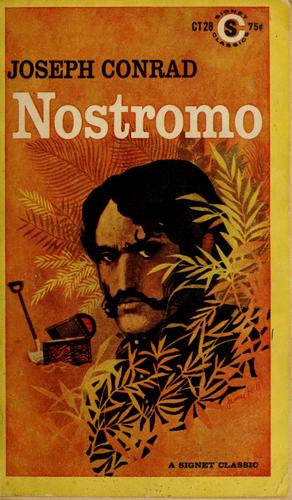
Nostromo
by Joseph Conrad
Buy on AmazonA gripping tale of capitalist exploitation and rebellion, set amid the mist-shrouded mountains of a fictional South American republic, employs flashbacks and glimpses of the future to depict the lure of silver and its effects on men. Conrad's deep moral consciousness and masterful narrative technique are at their best in this, one of his greatest works.
Recommended by
"I don’t think Conrad is interested in asserting any type of moral equivalency—I don’t think he believes the exploited and the exploiters have equal moral claims. Instead, what Conrad cares about is individuality—the possibility or impossibility of a world of individuals—and how each of them, each of us, might be trapped, or might resist being trapped, in the positions and circumstances into which we were born. This, in Nostromo , is best dramatized in the person of Charles Gould: is the mine his birthright? From there, it’s a very direct line to asking the question: To what degree are birthrights delusions, or self-invented? For Conrad, especially in Nostromo , it’s a question of personal ennoblement, of honour. So many of his characters have conflicting loyalties and are always trying to negotiate between them. Conrad is especially engaged with the ways in which people fail, or feel as if they have failed, the standards that were set for them. So, for him, “stepping up” as you put it, usually takes the form of a “stepping down,” a betrayal—not least of notions of Empire, or of duty. Sure. He was the displaced son of a Polish patriot who hated the Russians and spoke French and wrote in English. This, for him, is what the sea did. His style is ship style: when you work and live on a ship, it doesn’t matter where you’re from, or where your shipmates are from. The only thing that matters is that they can do their jobs, and that you can do your job. You’re forced to become mutually reliant, for survival. At sea, or on Conrad’s sea, problems of origin fall away or become translated into problems of individual talent and character. The sea, in Conrad’s imaginary, becomes a democracy, a meritocracy, of survival. This, at least, is the “governance” that his Europeans aspire to and are tried by. This is Conrad’s European way of understanding the “natives,” not by appropriating them culturally, but by enlisting and rallying them in a campaign against the elements, a campaign against the pitilessness of Nature."
The Best Political Novels · fivebooks.com