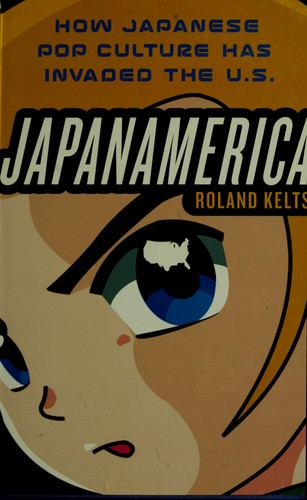
Japanamerica: How Japanese Pop Culture Has Invaded the U.S.
by Roland Kelts
Buy on Amazon"Japanamerica is the first book that directly addresses the American experience with the Japanese pop phenomenon. With insights from artists, critics, readers, and fans from both nations, this book is as literate as it is hip, highlighting the shared conflicts as American and Japanese pop cultures collide in the here and now."--Jacket.
Recommended by
"Japanamerica is very well-written. He does a lot of work on how manga and anime became so popular. Roland is someone who knows both Japan and the United States really well. Kelts talks about the late twentieth-, early twenty-first-century moment when Japan and America were influencing each other. He compares this influence loop to a Möbius strip where things come from Japan and then they come to America, and return to Japan. He uses the movie The Matrix as an example. It was inspired by the manga and anime series Ghost in the Shell , which the Wachowski sisters, the directors, acknowledge having seen. Ghost in the Shell inspired major sequences in The Matrix , and The Matrix inspired many anime. So there’s this continuous loop of Japanese and American cultural influence. Roland explores the excitement about this cultural transmission, how we are in a time when we can go back and forth between and among cultures and get inspiration and even products and art from another culture. In From Impressionism to Anime: Japan as Fantasy and Fan Cult in the Mind of the West , I talked about the French Impressionists’ excitement discovering Japanese art, and then when beat poets—people like Jack Kerouac—got into Japanese culture in the 1950s. Roland talks a little about these periods as a preface. The first wave was during the nineteenth century. Young artists in the 1860s and 1870s discovered Japanese woodblock prints; it transformed French art forever. You can see in the writings of people like Van Gogh and Pissarro, the sense of the artistic excitement about Japan. It informed Impression; it affected Expressionism So many artists– from Klimt to Monet–have been affected by Japanese art. Also, in terms of intellectual stimulation an interest in Buddhism, as a path to enlightenment, as an alternative to stale Christianity, many philosophically-inclined people were getting into Buddhism. That’s the first wave. Support Five Books Five Books interviews are expensive to produce. If you're enjoying this interview, please support us by donating a small amount . The second wave is mid-twentieth century interest in Zen, martial arts and also haiku. My interest in Japan got started because when I was a kid, in 1960s, there were translations of haiku books everywhere and in schools teachers would ask children to write haiku. That was an important intellectual spur in the late fifties and sixties. Then Kelt brings us to this huge wave of popular culture. Which, I might add, is not imposed by a big corporation. Although you have huge Japanese corporations coming to America, the fascination with Japanese popular culture spread by word of mouth. Manga and anime were an alternate to American popular culture, a stealth culture that came in through the internet and in the suitcases of techie types—engineers and computer scientists who told their friends about it. Then, once it started taking off, they organized conventions. So it’s a really fascinating moment in cultural history when one country’s culture spreads so virally into other country’s popular culture."
Manga and Anime · fivebooks.com