← All books
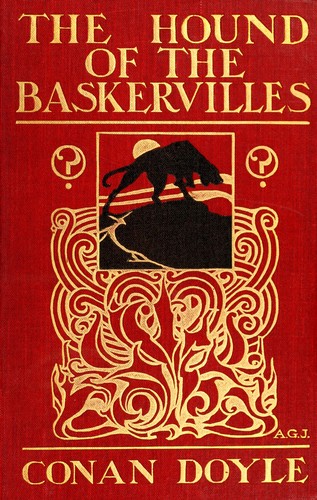
The Hound of the Baskervilles
by Arthur Conan Doyle
Buy on Amazon
The Hound of the Baskervilles is the third of the four crime novels by British writer Arthur Conan Doyle featuring the detective Sherlock Holmes. Originally serialised in The Strand Magazine from August 1901 to April 1902, it is set in 1889 largely on Dartmoor in Devon in England's West Country and tells the story of an attempted murder inspired by the legend of a fearsome, diabolical hound of supernatural origin. Holmes and Watson investigate the case. This was the first appearance of Holmes since his apparent death in "The Final Problem", and the success of The Hound of the Baskervilles led to the character's eventual revival. One of the most famous stories ever written, in 2003, the book was listed as number 128 of 200 on the BBC's The Big Read poll of the UK's "best-loved novel".…
Recommended by
"The Hound of the Baskervilles is a short book, easily read in an afternoon. I first heard of it when I was about seven and a picture and short summary featured in a diary I was given. It was already enough to send shivers down my spine. The book opens in London, in Baker Street, with the usual back-and-forth between Sherlock Holmes and Dr. Watson as they deduce what kind of man has left behind his walking stick. The plot quickly draws you in with its combination of a family curse, the unforgettable setting of the bleak, Devon moors and the hellish, spectral hound that haunts them. Sir Charles Baskerville feared his own death and duly died—will the last of the Baskervilles, Sir Henry, fresh back from the colonies, also fall victim if he returns to Baskerville Hall? It’s very, very cleverly done. Our interview about Sherlock Holmes (or Arthur Conan Doyle) is with Washington Post literary critic Michael Dirda"
"Yes, of course. This is an English country house mystery, although people don’t think of it in those terms. Probably because it’s more brutal. It’s gothic. The house in this case is much more isolated than is typical, up on these lonely moors, and there’s this eerie, deadly spectre…. It contrasts with what we usually think of in country house mysteries, which is ladies in pearls and evening gowns, gentlemen in black time. In this case, it’s a demonic dog pursuing people across the moors. Although, when Lord Baskerville is first murdered, when Holmes is brought in to investigate, he was wearing a dinner jacket and smoking a cigar outside his house. He had dressed for dinner, even though it was just him and his servants and nobody else around for miles. Presumably this is what they really would do—still dress formally for dinner. There’s a sense that you had to adhere to these social customs or society would break down. It’s very amusing. Yes, we see it very much from the outside—the pretty dresses, the nice cars. We forget about the rampant tuberculosis, the people dying in wars…. We generally see the upper class at play. The working class, not so much."
"I guess I have always had an interest in the supernatural. I loved the way that this was a supernatural tease. I don’t want to spoil the ending for those who don’t know the book, but for a long time it reads like a very credible ghost story until it turns to a more prosaic explanation. I like it because it was a real adventure. Get the weekly Five Books newsletter Holmes was a man of action in this book and Watson also plays quite a key role. It actually scared me the first time I read it as a kid. And I have always liked it. It is my favourite of all his books and it has a very clever ending. Yes, he does it so well, you can feel the fog. It was set on Dartmoor, down in Devon in the west country. And it’s full of surprises. I think part of the joy of reading good books is to be constantly surprised as a reader."
"The tales still make great reading at night by a fireplace."
"I also really like "The Hound of the Baskervilles," which was written after Conan Doyle had apparently killed Sherlock in "The Final Problem." I like the complex plot and Sherlock's intensity in solving the case."
"The Hound of the Baskervilles was, and remains, my favorite Holmes story. It was scary and gave me sleepless nights."
""The Hound of the Baskervilles," by Sir Arthur Conan Doyle. I read these at an early age and they have had a profound effect on me."
"The Hound of the Baskervilles was the first grown-up book I ever read. I can remember buying the novel as part of a school book club and waiting until just the right November evening to read it, one when my sisters and parents would be away. It was literally a dark and stormy night and I pulled all the covers down from my bed and turned off all the lights in the house except one and read the pages absolutely wide-eyed. When you come to the end of that second chapter, there is this particularly brilliant exchange when Doctor Mortimer describes the death of the latest Baskerville and mentions that there were footprints seen near the body. Holmes turns to Mortimer and says, “A man’s or a woman’s?” and Mortimer delivers the greatest reply in 20th century literature, “Mr Holmes, they were the footprints of a gigantic hound!” I shivered with pleasure and realised that life didn’t get much better than that. After I finished the book, I went to the library and found the complete Sherlock Holmes stories and devoured those. Eventually I went on to learn that Conan Doyle wasn’t just the creator of Sherlock Holmes but that he was really a multi-talented writer. He also wrote wonderfully evocative ghost stories and historical fiction . He has these rather swashbuckling tall tales told by a Napoleonic cavalryman, Brigadier Gerard. I recommend them. Still, The Hound of the Baskervilles was the book that persuaded Conan Doyle to bring back Holmes in a serious way. You know that he killed off the detective at the end of the Memoirs of Sherlock Holmes and people thought for several years that their beloved Sherlock was dead after the tumble with Professor Moriarty at the Reichenbach Falls. But eventually Conan Doyle bowed to audience pressure and came out with The Hound of the Baskervilles, though he insisted that this was a pre-Reichenbach adventure. But the book was so fabulously popular – it was the Da Vinci Code or Harry Potter of the day – that ultimately Conan Doyle was offered so much money he couldn’t refuse to produce more Sherlock Holmes stories. I would say the only real flaw lies in the middle of the novel, where there is a long period in which Holmes isn’t around and we are only following Doctor Watson’s adventures at Baskerville Hall. But the idea of this hound from hell really gives the story an air of the uncanny that readers love. The curse of the Baskervilles, played out over the generations and still in modern times, is especially brilliant – as is Holmes’s discovery of the truth."
"Most people when you ask them what the best Sherlock Holmes story is will say The Hound of the Baskervilles. It’s one of the four novels featuring Holmes. Probably the best novel in my mind that he wrote, and probably the most atmospheric: the moor in Dartmoor with a convict prison nearby, and with very few potential suspects. I understand that Doyle went there on holiday and had a friend who told him the local lore about a hound from hell. The only downside to the novel is that there were so few people living there that the suspect pool was very limited. If you read a lot of mysteries, I think you’ll arrive at the fact that the botanist, Stapleton, was the villain. The only other possible criminal—and it could have been a huge twist—would have been Dr. Mortimer, who brought Holmes and Watson into the story, and who had befriended the new baron Sir Henry Baskerville. Support Five Books Five Books interviews are expensive to produce. If you're enjoying this interview, please support us by donating a small amount . The story is pretty basic: Charles Baskerville is a wealthy guy who has come back to his ancestral home in England on the moor. He is rebuilding the old estate and being very generous with the local community. But he has taken this tale of the hound of the Baskervilles to heart. This is the family lore about a very evil Baskerville, Hugo, who did something very terrible to a young woman which caused her death. He was chased out on the moor by this hound from hell that ripped his throat out and killed him. And every male Baskerville after that will suffer that same fate; Charles Baskerville went out on the moor one night to smoke a cigar and he never came back alive. They found him dead, not killed by a dog, but Dr Mortimer said to Sherlock Holmes he saw the prints of a gigantic hound near the body. That’s the start of the story. Watson is sent by Holmes to Dartmoor to watch over Sir Henry and to act as Holmes’ eyes and ears. He tells the story through a series of letters he sends back to Holmes. He doesn’t know that Holmes is there as well. He’s using Watson as a buffer to make people think that he wasn’t actually on the scene. Then at the end, Holmes figures it all out and you find out the motive. It turns out that Stapleton is actually a Baskerville, so if he kills Charles and then Henry, he gets the estate and the money. That’s why he did it. It’s a terrifically, darkly atmospheric tale and I think if you read it for the first time it will really give you chills because you just don’t know if there’s a supernatural demonic dog out there that’s going to take the life of another Baskerville, or if Holmes and Watson will be able stop it. If it’s done well, it’s great. For example, Stephen King has made a career out of combining real life elements with the supernatural, where the resolution is because someone has incredible gifts or has incredible powers beyond human nature. Stephen King certainly has done this well over the years. If it’s done poorly, you will think, well, that was a cheap way out of that. The killer was able to walk through a wall? How? Well, he was a supernatural being! Probably the best legal thriller I’ve ever read is Presumed Innocent by Scott Turow , which came out in the late 1980s. I’ve known Scott a long time. That book was superb. It combined two things I love dearly as a writer: forensic knowledge and the legal machinations of a criminal trial. Scott delivered both of those in that novel to an incredibly high degree. The twist at the end is phenomenal and he builds it superbly throughout. Another book which I thought was probably one of the best forensic novels ever written in terms of chilling suspense and atmosphere was Postmortem by Patricia Cornwell. I’ve known Patricia for a long time as well. It came out in 1990. It was set in my hometown of Richmond, Virginia and was based on the story of the Southside Strangler, who committed a series of rapes and murders in the Richmond area in the 1980s. The man arrested and convicted of the crimes was Timothy Wilson Spencer. He was the first serial killer in the US convicted on the basis of DNA evidence. Patricia Cornwell worked in the medical examiner’s office in Richmond during that time, and has a phenomenal base of forensic knowledge that she brought to bear in creating Kay Scarpetta—her medical examiner protagonist. That book was superb. She’s one of the best suspense novelists out there. Walk The Wire is the sixth instalment in the Amos Decker series. He’s a former American footballer who suffered a brain trauma on the field that gave him a condition called hyperthymesia and another condition called synesthesia . So, the brain is rewiring around the damaged parts caused by the trauma. When that happens, the rewired pathways go into areas of the brain that have not been not fully accessed before. For Decker, the big change is in memory. Hyperthymesia means perfect recall. So, he really can’t forget anything. That’s a good thing for a detective, but a bad thing if you’re a person trying to get over some terrible losses, which Decker has had in his past. And when your brain changes, your personality changes. When he was a younger man, he was very gregarious and outgoing. Now, he’s very aloof and perhaps on the spectrum somewhere. He doesn’t pick up on social clues and he has to live with that. In Walk The Wire , Decker and his FBI partner Alex Jamison travel to North Dakota in the middle of the fracking boom. A young woman has been found murdered and a post-mortem has been done on the body by the killer. They need to figure out who killed her and why it was done in that way. It really leads them to all these deep and dark secrets in this little town. There’s also an Air Force facility located there with something mysterious going on. There’s also a religious colony there which owns some land around the military facility and was where the dead woman worked as a schoolteacher. And surrounding all of this is a multibillion-dollar oil and gas drilling operation. It’s high stakes and multiple plots are going on in the novel. At the same time as I was developing the thriller/mystery part of it, I was also trying to further develop Decker’s character. The device I used for that was to bring his brother-in-law, who works at one of the fracking companies out there. Decker had no idea he was even there. That gives us some glimpses into pre-brain-trauma Decker—who he used to be. Obviously, his brother-in-law has known him a very long time. It also forces Decker throughout the course of the book and at the end to make some important and critical personal choices vis-à-vis his family."